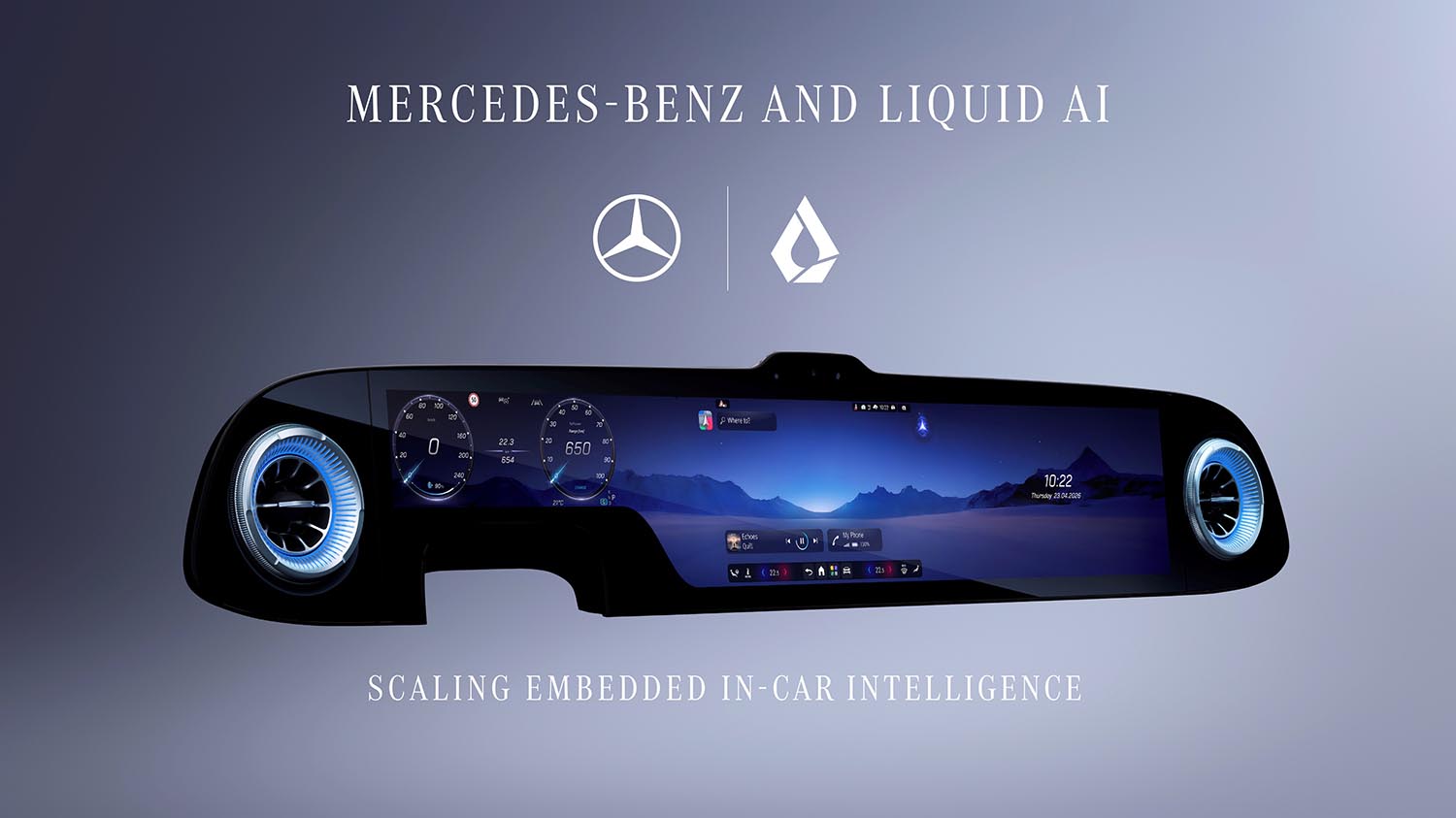
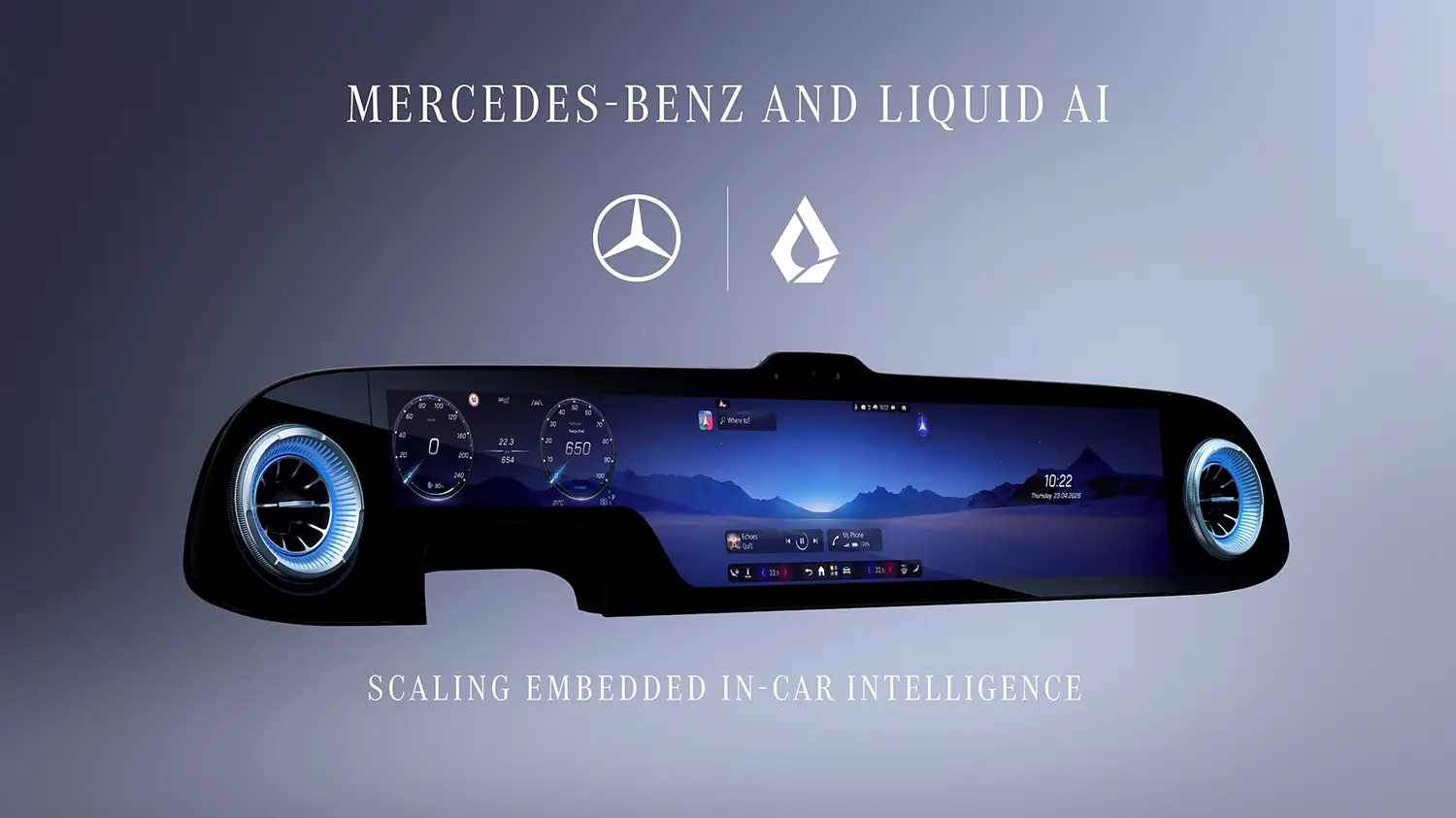
Mercedes-Benz has officially entered a multi-year strategic partnership with Liquid AI to revolutionize the digital ecosystem within North American Mercedes-Benz models. This collaboration focuses on scaling embedded, on-device intelligence for vehicles equipped with third- and fourth-generation MBUX systems. By moving away from a total reliance on cloud-based processing, the German automaker aims to deliver a more robust and private user experience. This transition ensures that the MBUX Virtual Assistant can function with high efficiency regardless of cellular connectivity, marking a significant milestone in the evolution of the software-defined vehicle.
Embedded Foundation Models and On-Board Reasoning Power
The performance of future Mercedes-Benz models will be defined by Liquid Foundation Models (LFM), which provide advanced reasoning and language recognition directly on the vehicle’s hardware. Unlike traditional cloud-dependent systems, these efficient, low-footprint models allow for near-zero latency when executing voice commands or vehicle functions. The integration of LFM technology enables the car to understand complex, multimodal inputs with a natural flow that mimics human conversation. By processing data locally, the system maintains a high level of speed and reliability, ensuring that the driver’s relationship with the vehicle is effortless and intuitive even in remote areas without data coverage.
Enhanced Privacy and Seamless MB.OS Integration
Ownership of a modern Mercedes-Benz will soon involve a more “sovereign” AI experience, where personal data and voice interactions remain private and stored locally on-device. This partnership is built upon the in-house developed Mercedes-Benz Operating System (MB.OS), providing a unified software architecture that facilitates deep integration between AI and vehicle hardware. For the customer, this translates to a consistent experience across everyday use cases, from adjusting climate settings to navigating complex infotainment menus. The first production deployment of this advanced speech and reasoning technology is targeted for the second half of 2026, coinciding with the brand’s ongoing product offensive.
Benchmarking Intelligence Against Global Tech Competitors
In the current automotive landscape, Mercedes-Benz is positioning its intelligent cabin as a unique selling point against competitors like Tesla and BMW. While many manufacturers rely heavily on external compute ecosystems, the move to embedded Liquid AI models allows Mercedes-Benz to offer a faster and more private alternative. This strategy addresses a growing market demand for data sovereignty and high-speed interaction. By optimizing intelligent conversational experiences for North American customers, Mercedes-Benz aims to set a new industry benchmark for in-car assistants. This pivot toward efficient, low-footprint AI ensures the brand remains at the forefront of the 140-year-old pursuit of automotive innovation.
Pioneering the Next Era of Digital Mobility
The partnership between Mercedes-Benz and Liquid AI is more than a simple feature update; it is a fundamental shift in how vehicles process information in the physical world. As the brand celebrates 140 years of engineering excellence, this collaboration proves that the future of mobility is as much about software as it is about hardware. By delivering fast, private, and cloud-independent intelligence, Mercedes-Benz is ensuring that its next generation of vehicles remains the most desirable on the market. Looking toward 2026, the arrival of these advanced embedded models will define a new standard for natural, human-centric interaction on the road.
Disclaimer: Content on this site is for informational and entertainment purposes only. Details, analyses, and opinions reflect current trends and personal views, not professional or financial advice. Always verify information with official sources before making any decisions.
Source: Mercedes-Benz