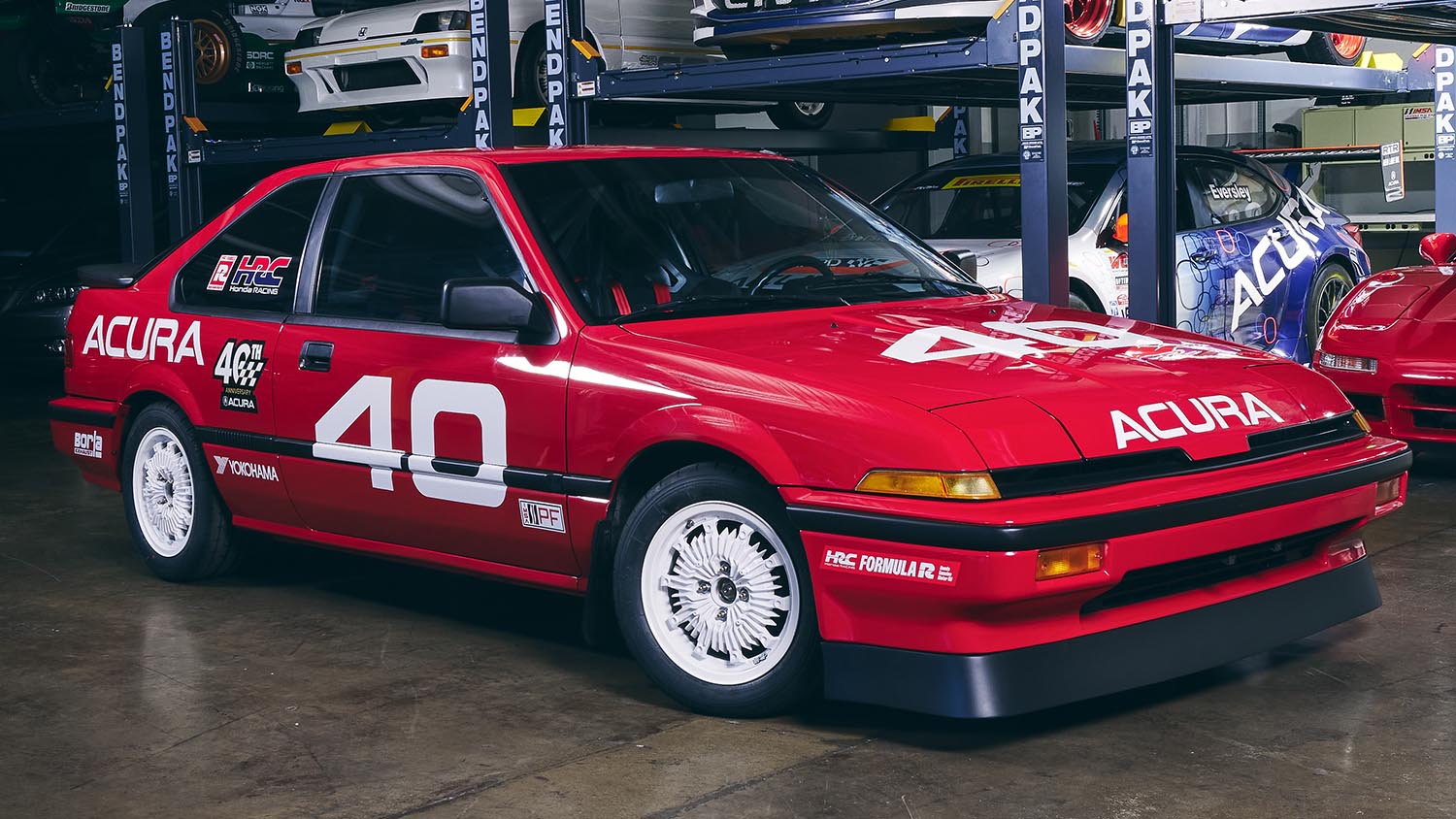
Acura officially celebrates four decades of Precision Crafted Performance, marking its historic March 1986 debut as the first Japanese luxury automotive brand in North America. To commemorate this milestone, the brand has unveiled the Acura Integra 40 Racer, a meticulously engineered tribute to the original Comptech Integra No. 48 that dominated the IMSA International Sedan Series. Built by Honda Racing Corporation US, this one-off creation serves as a bridge between the brand’s founding years and its high-performance future. It arrives at the 51st Acura Grand Prix of Long Beach as a rolling testament to the innovation and reliability that redefined the luxury landscape forty years ago.
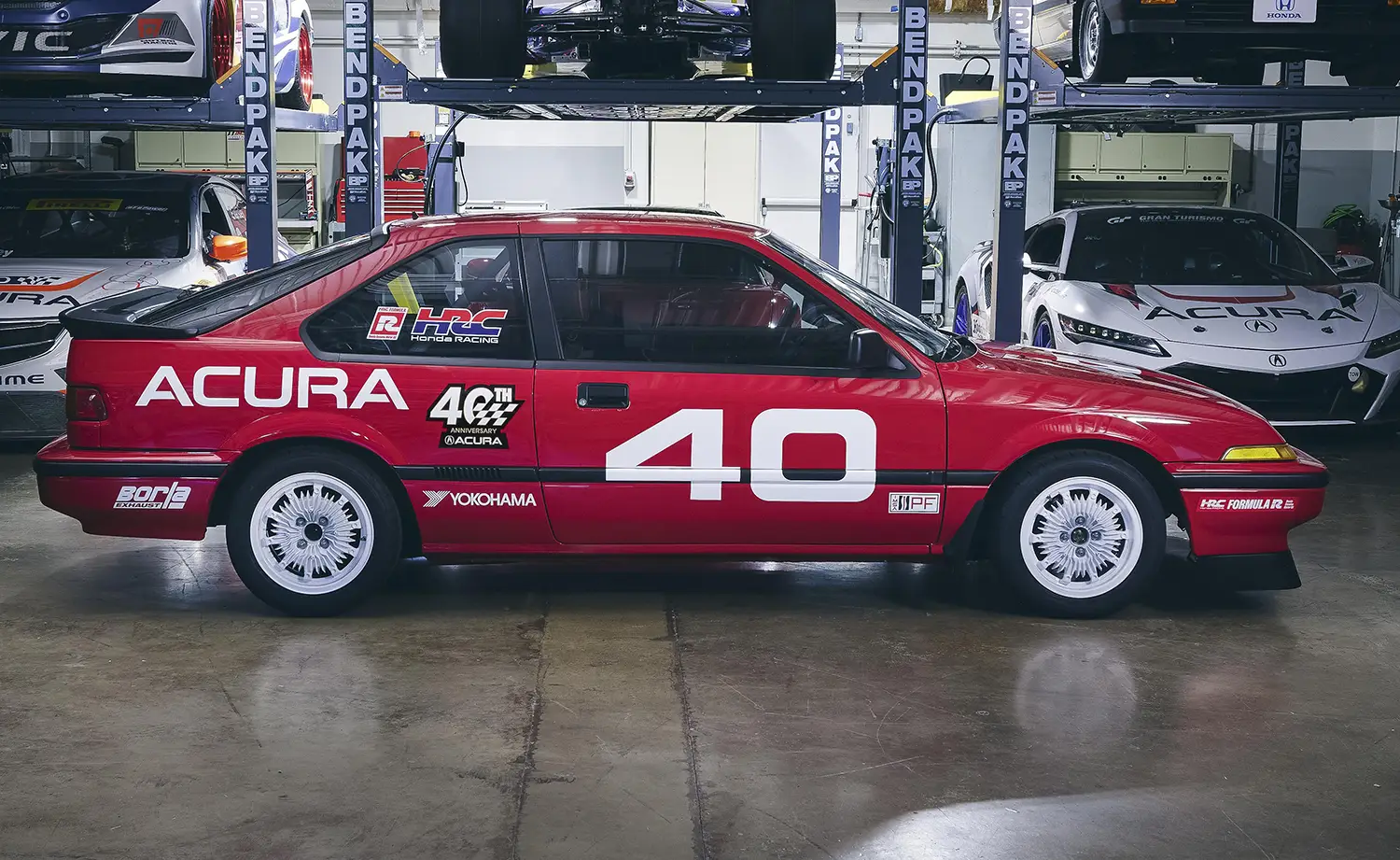
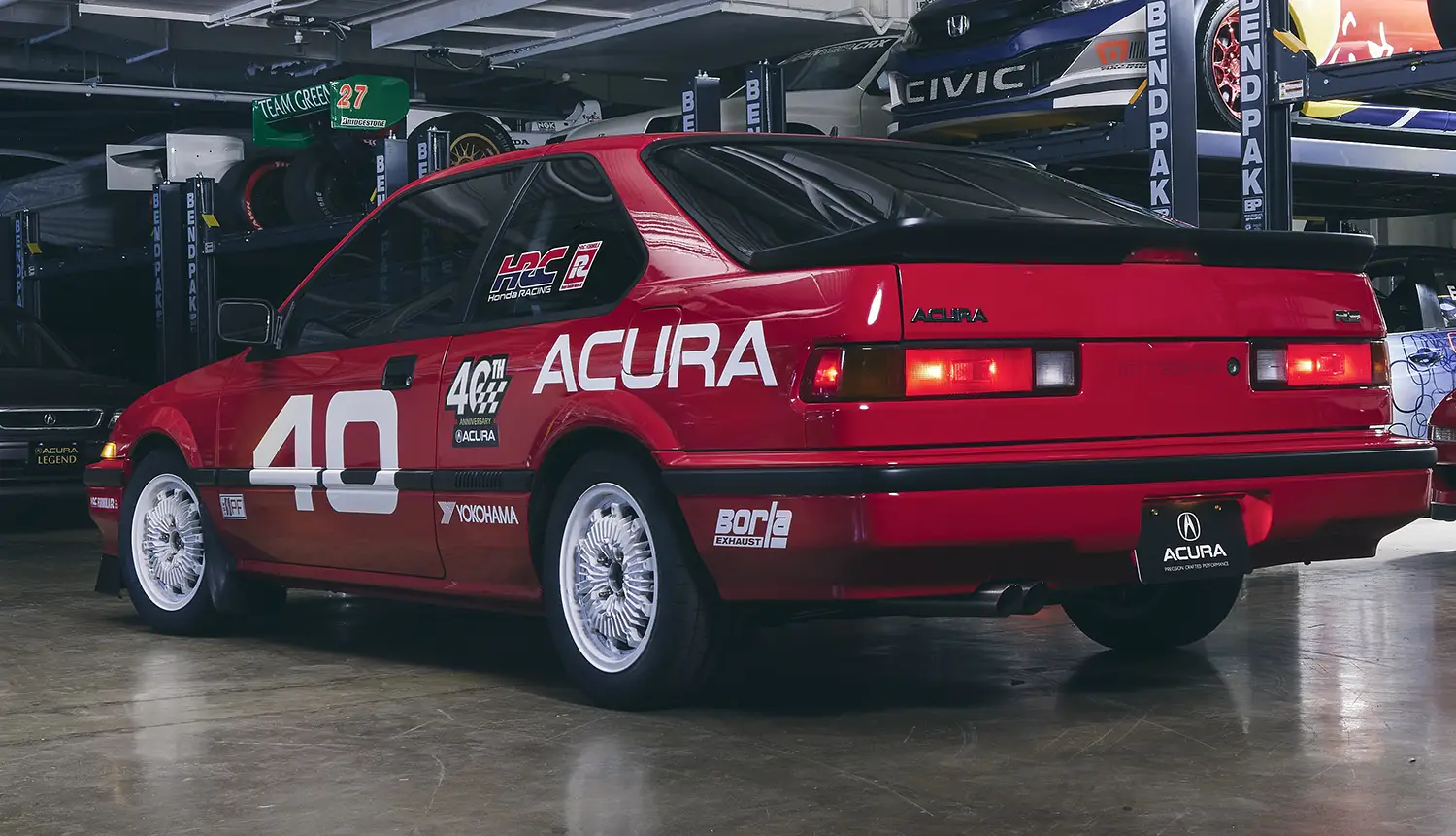
Rio Red Metallic and Mugen Heritage Styling
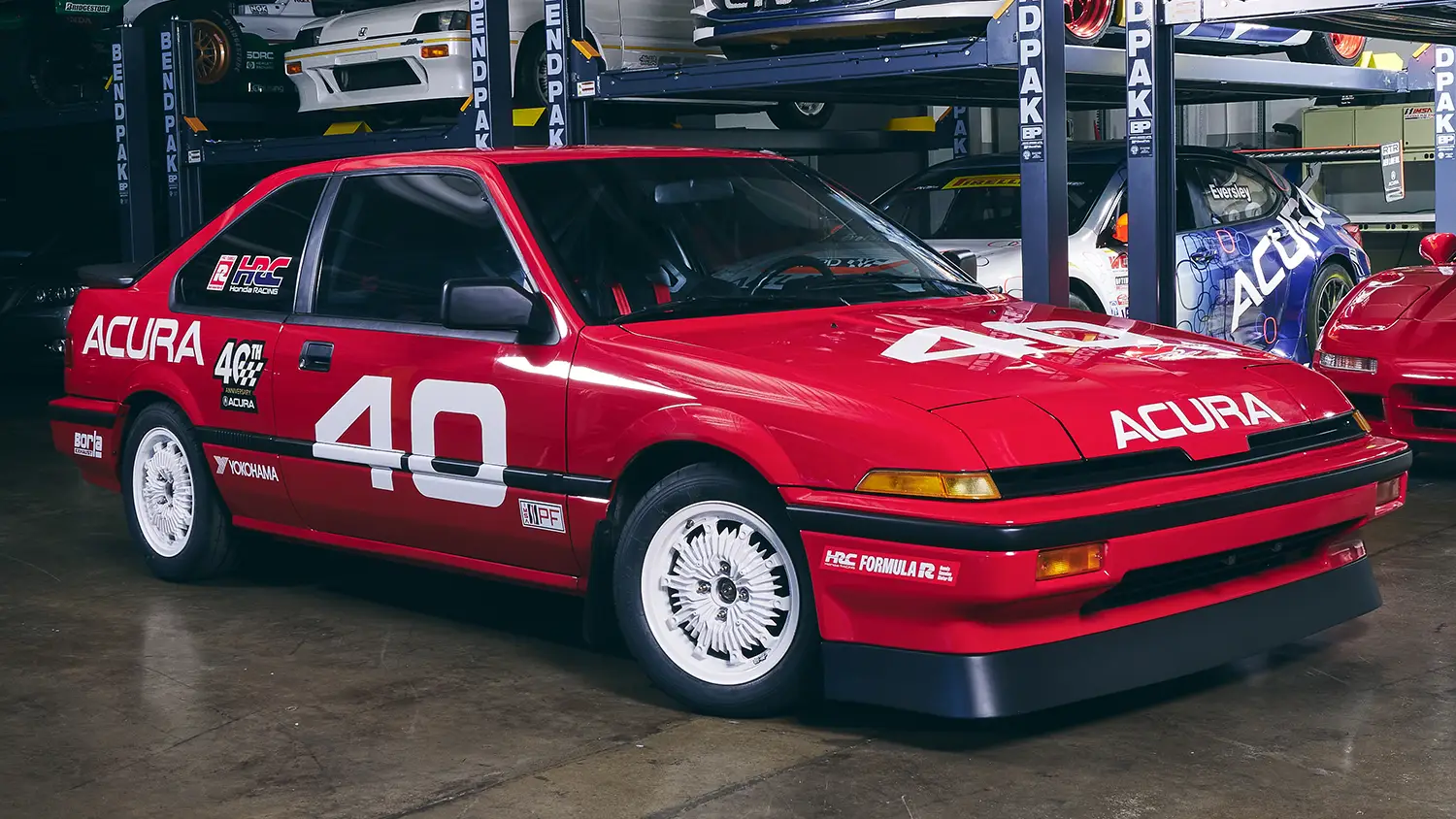
The silhouette of the Acura Integra 40 Racer stays faithful to the angular, wedge-shaped aesthetic of the first-generation Integra while incorporating purposeful track modifications. Finished in a vibrant Rio Red Metallic, the bodywork features a period-correct racing livery that mirrors the 1987-1990 championship-winning cars. Lightweight 14-inch Mugen wheels are wrapped in Yokohama ADVAN A050 semi-slick tires, providing the necessary mechanical grip for high-speed exhibition runs. The engine bay and interior surfaces are finished in Quartz Silver, creating a clean, industrial contrast to the bold exterior paint. Every vent and panel serves to honor the heritage of the Comptech build while maintaining the sharp, precise lines that originally gave Acura its name.
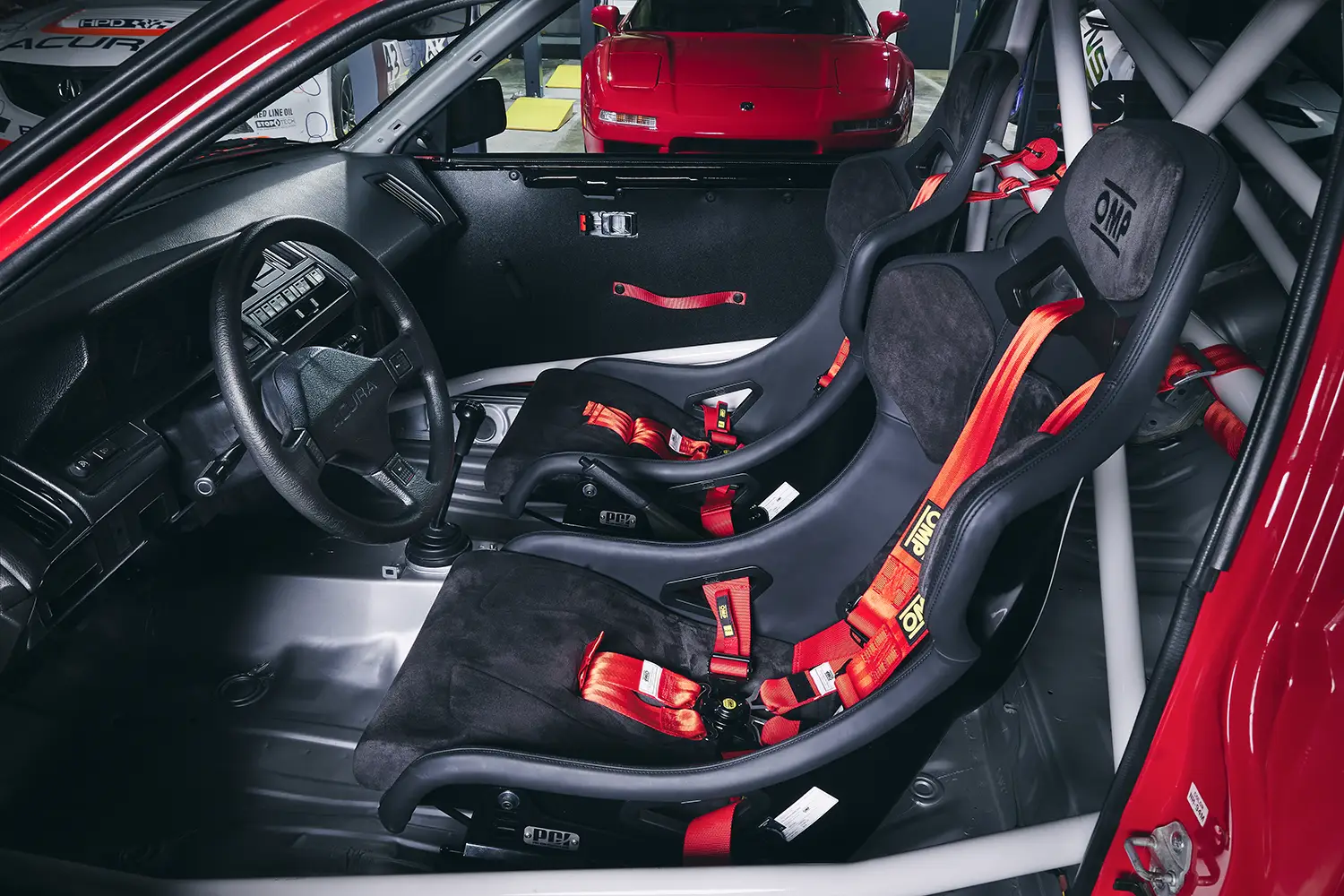
Stripped Racing Cockpit and Safety Hardware
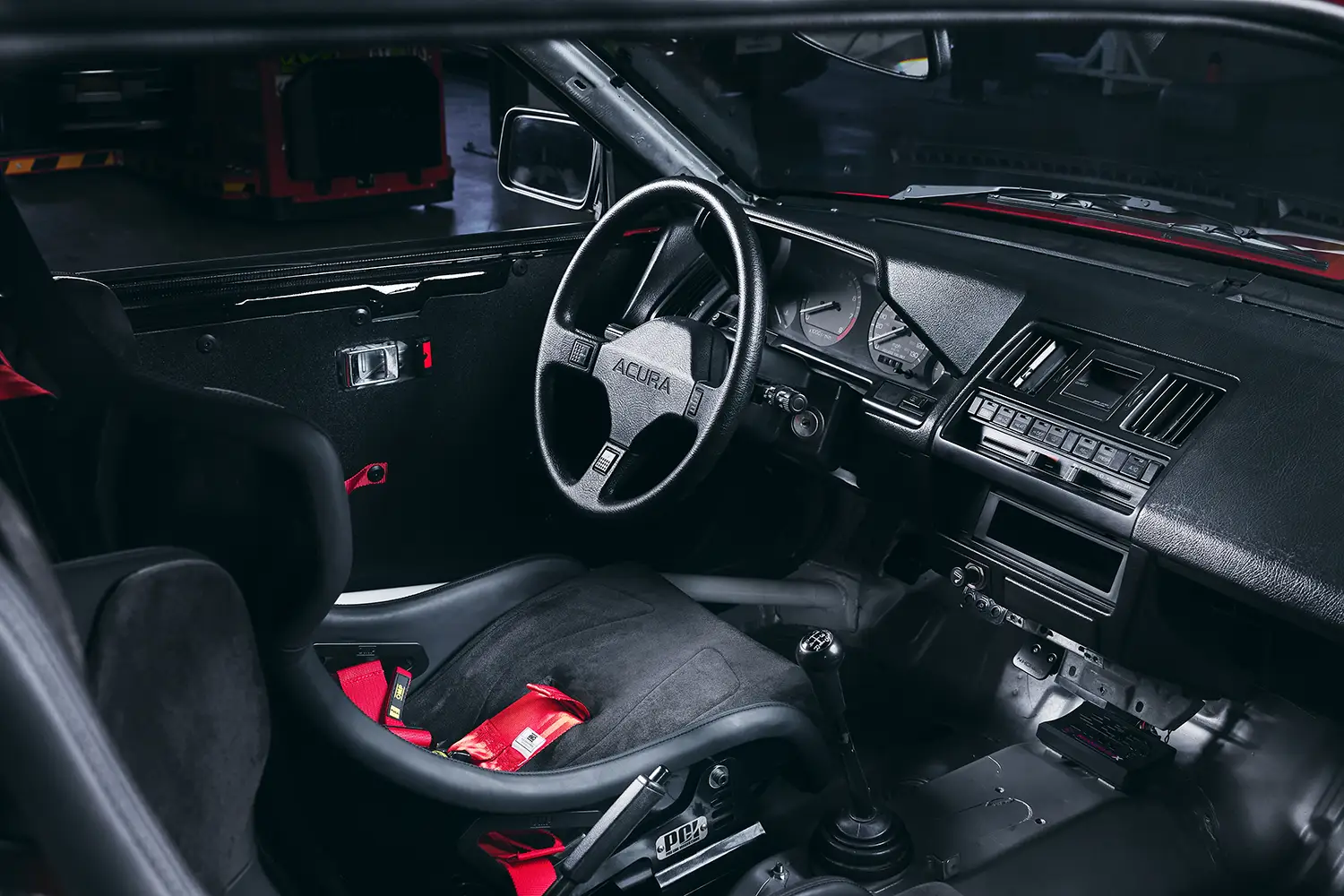
Interior accommodations have been completely transformed from a 1980s commuter cabin into a professional-grade motorsport environment. The original dashboard remains as a nod to the street car’s roots, but the rest of the space is dominated by a custom roll cage fabricated by Blackbird Fabworx. OMP racing seats replace the factory units, equipped with six-point Endurance harnesses to keep the driver secure during spirited maneuvers. By stripping the cabin down to the bare metal and painting it Quartz Silver, HRC US has highlighted the structural rigidity required for the track. This minimalist approach ensures that the focus remains entirely on the driver’s connection to the machine and the heritage it represents.
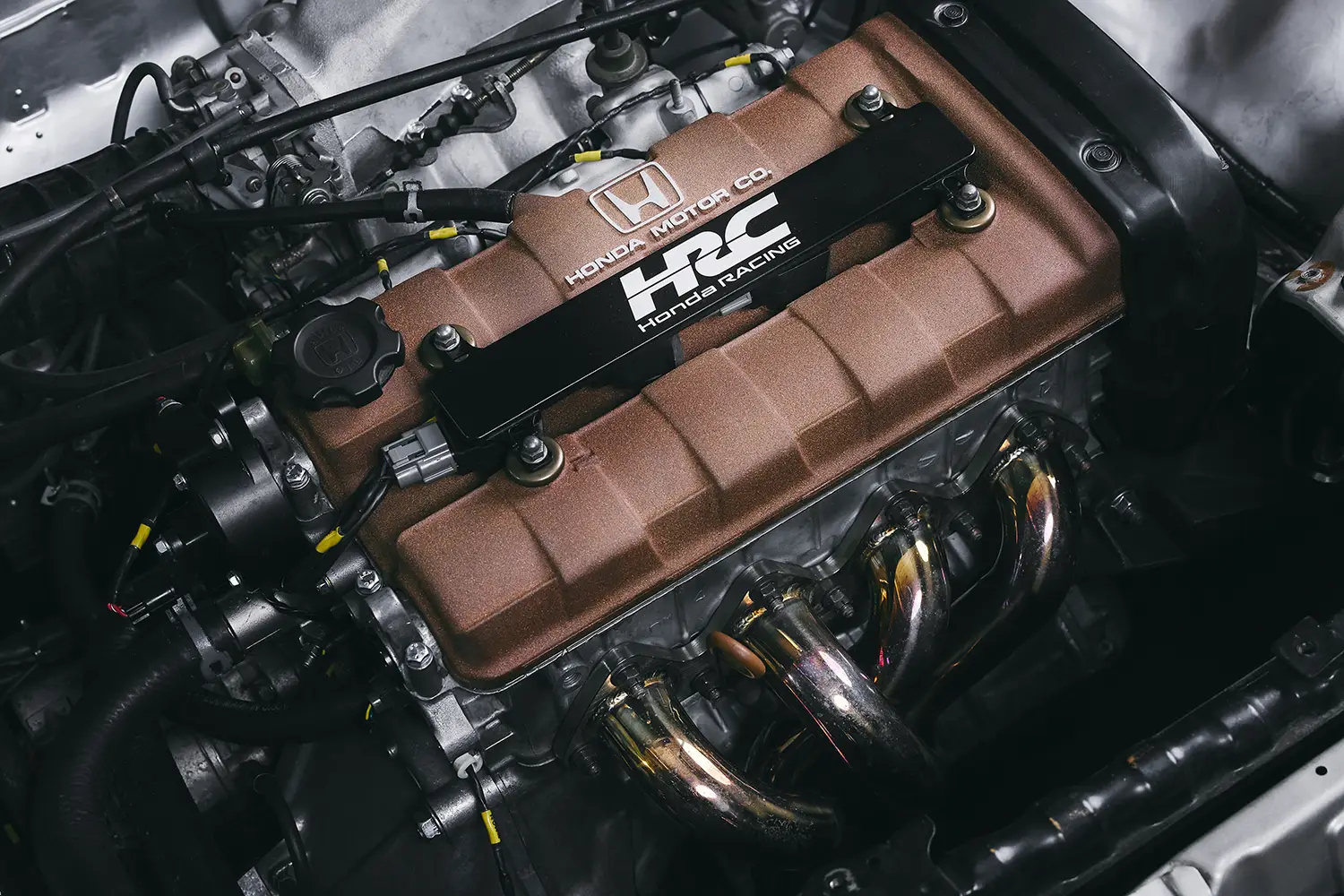
Classic D16A1 Power and Analog Mechanical Precision
Mechanical soul is provided by a rebuilt original D16A1 engine, which has been modernized with a Monsoon ECU and a coil-on-plug conversion for improved reliability. This naturally aspirated four-cylinder breathes through a stainless 4-2-1 long-tube header and a custom Borla exhaust system, producing a visceral 1980s soundtrack. The powertrain delivers its output through a five-speed manual transmission equipped with a Torsen-type limited-slip differential to optimize corner-exit traction. While official modern figures are not provided, the setup prioritizes the high-revving character and responsive throttle feel that defined Acura’s early racing success. The entire package is designed to offer a raw, analog experience that contrasts sharply with the digital complexity of modern performance hybrids.
| Technical Specifications | |
|---|---|
| Engine | Rebuilt Original D16A1 |
| Transmission | 5-Speed Manual |
| Differential | Torsen-Type Limited-Slip |
| ECU | Monsoon with Coil-On-Plug |
| Suspension | Tein Coilovers |
| Wheels | 14-Inch Mugen Lightweight |
| Tires | Yokohama ADVAN A050 Semi-Slick |
| Brakes | Manual Conversion / Carbotech Pads |
Defining the First Japanese Luxury Segment
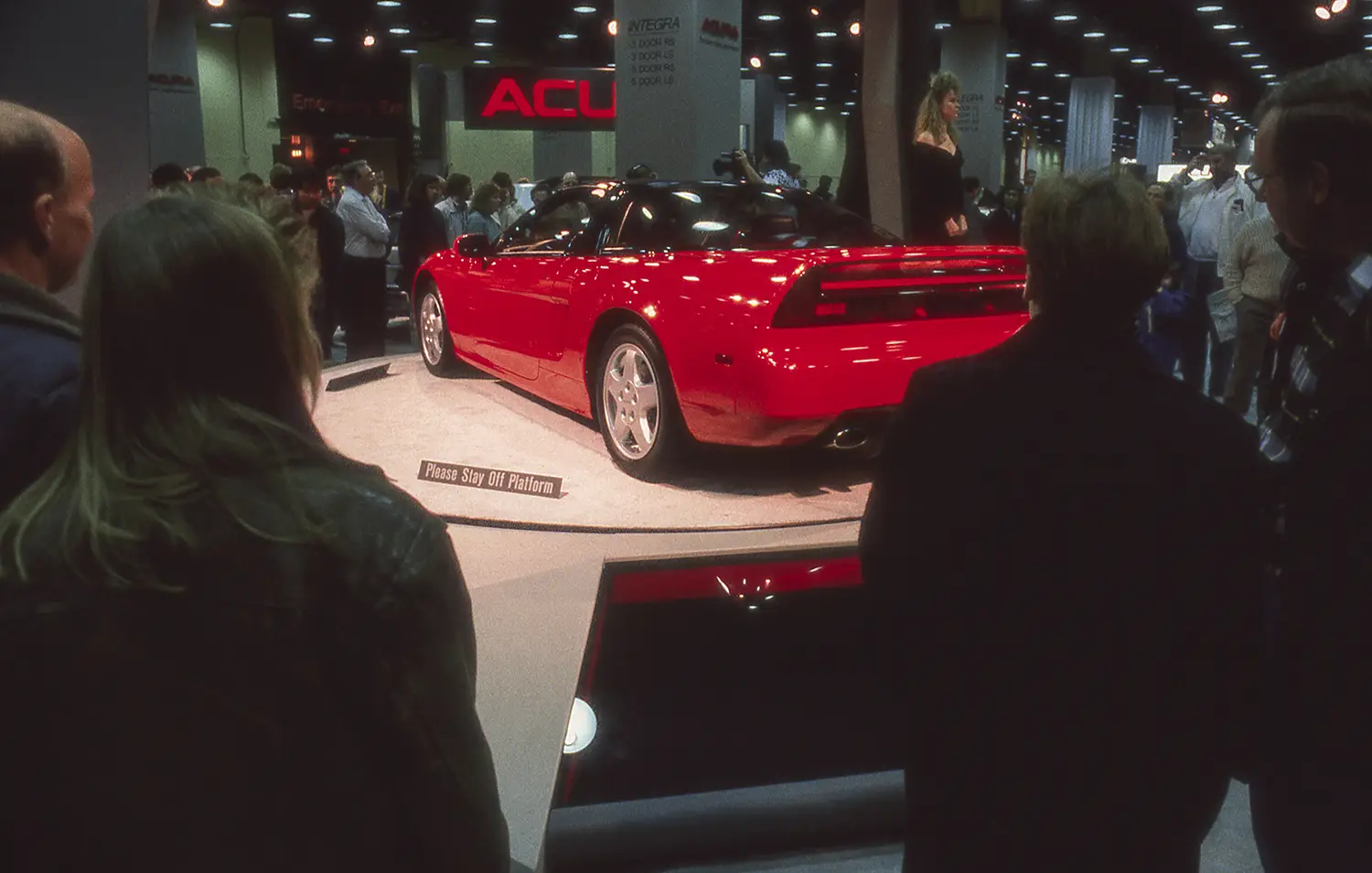
The market significance of the original 1986 Integra and Legend cannot be overstated, as they forced European giants to rethink their pricing and service structures. Before Acura, Japanese cars were viewed primarily as economical transport; however, the success of the Legend proved that luxury buyers valued Japanese reliability. Today, the Acura Integra 40 Racer reminds the industry of the brand’s unique selling point: the democratization of high-performance engineering. While rivals like Lexus and Infiniti followed in 1990, Acura remains the pioneer that successfully combined racing pedigree with daily drivability. This tribute build reinforces that lineage at a time when the brand is transitioning toward a new era of electrified performance.
Four Decades of Reliability and Customer Satisfaction
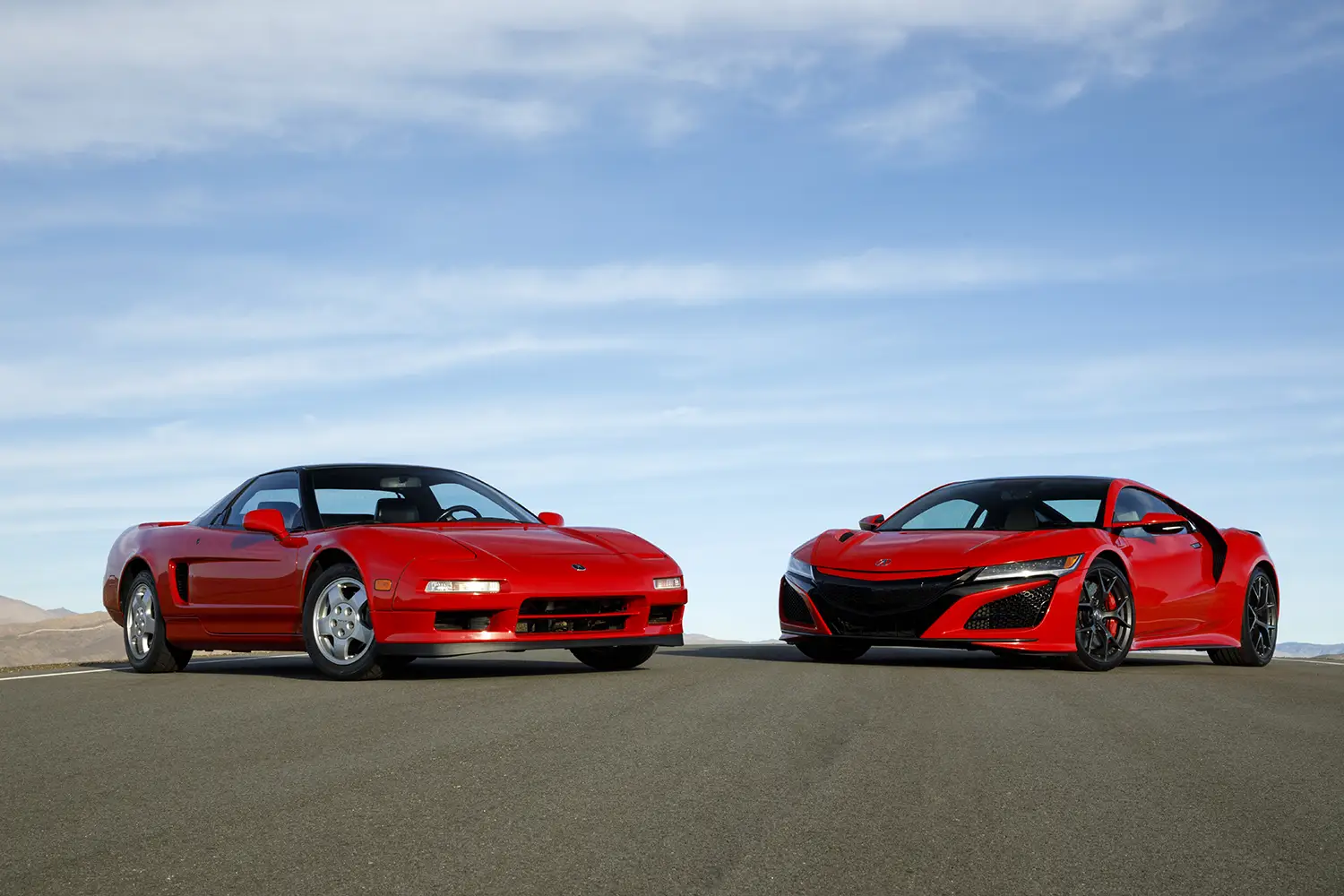
Acura’s reputation was built on more than just speed, consistently earning the top spot in J.D. Power Customer Satisfaction surveys during its first four years. This focus on the “Precision Team” award at dealerships set an industry benchmark that remains a core part of the brand DNA in 2026. For modern owners, this legacy manifests in high resale values and a track record of longevity that few premium brands can match. The transition to American-led design and manufacturing has further solidified the brand’s local footprint, with nearly all current models being produced in North America. Investing in an Acura today is seen as a choice for long-term efficiency and engineering integrity, qualities first established by the cars the 40 Racer honors.
A Bridge Between Racing Eras
The Acura Integra 40 Racer is a powerful reminder that while technology evolves, the spirit of precision remains constant. By blending the raw mechanical hardware of the 1980s with modern HRC tuning, Acura has created a celebration that is both nostalgic and forward-looking. As the brand moves into its next 40 years with new hybrid and electric models, this Rio Red tribute stands as a permanent marker of where the journey began.
Disclaimer: Content on this site is for informational and entertainment purposes only. Details, analyses, and opinions reflect current trends and personal views, not professional or financial advice. Always verify information with official sources before making any decisions.
Source: Acura