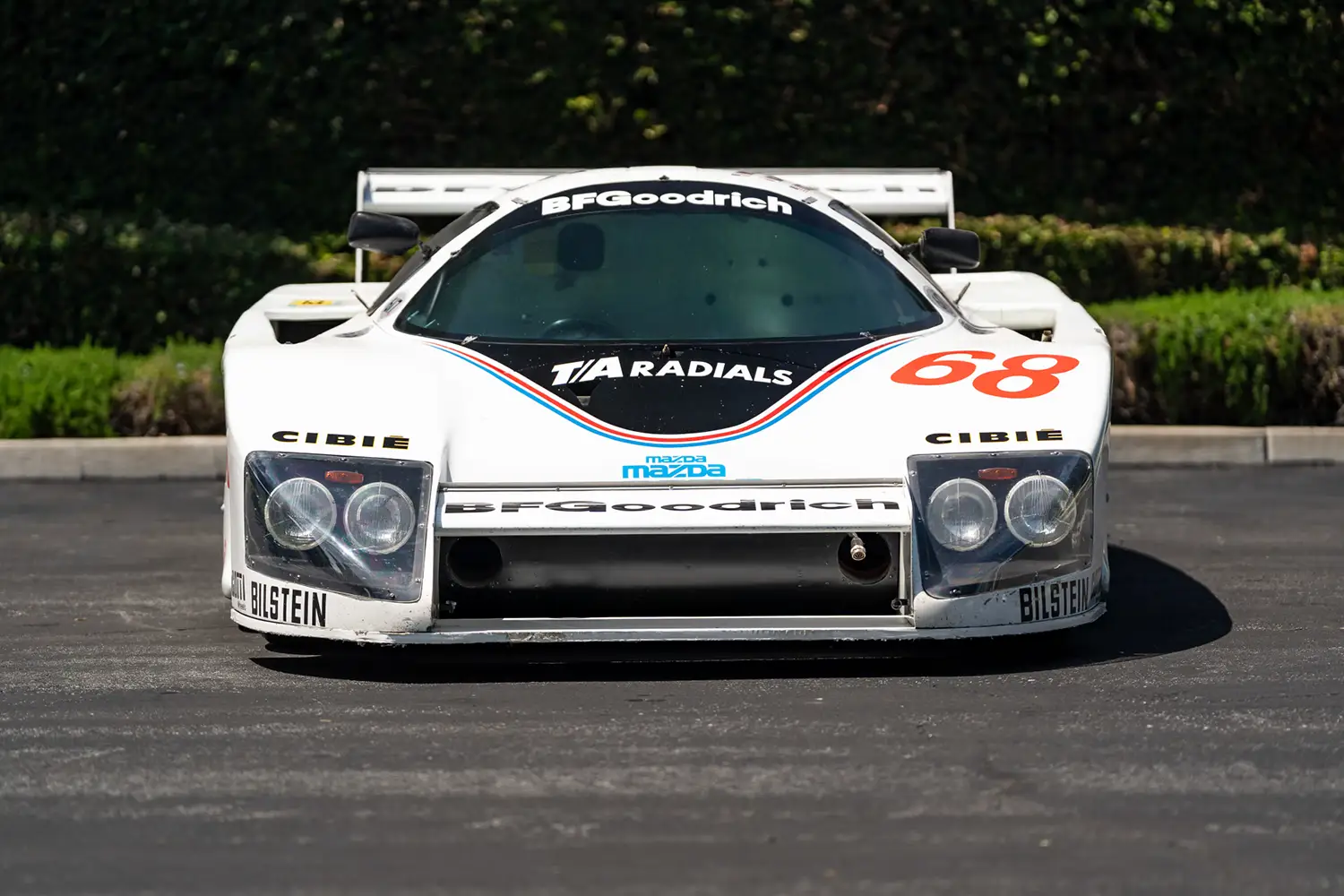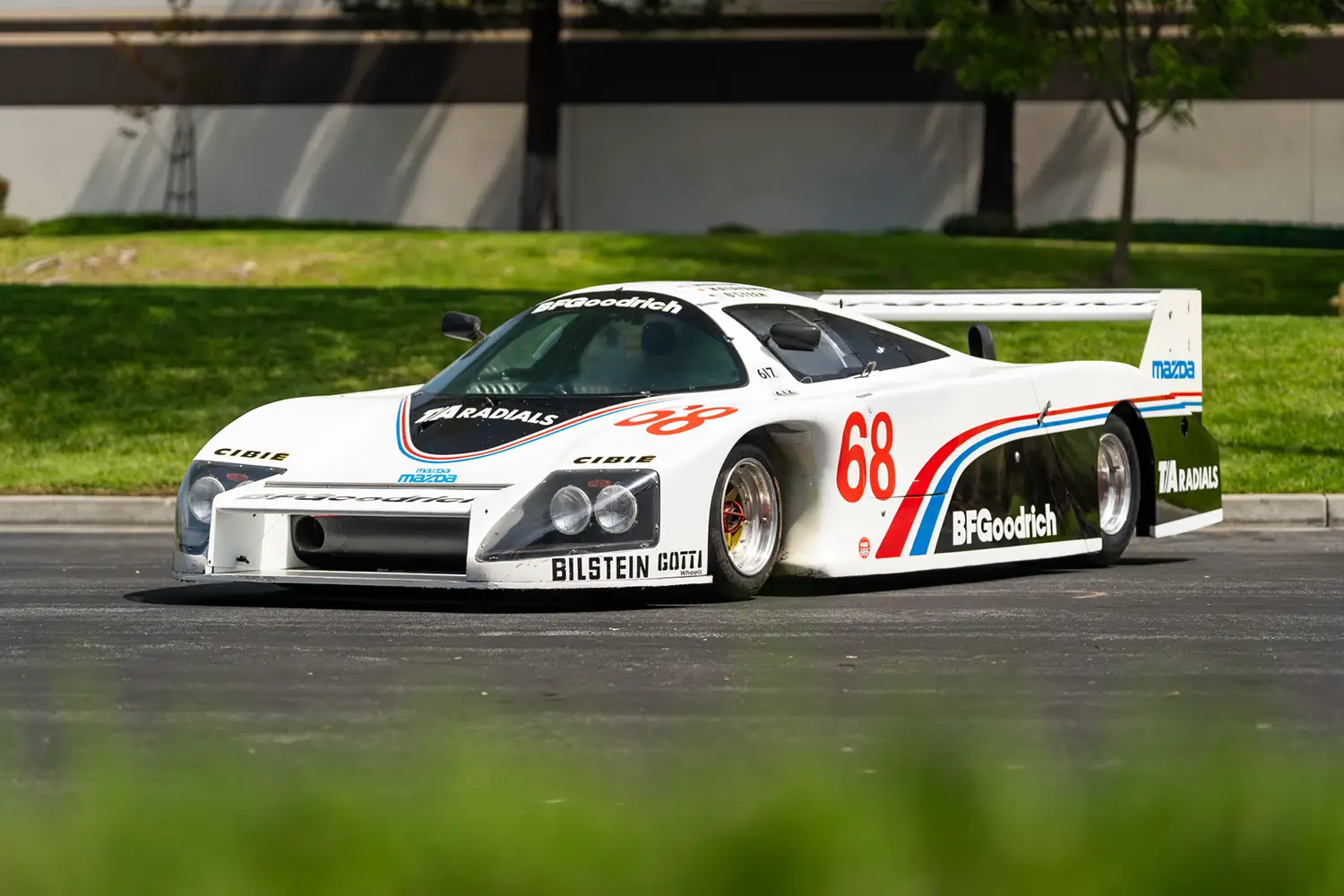
The 1984 Lola T616 Mazda stands as a monumental pillar in the history of international endurance racing. It is the machine that famously secured Mazda’s first-ever class victory at the 24 Hours of Le Mans. Driven by John Morton, Yoshimi Katayama, and John O’Steen, this car silenced skeptics of the rotary engine on the world’s most demanding stage. This specific example, chassis HU-2, represents a rare intersection of British chassis engineering and Japanese powertrain innovation. Beyond its trophy cabinet, the car served as a high-speed laboratory for the BFGoodrich radial tire development program. Its presence at Monterey 2026 remains a vivid reminder of the Group C2 era’s competitive spirit and the burgeoning dominance of Japanese manufacturers.
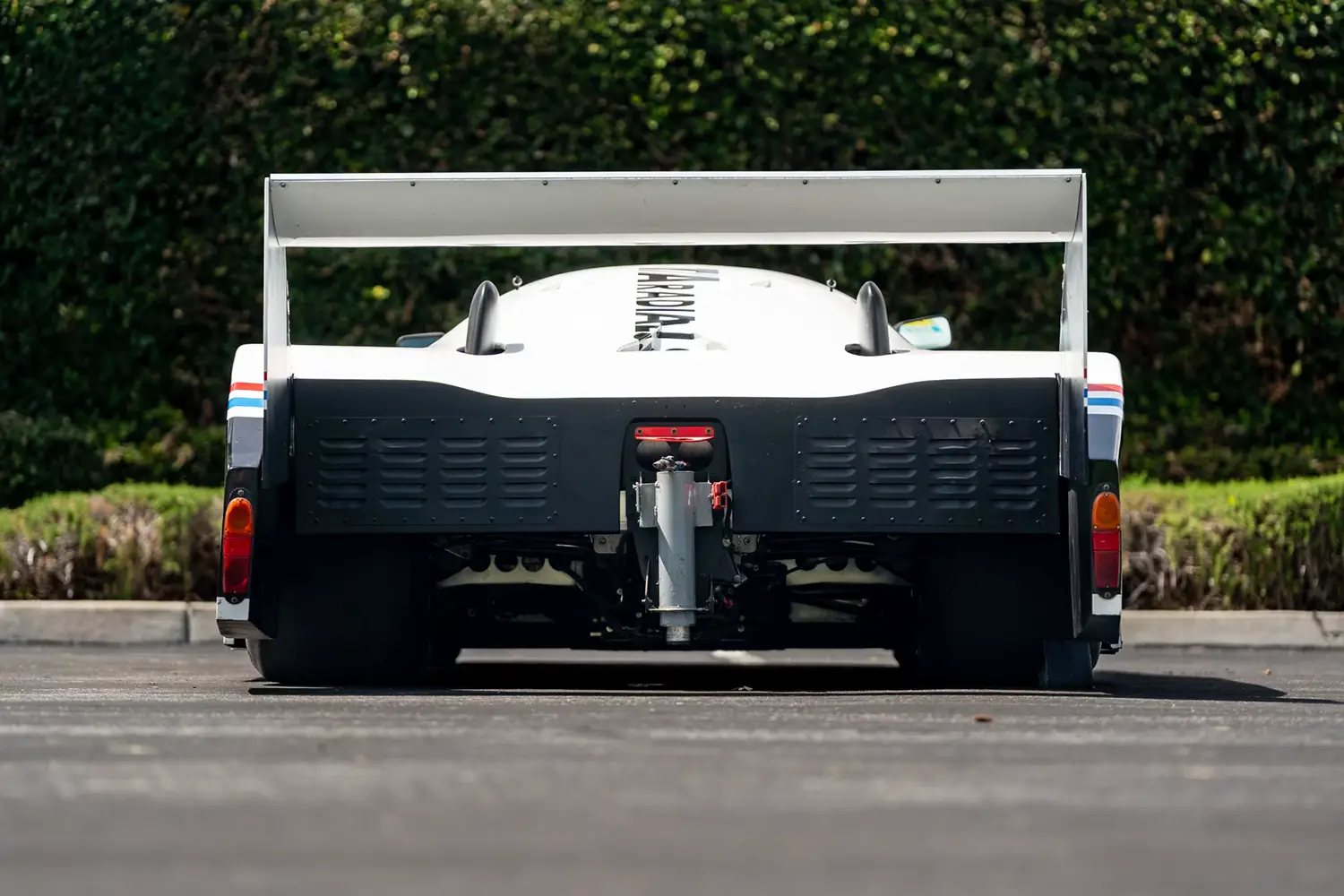
Aerodynamic Precision in Iconic BFGoodrich Livery
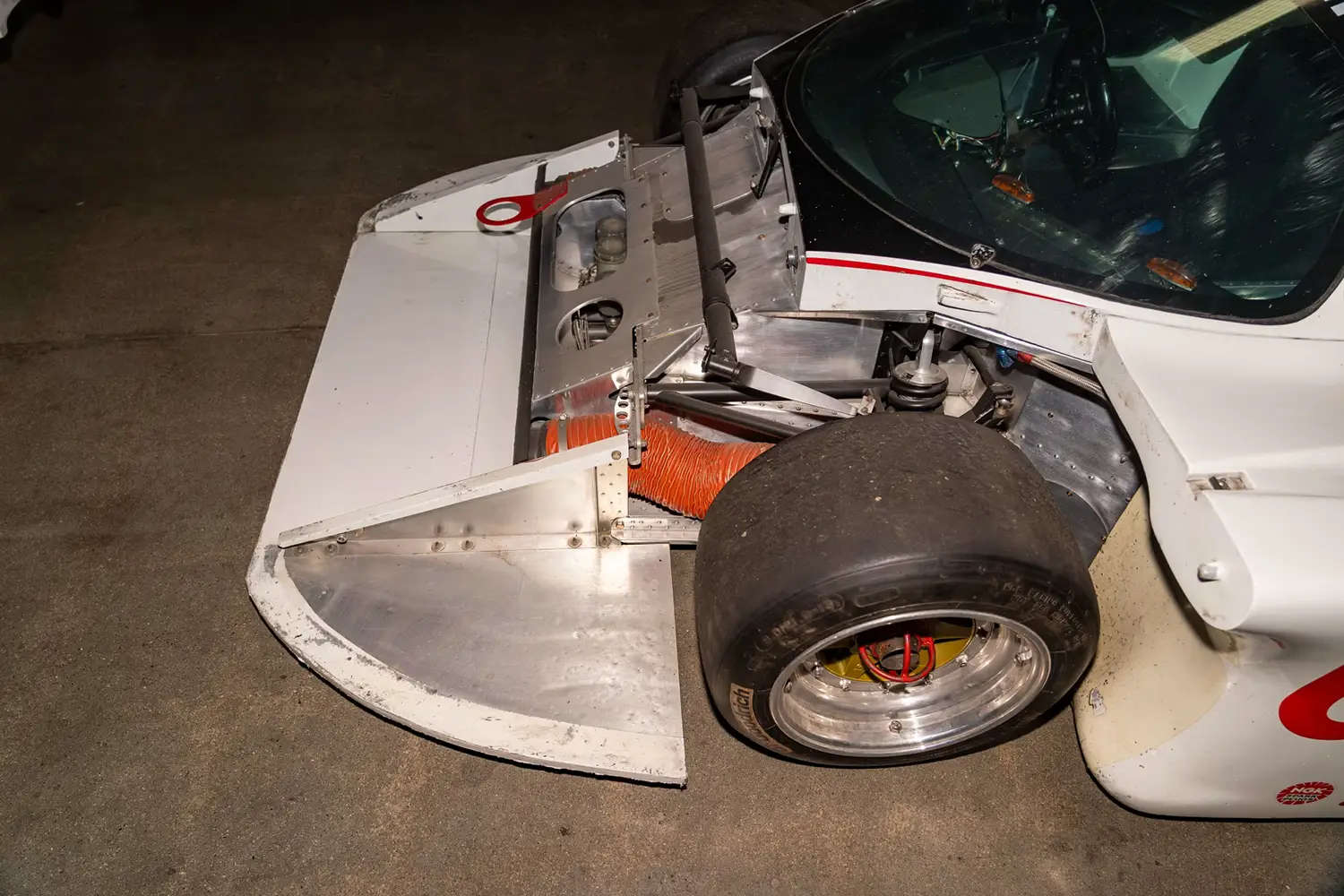
The visual character of the 1984 Lola T616 Mazda is defined by its low-drag, sleek prototype silhouette. It features an aluminum honeycomb monocoque chassis that was revolutionary for its weight and rigidity during the mid-eighties. Dressed in the unmistakable white and black livery of BFGoodrich with red and blue stripes, the car retains its number 68 race markings. Every curve of the bodywork was designed in England to slice through the air at the Mulsanne Straight. A comprehensive cosmetic restoration by Canepa in 2016 returned the exterior to its period-correct glory. The wide fenders and integrated rear wing emphasize its purpose as a high-speed endurance tool, designed to slice through the air at 200 mph.
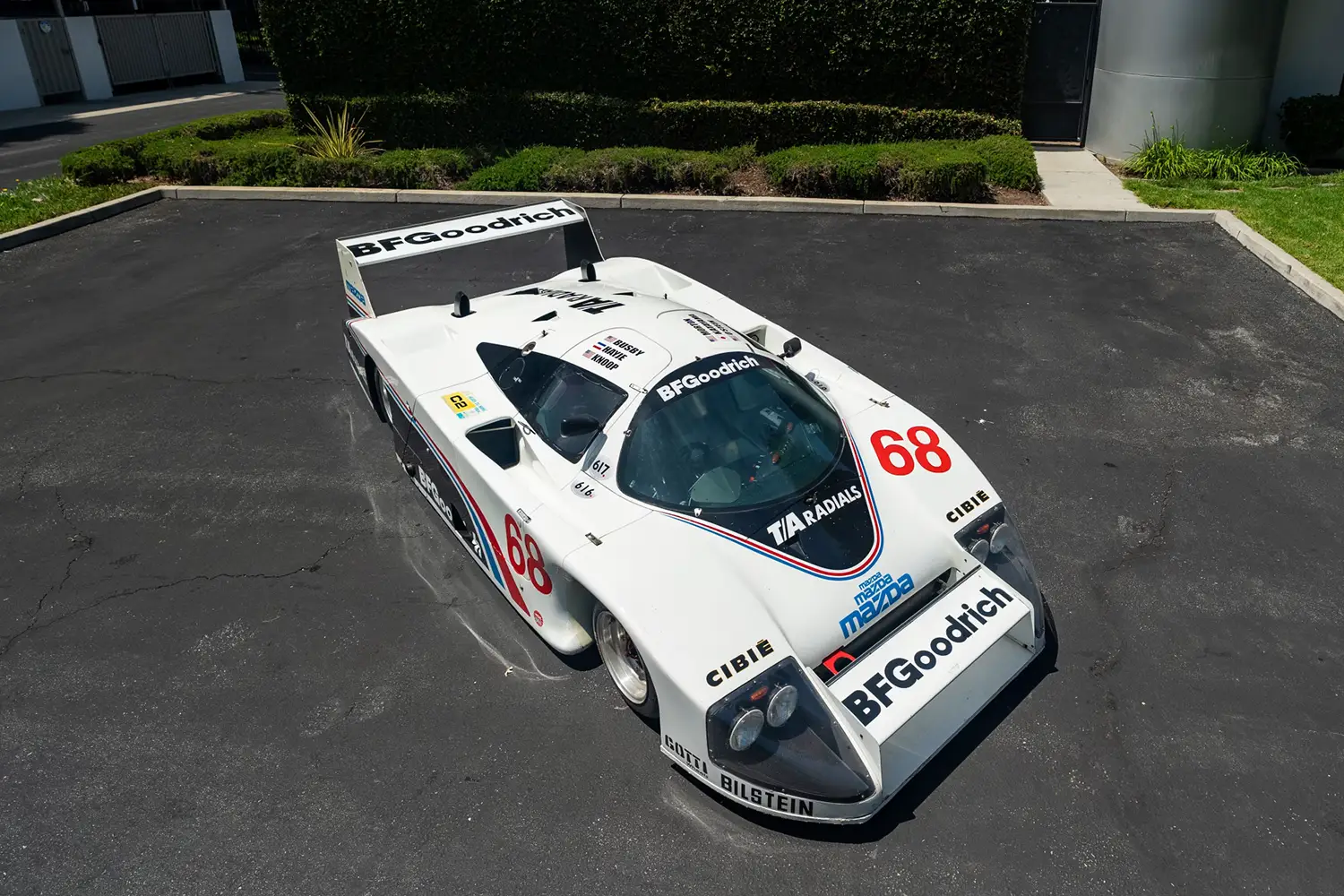
Purposeful Racing Cockpit and Period Instrumentation
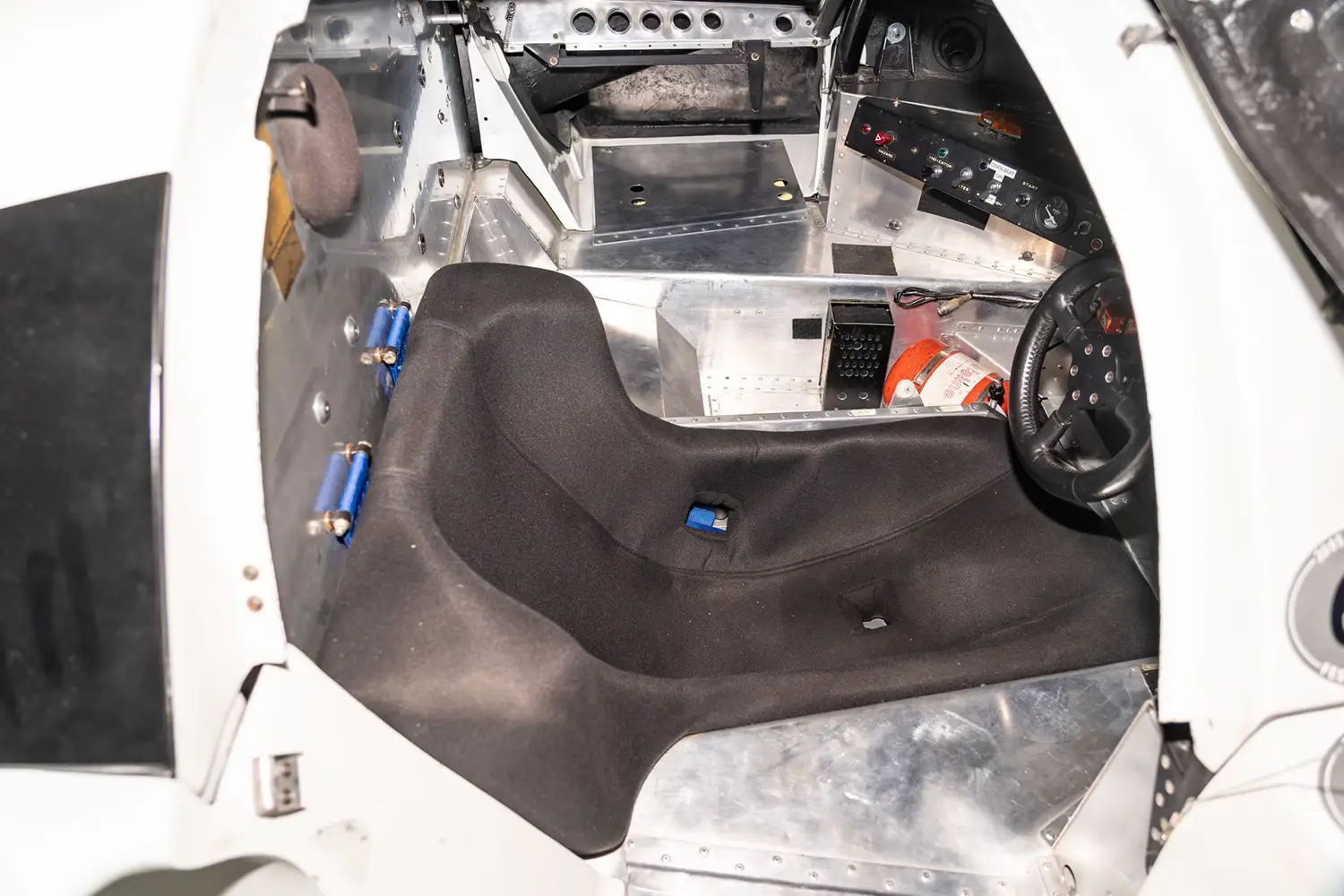
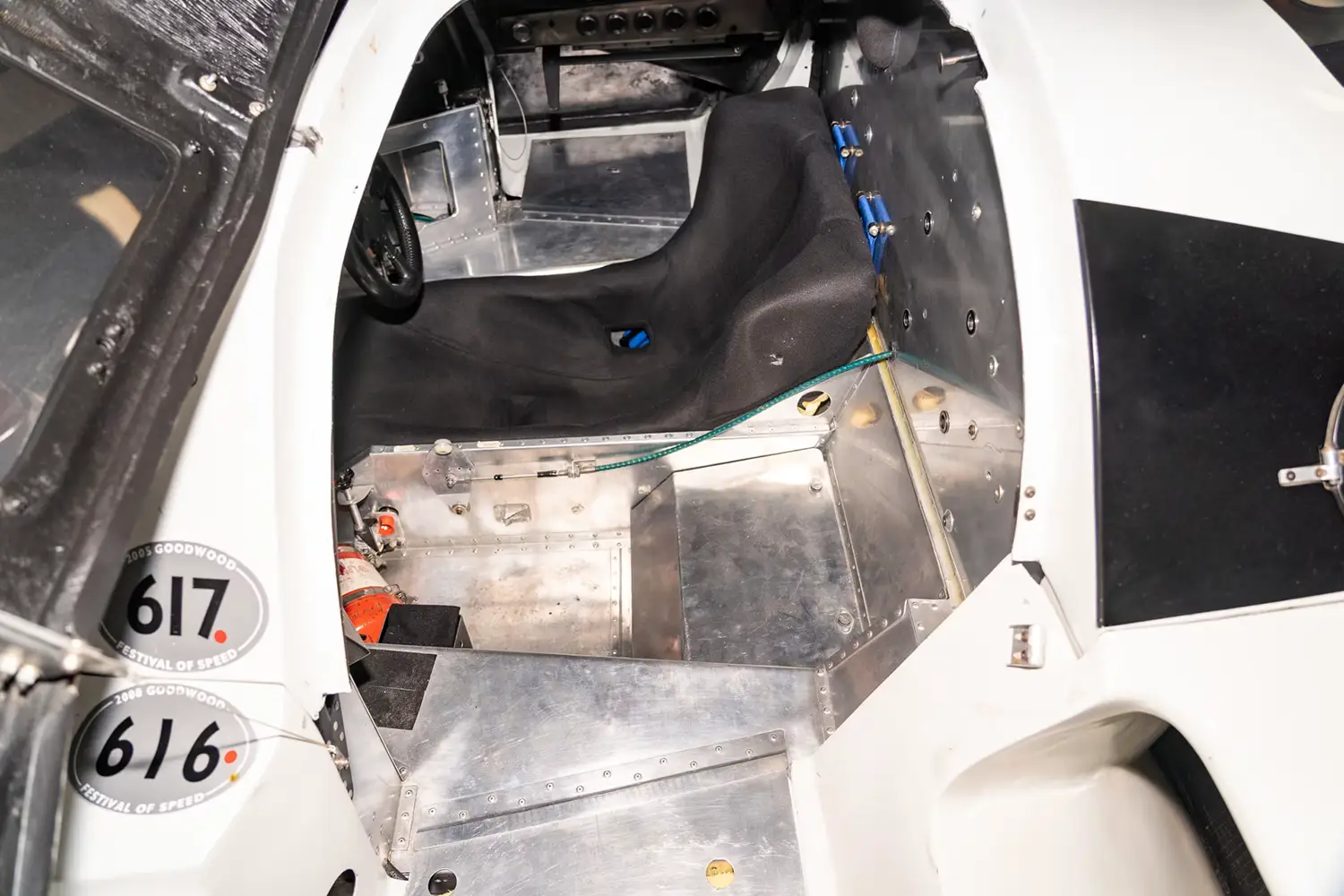
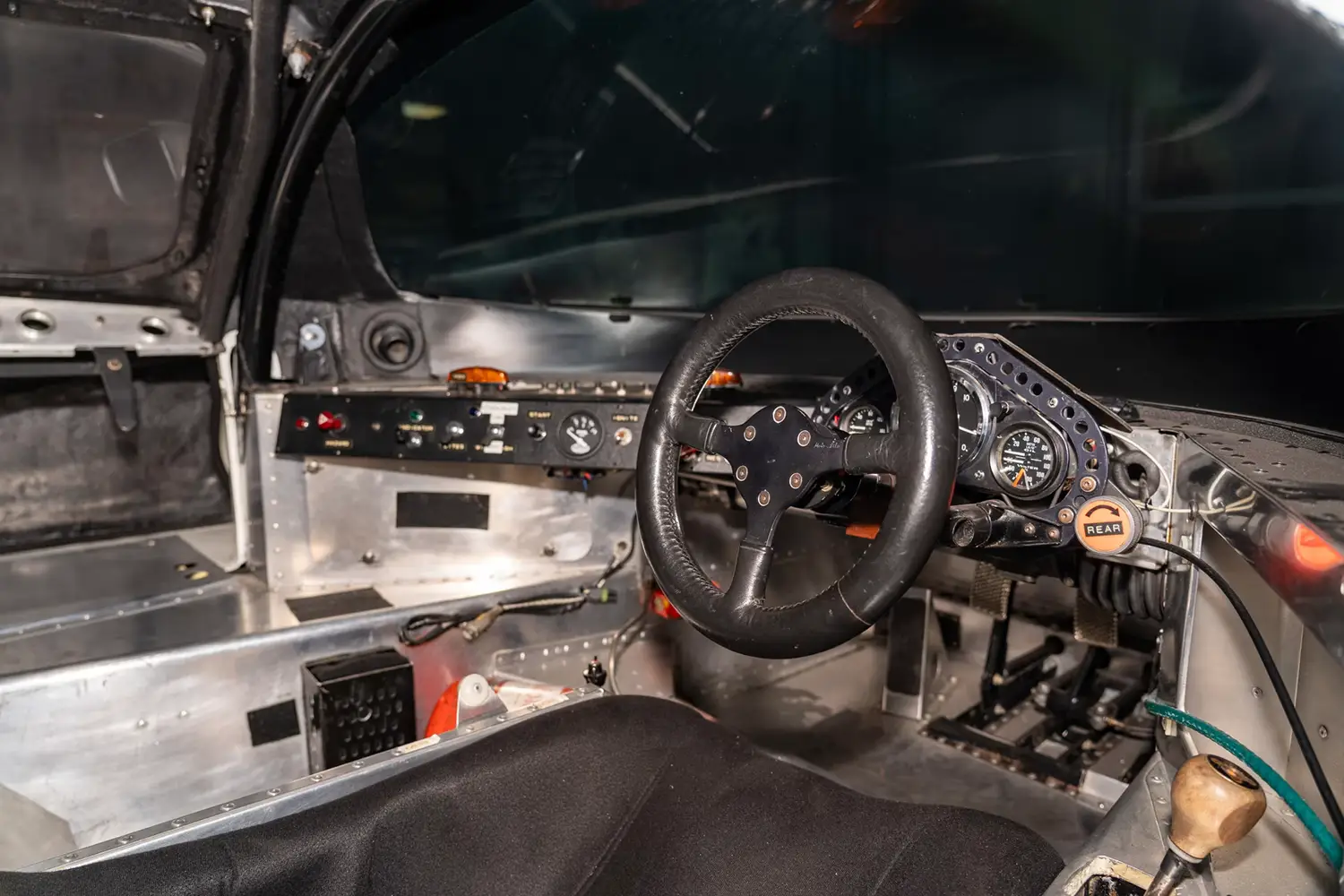
Inside the 1984 Lola T616 Mazda, the environment is strictly utilitarian, reflecting the focused nature of a professional Group C2 prototype. The black interior is dominated by the structural aluminum of the tub and a cockpit designed for rapid driver changes. It houses essential analog gauges and a fire suppression system that was fully restored in 2009 by Virtuoso Performance. The seating position is reclined and centered to maximize the driver’s connection to the chassis under high lateral loads. Recent attention in 2025 included a complete rebuild of the fuel cell with a new liner, ensuring the car remains functional for historic competition. It is a workspace where legends once spent grueling hours at triple-digit speeds.
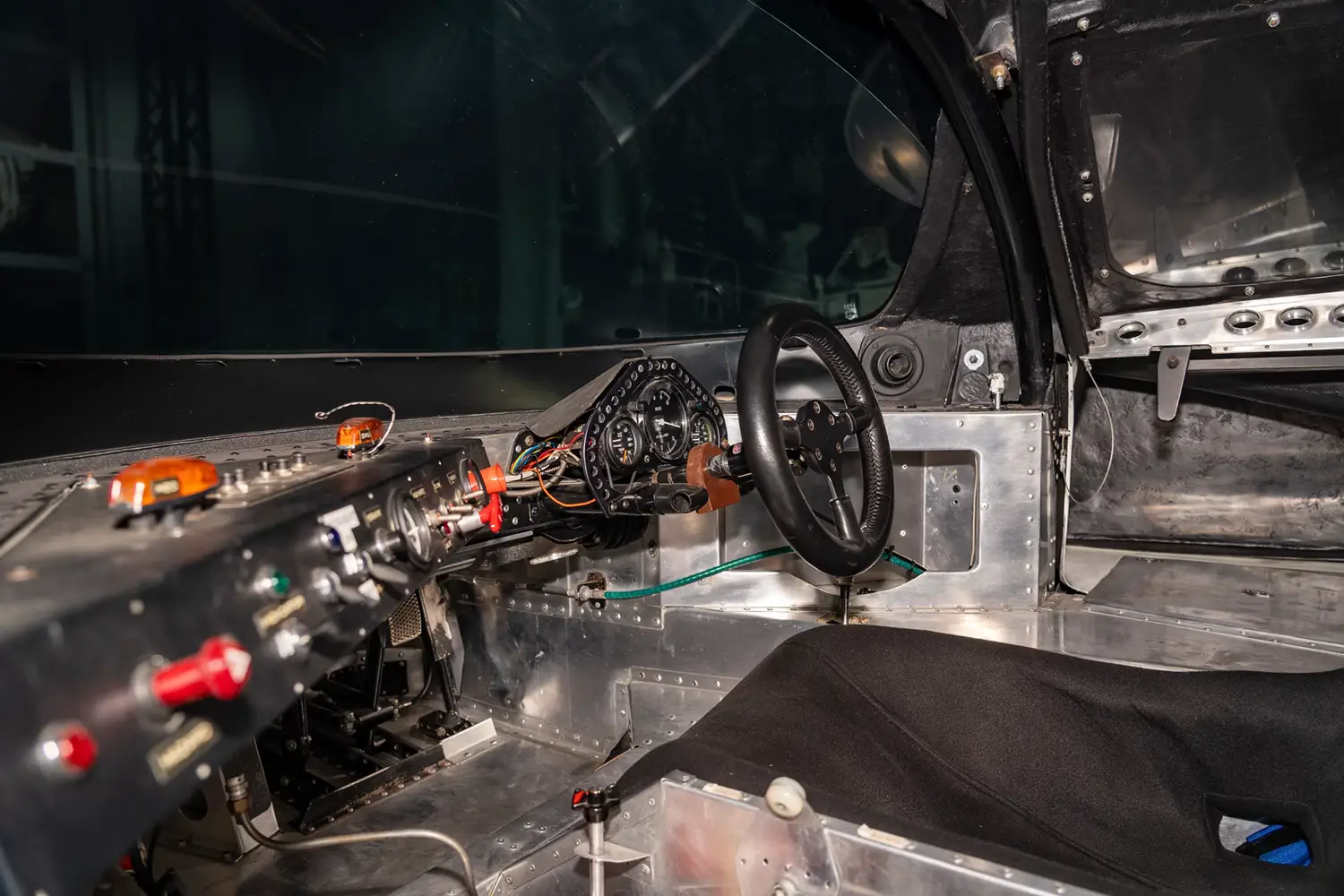
The High-Revving Symphony of the 13B Rotary
The driving experience of the 1984 Lola T616 Mazda is defined by the high-revving, ear-splitting shriek of its 1.3L Mazda 13B rotary engine. Widely regarded as one of the most evocative engine notes in racing history, this 2-rotor unit produces 300 hp / 304 PS and 182 lb-ft / 247 Nm at a staggering 8,500 rpm. Power is managed through a Hewland five-speed manual transaxle, which requires the driver to maintain high revs to stay within the peak power band. This rotary heartbeat delivered incredible reliability during its 24-hour debut, providing a linear and relentless surge of speed. The sound of this 13B at full tilt is an auditory masterpiece, echoing the same rotary soul that would later define the overall Le Mans-winning 787B.
| Technical Specification | Historical Data |
|---|---|
| Engine | 1.3L Mazda 13B 2-Rotor |
| Transmission | Hewland 5-Speed Manual |
| Maximum Output | 300 hp / 304 PS @ 8,500 RPM |
| Top Speed | 200 mph (Factory Benchmark) |
| Weight | Estimated 1,543 lbs / 700 kg |
| Chassis Number | HU-2 |
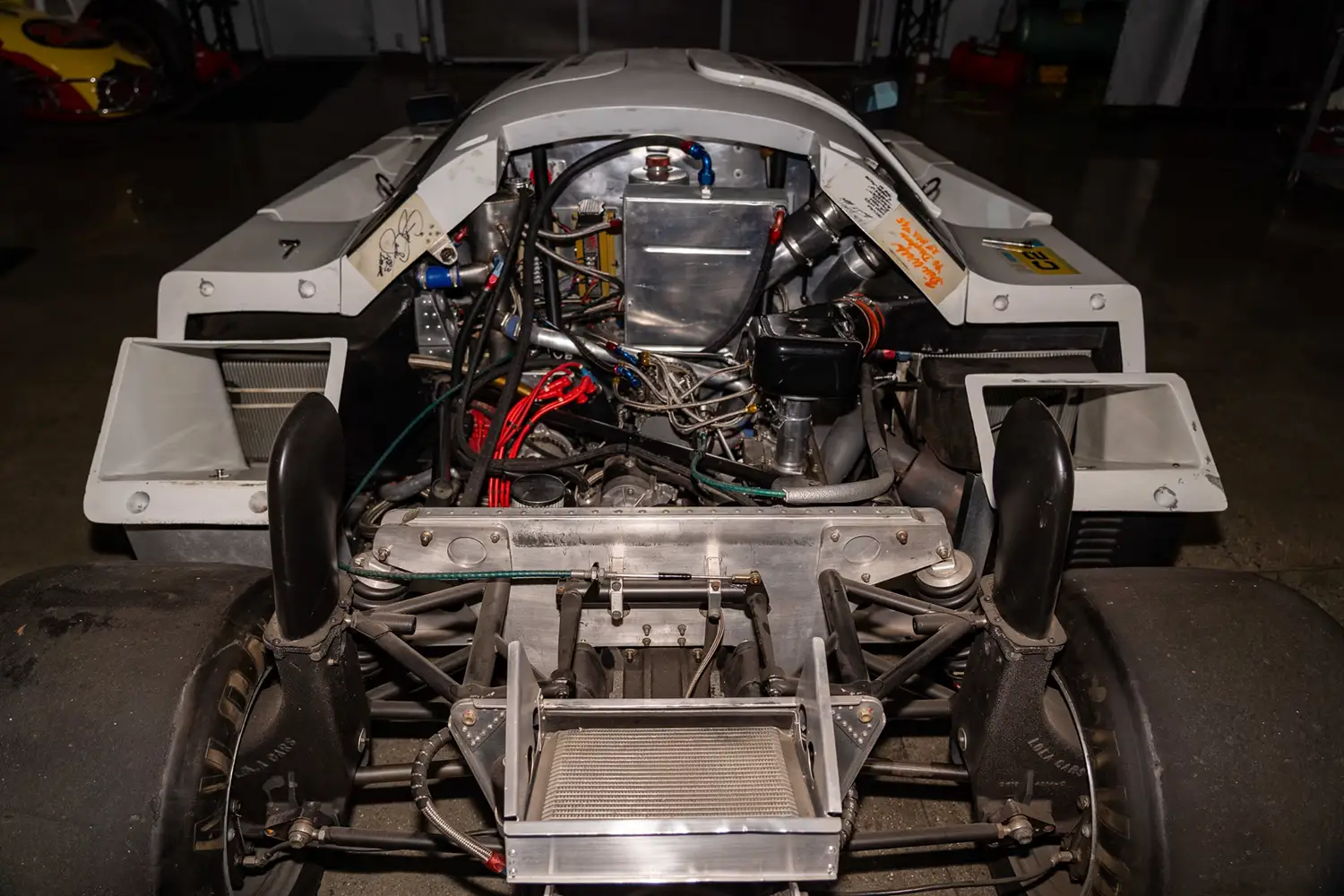
Historical Context and Global Racing Rivalry
In the mid-eighties, the 1984 Lola T616 Mazda was a giant killer, competing against established European marques in the Group C2 class. This car’s victory at Le Mans paved the technical road for Mazda’s overall win with the 787B in 1991. Chassis HU-2 carries significant market value as one of the few surviving prototypes with a verified Le Mans class win and a clear lineage through Jim Busby Racing. Compared to contemporary Porsche or Alba prototypes, the T616’s rotary engine makes it a standout for collectors who value unique mechanical heritage. Its inclusion in the Monterey 2026 auction highlights its status as an investment-grade racing icon, following appearances at prestigious events like the Goodwood Festival of Speed.
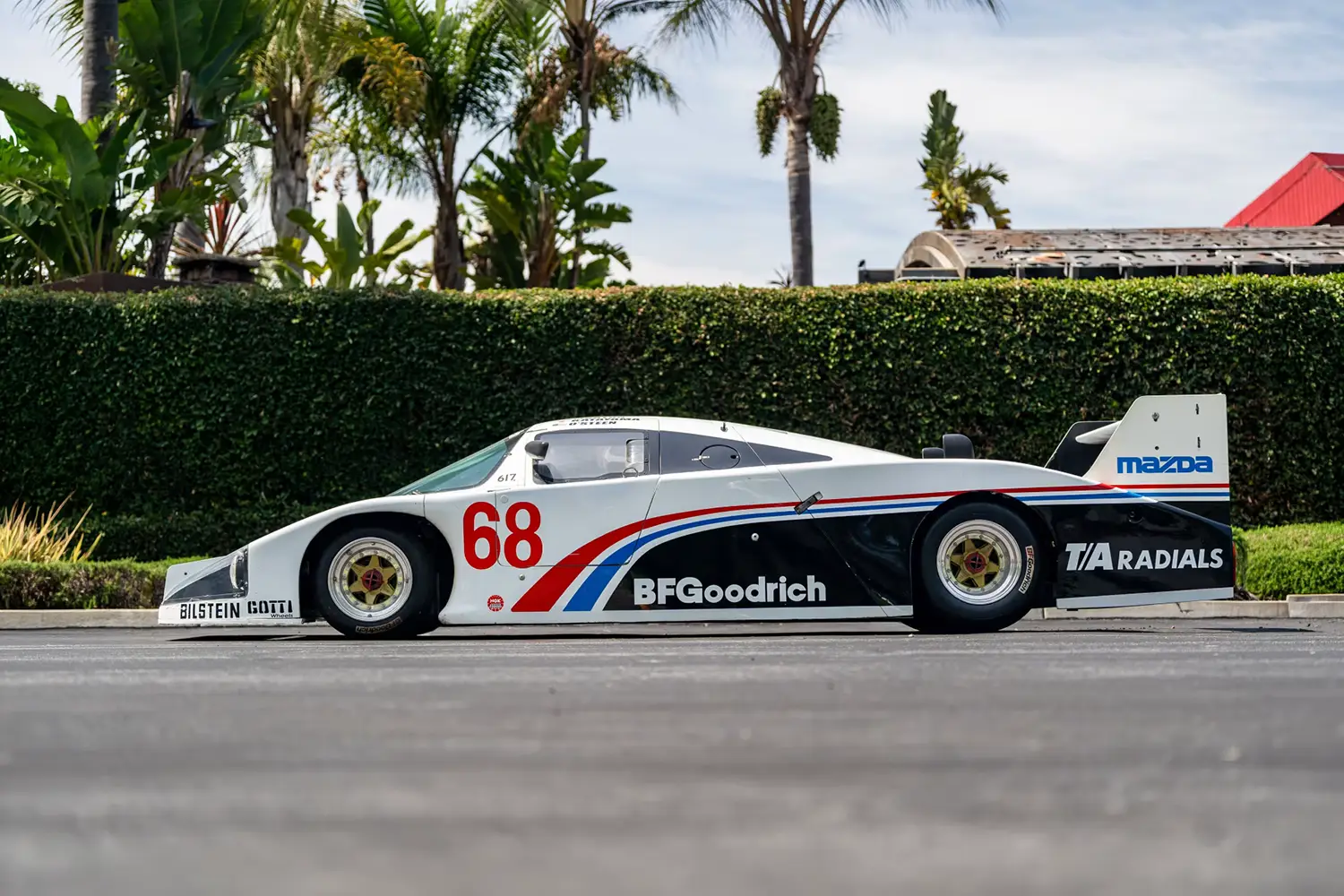
Restoration Excellence and Provenance Continuity
Owning the 1984 Lola T616 Mazda offers a direct connection to a period of radical innovation in motorsport technology. Chassis HU-2 benefited from a full frame-off, tub-up restoration in 2003 under the supervision of Jim Busby himself, followed by world-class cosmetic work by Canepa. This fastidious maintenance record ensures the car is ready for continued participation in historic racing circuits like HMSA and Laguna Seca. For the serious collector, the provenance is airtight, having been owned and maintained by key figures in its original racing campaign. This prototype represents a rare opportunity to acquire a piece of Japanese automotive history that was built in England and perfected on the world’s most famous race tracks.
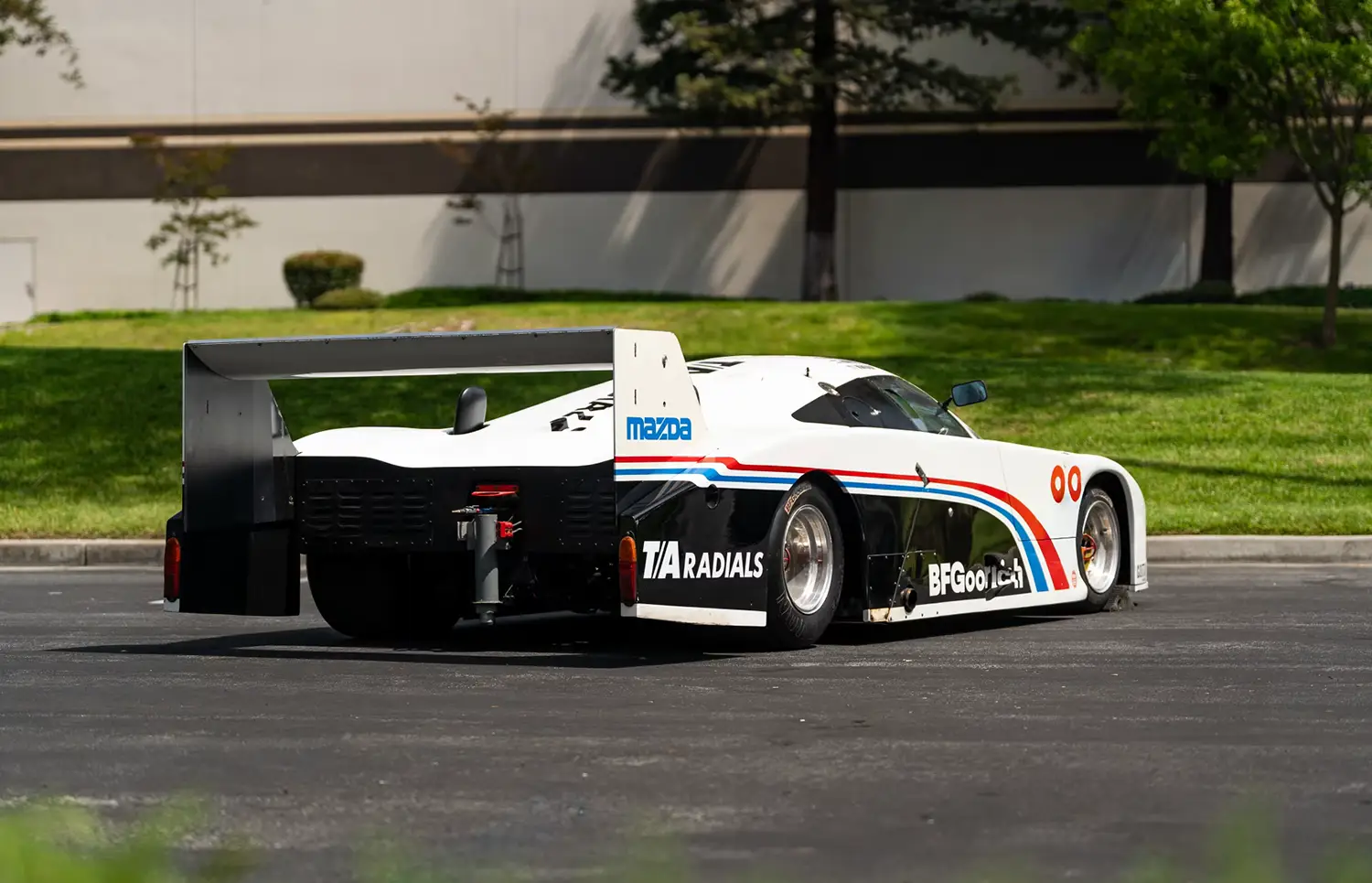
A Definitive Masterpiece of the Rotary Racing Era
Ultimately, the 1984 Lola T616 Mazda is more than just a successful racing car; it is a symbol of engineering defiance. It proved that the rotary engine could endure 24 hours of sustained abuse while outperforming the world’s best piston engines. From its high-tech aluminum monocoque to its history-making class win at Le Mans, every aspect of chassis HU-2 reflects a peak moment in the partnership between Lola and Mazda. Whether viewed as a technical marvel, a historic winner, or an auditory masterpiece, this car continues to captivate the imagination of enthusiasts globally. As it crosses the block at Monterey 2026, it carries with it the legacy of a team that dared to race differently and won, forever etching the rotary shriek into the annals of Le Mans glory.
Disclaimer: Content on this site is for informational and entertainment purposes only. Details, analyses, and opinions reflect current trends and personal views, not professional or financial advice. Always verify information with official sources before making any decisions.
Source: mecum.com