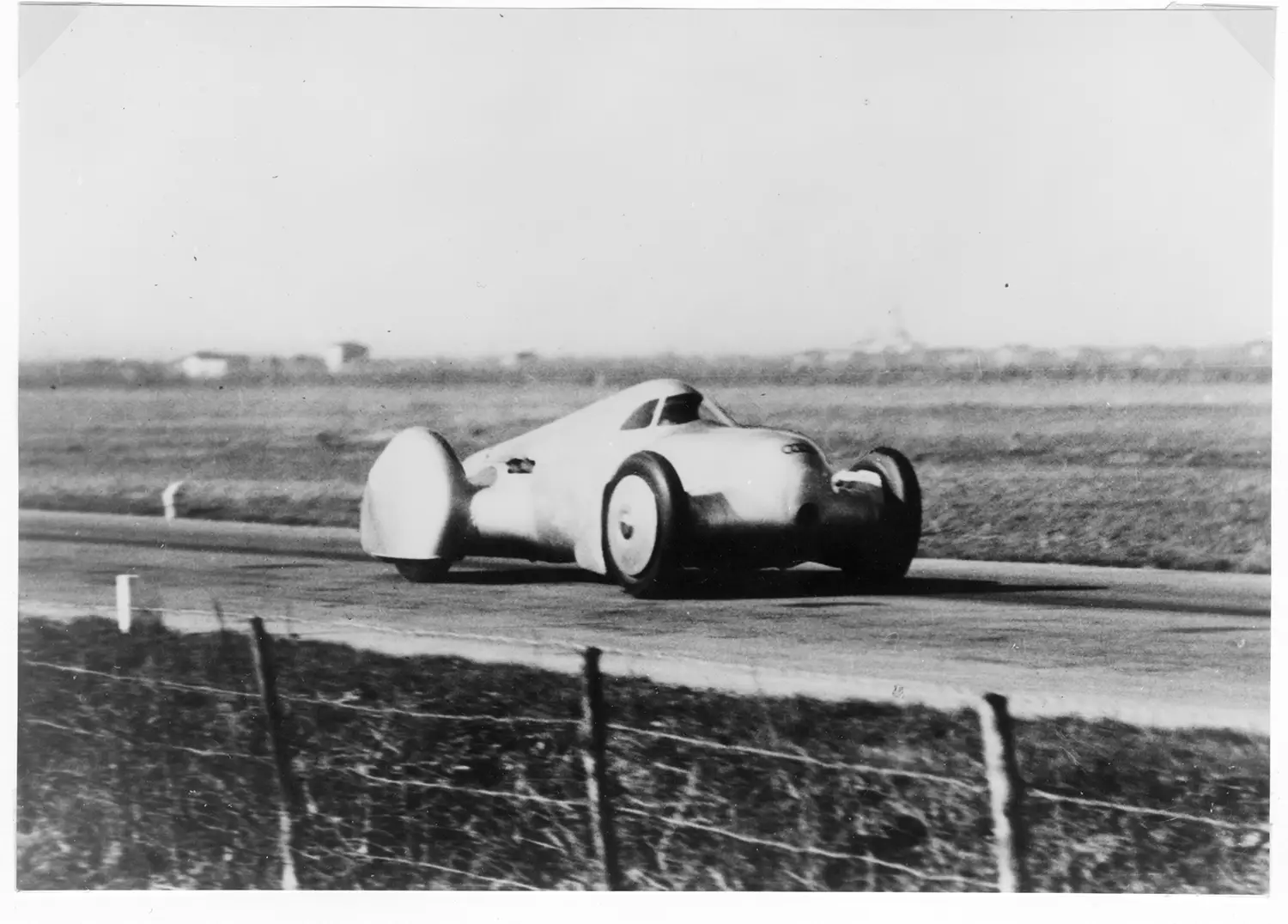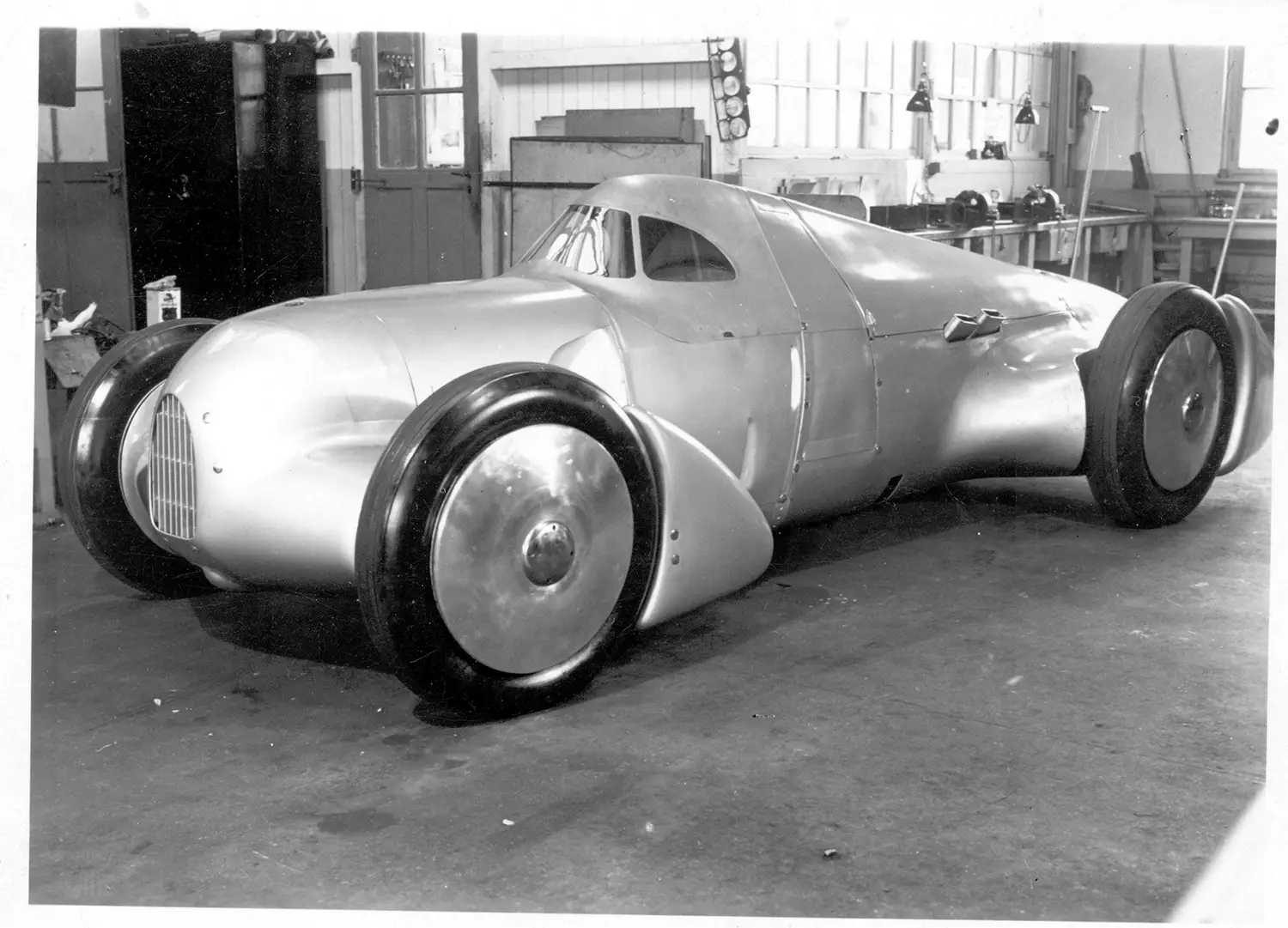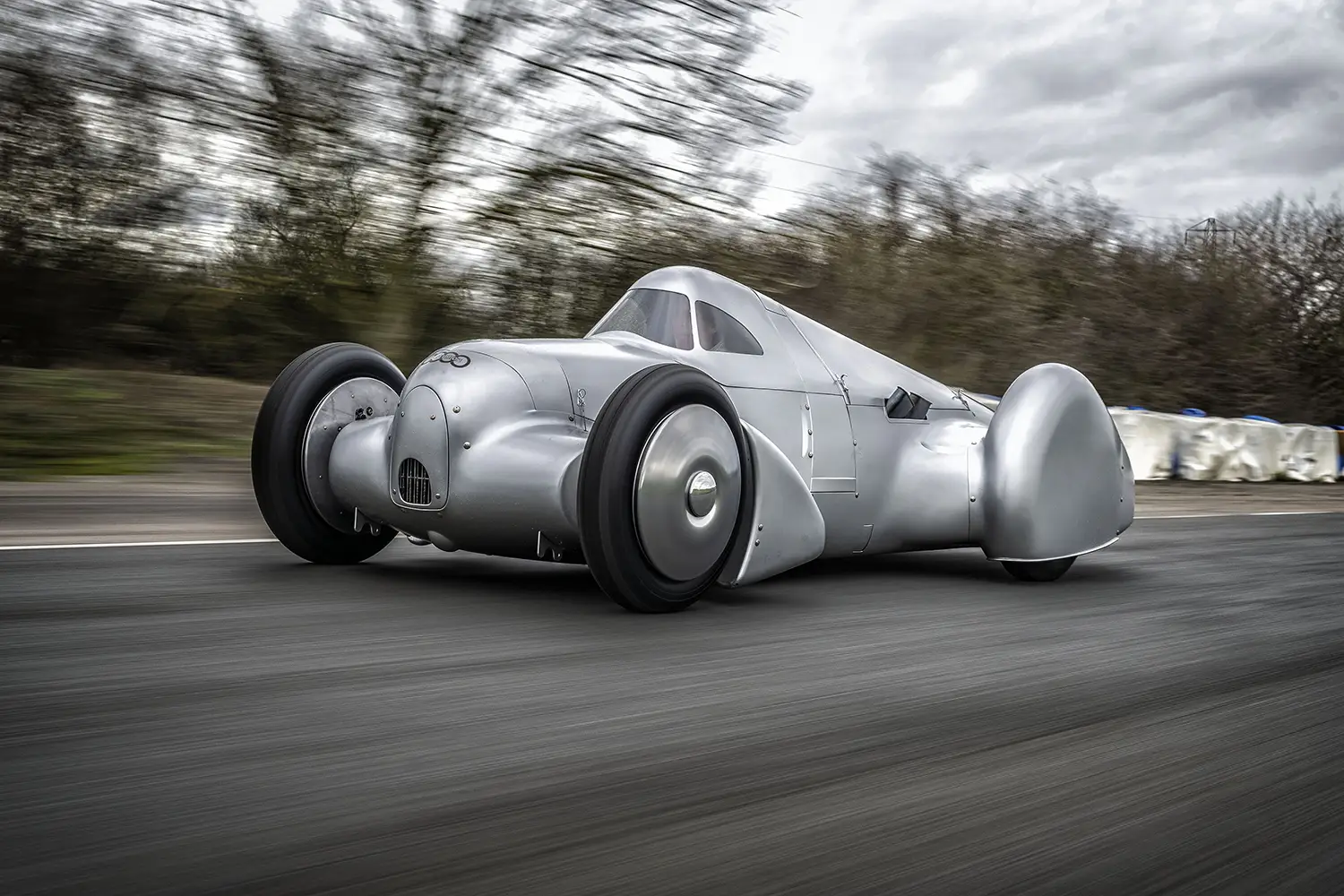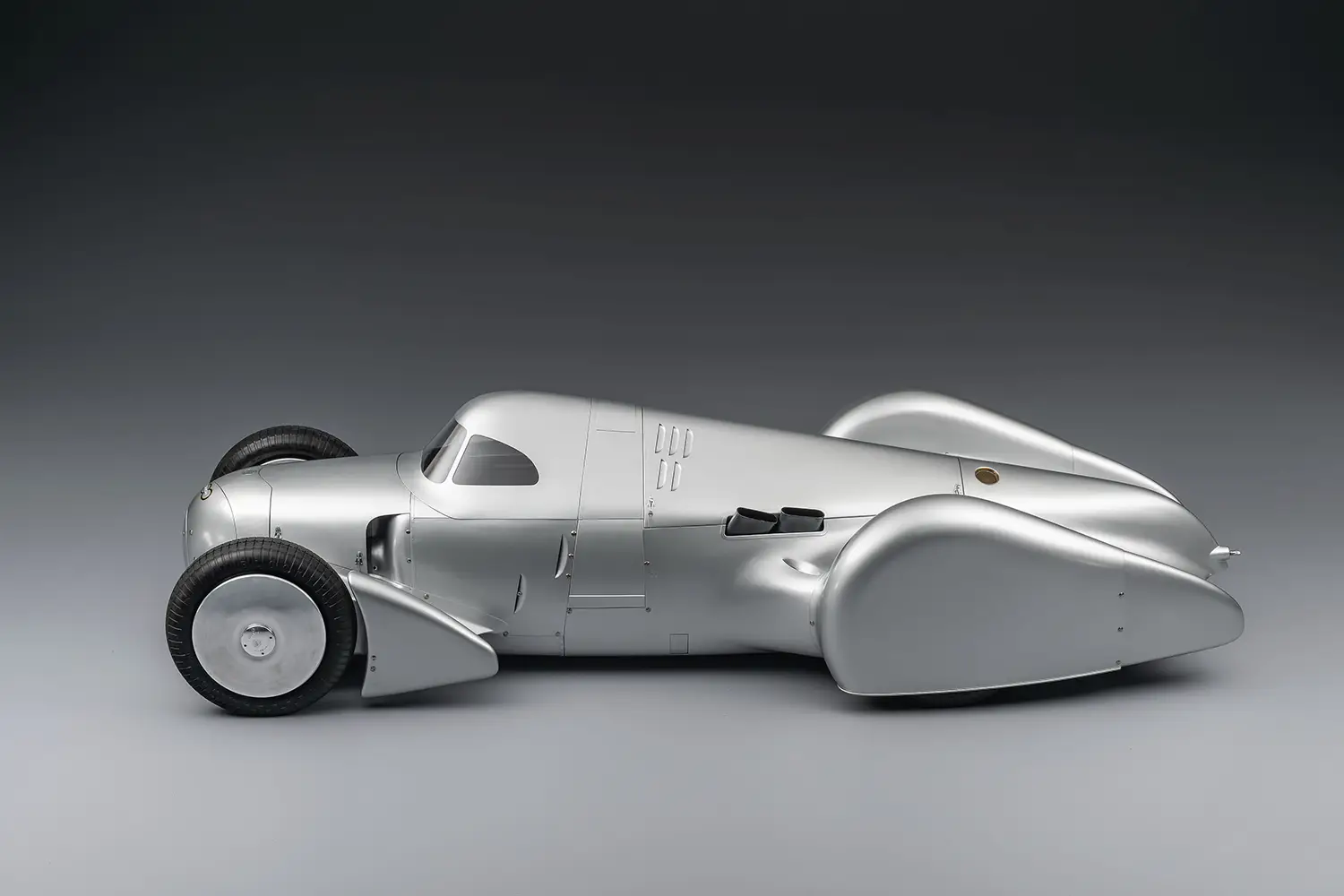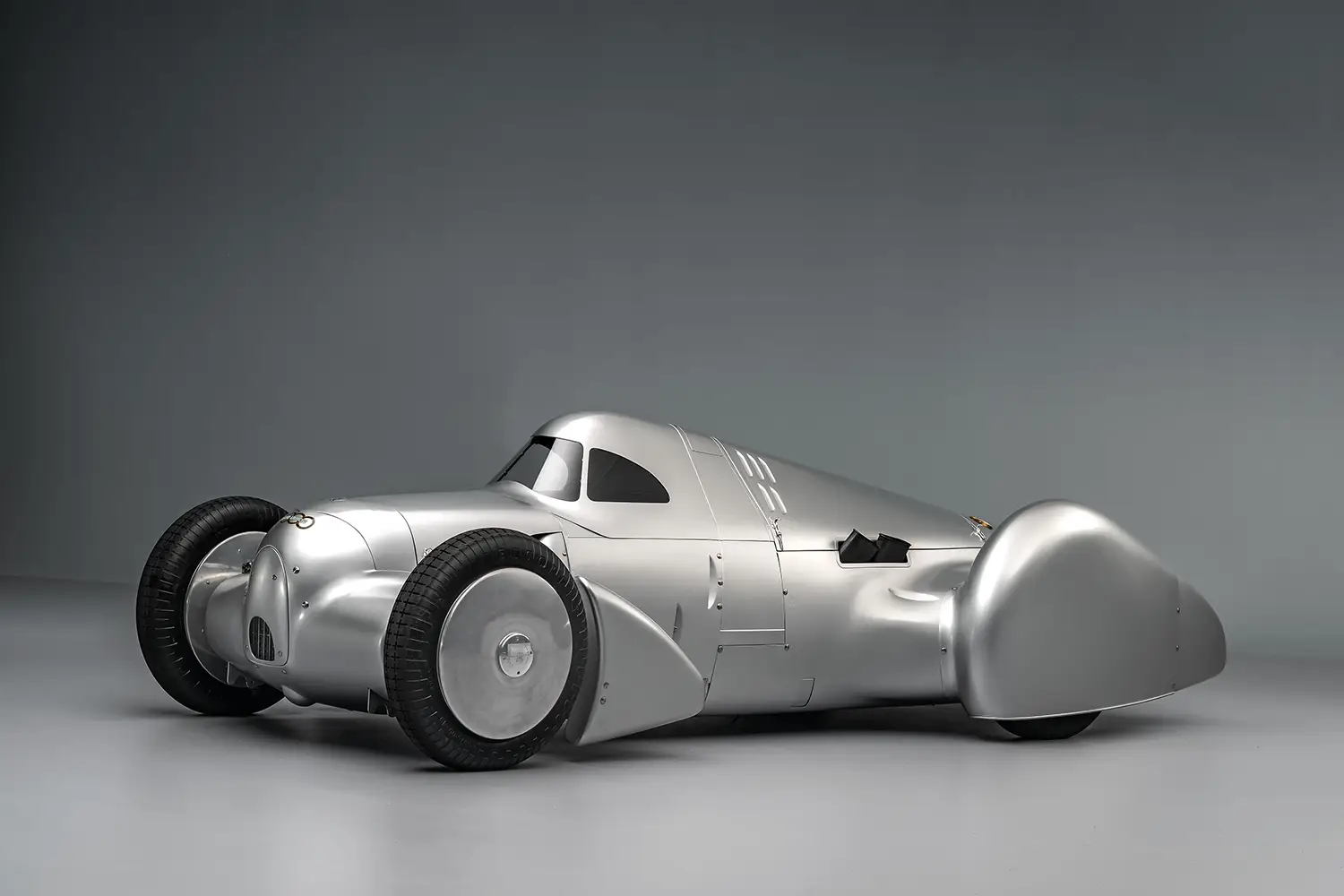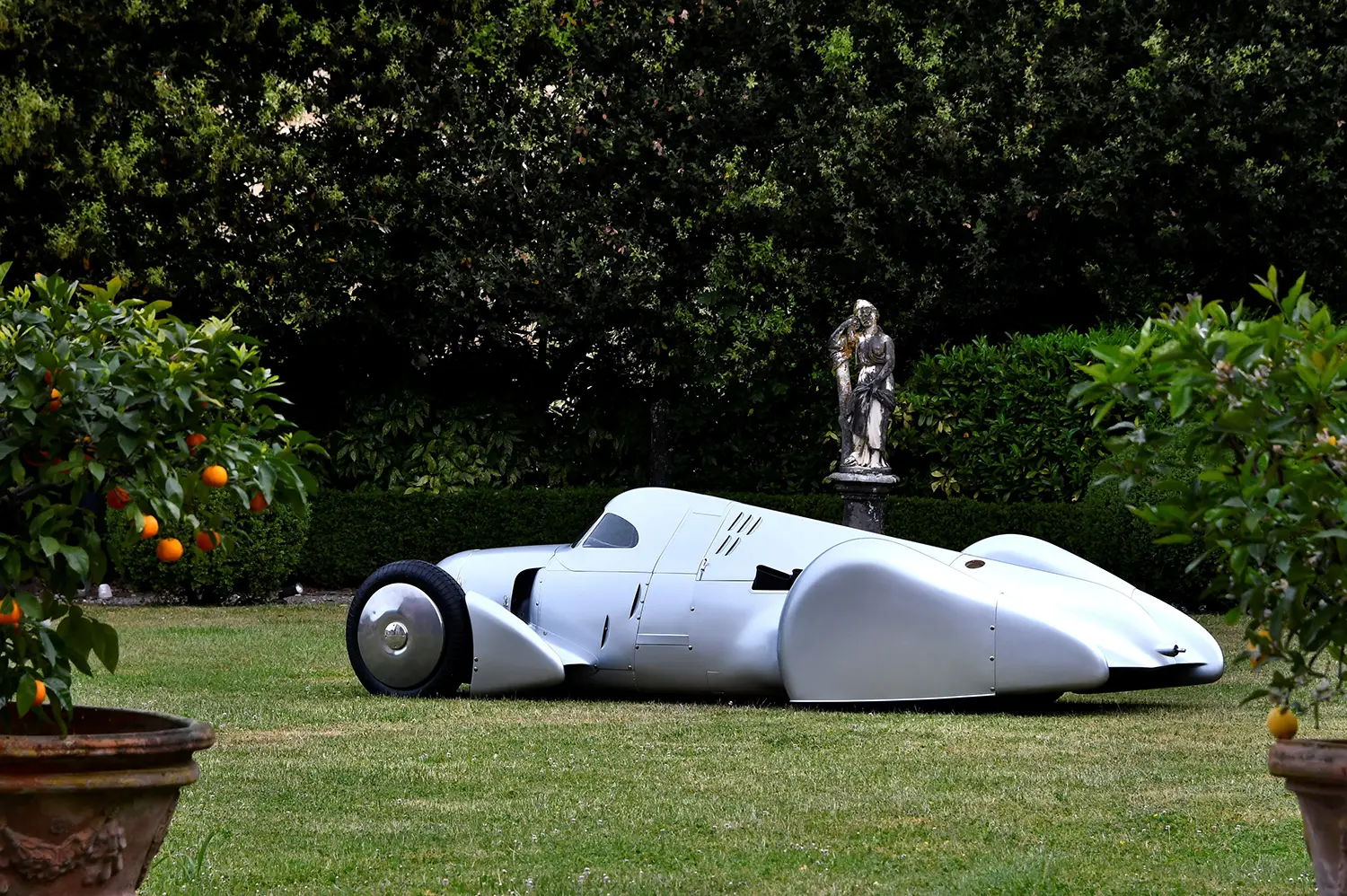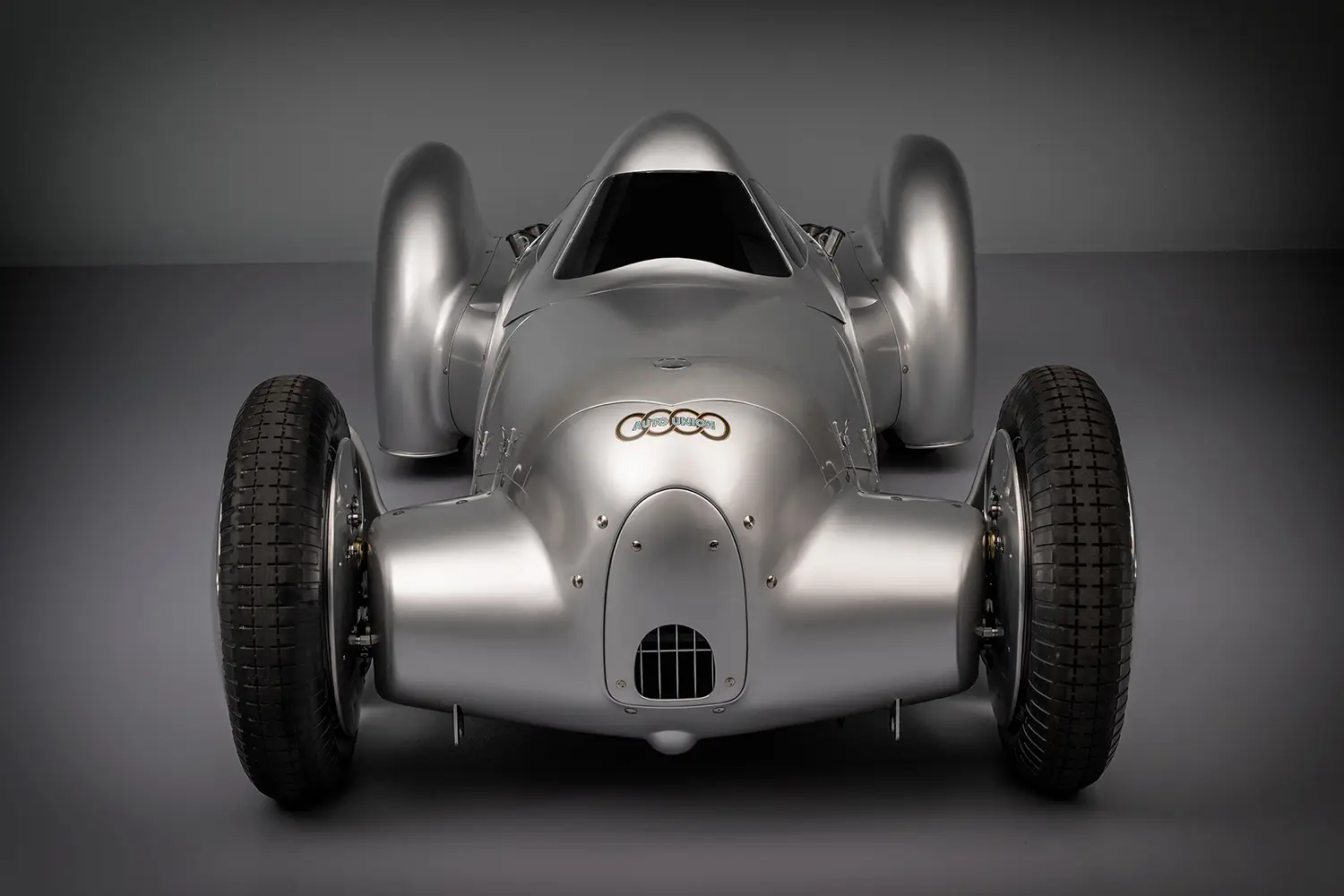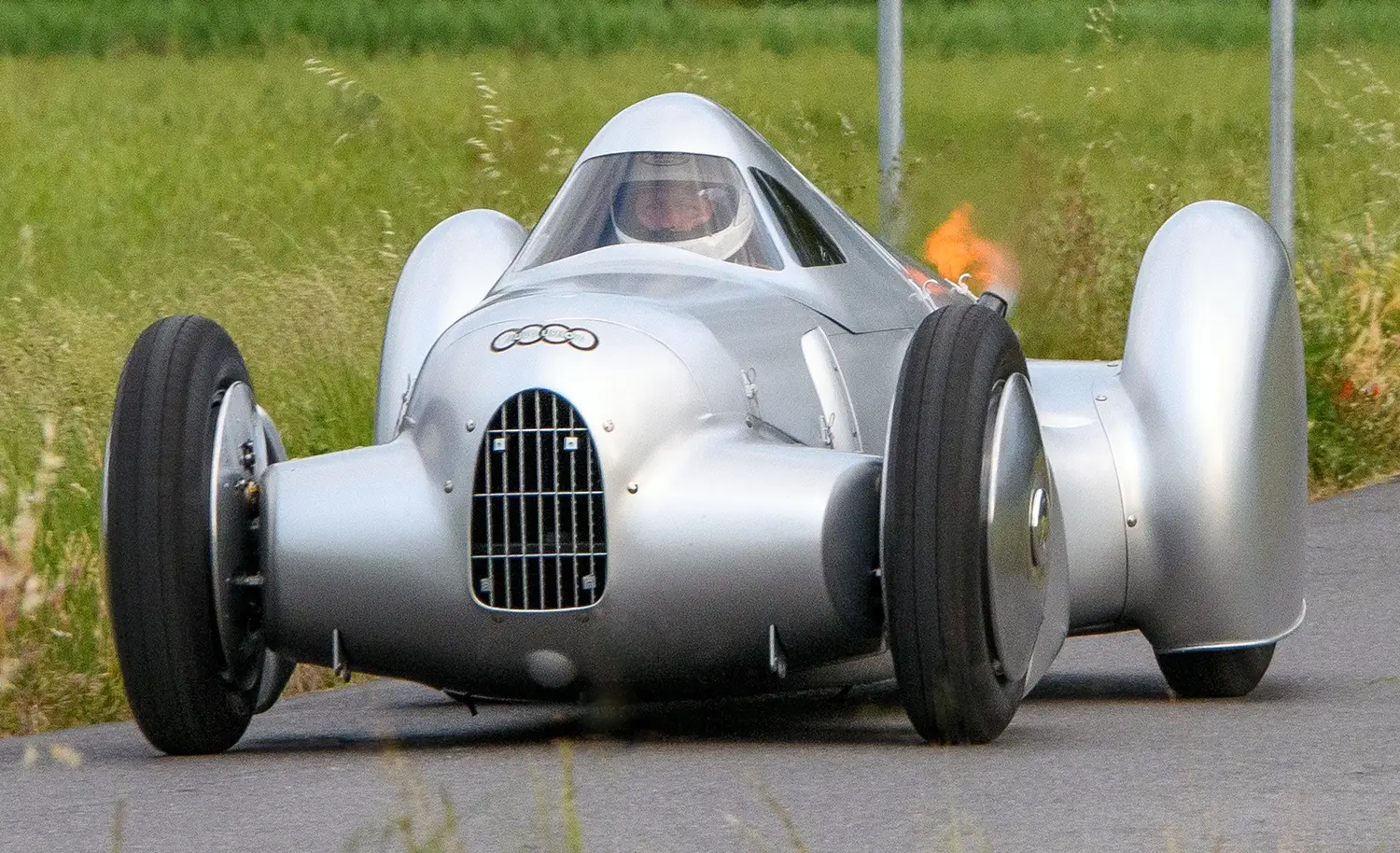
The Auto Union Lucca stands as a definitive monument to the technical ambition of the four rings, representing a period when speed was the ultimate measure of engineering prestige. Originally setting a staggering top speed of 326.975 km/h in 1935, this “Rennlimousine” has been painstakingly recreated by Audi Tradition for a new era. This 2026 reconstruction honors the original car’s record-breaking run near the Italian city of Lucca, where Hans Stuck pushed the boundaries of early aerodynamics. Now joining the historic Silver Arrow family, the vehicle serves as a functional testament to the innovation that defined European racing before the mid-century shift.
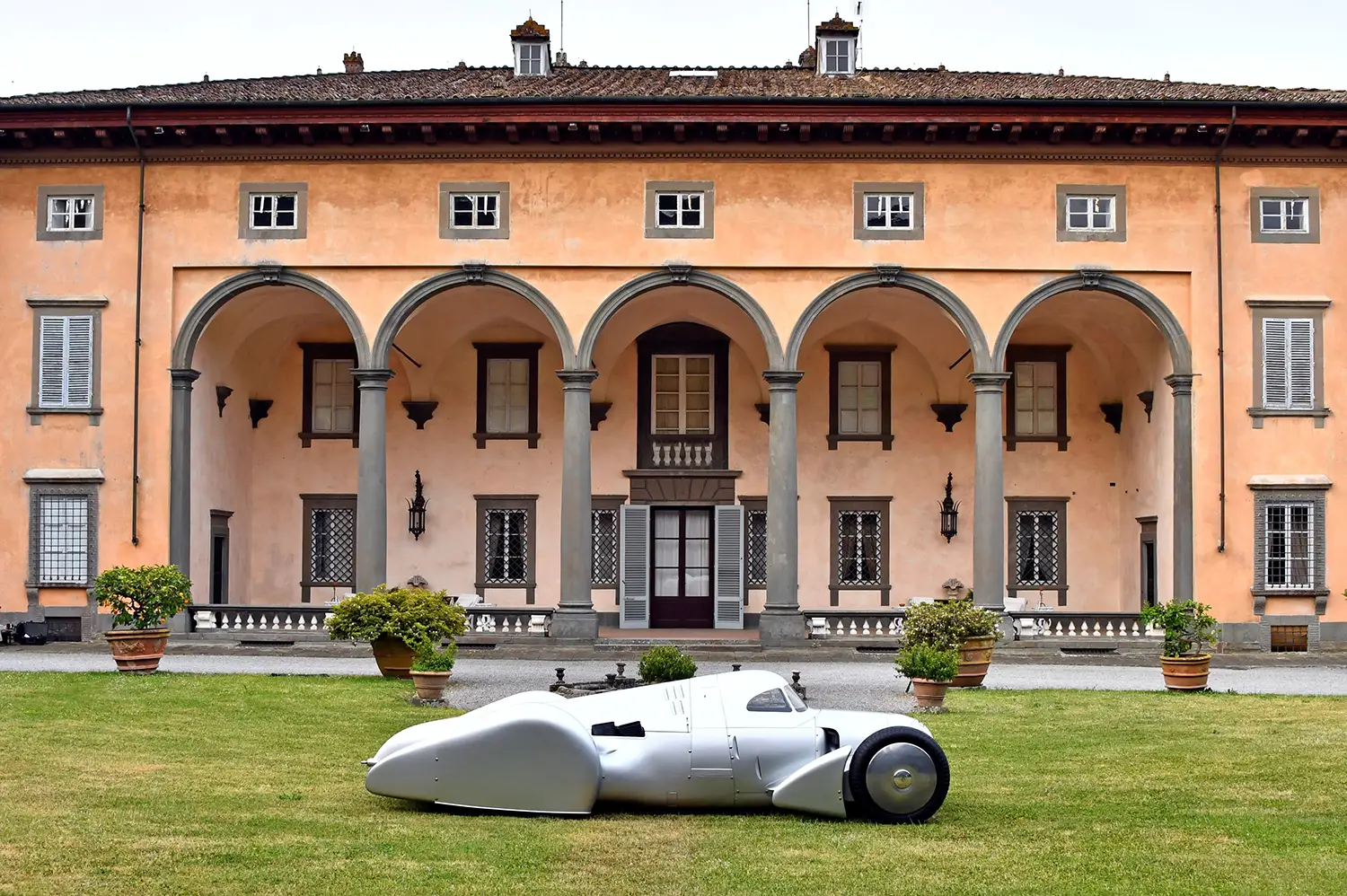
Sculpted Aerodynamics and Cellulose Silver Elegance
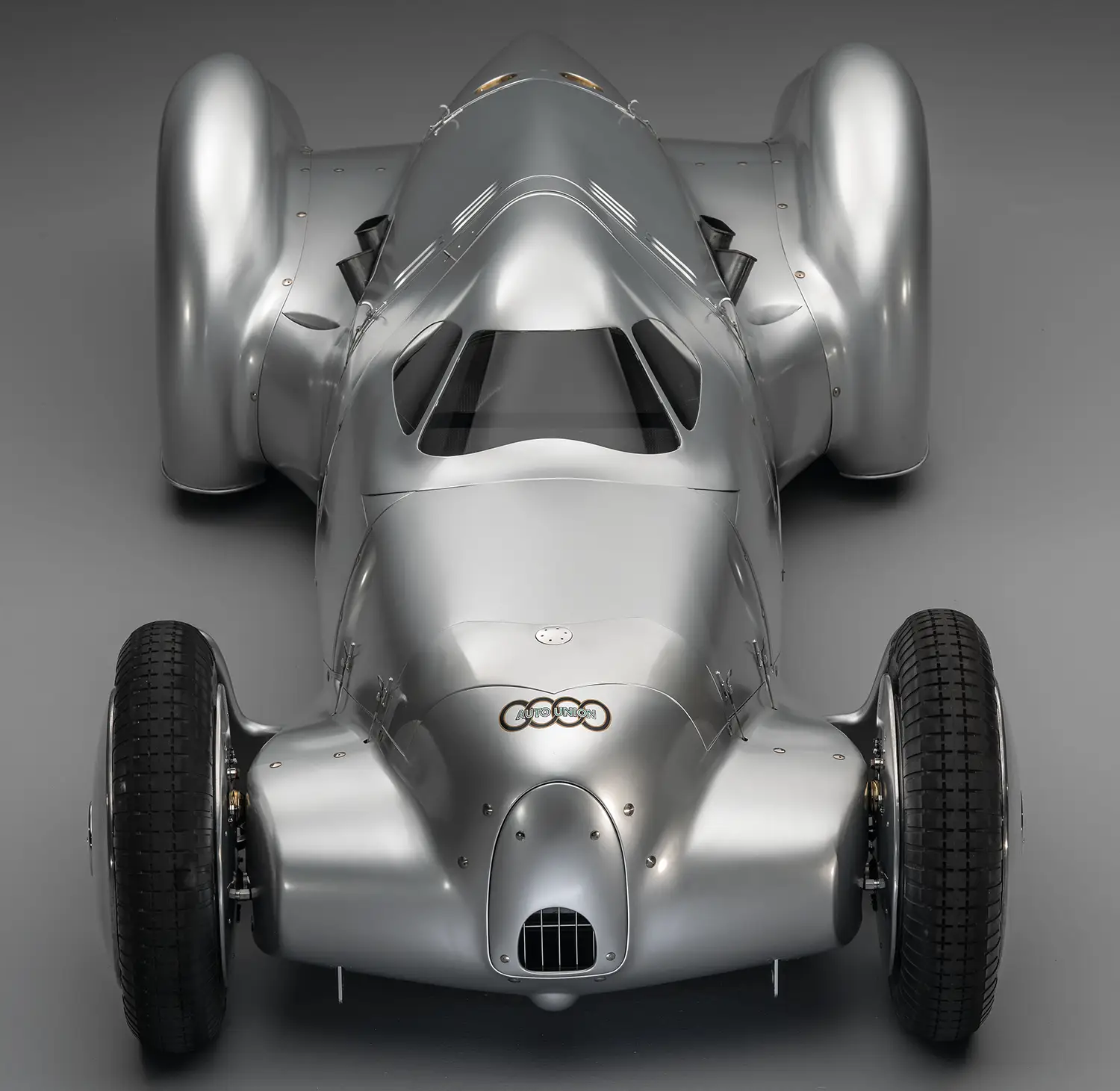
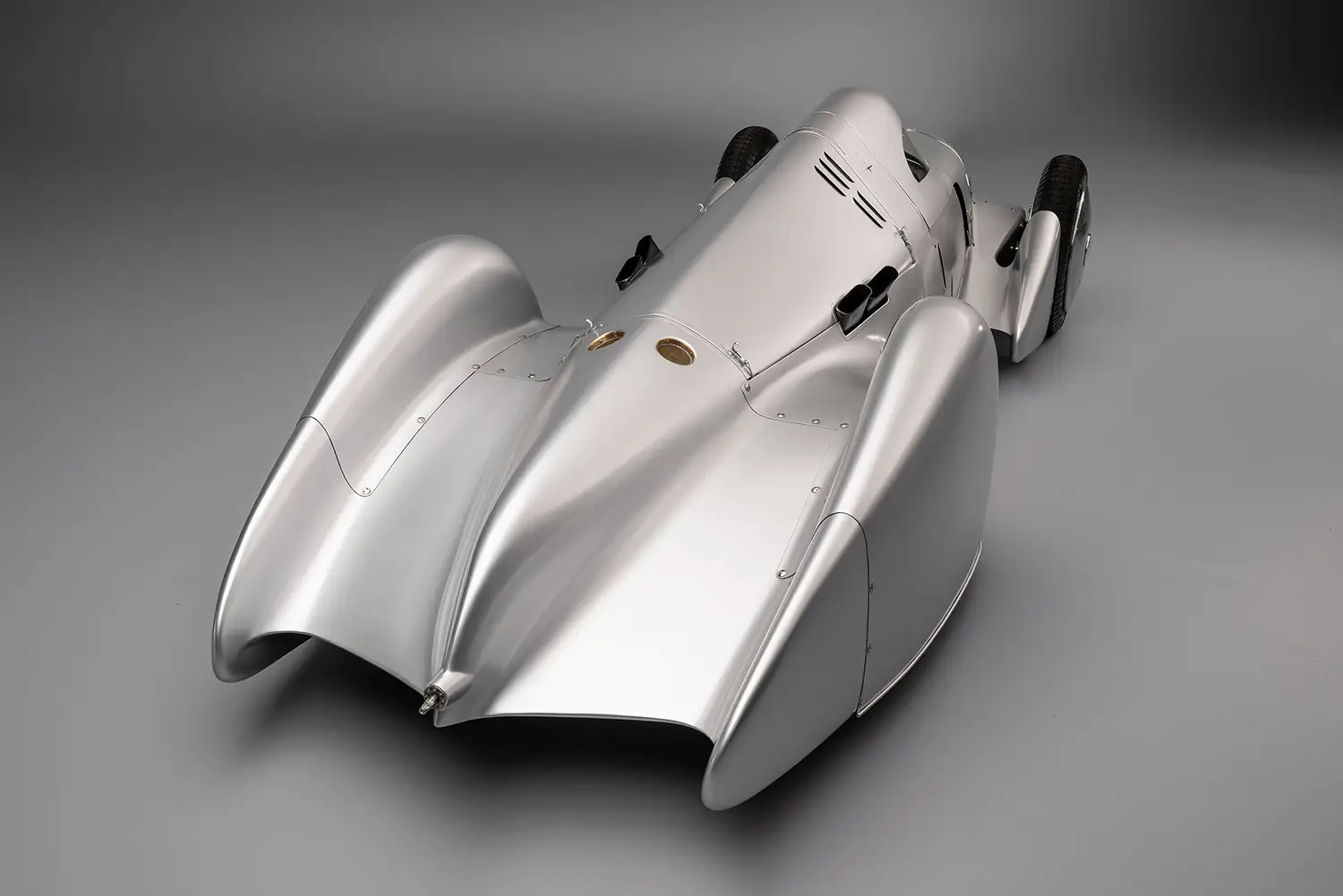
The exterior of the Auto Union Lucca is a masterclass in pre-war aerodynamic theory, featuring an elongated silhouette and a distinctive fin-like rear end. Handcrafted by restoration specialists Crosthwaite & Gardiner, the bodywork is finished in a period-correct cellulose silver that highlights its teardrop-shaped wheel arches. Unlike its open-cockpit Grand Prix counterparts, this racing sedan utilizes a closed cockpit canopy to achieve a measured drag coefficient of 0.43. Technical details like the spoked wheels with integrated covers and grouped exhaust outlets pointing upward underscore a design where every curve was calculated for maximum velocity. Its aesthetic of speed remains one of a kind, blending functional air intakes with a finely sanded, clear-lacquered finish.
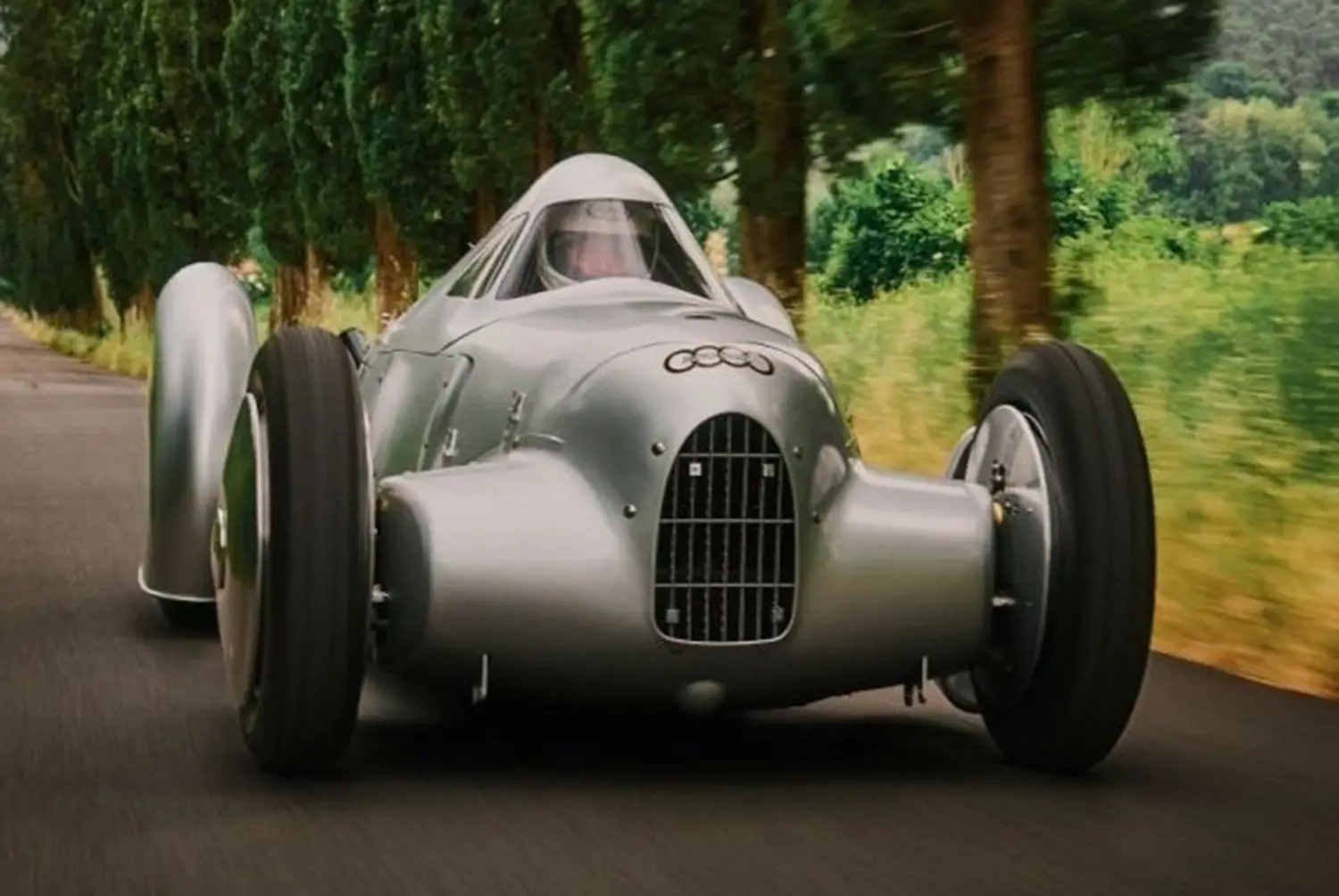
Purpose-Built Cockpit for Record-Breaking Precision
Inside the cabin, the environment is strictly focused on the high-stakes world of land speed records and non-formula racing. The driver is sheltered by a streamlined canopy, a revolutionary feature in European racing construction during the 1930s that protected pilots from the brutal wind resistance encountered at speeds exceeding 300 km/h. While specific luxury materials are absent, the interior reflects the raw, industrial craftsmanship of the Zwickau racing division, featuring essential instrumentation to monitor the massive 16-cylinder powerplant. This recreation maintains the authenticity of the 1935 original while incorporating modern durability standards to ensure the car can safely perform during upcoming dynamic demonstrations at the Goodwood Festival of Speed.
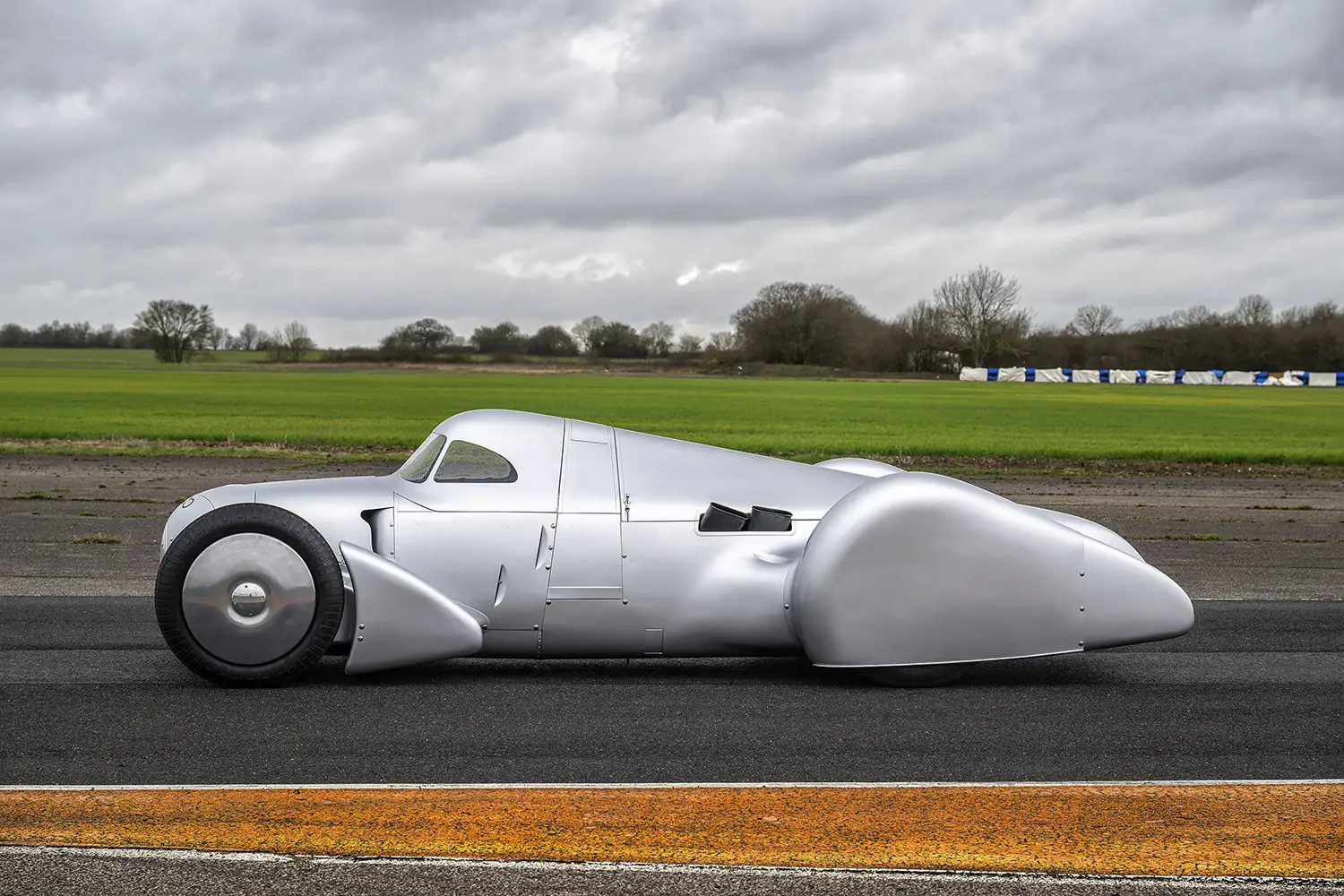
Sixteen Cylinders of Supercharged Silver Arrow Power
At the heart of the Auto Union Lucca sits a legendary 16-cylinder engine equipped with a compressor, delivering a visceral mechanical symphony and immense thrust. While the 1935 original utilized a 5-liter unit, this recreation employs the 6,005 cc displacement engine from the Type C, which produces 520 hp / 527 PS and a relentless torque delivery. This staggering output is managed through a handcrafted chassis that weighs only 960 kg / 2,116 lbs, allowing for a power-to-weight ratio that remains impressive even by modern standards. The engine runs on a specialized fuel blend of methanol, premium unleaded, and toluene, ensuring that the supercharged V16 can breathe freely during high-speed runs on the world’s most prestigious heritage circuits.
| Specification | Detail |
|---|---|
| Engine | 16-Cylinder with Compressor |
| Displacement | 6,005 cc |
| Power Output | 520 hp / 527 PS |
| Curb Weight | 960 kg / 2,116 lbs |
| Top Speed (1935) | 326.975 km/h (203.17 mph) |
| Dimensions (L/H/W) | 4,570 / 1,200 / 1,700 mm |
| Wheelbase | 2,800 mm |
| Exterior Color | Cellulose Silver |
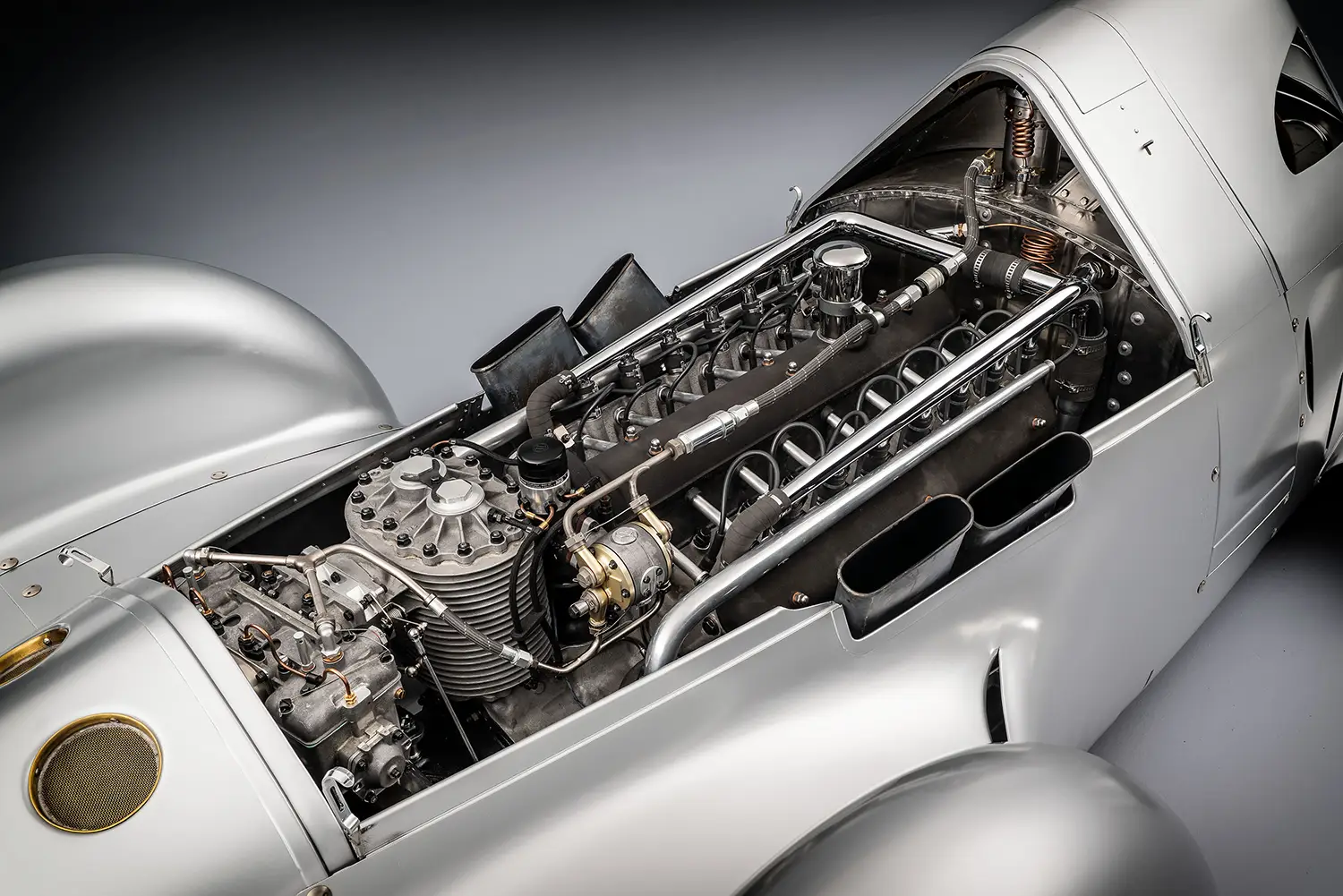
A Priceless Addition to the Silver Arrow Legacy
The market for Auto Union racing cars is virtually non-existent outside of factory collections, making this one-off recreation an invaluable asset for Audi Tradition. By bringing the Lucca car back to life, Audi fills a significant gap in its historic vehicle collection, which previously lacked record-attempt cars from the early Grand Prix era. This project represents a multi-year investment in brand heritage, rivaling the historical significance of the Mercedes-Benz “W” series record cars. The ability to convert the vehicle between its Lucca record-breaking trim and its Avus racing configuration provides unique versatility, allowing it to represent two distinct and pivotal moments in 1935 motorsport history simultaneously.
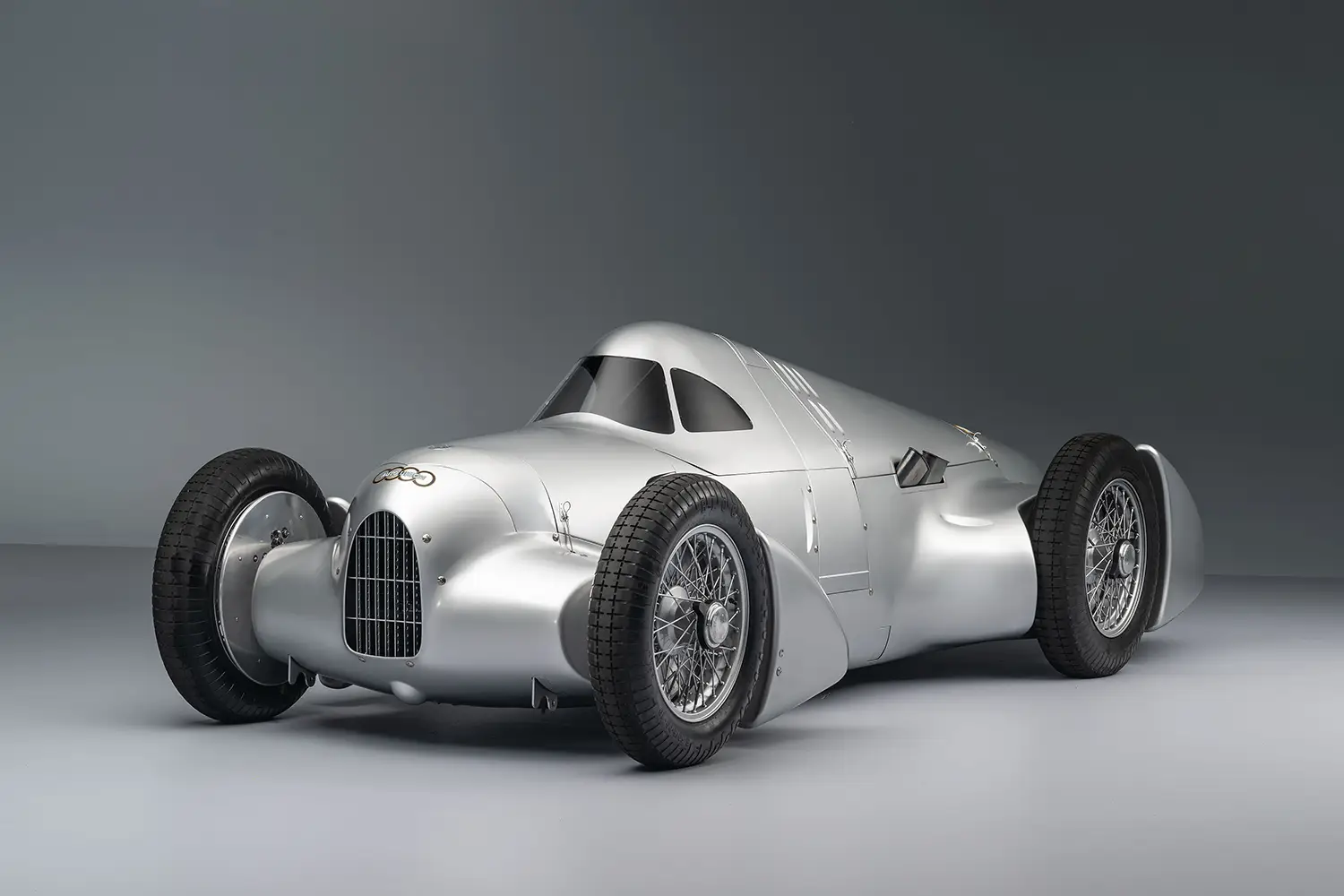
Curating a Masterpiece of Handcrafted Engineering
Owning and maintaining the Auto Union Lucca is a task of immense technical responsibility, handled exclusively by the experts at Audi Tradition. The construction project lasted over three years, involving the bespoke manufacturing of every single component to ensure historical accuracy and mechanical reliability. Engineers adapted the cooling and ventilation systems from the later Avus variants to protect the engine from excessive thermal stress during modern demonstration runs. This careful stewardship ensures that the car is not merely a static museum piece but a living, breathing machine capable of showcasing “Vorsprung durch Technik” to global audiences. It serves as a reminder of a time when the pursuit of “higher, faster, further” was the ultimate engineering creed.
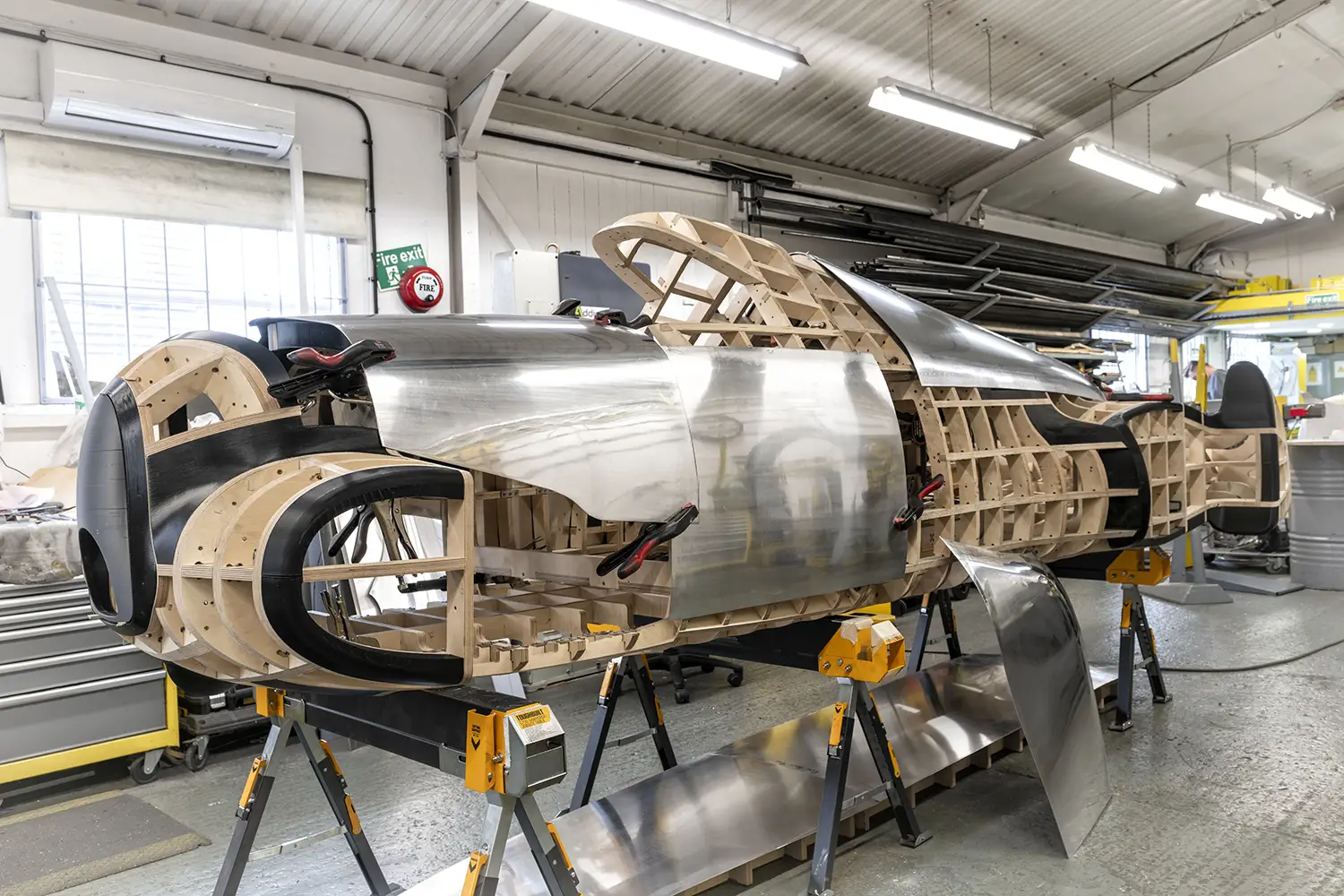
Pushing the Boundaries of the Possible
The Auto Union Lucca is more than just a reconstructed racing car; it is an evocative symbol of technical courage and the relentless pursuit of speed. From its initial record-breaking success in Italy to its high-profile appearance at the Goodwood Festival of Speed, it continues to capture the imagination of the public just as it did in 1935. This 16-cylinder masterpiece demonstrates how the merger of four independent brands created a powerhouse of innovation capable of challenging the world’s best. As it takes its place among the legendary Silver Arrows, the Lucca stands as a beautiful, high-performance testament to the enduring legacy of the four rings in motorsport history.
Disclaimer: Content on this site is for informational and entertainment purposes only. Details, analyses, and opinions reflect current trends and personal views, not professional or financial advice. Always verify information with official sources before making any decisions.
Source: Audi