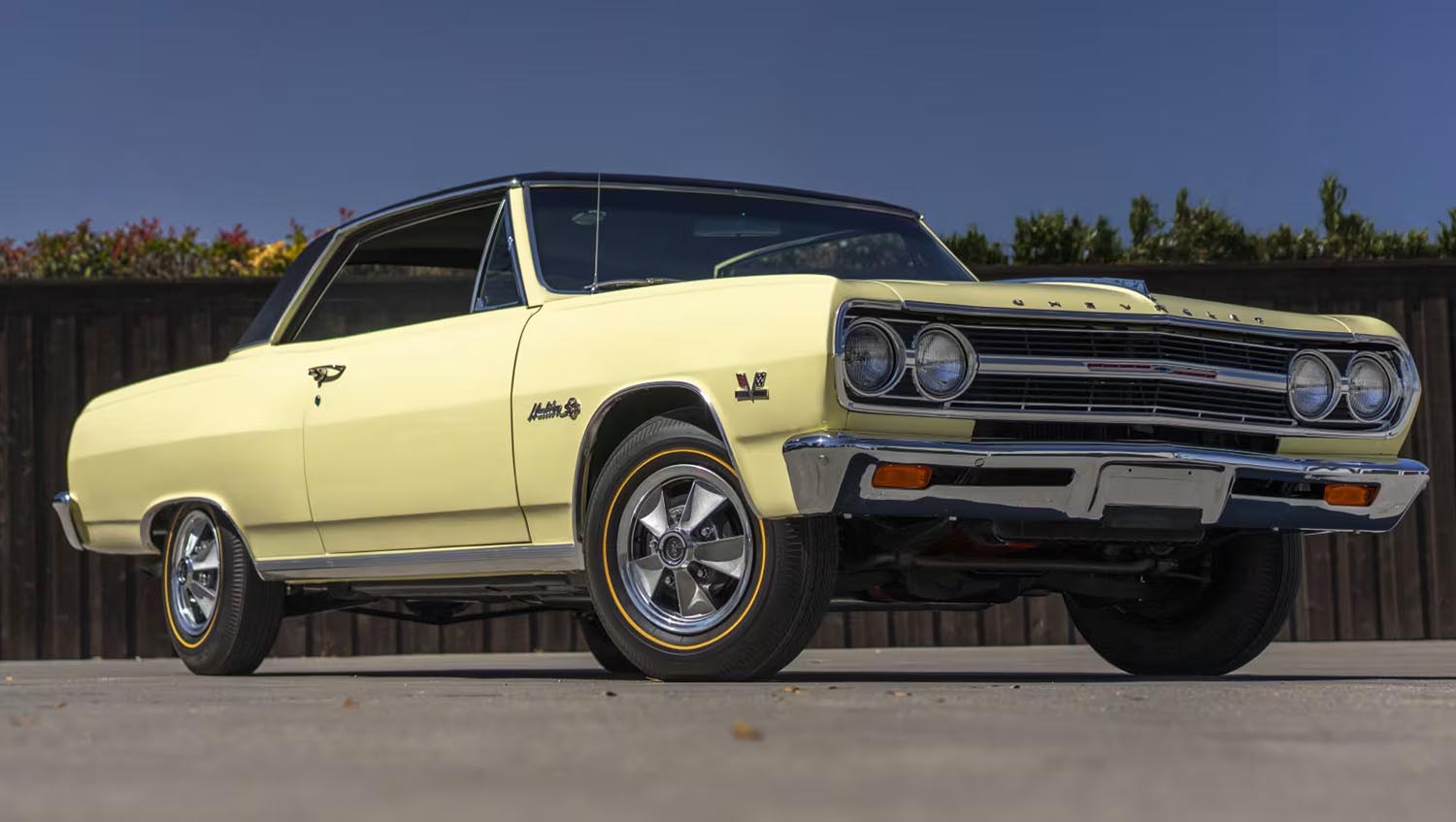
The 1965 Chevrolet Chevelle Z16 represents the explosive birth of the big-block A-body, a car so rare and purposeful that it remains a holy grail for muscle car collectors. With only 201 units produced at the Kansas City GM plant, the Z16 was effectively a pilot program for the L37 396ci V-8, long before the SS 396 became a mainstream staple. This specific example, finished in striking Crocus Yellow, captures the mid-sixties transition from understated cruiser to street-dominating powerhouse. Crossing the block at Indy 2026 on Friday, May 15th, this Z16 is a documented survivor tracked on the official registry, offering a level of exclusivity that few other Chevrolet nameplates can match in the current collector landscape.
Crocus Yellow Silhouette and Unique Z16 Trim Accents
The visual character of this 1965 Chevrolet Chevelle Z16 is defined by its clean, squared-off silhouette accentuated by the rare Crocus Yellow finish. Because the Z16 was a specialized performance package, it was limited to just three factory colors, making this yellow-on-black combination a distinctive standout. The exterior is further detailed with a black vinyl top, which was one of the few options available for this strictly specified model. Distinguishing it from a standard Malibu are the unique rear tail light panel trim and mag-style wheel covers wrapped in period-correct Goldline tires. These subtle cues signaled to onlookers that this was no ordinary commuter, but rather a factory-built hot rod designed to test the limits of the intermediate chassis.
Black Vinyl Cabin and the Rare 160-MPH Instrument Cluster
Inside, the cabin offers a focused performance environment trimmed in black vinyl, reflecting the car’s dual nature as a luxury flagship and a drag strip contender. The cockpit features a sport steering wheel and the highly coveted 160-mph speedometer, a tell-tale sign of the Z16’s high-speed capabilities. For entertainment beyond the rumble of the big-block, the interior is equipped with a rare multi-plex radio system. Every touchpoint, from the floor-mounted shifter for the Muncie 4-speed to the bucket seats, remains faithful to the original Kansas City assembly standards. This interior provides an authentic look at the birth of the SS legacy, where high-performance hardware was seamlessly integrated into Chevrolet’s most popular mid-sized platform.
L37 396ci V-8 Narrative and Muncie 4-Speed Manual Gearing
The heart of this 1965 Chevrolet Chevelle Z16 is the legendary L37 396ci V-8, a powerhouse that forever changed the performance trajectory of the Chevelle line. This engine produces a factory-rated 375 hp / 380 PS and 415 lb-ft / 563 Nm of torque, delivering a visceral mechanical feel that smaller-displacement engines simply could not replicate. Power is managed through a Muncie 4-speed manual transmission, allowing the driver to fully exploit the big-block’s massive torque curve. To handle the additional weight and power of the 396, Chevrolet equipped every Z16 with larger brakes and a heavy-duty suspension system derived from the full-sized Impala. This combination ensures that the car feels planted and authoritative, providing a raw driving experience that defined the muscle car formula.
| Technical Specifications | |
|---|---|
| Engine Type | L37 396ci V-8 |
| Transmission | Muncie 4-Speed Manual |
| Production Location | Kansas City GM Plant |
| Output | 375 hp / 380 PS |
| Exterior Color | Crocus Yellow |
| Wheels | Mag-Style Covers w/ Goldline Tires |
| Instrumentation | 160 MPH Speedometer |
Market Position and the 1-of-201 Production Rarity
The 1965 Chevelle Z16 occupies a dominant position in the “Tier 1” muscle car market, frequently benchmarked against the Pontiac GTO or the Hemi-powered Mopars of the era. However, the Z16’s unique selling point is its extreme rarity, as it was never intended for mass consumption. In the current 2026 market, tracked registry cars like this Crocus Yellow example are viewed as blue-chip investment assets. While the 1966 and 1967 SS 396 models were produced in the thousands, the Z16 remains a ghost in the hobby, sought after by collectors who prioritize historical significance and low production numbers. This car represents a pivotal moment in GM history where the ban on large engines in intermediate cars was officially broken.
Kansas City Origins and Documented Registry Status
Ownership of this Chevelle is anchored by its verified origins at the Kansas City plant, where all 201 original Z16 chassis were meticulously assembled. The vehicle is part of a small group of known survivors tracked on a specialized registry, providing the next steward with the highest level of historical verification. Its appearance as Lot R310 at Indy 2026 marks a rare opportunity to acquire a vehicle that is often held in private collections for decades. Because Z16s were built with such similar specifications, the condition and documentation of this Crocus Yellow car are paramount to its value. This lot offers a transparent and high-quality acquisition for those who recognize the Z16 not just as a car, but as the blueprint for the entire SS 396 movement.
A Final Look at a Crocus Yellow Big-Block Pioneer
The 1965 Chevrolet Chevelle Z16 is a physical manifestation of a time when Chevrolet’s engineering team dared to push the boundaries of factory-built performance. By merging the 375 HP big-block V-8 with the unmistakable Crocus Yellow finish and the prestige of a 1-of-201 production run, the brand created a machine that remains a permanent icon of the automotive landscape. This rare Z16 stands as a proud representative of the brand’s heritage as a leader in both mechanical innovation and bold styling. Whether it is destined for a national concours event or a prominent private garage, this 1965 Chevelle remains a masterclass in American muscle that successfully carries its crown into the 2026 collector era.
Disclaimer: Content on this site is for informational and entertainment purposes only. Details, analyses, and opinions reflect current trends and personal views, not professional or financial advice. Always verify information with official sources before making any decisions.
Source: mecum.com