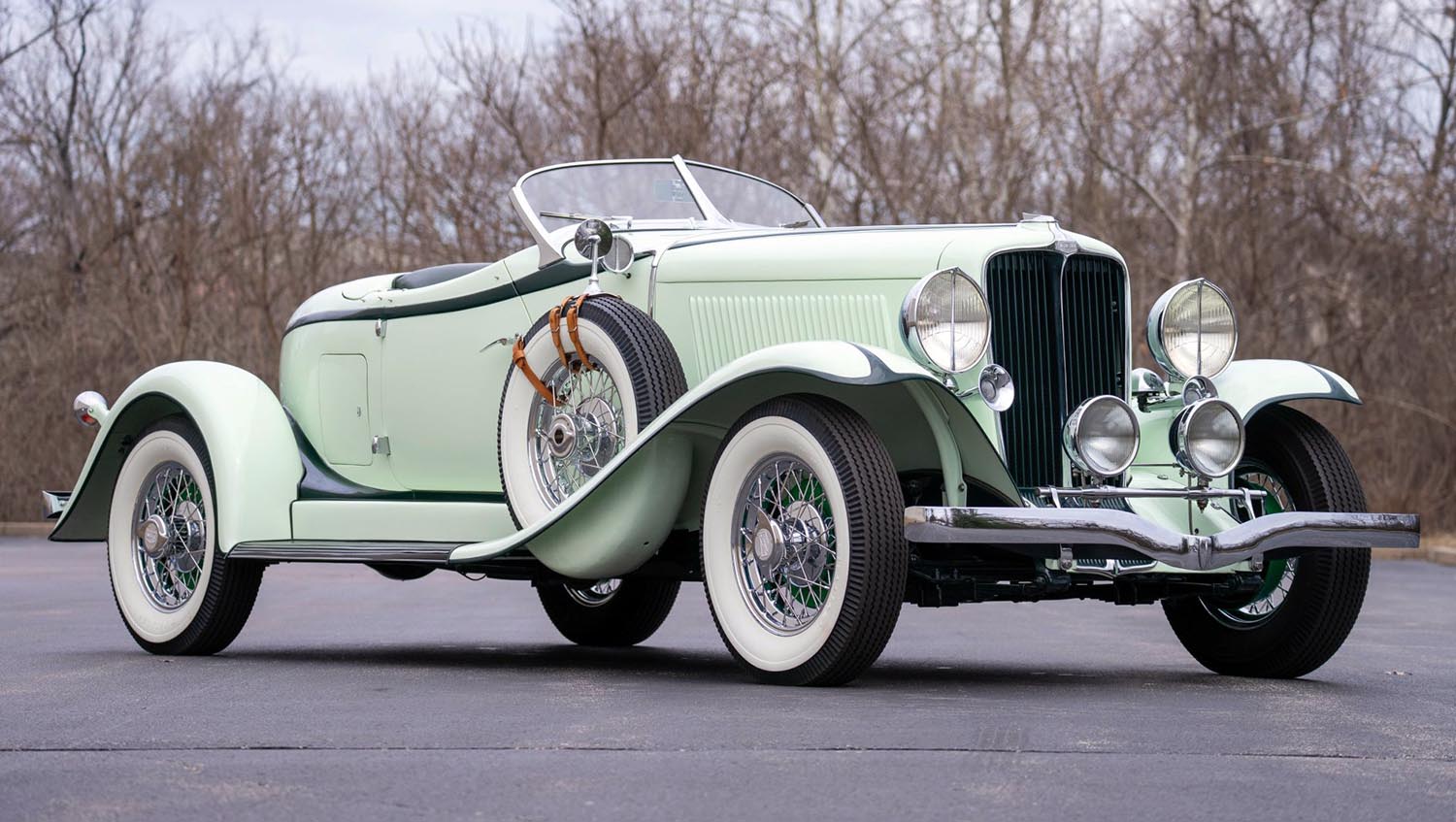
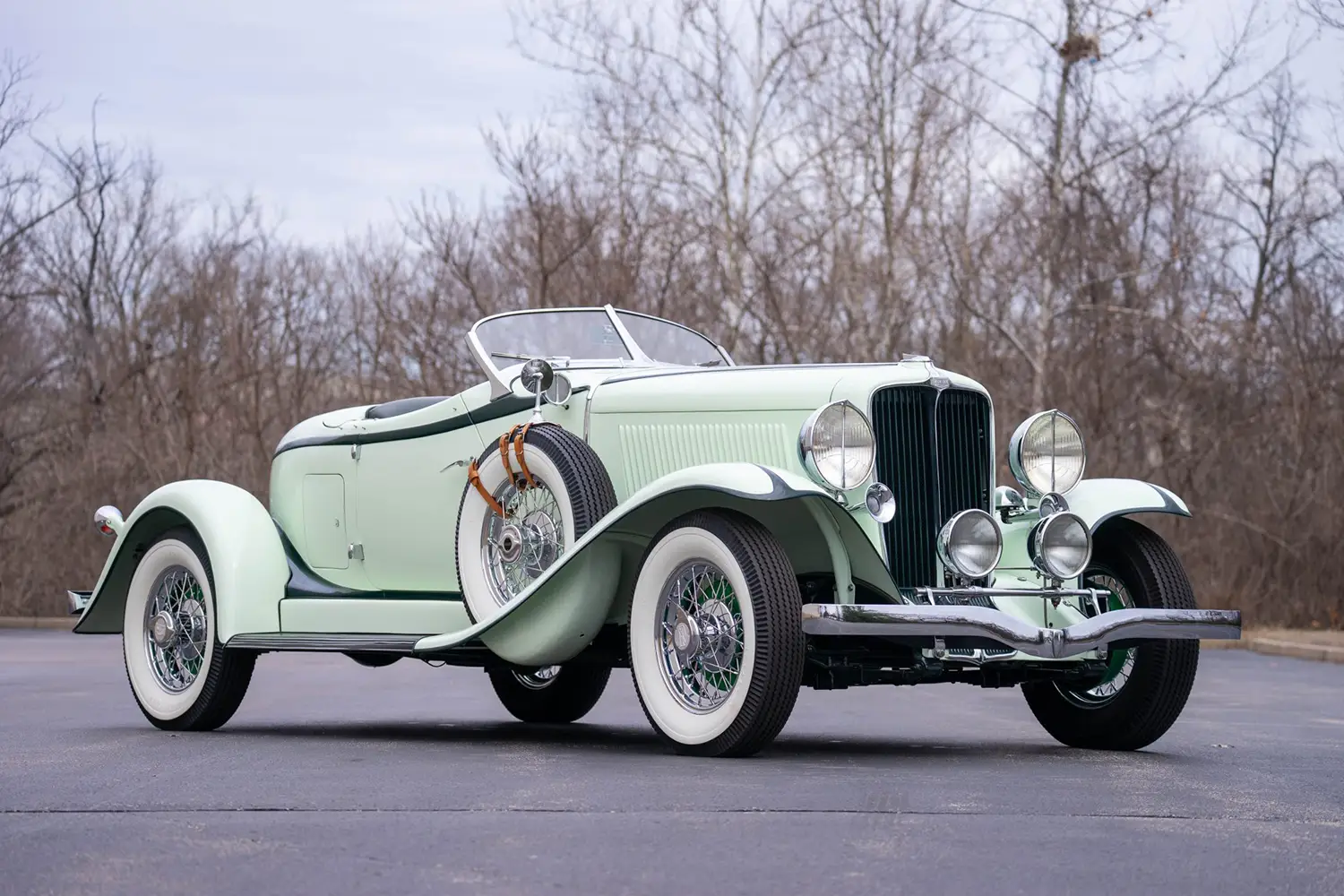
The 1931 Auburn 8-98 Speedster captures the elegance and engineering ambition of early American performance cars. Introduced during the final years before the Great Depression reshaped the automotive market, the Auburn combined advanced chassis engineering with dramatic styling. This example features steel boattail speedster coachwork and a rebuilt Lycoming straight-eight, presenting a refined interpretation of pre-war luxury performance.
Boattail Coachwork and Art Deco Presence
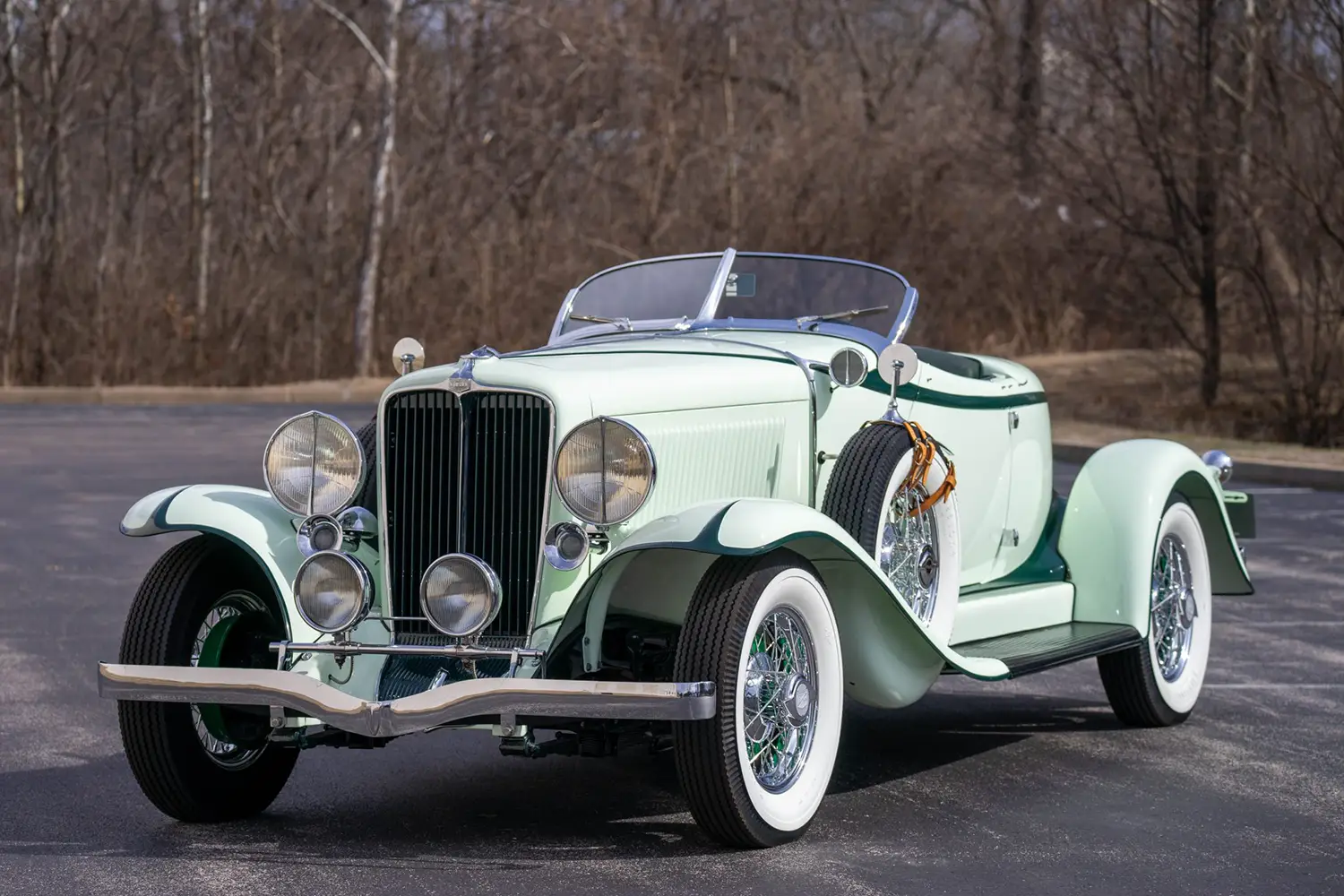
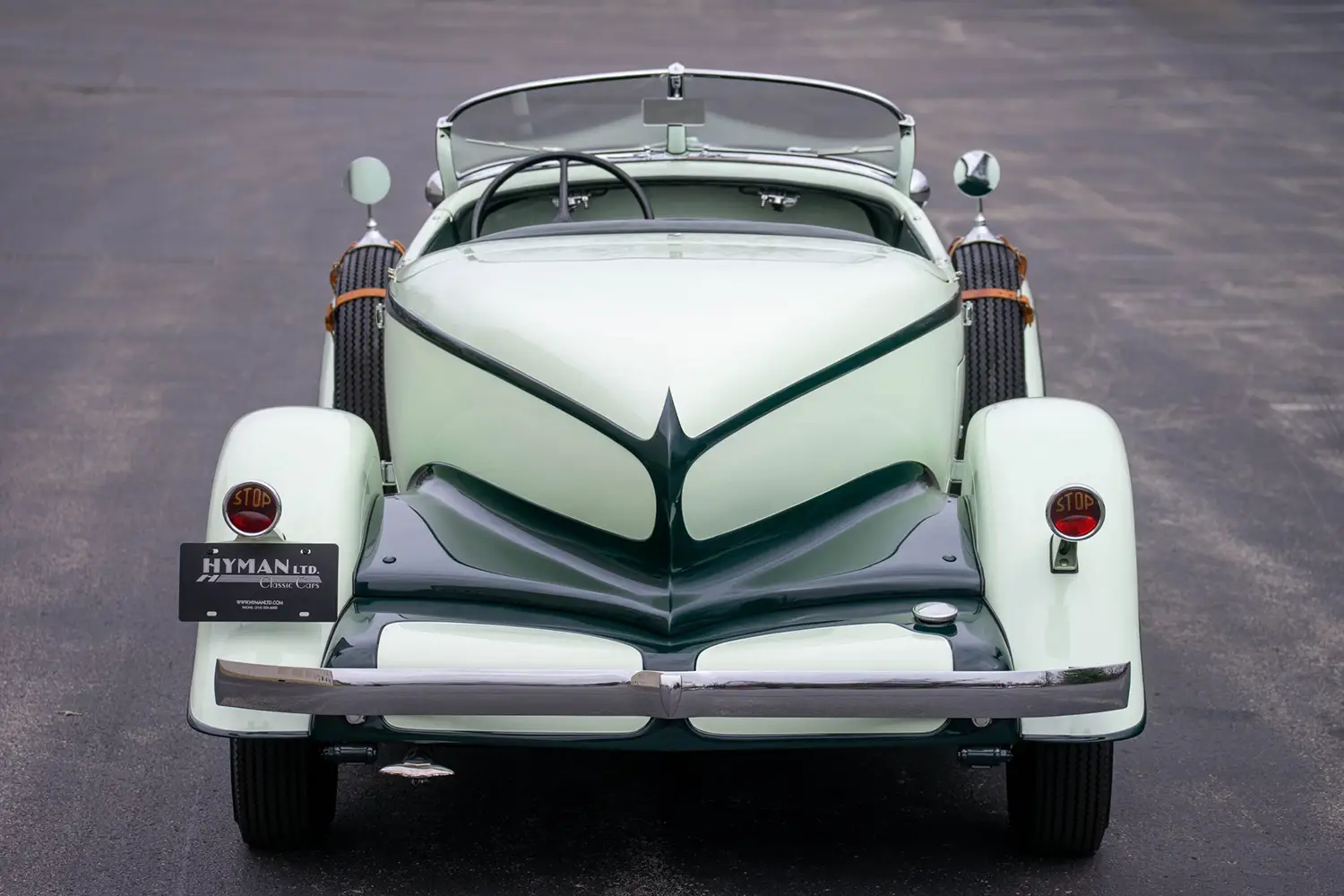
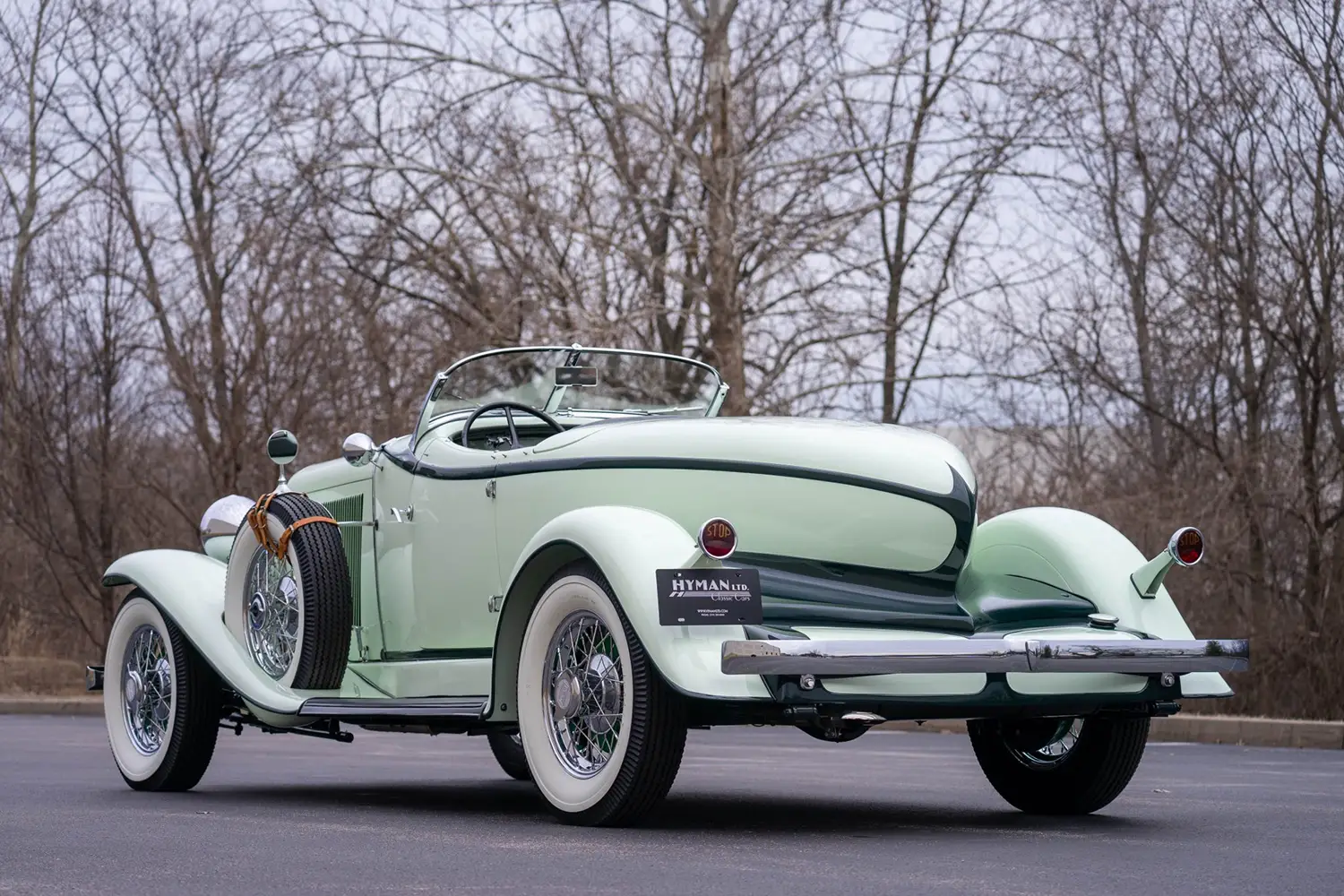
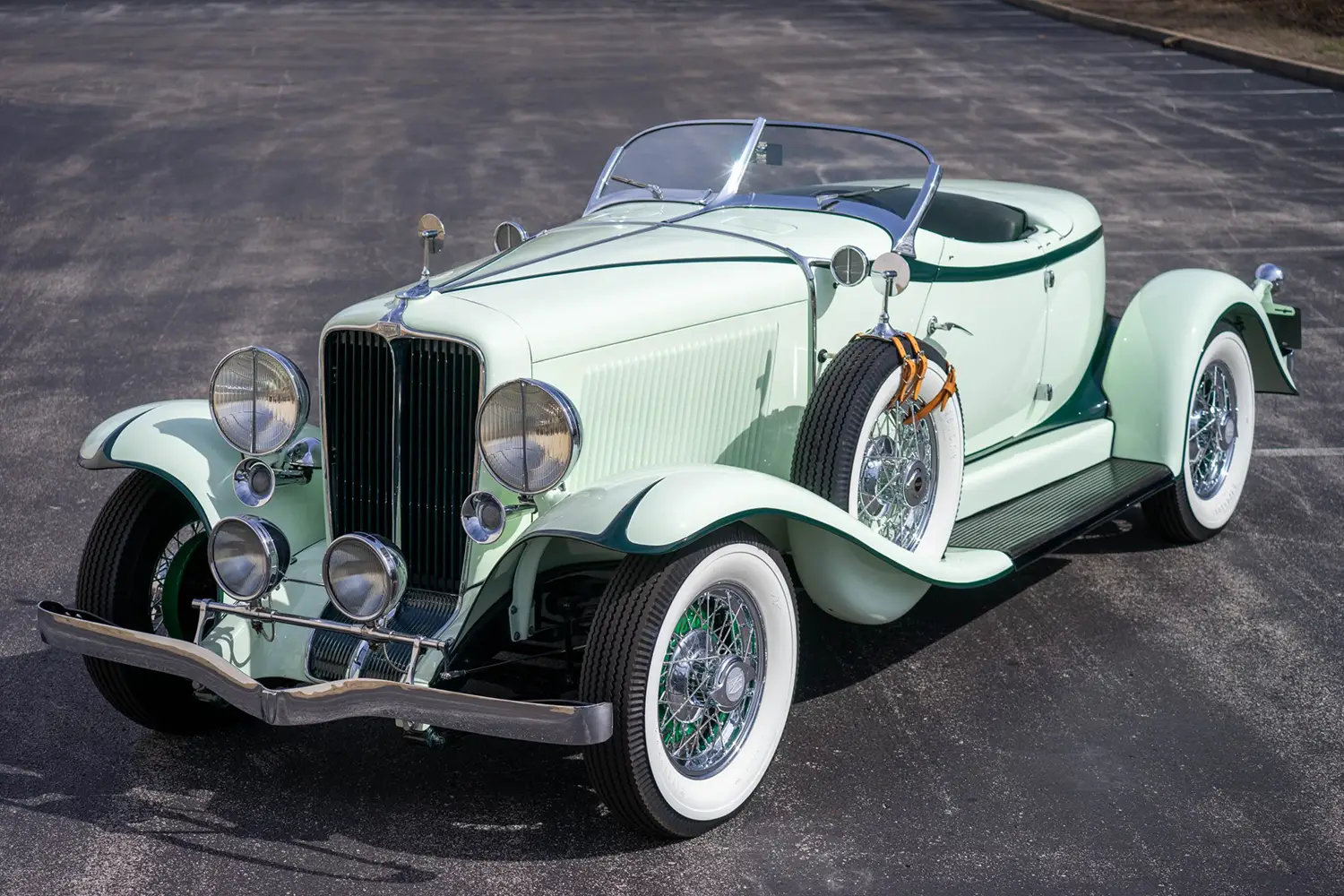
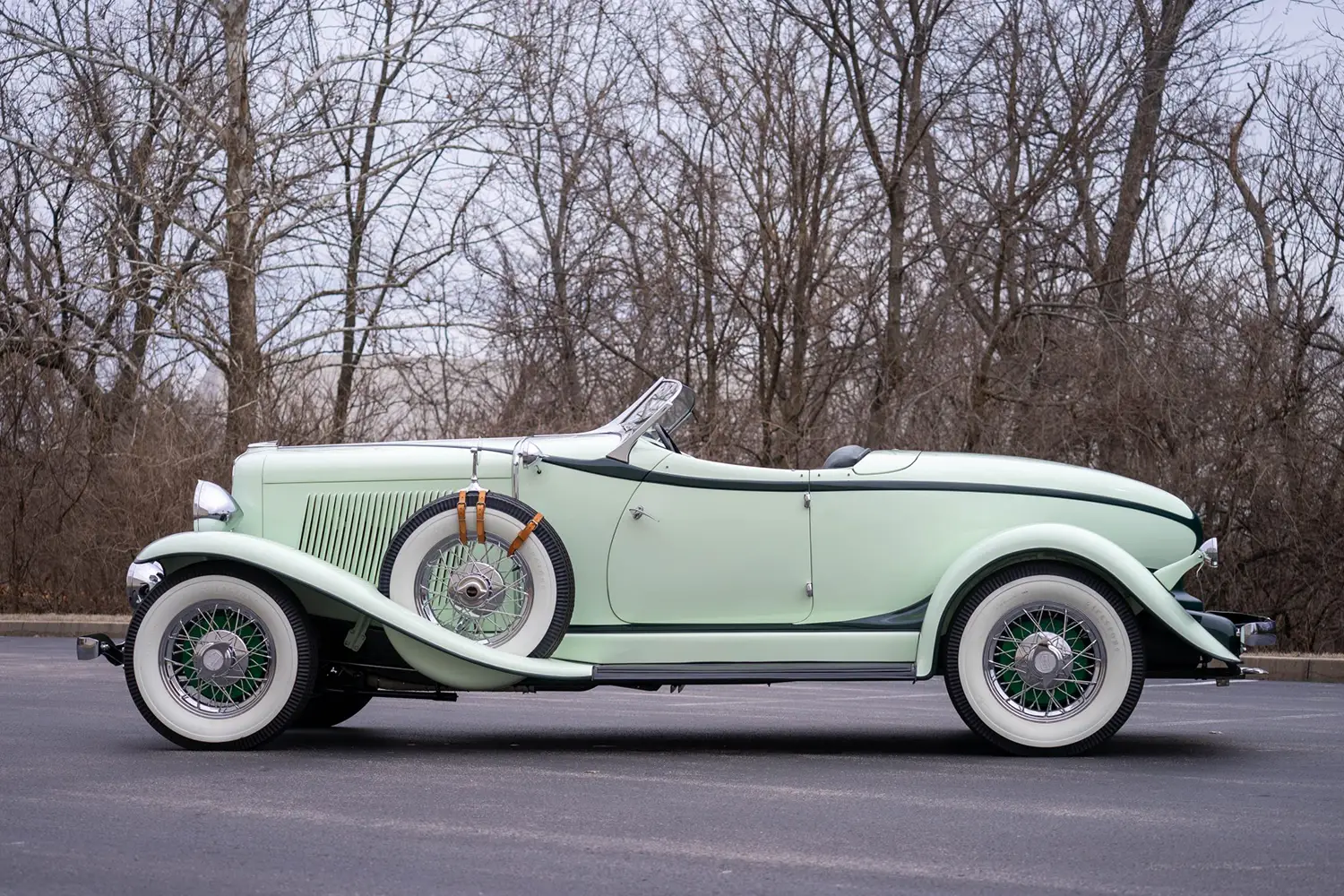
The Auburn’s dramatic speedster silhouette remains one of the most recognizable shapes from the pre-war era. Flowing rear bodywork tapers into a distinctive boattail design, emphasizing motion even at rest. Refinished in Mint Green with Hunter Green accents, this example highlights the sculpted steel bodywork while maintaining a period-correct appearance.
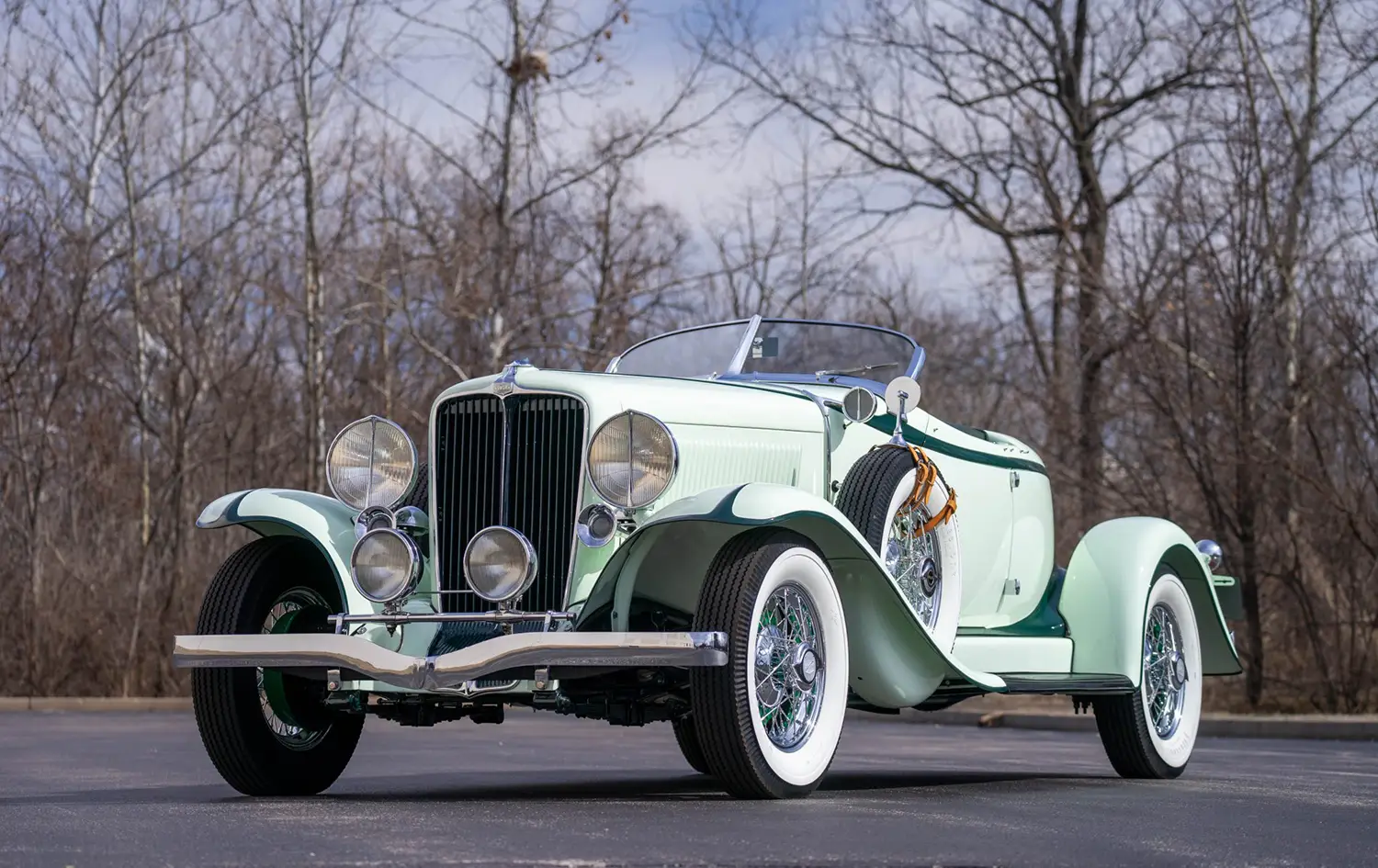
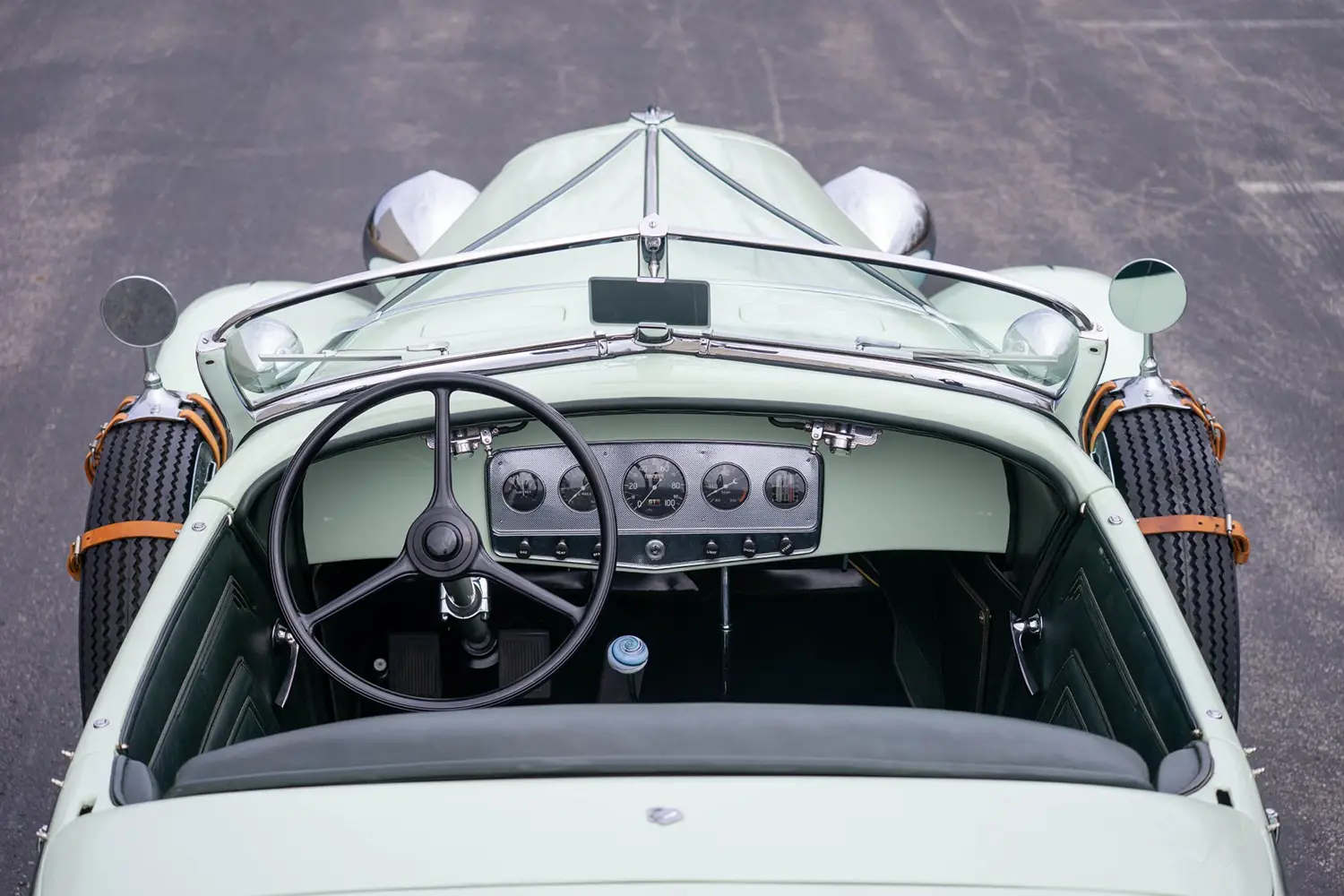
Rechromed details enhance the visual presentation, including the rear bumper, radiator cap, windshield frame, and dash fascia. Equipment includes Pilot Ray driving lamps, cat’s-eye headlights, and cowl lamps that reinforce the car’s early 1930s character. Dual side-mounted spares with mirrors and a khaki convertible top further define the Auburn’s grand touring personality.
Pre-War Craftsmanship in Green Leather
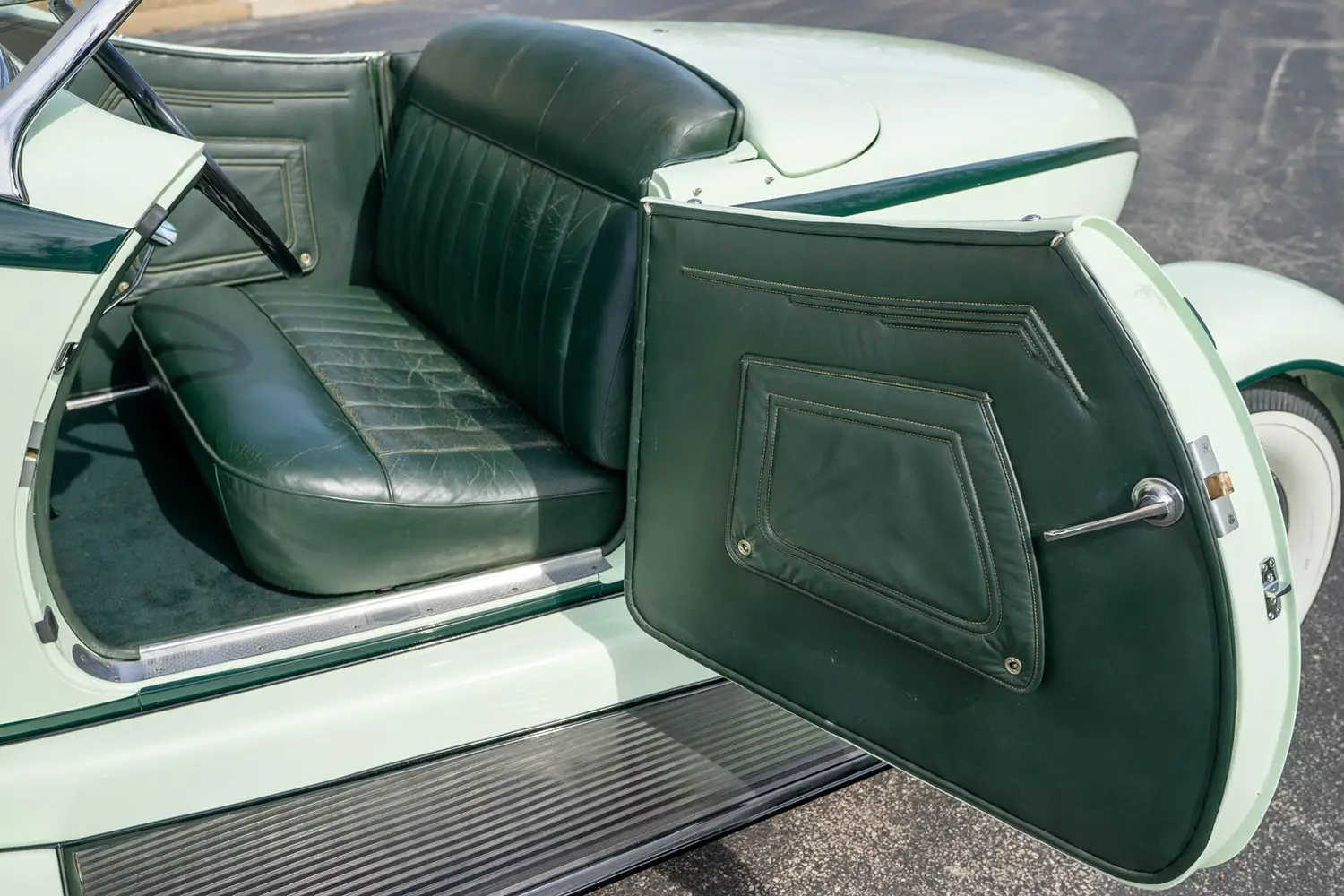
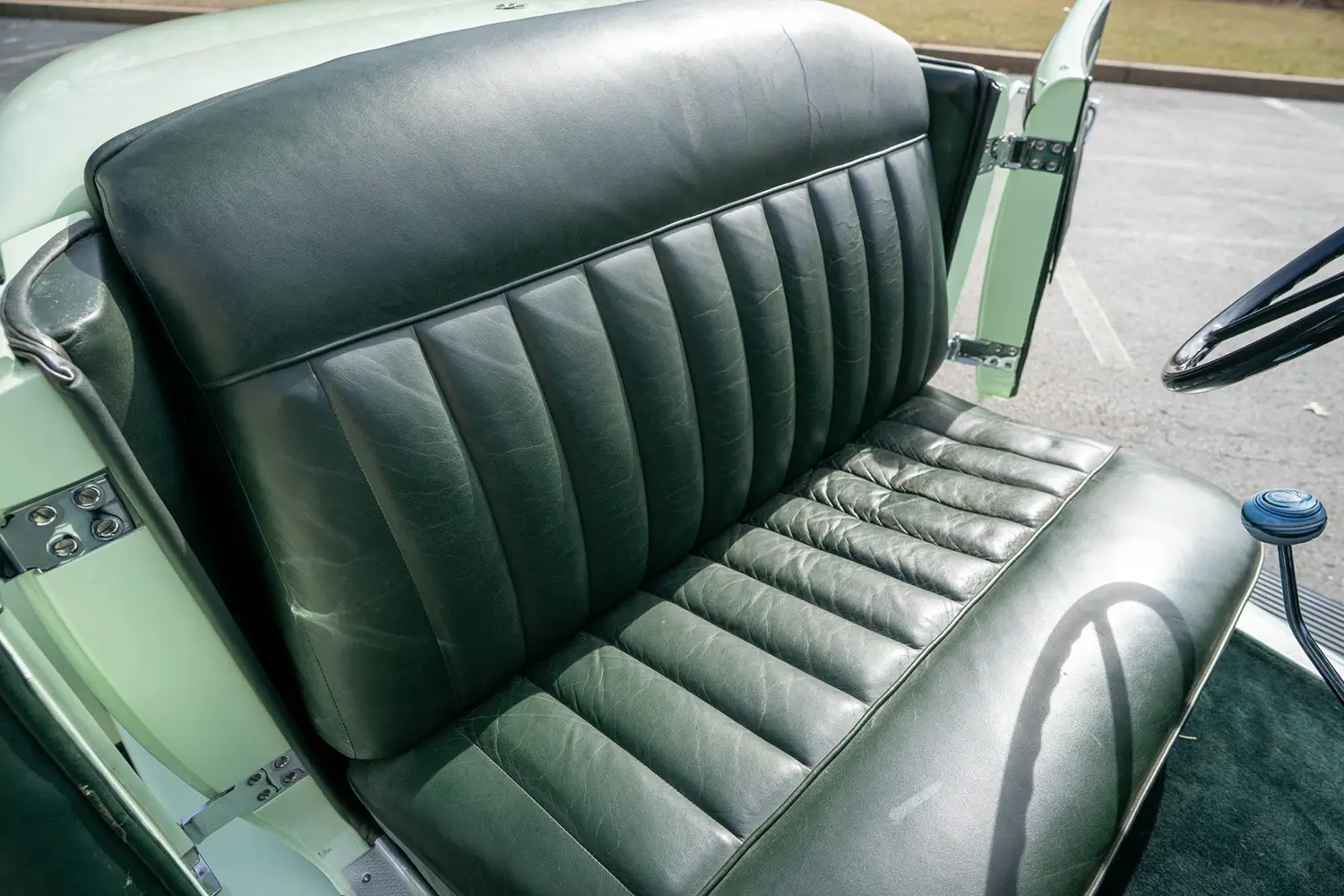
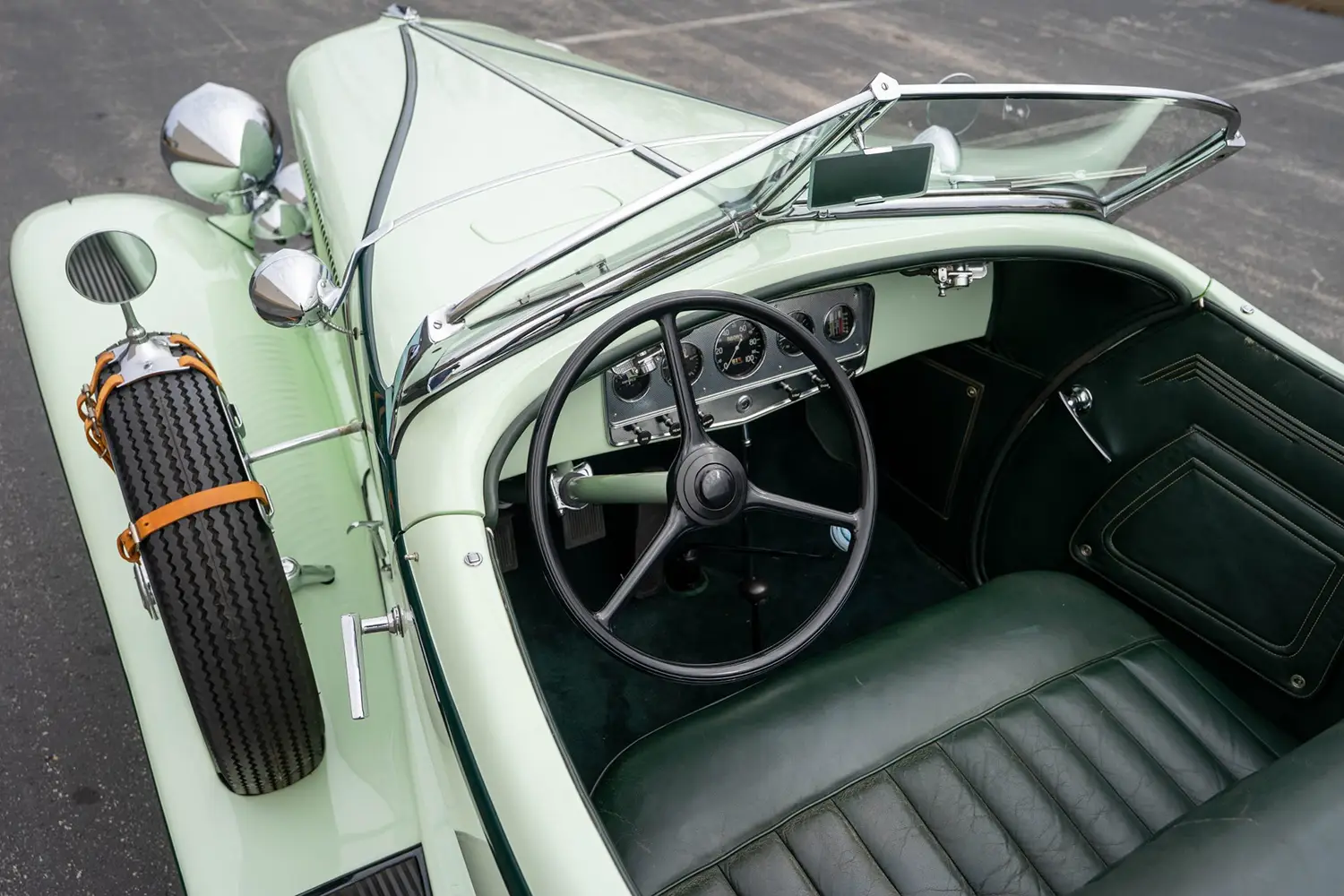
The cabin reflects traditional craftsmanship typical of American luxury automobiles from the early 1930s. Green leather upholstery covers the seats, while matching door panels and carpets maintain a coordinated appearance. Materials and finishes emphasize durability and elegance rather than modern complexity.
A glass shift knob and storage pockets add practical touches within the cockpit. The body-color dashboard features a textured aluminum instrument bezel that frames the main gauges. A beveled rear-view mirror and classic analog instrumentation complete the vintage driving environment designed for long-distance touring.
Lycoming Straight-Eight Power and Early Engineering Innovation
Power comes from a 268.6 cubic-inch Lycoming inline-eight equipped with a Zenith updraft carburetor. Factory output was rated at 98 horsepower (99 PS), delivered smoothly through a three-speed manual transmission. The engine underwent rebuilding work in the 2010s that included resurfacing the cylinder head and regrinding the crankshaft.
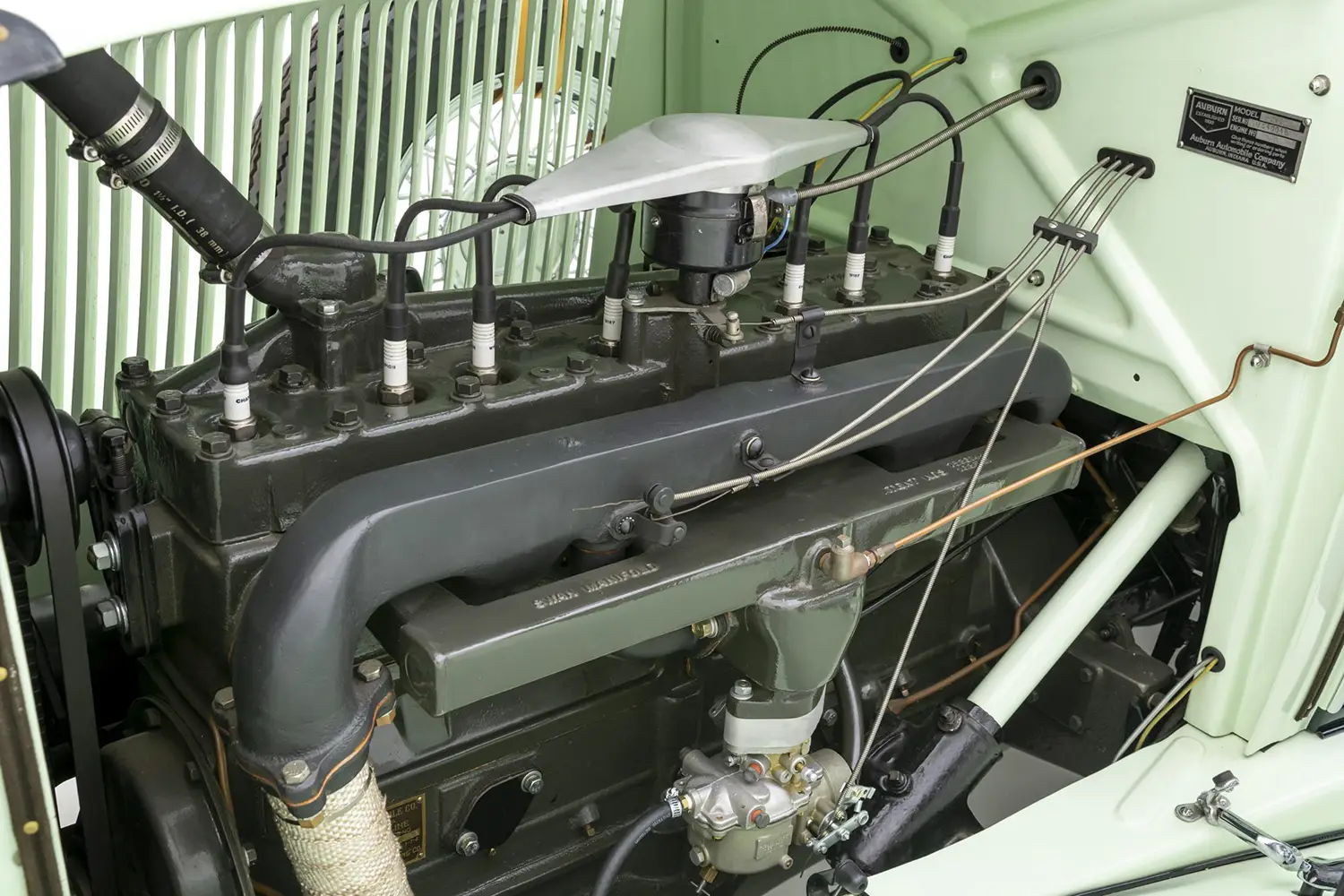
Additional refurbishment involved replacement pistons, valves, and Babbitt bearings as well as an updated wiring harness. Power flows to the rear wheels through a traditional mechanical driveline, reflecting the engineering simplicity of the era. Mechanically actuated drum brakes provide stopping power, while lever-arm shock absorbers manage the ride.
Technical Specifications
| Technical Specifications | |
|---|---|
| Engine | 268.6 cu in Lycoming Inline-Eight |
| Power Output | 98 hp (99 PS) |
| Transmission | 3-Speed Manual |
| Carburetor | Zenith Updraft Carburetor |
| Wheel Size | 17-Inch Chrome Wire Wheels |
| Tires | 6.00/6.50–17 Firestone Deluxe Champion Bias-Ply Whitewalls |
| Brakes | Mechanically Actuated Drum Brakes |
| Convertible Top | Khaki Fabric Convertible Top |
Auburn’s Role in the Pre-War Performance Landscape
During the early 1930s, Auburn positioned its cars between mass-market brands and elite luxury manufacturers. Models such as the Auburn 8-98 competed with offerings from Buick and Chrysler while delivering more dramatic styling. The brand relied on strong design language and advanced chassis engineering to attract buyers seeking distinction.
Today, Auburn speedster-style cars remain highly recognizable among pre-war collectors. Their dramatic boattail bodies and Art Deco details distinguish them from more conservative contemporaries. As a result, restored examples continue to hold strong appeal among enthusiasts interested in early American performance heritage.
Restoration Efforts and Collector Appeal
This Auburn has undergone refurbishment that included a repaint, rechromed trim components, and a rebuilt Lycoming engine. The chassis was refinished in dark green, and the wire wheels were rechromed during the process. Matching side-mounted spare wheels and period-correct tires maintain the car’s authentic appearance.
Documentation accompanies the car along with service records, spare parts, and side curtains. While the Bijur chassis lubrication system currently does not function, the Auburn remains a distinctive representation of early American engineering. Its restored condition and dramatic styling contribute to lasting collector interest.
An Icon of Early American Performance Design
The 1931 Auburn 8-98 Speedster stands as a vivid reminder of the creativity and ambition that defined the pre-war automotive era. With its boattail styling, rebuilt Lycoming straight-eight, and carefully refurbished presentation, this Auburn continues to represent the elegance and innovation that shaped early American motoring.
Disclaimer: Content on this site is for informational and entertainment purposes only. Details, analyses, and opinions reflect current trends and personal views, not professional or financial advice. Always verify information with official sources before making any decisions.
Source: bringatrailer.com