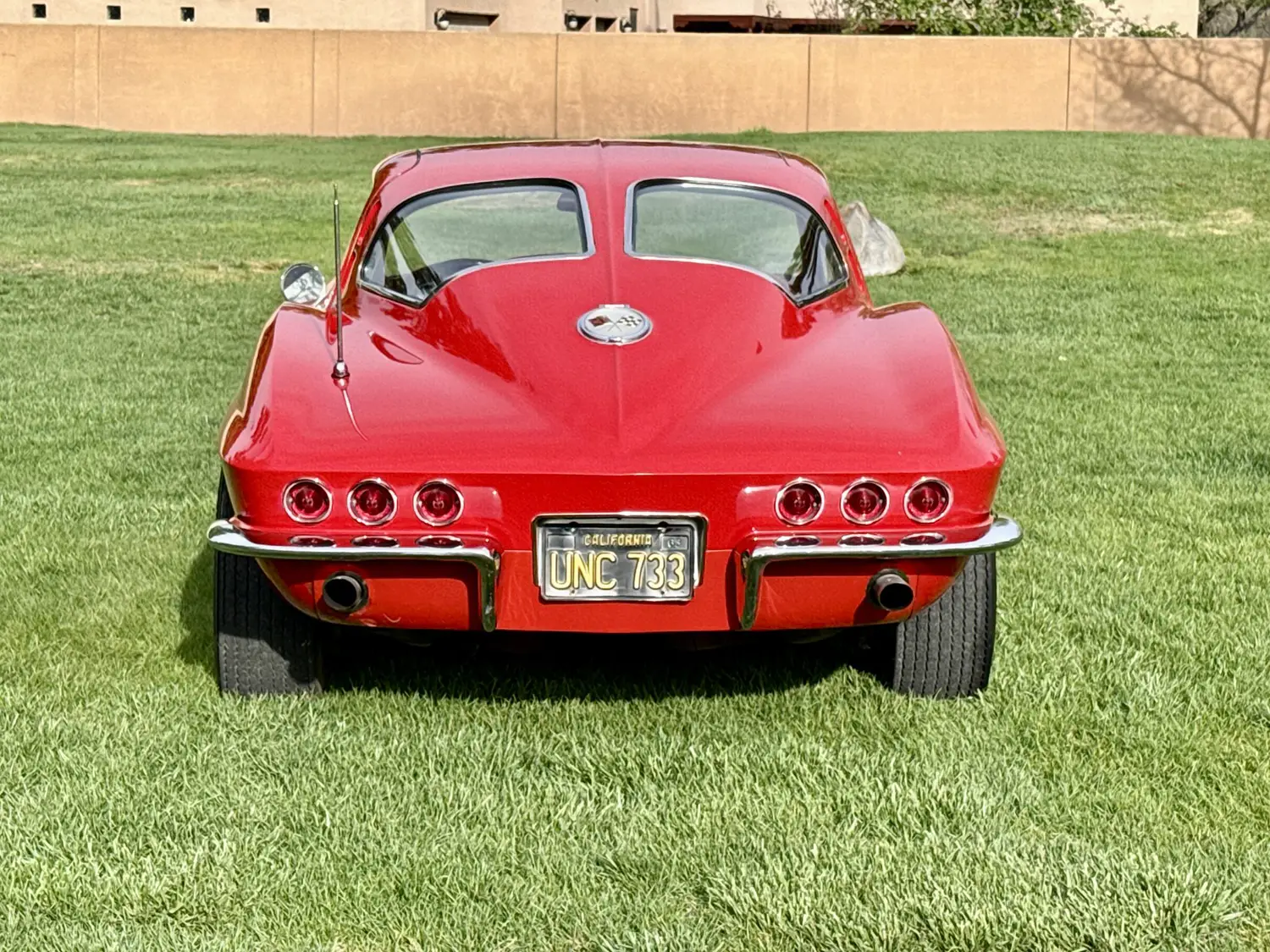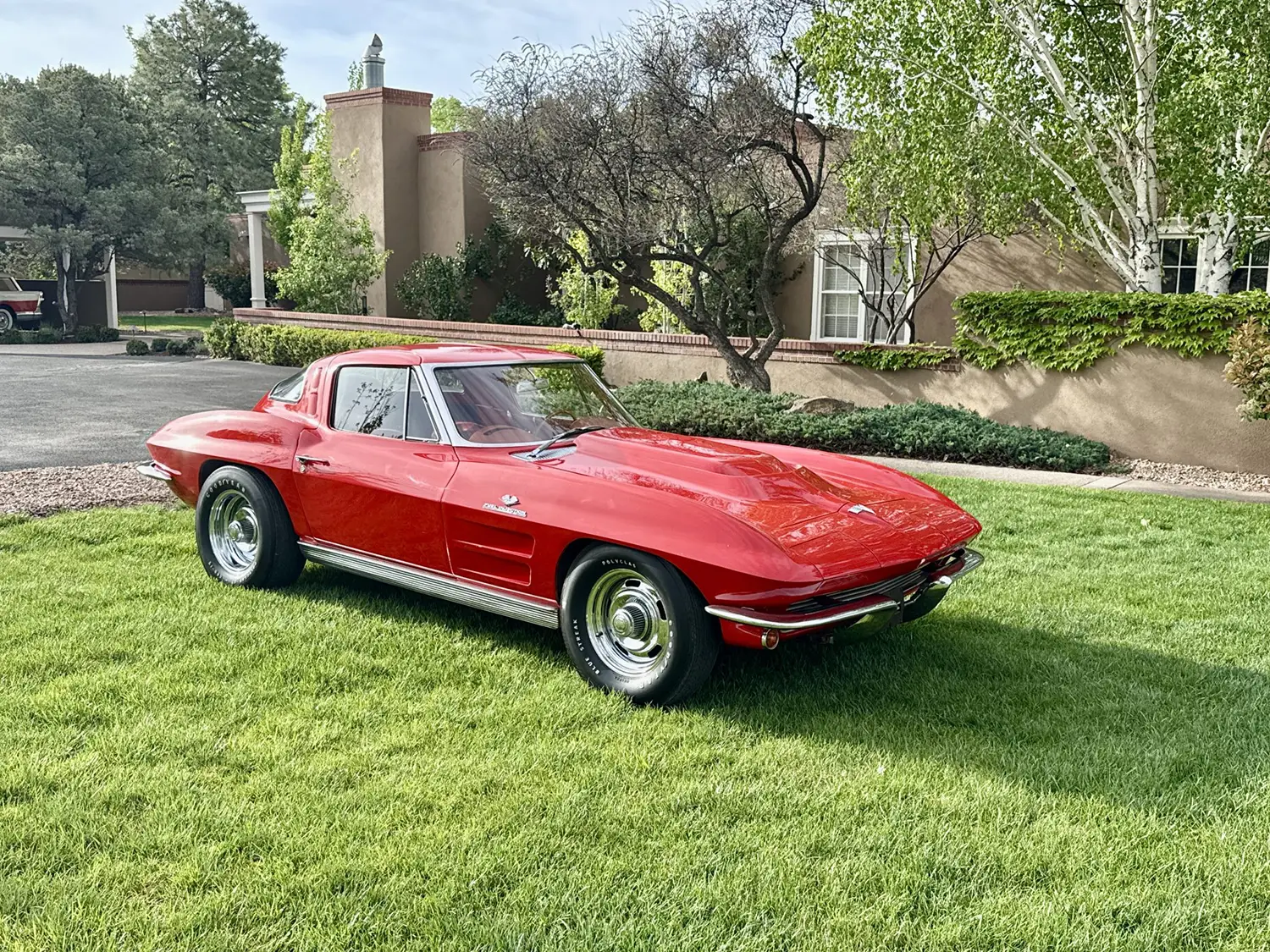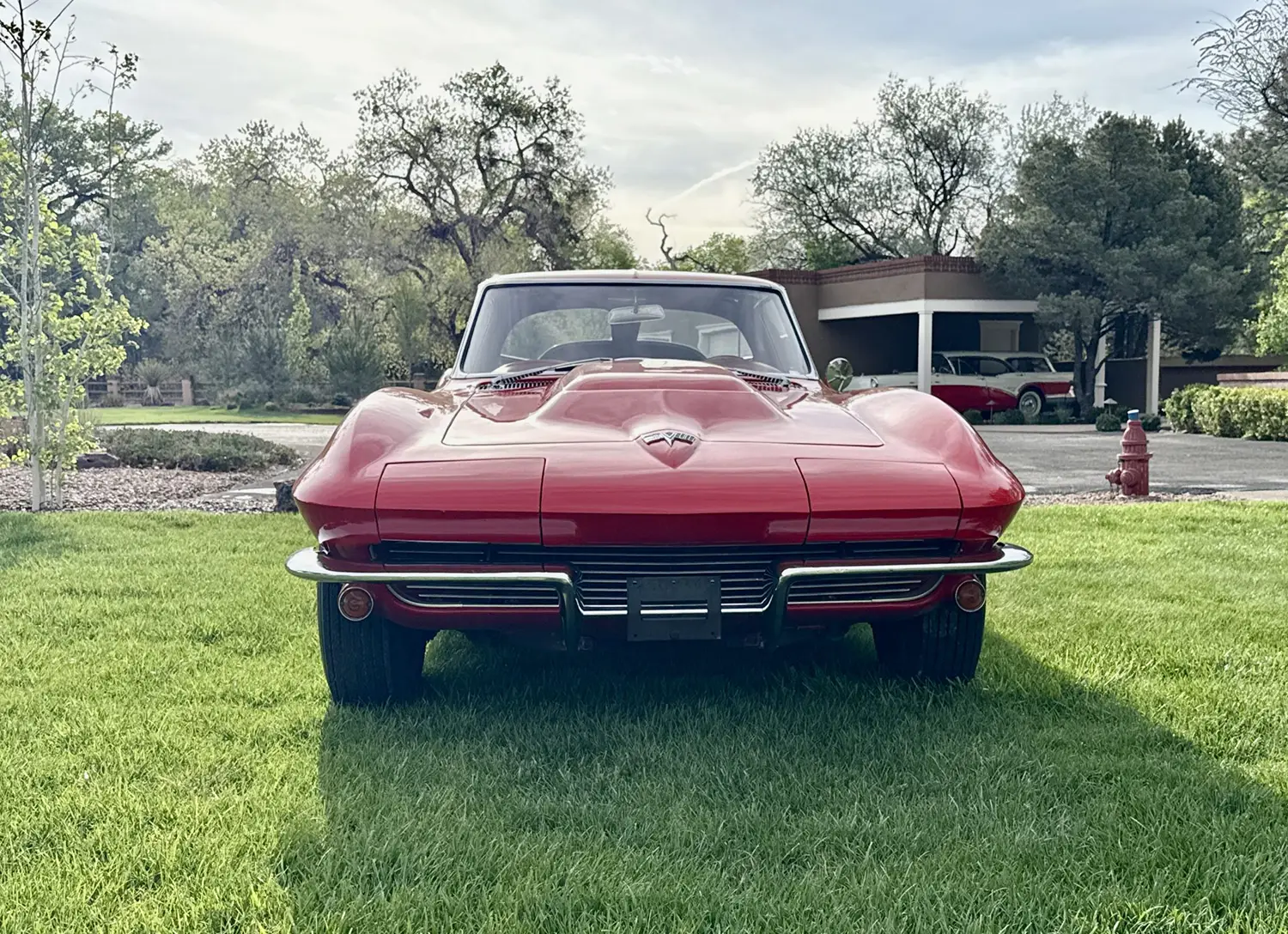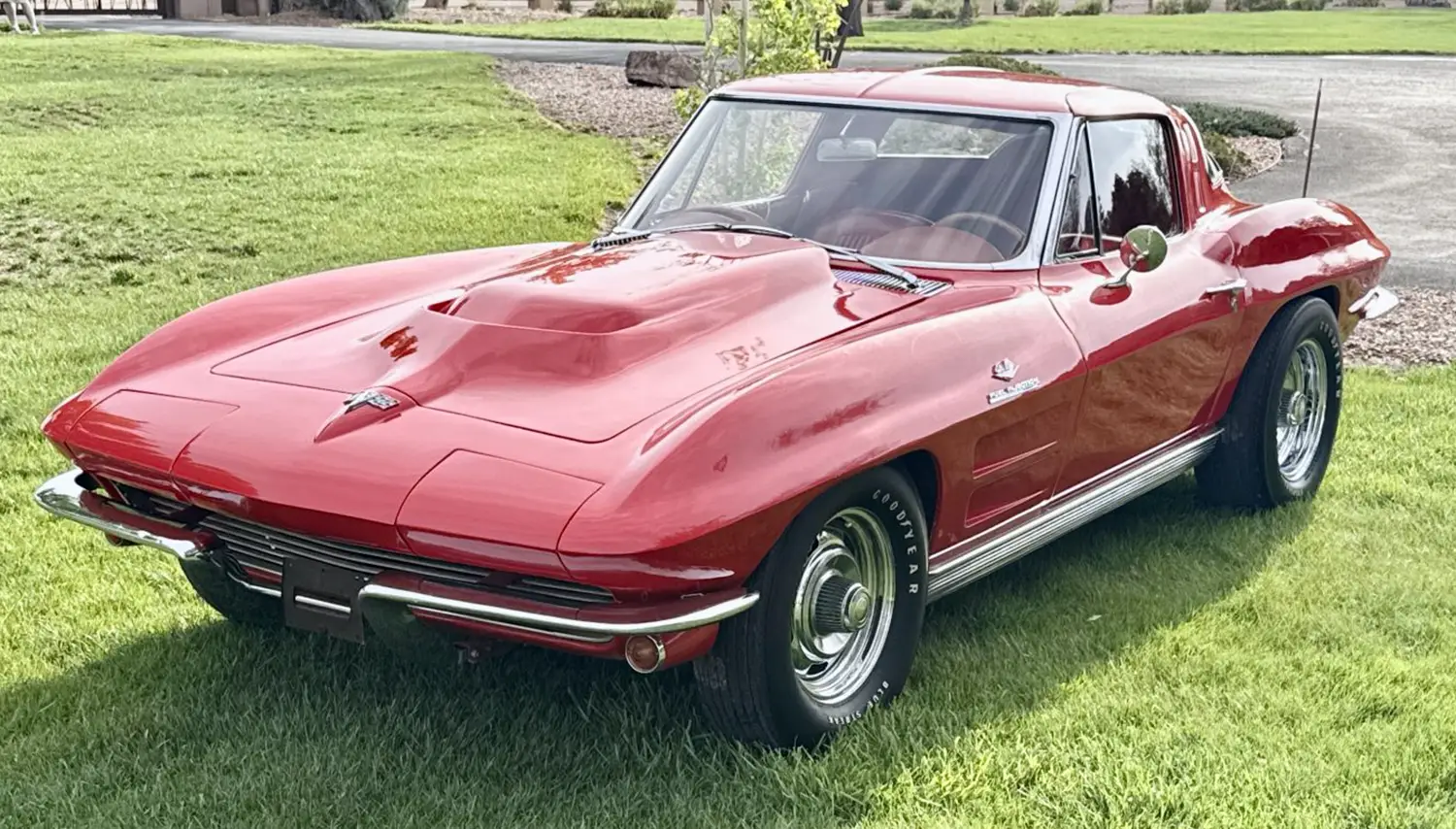
The 1963 Chevrolet Corvette split-window coupe is perhaps the most celebrated silhouette in American automotive history, marking the spectacular debut of the second-generation Sting Ray. This particular example carries a remarkable provenance, having remained with its original owner from its initial purchase in California through its relocation to New Mexico in 1966. Following nearly four decades in long-term storage, this 1963 Chevrolet Corvette split-window coupe was acquired by its current owner in 2025. It presents a rare opportunity to own a period-modified survivor that has recently undergone extensive mechanical rejuvenation to return its high-output small block to life.
Riverside Red Fiberglass and Custom C2 Details
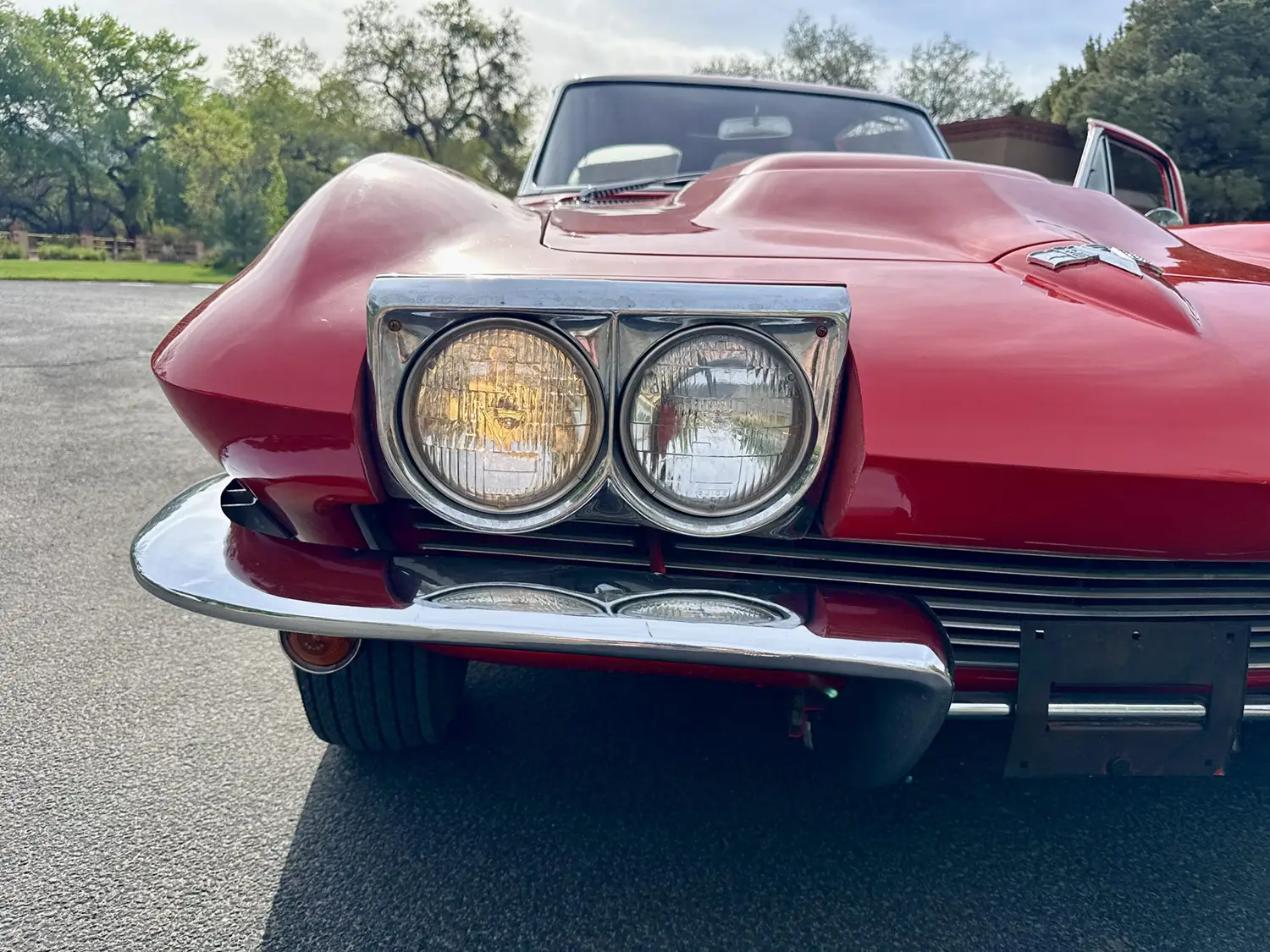
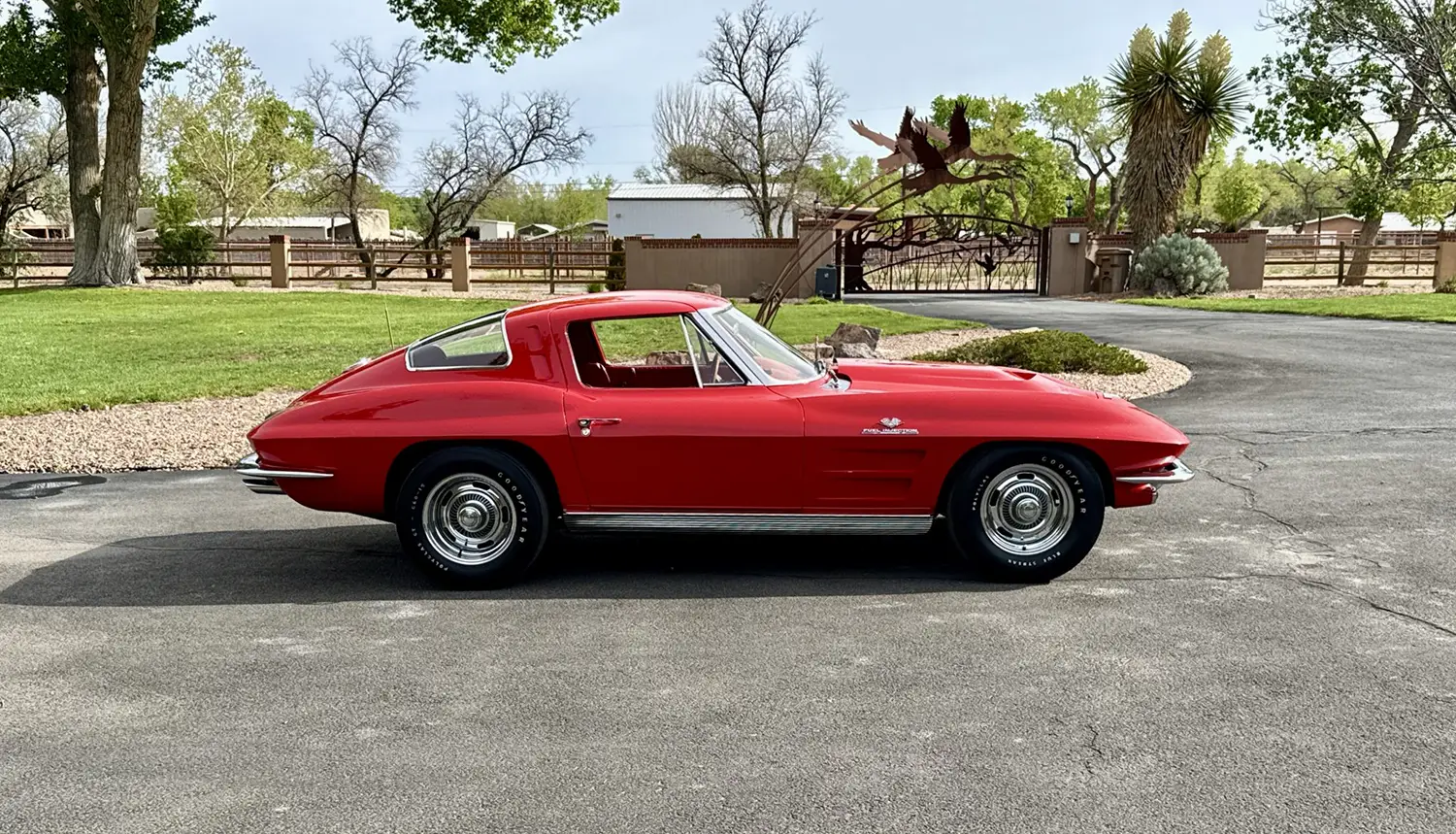
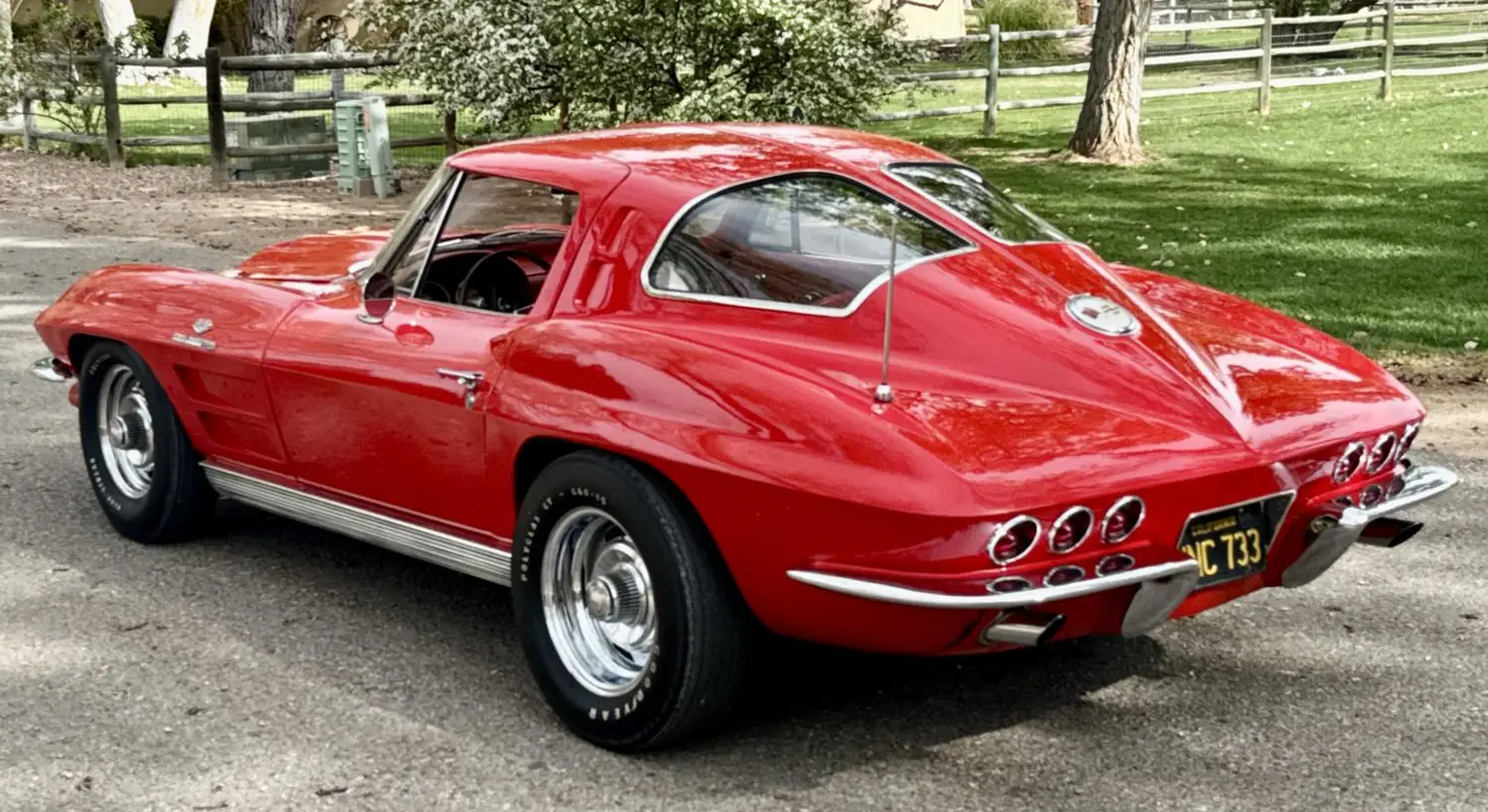
The visual character of the inaugural C2 coupe is defined by the iconic central spine that bisects the rear glass, a design element exclusive to the 1963 model year. This fiberglass body is finished in factory-correct Riverside Red and features several period-inspired modifications including a cowl-induction hood and a six-taillight configuration. Authentic California black plates remain with the car, complementing the flip-up headlamps and sleek fender vents that define the Sting Ray’s aerodynamic profile. The car sits on 15-inch Rally-style wheels mounted with Goodyear Polyglas tires, while dual exhaust tips exiting through the rear valance provide a classic finishing touch to this red-on-red masterpiece.
Crimson Vinyl Cabin with Hurst Shifting
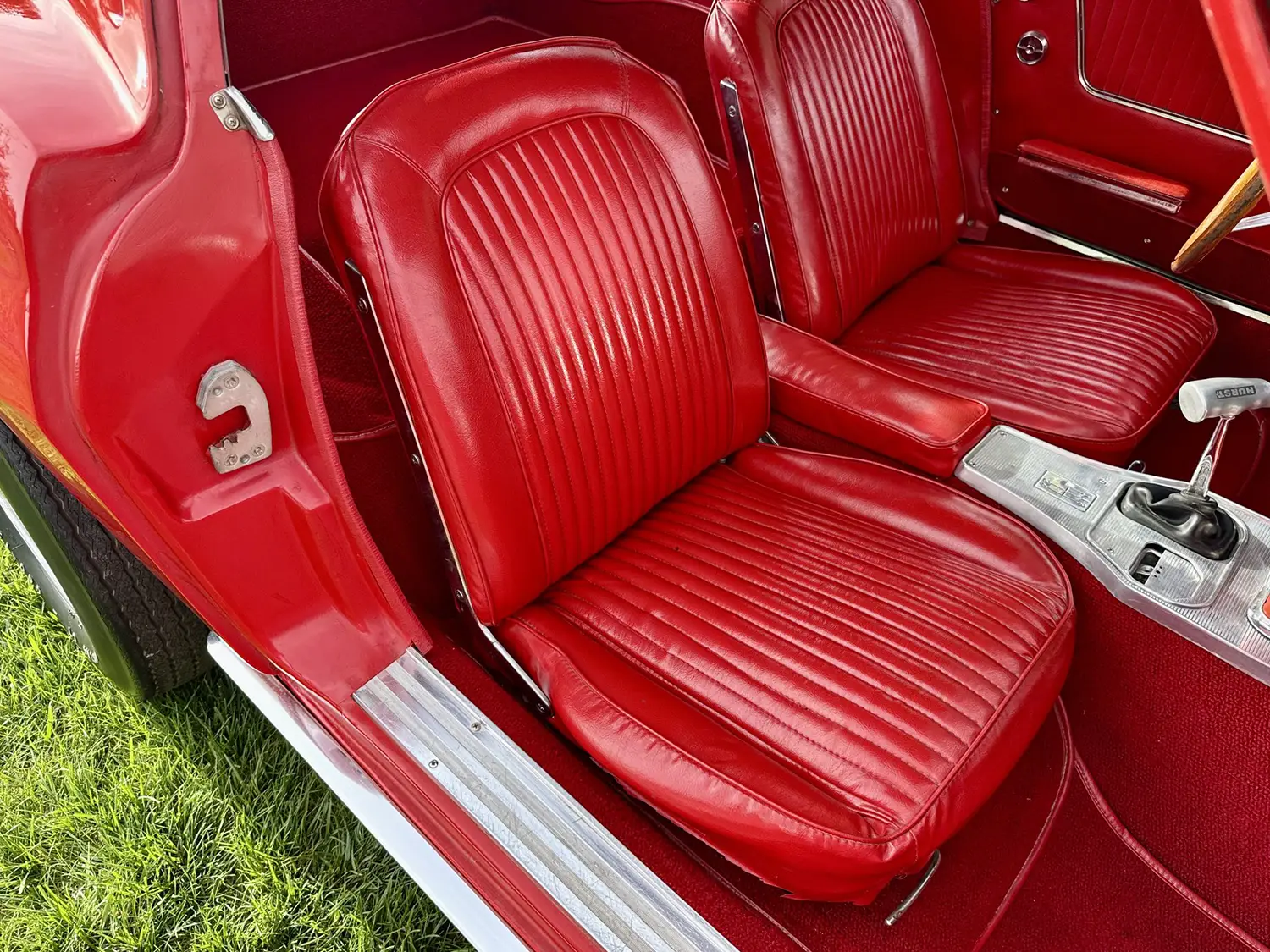
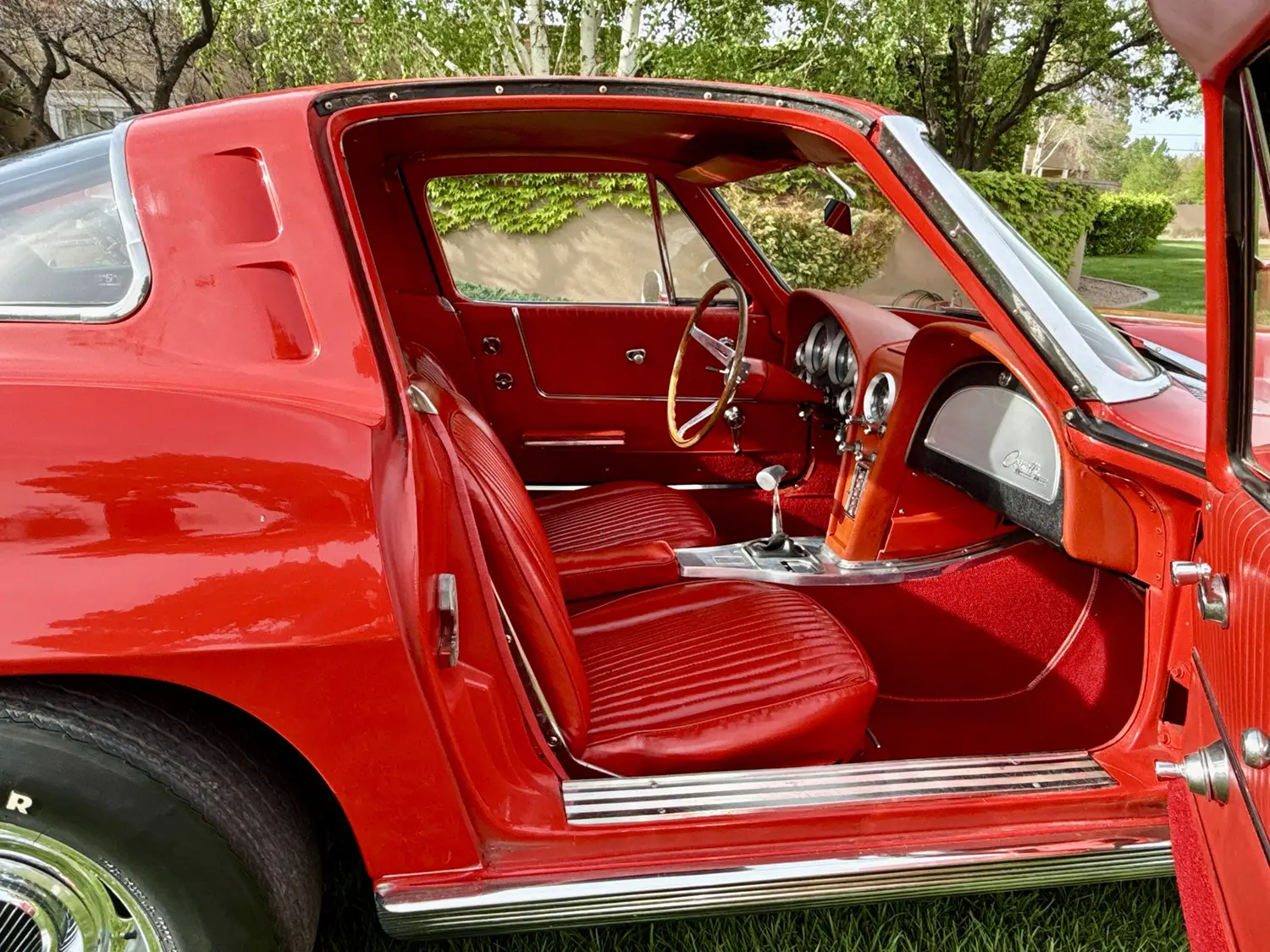
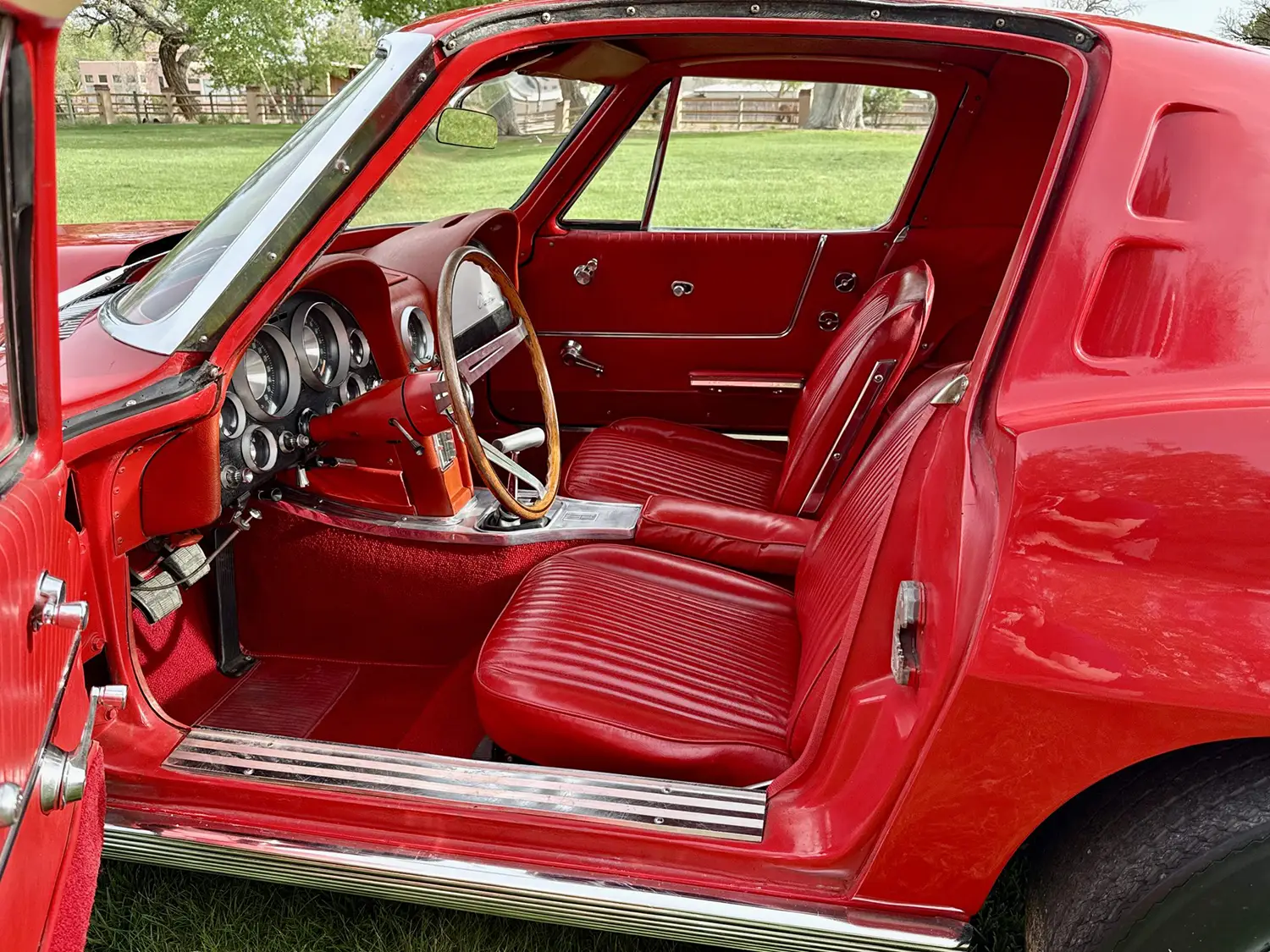
The interior is a monochromatic sanctuary of red vinyl, with bucket seats that match the color-coordinated door panels and carpeting. The driver interacts with a wood-rimmed steering wheel and a full suite of instrumentation, including a 160-mph speedometer and a tachometer with a 6,500-rpm redline. A Hurst T-handle shifter has been installed to manage the four-speed manual transmission, offering more precise gear changes than the factory unit. Despite its time in storage, the cabin retains its classic amenities such as an AM/FM radio, a heater, and an analog clock. This cockpit represents the height of 1960s sports car luxury, blending functional racing ergonomics with elegant mid-century design.
High-Output 327ci L76 V8 and Dual-Quad Induction
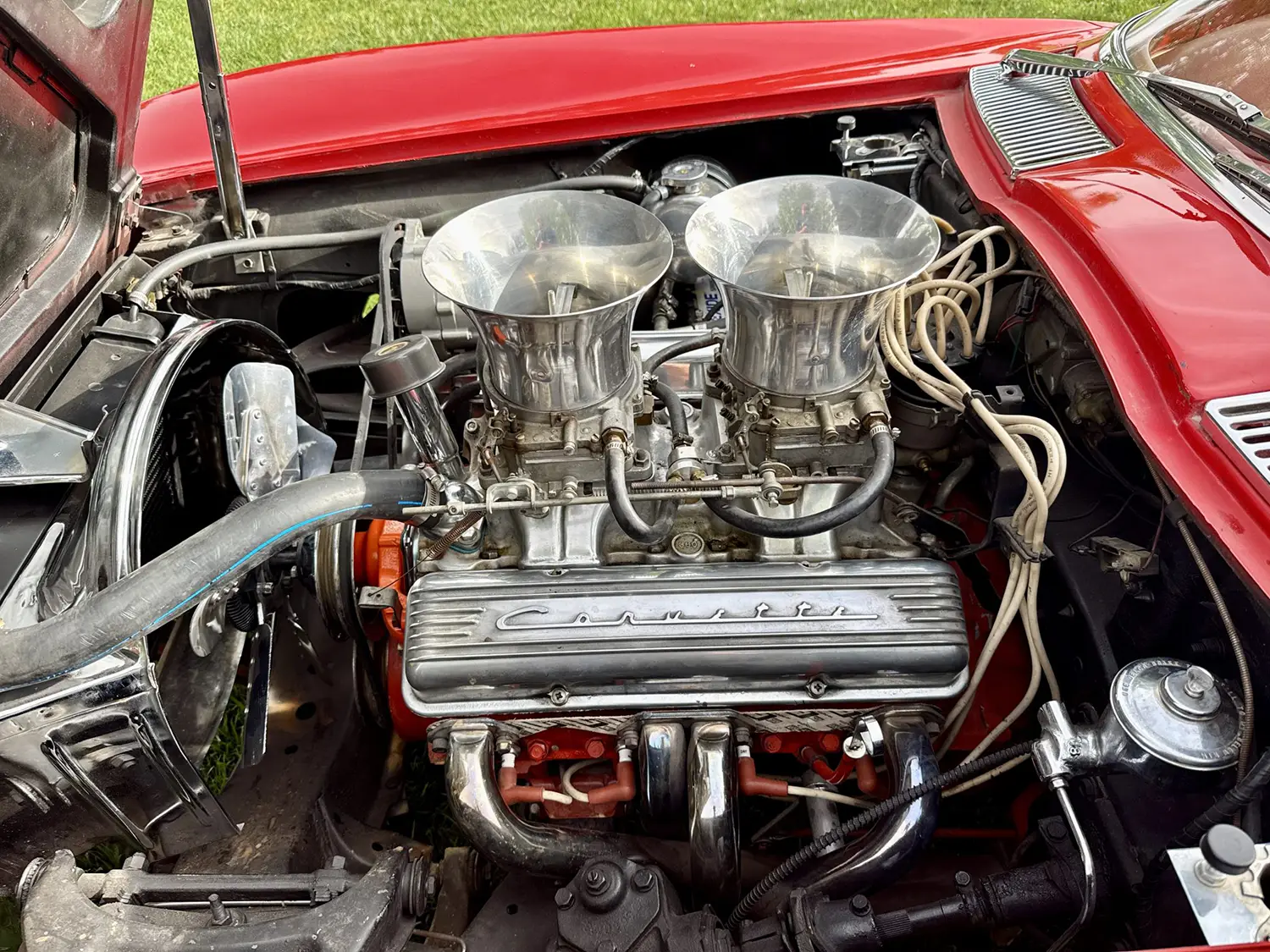
At the heart of this Sting Ray is a 327ci L76 V8, which was factory rated at 340 hp / 345 PS and 344 lb-ft / 466 Nm of torque. This numbers-matching engine has been enhanced with an Offenhauser intake manifold, dual carburetors with velocity stacks, and polished exhaust headers for improved breathing and a more aggressive power delivery. To prepare the car for the road after 38 years of sitting, technicians in 2025 rebuilt the carburetors and replaced the water pump, distributor, and spark plugs. This small-block V8 sends power to the rear wheels through a four-speed manual gearbox, providing the visceral, high-revving soundtrack that made the L76 a legend on both the street and the strip.
| Specification | Detail |
|---|---|
| Engine | 327ci L76 V8 (Numbers Matching) |
| Induction | Dual Carburetors / Offenhauser Intake |
| Transmission | 4-Speed Manual |
| Brakes | Four-Wheel Drums |
| Exterior Color | Riverside Red (923) |
| Interior Color | Red Vinyl (490L) |
A Premier Investment Among American Classics
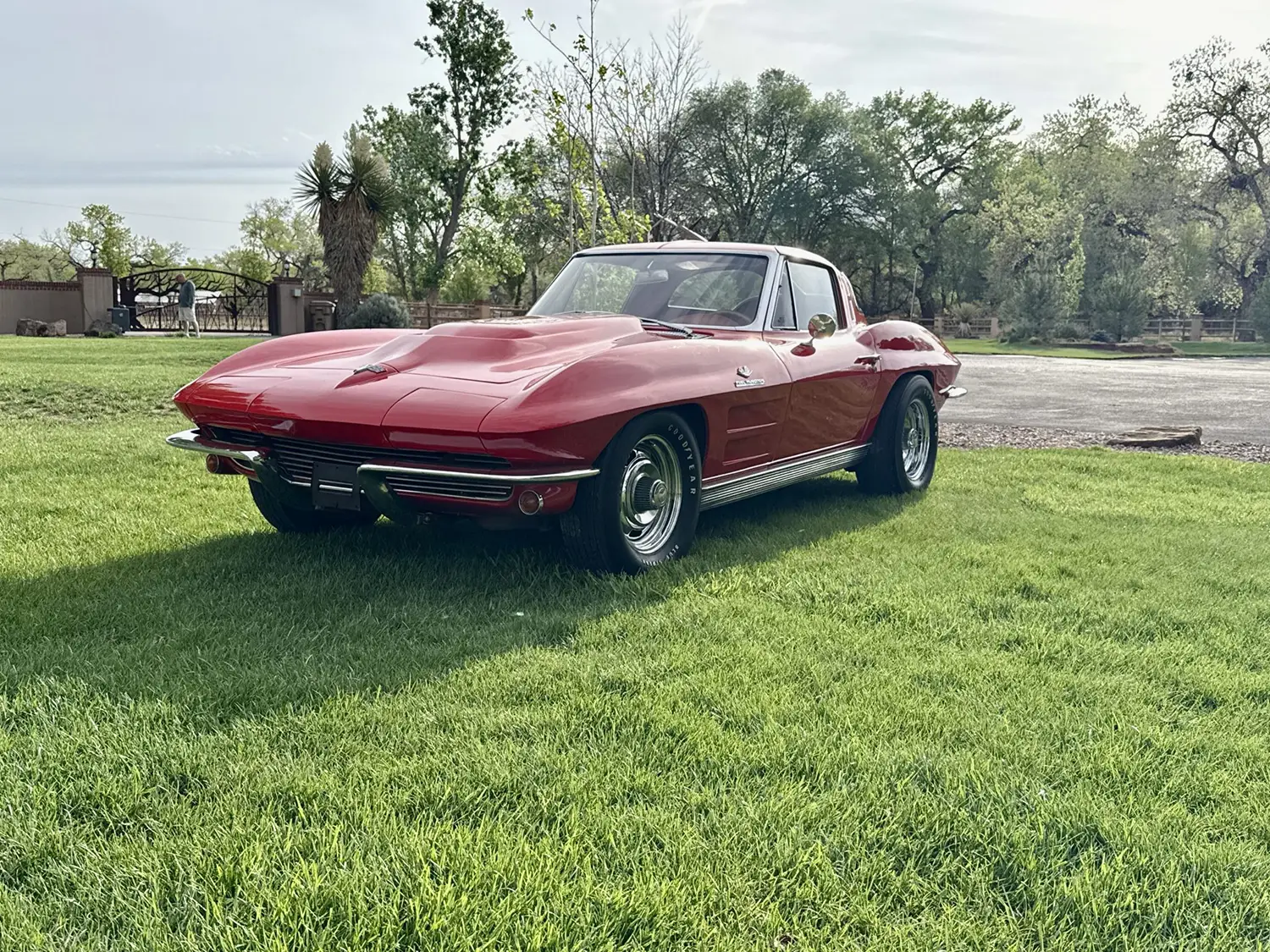
The 1963 “Split-Window” occupies a unique space in the collector market, often outperforming its contemporary rivals like the Jaguar E-Type or the Shelby Cobra in terms of long-term desirability. Its unique selling point is the single-year rear window design, which has made it one of the most recognizable automotive forms in existence. While many examples have been restored to strict factory specifications, period-modified survivors like this one offer a different kind of appeal, representing the way these cars were actually enjoyed during the peak of the muscle car era. The combination of original family ownership and a recent mechanical revival makes this red coupe a standout candidate for any serious American car collection.
Authenticity and the Road to Restoration
Investing in a C2 Corvette requires careful attention to mechanical provenance, and this example delivers with its matching-number engine stamping and original trim tags. The recent work performed in 2025 ensures that the critical cooling and ignition systems are ready for operation after decades of dormancy. While the car shows paint imperfections and visible cracking on the older tires, these details serve as a roadmap for the next owner to decide between continued preservation or a concours-level restoration. Regardless of the path chosen, this Riverside Red split-window remains a cornerstone of automotive engineering, celebrating the moment the Corvette became a world-class sports car icon.
Disclaimer: Content on this site is for informational and entertainment purposes only. Details, analyses, and opinions reflect current trends and personal views, not professional or financial advice. Always verify information with official sources before making any decisions.
Source: bringatrailer.com