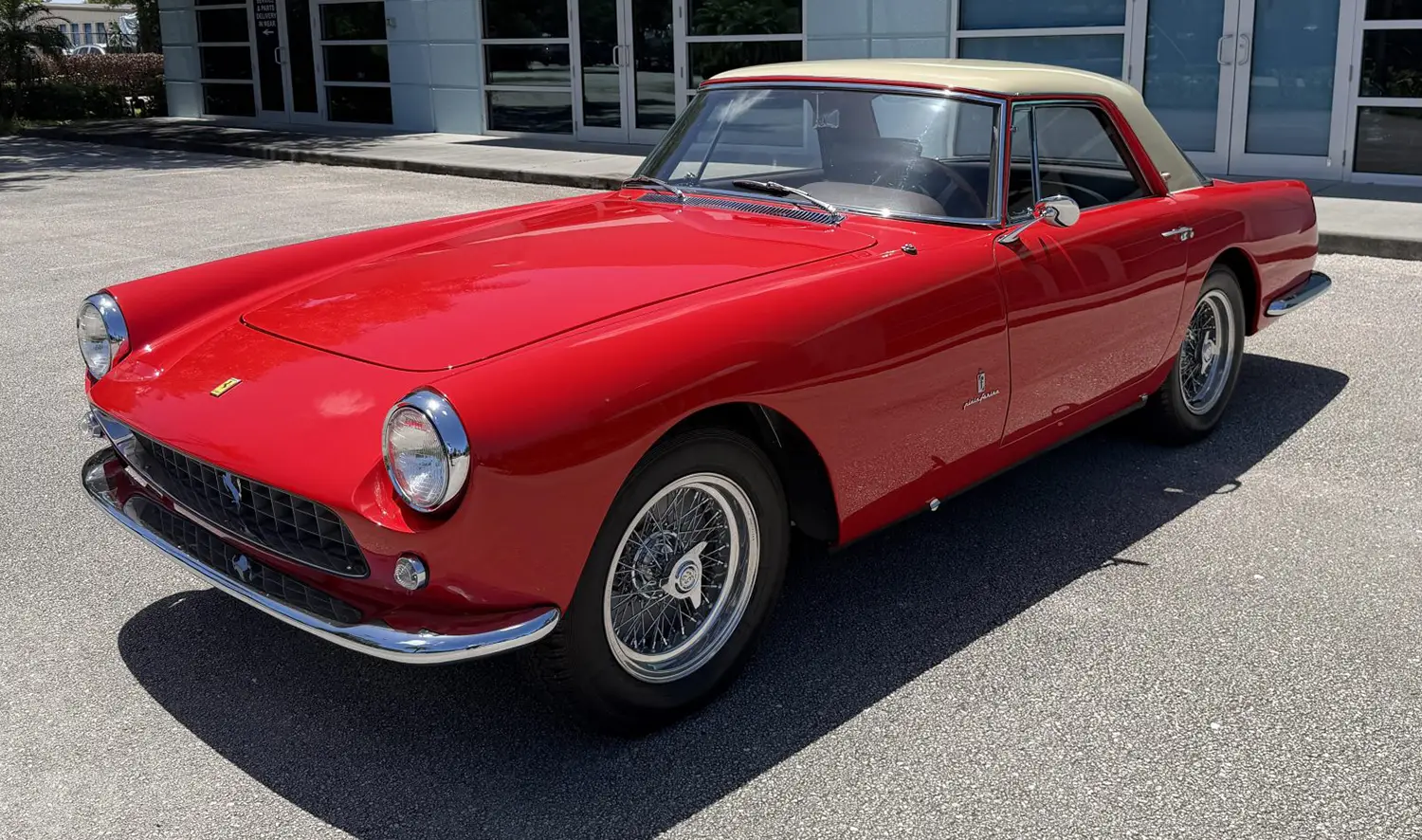
The 1959 Ferrari 250 GT stands as a pivotal moment in Maranello’s history, representing the model that transitioned Ferrari from a boutique coachbuilder into a true series-production manufacturer. As the 191st of only 353 Pinin Farina-bodied coupes produced, this example highlights the elegant notchback styling that debuted at the 1958 Paris Motor Show. Originally delivered through John Von Neumann’s legendary Hollywood dealership, this chassis has traversed a global path through Switzerland and Florida over the decades. It offers collectors a refined grand touring experience, blending a 2,600mm wheelbase chassis with the sophisticated mechanical heart that made the 250 series the most famous lineage in automotive history.
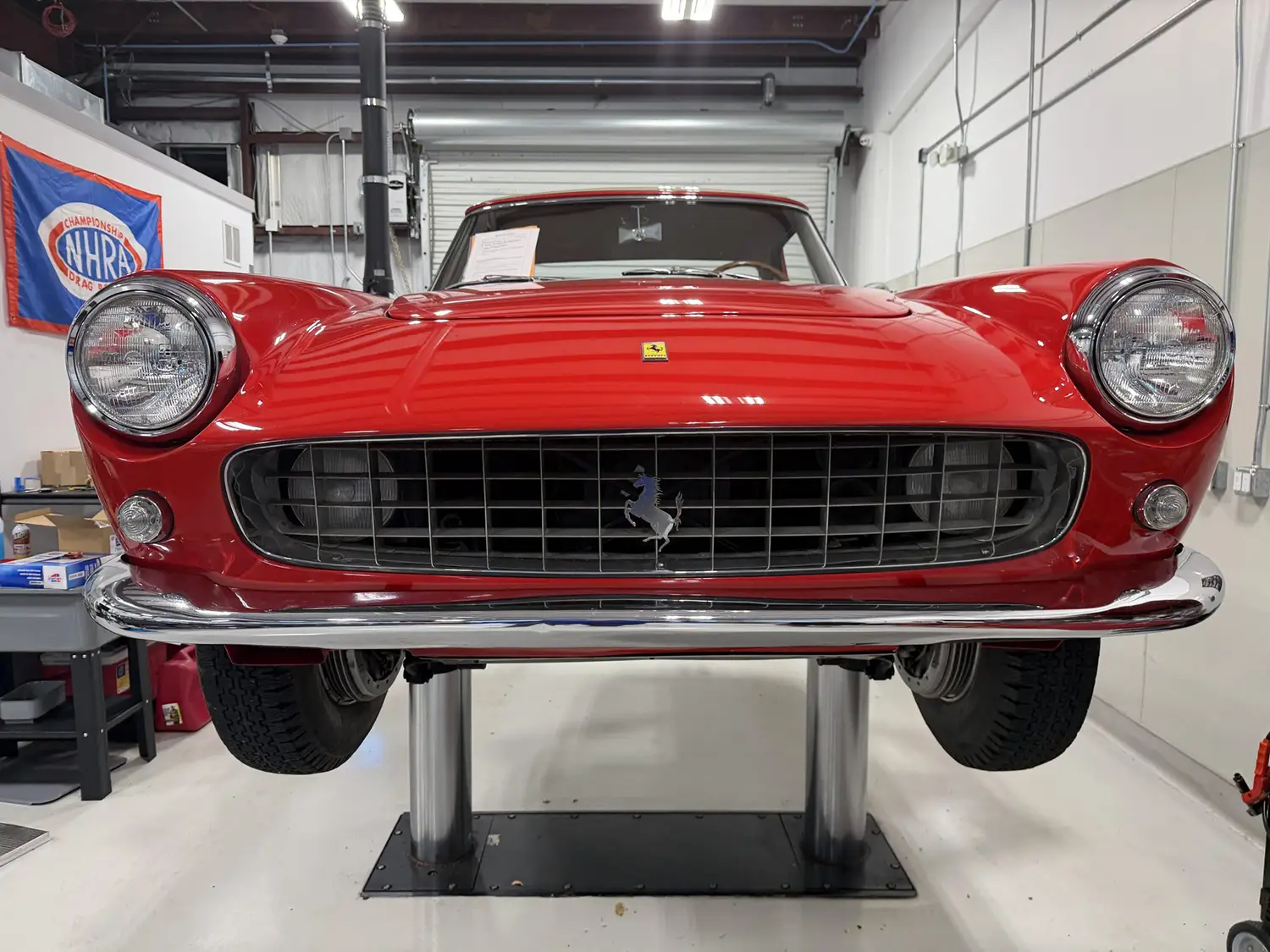
Notchback Pinin Farina Elegance in Red and Beige
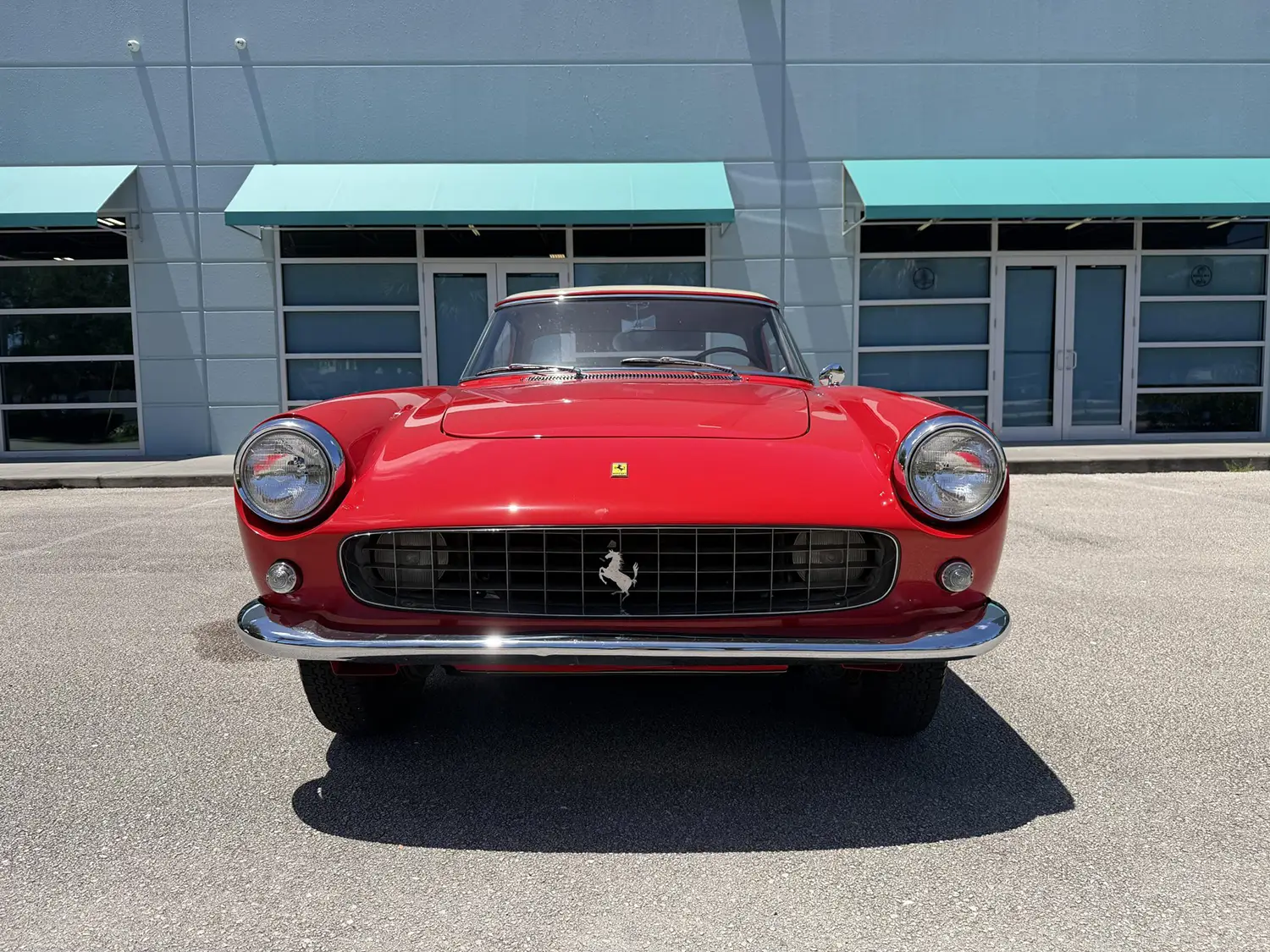
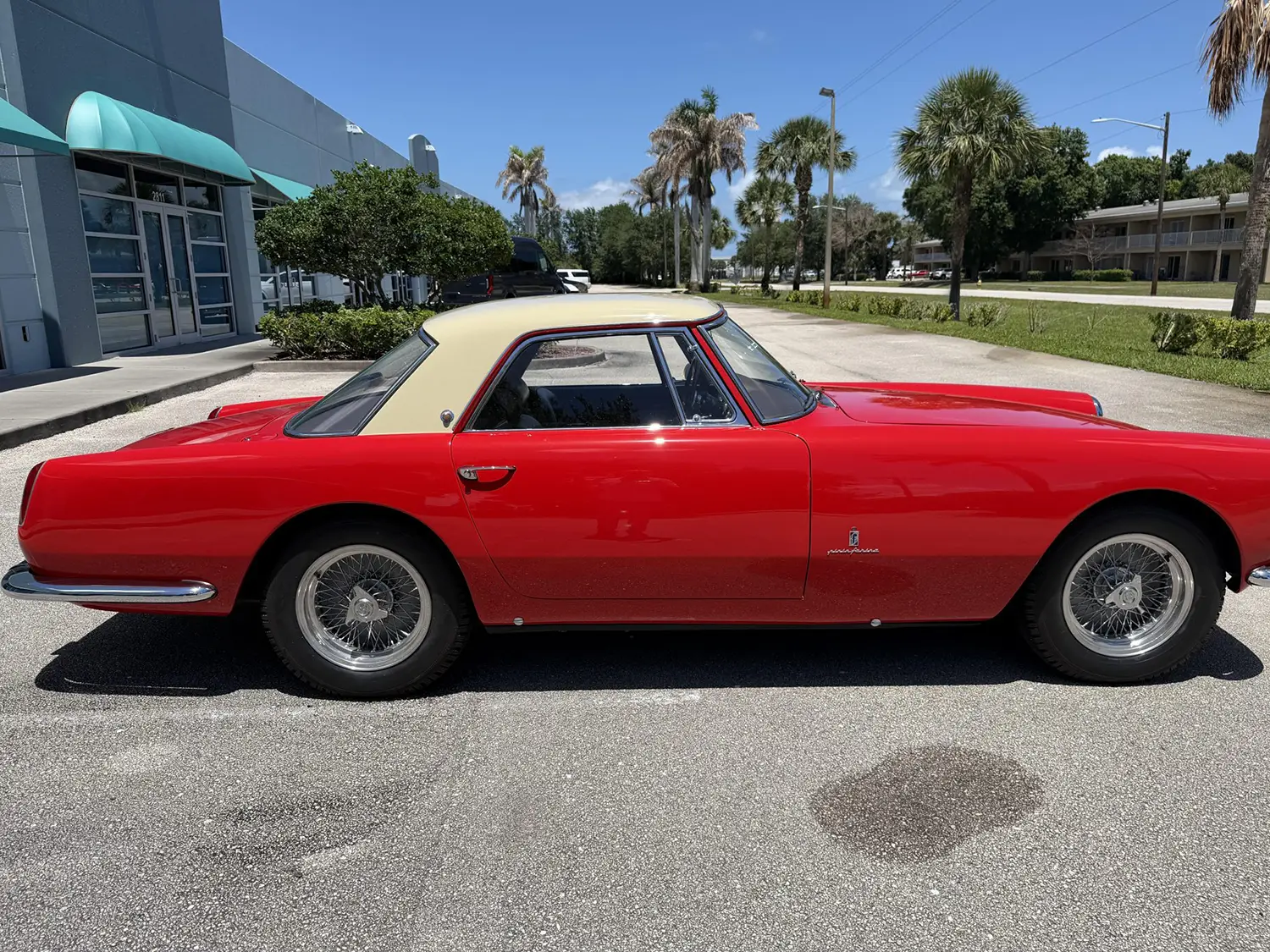
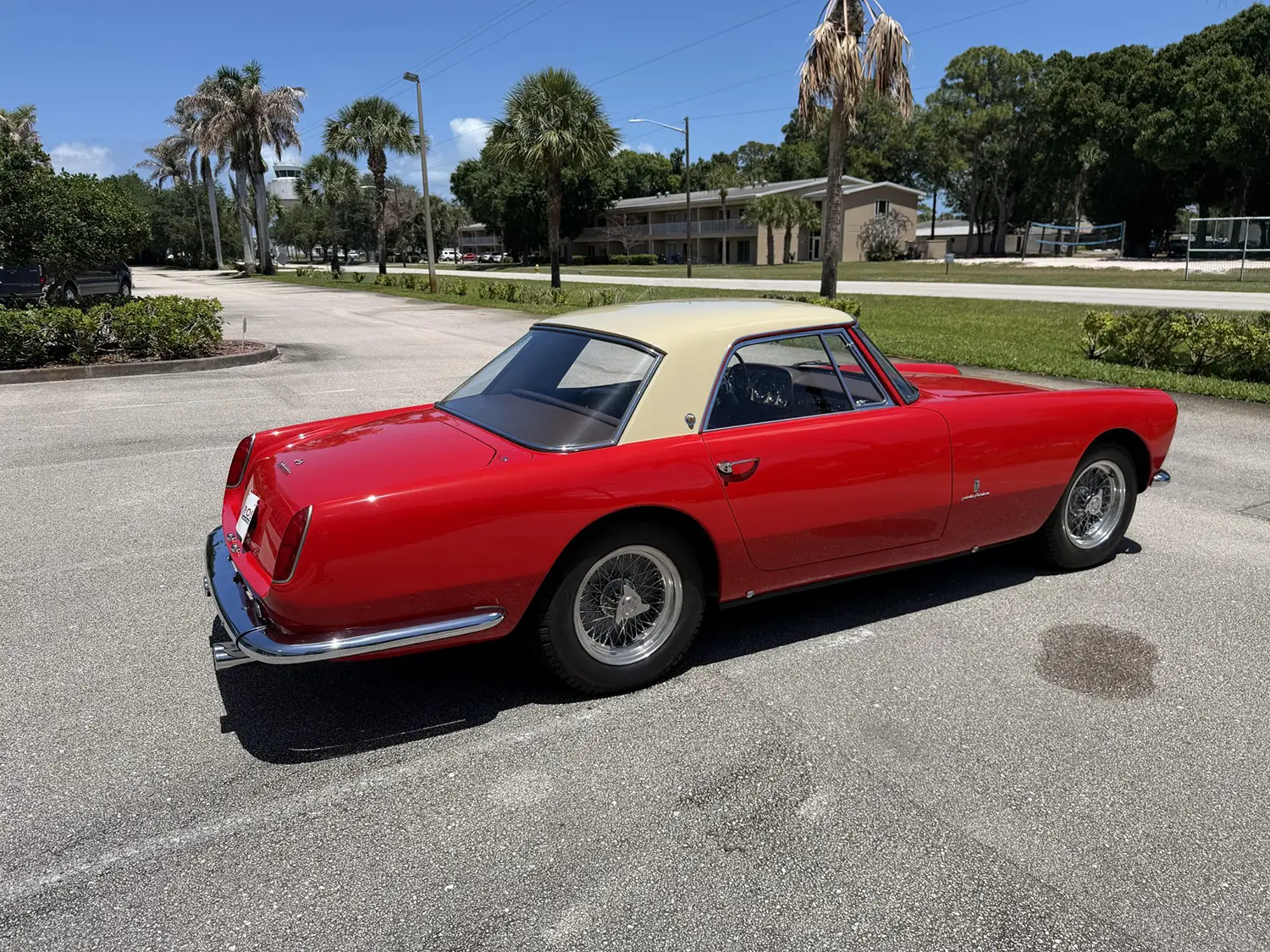
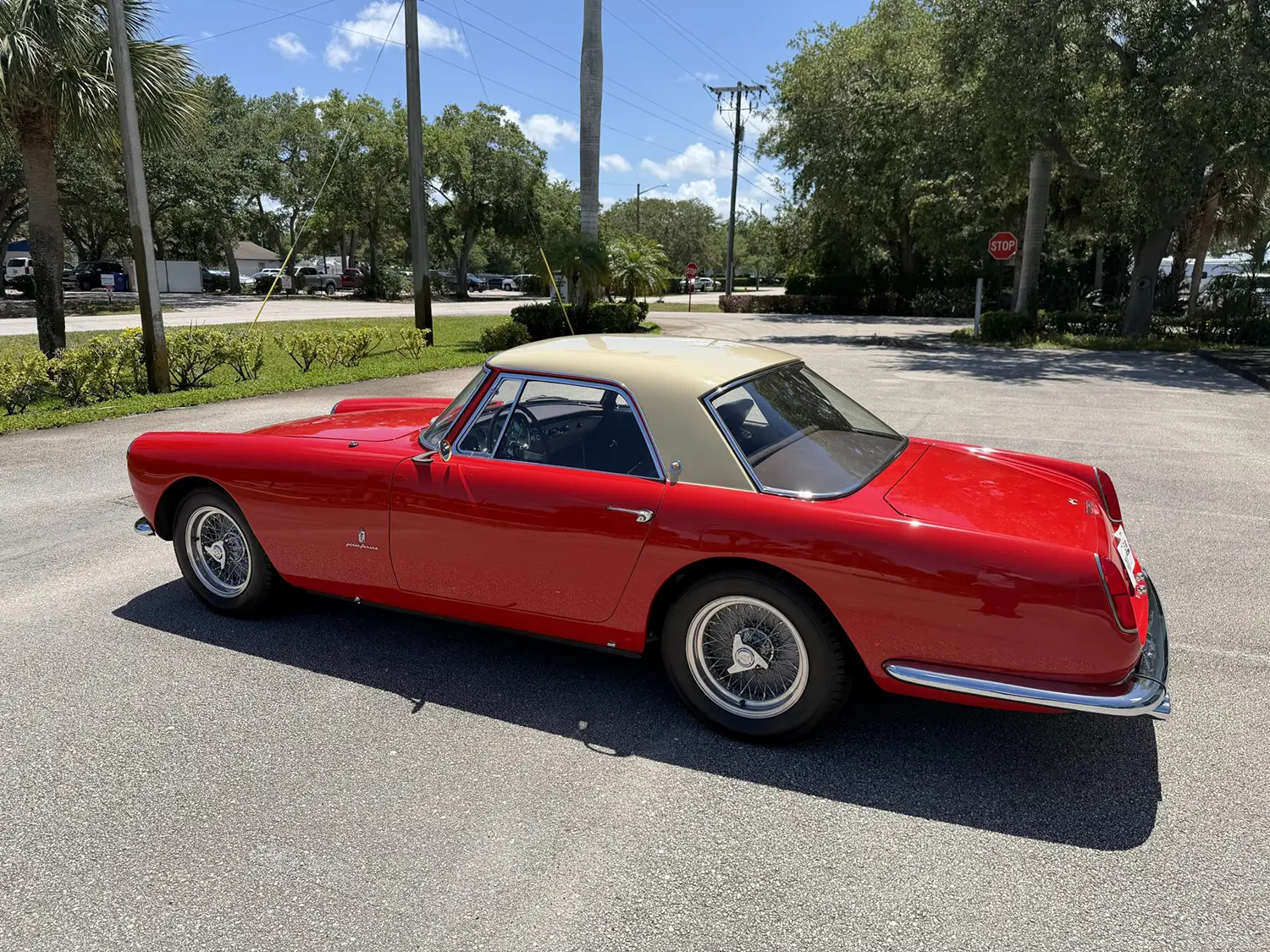
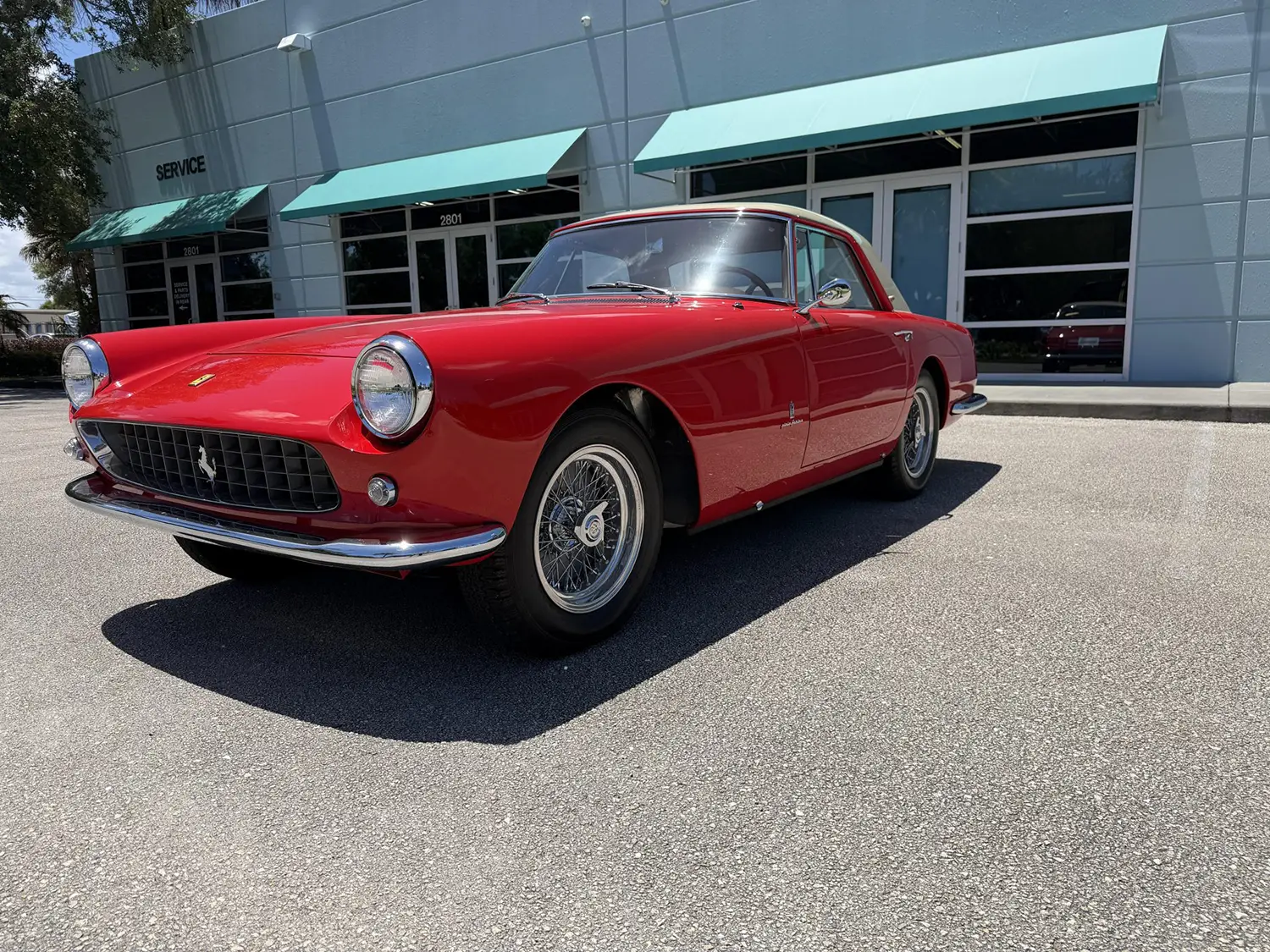
The visual character of this Pinin Farina coupe is defined by its clean, understated lines, a departure from the more aggressive racing Ferraris of the mid-fifties. Finished in a classic red with a contrasting beige roof, the bodywork was meticulously fitted over a steel-tube chassis at the newly opened Grugliasco factory. Distinctive exterior details include fog lamps integrated discreetly behind the front grille and quad exhaust outlets that hint at the V12 potential. It sits with a perfect stance on 16-inch Borrani wire wheels secured by three-eared knock-offs and wrapped in period-correct Pirelli Cinturato tires. Every element, from the Marchal turn signal repeaters to the guardless bumpers, emphasizes the sophisticated “Gran Turismo” silhouette that redefined high-speed luxury travel in 1959.
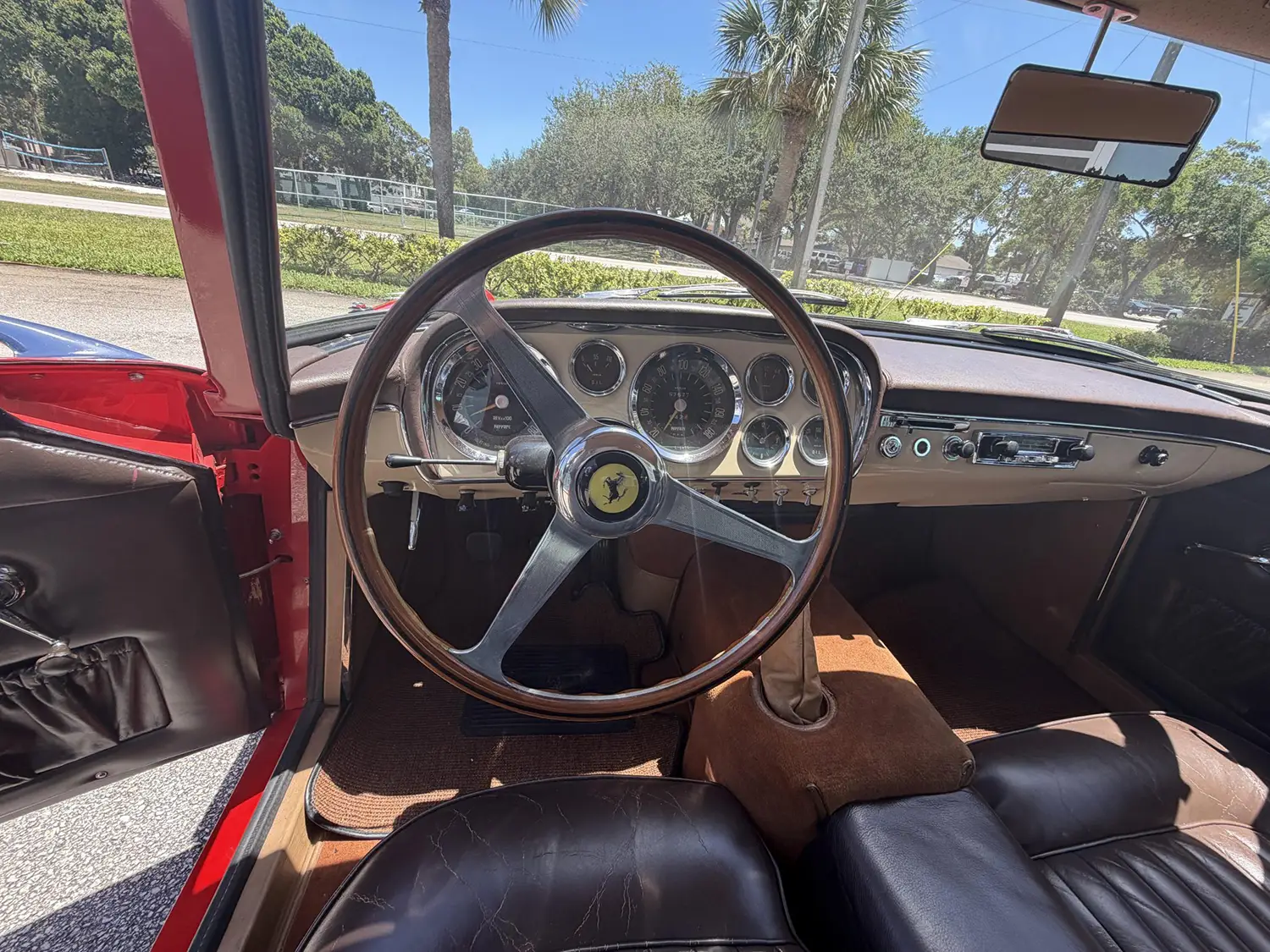
Brown Leather Grand Touring Cabin with Blaupunkt Audio
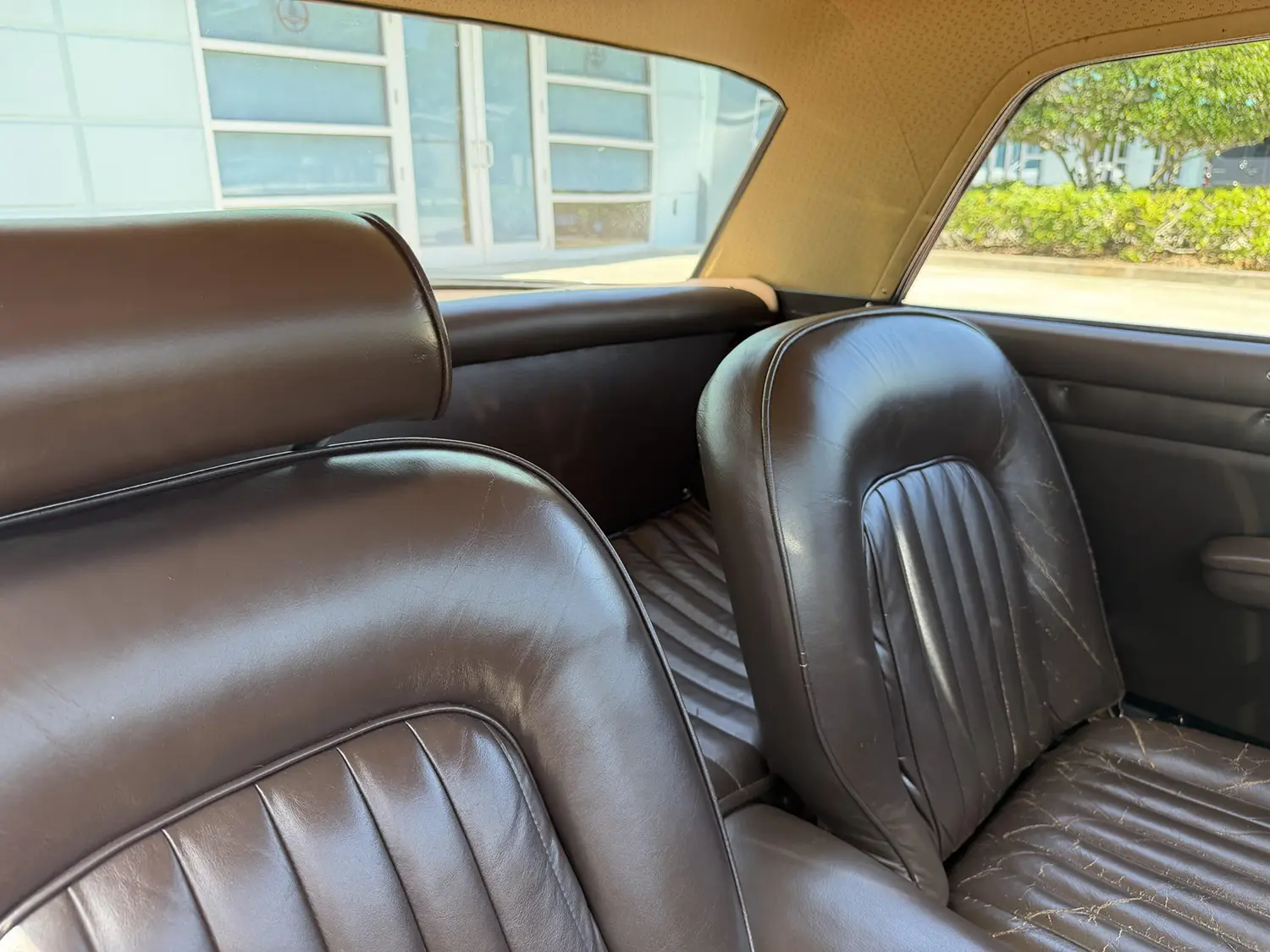
Inside the cabin, the environment is a masterclass in mid-century Italian luxury, featuring 2+2 seating upholstered in rich brown leather. This coordinated hide extends across the door panels, transmission tunnel, and the upper dashboard, creating a warm and cohesive atmosphere. The driver interface is dominated by a large wood-spoke steering wheel and a classic offset shifter that controls the four-speed manual gearbox. Instrumentation consists of a sweeping 190-mph speedometer and an 8,000-rpm tachometer, flanked by essential gauges for oil and coolant monitoring. Period-correct tan carpeting and a Blaupunkt radio complete the interior, which remains largely preserved despite a minor age-related tear on the driver-side bolster. It is a space designed for crossing continents with effortless style and tactile satisfaction.
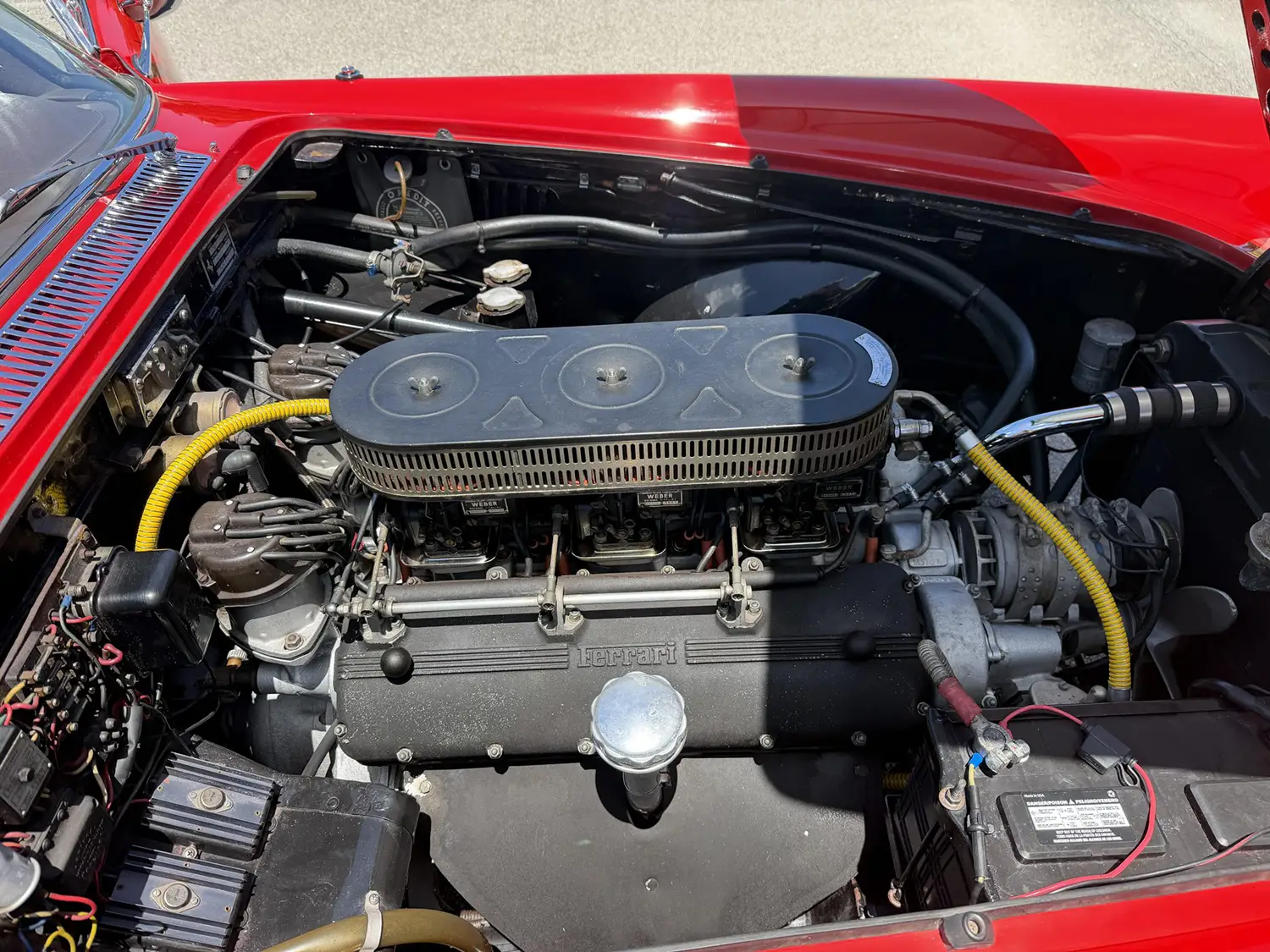
Inside Plug Colombo V12 Heart and Finned Aluminum Brakes
Performance is anchored by the legendary 3.0-liter Tipo 128D Colombo V12, an engine revered for its smooth power delivery and iconic exhaust note. This “inside-plug” variant features triple Weber carburetors and twin distributors, producing a factory-rated 240 hp / 243 PS and 181 lb-ft / 245 Nm of torque. The engine sends power to the rear wheels via a crisp four-speed manual transmission, providing a visceral connection between the driver and the road. To manage this output, Ferrari equipped the car with finned aluminum drum brakes utilizing duplex actuation for improved heat dissipation. The suspension utilizes a traditional setup of coil-sprung independent front arms and a leaf-sprung solid rear axle, all dampened by Houdaille shock absorbers at every corner.
| Technical Specifications | |
|---|---|
| Engine | 3.0L Tipo 128D Colombo V12 |
| Induction | Triple Weber Carburetors |
| Horsepower / Torque | 240 hp / 243 PS and 181 lb-ft / 245 Nm |
| Transmission | 4-Speed Manual |
| Wheels | 16-inch Borrani Wire Wheels |
| Chassis | Steel-Tube (2,600mm Wheelbase) |
The Blue Chip Appeal of the Early Pinin Farina Coupes
In the global market for vintage Ferraris, the 250 GT Pinin Farina Coupe is increasingly recognized as a blue-chip investment that offers better value than its Spyder or Berlinetta siblings. Its unique selling point is the combination of the world-class 250-series drivetrain with a body style that is genuinely usable for long-distance touring and vintage rallies. While racing variants of the 250 GT command eight-figure sums, these coupes provide nearly the same mechanical experience at a more accessible entry point. Compared to rivals like the Aston Martin DB4 or Maserati 3500 GT, the Ferrari’s Colombo V12 remains the gold standard for engine architecture. As collectors prioritize provenance and usability, documented examples with Hollywood roots and long-term care continue to see strong demand.
Investment Integrity and Mechanical Heritage
Owning a 1959 Ferrari 250 GT is a commitment to preserving the heritage of the world’s most storied automotive brand. This specific chassis, 1457GT, benefits from over two decades of consistent care in a single Florida collection, ensuring a level of mechanical stability that is vital for Colombo-powered cars. The presence of its matching-number engine block and factory-correct Borrani wheels reinforces its investment integrity for future concours events. Regular maintenance, including a recent service prior to its current offering, ensures the V12 remains ready for the open road. For the enthusiast seeking the definitive 1950s Ferrari experience, this Pinin Farina coupe represents an intersection of art, history, and mechanical excellence that few other vehicles can hope to match.
Disclaimer: Content on this site is for informational and entertainment purposes only. Details, analyses, and opinions reflect current trends and personal views, not professional or financial advice. Always verify information with official sources before making any decisions.
Source: bringatrailer.com