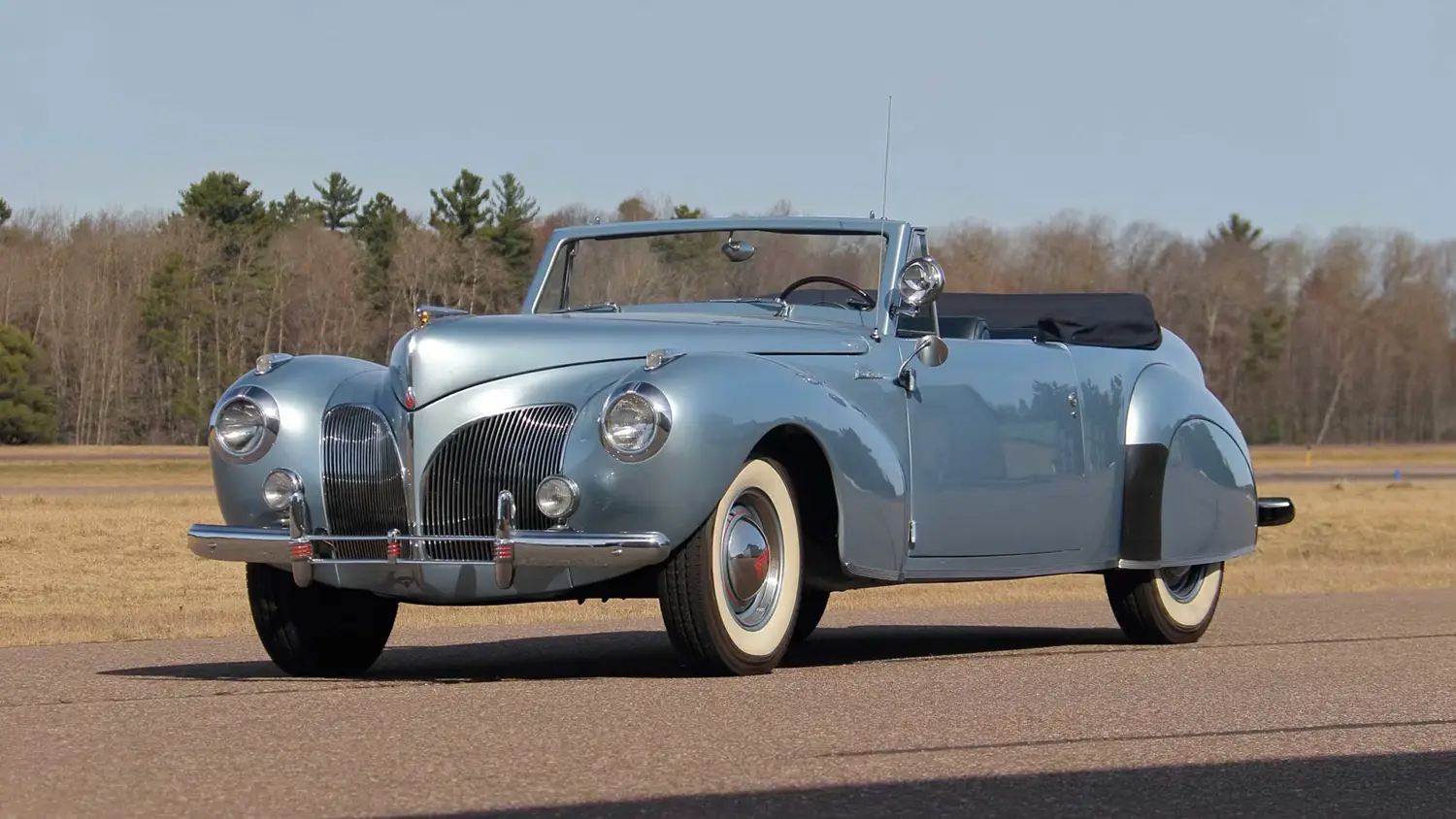
The 1941 Lincoln Continental Cabriolet stands among the most elegant American cars ever produced. Created at the height of prewar craftsmanship, it blends flowing design with refined engineering in a way few vehicles ever matched.
With just 400 units built for the model year, exclusivity defines its legacy. Lincoln positioned the Continental as a personal luxury car, targeting buyers who valued understated prestige over excess ornamentation, a philosophy that still resonates with collectors today.
A Silhouette That Shaped an Era
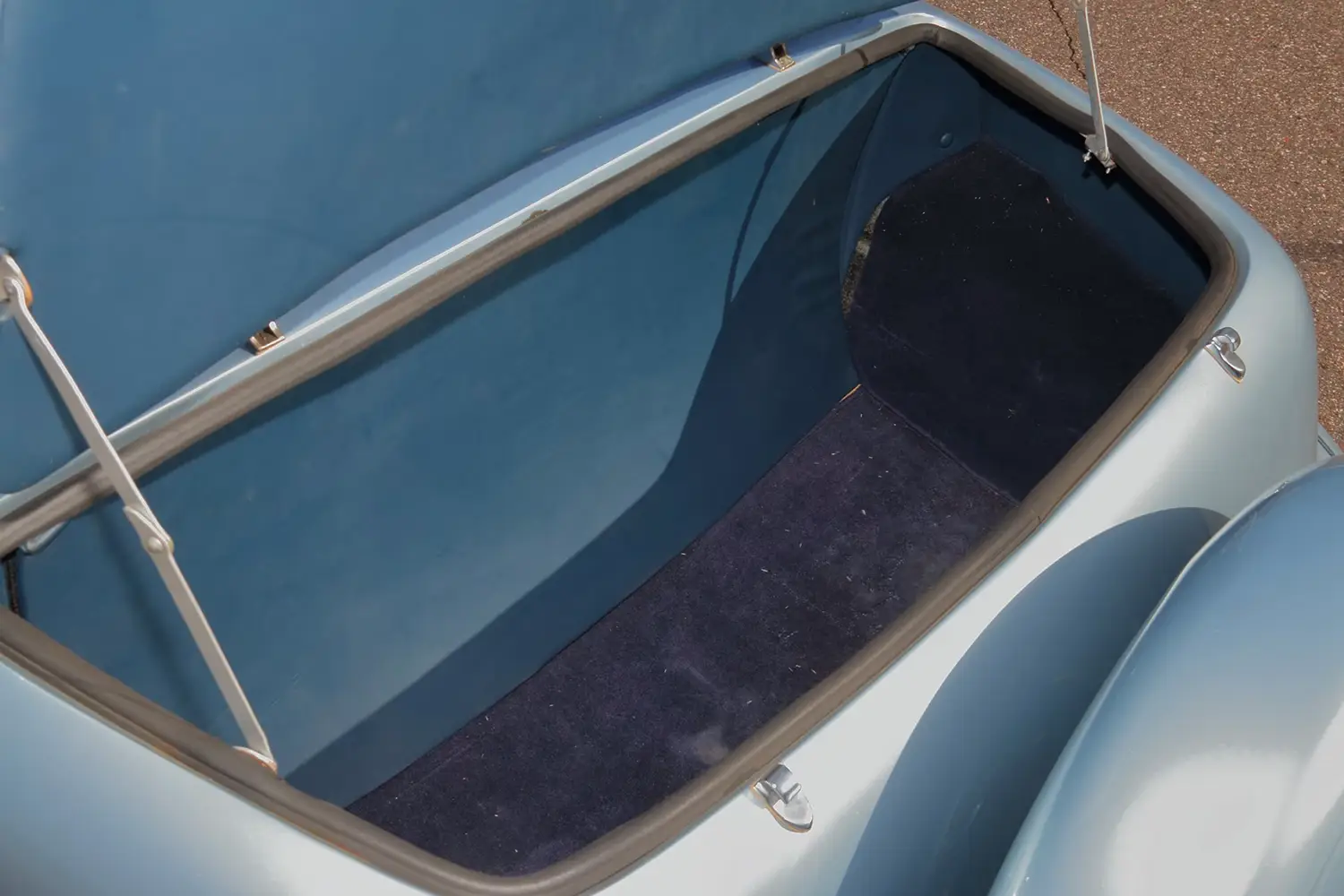
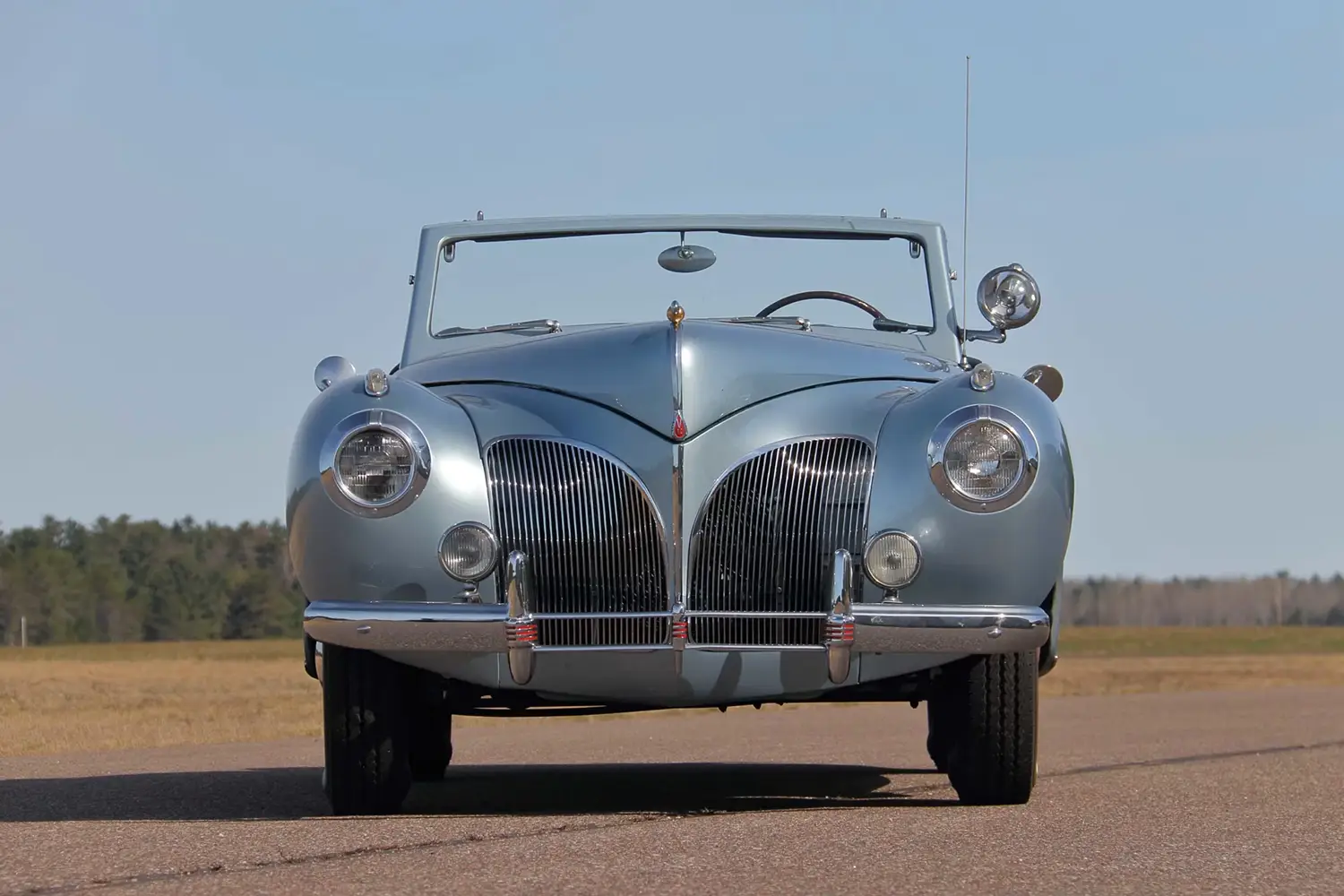
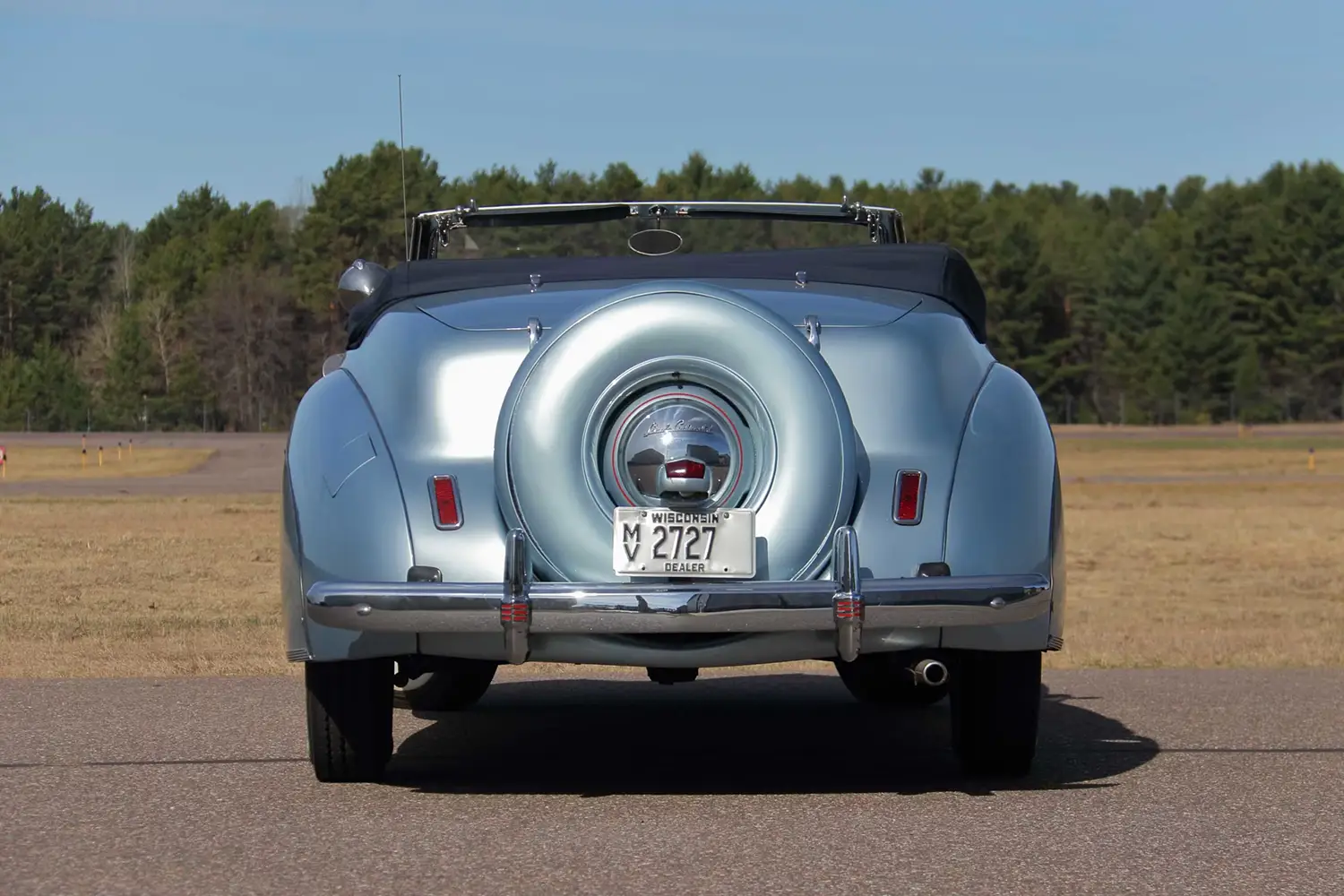
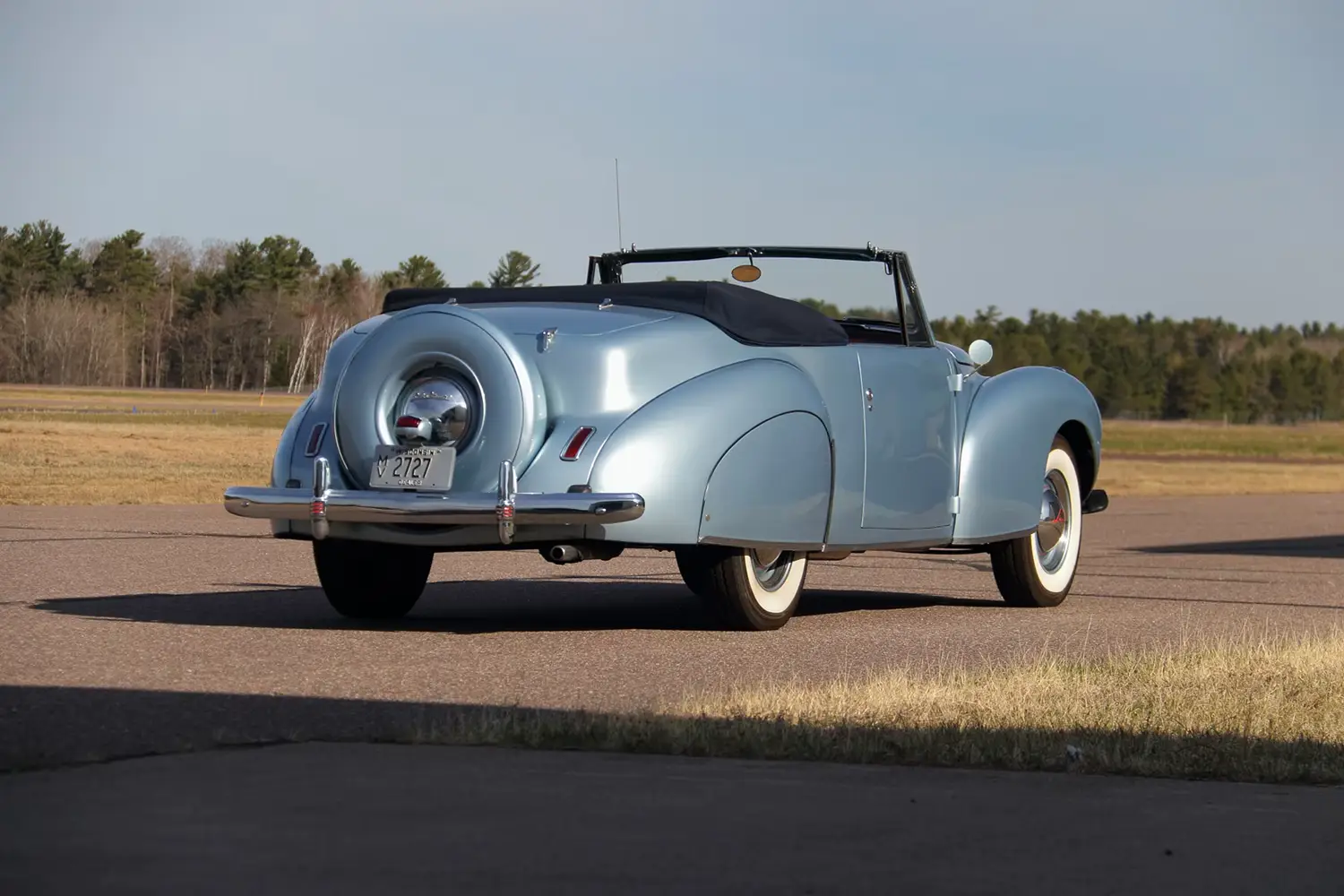
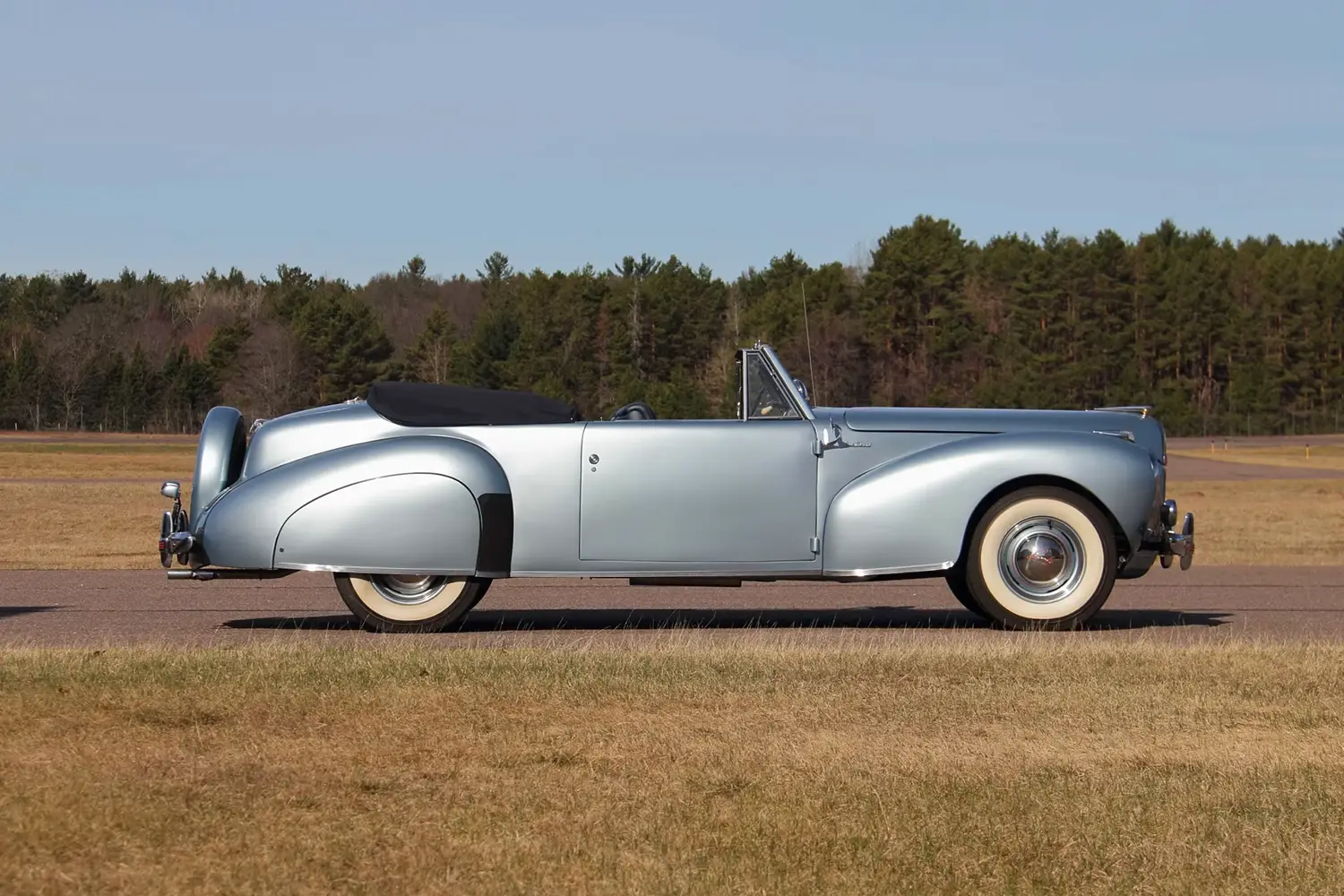
The exterior design remains instantly recognizable for its long hood and rear-mounted spare tire. This so-called Continental kit became a defining feature, extending the car’s profile with a sense of effortless motion. Finished in Light Blue, the Cabriolet’s proportions feel deliberate and balanced, avoiding the bulk common in its era.
Unlike many contemporaries, chrome accents are restrained rather than overwhelming. Smooth fender lines flow into the body, creating a cohesive shape that feels closer to European coachbuilding than traditional American styling. Even decades later, the design still feels modern in its simplicity.
Craftsmanship Over Ornamentation
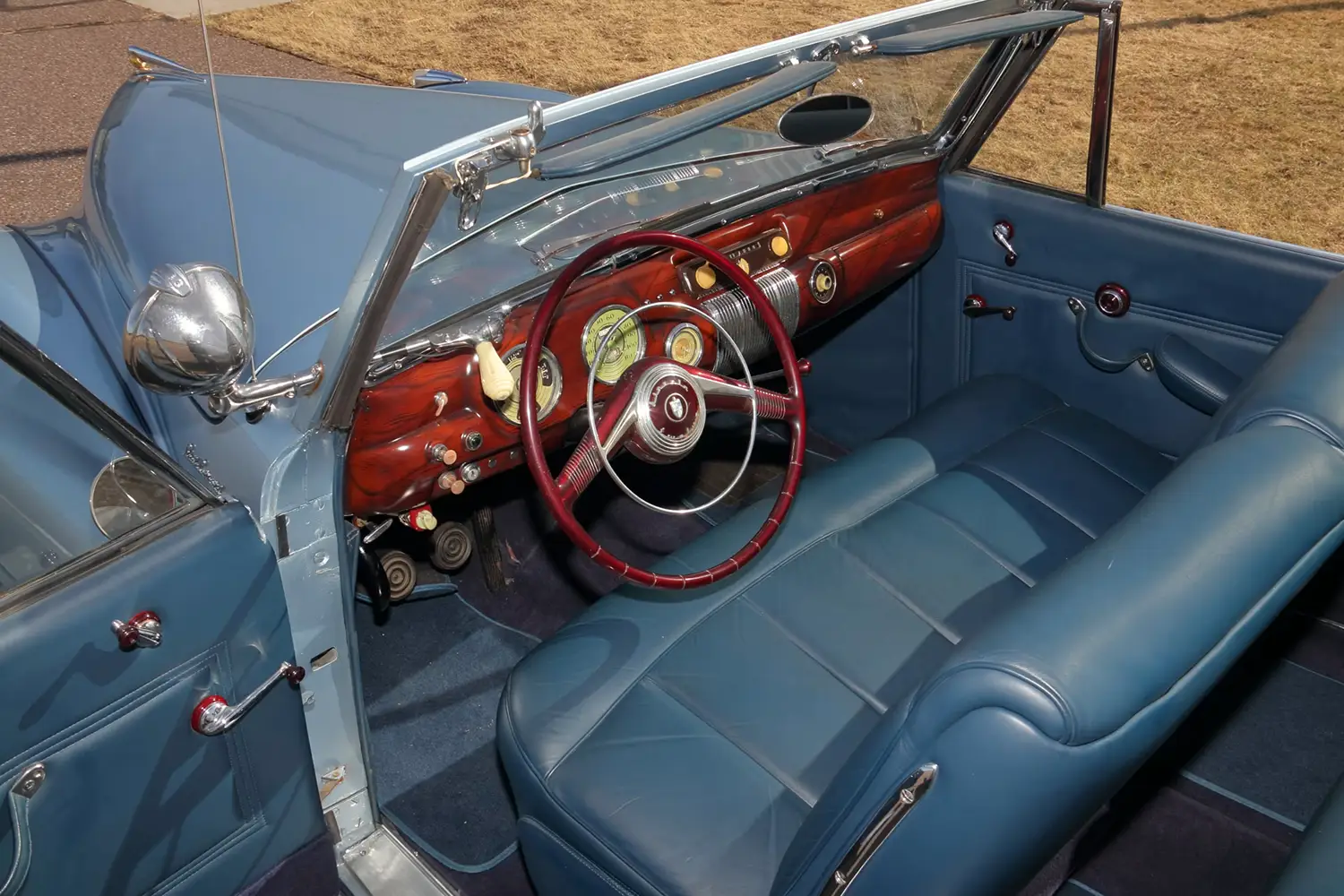
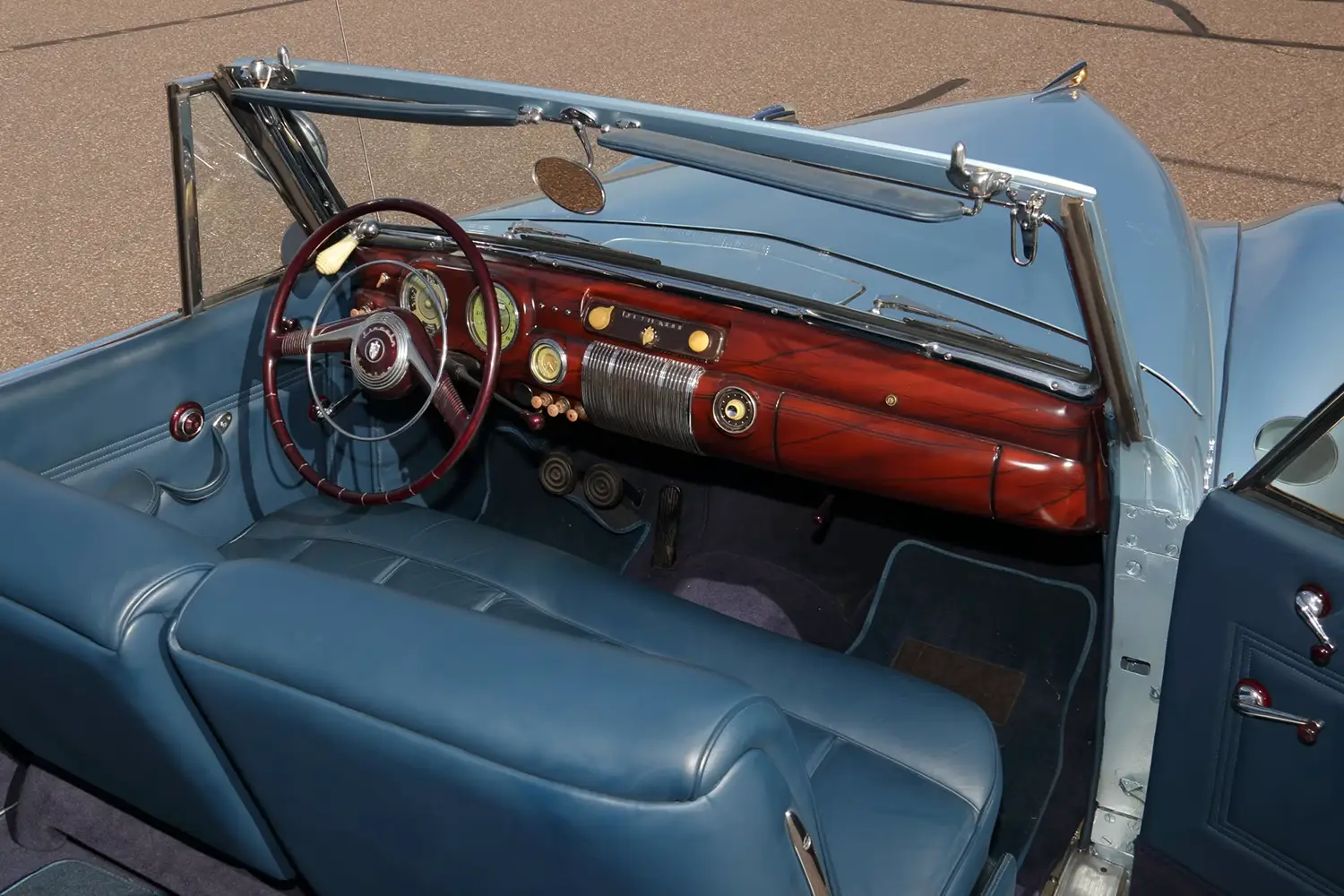
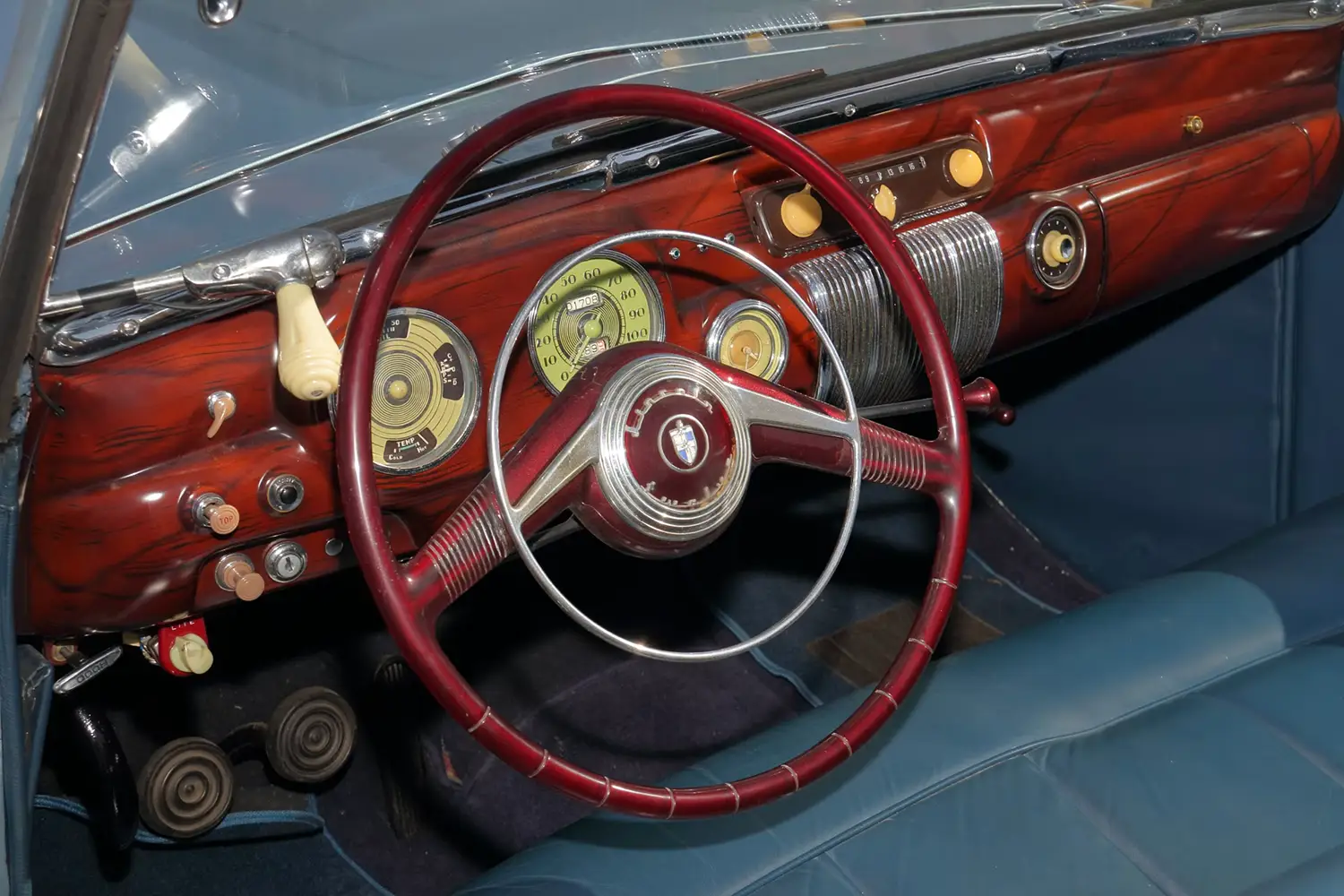
Inside, the Dark Blue interior reflects a commitment to comfort and quality materials. The cabin avoids unnecessary complexity, focusing instead on clean surfaces and tactile richness. Seating is generous, offering a relaxed driving position suited for long-distance touring.
Controls are arranged with clarity, emphasizing usability over decoration. The overall atmosphere feels calm and composed, reinforcing the Continental’s identity as a grand touring machine rather than a showpiece filled with distractions.
Smooth V12 Touring Character
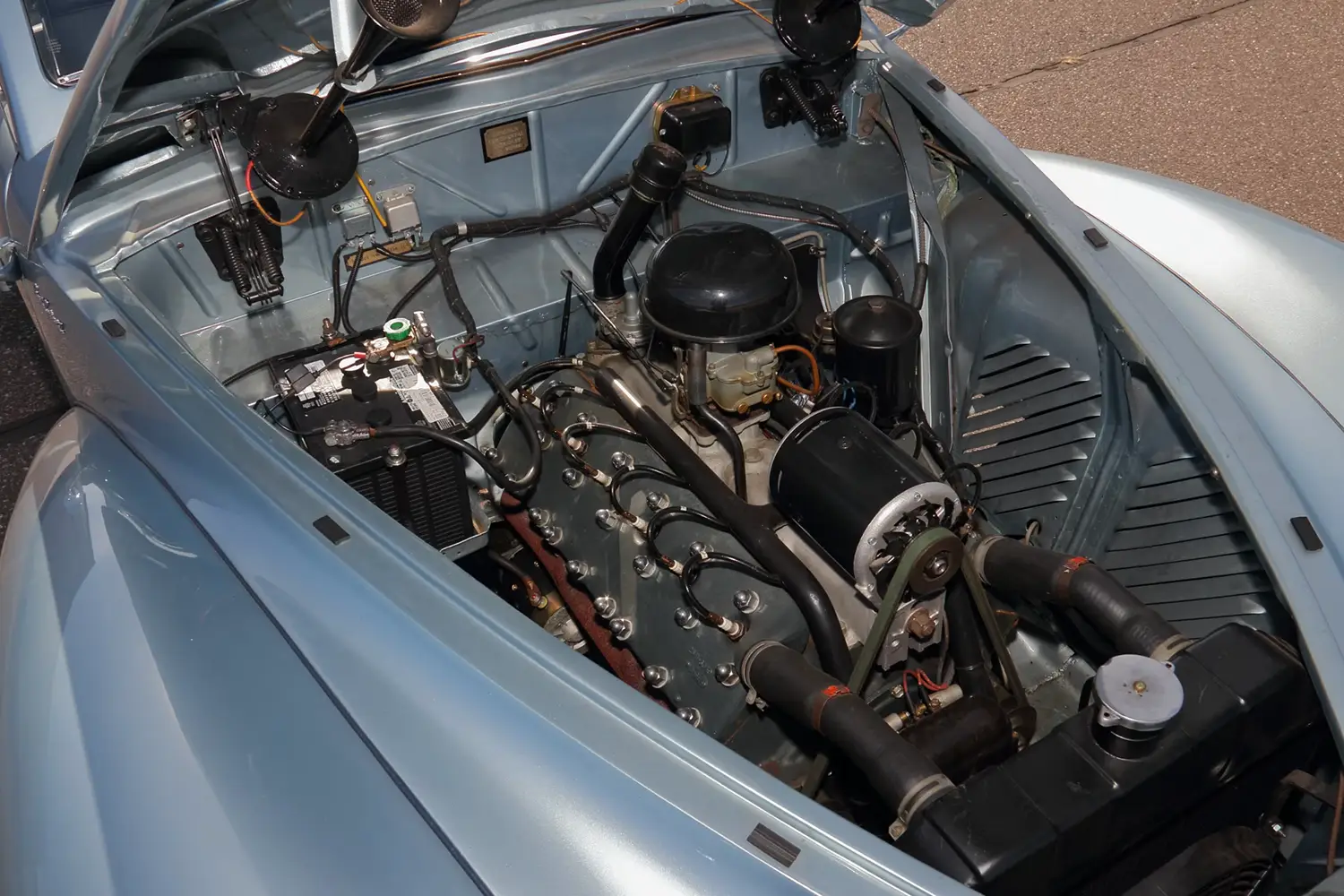
Power comes from a 292 cubic-inch V12 engine, delivering 120 hp / 122 PS and 220 lb-ft / 298 Nm. Paired with a 3-speed manual transmission, the driving experience prioritizes smoothness over outright performance, making it ideal for relaxed cruising.
Acceleration builds progressively, while the engine’s refinement remains its defining trait. Four-wheel hydraulic drum brakes provide adequate stopping power for the period, reinforcing its role as a composed grand tourer rather than a performance machine.
| Specification | Details |
|---|---|
| Engine | 292ci V-12 |
| Power | 120 hp / 122 PS |
| Torque | 220 lb-ft / 298 Nm |
| Transmission | 3-Speed Manual |
| Brakes | 4-Wheel Hydraulic Drum |
| Production | 1 of 400 |
A Benchmark of Prewar Prestige
During its time, the Continental competed with high-end American luxury cars, yet its design set it apart. Instead of following trends, it established them, influencing future generations of luxury vehicles both in the United States and abroad.
Today, its rarity and historical importance elevate it beyond simple transportation. Collectors recognize it as a milestone in automotive design, representing a moment when artistry and engineering aligned perfectly.
Collector Appeal and Lasting Value
With an estimate between $140,000 and $175,000, this Cabriolet reflects strong demand among collectors. Its limited production and timeless design support steady appreciation, especially when preserved in authentic condition.
Ownership centers on preservation rather than modification. Maintaining originality plays a critical role in long-term value, making well-kept examples particularly desirable in the classic car market.
Enduring Symbol of American Luxury
The 1941 Lincoln Continental Cabriolet remains a defining expression of prewar automotive elegance. Its restrained styling, smooth V12 engine, and limited production ensure lasting relevance in the collector world.
Few cars capture the balance between beauty and purpose so effectively. As a result, it continues to stand as one of the most respected luxury automobiles ever produced in the United States.
Disclaimer: Content on this site is for informational and entertainment purposes only. Details, analyses, and opinions reflect current trends and personal views, not professional or financial advice. Always verify information with official sources before making any decisions.
Source: mecum.com