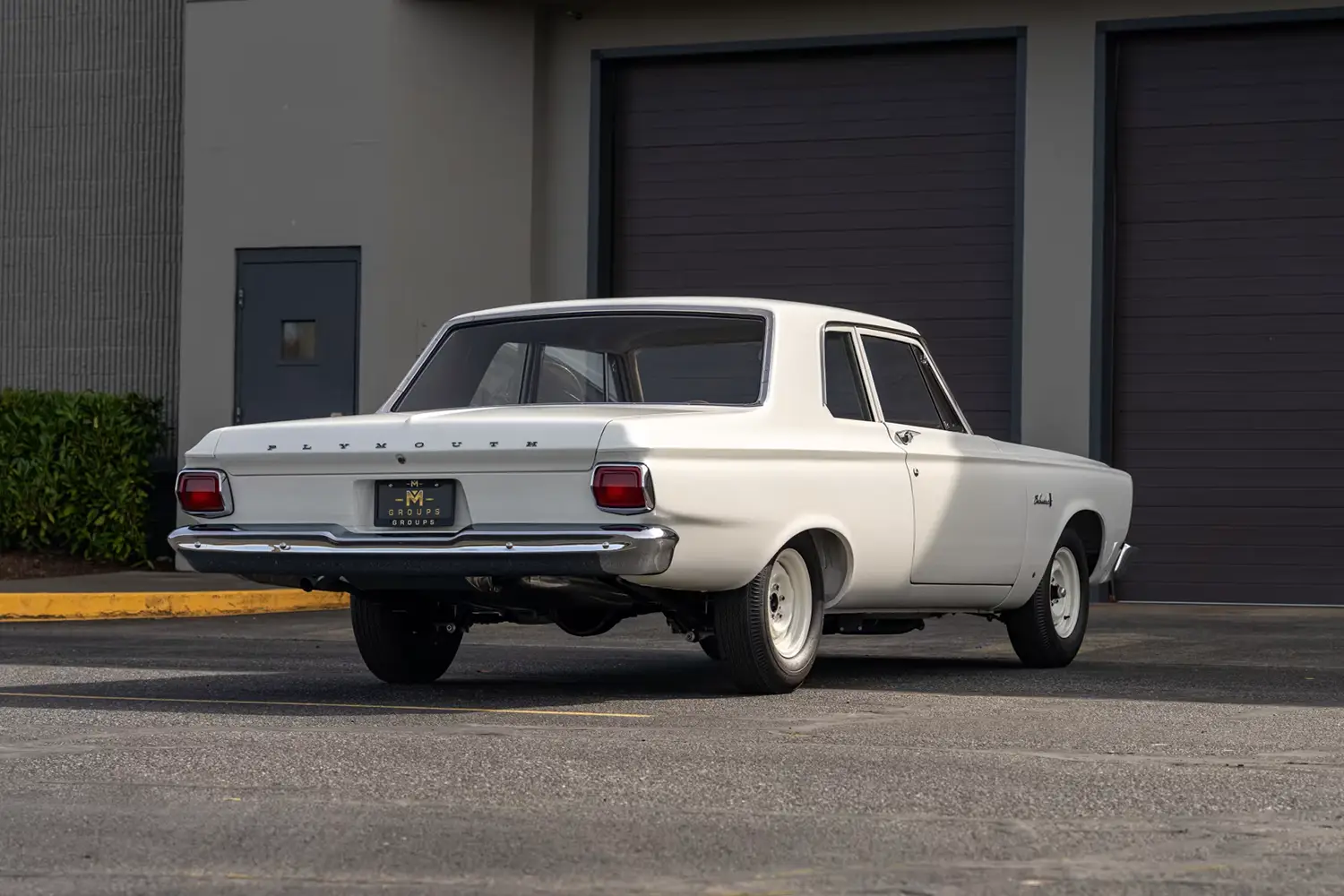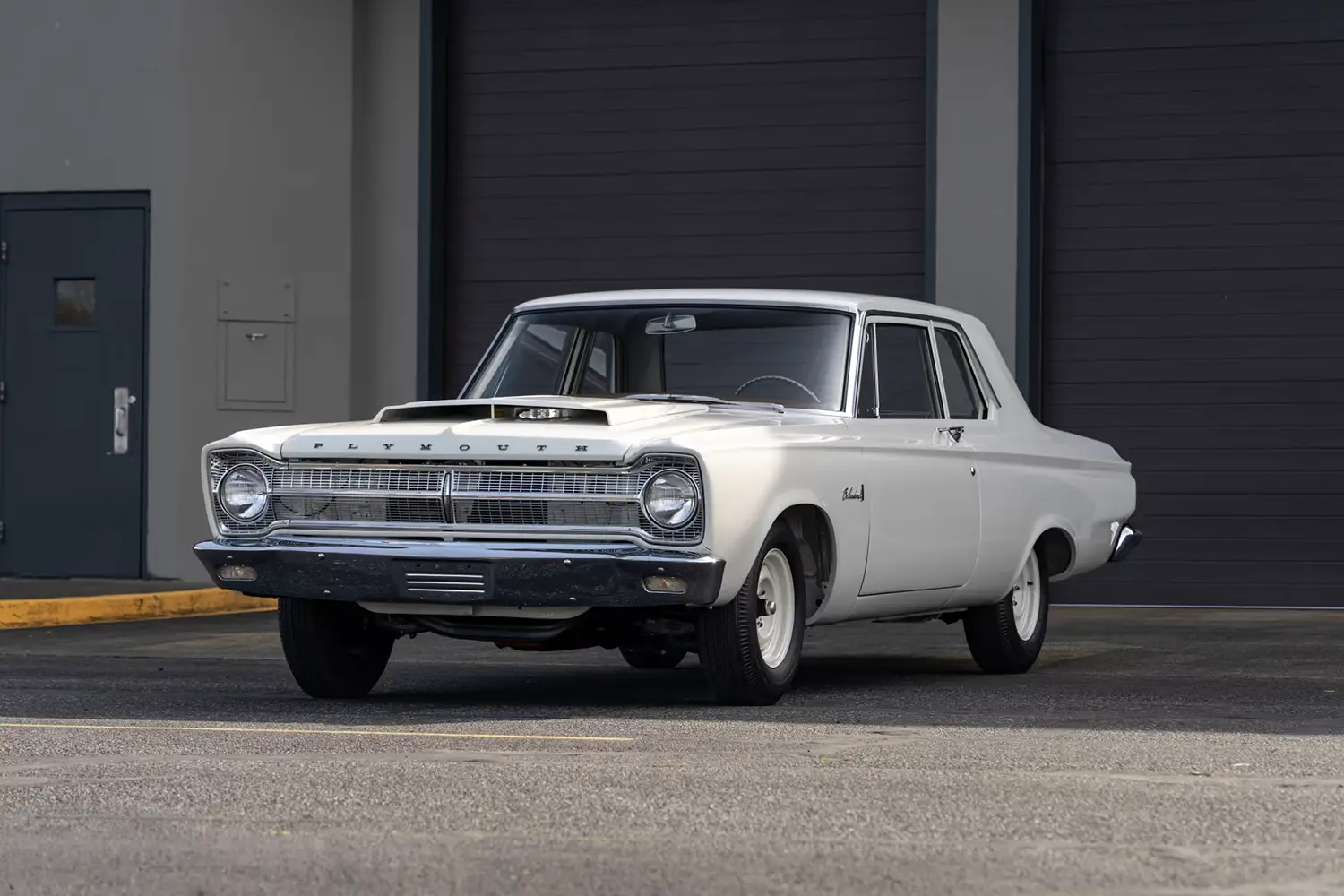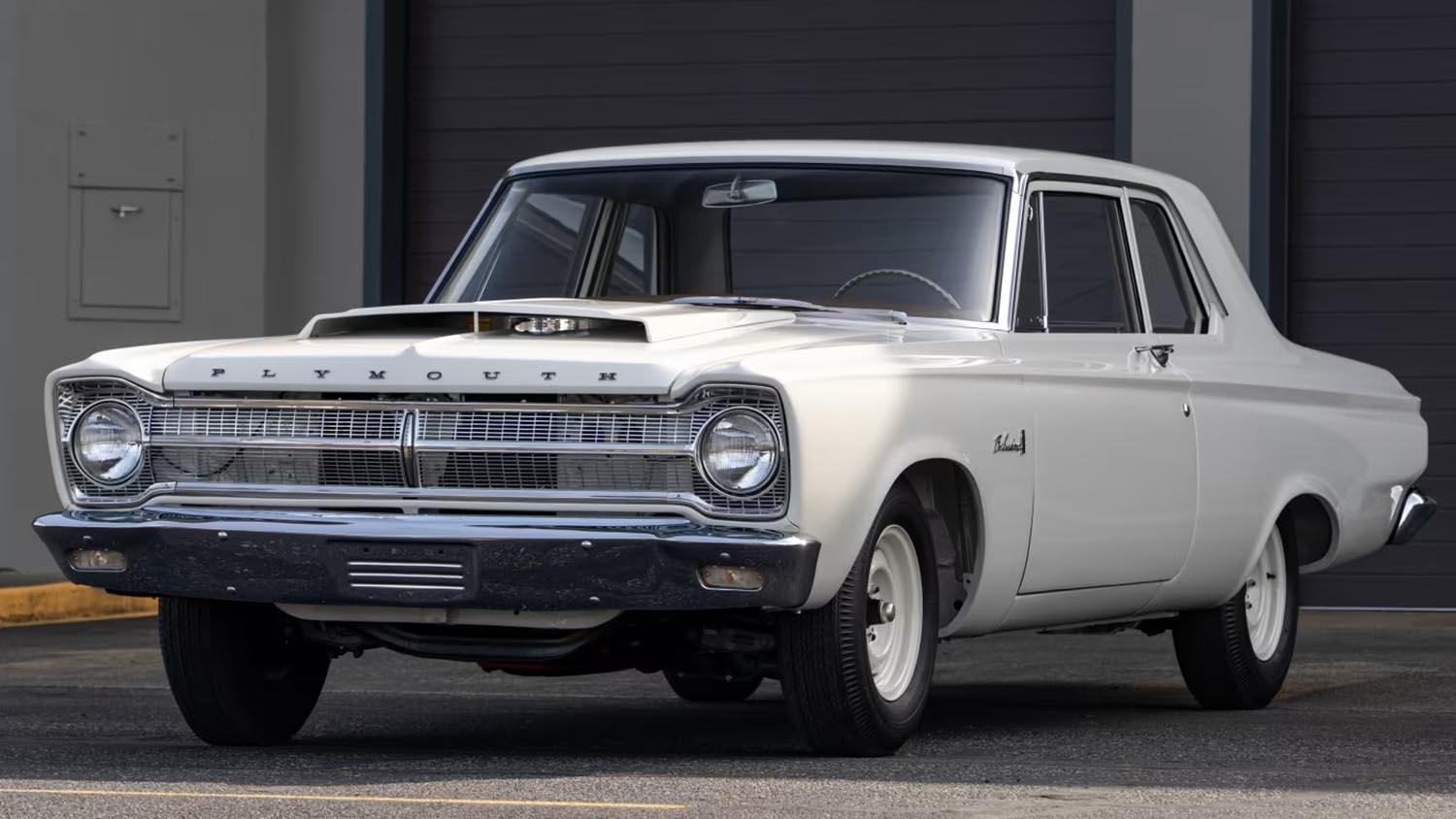
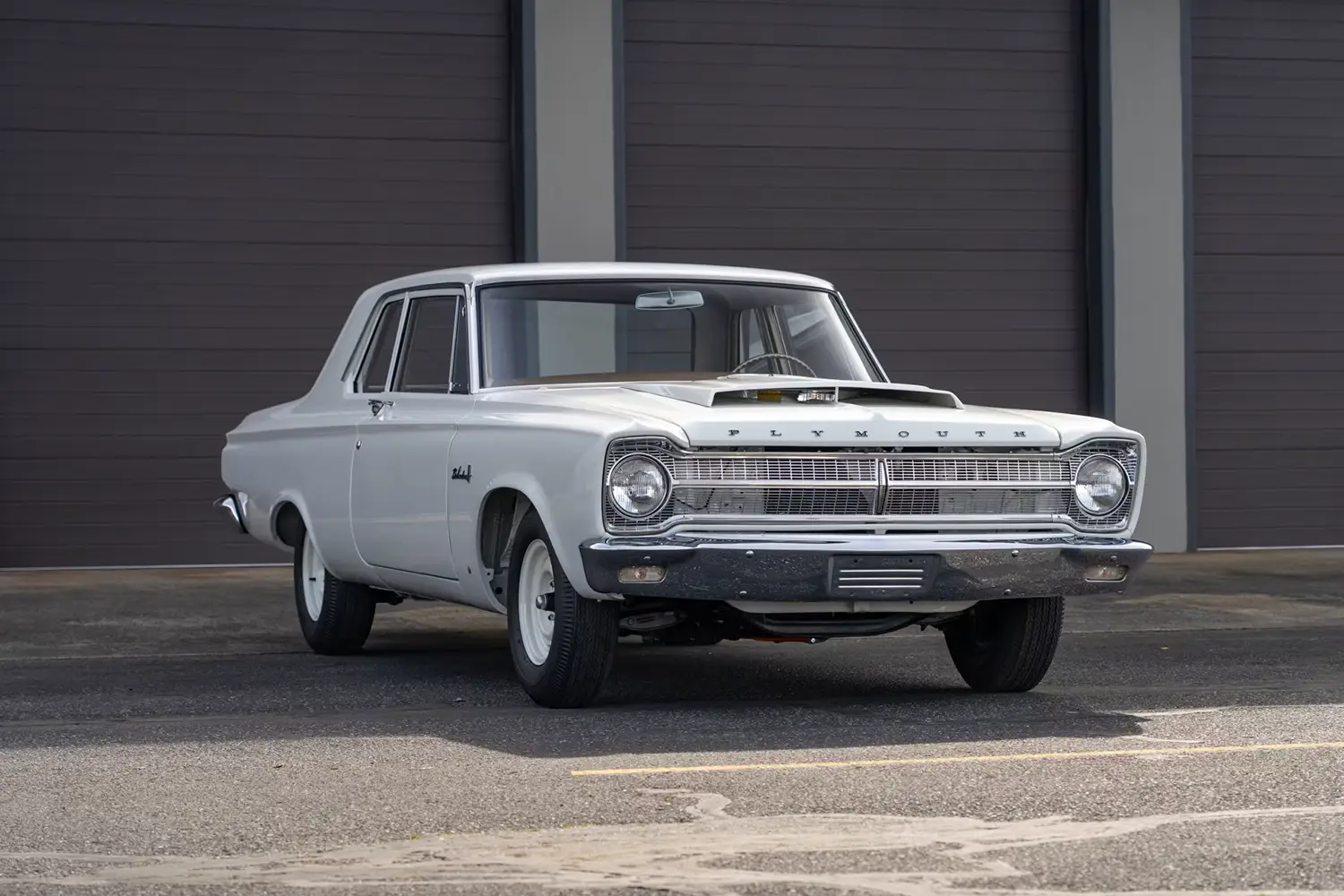
The 1965 Plymouth Belvedere I Super Stock Lightweight stands as a testament to the uncompromising era of factory-backed drag racing. Engineered specifically to dominate the NHRA Super Stock classes, this machine is one of only 11 examples produced with the specialized Lightweight Package in 1964 for the 1965 model year. This particular chassis, R051191722, shows just 520 miles on the odometer and carries a prestigious history, including time spent on display at the Walter P. Chrysler Museum. Meticulously restored by Muscle Car Restorations, it represents the absolute peak of Mopar’s “win on Sunday, sell on Monday” philosophy.
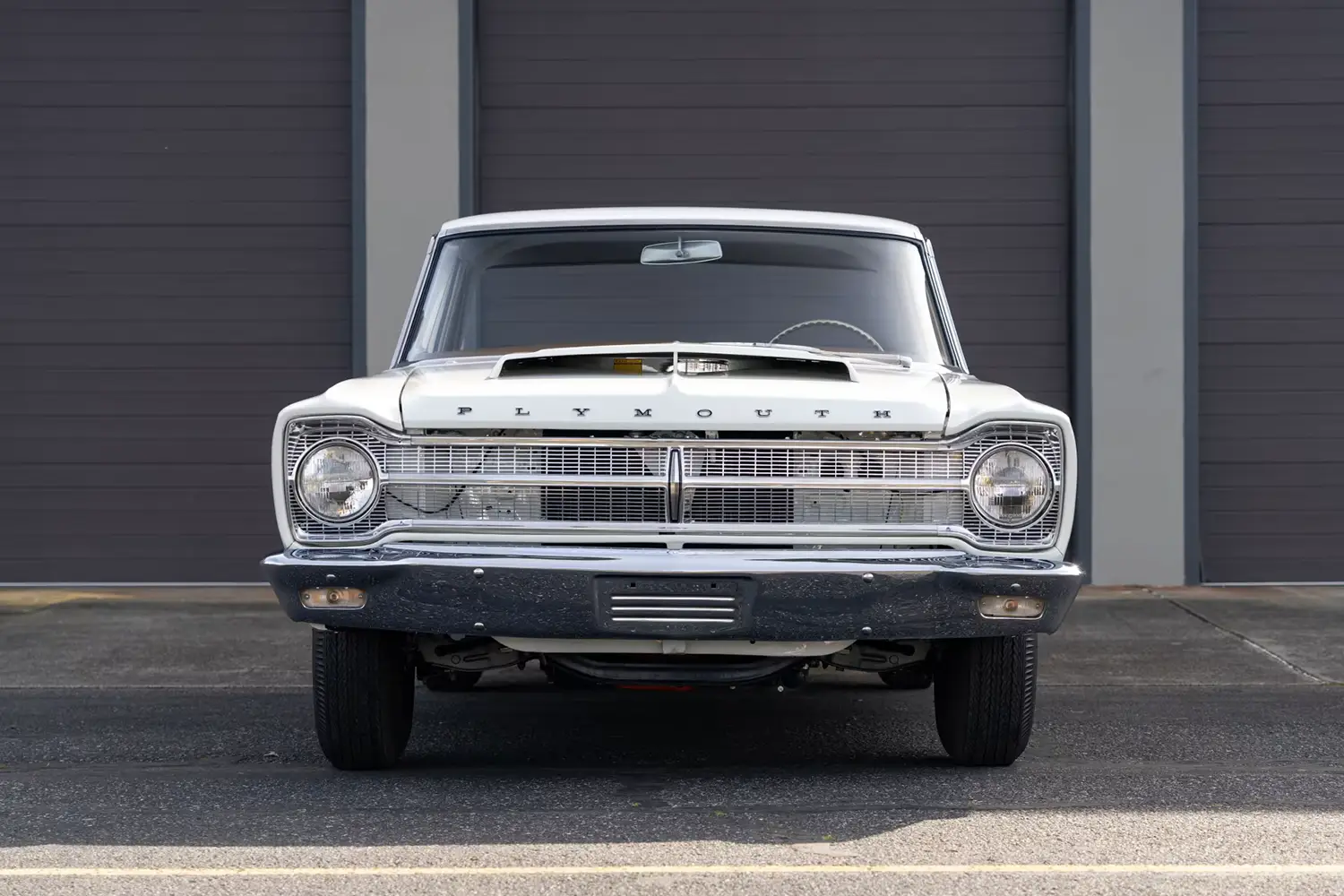
Purposeful Engineering Through Stamped Steel Panels
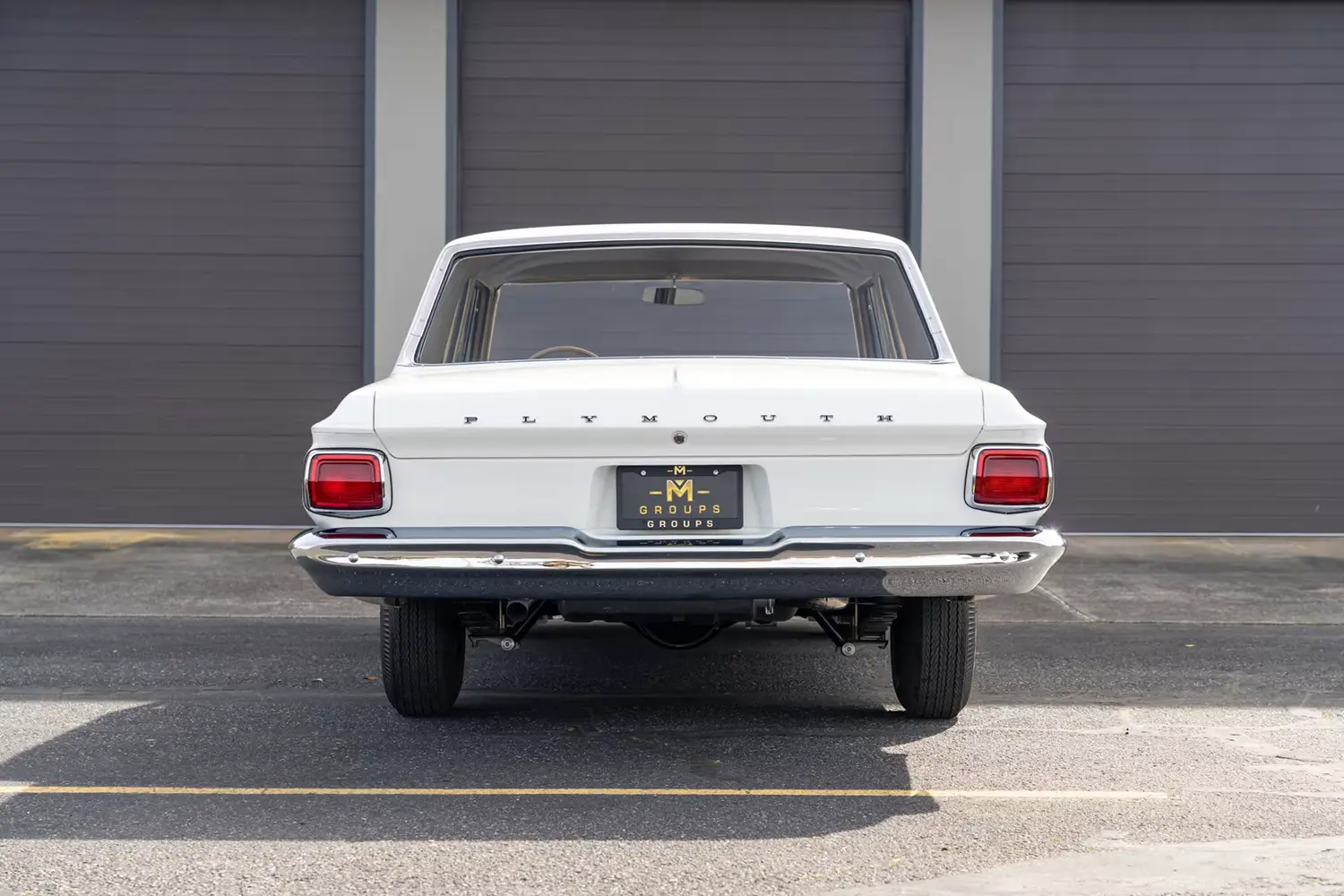
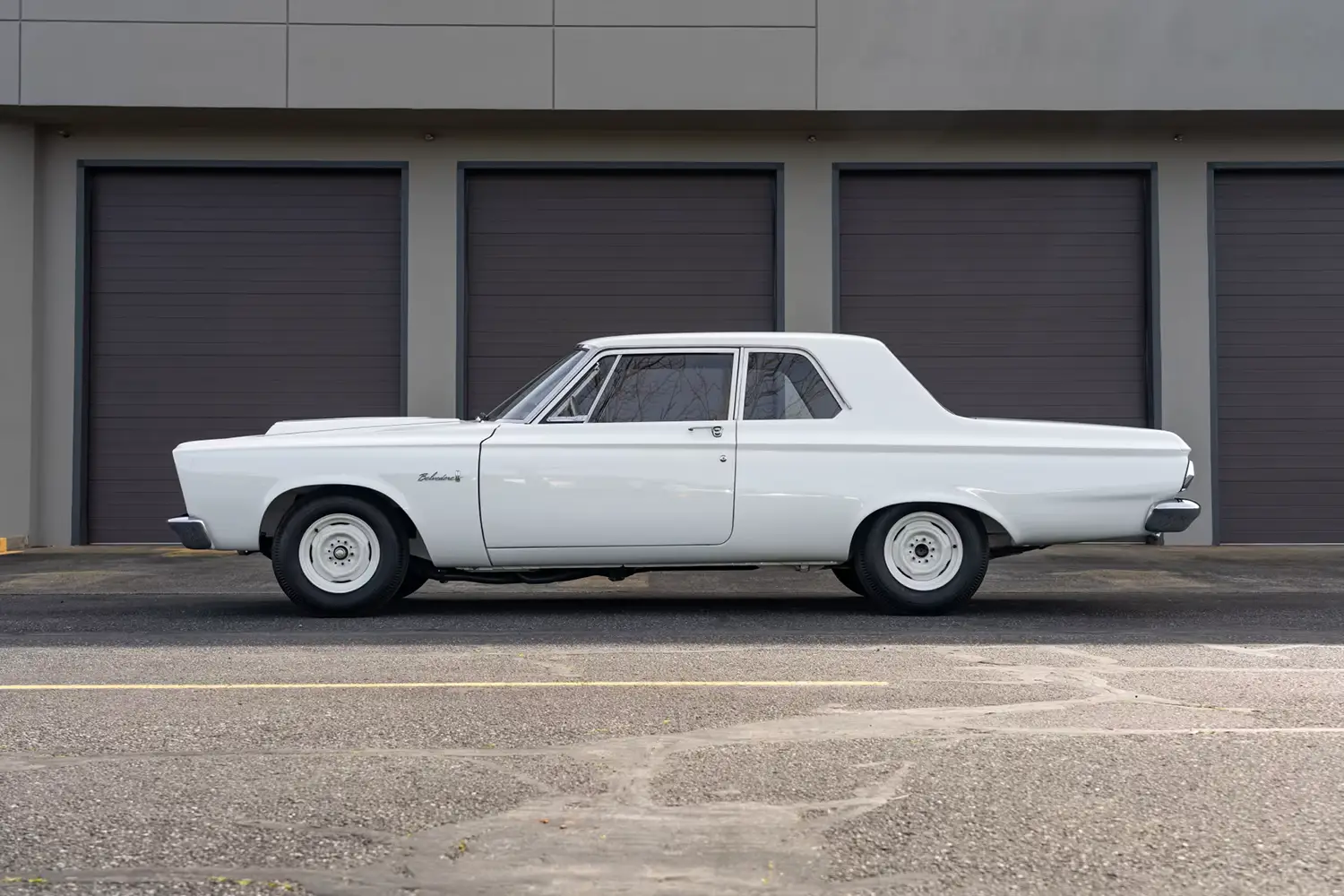
Visually, the Belvedere I is a masterclass in functional minimalism, finished in a classic White that masks its lethal racing intent. To meet strict weight requirements, Plymouth utilized lightweight stamped steel for the front fenders, hood, radiator, and grille supports. These subtle modifications shed crucial pounds from the front end, improving weight distribution for better launch traction. Every line of this Super Stock variant serves the goal of speed, eschewing the heavy chrome trim and undercoating of standard road cars to create a silhouette defined by aerodynamic efficiency and raw mechanical focus.
The Spartan Cabin of a Factory Drag Racer
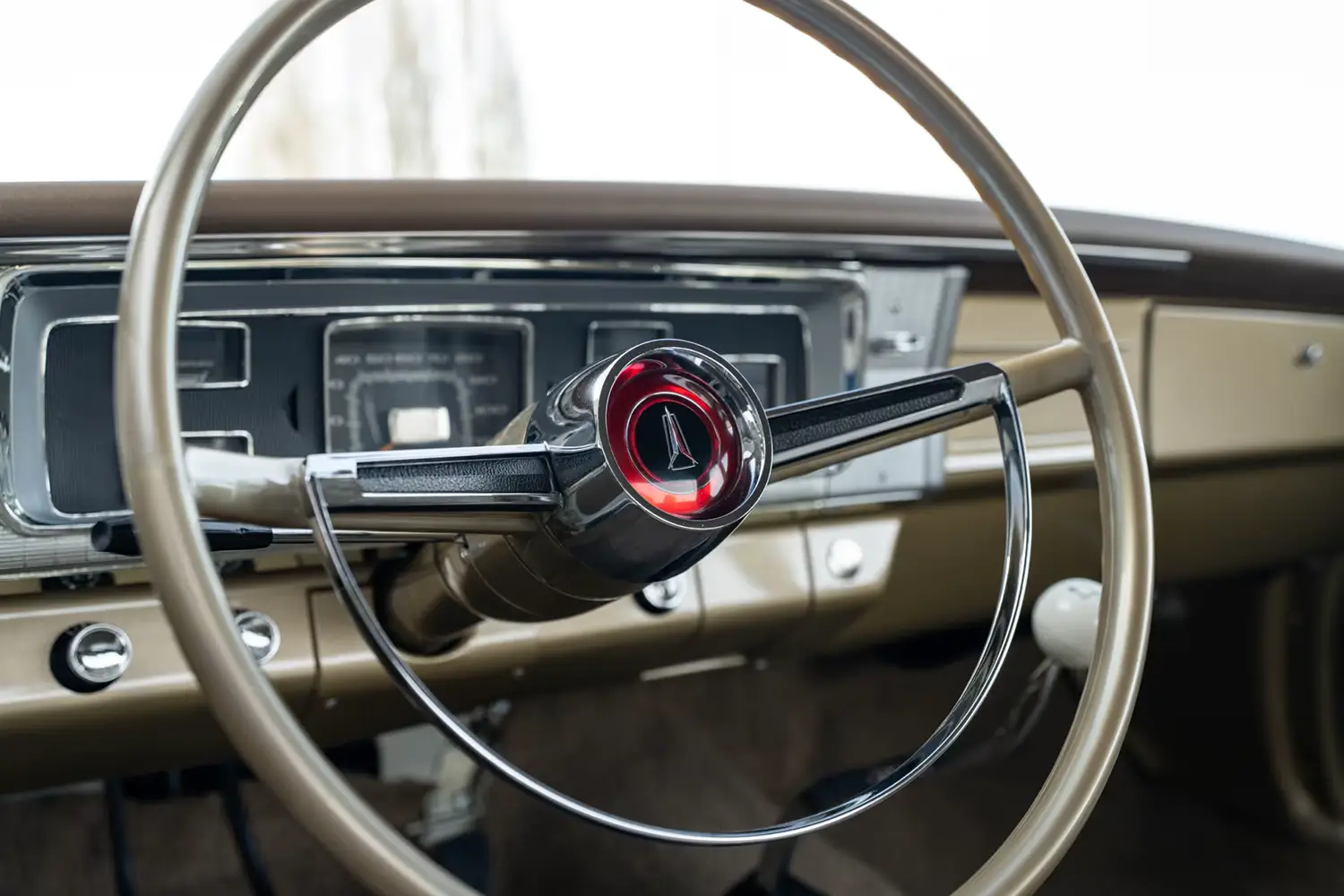
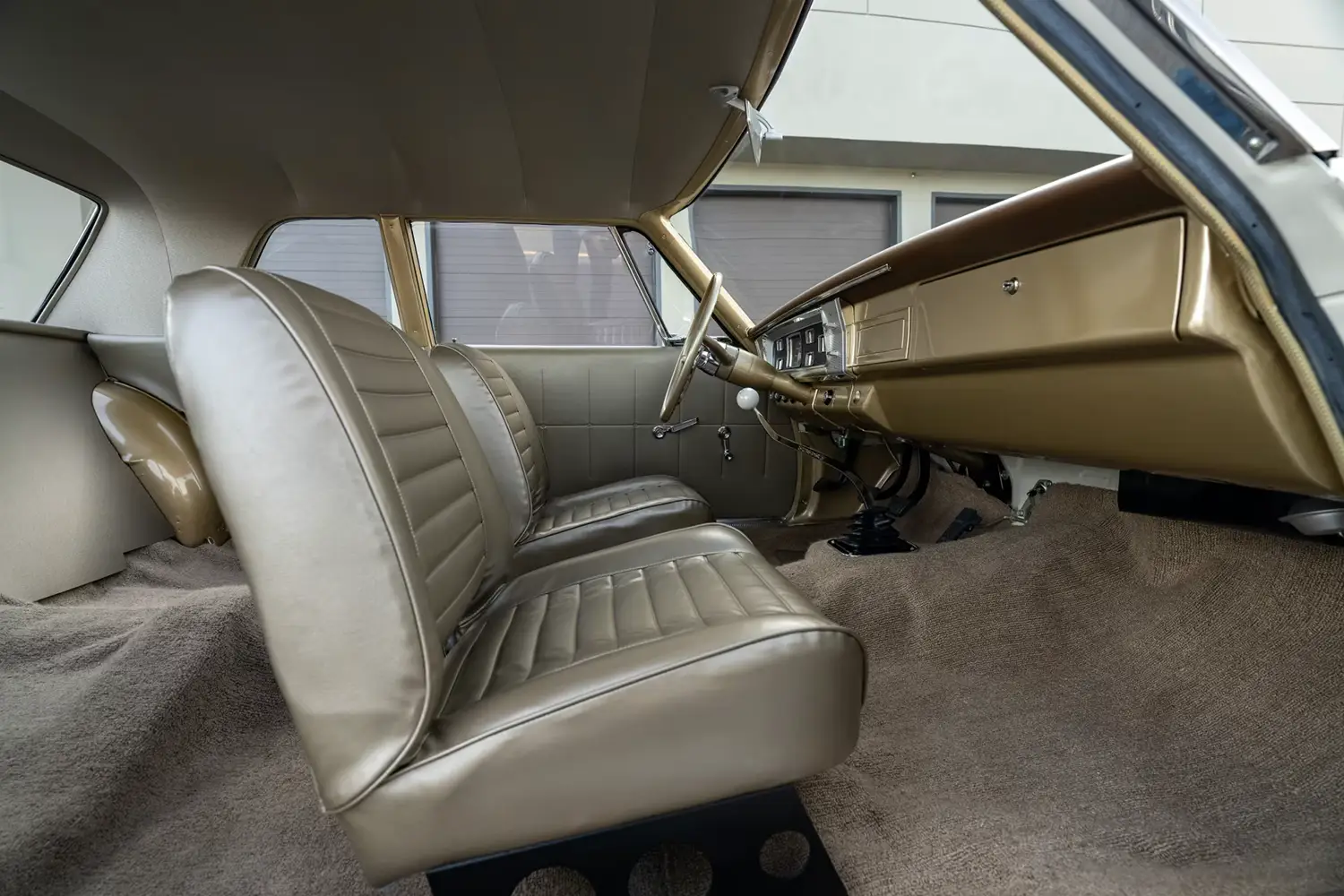
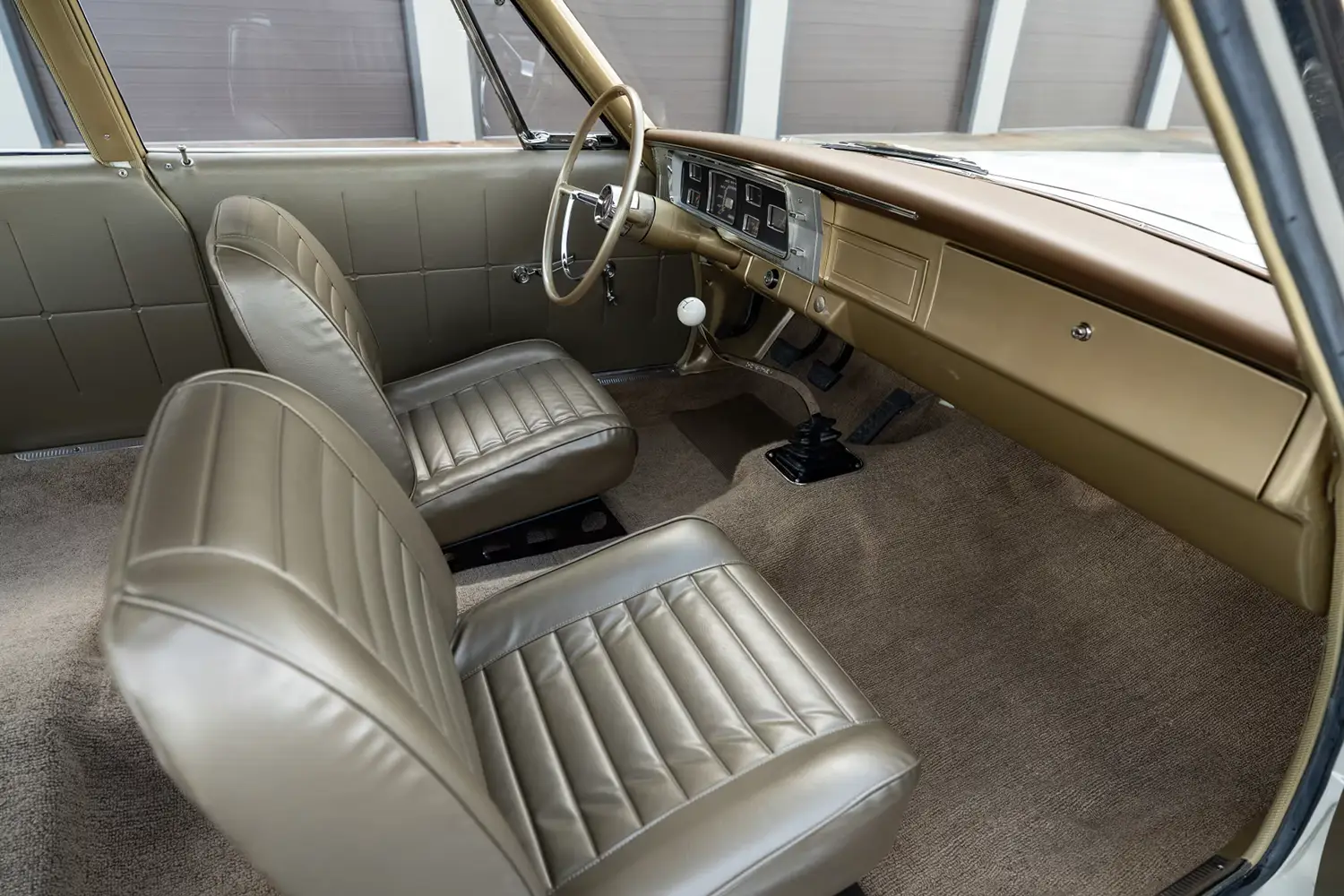
Stepping inside the Tan interior reveals a cockpit designed for the strip rather than the street. In the pursuit of lightness, Plymouth implemented a strict delete policy, removing the radio, heater, and rear seat to save every possible ounce. The driver sits in a lightweight cloth bucket seat, facing a dashboard stripped of creature comforts but rich in performance potential. The tactile nature of the Tan cloth and the simple layout highlight the car’s original purpose, where the only priority was monitoring the massive Hemi engine while rowing through the four-speed manual gearbox.
Dominating the Strip with A990 Hemi Power
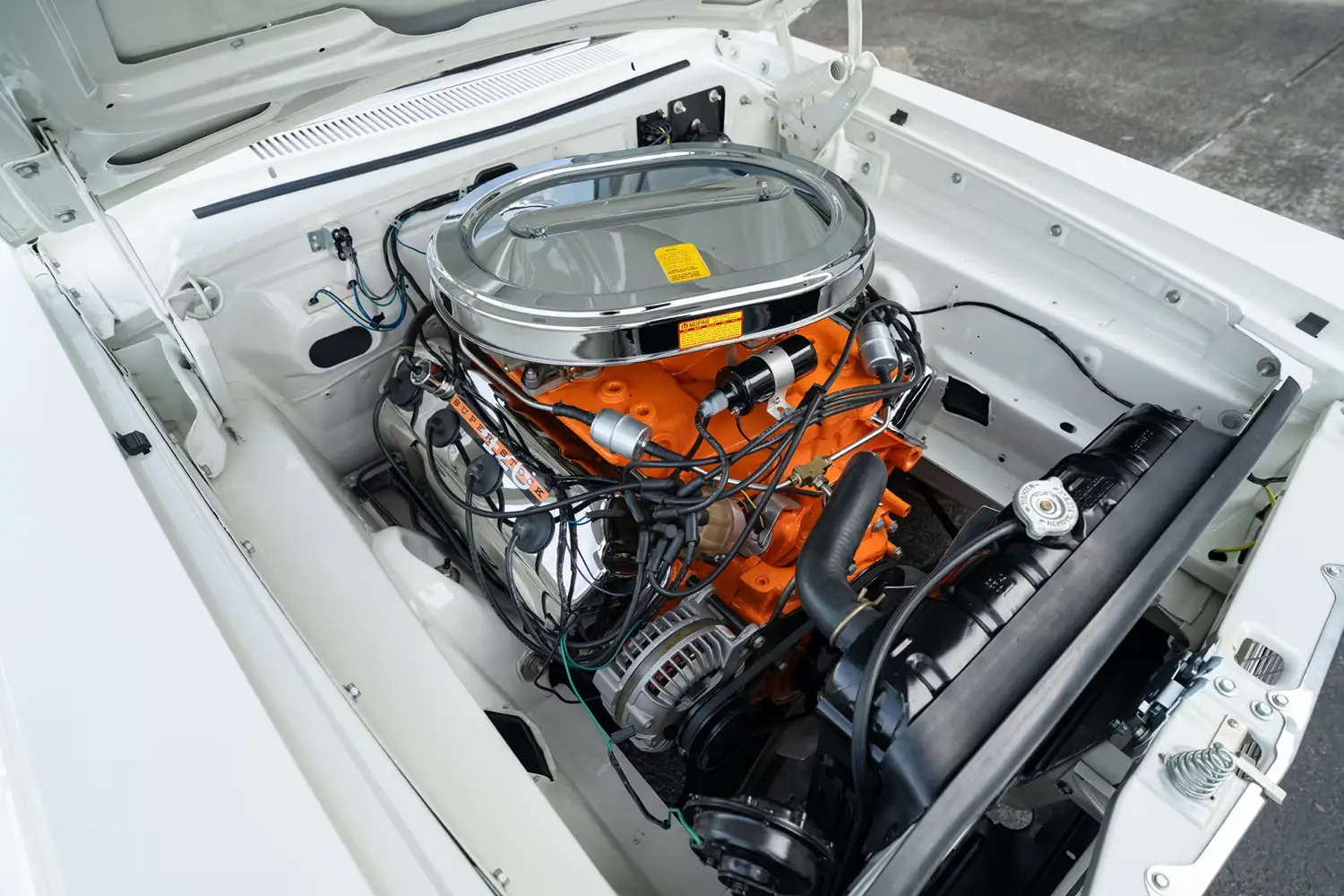
The heart of this Belvedere is the legendary A990 426/425 HP OHV Hemi V-8 engine, a powerplant that redefined muscle car performance. This race-spec engine features a Magnesium Cross Ram intake, aluminum cylinder heads, and dual 4-barrel carburetors to maximize airflow and fuel delivery. To further reduce mass, Plymouth utilized an aluminum water pump, thermostat housings, and alternator brackets. The V-8 produces factory benchmarks of 425 hp and an equivalent torque output that reaches the pavement through a 4-speed manual transmission and a live rear axle with semi-elliptic leaf springs.
| Technical Specifications | |
|---|---|
| Engine | A990 426 CI Hemi V-8 |
| Transmission | 4-Speed Manual |
| Induction | Magnesium Cross Ram / Dual 4-Barrel |
| Cylinder Heads | Aluminum |
| Front Suspension | Torsion Bar Independent |
| Rear Suspension | Semi-Elliptic Leaf Springs |
| Brakes | 4-Wheel Hydraulic Drum |
| Mileage | 520 Miles (Odometer Reading) |
An Elite Tier of Mopar Collectibility
In the high-stakes world of automotive collecting, few cars carry the weight of a factory-produced A990 lightweight. While standard muscle cars are compared to rivals from Ford or GM, the 1965 Plymouth Belvedere I Super Stock Lightweight exists in a specialized bracket of competitive history. Its rarity, one of just 11, places it far above mass-produced performance models in terms of investment potential. Its unique selling point remains the combination of its steel lightweight components and its museum-grade restoration, making it a cornerstone piece for any serious collection focused on American motorsport heritage.
The Ultimate Expression of Factory Muscle
The legacy of the 1965 Plymouth Belvedere I Super Stock Lightweight is secured by its mechanical purity and its extreme rarity. This is not merely a car but a specialized tool built for the singular purpose of victory on the quarter-mile. With its low mileage and documented restoration, it offers a rare opportunity to own a vehicle that was once a staple of Chrysler’s official museum. It remains an enduring icon of the 1960s horsepower wars, embodying a time when manufacturers pushed technical boundaries to their absolute limits in the name of performance.
Disclaimer: Content on this site is for informational and entertainment purposes only. Details, analyses, and opinions reflect current trends and personal views, not professional or financial advice. Always verify information with official sources before making any decisions.
Source: mecum.com