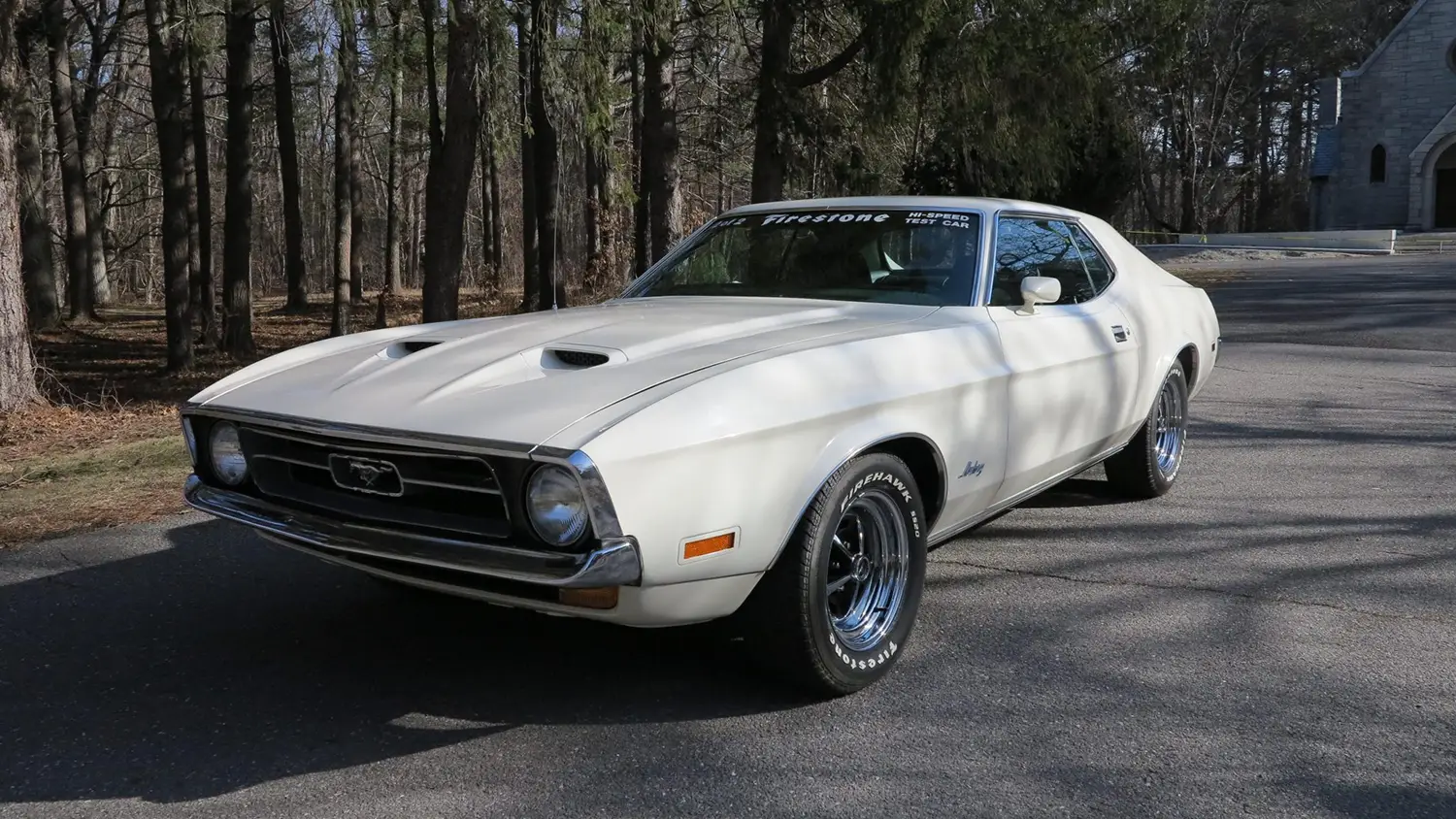
The 1972 Ford Mustang hardtop occupies a unique space in the pony car timeline, representing a shift toward more substantial proportions while retaining high-performance DNA. This specific example is a remarkable historical artifact, being the second of two identically prepared, sequentially numbered units delivered new to the Firestone Tire and Rubber Company. Utilized as a high-speed test car for tire development until 1985, it remains a rare “survivor” that bridges the gap between factory production and industrial research. Specified with a heavy-duty powertrain and specialized suspension, it offers a fascinating look at the rigorous testing standards of the early 1970s.
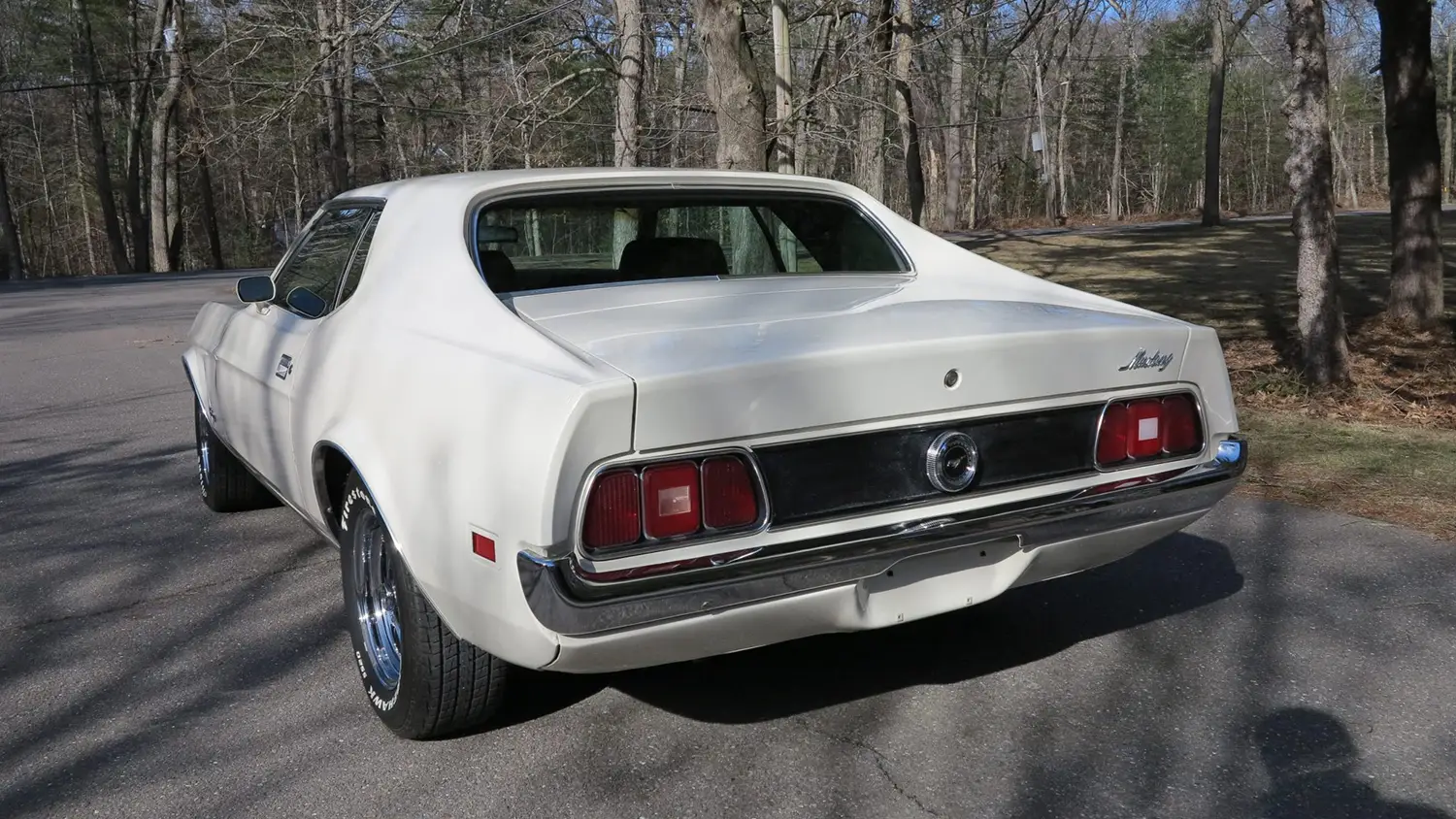
White High-Speed Aero and Competition Trim
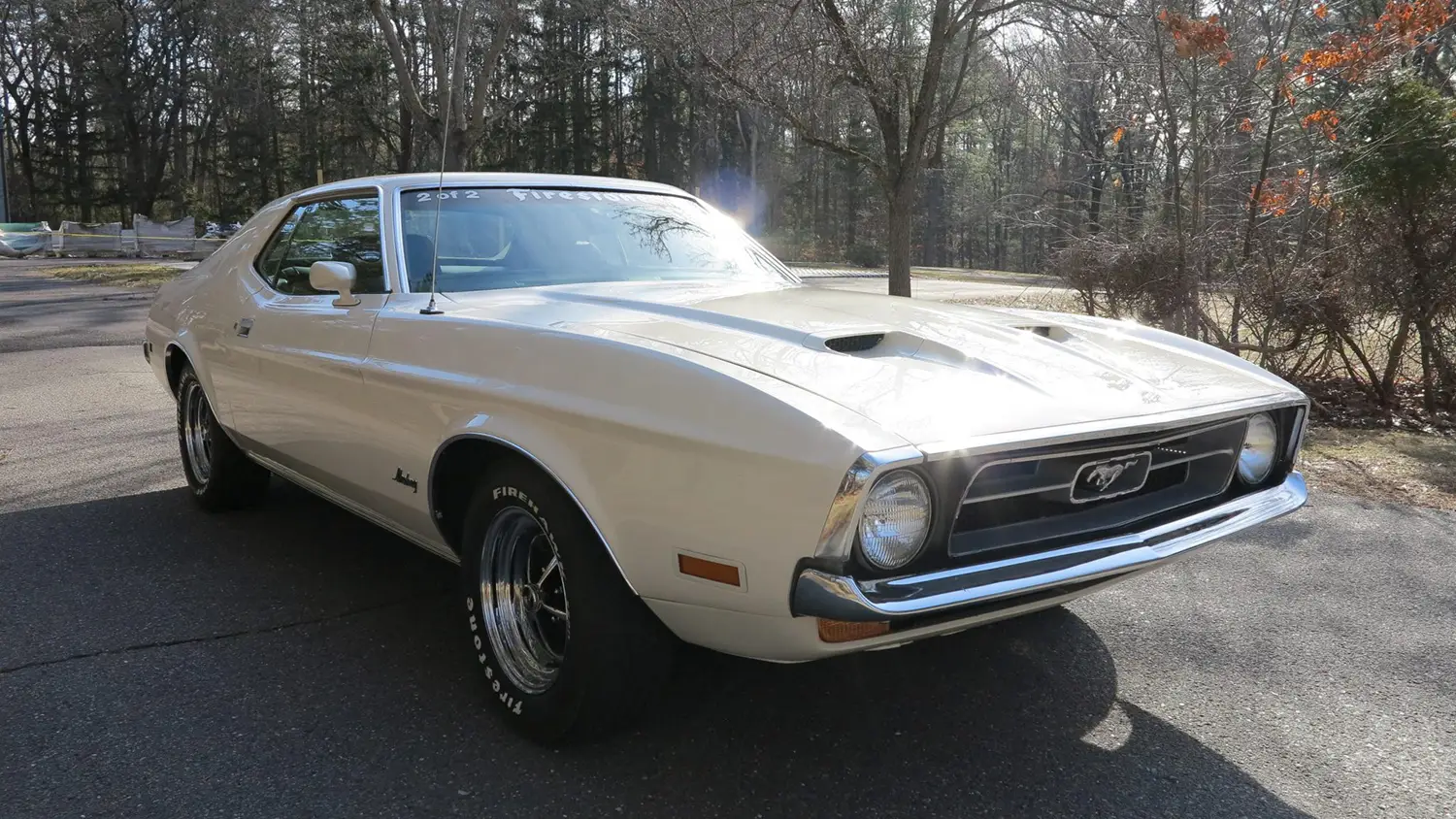
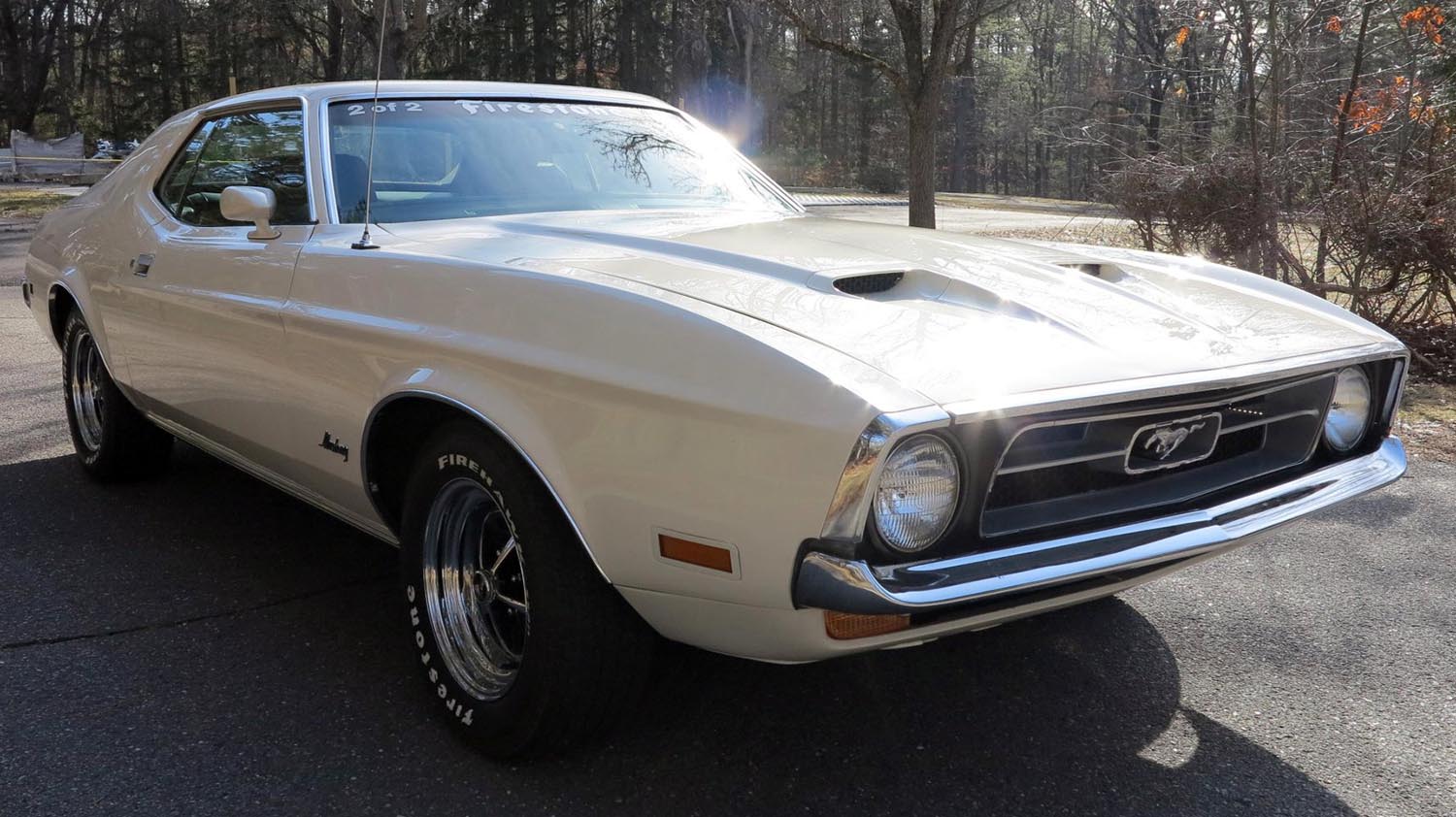
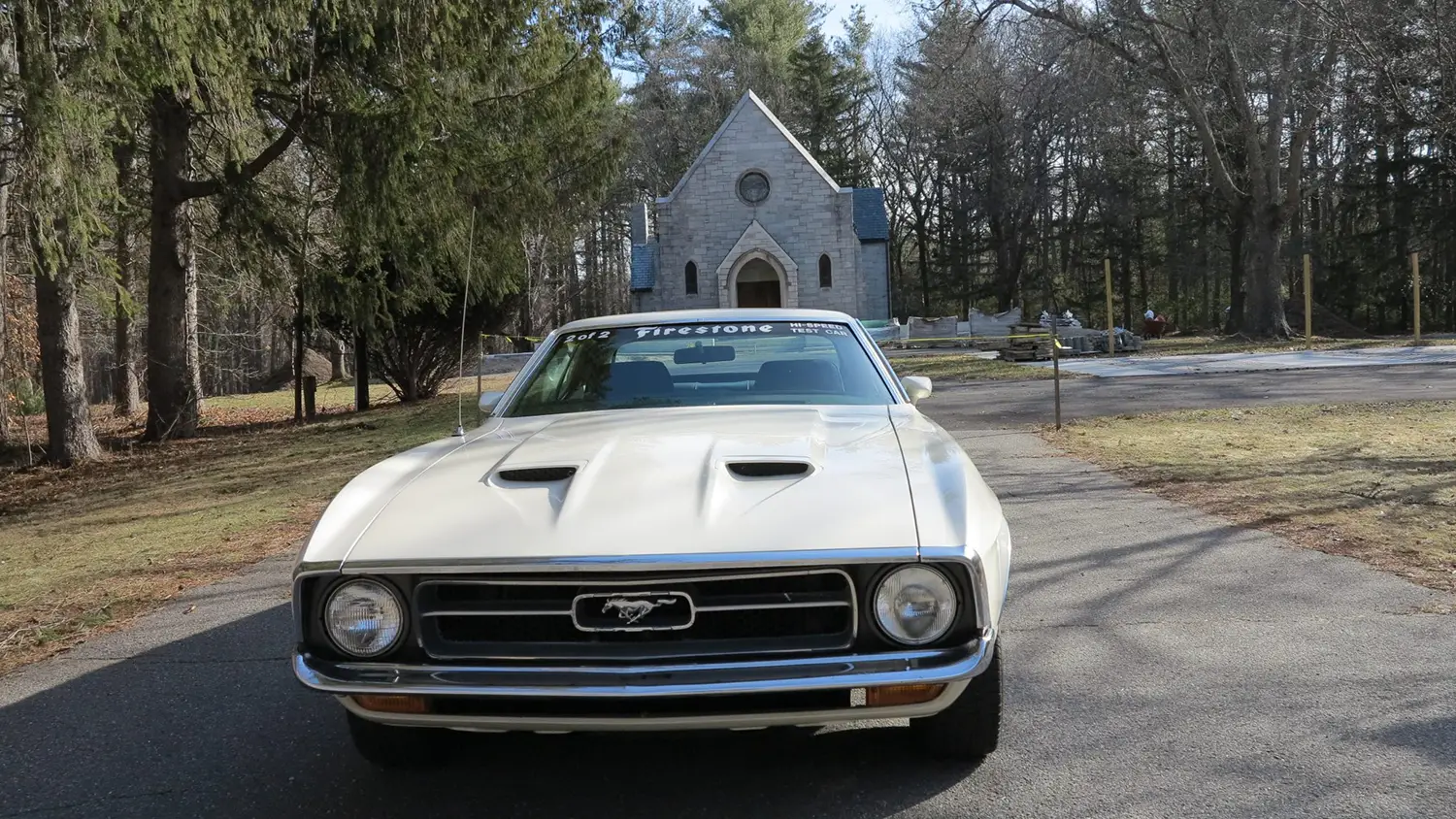
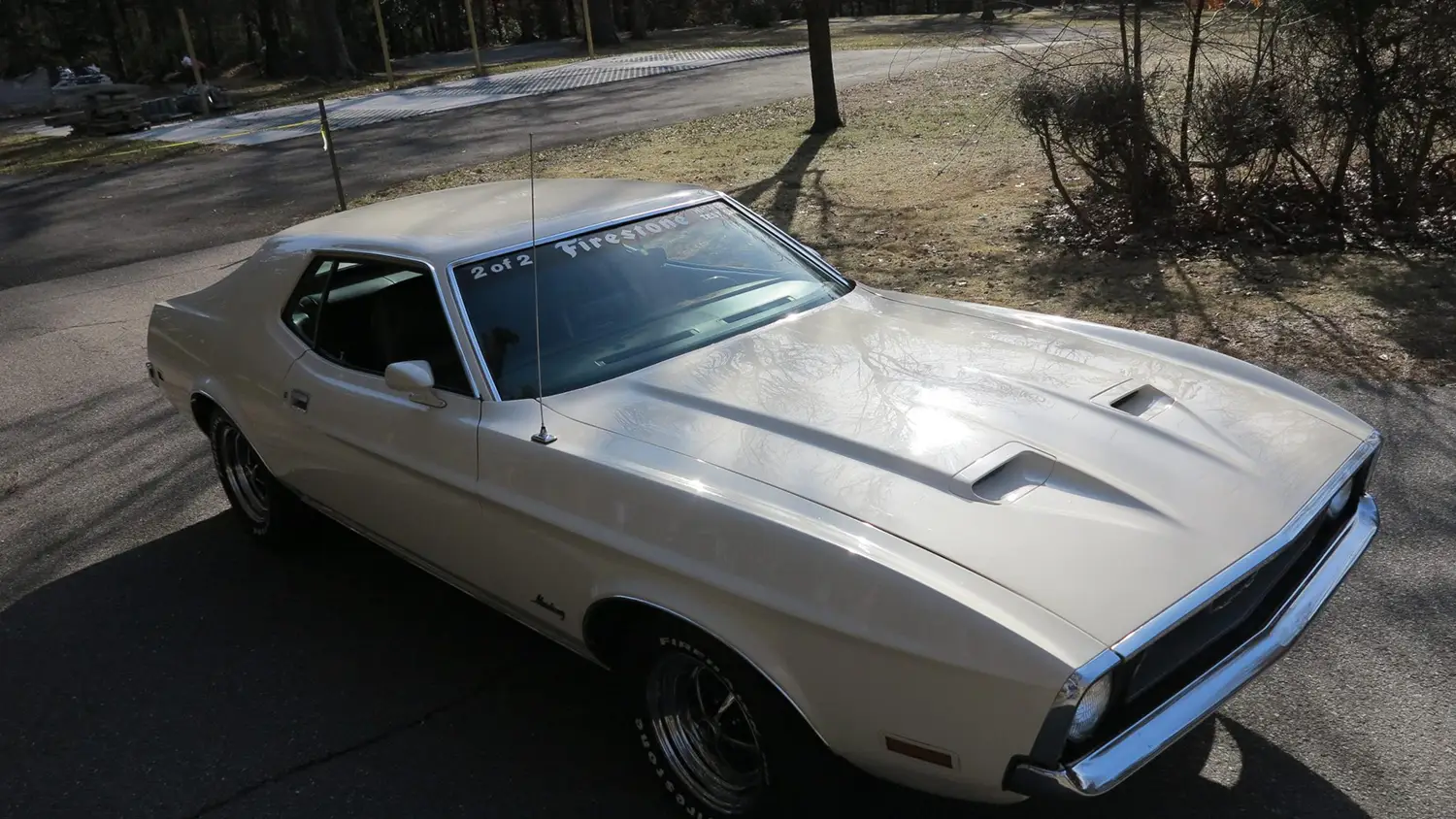
Finished in factory White (9A), the exterior of this 1972 Ford Mustang hardtop is defined by its functional performance upgrades and unique Firestone decals. The silhouette is enhanced by twin hood scoops, color-keyed racing mirrors, and chrome bumpers that highlight the long-hood, short-deck proportions of the era. Bright-finished rocker-panel and wheel-arch moldings add a touch of period-correct flash, while the 15-inch Magnum 500-style wheels provide a muscular stance. Though the car shows honest evidence of its testing life, including some filled hood pin holes and a cracked grille, the overall visual character remains that of a purposeful, high-speed development machine.
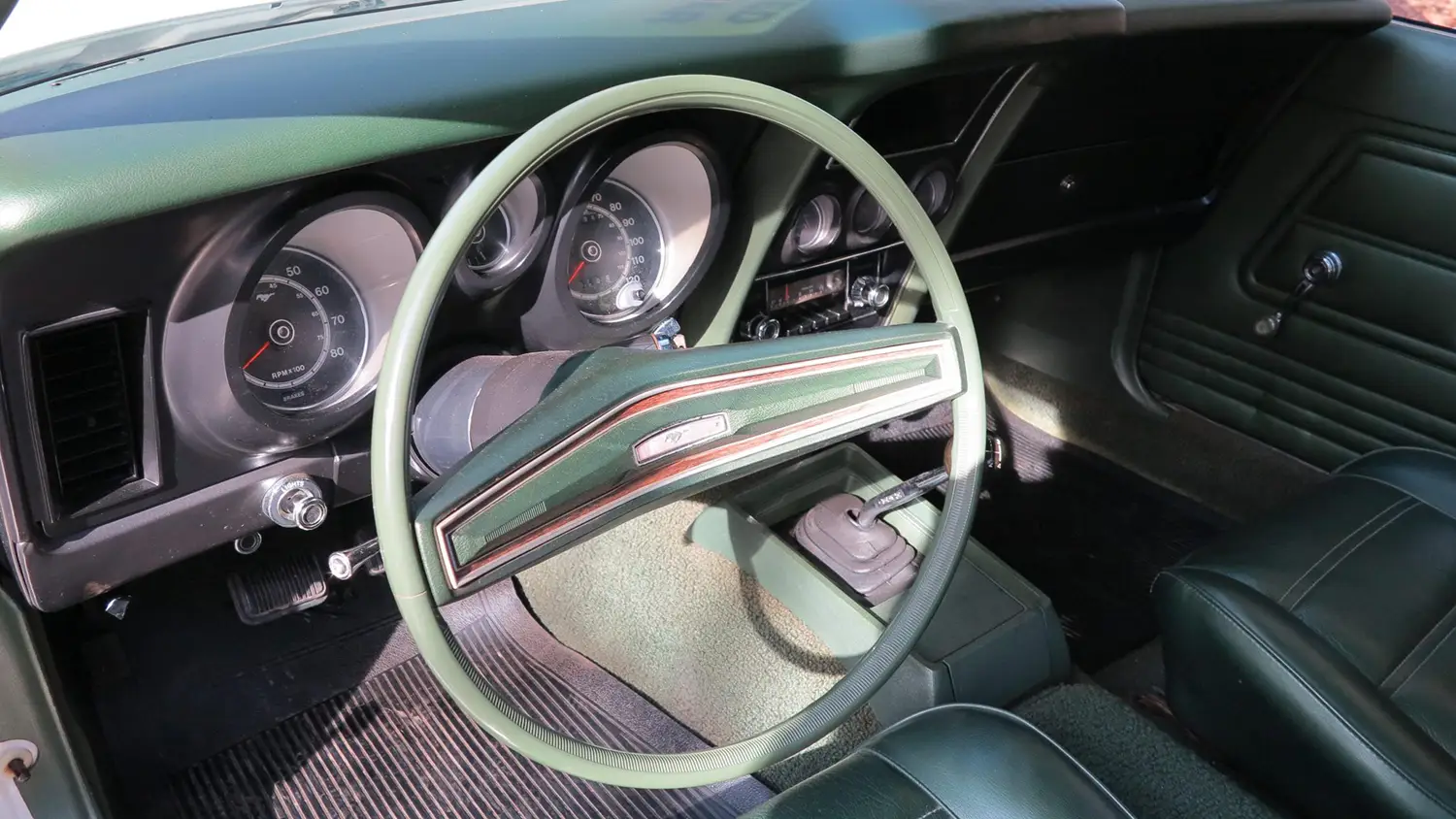
Ruffino Corinthian Green and Test Data Origins
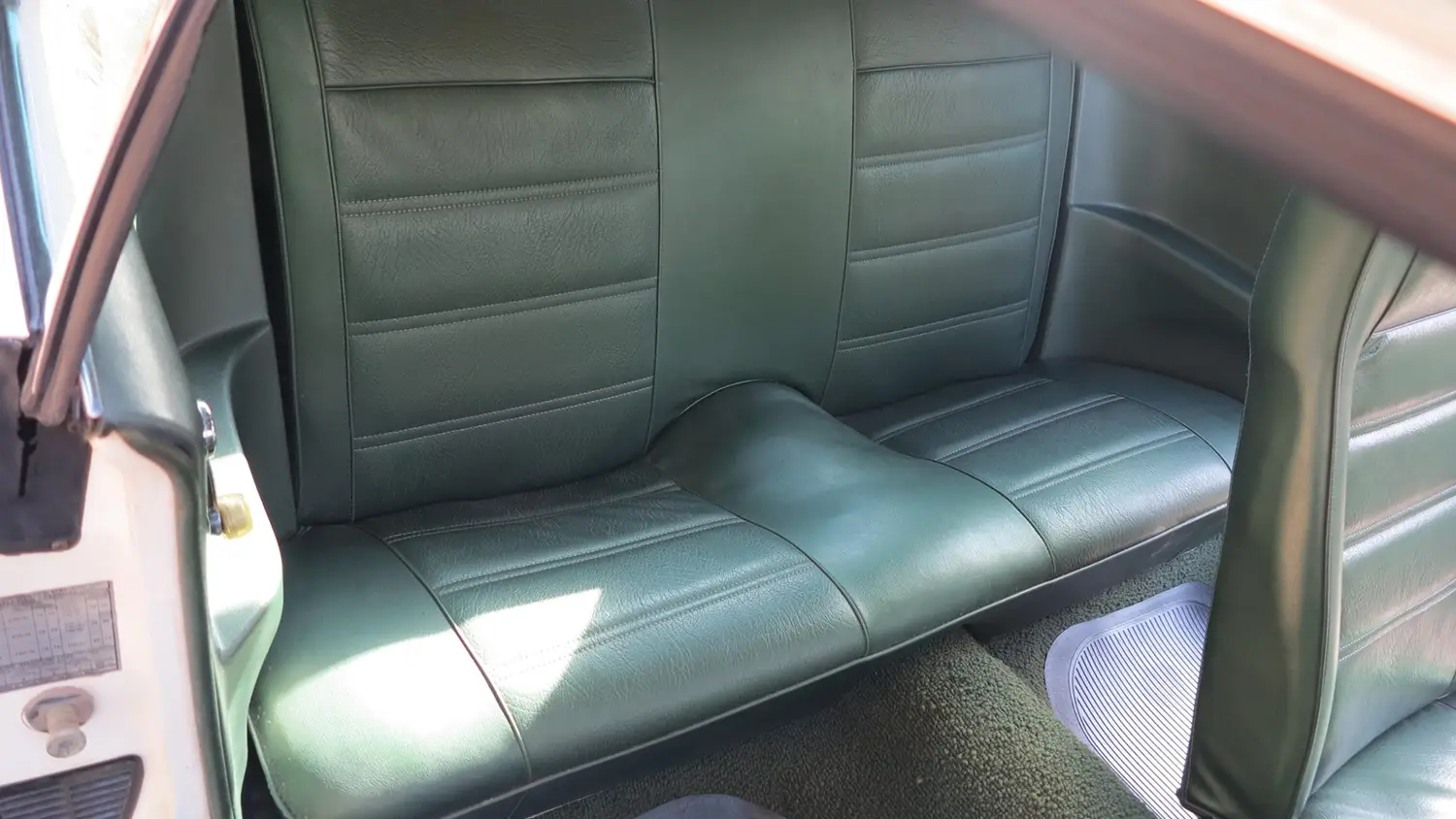
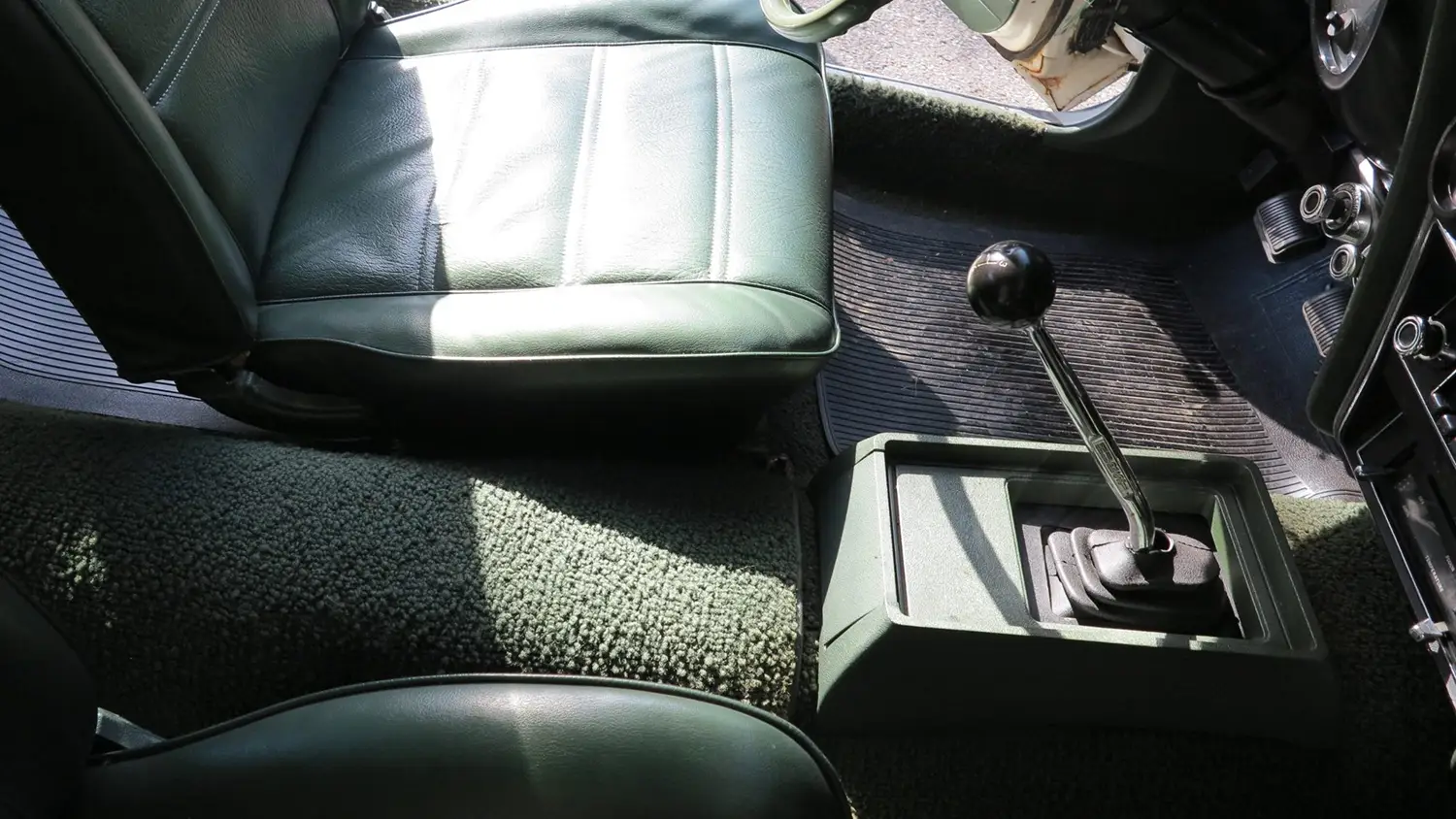
The cabin of this 1972 Ford Mustang hardtop features a distinctive Green Ruffino Corinthian vinyl interior, a rare and vibrant choice that extends across the high-back bucket seats, door panels, and dashboard. The driver-centric cockpit is equipped with the Instrumentation Group, featuring an 8,000-rpm tachometer and center-stack auxiliary gauges for precise monitoring. A Hurst shifter and a deluxe two-spoke steering wheel with woodgrain accents remind the pilot of the car’s performance intent. Notably, the trunk still contains holes drilled during its Firestone tenure to secure telemetry and testing equipment, serving as a permanent mechanical record of the vehicle’s unique professional history.
Cobra Jet Cleveland Power and Four-Speed Control
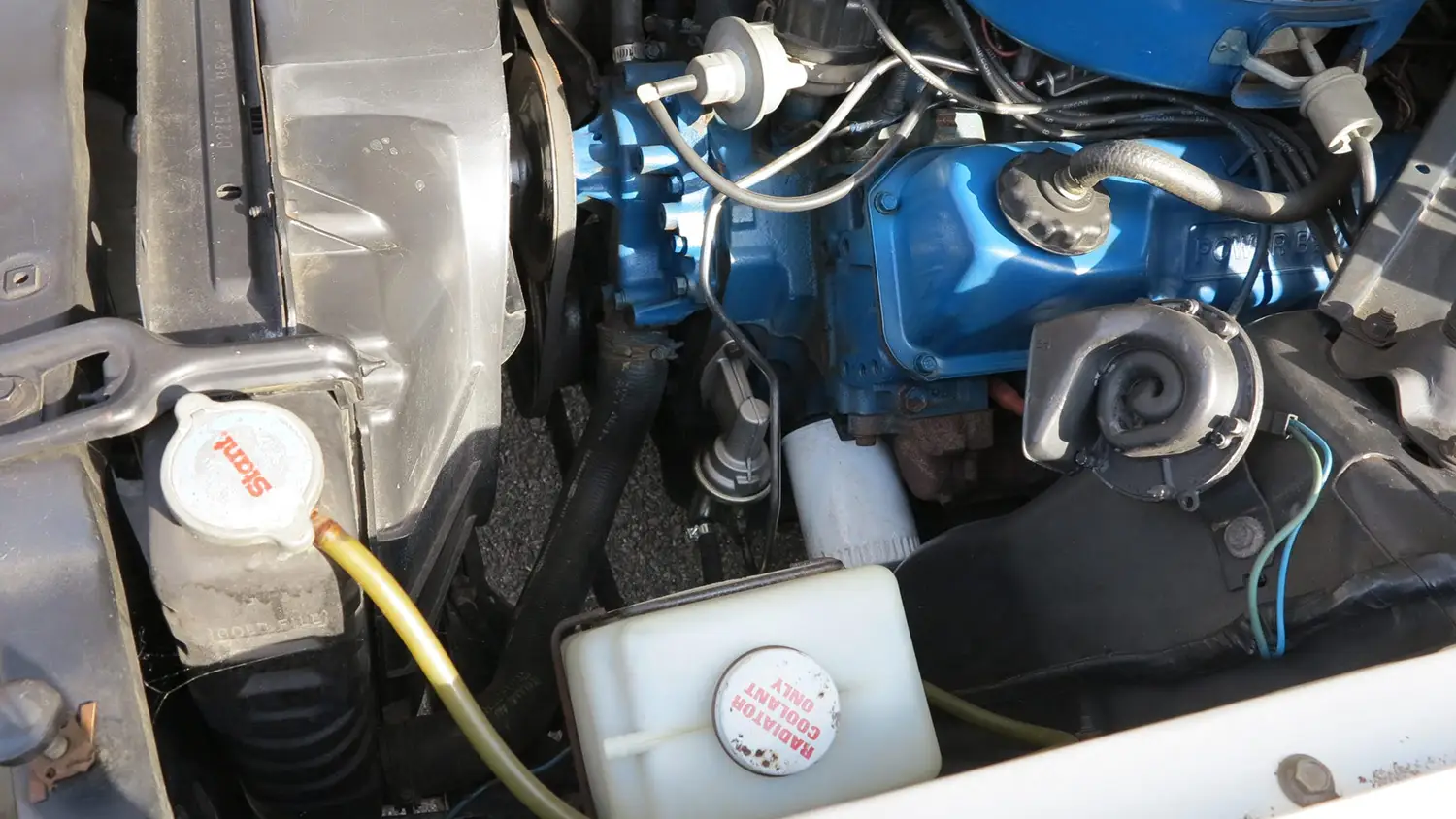
Under the twin-scoop hood lies the formidable 351ci Cobra Jet Cleveland V8, featuring a four-barrel carburetor and a high-lift, long-duration camshaft. This powerplant was factory rated at 248 hp/251 PS and 290 lb-ft/393 Nm of torque, delivering the mid-range punch required for sustained high-speed testing. The engine is paired with a four-speed manual transmission and 3.50:1 gearing within a 9-inch rear differential for optimal acceleration. Handling is managed by the factory Competition Suspension Package, which was augmented by Firestone-installed air shocks to simulate various load conditions. The result is a mechanical package designed specifically for stability and durability at the limit.
| Technical Specifications | |
|---|---|
| Engine | 351ci Cobra Jet Cleveland V8 |
| Transmission | 4-Speed Manual |
| Rear Differential | 9-inch with 3.50:1 Gearing |
| Wheels | 15-inch Magnum 500 |
| Exterior Color | White (9A) |
| Interior Color | Green Ruffino Corinthian Vinyl |
| Suspension | Competition Suspension Package |
| Historical Role | Firestone High-Speed Test Car |
Sequential Rarity and Collector Positioning
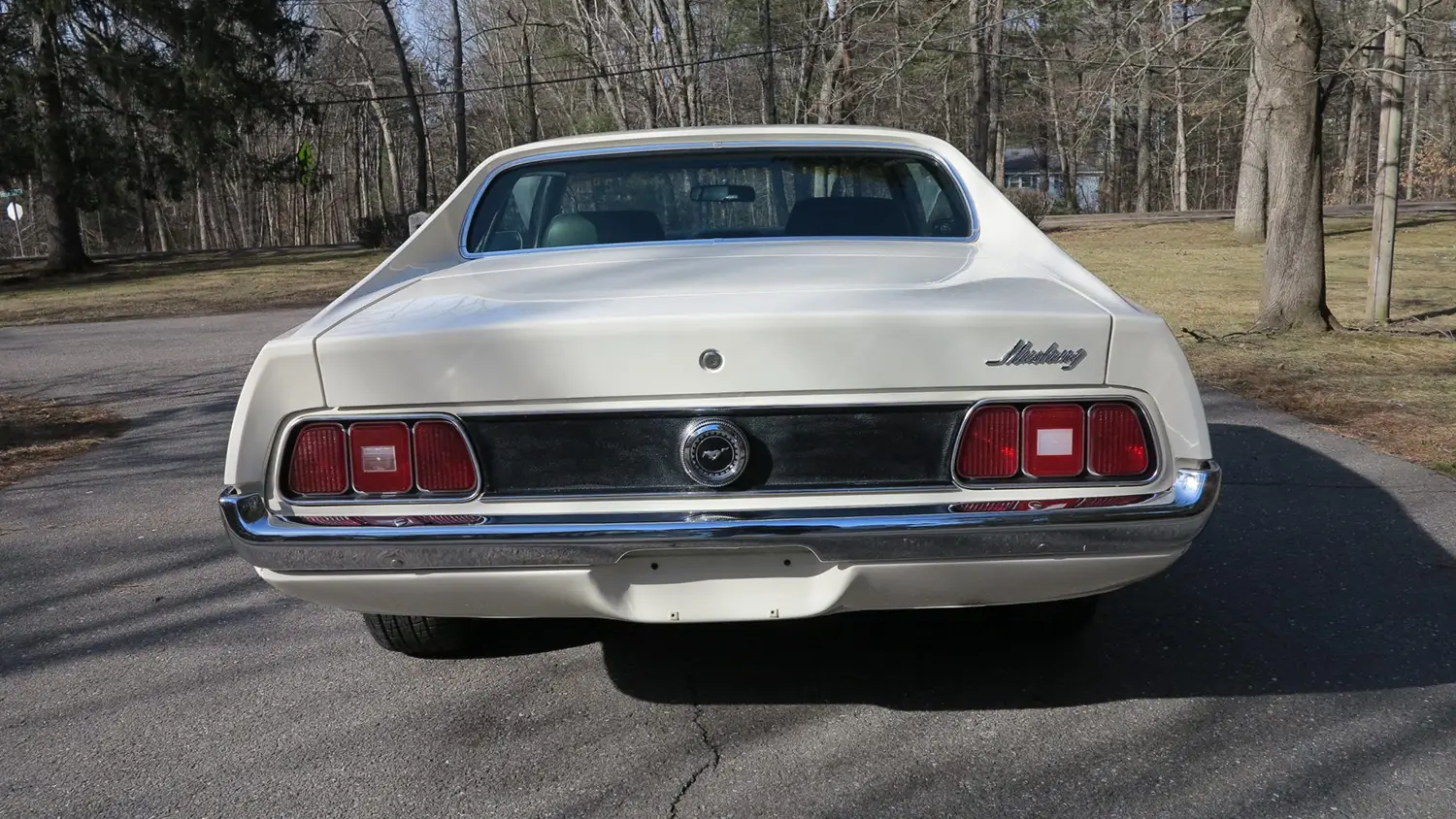
In the collector market, the 1972 Ford Mustang hardtop is often compared to its fastback stablemates, yet the “coupe” body style offers a unique structural rigidity that made it ideal for Firestone’s testing. This car’s unique selling point is its sequential history; as the “2 of 2” twin to its sister car, it possesses a provenance that standard production Mustangs simply cannot match. While competitors like the Camaro and Firebird were also used in industry testing, few survivors remain with such clear documentation, including the original shipping invoice and Marti Report. This vehicle appeals to both Mustang purists and historians of American industrial development.
Documentation and Mechanical Integrity
Ownership of this Mustang includes a wealth of historical documentation, from the 1971 shipping invoice to a modern Marti Report confirming its factory specifications. While the car shows signs of use consistent with its testing background, recent maintenance including a replaced gas tank and exhaust system ensures the 351 CJ remains roadworthy. The discrepancies in the odometer readings from 1985 suggest a life of dedicated service, making it an ideal candidate for a sympathetic preservation or a focused restoration. For the investor, the combination of a Cobra Jet engine, a four-speed gearbox, and a documented role at Firestone represents a stable and appreciating asset.
A Documented High-Speed Legend
The 1972 Ford Mustang hardtop Firestone Test Car is more than just a classic muscle car; it is a mobile laboratory that helped shape the safety and performance of tires for a generation. Its survival, complete with its original “1 of 2” pedigree and high-performance Cleveland V8, makes it one of the most intriguing Mustangs of the early seventies. Whether kept as a preserved artifact of industry or driven as a high-torque cruiser, it remains a powerful testament to the era of unrestricted automotive development.
Disclaimer: Content on this site is for informational and entertainment purposes only. Details, analyses, and opinions reflect current trends and personal views, not professional or financial advice. Always verify information with official sources before making any decisions.
Source: bringatrailer.com