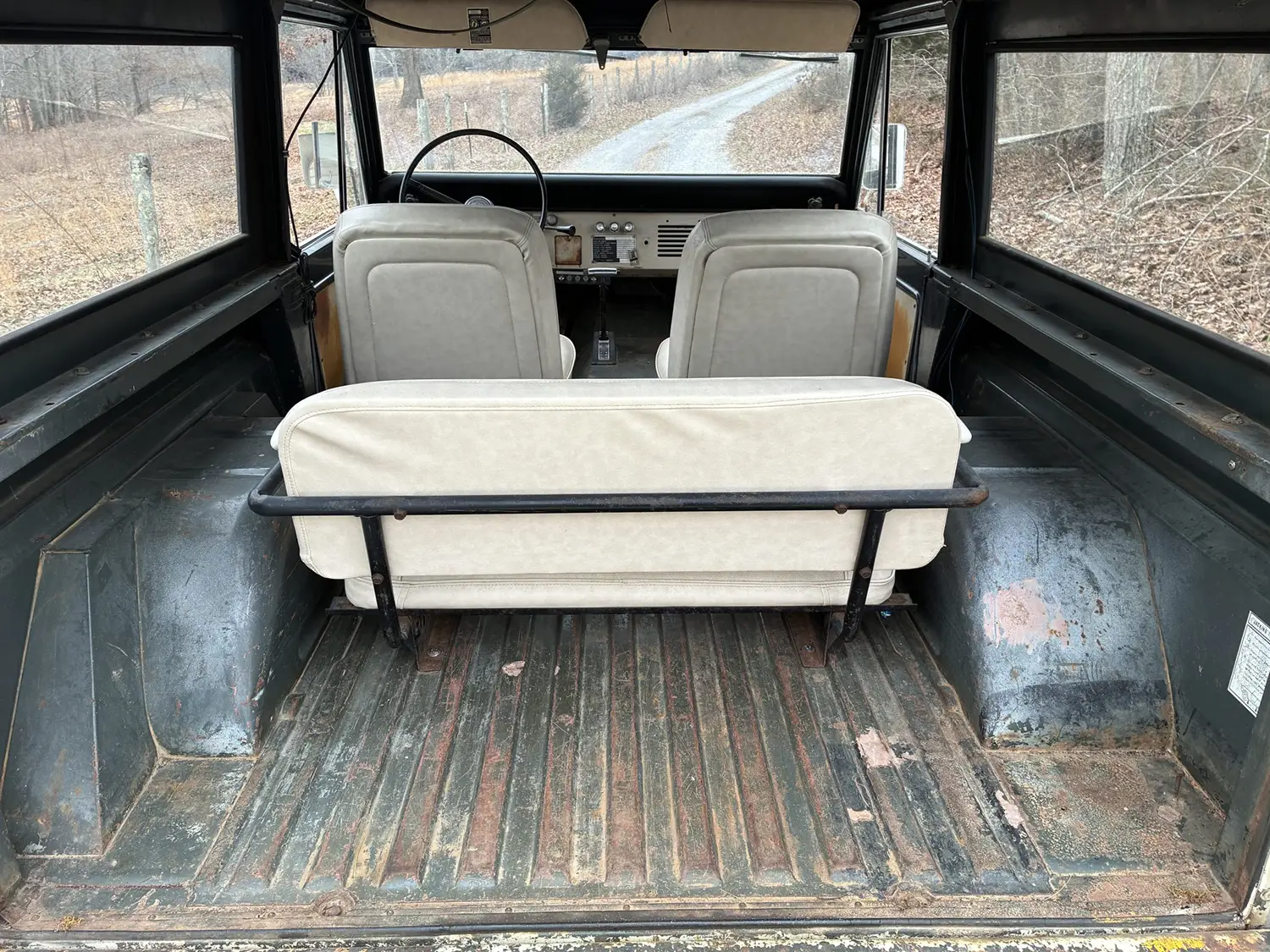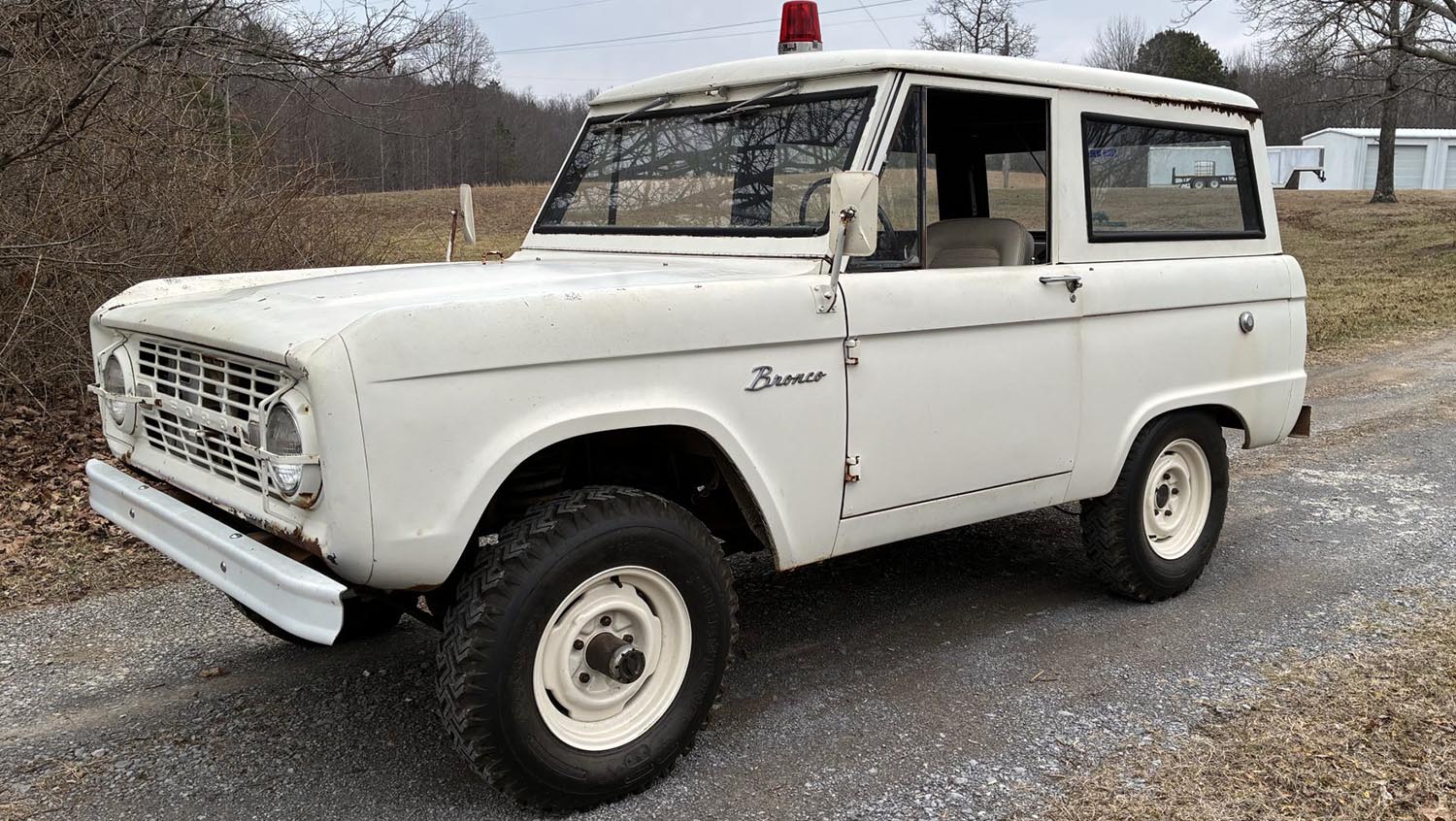
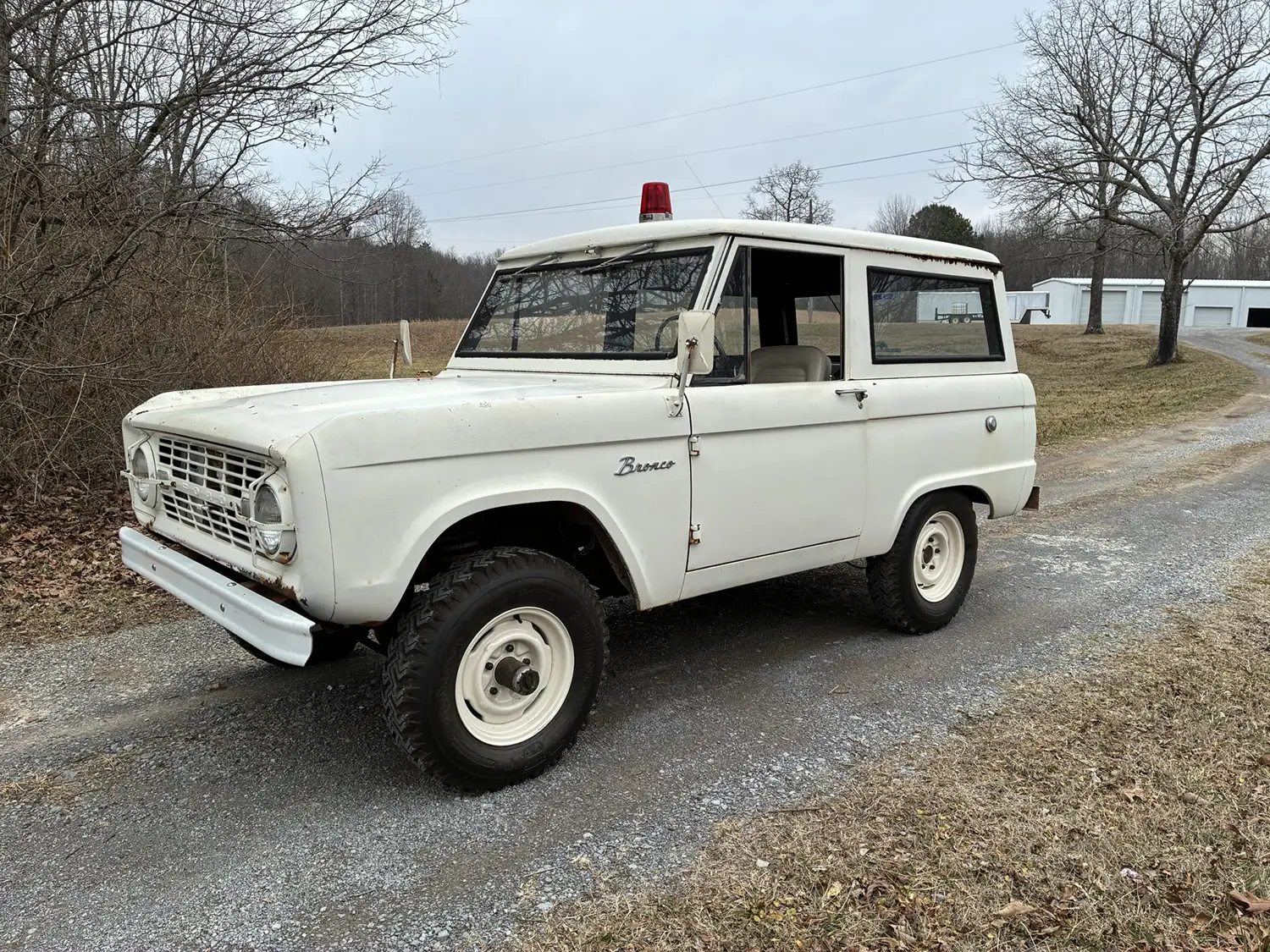
The 1967 Ford Bronco wagon represents a significant piece of American history, standing as one of a limited number of units produced specifically under contract for the U.S. military. Originally finished in a branch-specific green for the Army or Marine Corps, this chassis later transitioned to civilian service as a rescue vehicle in Talladega, Alabama. This evolution from tactical tool to emergency responder has left the vehicle with a unique dual-layered identity, characterized by its white exterior and original green engine bay. Purchased by the current seller in 2015 and mechanically refreshed in March 2024, this Bronco is a primary acquisition candidate for collectors seeking a utility icon with documented government provenance and a distinct service narrative in early 2026.
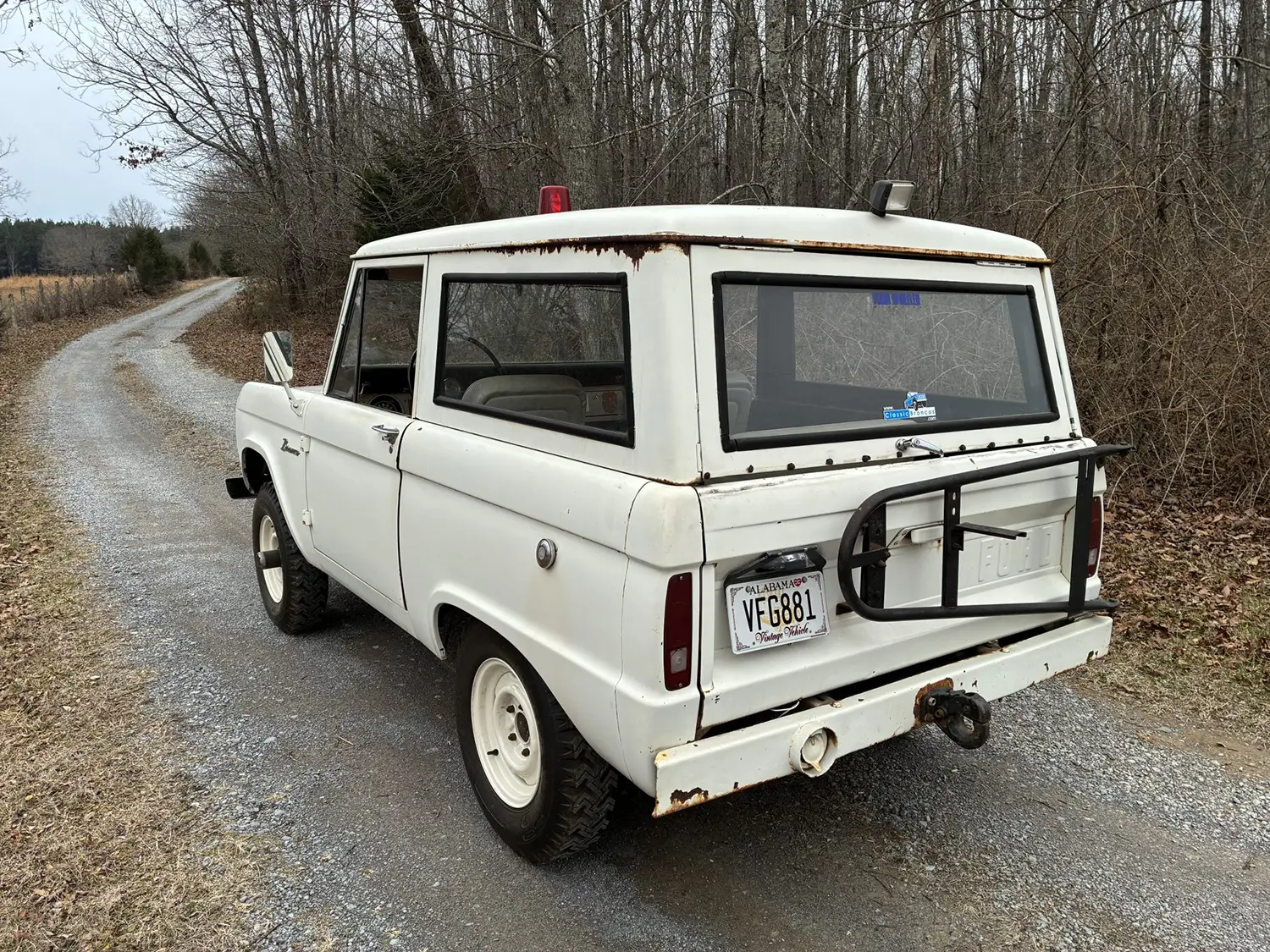
Military Silhouette and Functional Emergency Rescue Tech
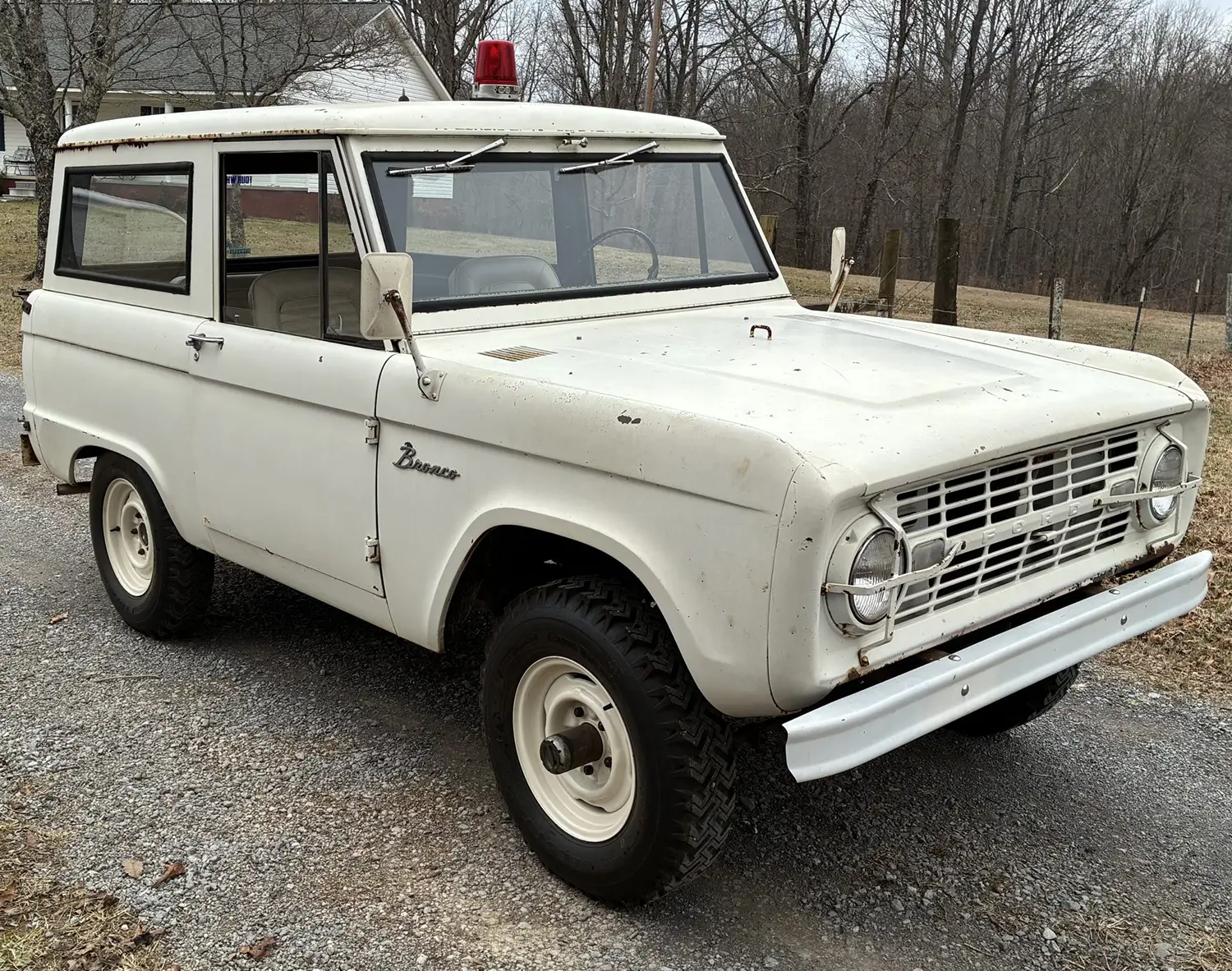
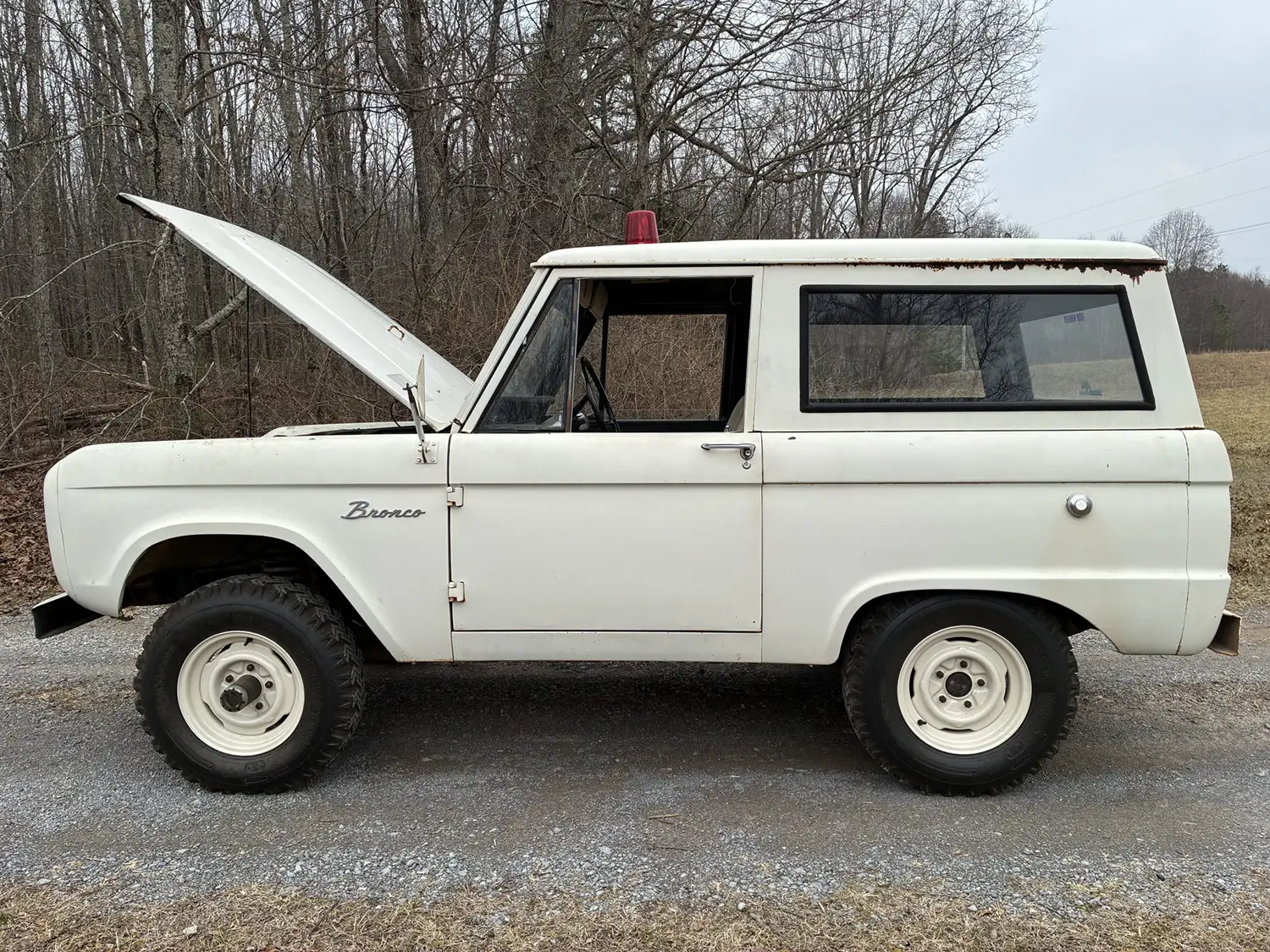
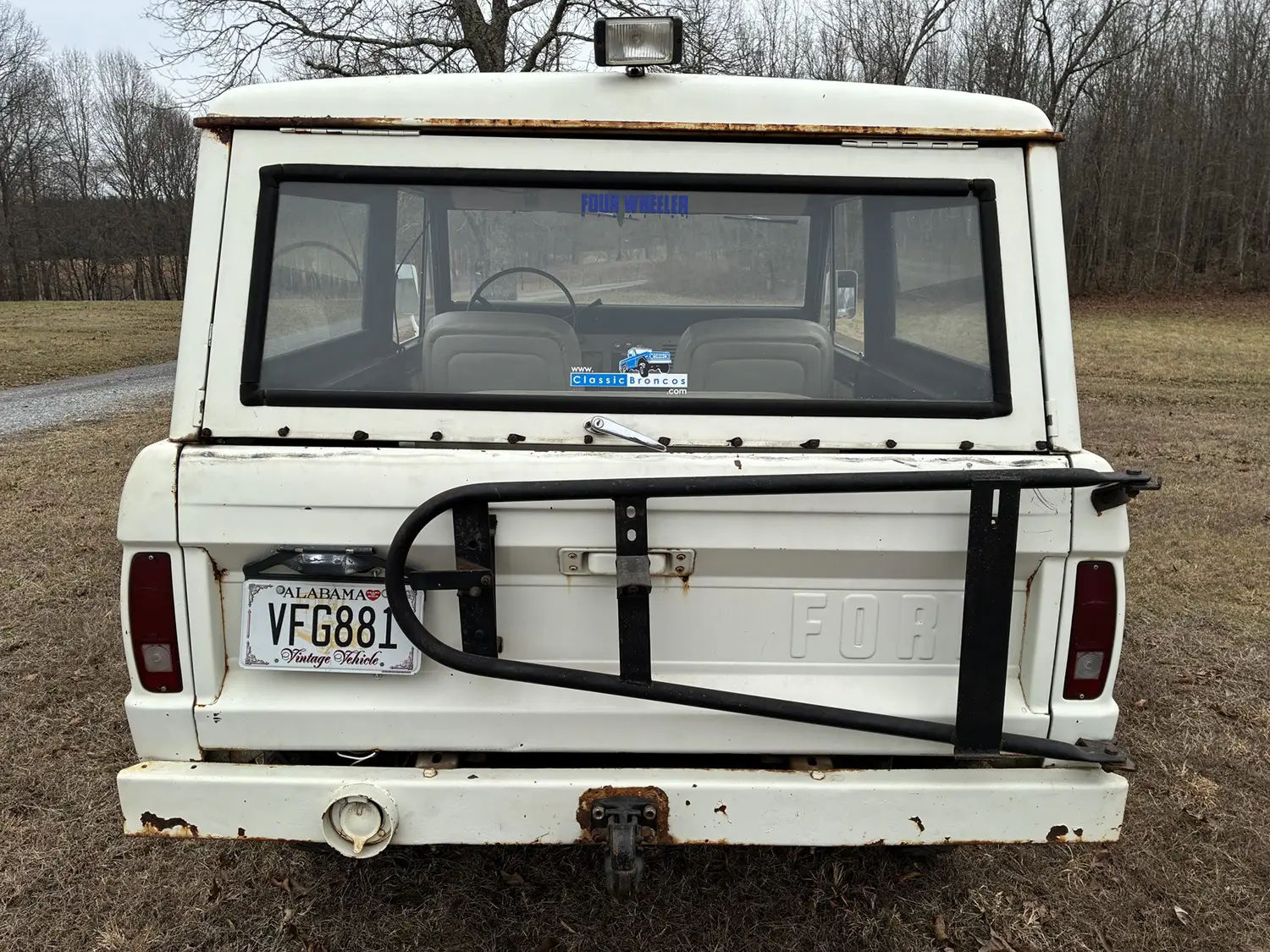
The visual character of this 1967 Ford Bronco is defined by its rugged silhouette, currently wearing an older white repaint that speaks to its history as a rescue truck. Despite the color change, the original military-specification green remains visible within the cabin and engine compartment, serving as a reminder of its tactical roots. Functional equipment includes headlight guards, fender-mounted mirrors, and a rear-mounted pintle hitch for heavy-duty towing. To honor its time in Alabama emergency service, the truck retains a red strobe light, a siren, and a rear spot light. The exterior package is completed by 15-inch steel wheels, which were powder-coated in March 2024 and mounted with Deestone D503 tires to ensure a period-correct utility stance.
Parchment Vinyl Cabin and Original 100-MPH Instrumentation
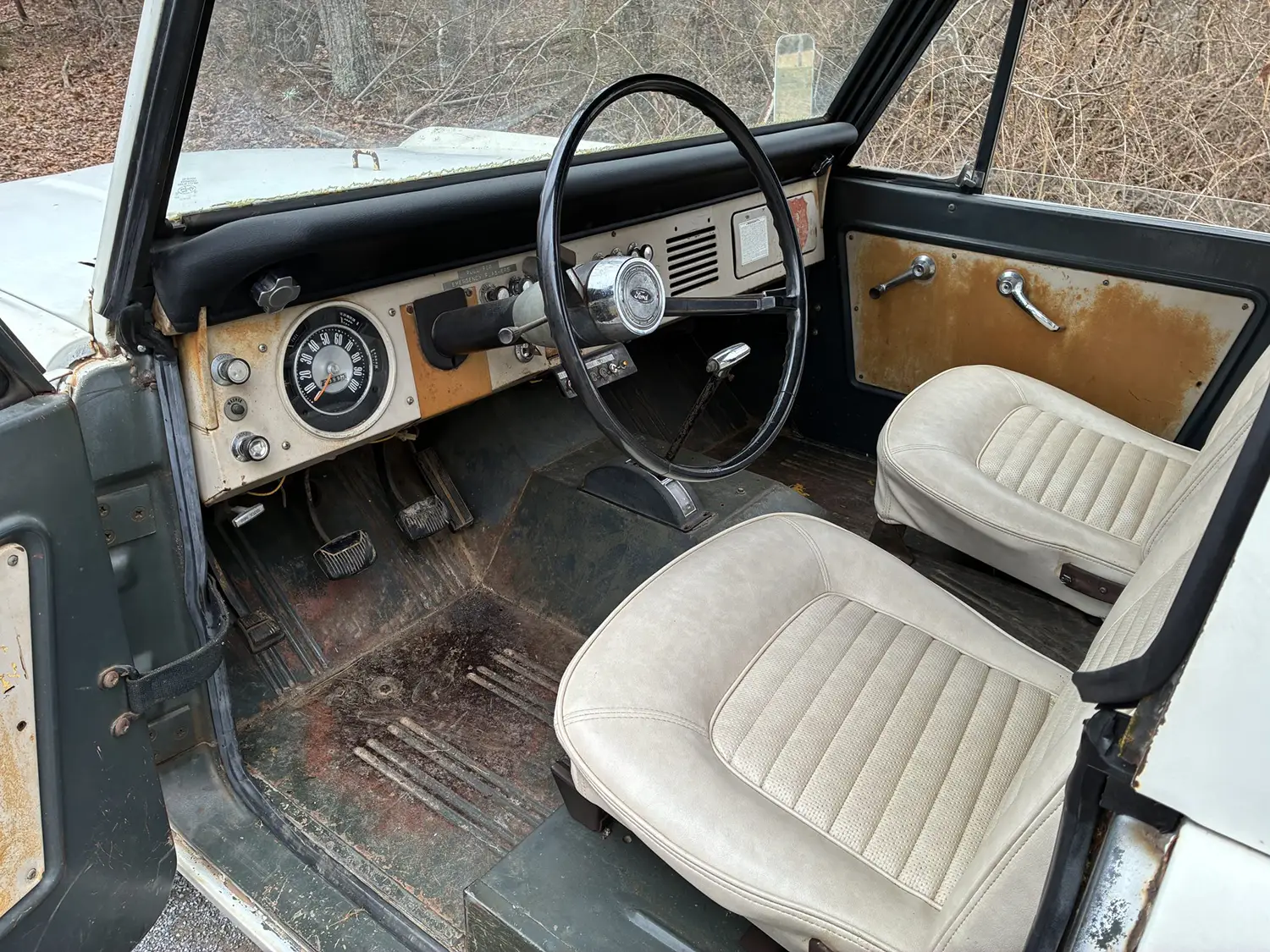
Inside, the cabin offers a focused environment featuring front bucket seats and a rear bench re-trimmed in Parchment vinyl approximately ten years ago. The interior section maintains its original military-green finish on the metal surfaces, providing a stark and authentic contrast to the light upholstery. Instrumentation is centered around a 100-mph speedometer, which is encircled by auxiliary gauges monitoring voltage, fuel level, coolant temperature, and oil pressure. While the truck shows 72k miles on the five-digit odometer, the primary focus remains on the functional simplicity of the layout. From the manual floor shifters to the basic metal dash, the cabin reflects the no-nonsense requirements of a vehicle designed for both the battlefield and the fire station.
170ci Inline-Six Narrative and Manual Drivetrain Engagement
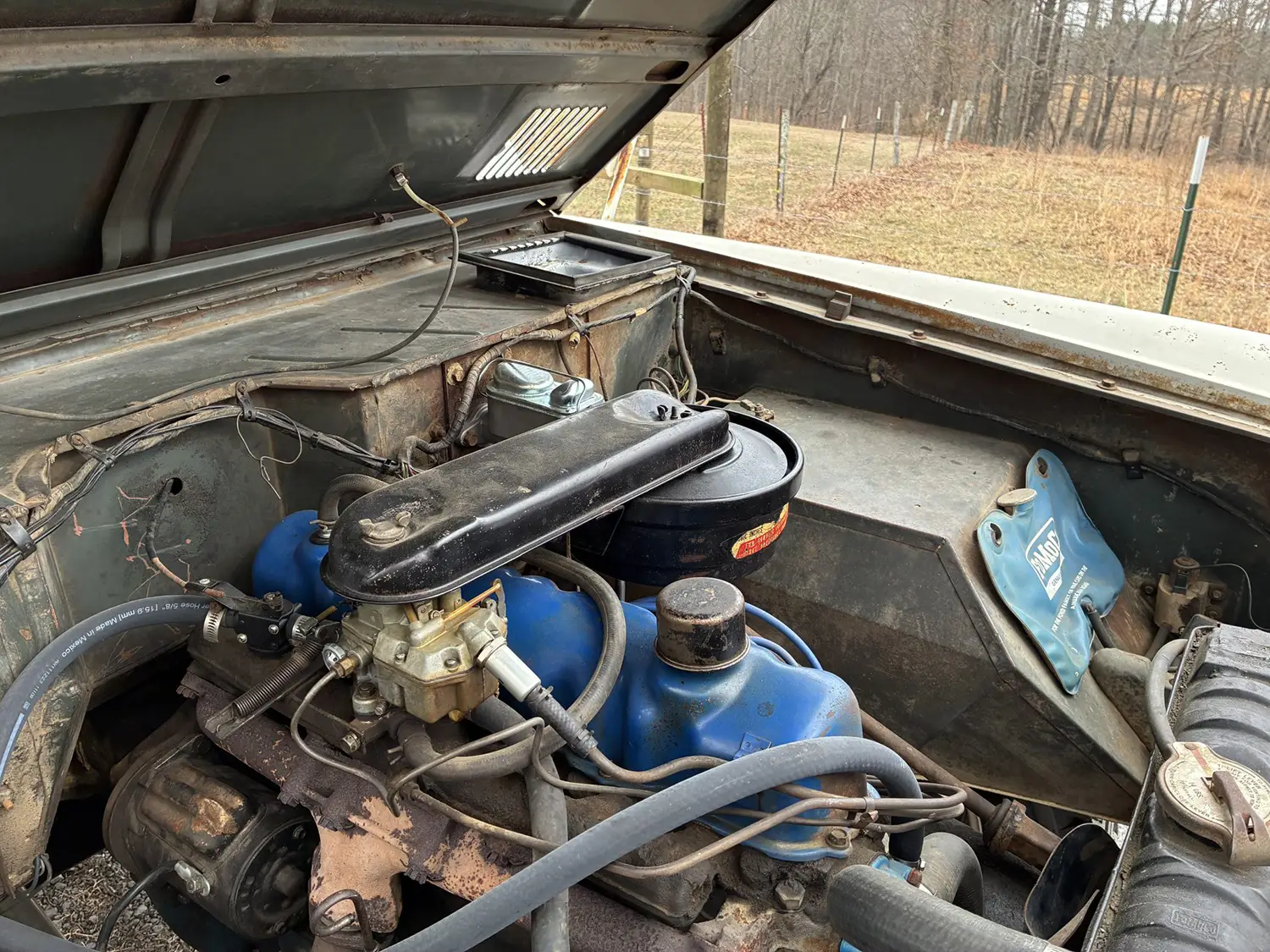
The heart of this 1967 Ford Bronco is a replacement 170ci inline-six engine, which was installed in March 2024 alongside a new fuel tank to improve reliability. This powerplant is mated to a three-speed manual transmission and a dual-range transfer case, offering the mechanical fluidity required for off-road maneuvers. The performance narrative is one of steady, low-end torque, supported by manually locking front hubs for varied terrain. While the truck is a functional runner, the seller notes that the carburetor requires a rebuild and an electrical parasitic drain needs attention. Braking is handled by drums at all four corners, providing a tactile and deliberate driving feel that honors the truck’s heavy-duty heritage and simple mechanical architecture.
| Technical Specifications | |
|---|---|
| Engine Type | Replacement 170ci Inline-Six |
| Transmission | 3-Speed Manual |
| Transfer Case | Dual-Range |
| Braking System | Four-Wheel Drums |
| Wheels | 15-Inch Powder-Coated Steel |
| Interior Color | Parchment Vinyl |
| Documentation | Deluxe Marti Report |
Market Context and the Military Contract Unique Selling Point
The 1967 Bronco is frequently benchmarked against the International Scout and the Jeep CJ-5, though the Ford’s military contract status provides a unique selling point that few others can claim. In the current 2026 market, “first-generation” Broncos remain high-value assets, but those with documented government service via a Marti Report command specific interest from military vehicle historians. While the presence of surface corrosion and the need for minor mechanical sorting are noted, the rarity of a “handful” of military-contract wagons makes this example a standout lot. It appeals to a crossover market of off-road enthusiasts and historical collectors who value the authenticity of a vehicle that served its country before its community.
Alabama Stewardship and Marti Report Provenance
Ownership of this Bronco is anchored by its long-term tenure in Alabama, where it was utilized by local rescue services before entering the seller’s collection. The vehicle is being conveyed with an Alabama registration, serving as the ownership document for a vehicle of this age, and is accompanied by a Deluxe Marti Report that verifies its factory colors and production statistics. This report is essential for confirming the military-specific green paint and the “contract” nature of the build. Although the truck has moved away from its original tactical duties, the stewardship of the last decade has focused on preserving its dual-purpose history, making it a well-documented representative of Ford’s diverse 1960s production portfolio.
A Final Look at a Tactical Rescue Masterpiece
The 1967 Ford Bronco is a physical manifestation of a time when the American utility vehicle was called upon for the most demanding government and local service roles. By merging the refreshed 170ci inline-six with the unmistakable silhouette of a military-spec wagon and the charm of its rescue-ready equipment, Ford created a machine that remains a permanent icon of the heritage landscape. This rare Bronco stands as a proud representative of the brand’s legacy as a leader in both tactical engineering and civilian community support. Whether it is destined for a technical restoration to its original Army Green or preserved as a unique rescue-tribute survivor, this legend remains a masterclass in American automotive grace that successfully carries its crown into the 2026 era.
Disclaimer: Content on this site is for informational and entertainment purposes only. Details, analyses, and opinions reflect current trends and personal views, not professional or financial advice. Always verify information with official sources before making any decisions.
Source: bringatrailer.com