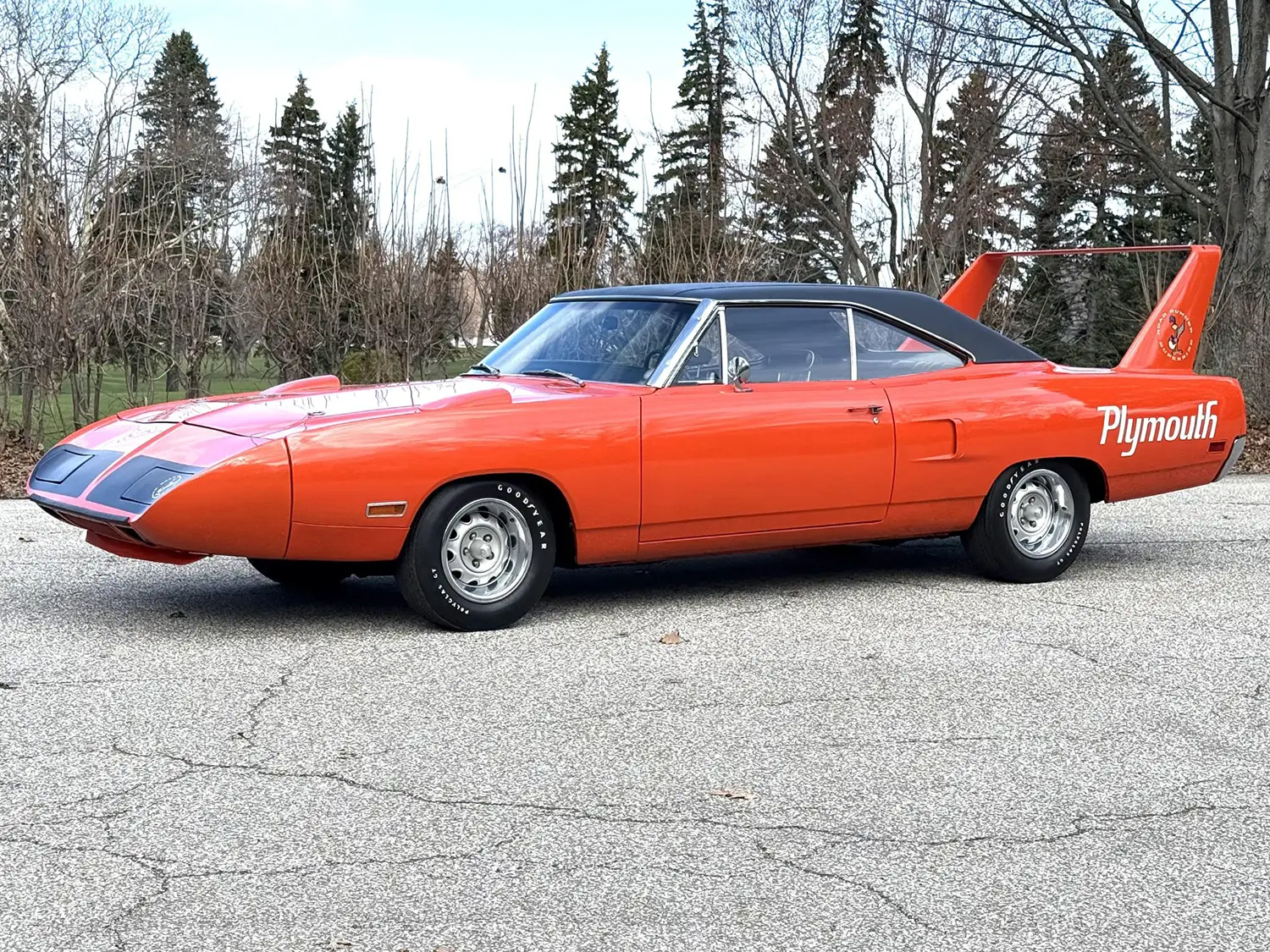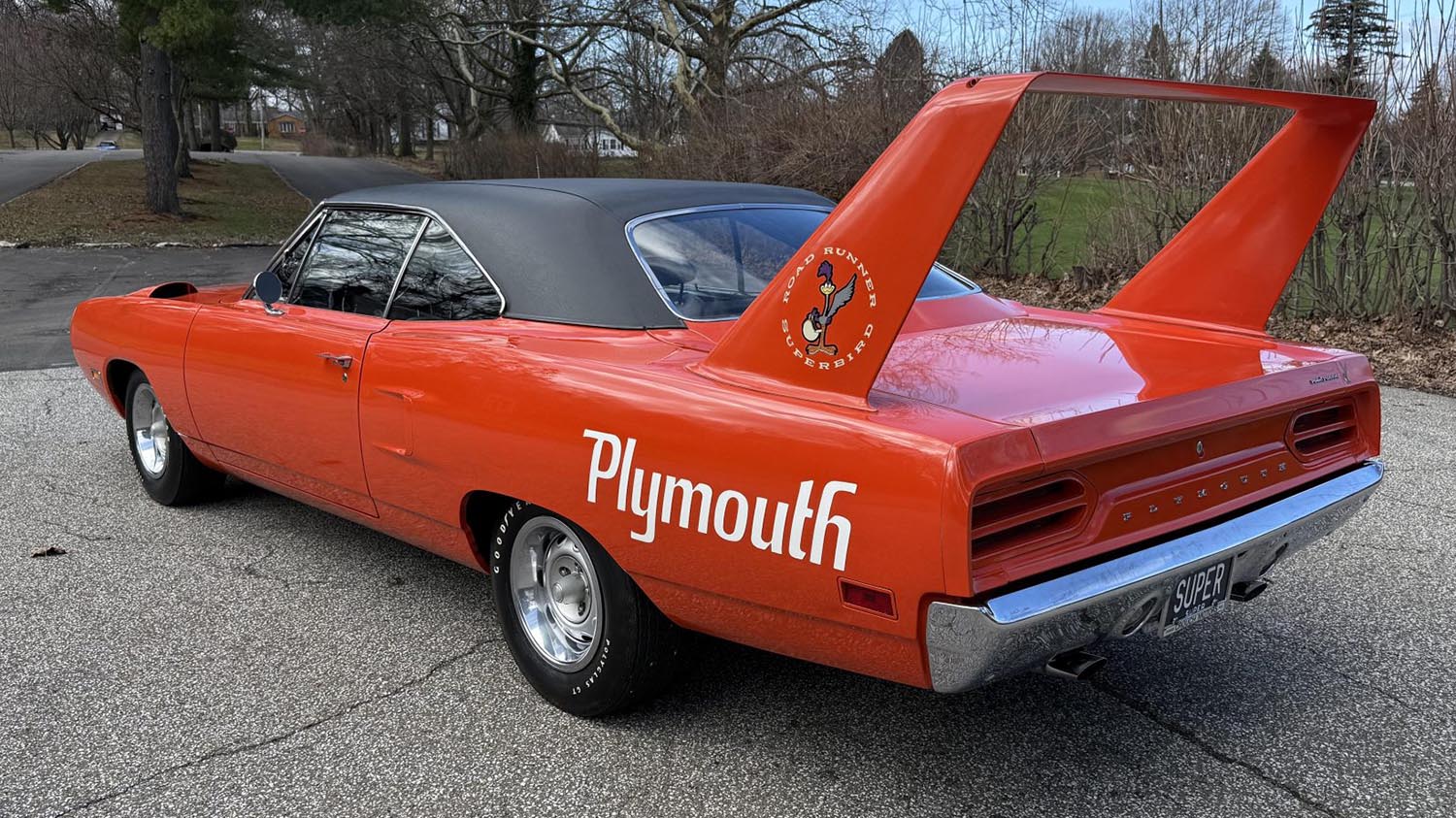
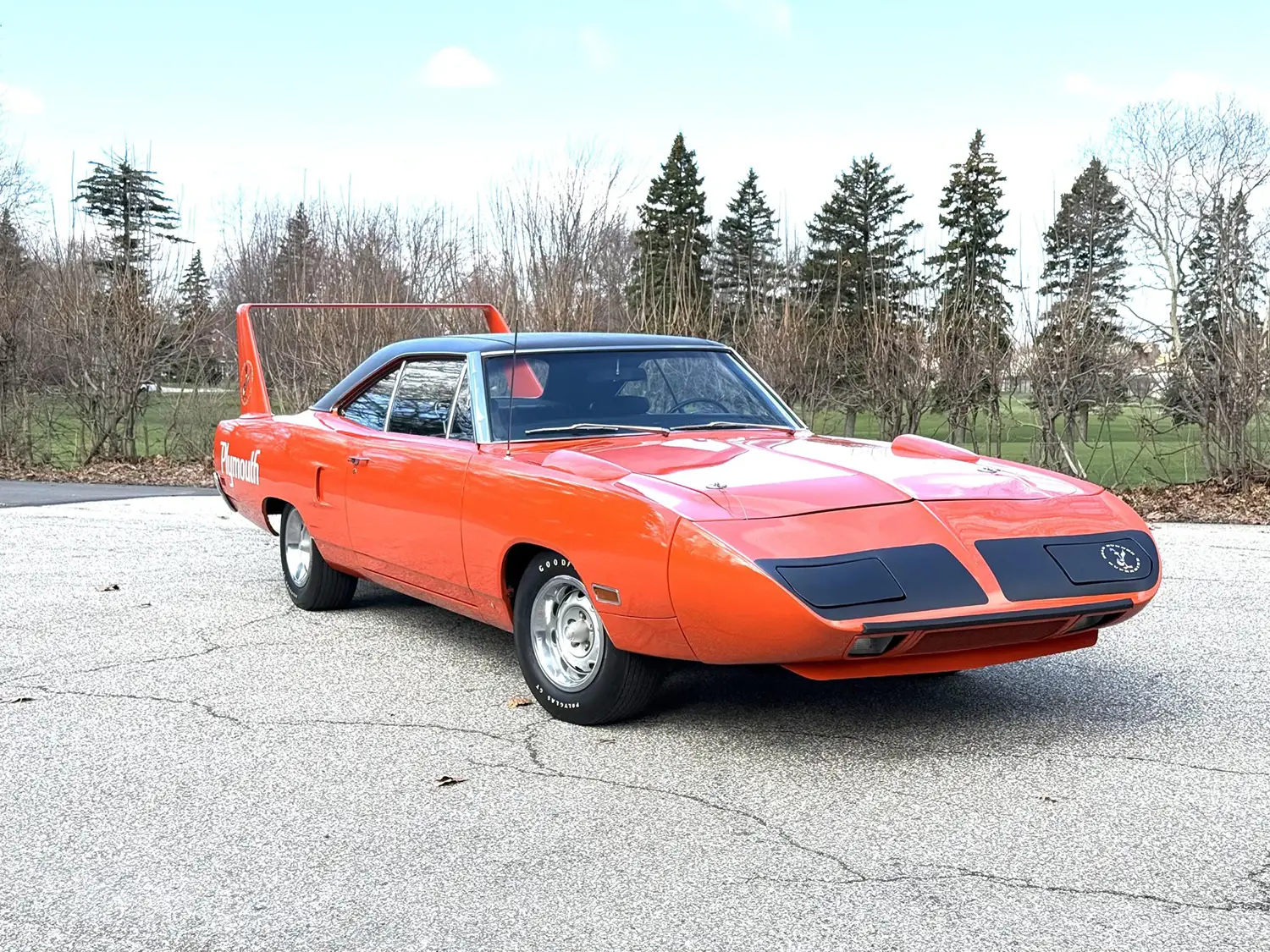
The 1970 Plymouth Superbird stands as one of the most radical examples of the “aero-war” era, a machine designed specifically to lure Richard Petty back to Plymouth and dominate the high-banked ovals of NASCAR. To meet homologation requirements, Chrysler produced approximately 2,000 units, with this specific V-code example being one of only 408 built with the 440 Six Pack and automatic transmission combination. Originally delivered through Crouch Motors in Kentucky, the car remained in the same family’s care for decades, appearing at select events before entering the collector market with just 22,000 miles on the odometer. Finished in vibrant Tor-Red, this Superbird represents a high-integrity survivor of a single-model-year legend that redefined automotive aerodynamics.
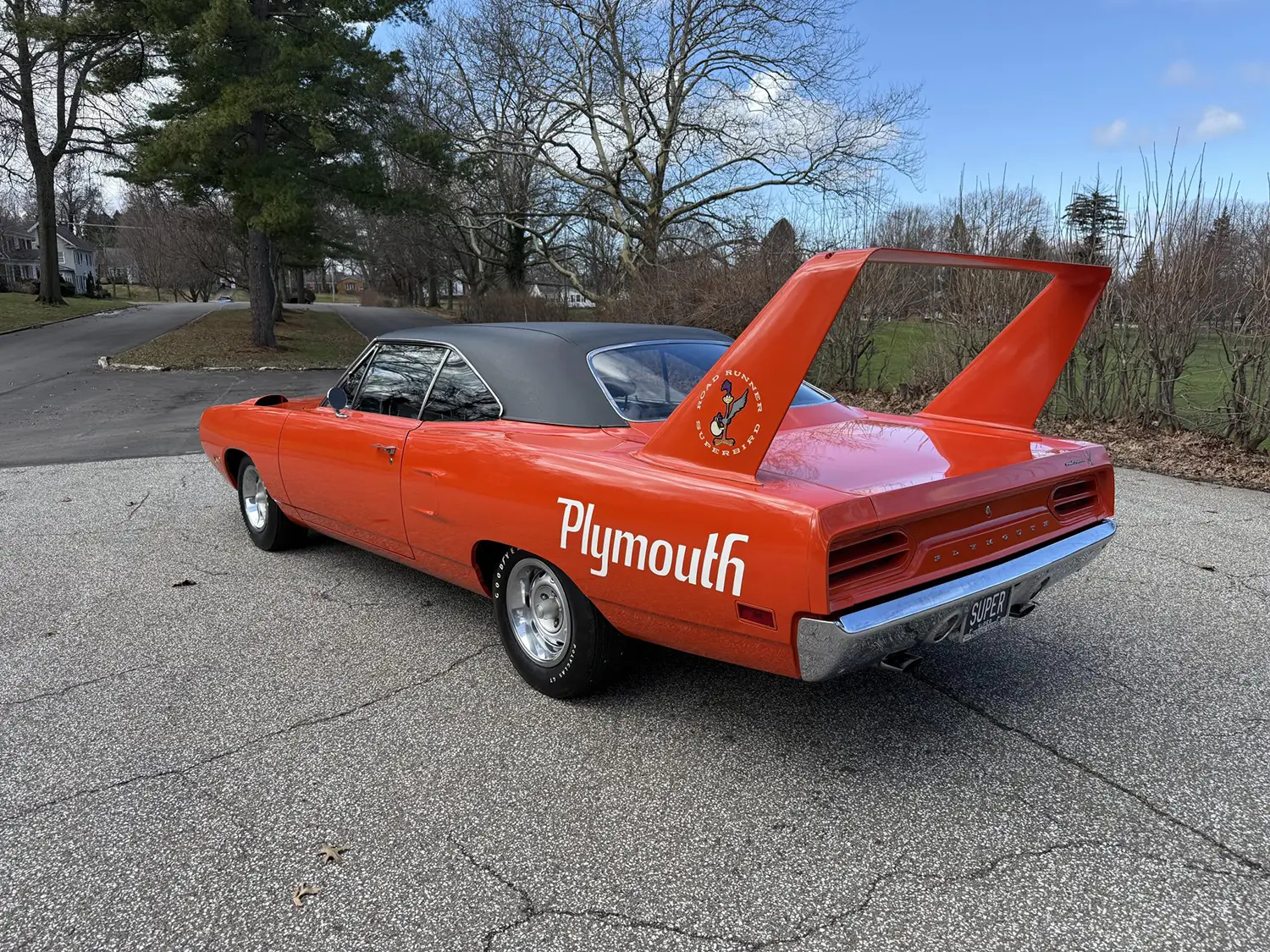
Tor-Red Silhouette and 24-Inch Stabilizer Wing
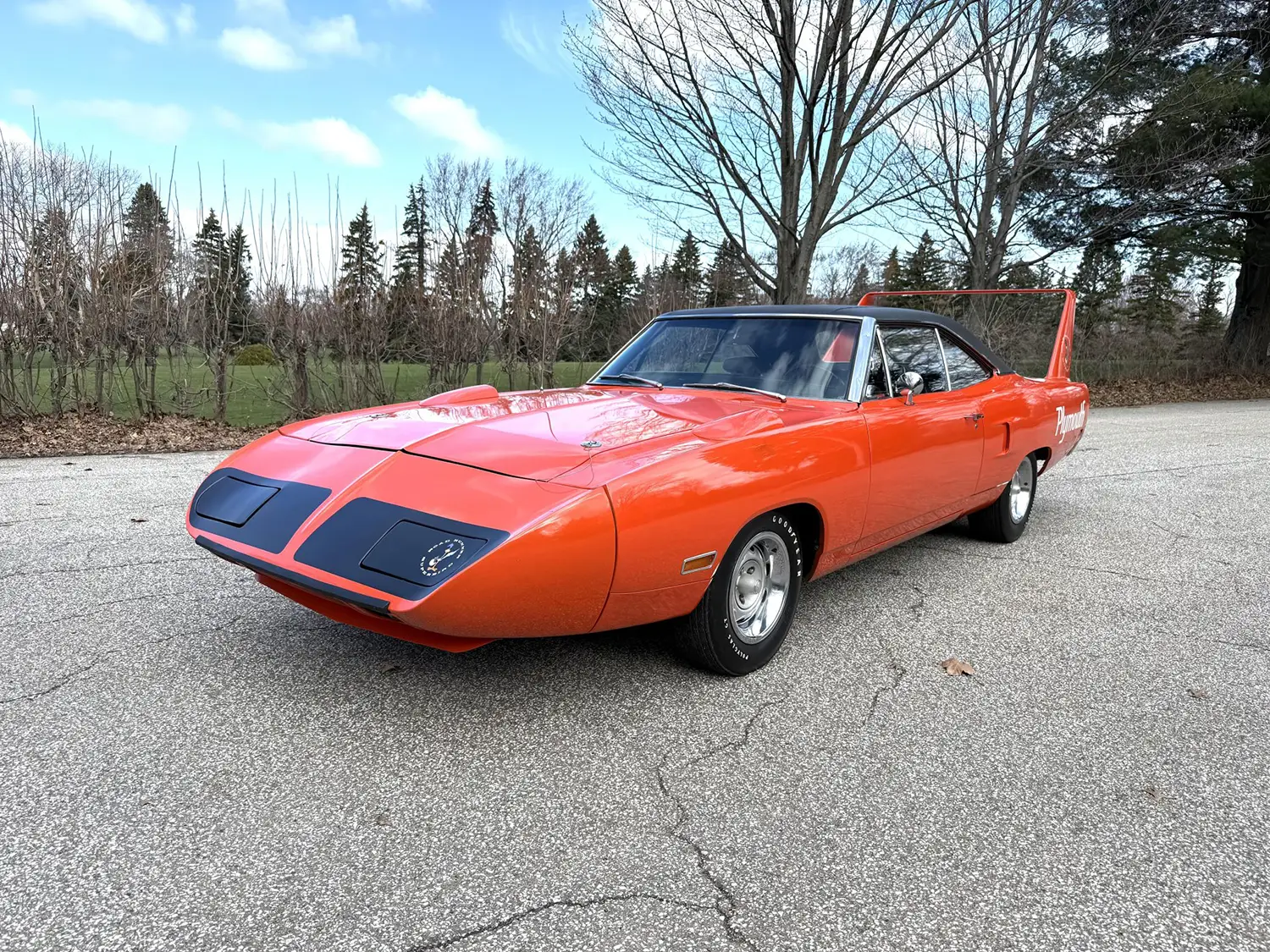
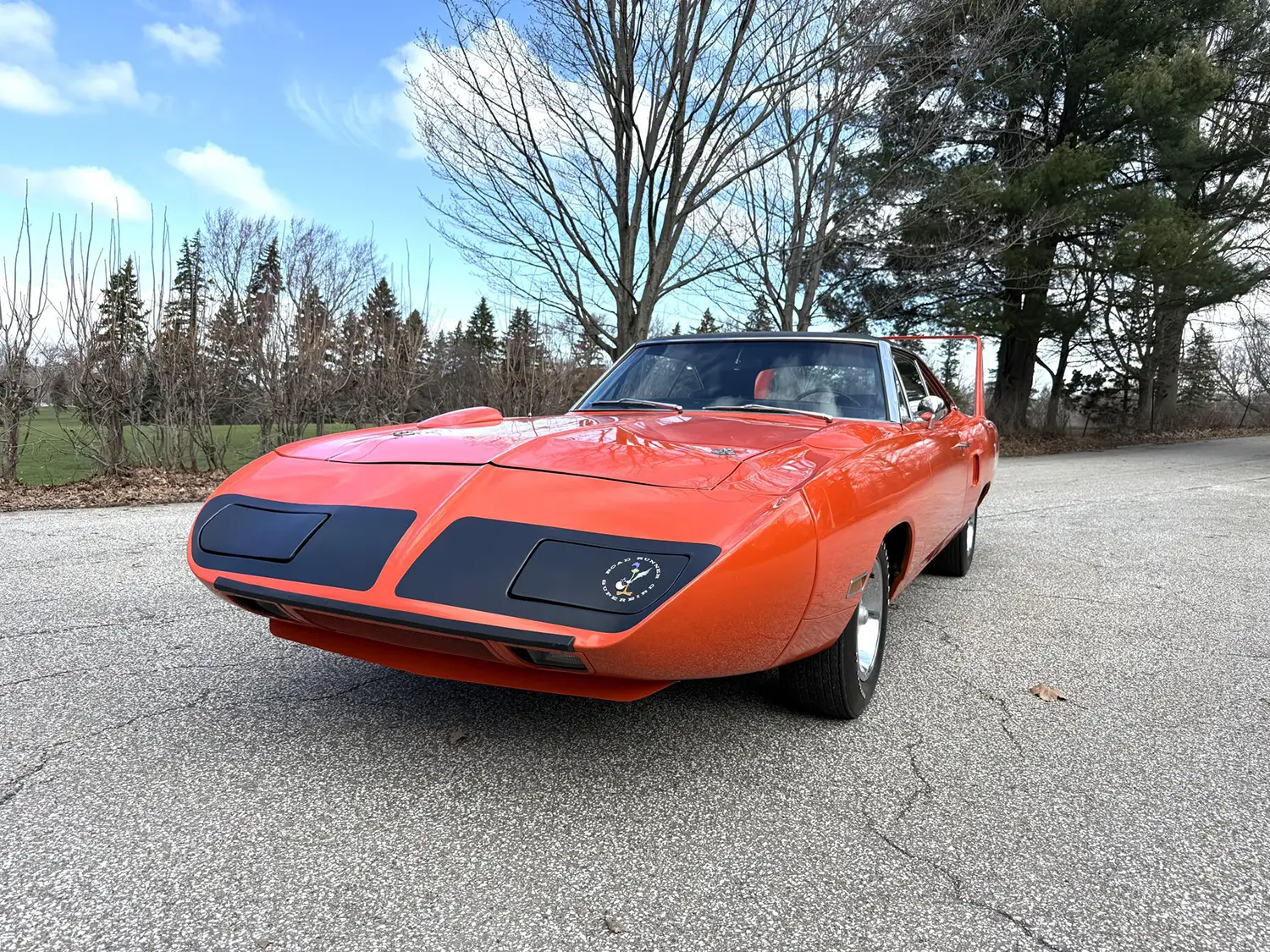
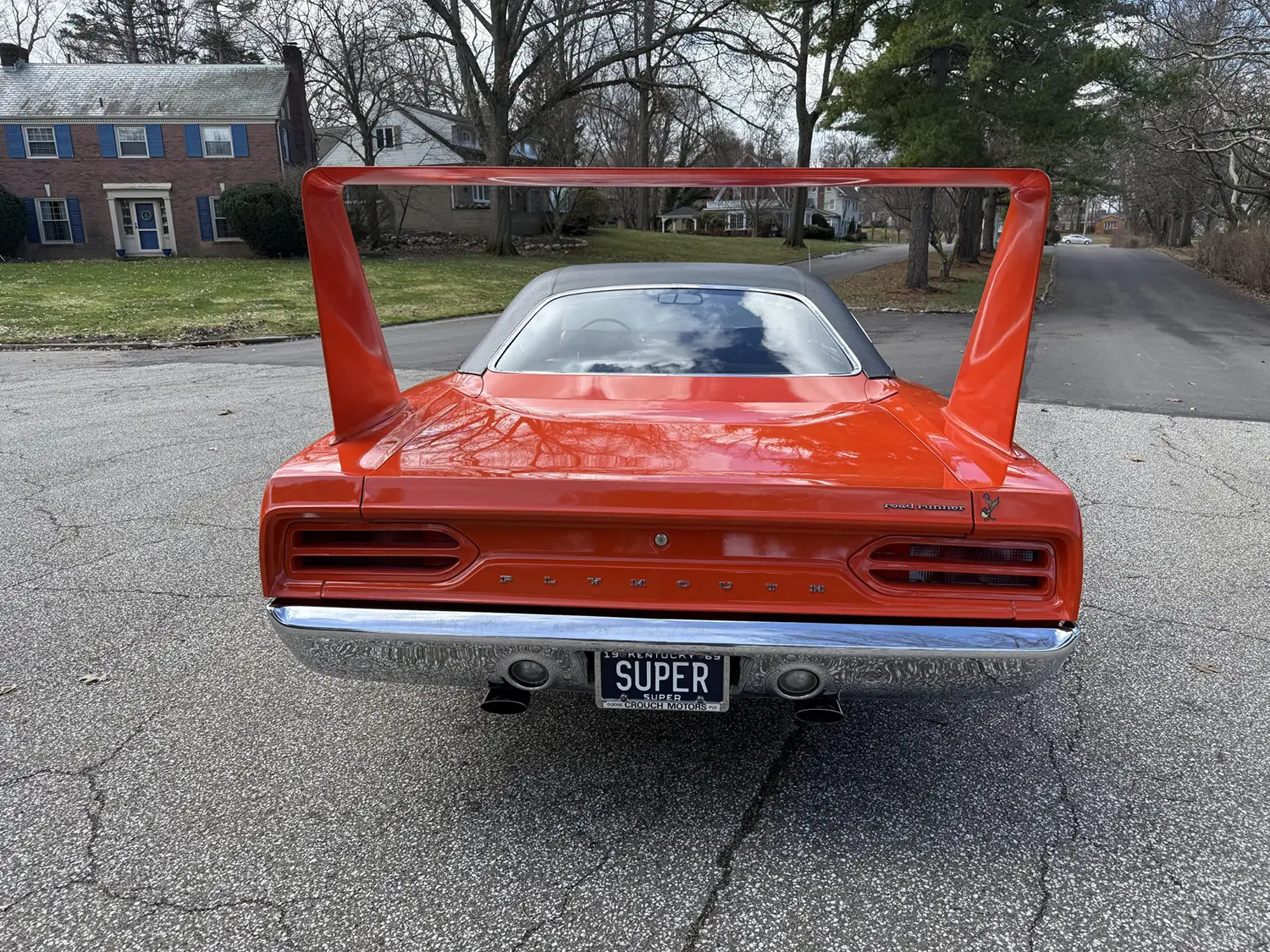
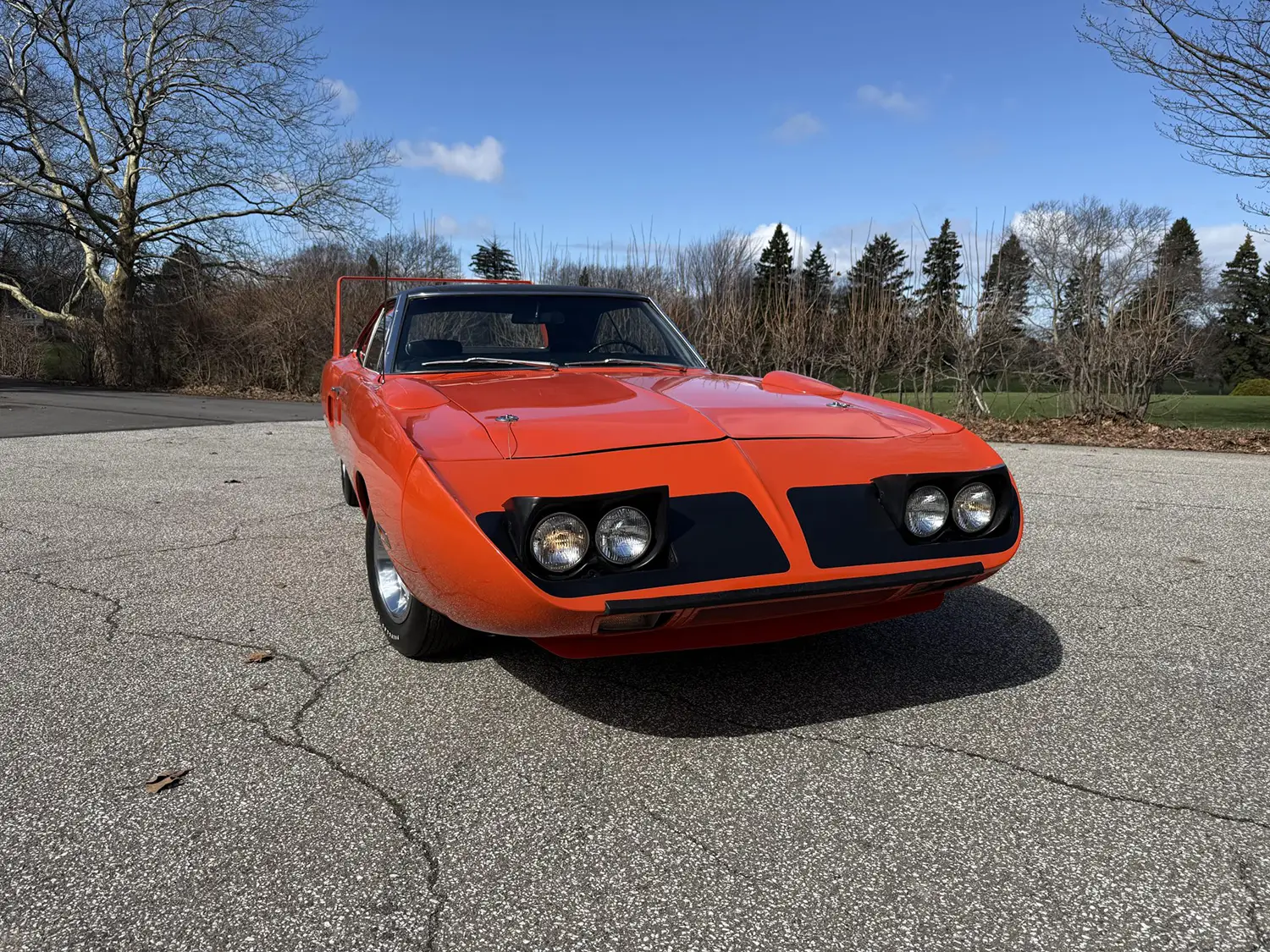
The visual character of this 1970 Plymouth Superbird is defined by its extreme aerodynamic modifications, most notably the elongated nose cone and the towering 24-inch rear stabilizer wing. Finished from the factory in Tor-Red (EV2), the car features the iconic black vinyl roof and specialized “Road Runner” cartoon graphics that signaled its performance intent. Functional exterior details include fender-top cooling vents, hood pins, and flip-up headlamps integrated into the nose cone. While the nose cone received a repaint in the 1980s, the body retains its simulated side scoops and white “Plymouth” quarter-panel script. The car sits with a period-correct stance on 15-inch Rallye wheels, which were recently fitted with fresh Goodyear Polyglas GT tires in 2023.
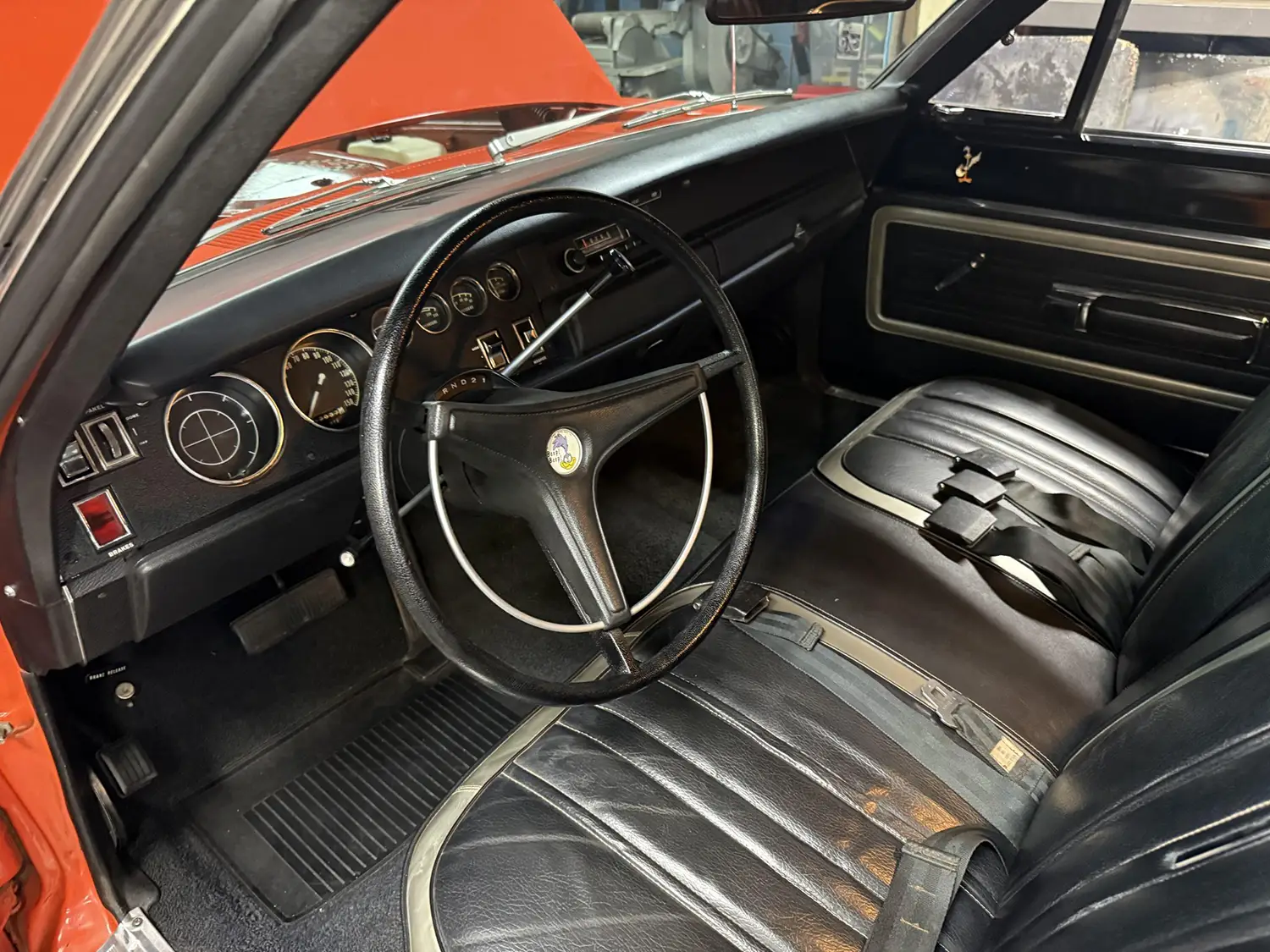
Black Vinyl Bench Seating and Beep-Beep Horn Integration
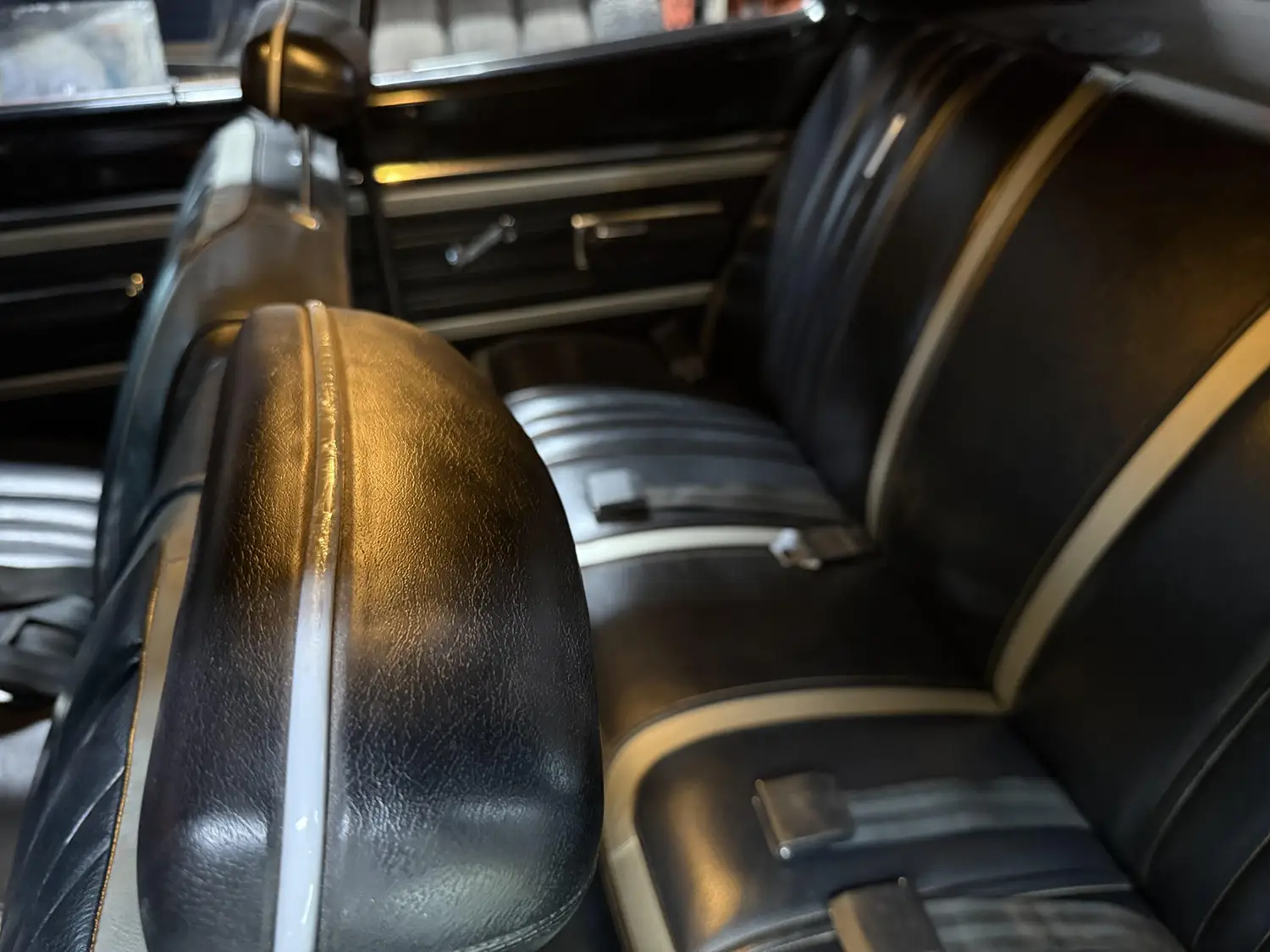
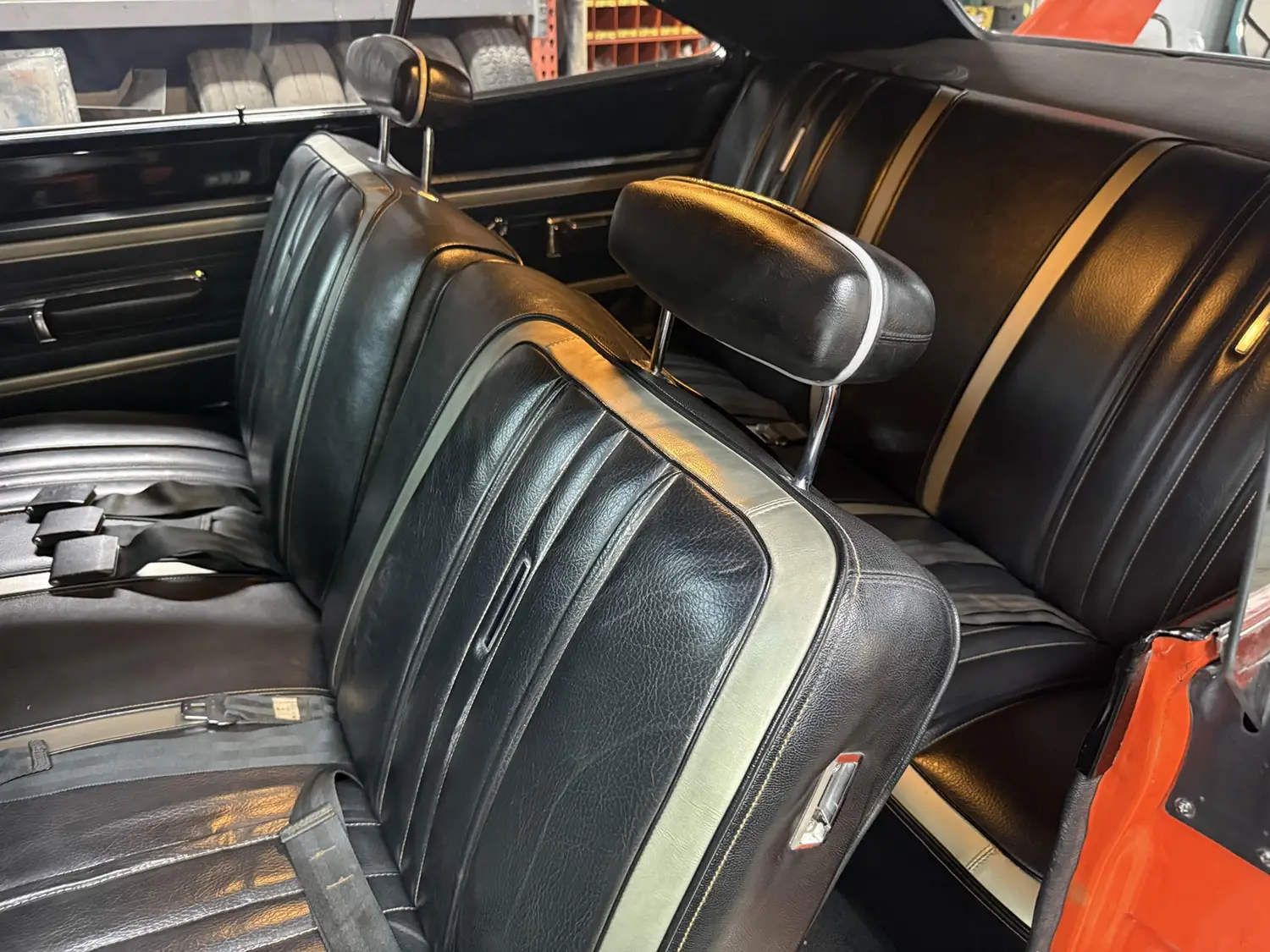
Inside, the cabin offers a well-preserved environment consistent with its low-mileage status, featuring front and rear bench seats upholstered in black vinyl with silver trim. The interior remains faithful to the mid-size Road Runner platform it was based upon, prioritizing functional controls and a focused driving position. The three-spoke steering wheel features a chrome horn ring and the signature “Beep! Beep!” center cap, fronting a 150-mph speedometer and a suite of factory gauges for oil pressure and amperage. Modern concessions are non-existent, as the dash retains its Chrysler Solid State AM radio and mechanical heater controls. Every surface, from the color-coordinated carpeting to the door panels, reflects the careful stewardship of a vehicle that has spent the majority of its life in climate-controlled storage.
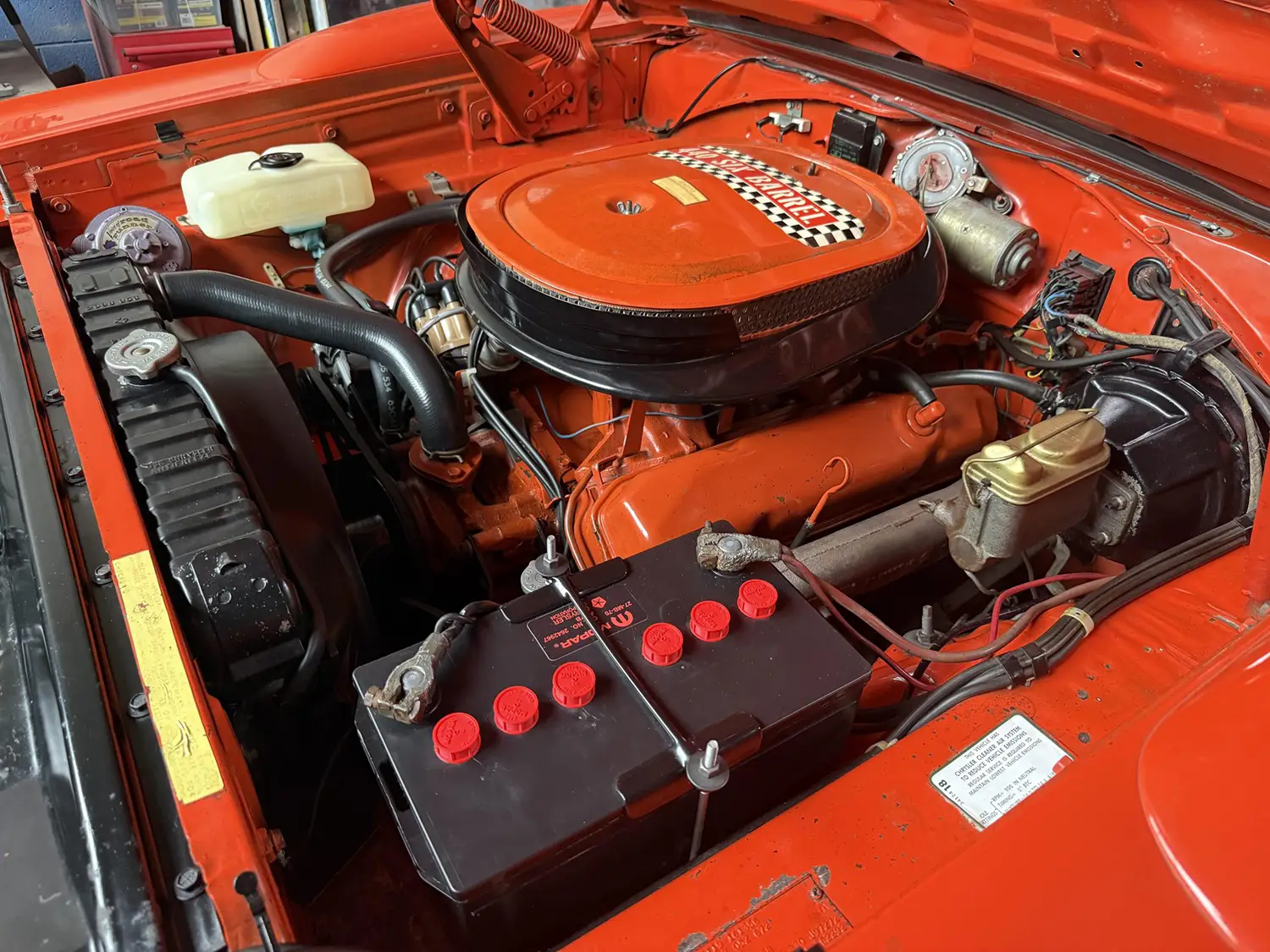
440ci Six Pack V-8 and TorqueFlite Automatic Gearing
The heart of the 1970 Plymouth Superbird is the formidable V-code 440ci V-8, which utilizes three Holley two-barrel carburetors to deliver immediate throttle response and a distinct mechanical growl. This powerplant was factory rated at 390 hp / 395 PS and 490 lb-ft / 664 Nm of torque, providing the heavy-duty muscle required for high-speed cruising. Power is managed by a three-speed A727 TorqueFlite automatic transmission and sent to the rear wheels through a Sure-Grip limited-slip differential with a 3.55:1 final drive ratio. The driving experience is refined by power-assisted steering and front disc brakes, ensuring that the 440+6 configuration remains as manageable on the street as it was capable on the superspeedways of the South.
| Technical Specifications | |
|---|---|
| Engine Type | 440ci V-8 w/ Three 2-Barrel Carburetors |
| Transmission | 3-Speed A727 TorqueFlite Automatic |
| Rear Axle | 8.75-inch Sure-Grip (3.55:1 Ratio) |
| Output | 390 hp / 395 PS |
| Production Rarity | 1 of 408 w/ 440+6 and Automatic |
| Exterior Color | Tor-Red (EV2) |
| Odometer | 22,000 Miles |
Market Position and the V-Code Homologation Premium
The Superbird occupies a dominant market position, frequently benchmarked against its corporate sibling, the Dodge Charger Daytona. While the Daytona was rarer in total production, the Superbird’s 1970-only run and association with “The King” Richard Petty have made it a cornerstone of the Mopar hobby. In the current 2026 market, V-code cars carry a substantial premium over standard 440 four-barrel models due to their increased power and racing-derived induction system. Its unique selling point is the blend of highly documented long-term family ownership and the verified Lynch Road Assembly heritage. This combination of low mileage and verified matching numbers makes it a primary target for collectors seeking a museum-quality example of NASCAR’s most outrageous era.
Lynch Road Assembly and Documented Stewardship
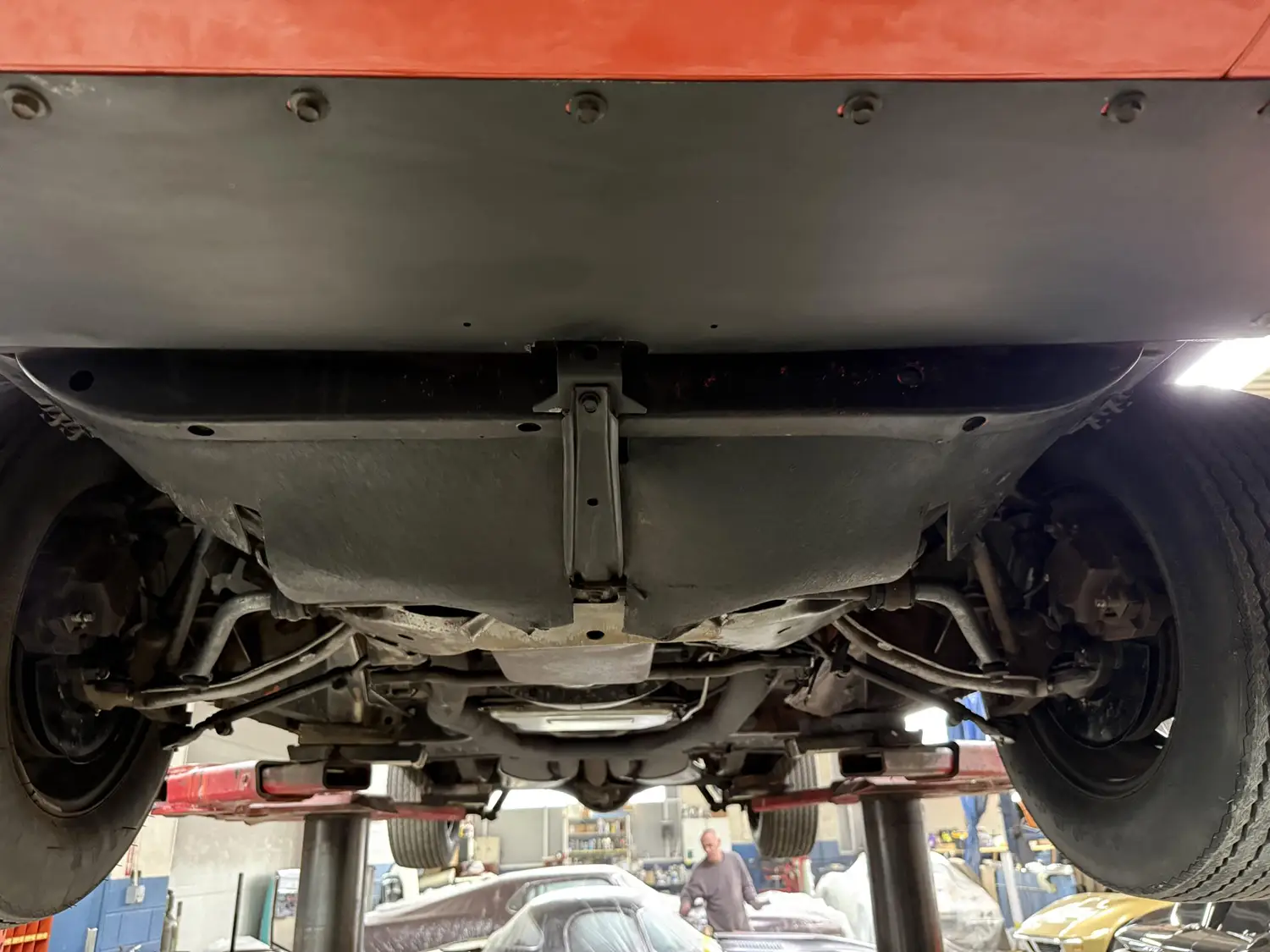
Ownership of this Plymouth is anchored by an exhaustive documentation file, including a broadcast sheet and a comprehensive 20-page Galen’s Tag Service report. The fender tag confirms its birth at the Lynch Road Assembly Plant with a scheduled production date of November 30, 1969. Having accumulated only 125 miles since 2007, the car’s mechanical integrity is supported by recent maintenance, including a new battery and the aforementioned Polyglas tires. The inclusion of a visual inspection report confirming the presence of matching serial numbers on the engine block and transmission case provides the transparency necessary for high-level investment. As a Pennsylvania-titled survivor with a clear lineage back to a Kentucky Dodge-Plymouth dealership, this Superbird represents a rare opportunity to own a piece of automotive history that has never been far from its original factory-delivered glory.
A Final Look at Plymouth’s High-Flying Aero Legend
The 1970 Plymouth Superbird is a physical manifestation of a time when the pursuit of speed led to the creation of the most distinctive silhouettes in automotive history. By merging the 390 HP Six Pack V-8 with the unmistakable Tor-Red finish and the tactical efficiency of the TorqueFlite automatic, Plymouth created a machine that dominated both the track and the imagination of a generation. This low-mileage survivor stands as a proud representative of the brand’s heritage as a leader in aerodynamic innovation. Whether it is destined for a prominent place in a private collection or a return to the show circuit, this Superbird remains a permanent icon of the automotive landscape that will never be repeated.
Disclaimer: Content on this site is for informational and entertainment purposes only. Details, analyses, and opinions reflect current trends and personal views, not professional or financial advice. Always verify information with official sources before making any decisions.
Source: bringatrailer.com