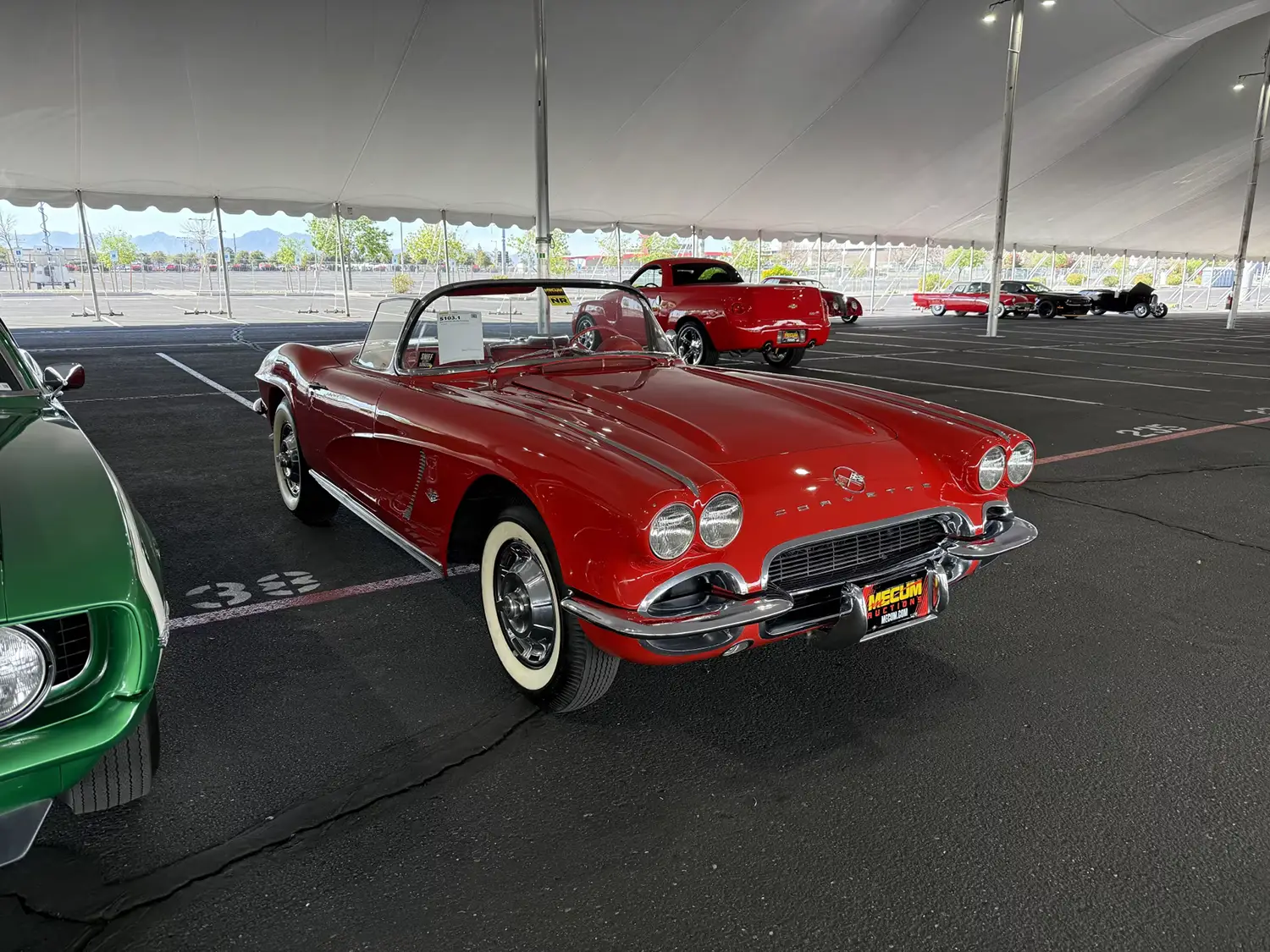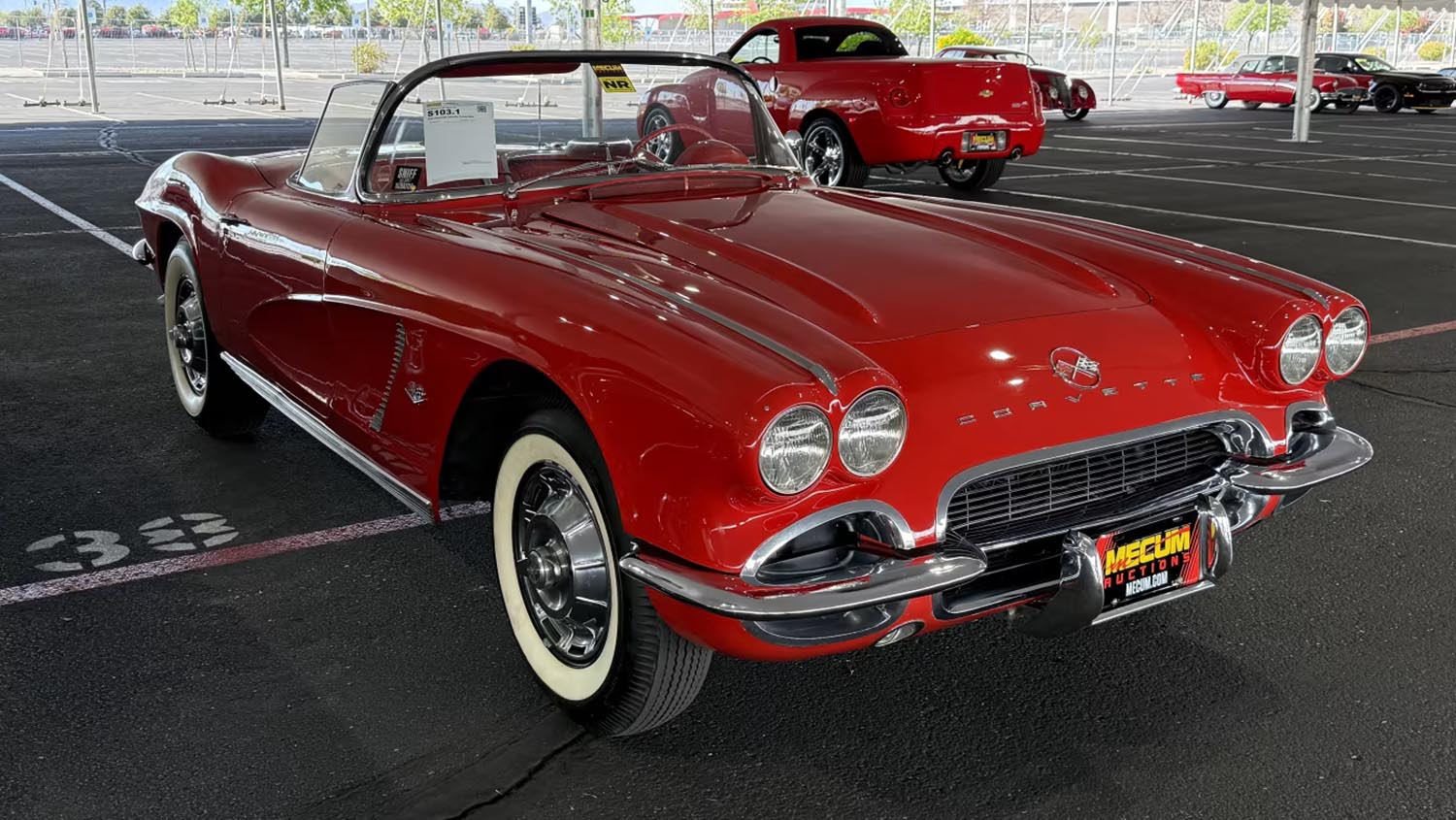
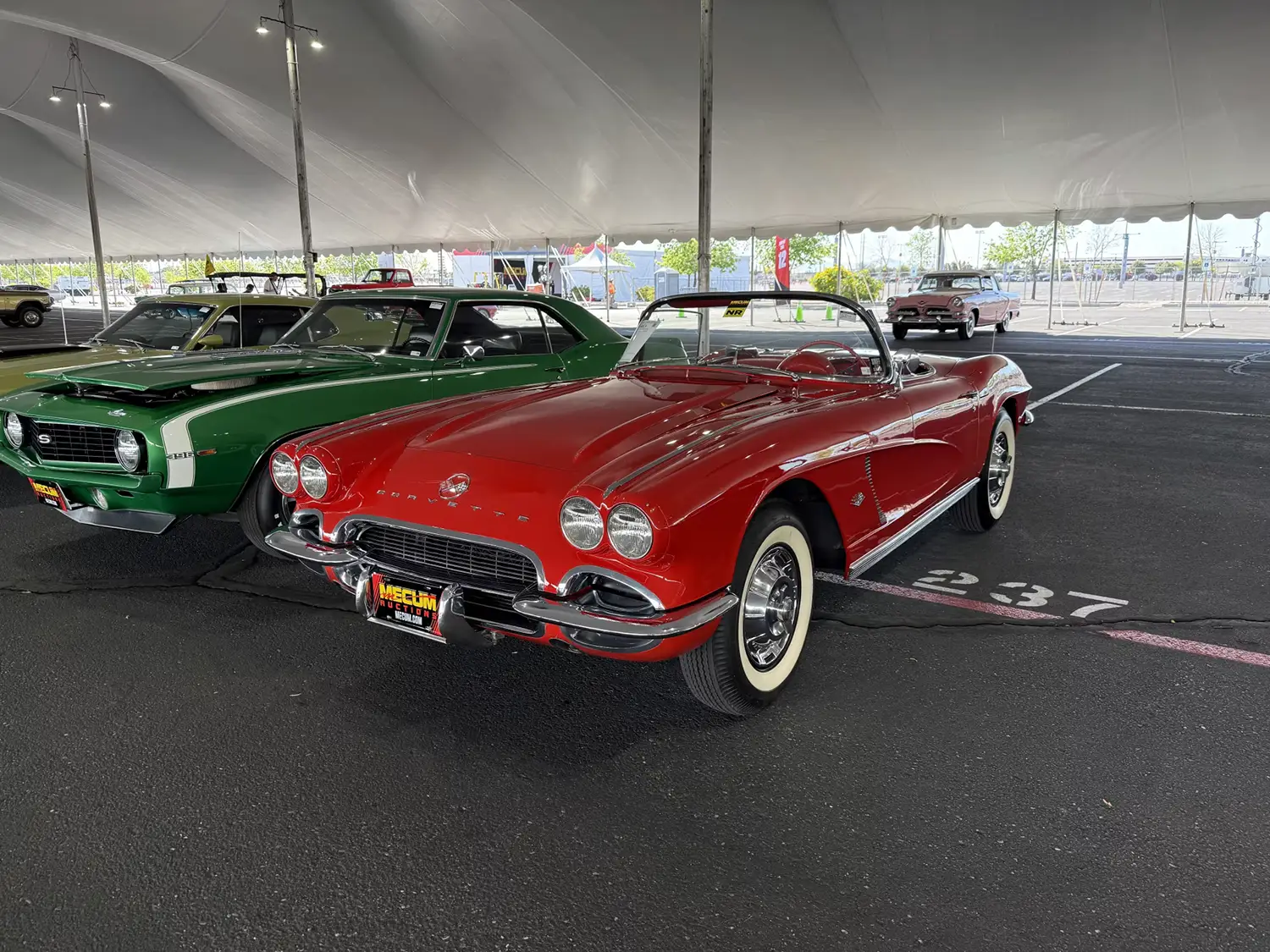
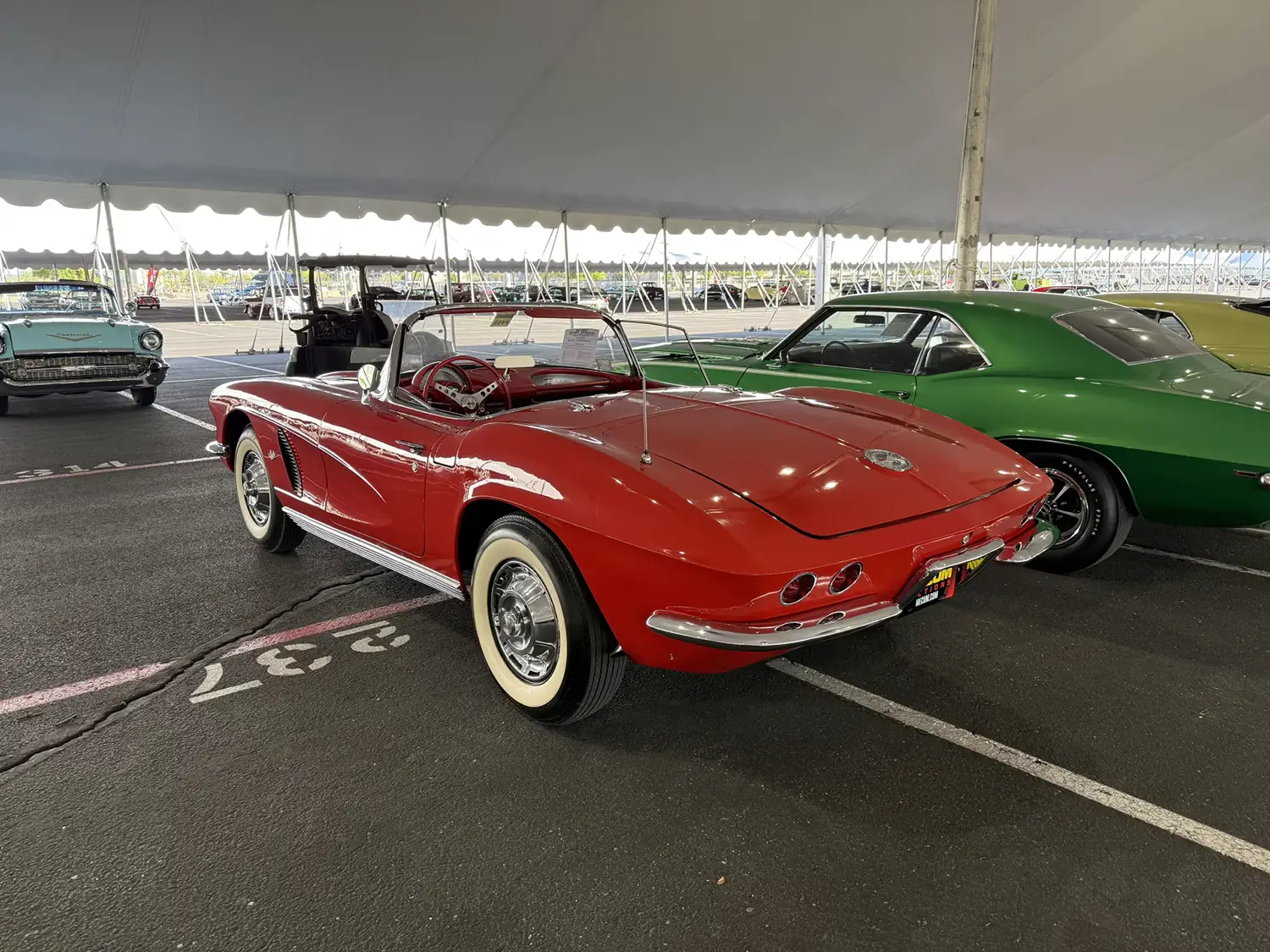
The 1962 Chevrolet Corvette Convertible marks a significant turning point in the lineage of America’s sports car, serving as the final year of the first-generation “solid-axle” design. This Roman Red example embodies the peak of C1 styling, bridging the gap between the ornate 1950s aesthetics and the more aggressive performance focused era that followed. Currently showing 12,382 miles on the odometer, this convertible presents a striking visual package with its matching red interior and contrasting white soft top. As it prepares to cross the block at the Glendale 2026 auction, it remains a quintessential collector piece for those who value the pure, unfiltered driving experience of early Corvette engineering.
A Masterclass in Roman Red Styling
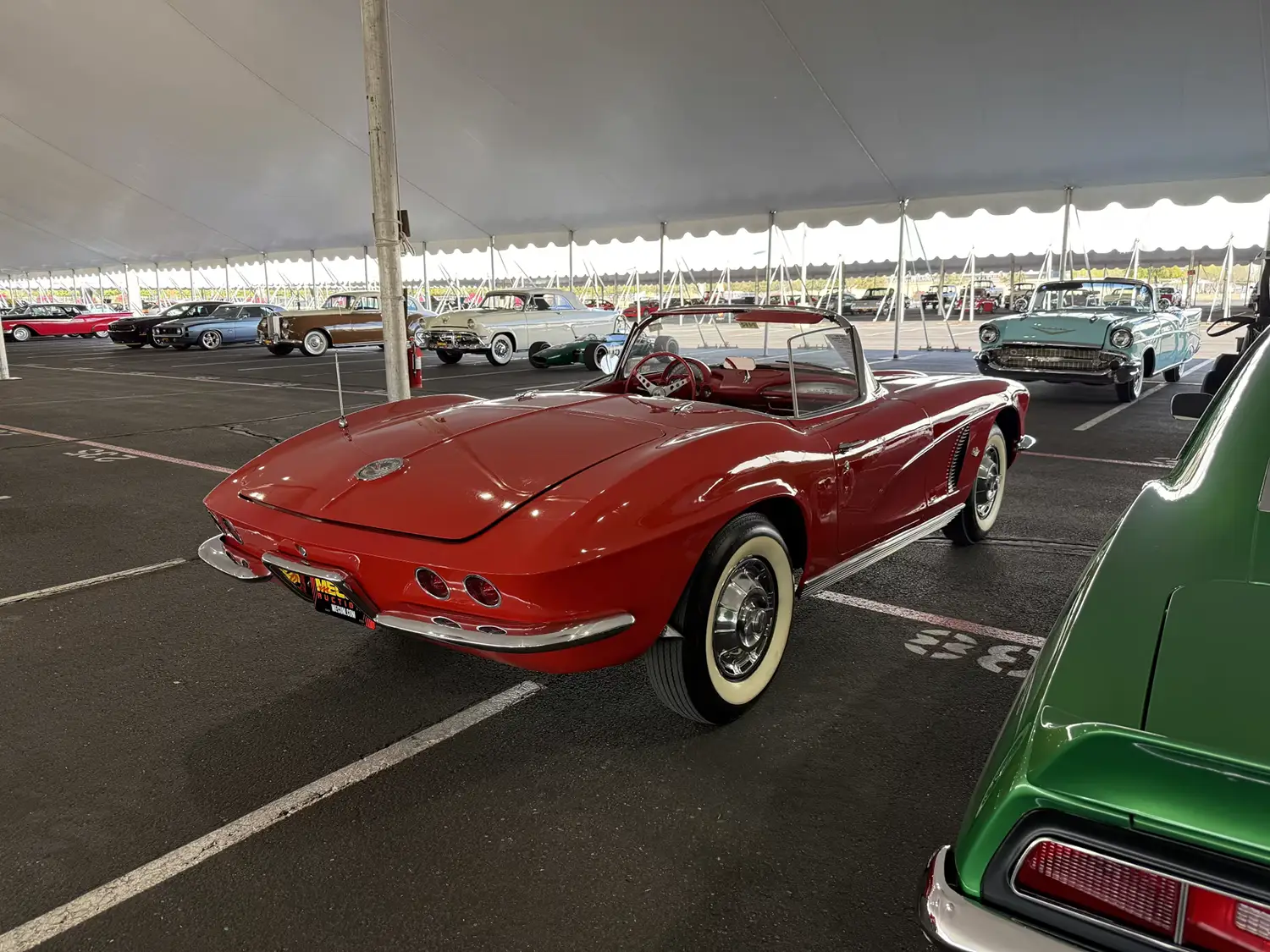
The exterior of this Corvette is finished in the iconic Roman Red, a color that perfectly accentuates the clean lines of the 1962 body style. Unlike earlier C1s, the 1962 model omitted the chrome headlight surrounds and two-tone paint side coves, resulting in a more streamlined and sophisticated appearance. This car features the classic white convertible top, which provides a sharp contrast to the bold paintwork. Details such as the chrome bumperettes, dual exit exhaust, and 15-inch wheels wrapped in wide whitewall tires reinforce its period-correct charm. The silhouette remains one of the most recognizable in automotive history, representing the absolute zenith of early sixties convertible design.
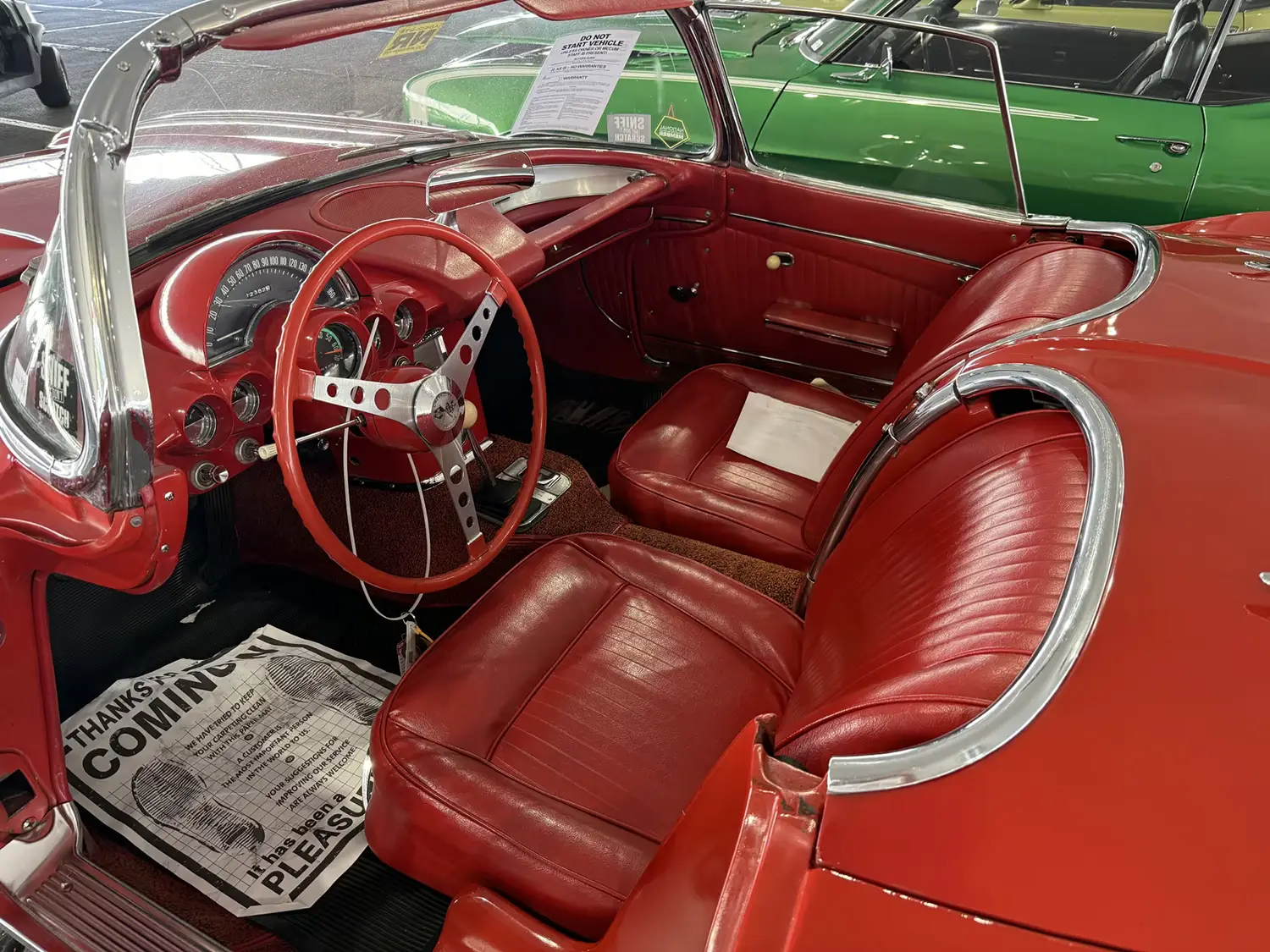
Crimson Cockpit and Wonderbar Technology
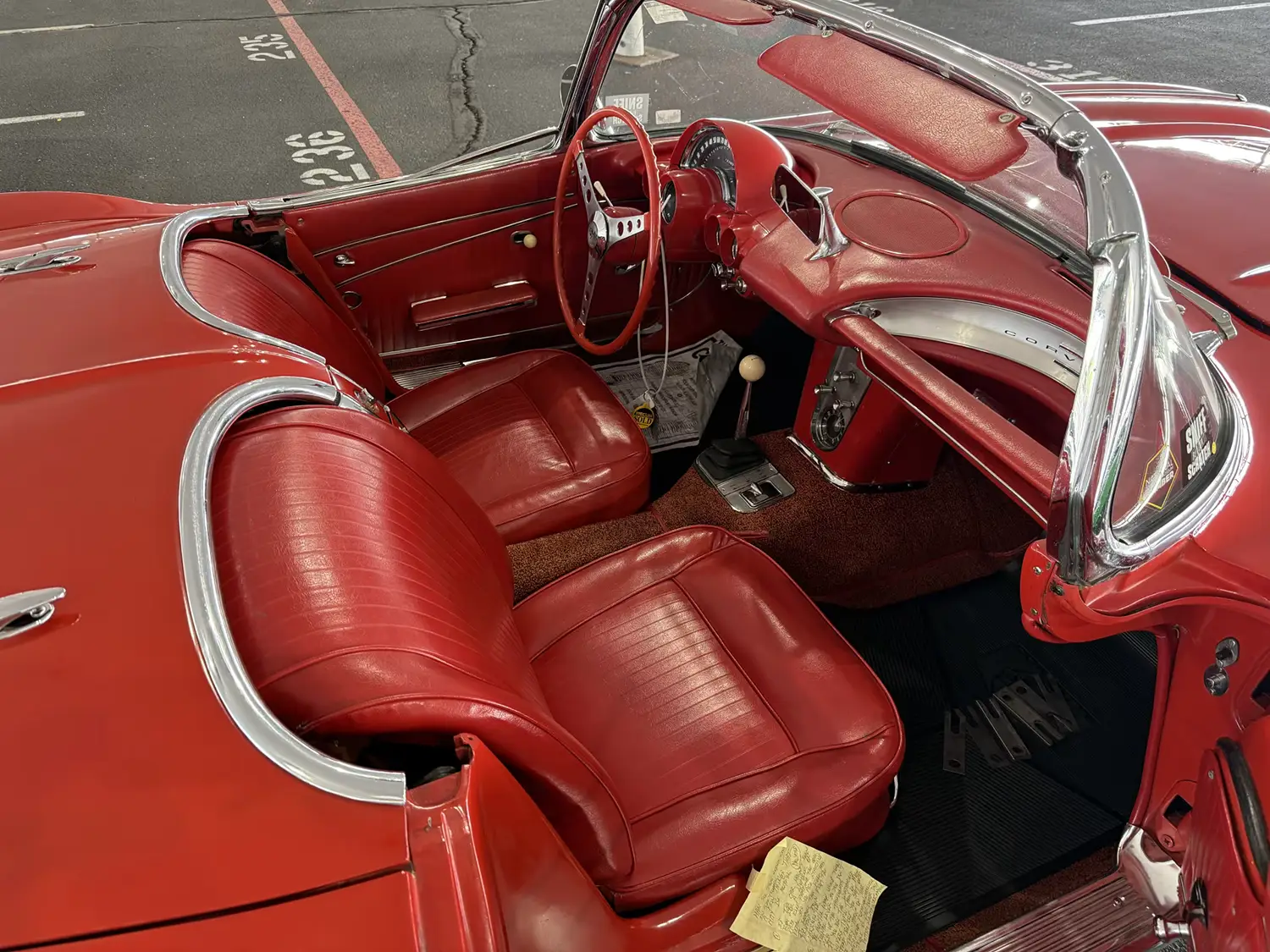
Inside, the red vinyl upholstery creates a dramatic “red on red” environment that was highly favored by performance enthusiasts of the era. The cabin is an exercise in functional simplicity, featuring a driver-centric dashboard layout and the classic thin-rimmed steering wheel. One of the standout features is the Wonderbar AM radio, a high-tech luxury for 1962 that remains a sought-after component for collectors today. Protective rubber floor mats cover the footwells, while the overall condition of the trim suggests a vehicle that has been treated with significant care. This interior offers an immersive time-capsule experience, placing the driver behind the wheel of a true mid-century masterpiece.
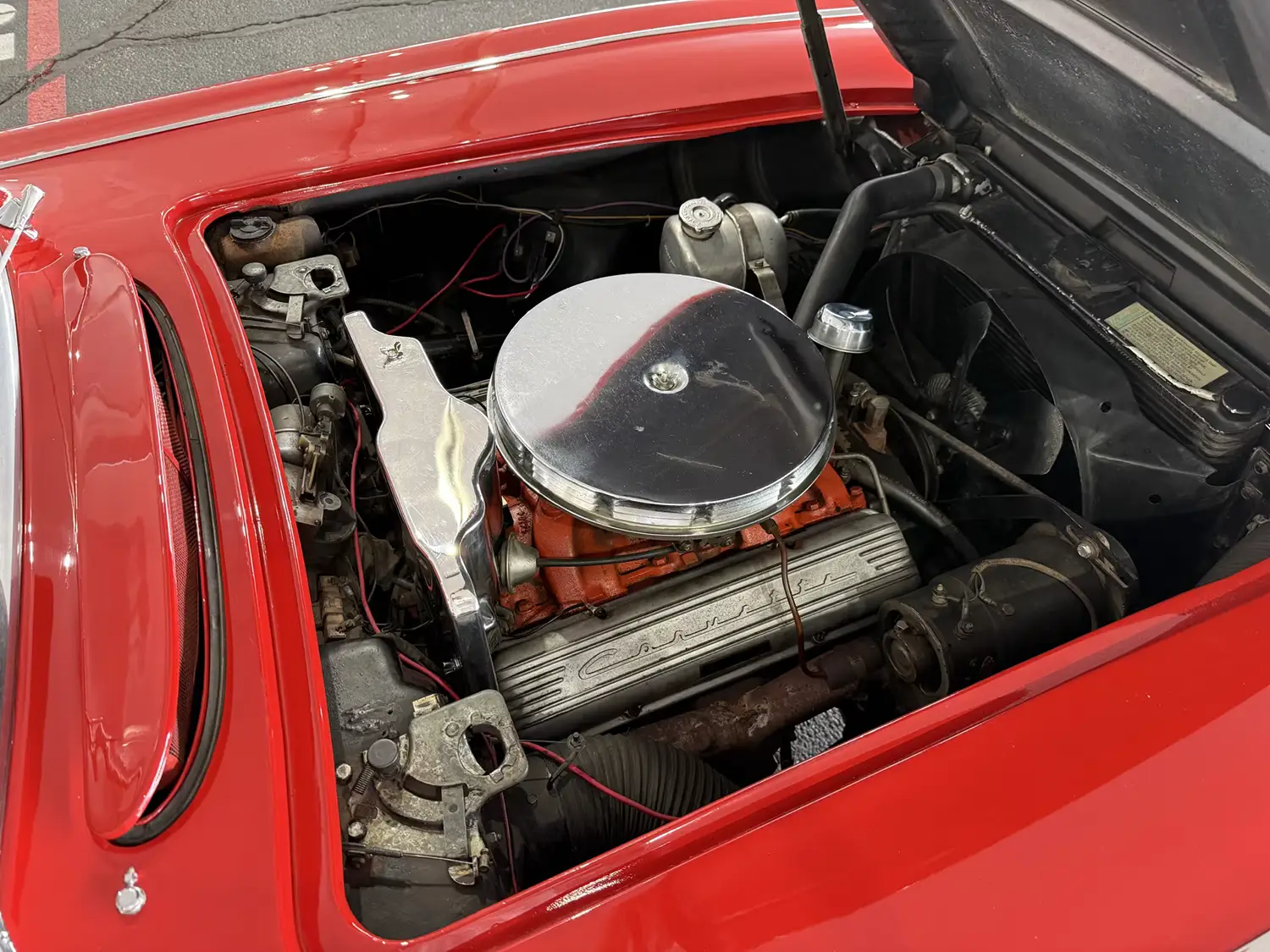
Legendary 327 V-8 and Manual Control
Performance is anchored by the 327 CI V-8 engine, a powerplant that debuted in 1962 to replace the smaller 283 and provide the Corvette with a substantial increase in torque and usable power. This engine is paired with a 4-speed manual transmission, offering the high level of driver engagement that defined the early Corvette racing spirit. The 327 cubic inch engine was a game-changer for Chevrolet, providing a factory-rated 250 hp/253 PS and 350 lb-ft/475 Nm of torque in its standard configuration. Stopping power is managed by a traditional 4-wheel drum brake system, while the dual exhaust note provides the unmistakable soundtrack of a small-block Chevy at work.
| Technical Specifications | |
|---|---|
| Engine Type | 327 CI V-8 |
| Transmission | 4-Speed Manual |
| Exterior Color | Roman Red |
| Interior Color | Red Vinyl |
| Braking System | 4-Wheel Drum Brakes |
| Wheels | 15-Inch with Hubcaps |
| Tires | Wide Whitewall |
Market Position and C1 Collectibility
The 1962 Corvette occupies a unique space in the market as the “ultimate” solid-axle car, offering the highest displacement engine and most refined suspension of the first generation. It often commands a premium over earlier dual-headlight models because it shares the rear-end styling cues of the upcoming Sting Ray, making it a transitional icon. In today’s auction environment, a Roman Red 327/4-speed combination is considered one of the most liquid and desirable specifications for a C1. Compared to the Jaguar E-Type of the same era, the Corvette offers a more visceral, mechanical connection to the road and significantly lower maintenance costs, ensuring its enduring popularity among domestic collectors.
Final Salute to the Solid Axle Era
This 1962 Chevrolet Corvette Convertible represents the end of an era and the beginning of a legend. It combines the classic open-top freedom of the original Corvette concept with the upgraded 327 V-8 performance that finally allowed it to compete on the world stage. With its striking Roman Red finish and period-correct details like the Wonderbar radio and wide whitewalls, it is a car that demands attention at any gathering. Whether intended for local concours events or spirited weekend drives, this C1 stands as a proud reminder of Chevrolet’s engineering prowess during the golden age of American performance.
Disclaimer: Content on this site is for informational and entertainment purposes only. Details, analyses, and opinions reflect current trends and personal views, not professional or financial advice. Always verify information with official sources before making any decisions.
Source: mecum.com