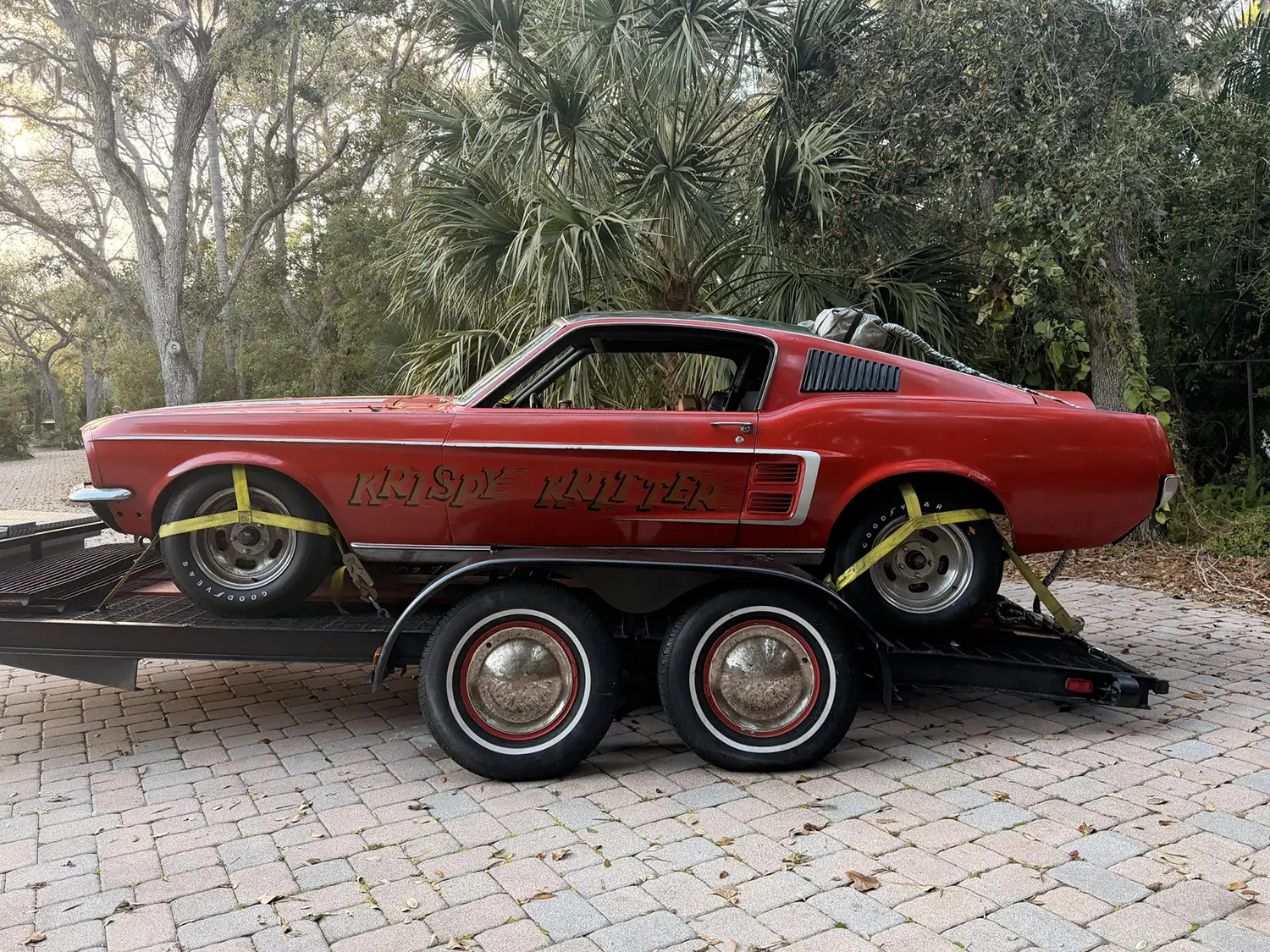
The 1967 Ford Mustang is a celebrated icon of the pony car era, but the “Krispy Kritter” represents a radical departure from factory specifications. Originally purchased as a bare unibody by Ted Trischle, this fastback was immediately destined for the extreme world of jet-powered drag racing. By merging a legendary Ford silhouette with Cold War-era aviation technology, Trischle created a machine that reportedly breached the 300-mph barrier in the quarter-mile. Now appearing as a non-running project, this Mustang serves as a significant historical artifact of American motorsport ingenuity and the pursuit of absolute speed.
Jet-Aged Silhouette and Bespoke Bodywork
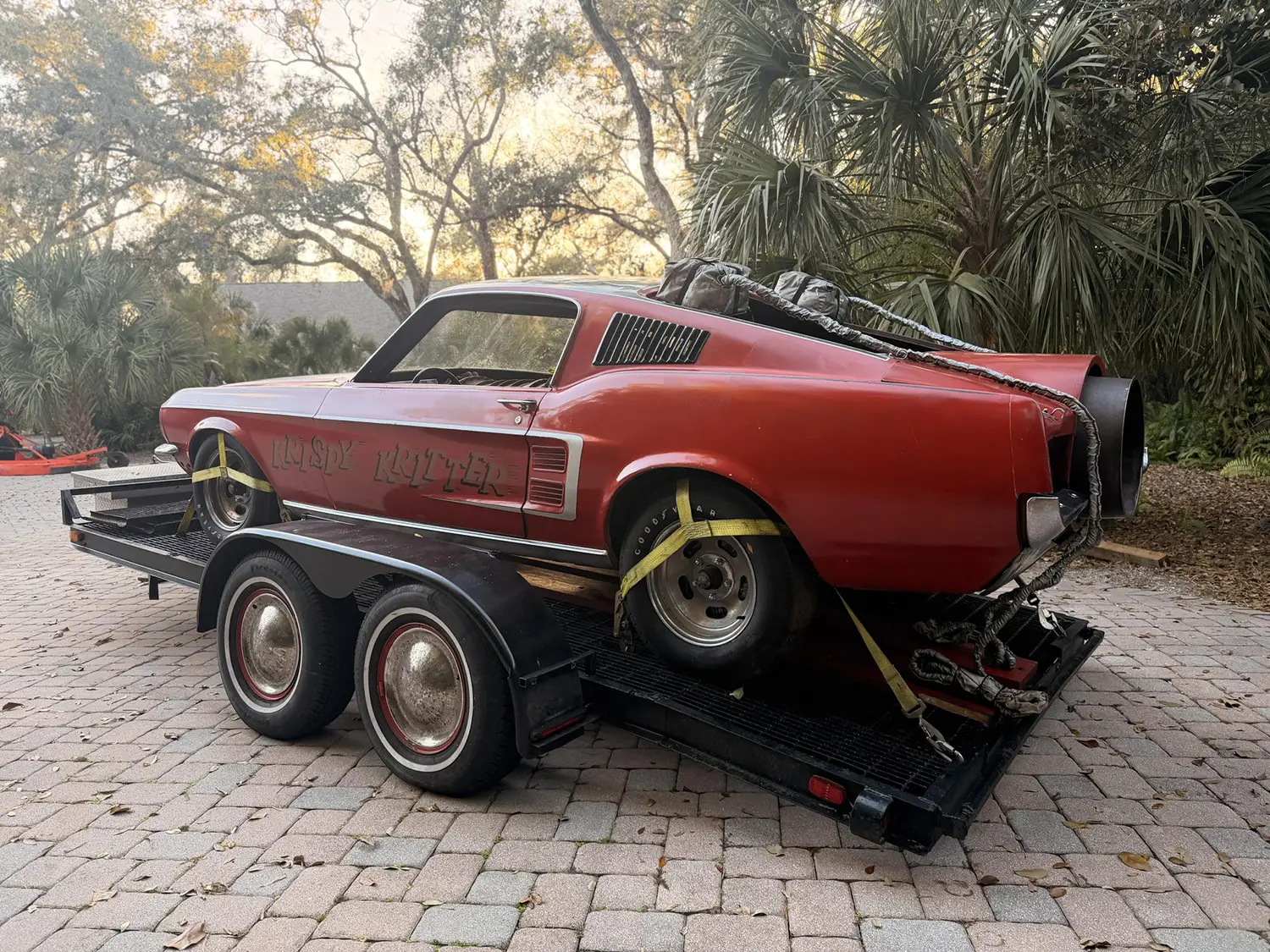
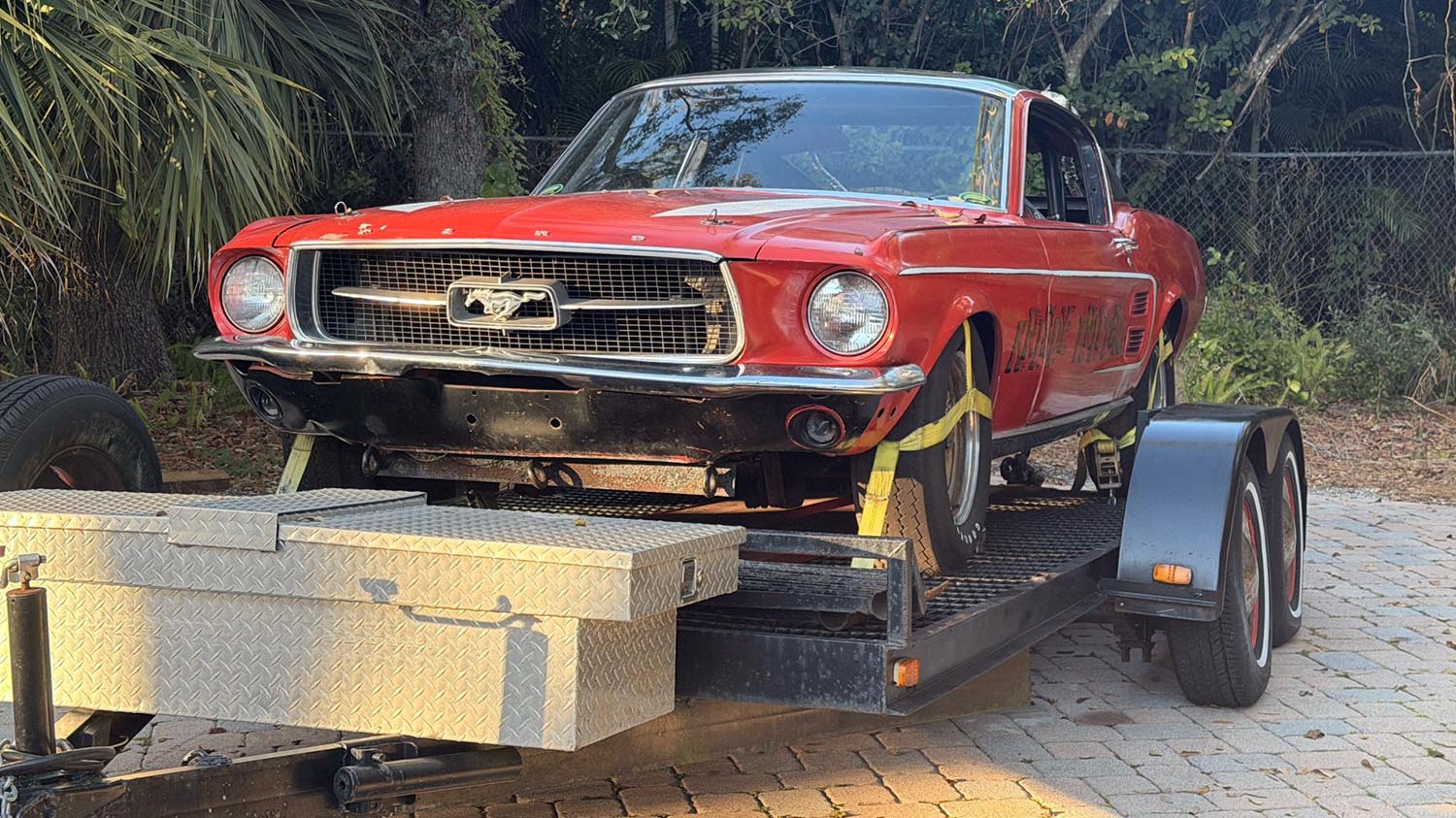
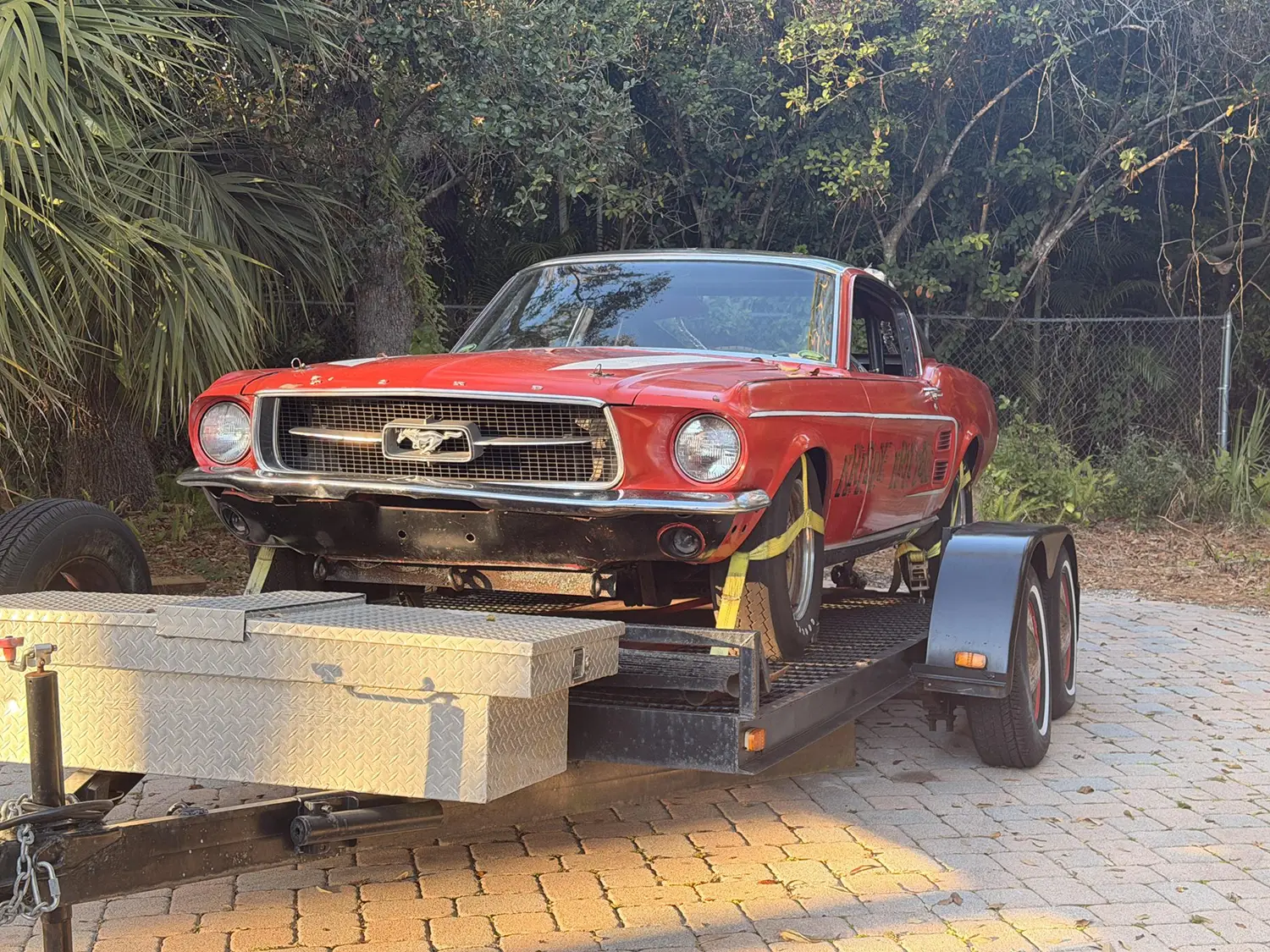
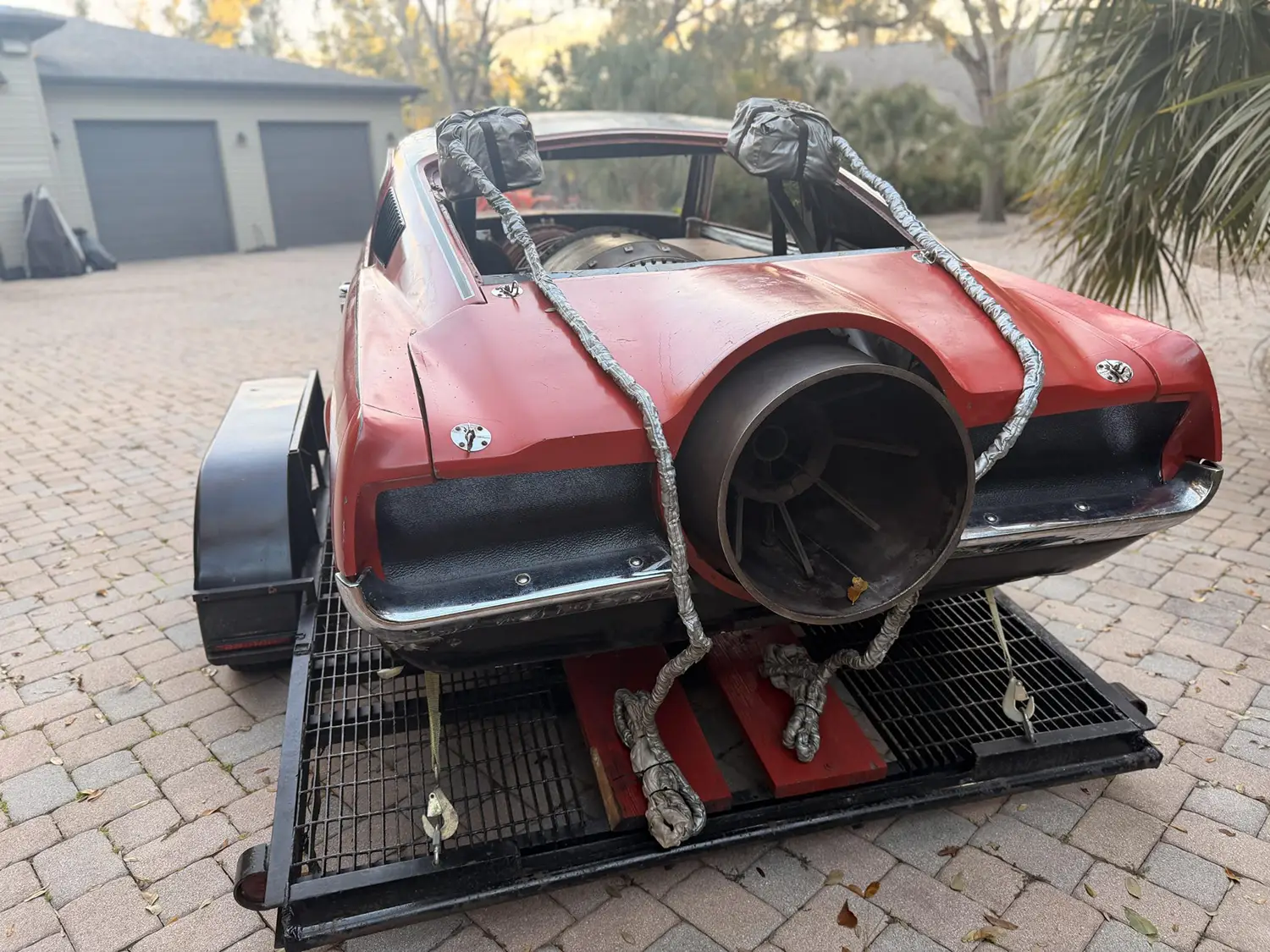
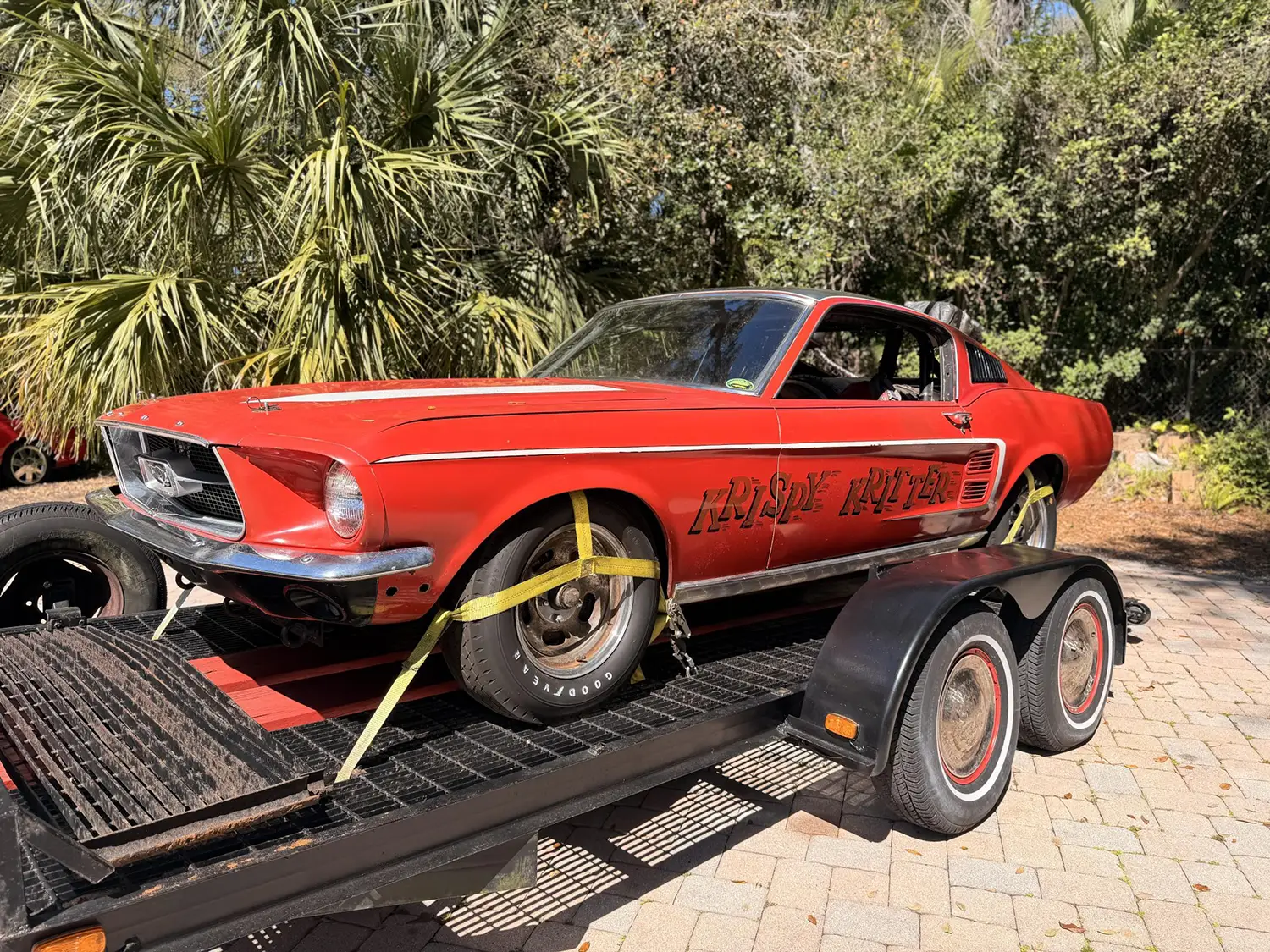
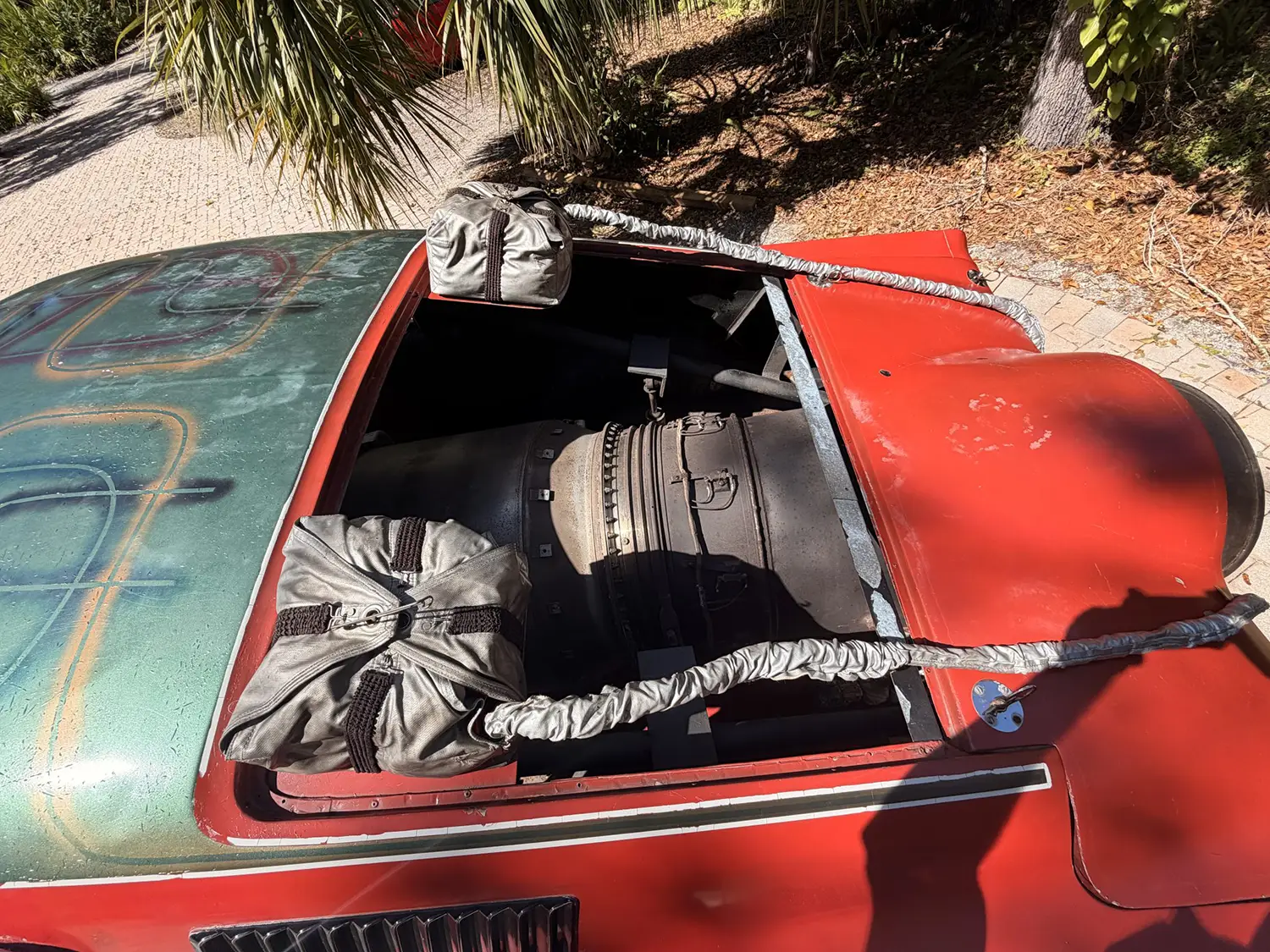
The visual character of this fastback is dominated by its functional modifications required to house a massive Westinghouse turbine. Finished in red with white accents and hand-painted “Krispy Kritter” lettering, the car retains its iconic 1967 fastback lines while featuring heavily modified rear bodywork. This fiberglass rear section is secured by pins and was specifically sculpted to accommodate the jet’s massive exhaust thrust. Dual drag chutes are mounted prominently at the rear to arrest the car’s extreme speeds, while the front end sits on a vintage 1939 Plymouth axle paired with slotted aluminum wheels.
A Fighter Pilot Command Center
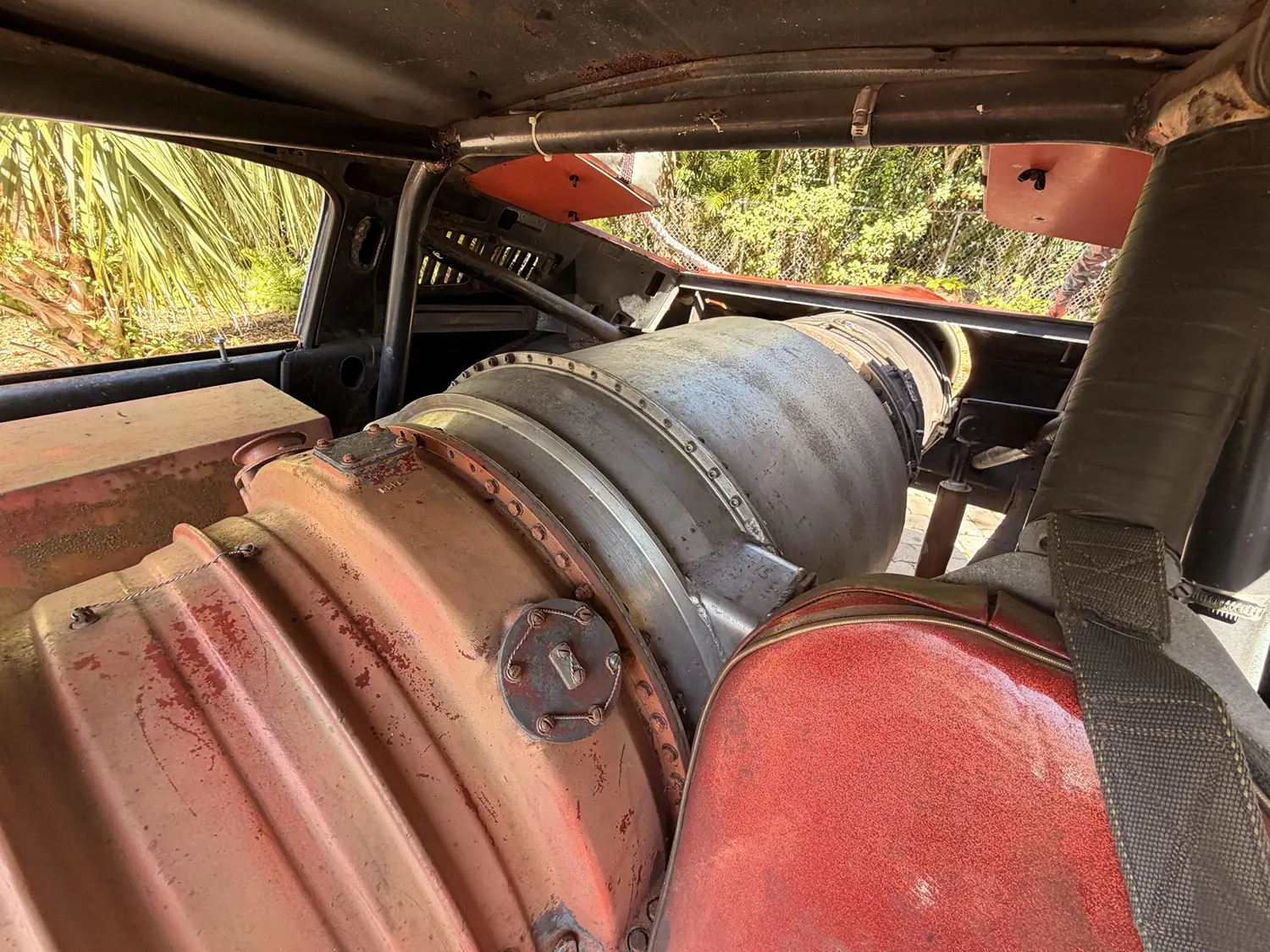
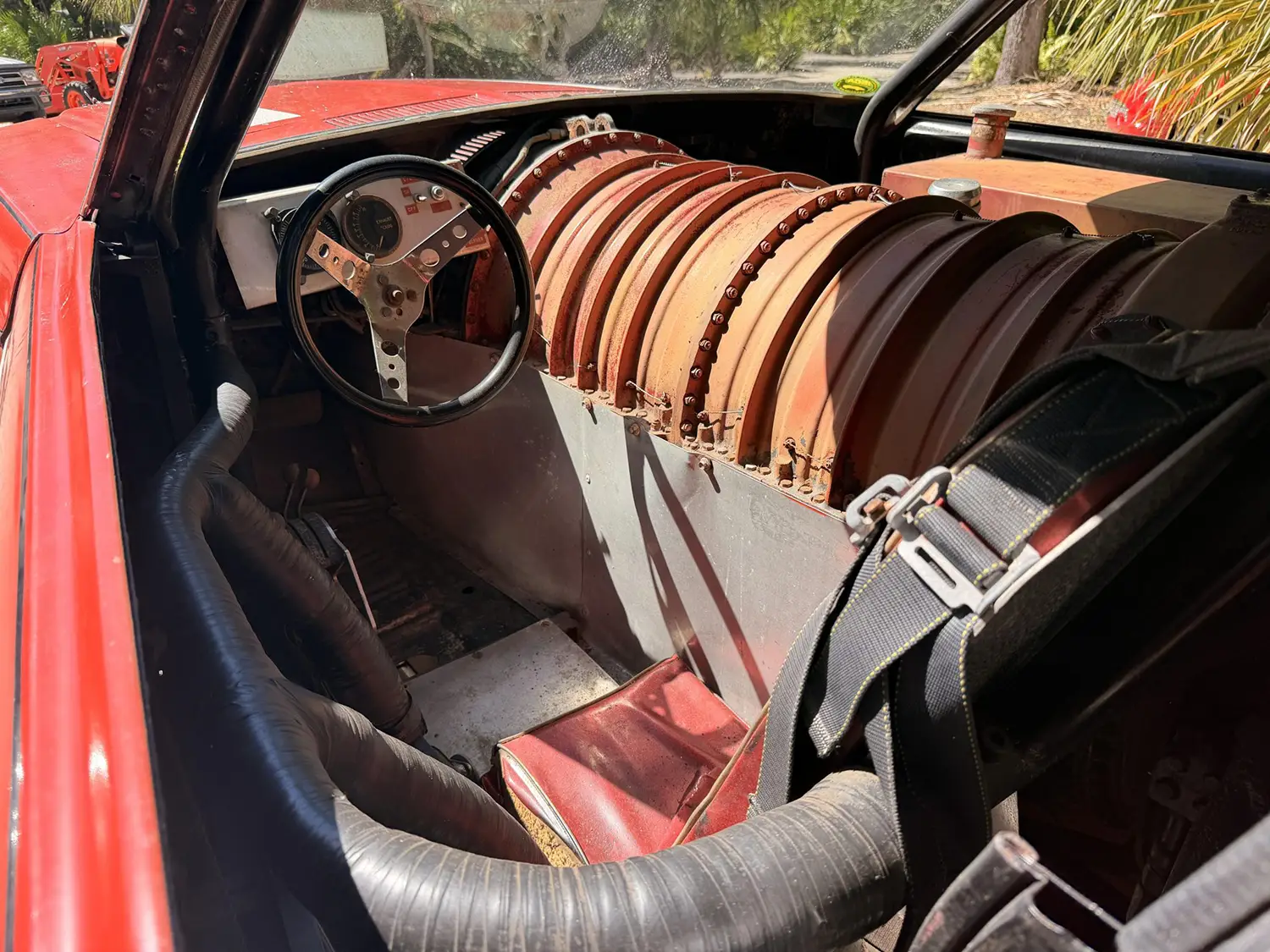
Inside the cockpit, the environment feels more like a McDonnell F2H Banshee than a traditional muscle car. The driver sits in a padded racing bucket protected by a fabricated roll cage, positioned directly next to the massive J34 turbine casing. Control systems are rudimentary yet specialized, featuring throttle controls believed to be sourced from a boat and a custom dashboard. Instrumentation is purely functional, consisting of a General Electric tachometer and a tailpipe temperature gauge to monitor the jet’s health. In place of a passenger seat sits a large fuel tank, highlighting the car’s singular focus on high-speed runs.
Westinghouse J34 Turbine Integration
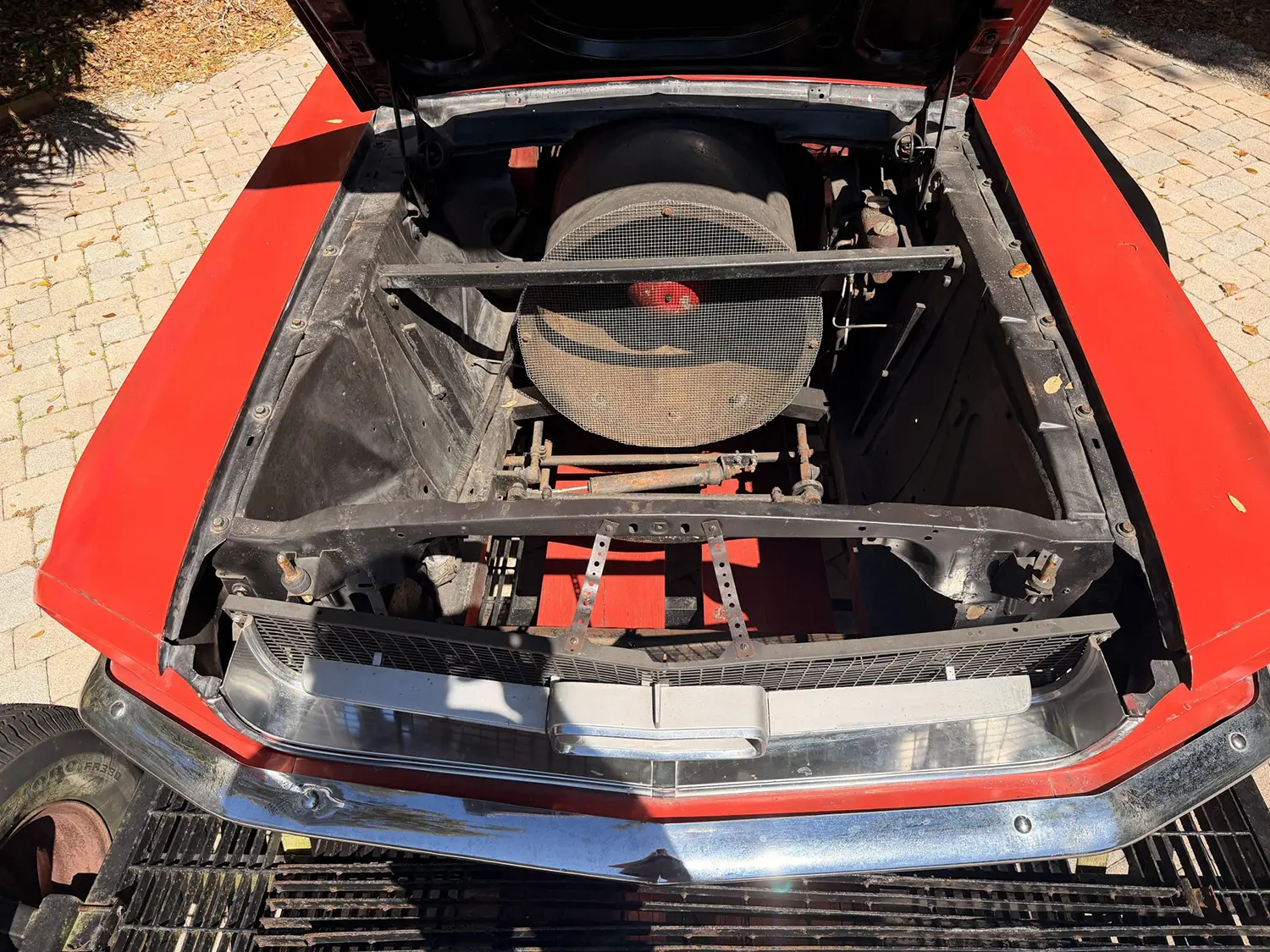
The heart of this project is a Westinghouse J34 turbojet engine, a powerplant originally designed for US Navy carrier-based fighters. This engine was integrated into the Mustang chassis using custom cross-members and a mesh-screened intake located within the engine bay. While horsepower figures for jet engines are measured in thrust, the car was famously claimed to have exceeded 300 mph (estimated) in competition. Braking this high-speed projectile relies on finned 1958 Buick aluminum drums, which were a favorite among drag racers of the era for their superior heat dissipation compared to stock Ford units.
| Technical Specifications | |
|---|---|
| Engine Type | Westinghouse J34 Turbine |
| Chassis Base | 1967 Mustang Unibody (C72B –6300001A) |
| Front Axle | 1939 Plymouth |
| Brakes | 1958 Buick Finned Aluminum Drums |
| Instrumentation | GE Tachometer, Temp Gauge |
| Safety Equipment | Full Roll Cage, Twin Drag Chutes |
| Wheels | Slotted Aluminum |
| Quarter-Mile Speed | 300+ mph (Factory Benchmark) |
A Unique Monument to Drag Racing History
In the niche market of exhibition dragsters, the Krispy Kritter holds a unique position due to its documented history and Ford-based construction. Unlike modern jet cars that use generic aerodynamic shells, this 1967 Ford Mustang retains the soul of a production fastback. It stands as a direct competitor to other famous turbine cars of the era, such as Art Arfons’ creations. For a collector or museum, its value lies in its provenance and the rare opportunity to restore one of the most extreme iterations of the Mustang platform ever conceived.
Restoration Potential and Preservation
Offered as a non-running project, the Krispy Kritter requires a specialist’s touch to return to its former glory. The sale includes crucial historical documents, handwritten notes, and pre-run checklists that provide a roadmap for the turbine’s operation. While the mechanical integrity of the J34 engine is currently unknown, the preservation of the original 1967 purchase order and the bespoke rear bodywork ensures its authenticity remains intact. As an investment, it represents a rare crossover between automotive muscle and aviation history, protected by its unique bill of sale status in Florida.
Legacy of a 300 MPH Fastback
Ultimately, the Krispy Kritter is a testament to a time when speed had no limits and drag strips were laboratories for jet-age experimentation. It remains a hauntingly beautiful and terrifying example of what happens when a 1967 Ford Mustang meets the sheer power of military-grade thrust. This is not just a car; it is a piece of quarter-mile folklore waiting for its next ignition.
Disclaimer: Content on this site is for informational and entertainment purposes only. Details, analyses, and opinions reflect current trends and personal views, not professional or financial advice. Always verify information with official sources before making any decisions.
Source: bringatrailer.com