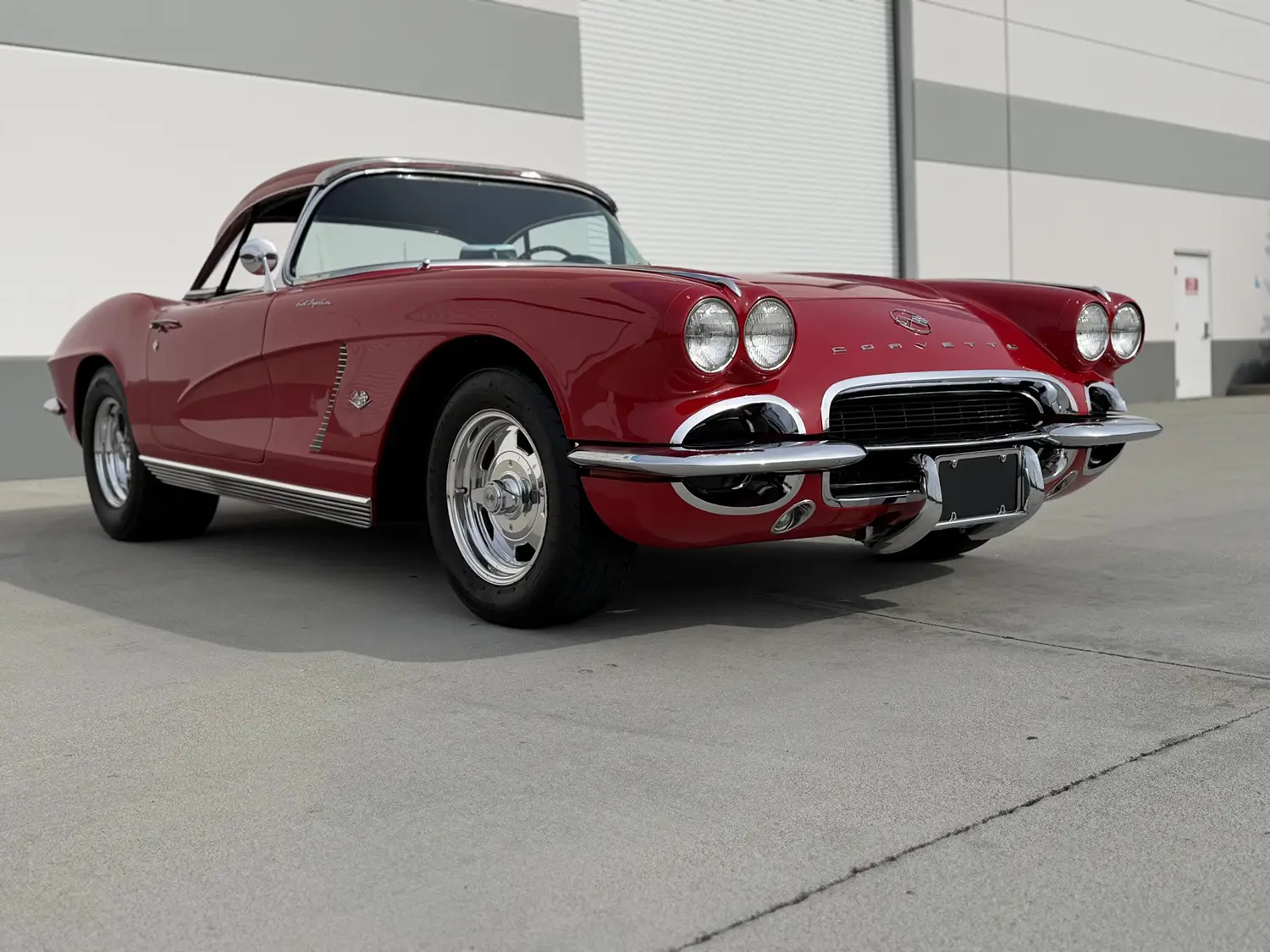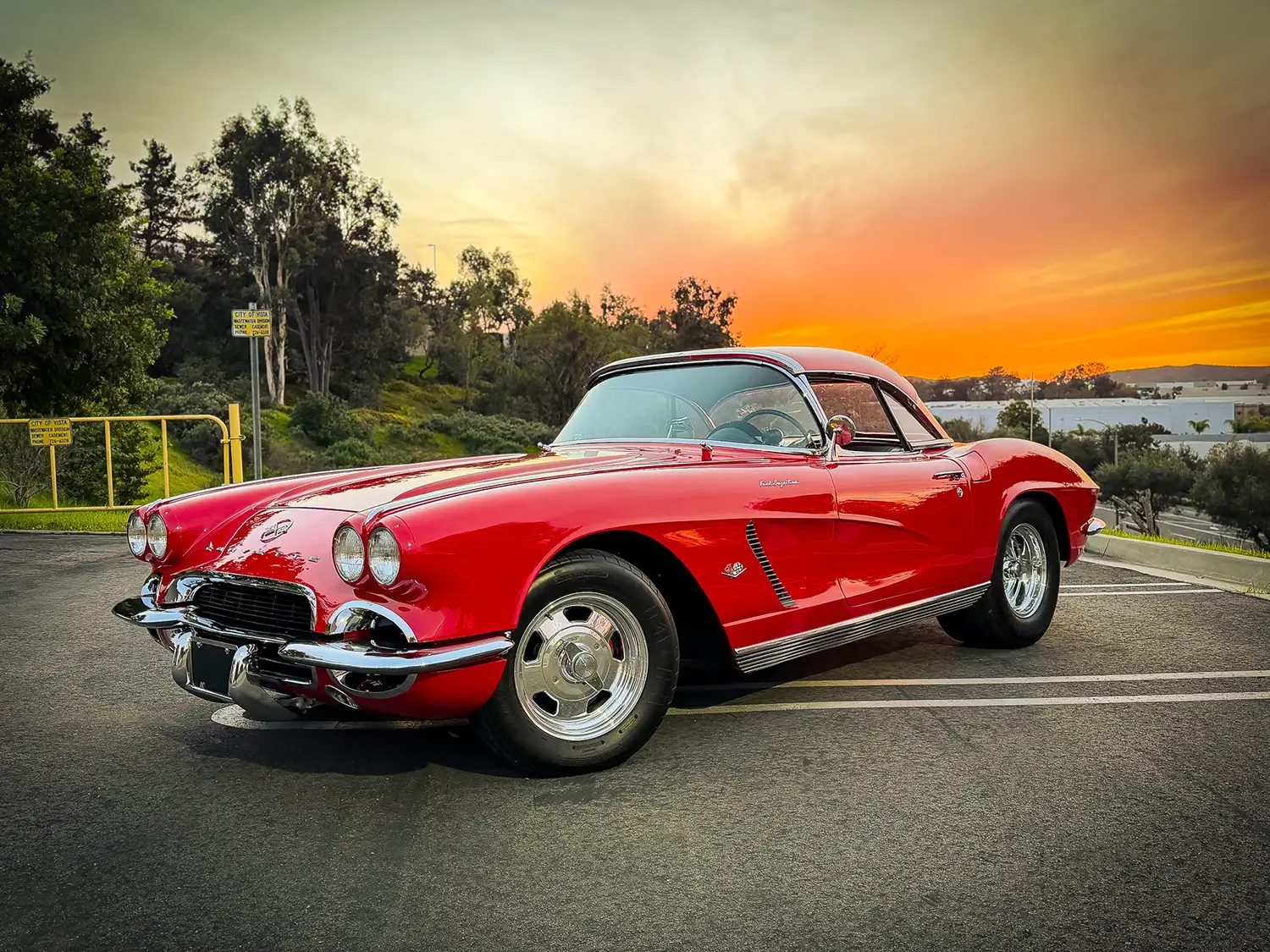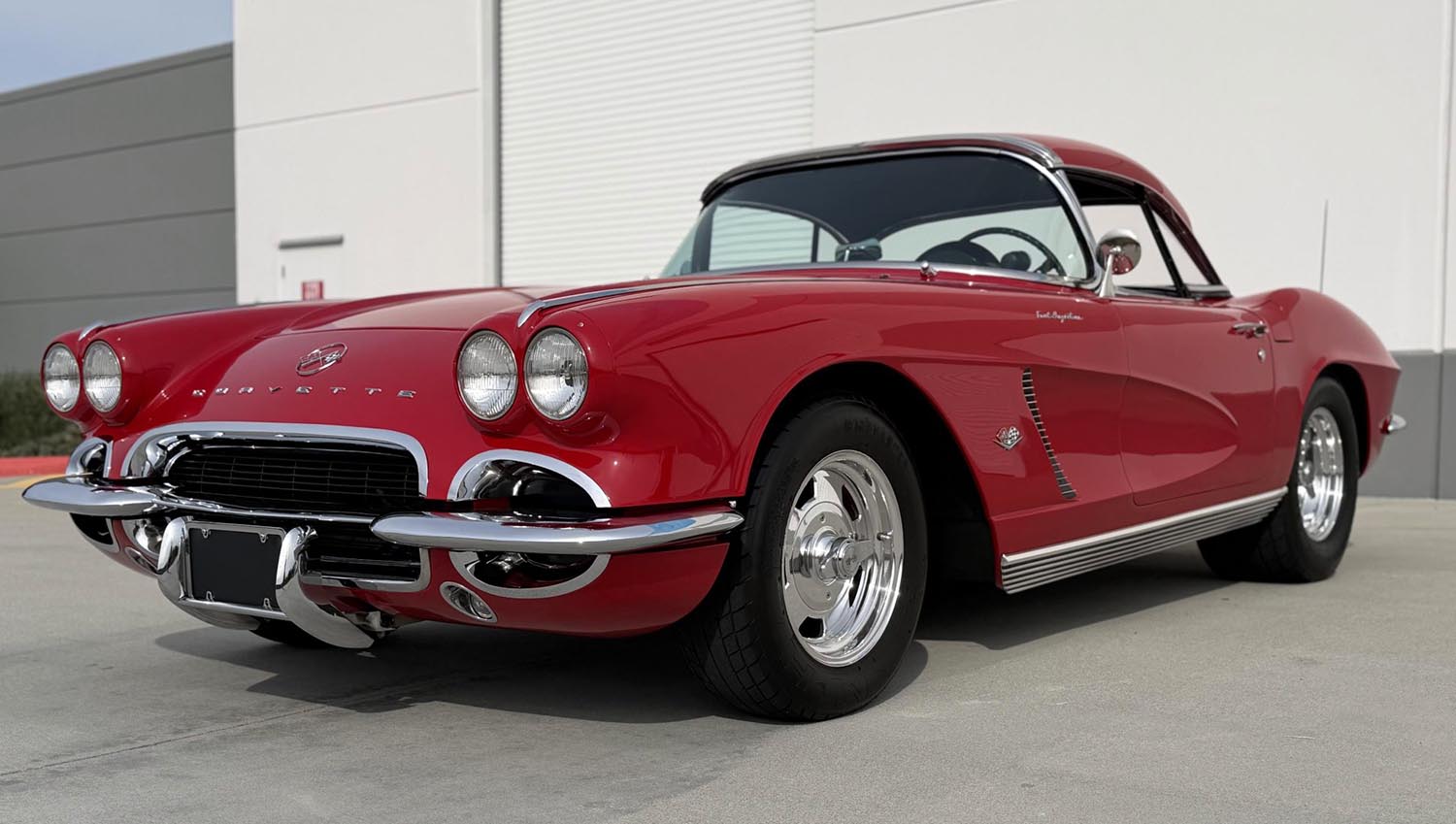
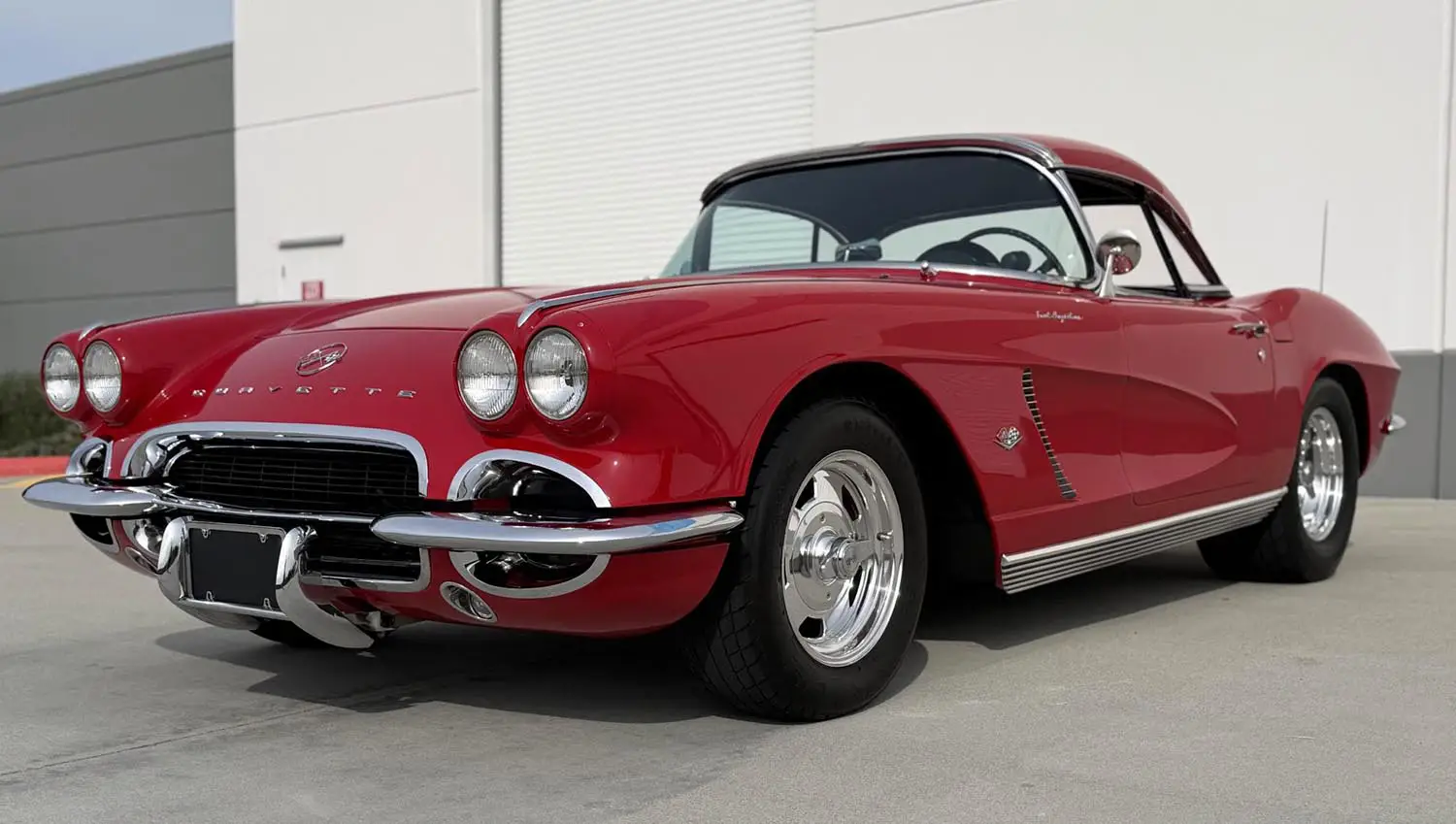
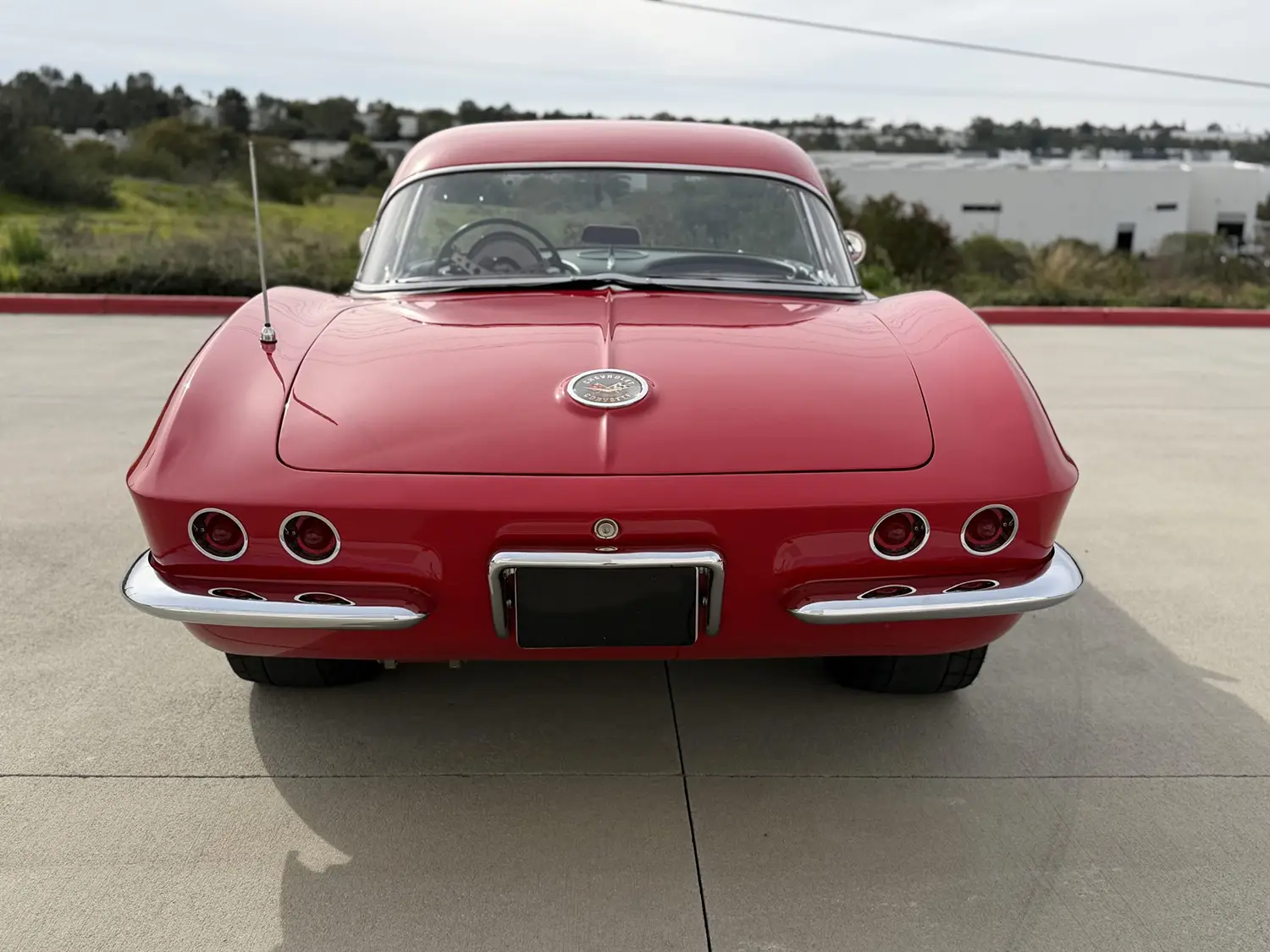
The 1962 Chevrolet Corvette marks a unique transition in American sports car history as the final year of the solid-axle design. This particular example has spent the last three decades under the same dedicated ownership, evolving from a project into a high-performance street machine. Purchased in 1996, the car underwent a massive body-off refurbishment that was completed at the turn of the millennium. It manages to retain the classic C1 silhouette while incorporating radical mechanical upgrades under the fiberglass skin. Every modification was chosen to improve its stance, power delivery, and overall reliability for modern driving conditions. With roughly 14,000 miles since the build, the car has been proven on the road and in the pages of Vette magazine. It remains a definitive statement on how to properly modernize a first-generation Corvette icon.
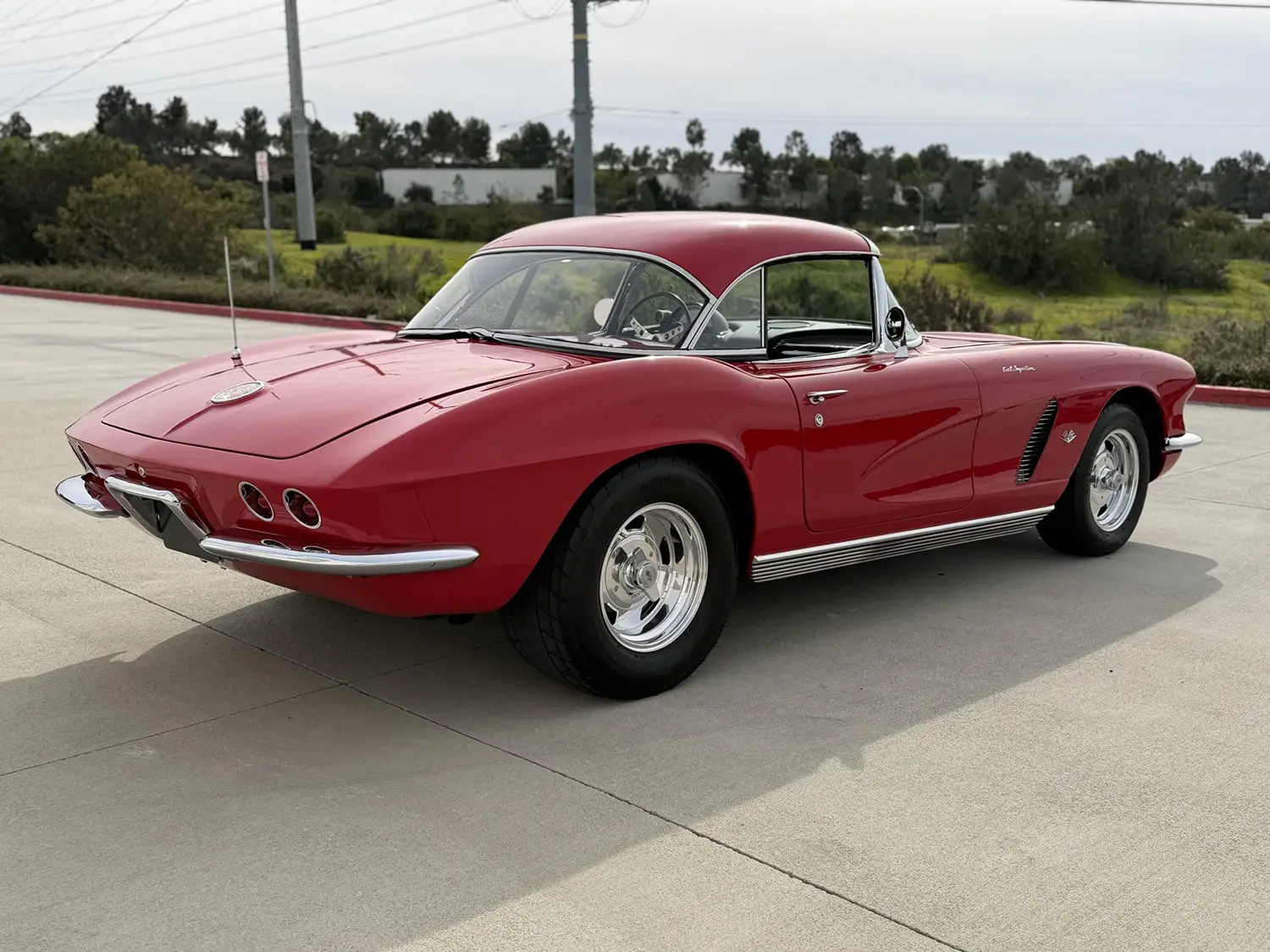
Chassis Architecture and Narrowed Frame Precision
Engineering a stance this aggressive required significant changes to the original 1962 Chevrolet Corvette frame. During the refurbishment, the rear frame rails were narrowed to accommodate massive M&H Racemaster tires tucked inside mini-tubs. A Mustang II front suspension replaces the original setup, offering vastly improved handling and power-assisted rack-and-pinion steering. In the rear, a four-link suspension kit works in harmony with the narrowed chassis to keep the power planted. Centerline 15 inch wheels give the car a traditional street-rod look that complements its bright red finish. In 2024, the braking system was upgraded to Wilwood four-wheel discs equipped with an electronic parking brake. This combination of vintage style and modern chassis hardware makes the car exceptionally stable at higher speeds. It is a build that prioritizes structural integrity alongside its visual impact.
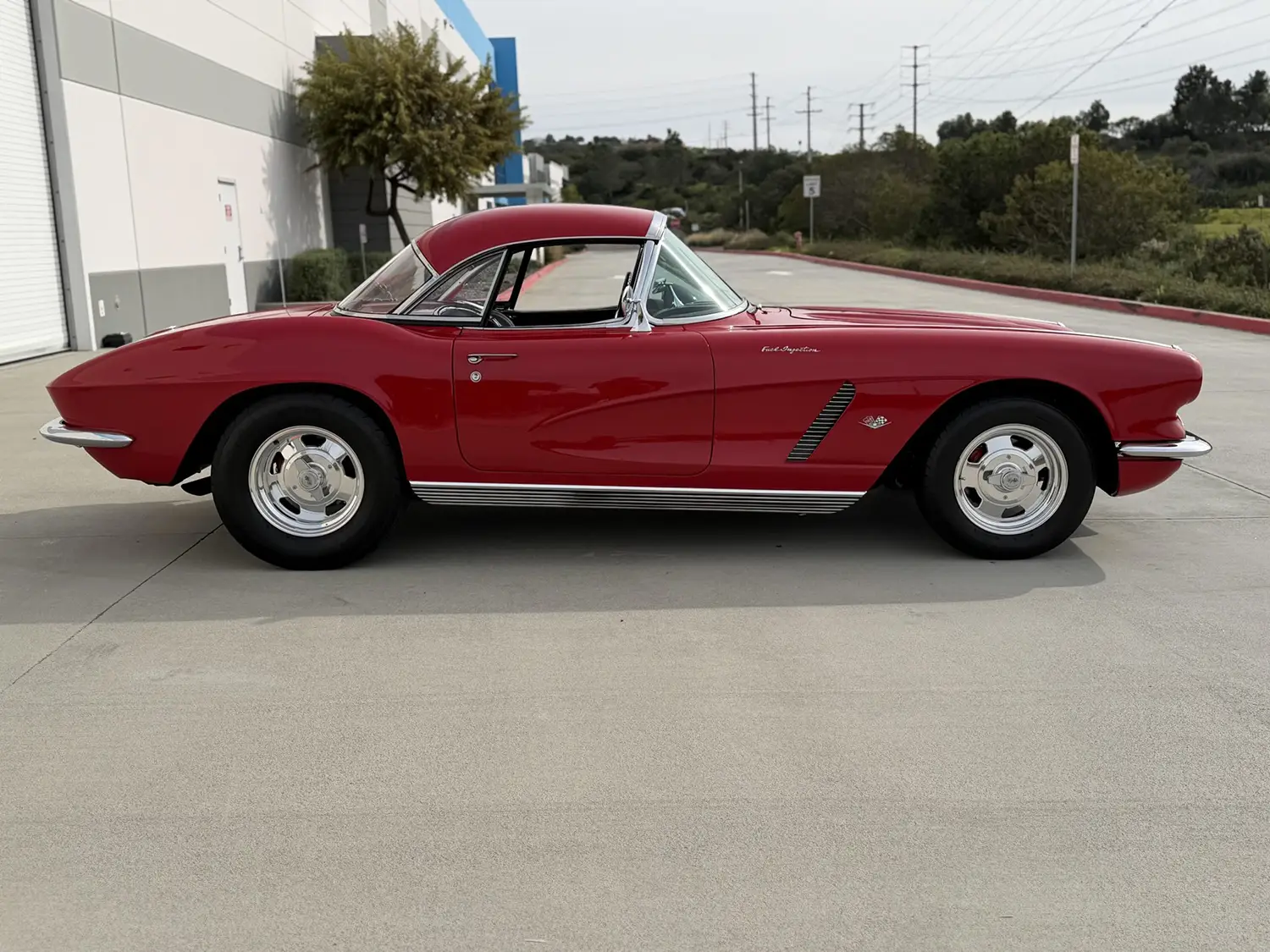
Custom Interior Craftsmanship and Modern Comforts
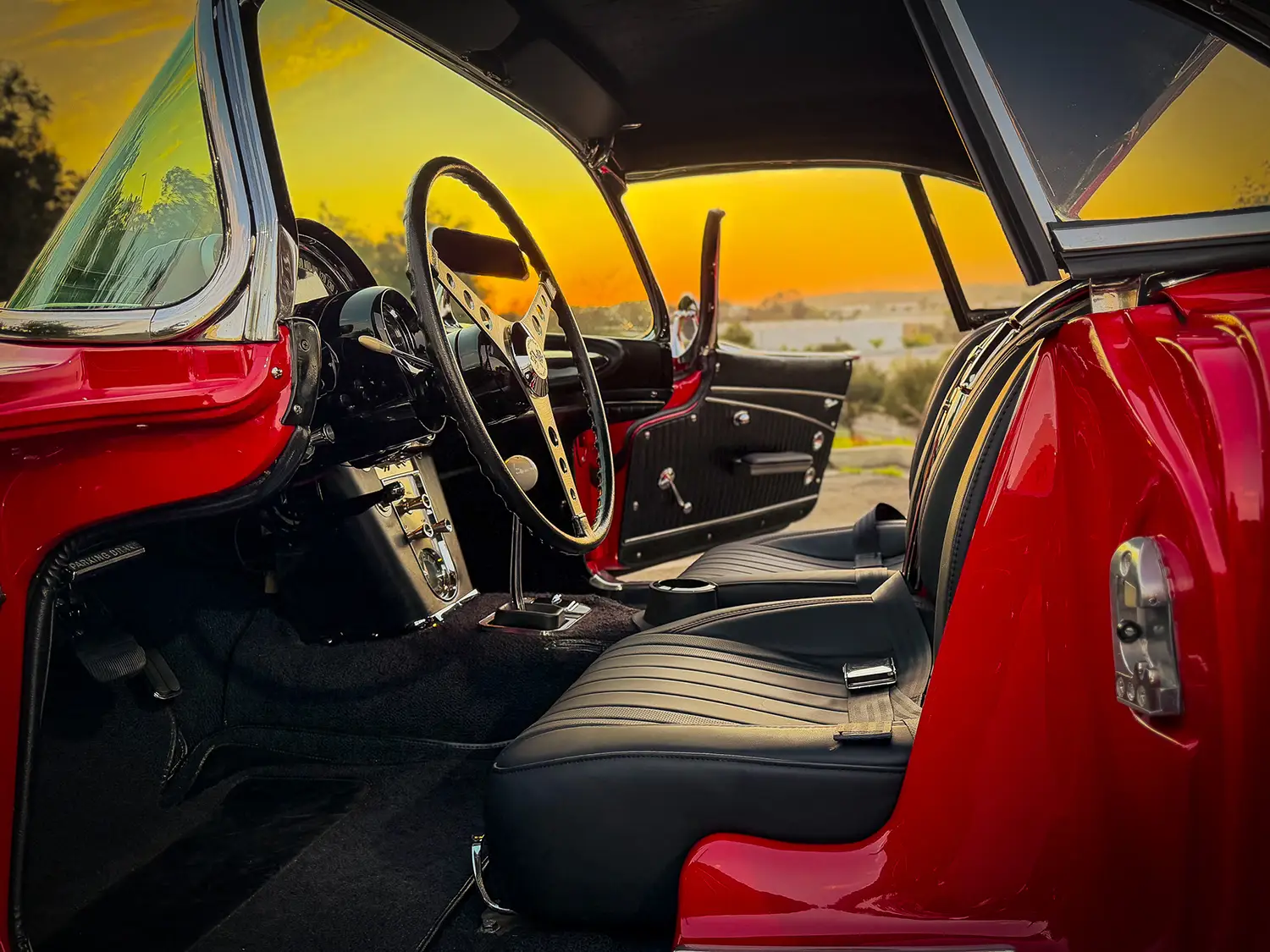
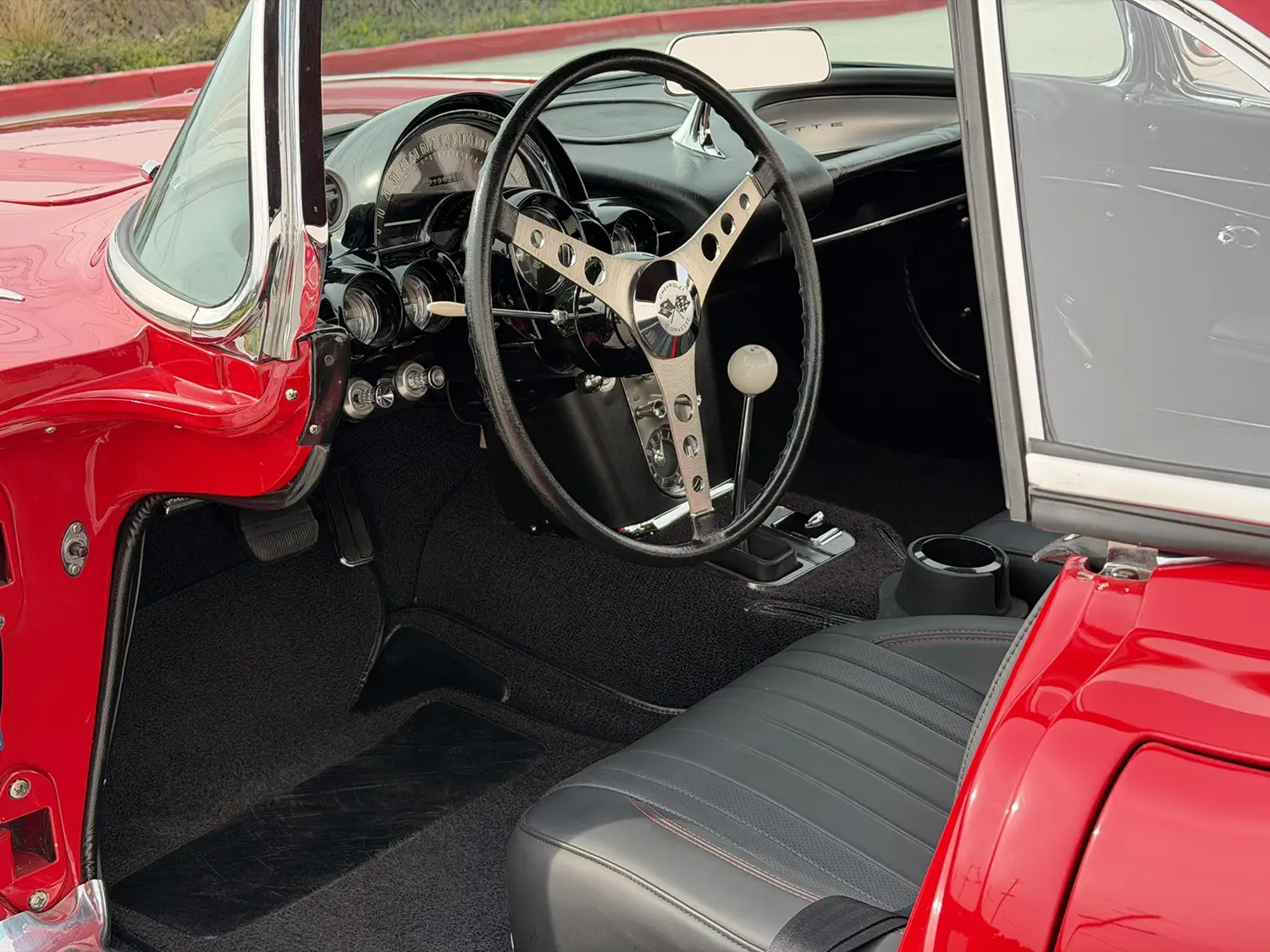
The cabin of this 1962 Chevrolet Corvette received a fresh breath of luxury as recently as 2025. Custom leather seats were designed and installed to provide better support than the original factory units. During the initial overhaul, the carpets, weatherstripping, and dash pad were all replaced to ensure a tight, quiet ride. The driver interacts with a reproduction steering wheel that frames a set of aftermarket gauges for accurate monitoring. A dash-mounted AutoMeter tachometer sits prominently to help the driver manage the 383 stroker’s power band. Despite the performance focus, the car retains its heater and an analog clock for a touch of period-correct charm. Every surface has been addressed to eliminate the aging feel common in unrestored classic fiberglass interiors. It is a refined workspace that feels consistent with the high-quality engineering found elsewhere.
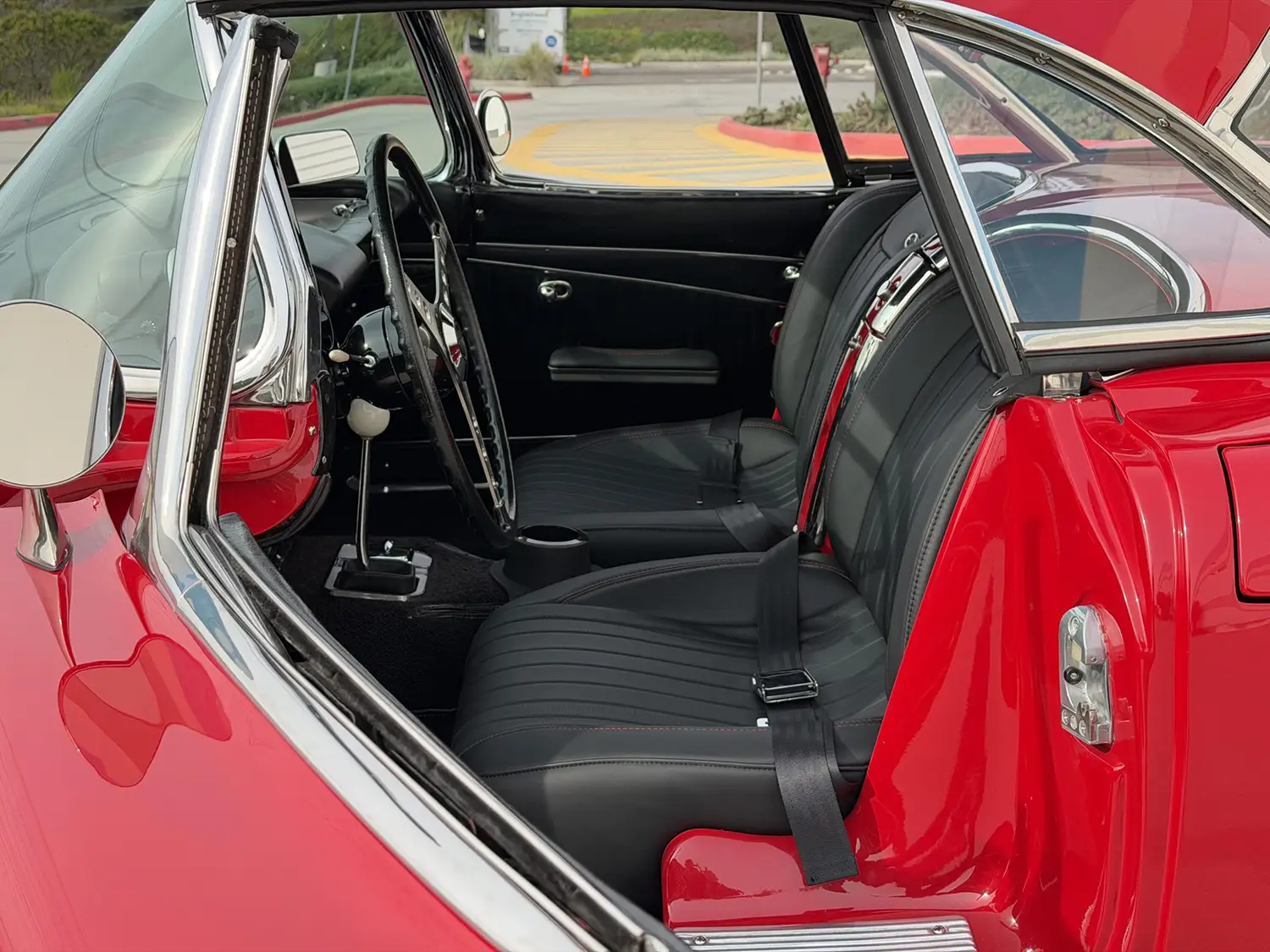
Engine Performance and Stroker V8 Specifications
The mechanical heart is a 383ci stroker V8 built from a 1970s block using Eagle I-beam rods and Ross racing pistons. This motor features a forged crankshaft and an Elgin camshaft paired with Avenger 197cc cylinder heads. A tuned-port injection system with a TPI Specialties Mini-Ram intake ensures smooth idling and consistent throttle response. Performance is further boosted by Hooker headers and a dual exhaust system utilizing Flowmaster mufflers for a deep growl. Cooling is handled by a DeWitts aluminum radiator, which was recently updated in 2019 to maintain optimal temperatures. Power is managed by a 700R4 four-speed automatic transmission featuring a 3,000-rpm stall torque converter for aggressive launches. This drivetrain combination delivers a level of reliability and punch that far exceeds the original 1962 factory offerings. It is a professionally built engine designed for both the show circuit and the street.
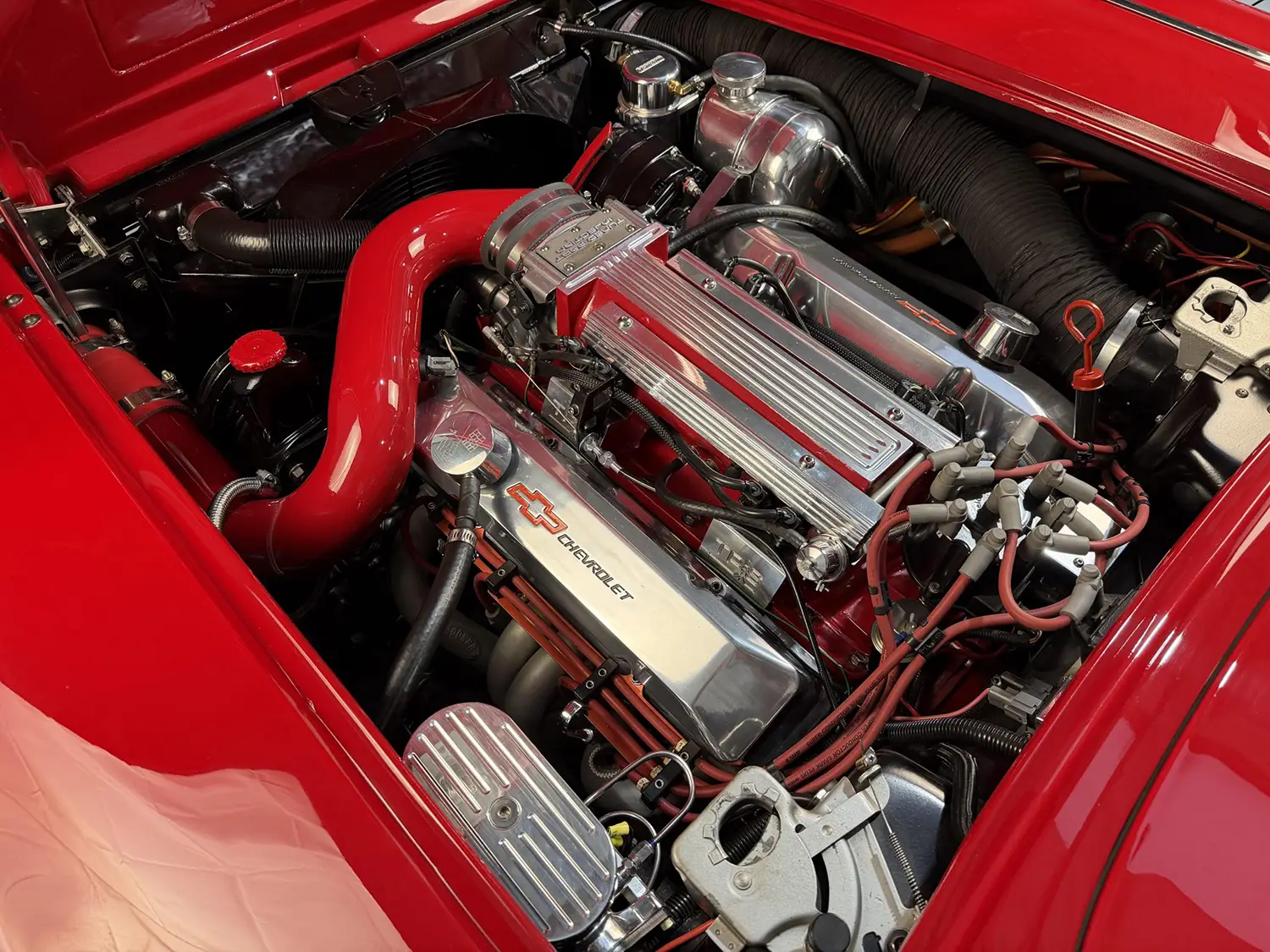
Drivetrain Strength and Rear End Details
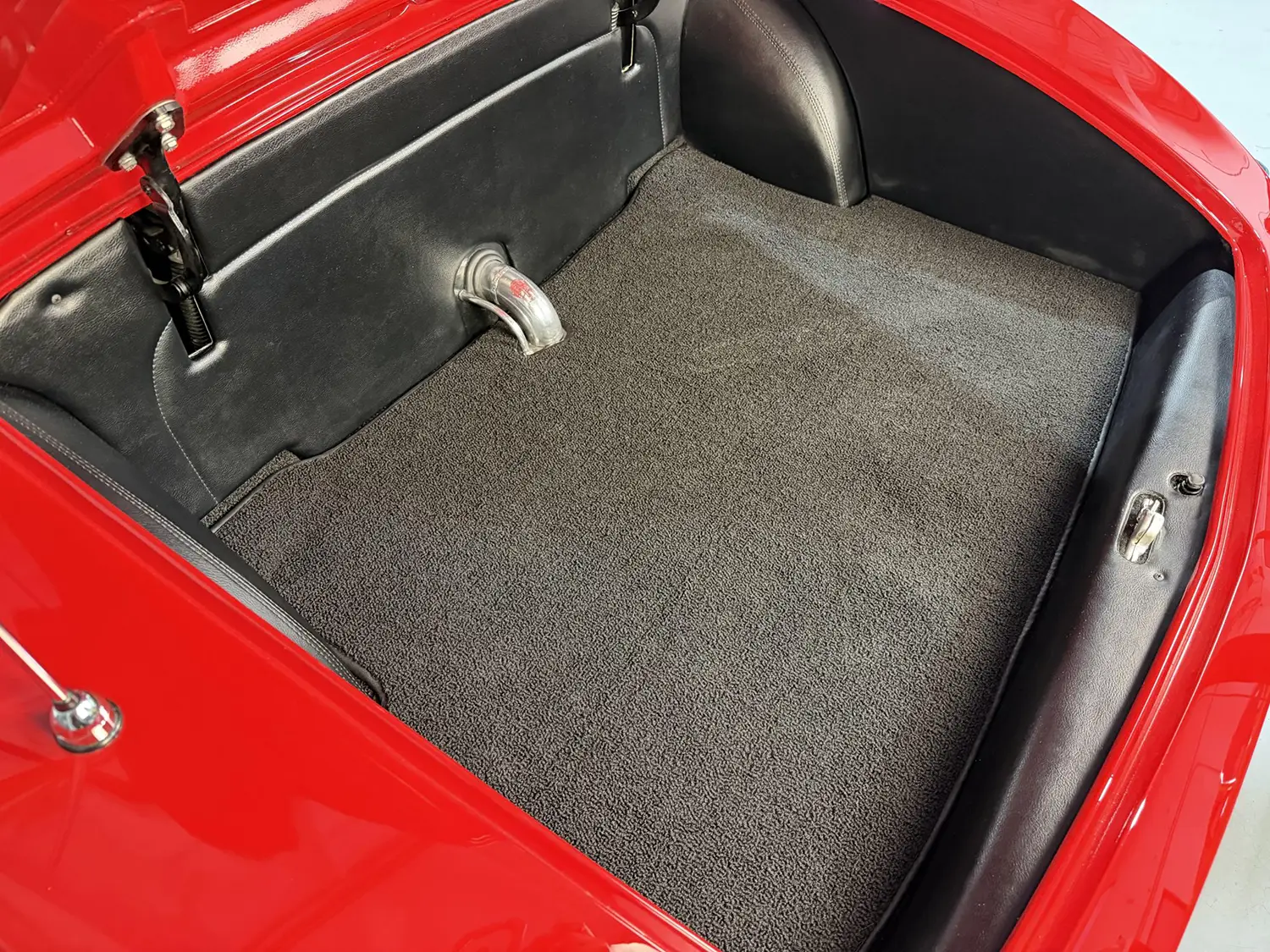
To handle the torque of the 383 stroker, the 1962 Chevrolet Corvette utilizes a rugged Currie 9 inch rear end. This unit is equipped with 3.70:1 gears and a limited-slip differential for maximum traction during spirited driving. The 700R4 transmission includes a dedicated cooler to preserve the life of the fluid under heavy loads. Fuel is stored in a custom aluminum tank, which provides a cleaner and more durable solution than the original steel. Polished valve covers and an MSD ignition system add a show-quality look to the highly functional engine bay. The odometer shows only 14,000 miles since these components were installed, suggesting many years of service life remaining. Nearly 200 pages of service records accompany the car to document this extensive mechanical journey. This level of transparency is rare for modified classics and speaks to the owner’s meticulous nature.
Summary of a Magazine Featured Classic
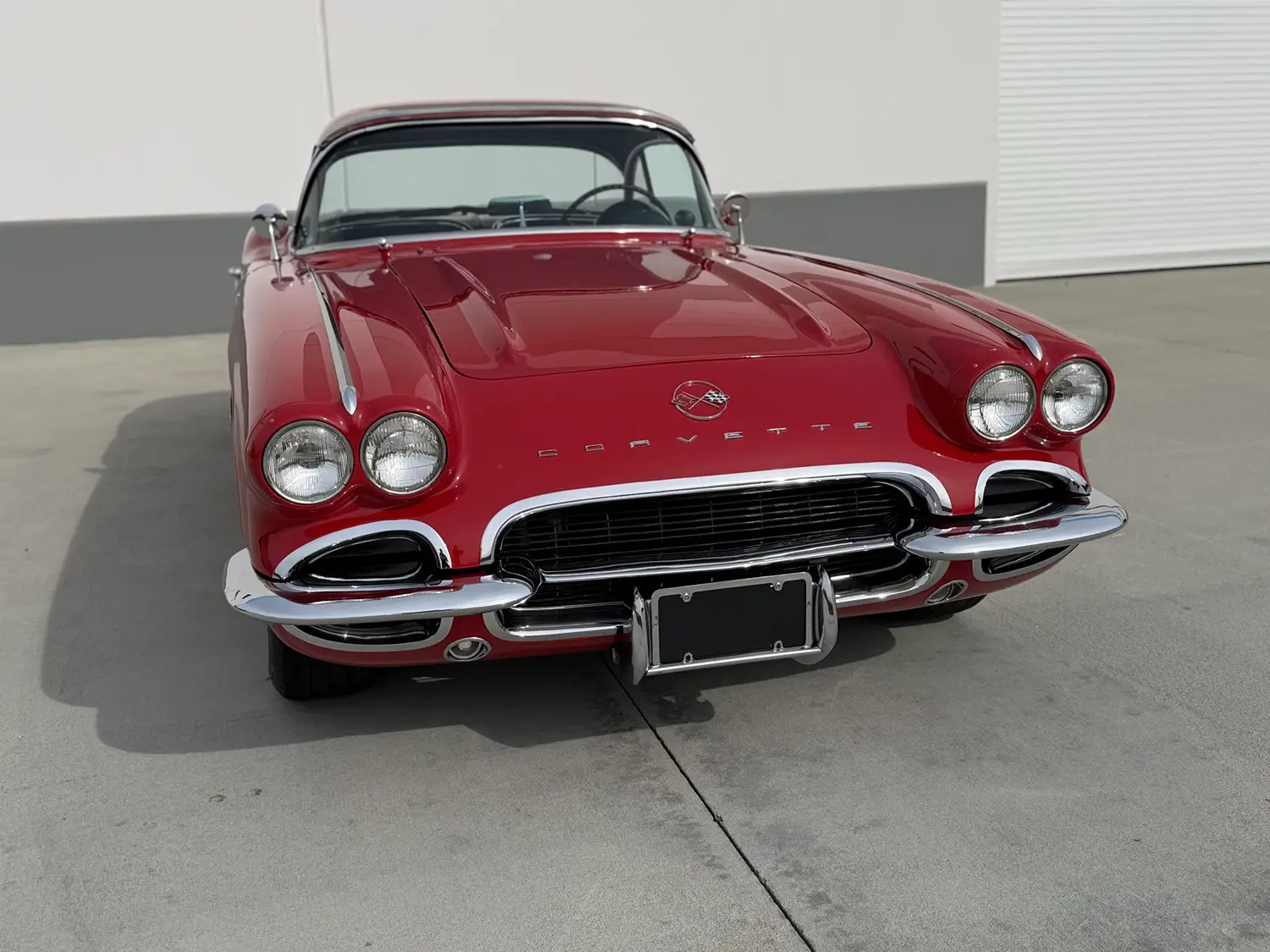
This 1962 Chevrolet Corvette is a well-documented example of a long-term passion project brought to life. It combines the legendary looks of the final solid-axle Corvette with a drivetrain that is ready for the twenty-first century. The red-over-red color scheme is a timeless choice that highlights the car’s quad-headlight front end and polished bumpers. Having appeared in Vette magazine, its quality and significance in the enthusiast community are already well-established. The 2025 interior updates ensure the car remains as comfortable as it is fast. With its California title and massive folder of receipts, it represents a turn-key opportunity for a serious collector. It is a machine built to be driven, heard, and admired in equal measure. This Corvette successfully honors its heritage while embracing a much more powerful future.
Disclaimer: Content on this site is for informational and entertainment purposes only. Details, analyses, and opinions reflect current trends and personal views, not professional or financial advice. Always verify information with official sources before making any decisions.
Source: bringatrailer.com