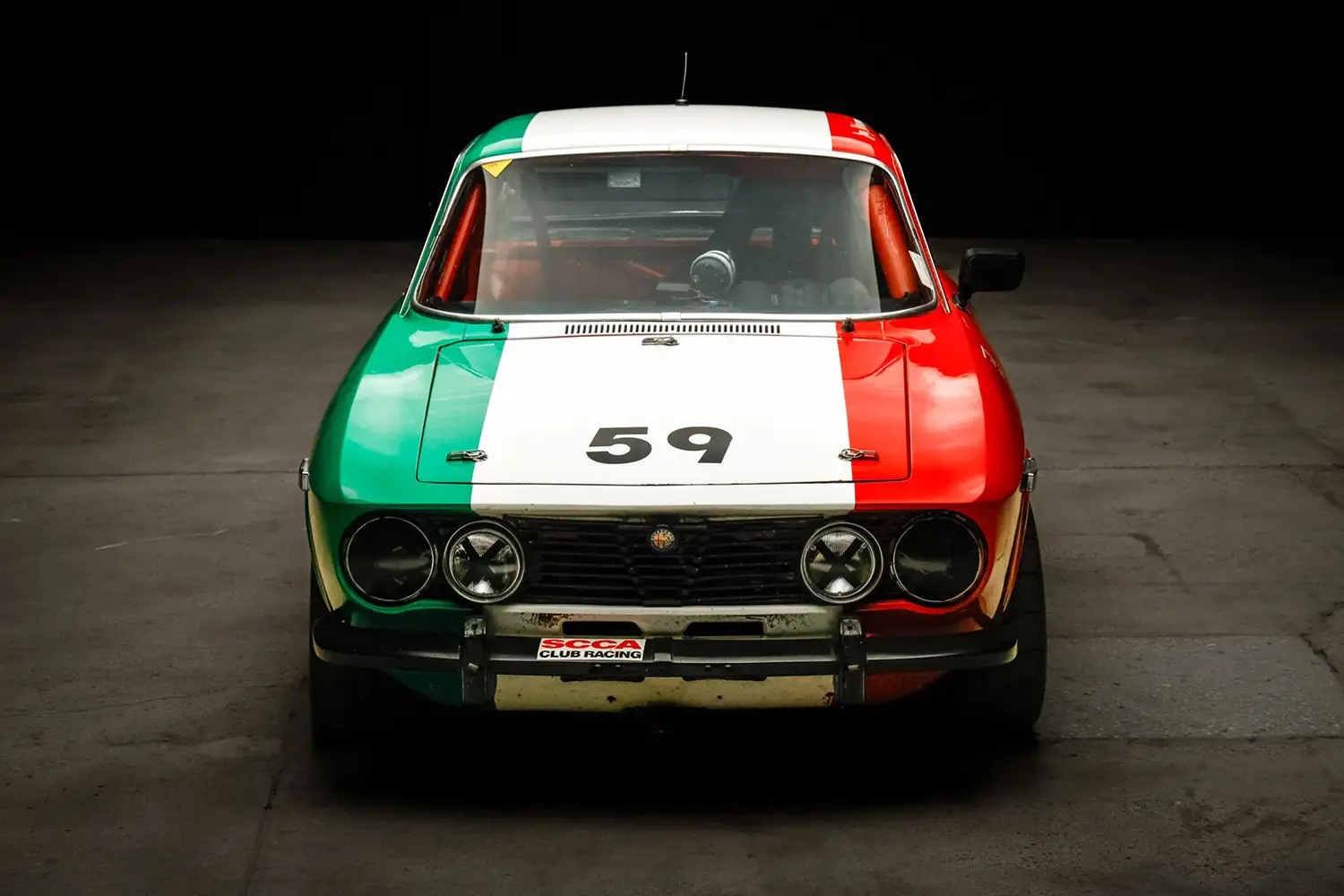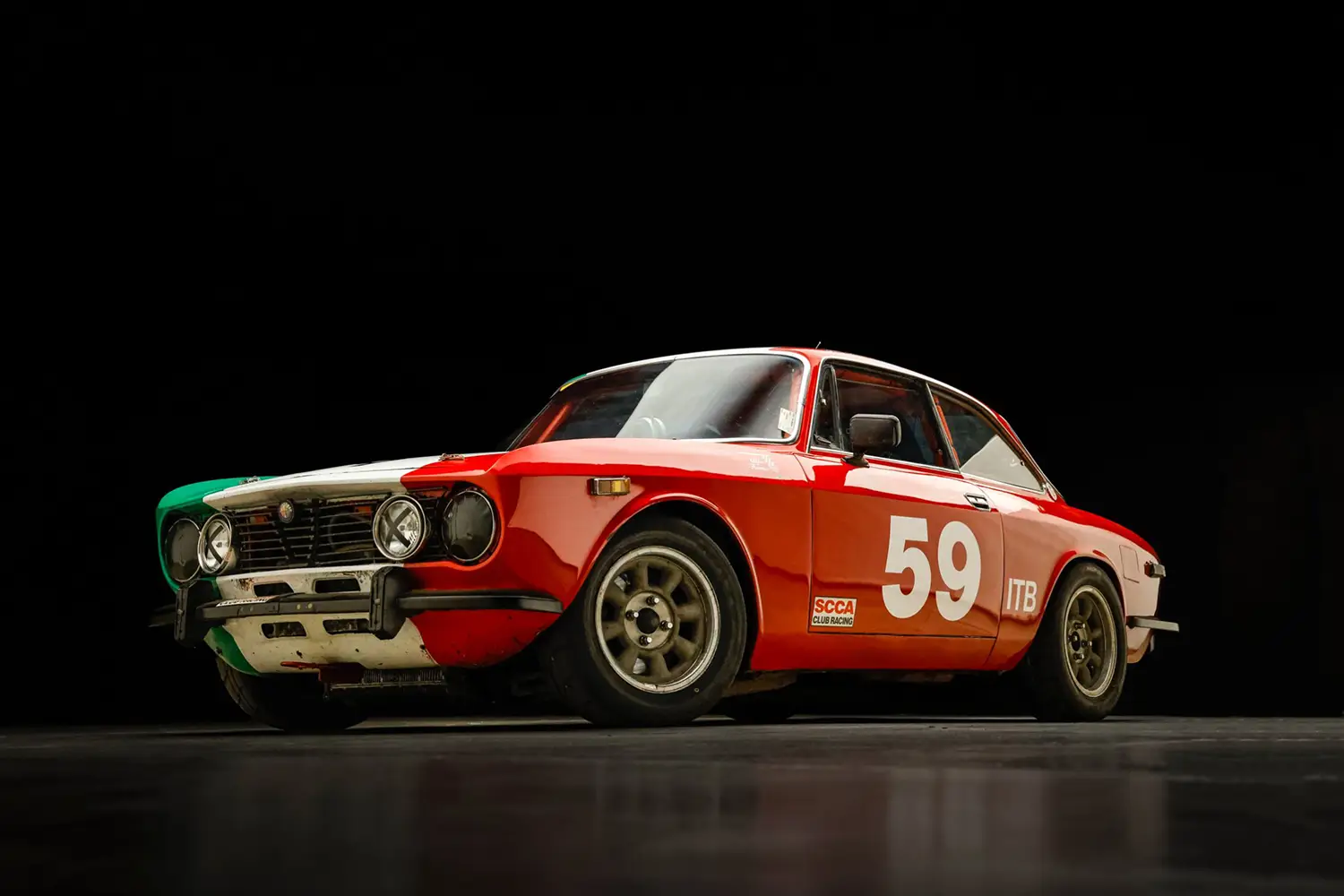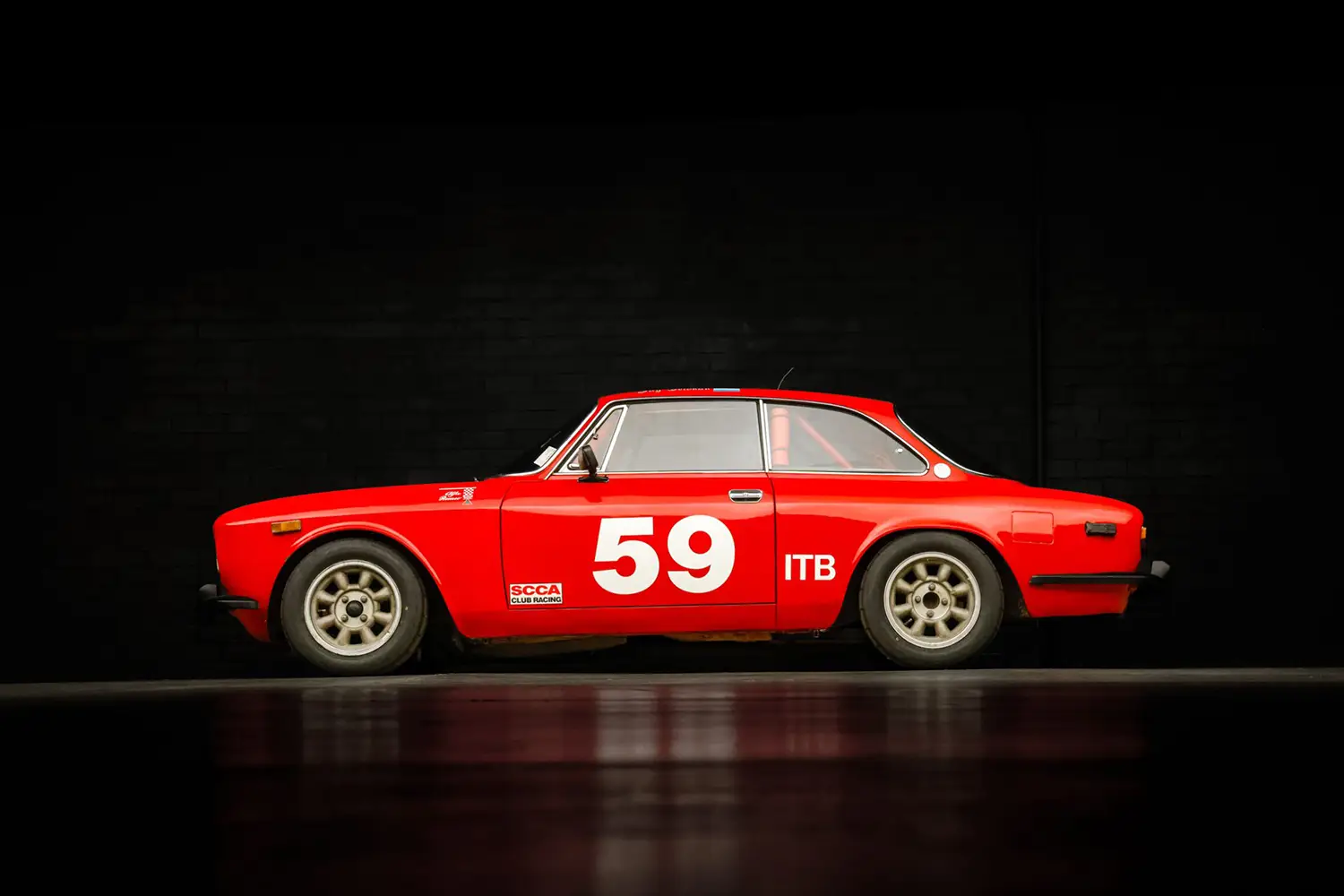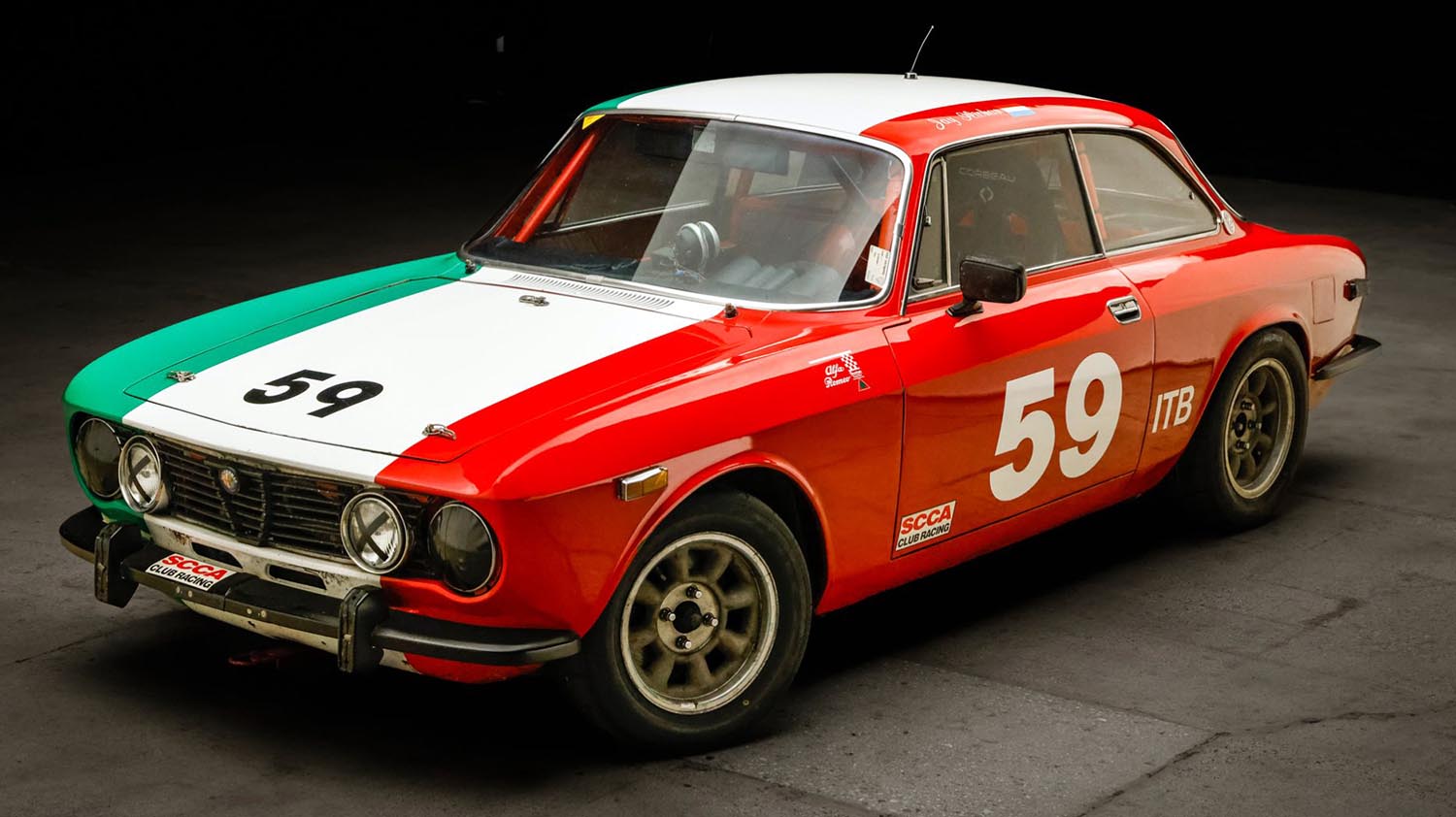
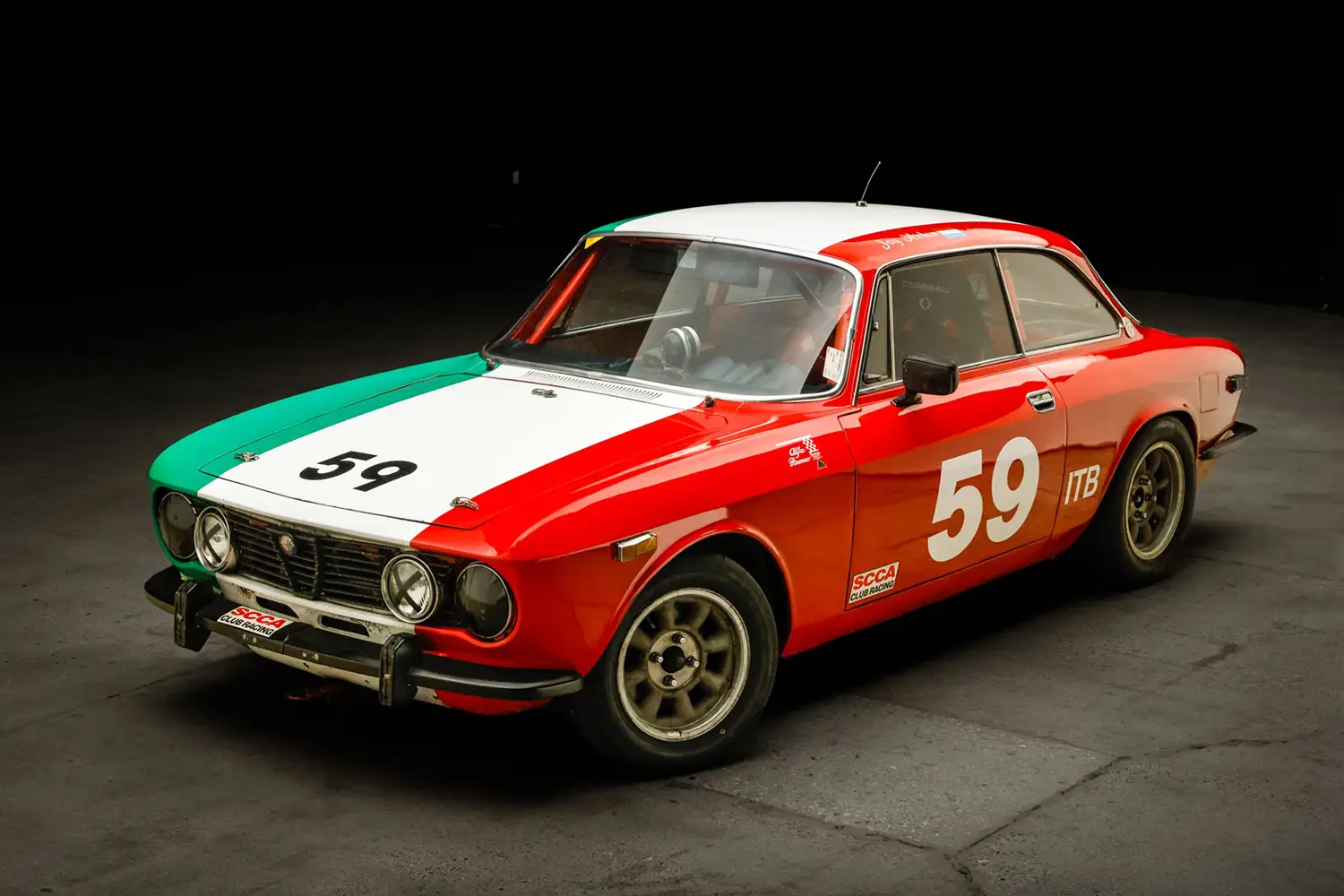
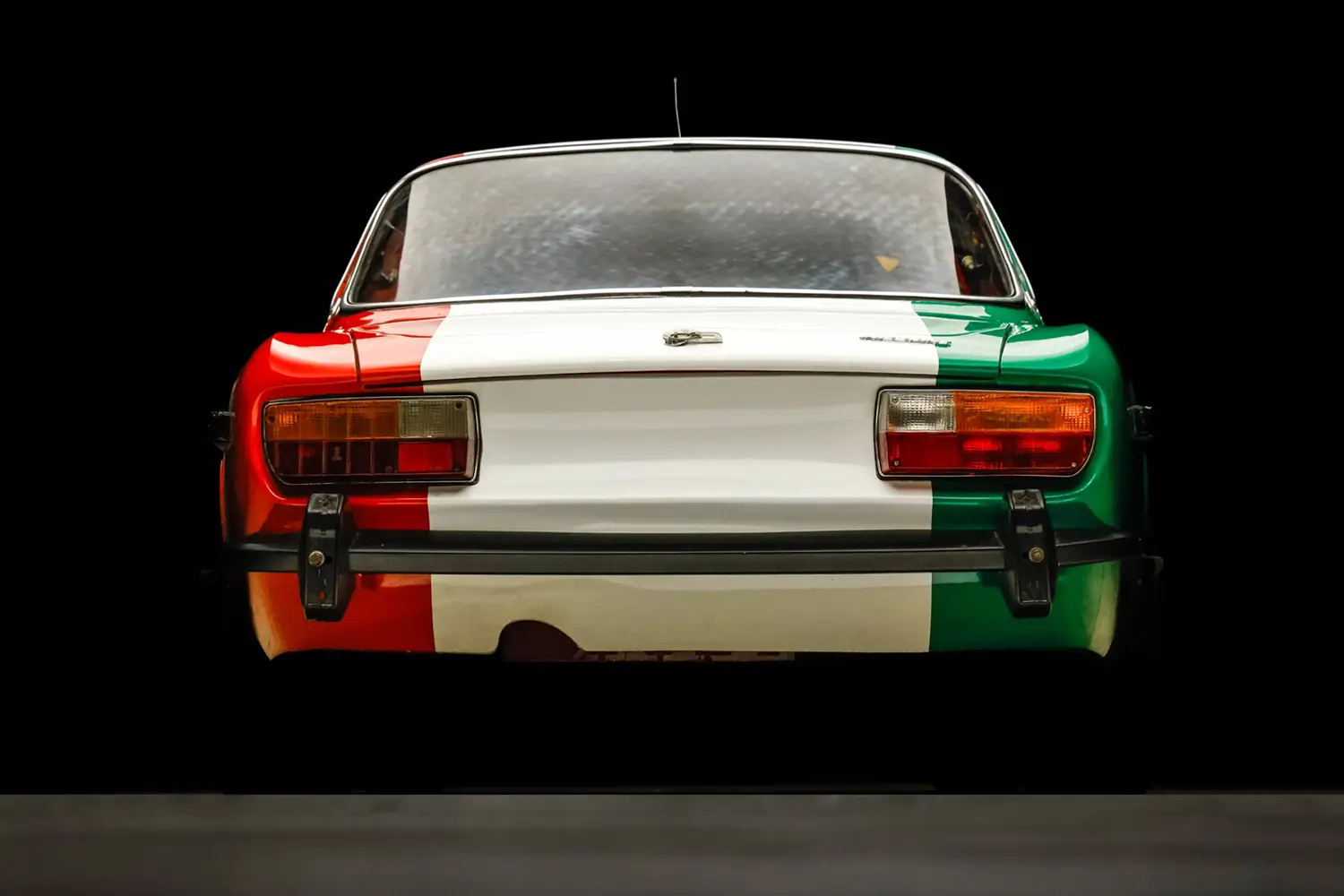
The 1974 Alfa Romeo GTV 2000 stands as one of the most celebrated silhouettes in Italian automotive history, originally designed for grand touring elegance. This specific example, however, has traded its comfortable street manners for the high-intensity world of SCCA vintage racing. Finished in a vibrant red, white, and green tricolore livery, it serves as a visual tribute to its national heritage and competition pedigree. The car successfully campaigned in various vintage events under previous ownership, proving its capabilities on the track. Offered at no reserve, it represents a rare opportunity for a driver to step directly into a sorted and proven chassis. It remains a focused machine built for the singular purpose of technical driving precision.
Track Focused Engineering and Safety Equipment
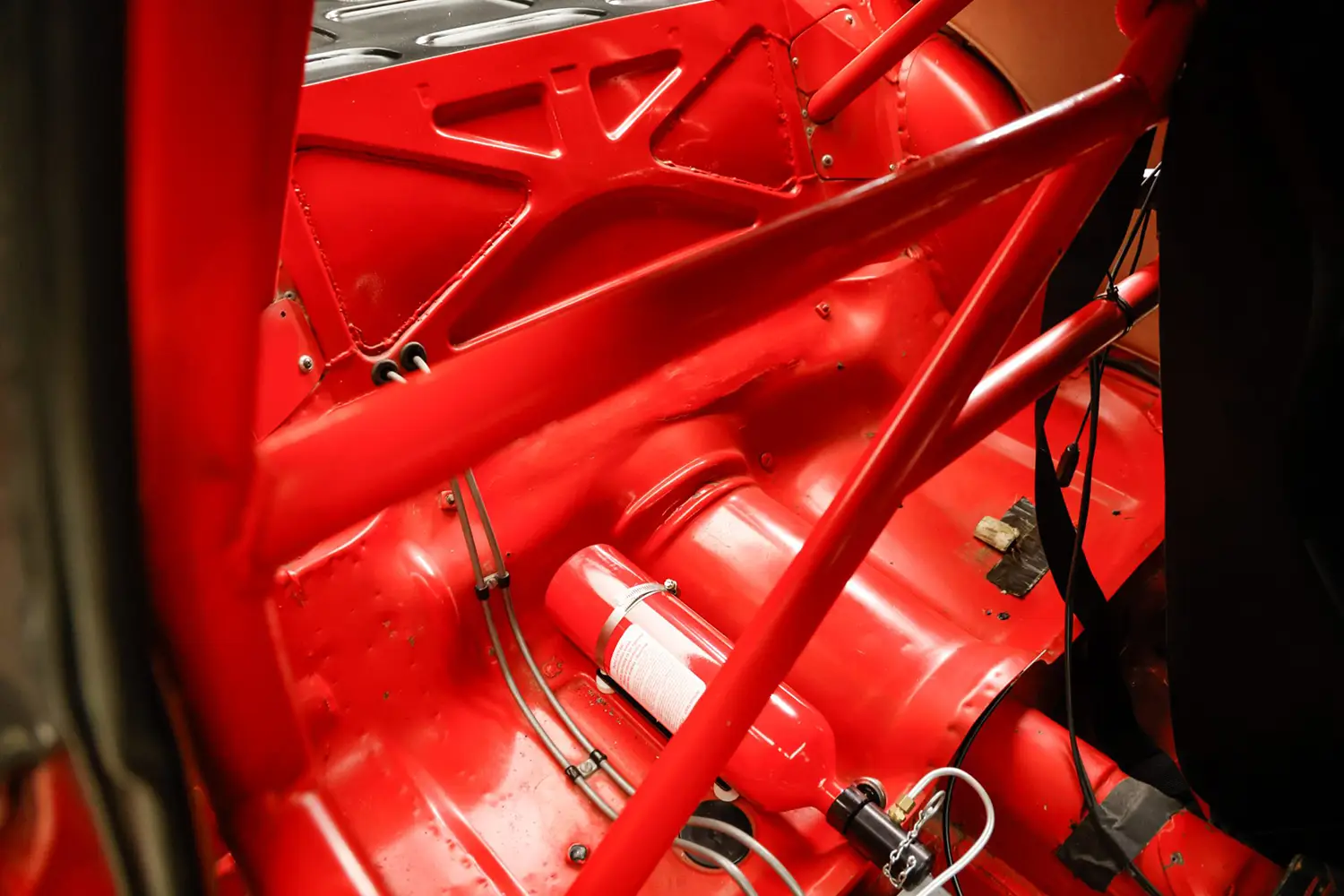
Engineers converted this GTV from a standard road car into a dedicated racer by stripping the interior to its bare essentials. A full roll cage provides the necessary structural rigidity and safety required for sanctioned competition events. For the driver, a single Corbeau racing seat works alongside a RaceQuip harness to ensure total stability during high-G cornering. The cabin also includes a fire suppression system and an electrical cutoff switch for emergency situations. Furthermore, a three-panel wink mirror and an RJS Racing window net complete the professional-grade safety suite. These modifications transform the classic cockpit into a command center designed for maximum situational awareness and driver protection.
Chassis Dynamics and Footwork Hardware
The car sits on classic 14-inch Minilite-style wheels, which are currently wrapped in high-performance Nitto NT01 tires for maximum track grip. Braking performance is handled by power-assisted four-wheel disc brakes, allowing for late-braking maneuvers into tight corners. While the exterior shows the honest scars of racing through minor finish imperfections, the overall stance remains purposeful and aggressive. The lift-off hood is secured with locking pins, and a front tow point is integrated for ease of trackside recovery. These choices reflect a builder who prioritized functional performance and ease of maintenance over simple cosmetic perfection. It is a vehicle that feels most at home when it is pushed toward its mechanical limits.
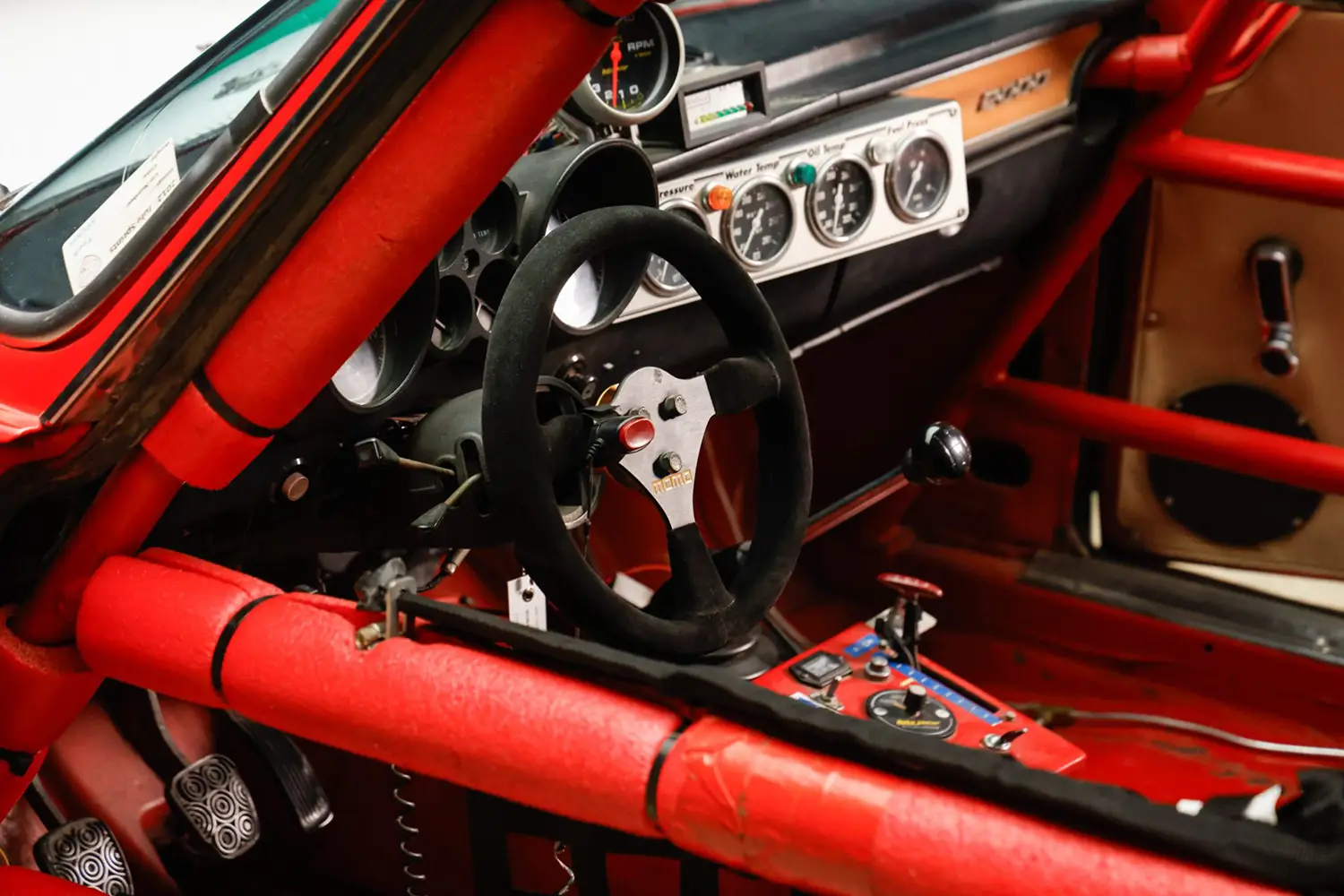
Cockpit Instrumentation and Data Monitoring
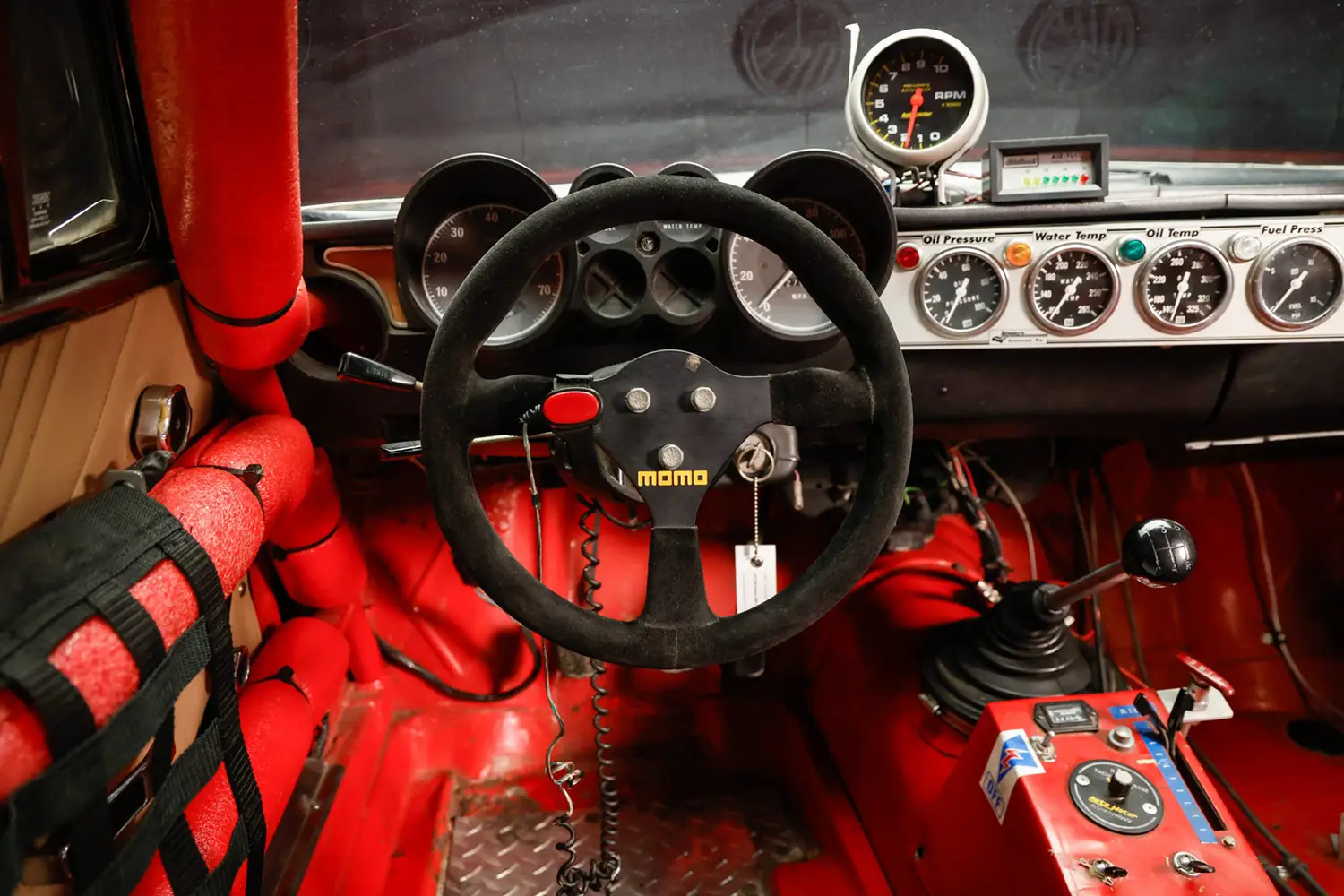
Inside the cabin, a MOMO microsuede steering wheel provides a tactile connection to the front wheels while reducing glare. The dashboard retains its woodgrain trim, though it now houses a suite of Stewart Warner and AutoMeter gauges. These readouts provide critical data on oil pressure, water temperature, and fuel pressure to keep the driver informed. An Edelbrock air/fuel ratio monitor allows for precise monitoring of the combustion process during a race. Additionally, a Veder-Root hour meter shows only 80 hours of runtime since the clock began its count. This data-heavy environment ensures that the driver can monitor the health of the twin-cam engine throughout a grueling heat.
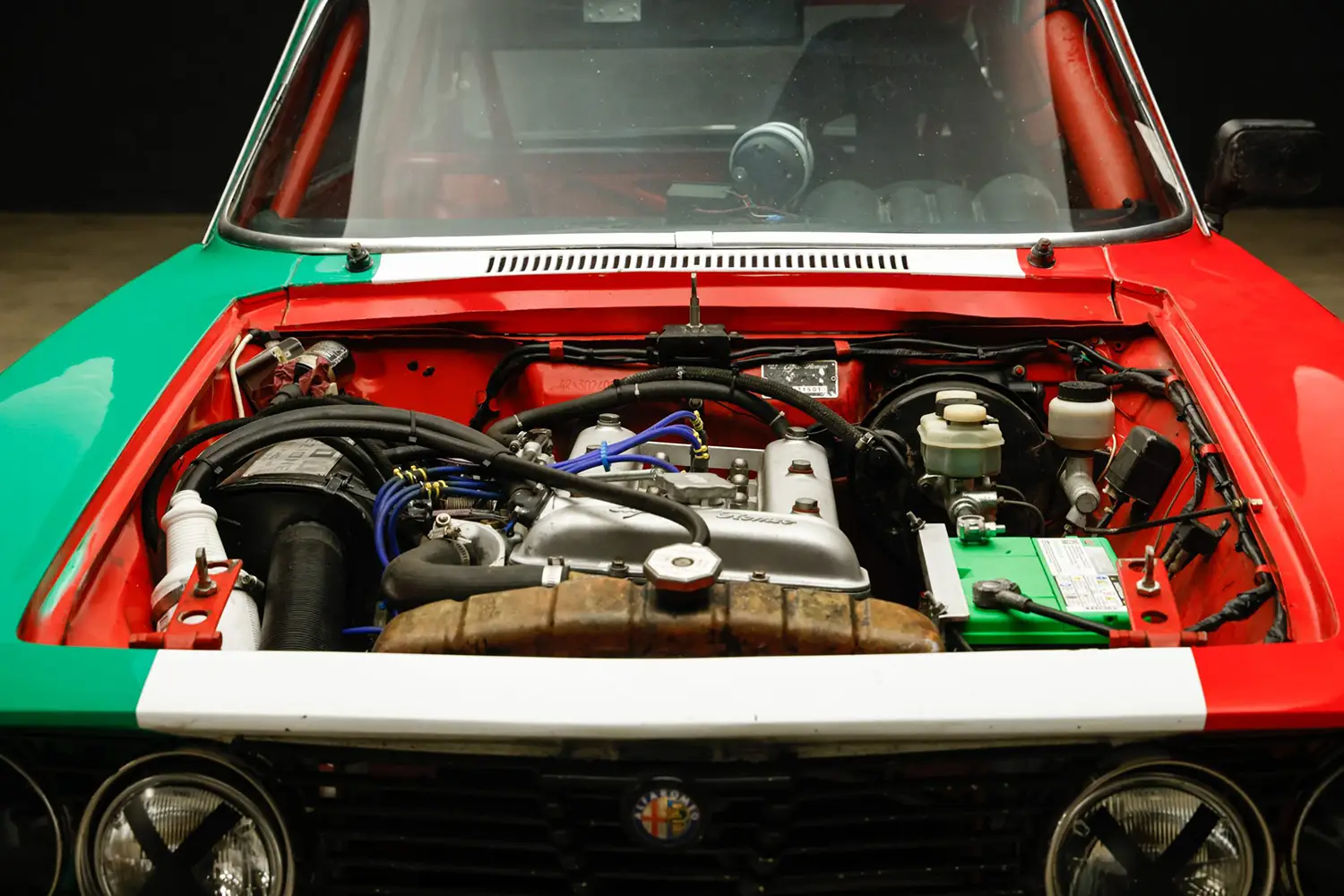
Power Engine Specs and Performance
At the heart of this machine is a 1,962cc twin-cam inline-four engine, a legendary powerplant known for its rev-happy nature. This engine utilizes SPICA mechanical fuel injection, a sophisticated system that defines the performance characteristics of US-market Alfas. To improve reliability during competition, the car features a Moroso electronic ignition and an ATL fuel cell mounted in the trunk. Power is managed by a five-speed manual transmission that allows the driver to keep the engine within its optimal power band. The result is a mechanical symphony of intake growl and exhaust note that only a vintage Italian four-cylinder can produce. It delivers 130 horsepower in factory trim, with this racing version tuned for consistent track delivery.
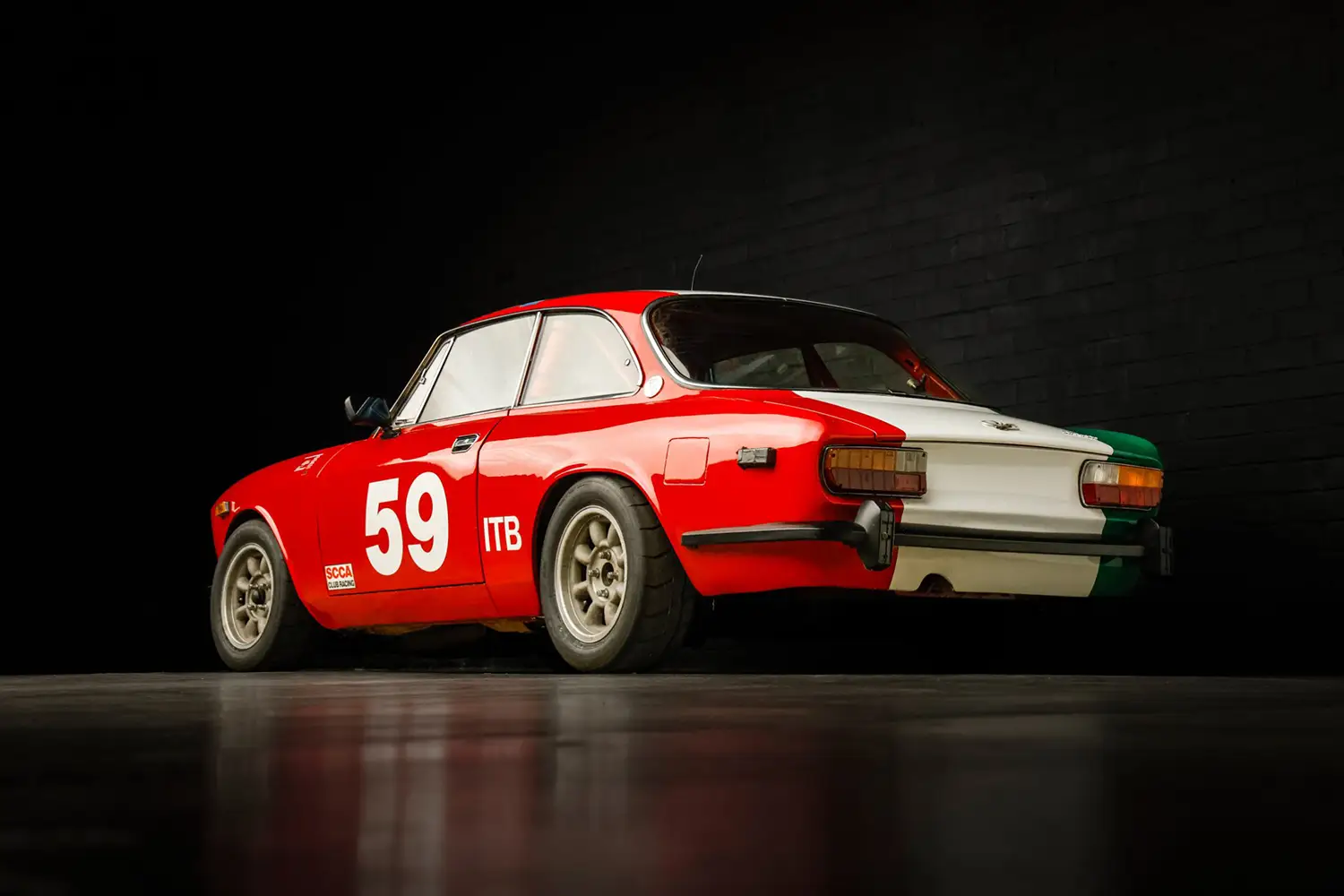
Summary of the GTV Race Car
The 1974 Alfa Romeo GTV 2000 race car is a visceral reminder of why these vehicles remain a staple of the vintage racing community. Because it is sold on a bill of sale for track use only, it avoids the complexities of modern registration and emissions. Its history in SCCA competition provides a solid foundation for the next owner to continue its legacy on the circuit. The combination of the SPICA-injected twin-cam and the light, balanced chassis makes it an incredibly rewarding car to master. Every dent and imperfection on its tricolore skin acts as a badge of honor from past battles. It stands ready for the next green flag, offering a pure connection between man, machine, and the asphalt.
Disclaimer: Content on this site is for informational and entertainment purposes only. Details, analyses, and opinions reflect current trends and personal views, not professional or financial advice. Always verify information with official sources before making any decisions.
Source: bringatrailer.com