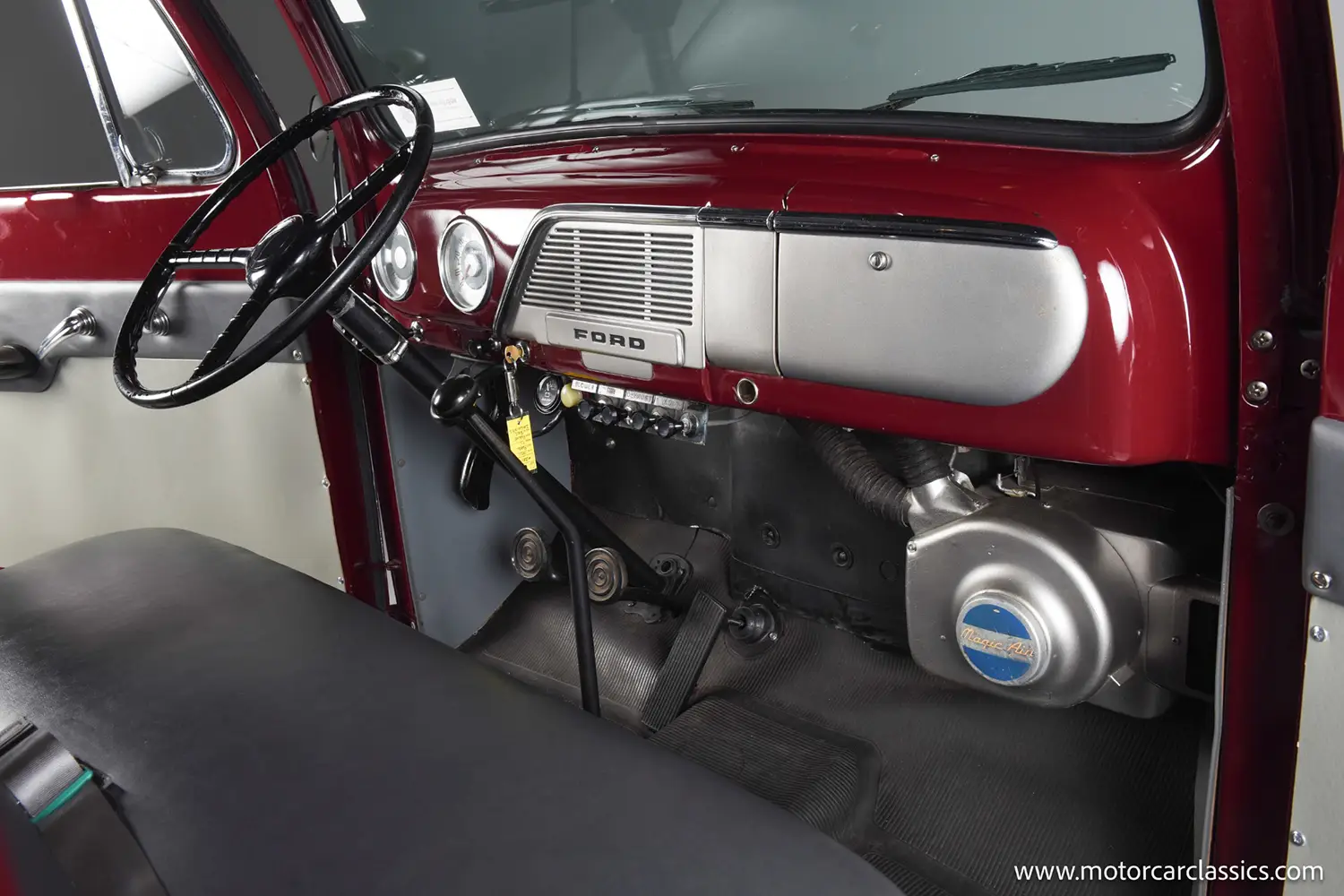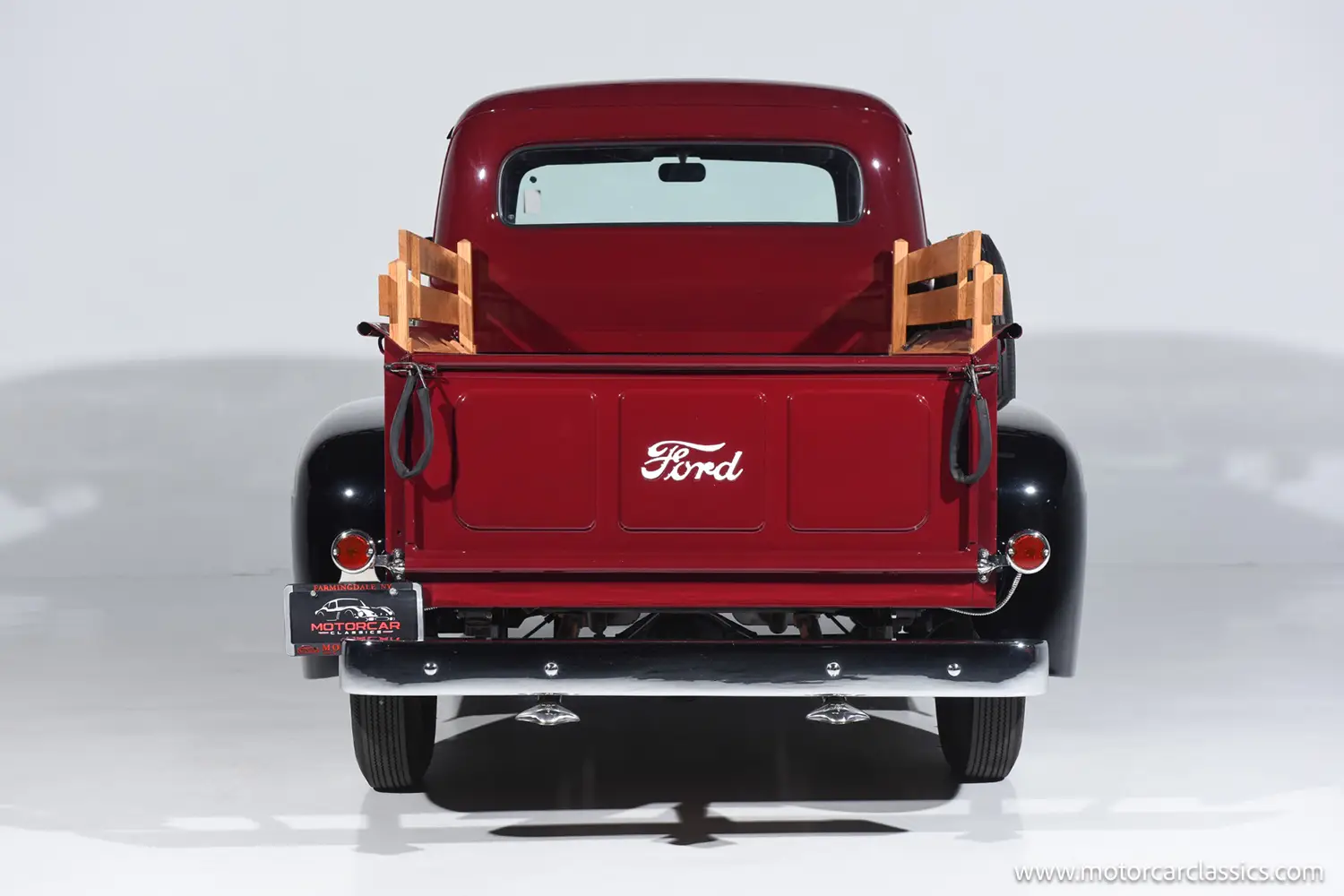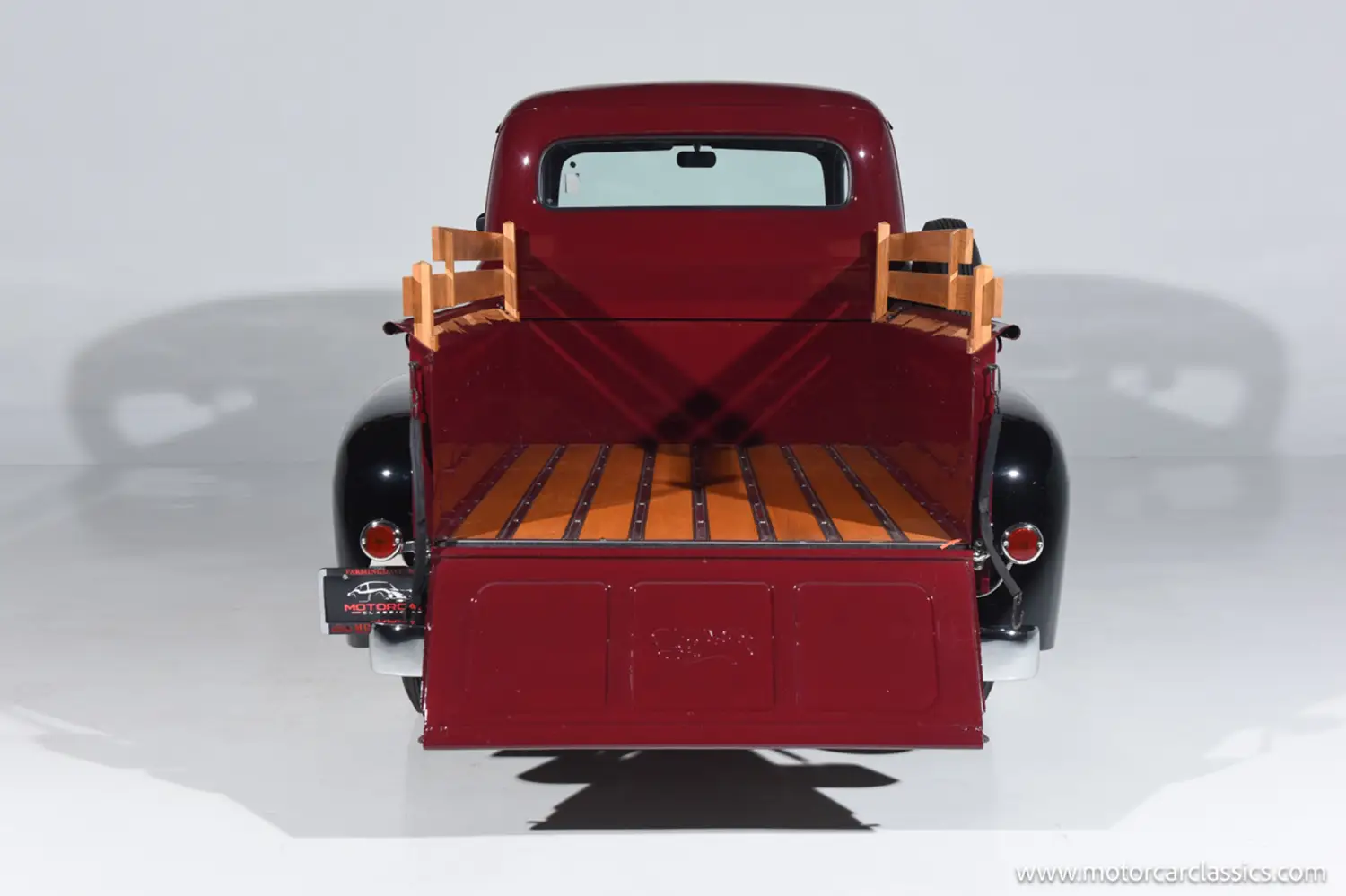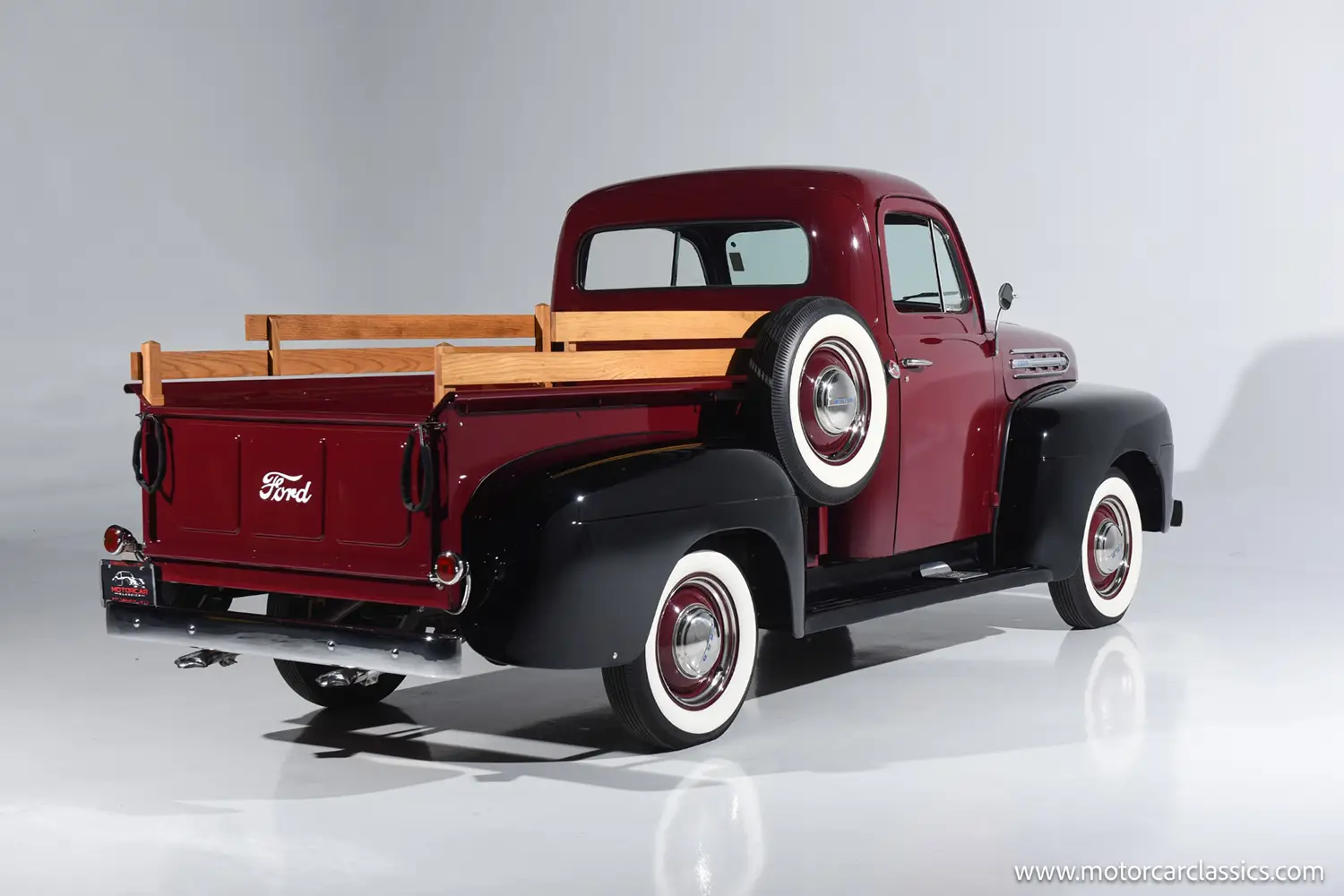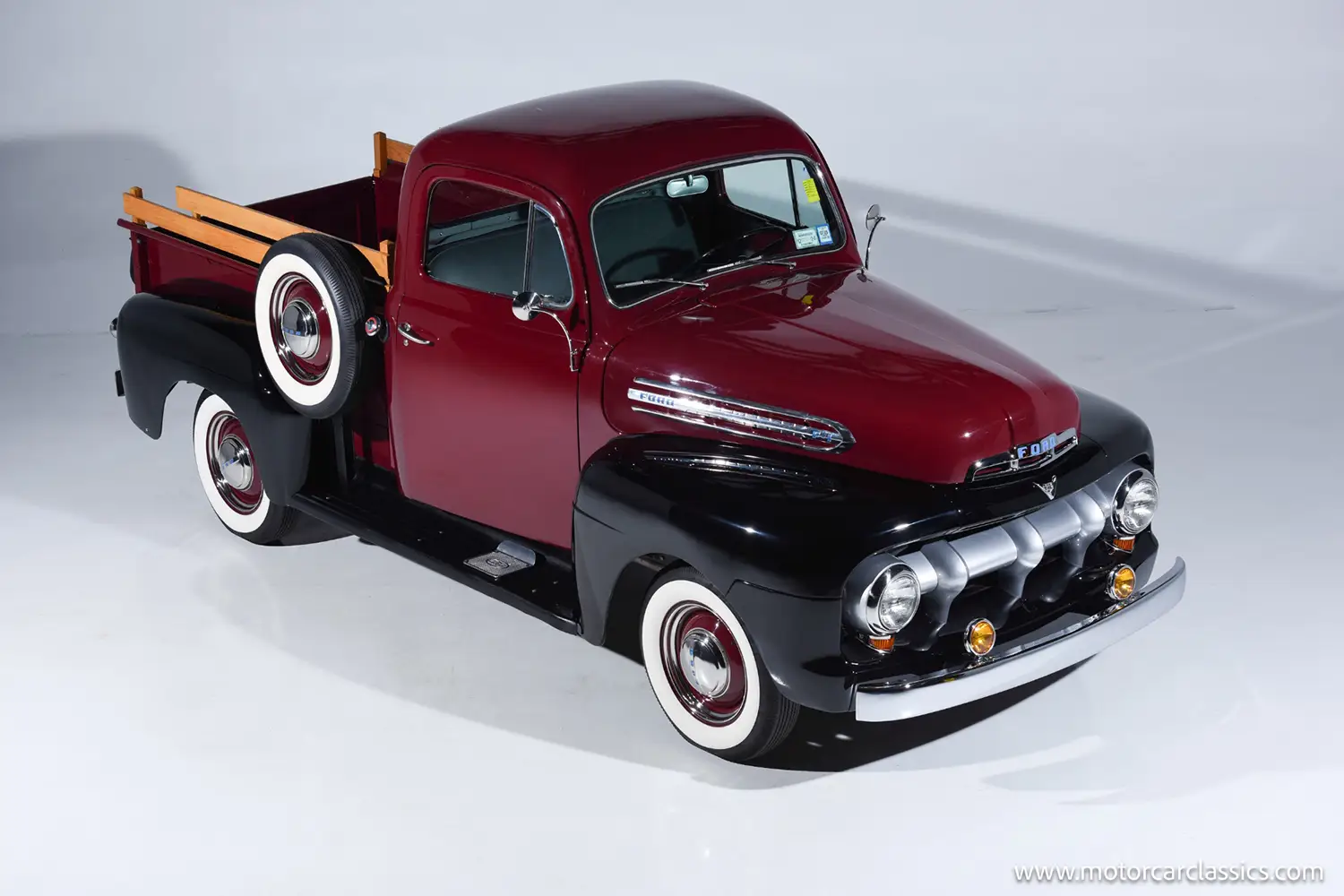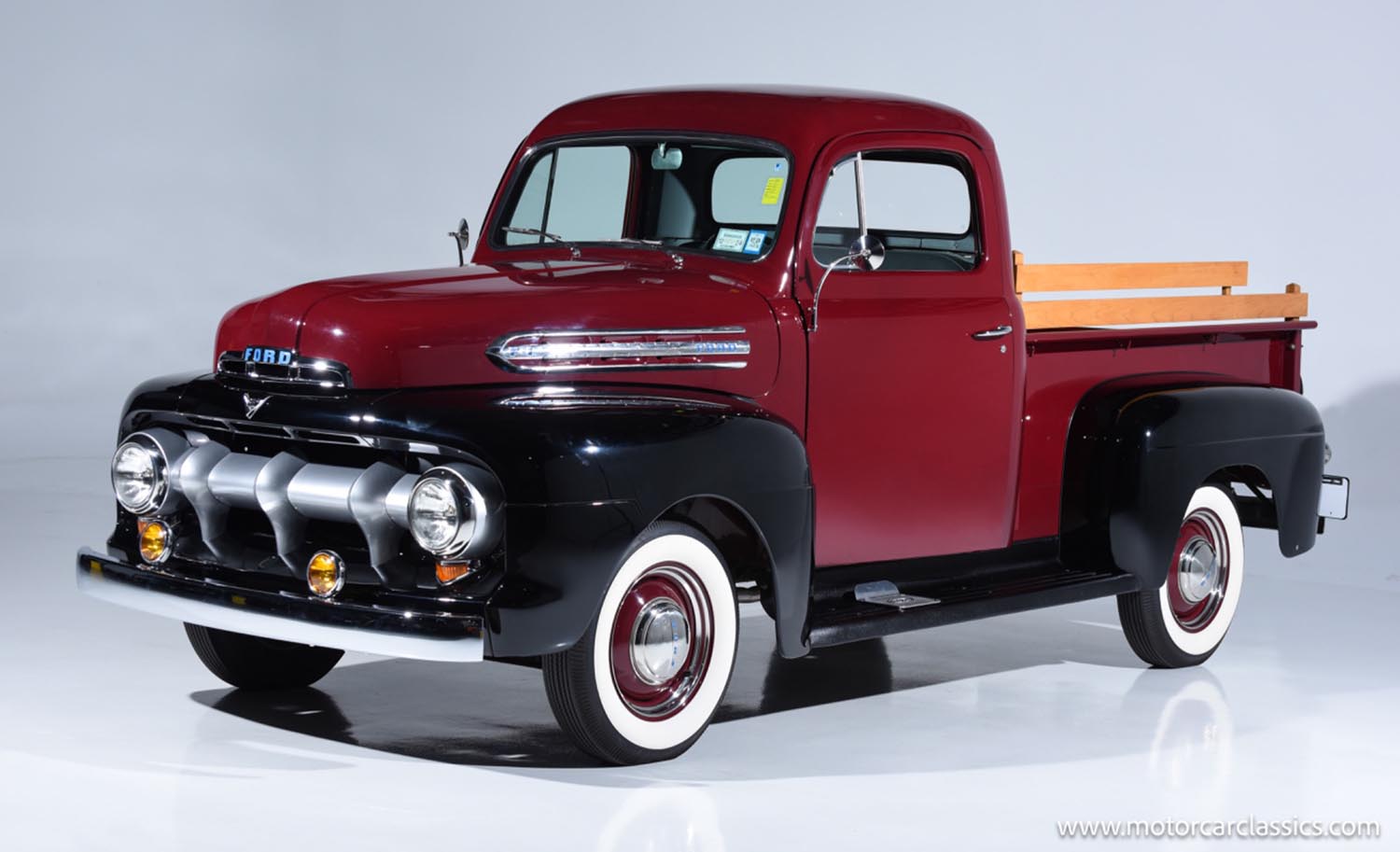
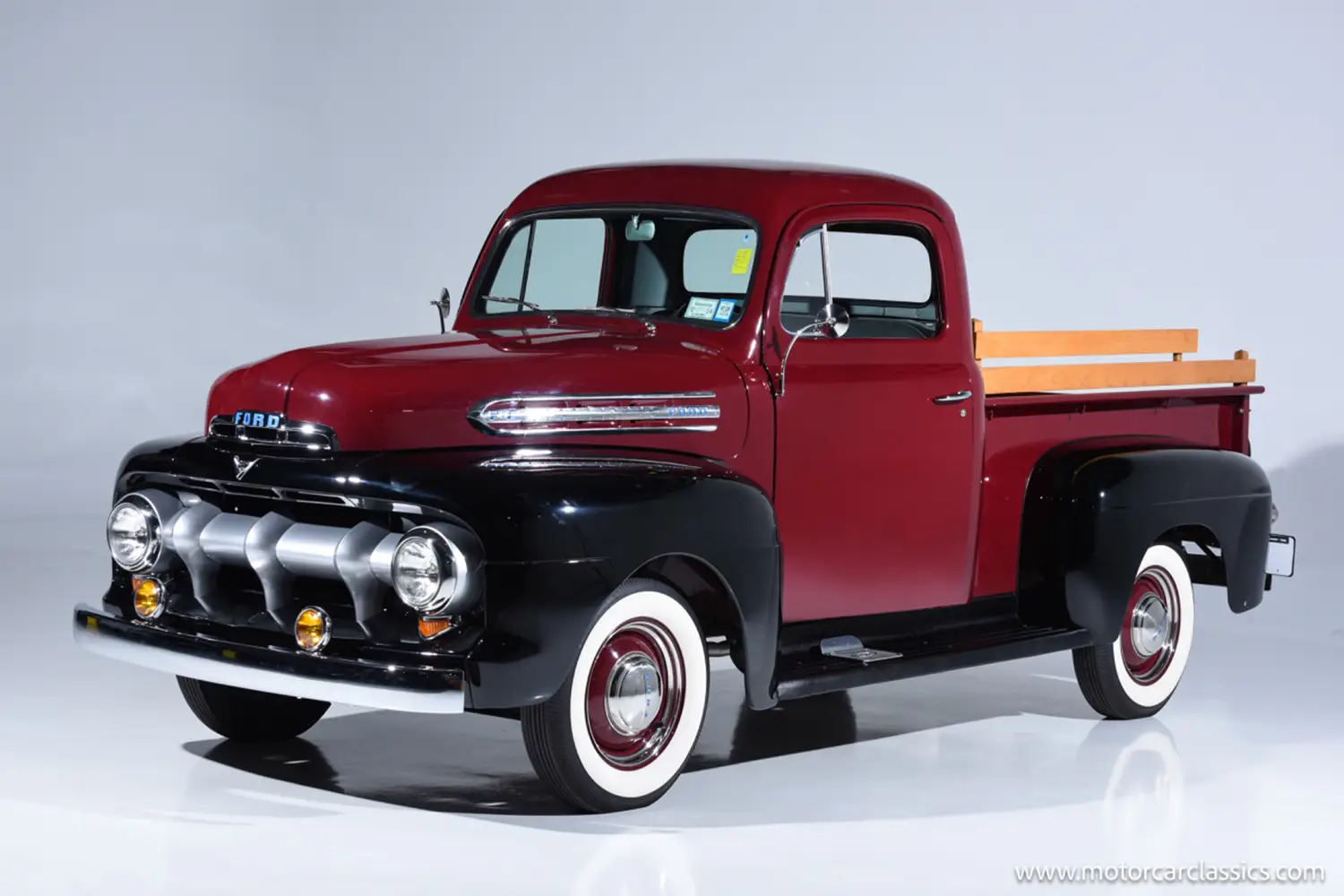
The 1951 Ford F-1 Pickup is a crucial artifact from the first generation of Ford’s hugely successful F-Series trucks. This era marked a significant departure from earlier truck design practices. Notably, the F-Series was the first Ford truck to use a dedicated, purpose-built frame instead of an adapted car chassis. This meticulously restored 1951 Ford F-1 Pickup stands as a pristine example of this foundational model. It blends a period-correct appearance with clever mechanical upgrades for improved daily use.
A Stunning, Documented Restoration
This F-1 has benefited from a comprehensive nut-and-bolt restoration process. Extensive photos and receipts document every phase of the rebuild, confirming the quality of the work. The body is finished in a rich Maroon paint, which contrasts beautifully with the sleek black fenders. Every detail, from the gleaming chrome to the tight panel fitment, has been addressed carefully. This high level of preservation truly showcases the model’s enduring appeal.
Exterior Details and Styling
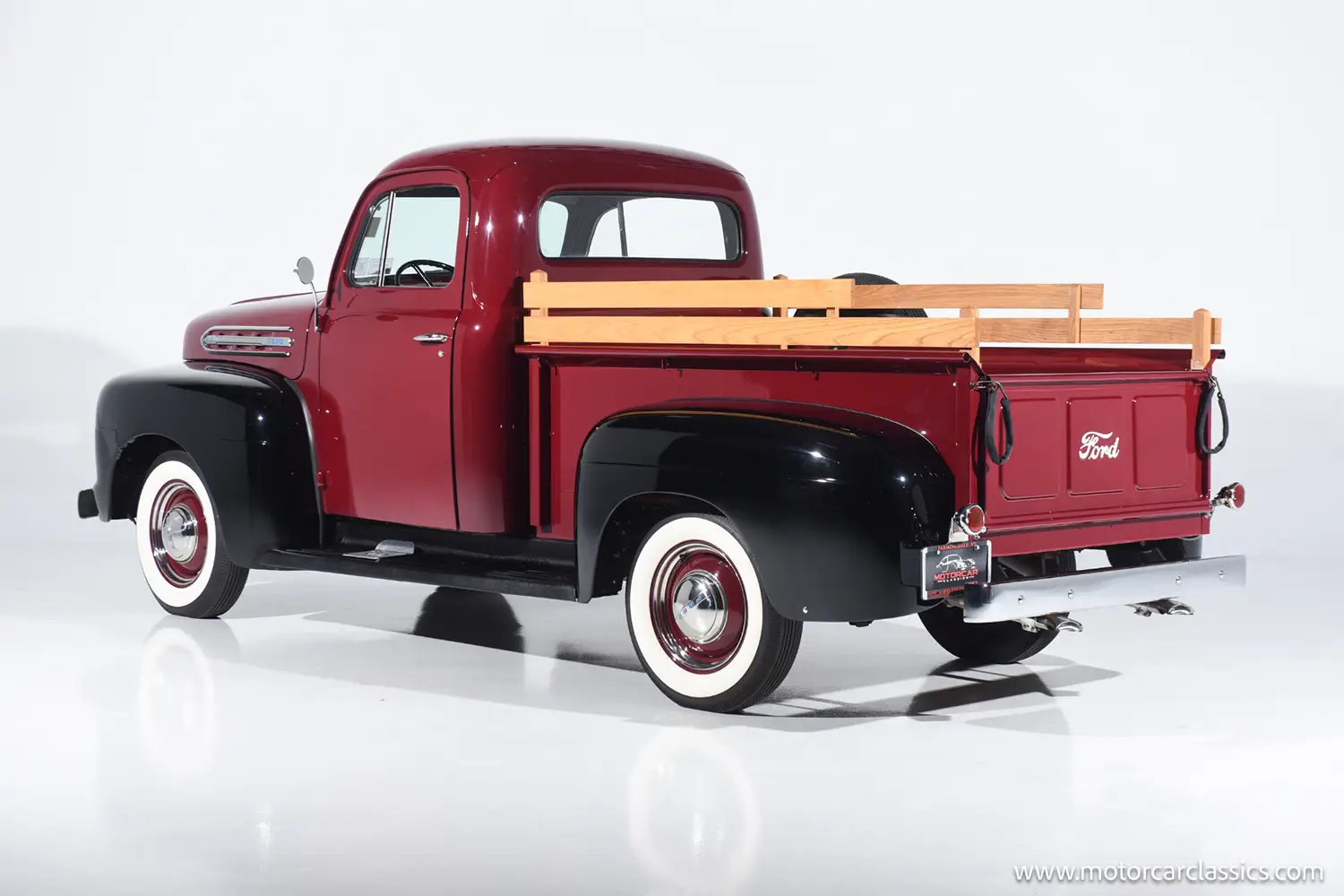
The 1951 model year introduced several key improvements to the F-1 line. Specifically, it featured an updated door panel design and a larger rear window for better visibility. The cargo area is finished with premium oak wood and includes matching side rails. This feature adds a touch of rustic elegance to the iconic truck’s exterior. The Maroon finish is perfectly accented by wide whitewall tires mounted on color-matched wheels.
Enhanced Drivability and Modern Reliability
While the truck maintains its vintage look, the mechanics have been thoughtfully upgraded for the modern era. The original electrical system has been seamlessly converted to 12 volts. This change drastically improves starting reliability and supports modern accessories. Furthermore, a major change is the transmission upgrade. The F-1 now utilizes a modern T-5 five-speed manual transmission. This swap enhances gear spacing and allows for more relaxed highway speeds.
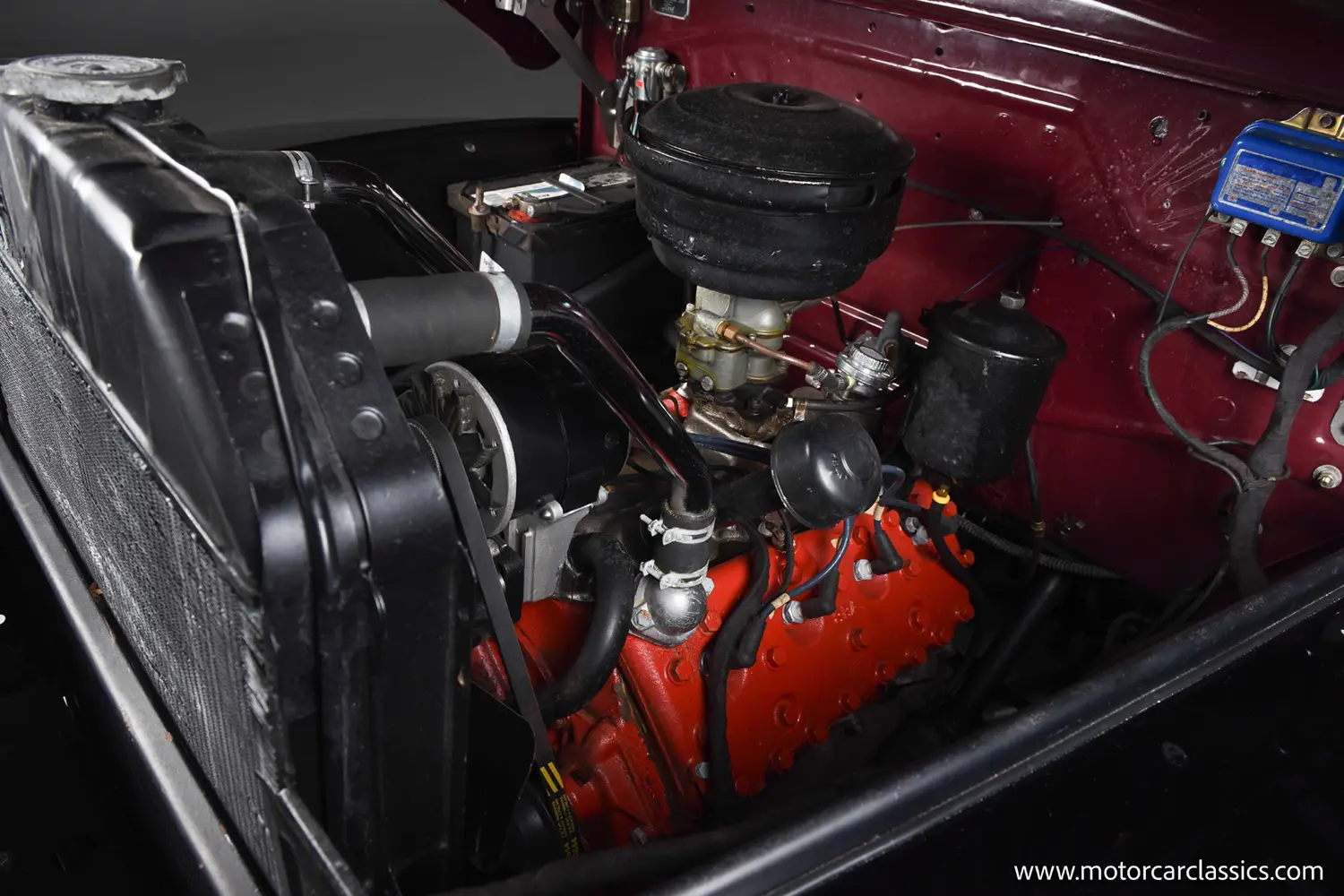
The Heart of the Truck: Flathead V8
At the core of this 1951 Ford F-1 Pickup beats the original 239 cubic inch Flathead V8 engine. The Flathead V8 is legendary, recognized for its distinctive sound and smooth power delivery. This engine design was critical to Ford’s success throughout the mid-20th century. Though rated for modest power by modern standards, the V8 provides ample torque for the F-1. The recent restoration ensures the engine is presented and operating in superb condition.
Power, Engine Specs, and Performance
The 239 CI Flathead V8 provides a strong connection to Ford’s early performance roots. Its power delivery is characterized by low-end torque, ideal for a light-duty utility vehicle. The addition of the T-5 five-speed transmission significantly improves the driving performance. The extra gear allows the engine to operate efficiently at higher speeds. This combination provides a much more comfortable and versatile experience for the driver.
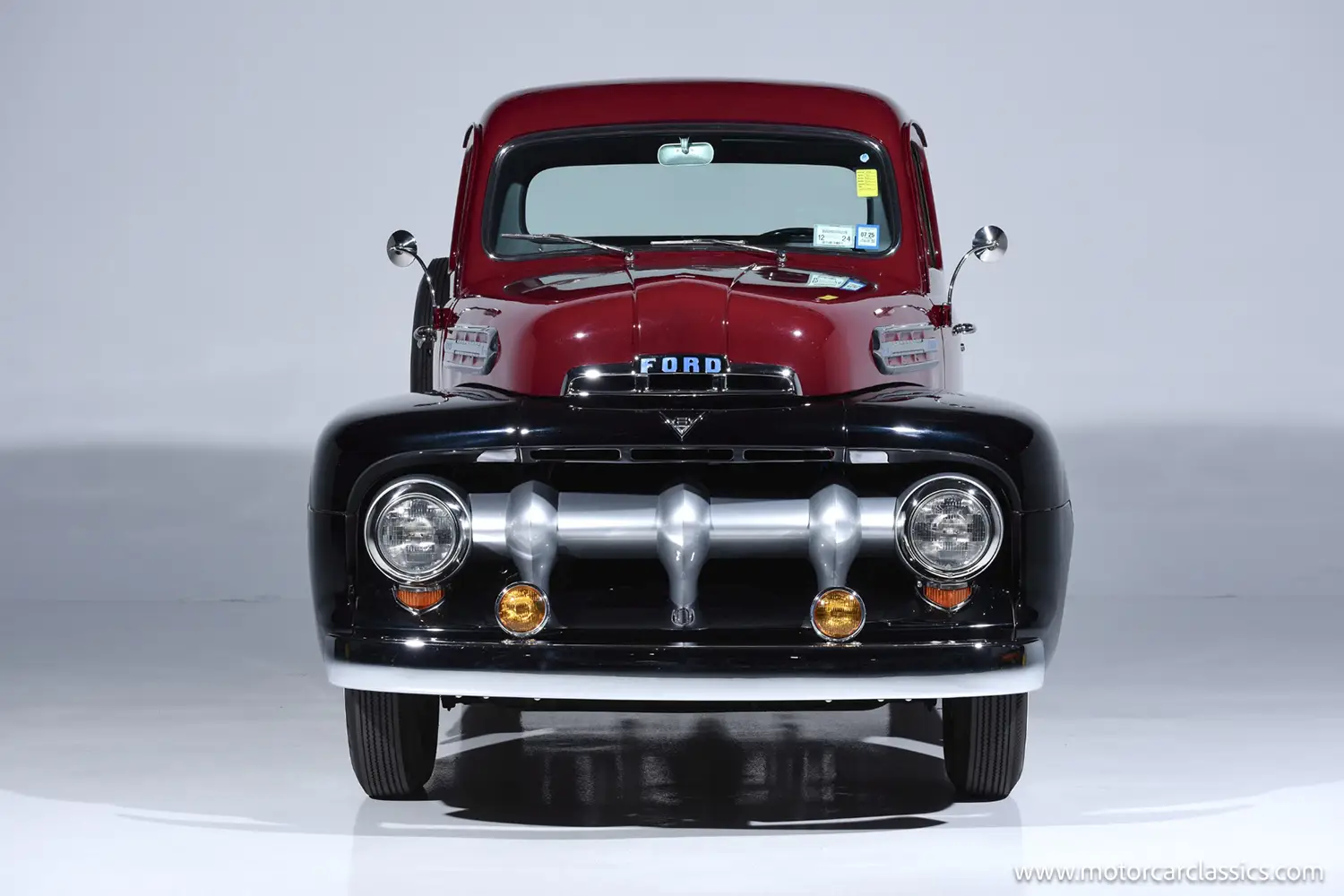
The Legacy of the F-1 Chassis
The F-1 was the lightest truck in the first-generation F-Series lineup. It had a Gross Vehicle Weight Rating (GVWR) of 4,700 pounds. Its purpose-built frame marked a revolutionary change in pickup design philosophy. This innovation contributed greatly to better ride quality and durability. This truck stands not just as a classic, but as an important developmental piece in Ford’s truck manufacturing legacy.
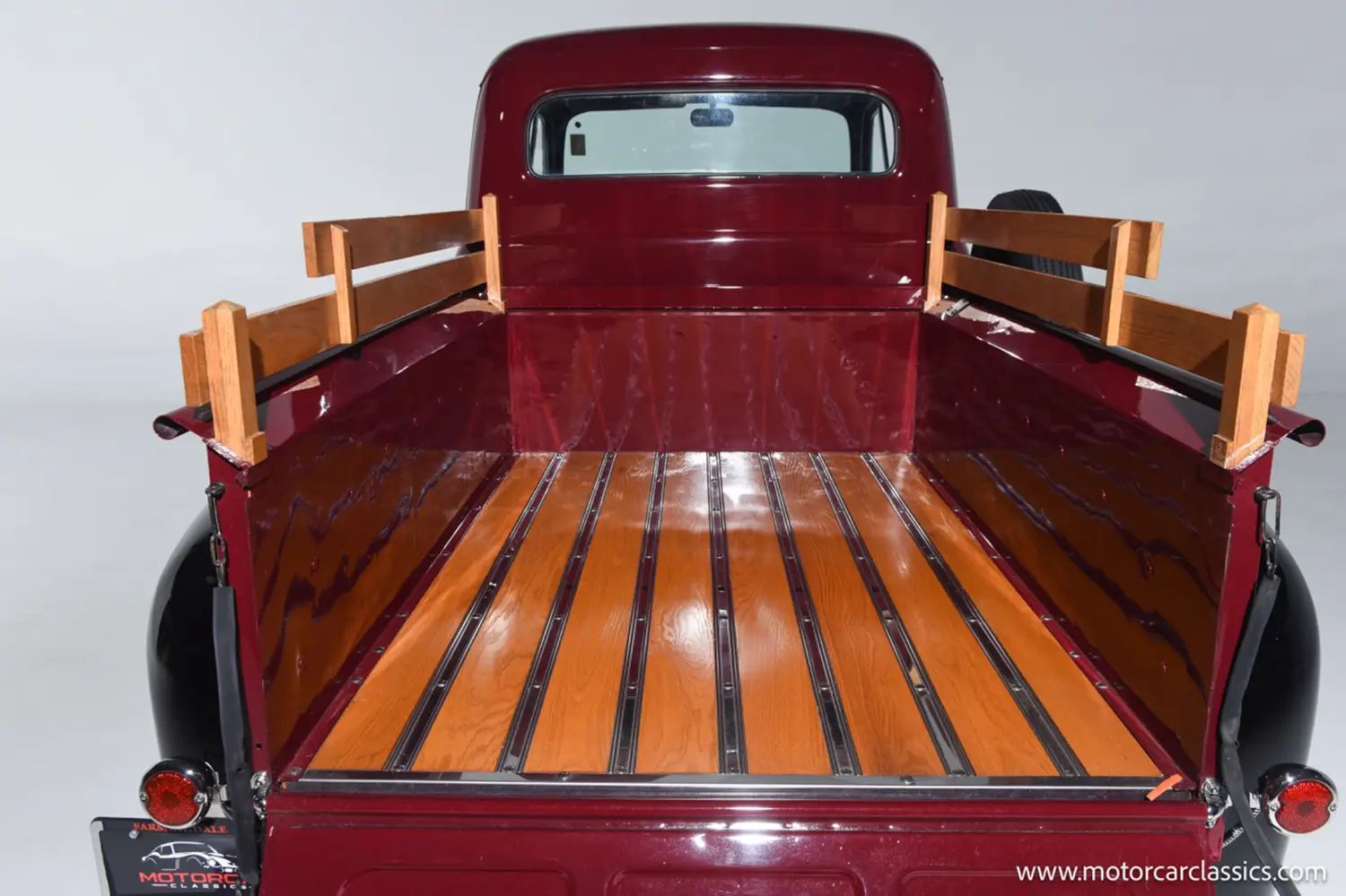
Summary of the Ford F-1 Pickup
This 1951 Ford F-1 Pickup is an exceptionally well-restored, first-generation F-Series truck. It combines the original 239 CI Flathead V8 engine with a smooth T-5 five-speed manual transmission upgrade. The stunning Maroon and Black exterior, complete with an oak bed, sets it apart visually. The documented nut-and-bolt restoration and 12-volt conversion make this a reliable and highly appealing piece of automotive history.
Disclaimer: Content on this site is for informational and entertainment purposes only. Details, analyses, and opinions reflect current trends and personal views, not professional or financial advice. Always verify information with official sources before making any decisions.
Source: motorcarclassics.com