The 2013 McLaren P1 represents the dawn of the hybrid hypercar era, and chassis VP04 stands as a critical pillar in that revolutionary development history. As one of only 22 validation prototypes built before road-going production commenced, this specific vehicle served as a high-profile promotional tool for the brand. It famously tackled the Goodwood Festival of Speed hill climb in July 2013 with Formula 1 champion Jenson Button behind the wheel, recording a 53-second sprint. Following its development duties, the car underwent a factory overhaul by McLaren before entering private hands, ensuring its legacy as a fully functional piece of automotive history.

Volcano Yellow Refinish and Active Aerodynamic Silhouette
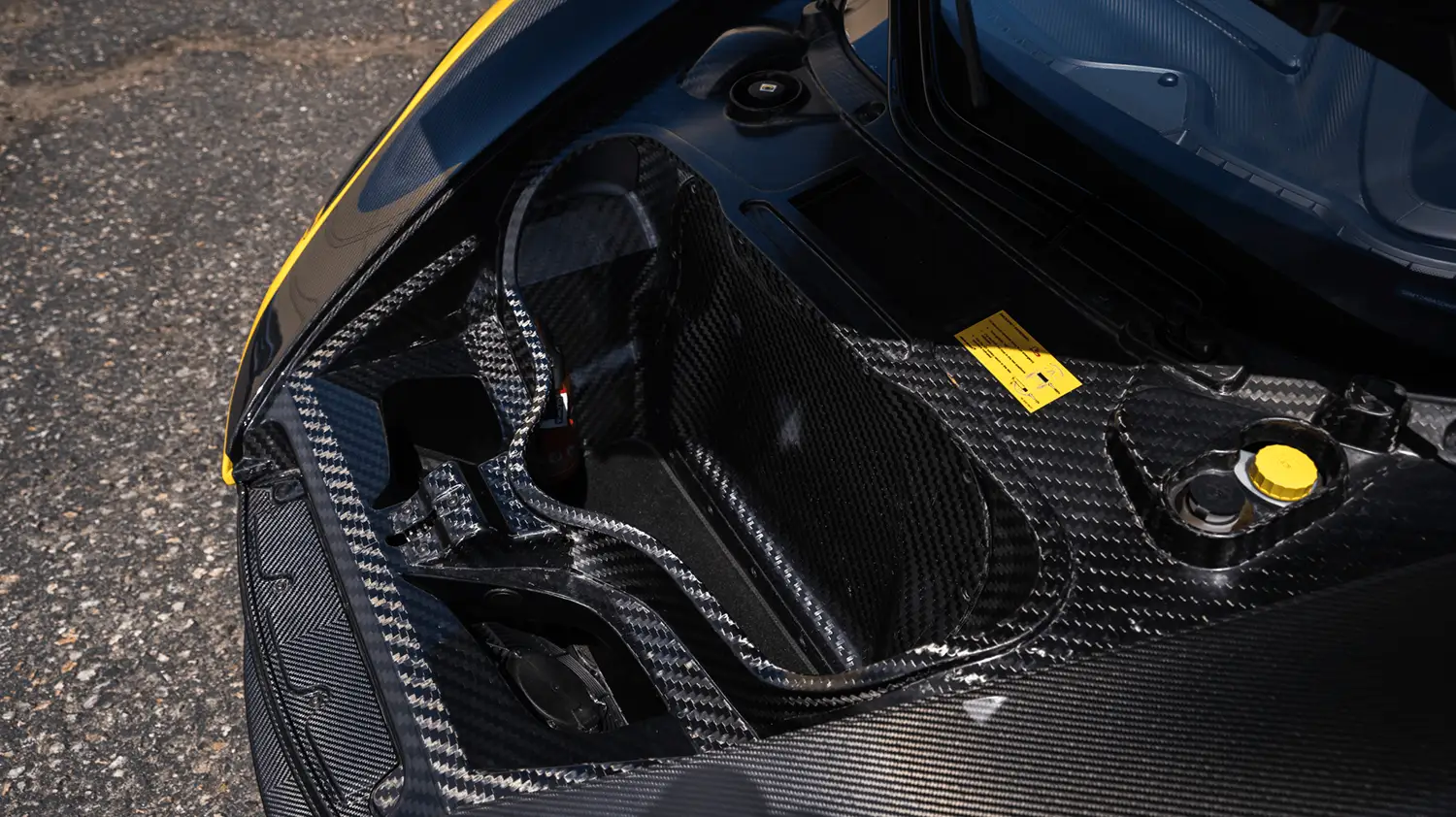
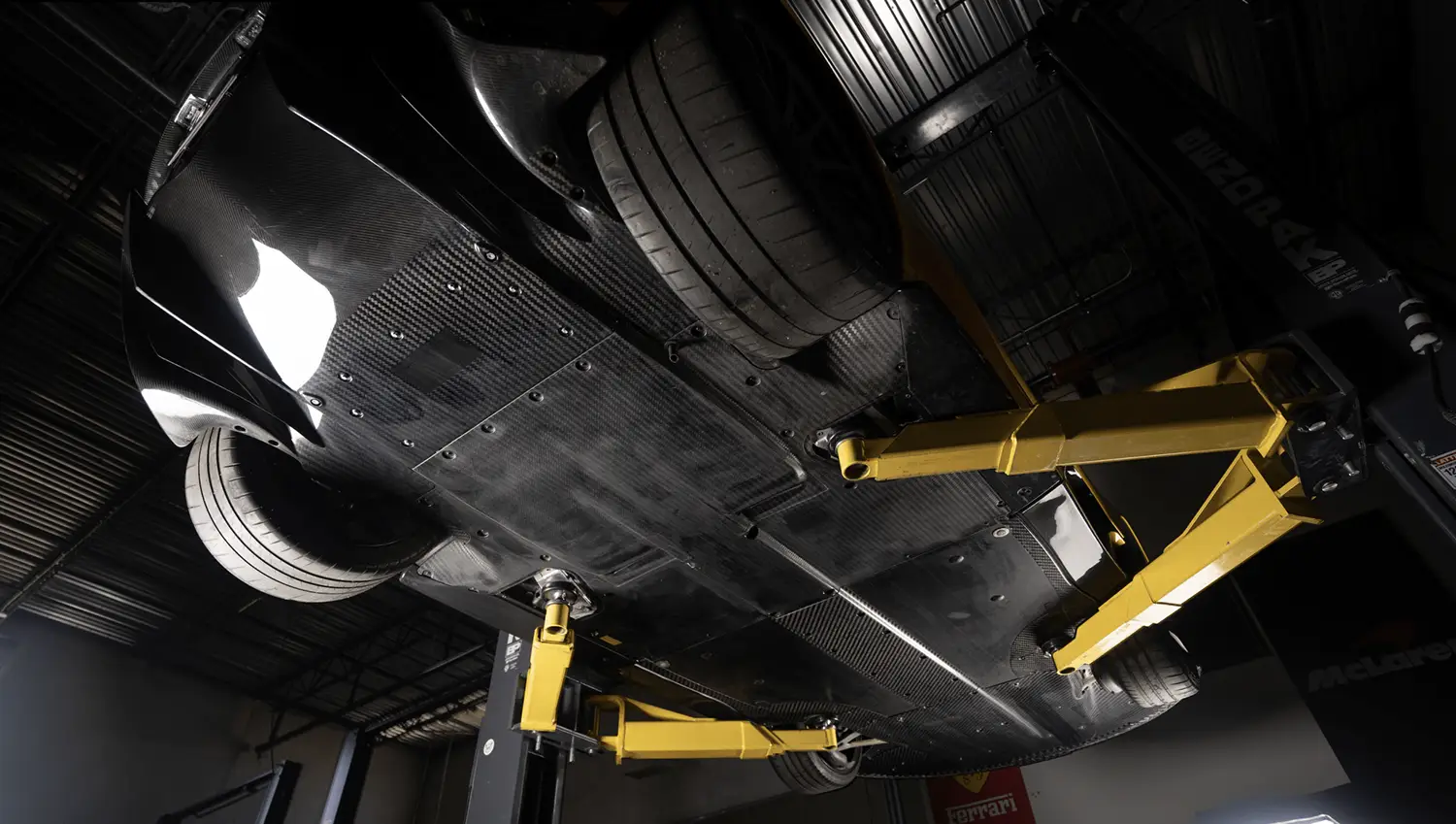
While originally finished in Amethyst Black exposed carbon fiber for its Goodwood debut, this example was later refinished in striking Volcano Yellow by the factory. The Frank Stephenson-designed bodywork remains a masterpiece of functional tech, featuring a roof-mounted air intake and an massive extendable rear wing. Black “VP4 Experimental Prototype” graphics on the quarter panels serve as a permanent nod to its developmental roots. The car sits on staggered 19-inch and 20-inch aluminum wheels and features LED lighting with European-market headlights. Exposed carbon fiber is artfully left visible on the hood, roof, and aero coves, highlighting the MonoCage monocoque platform that keeps the dry weight at approximately 3,075 lbs / 1,395 kg.

Carbon Racing Cockpit with Custom MSO Details
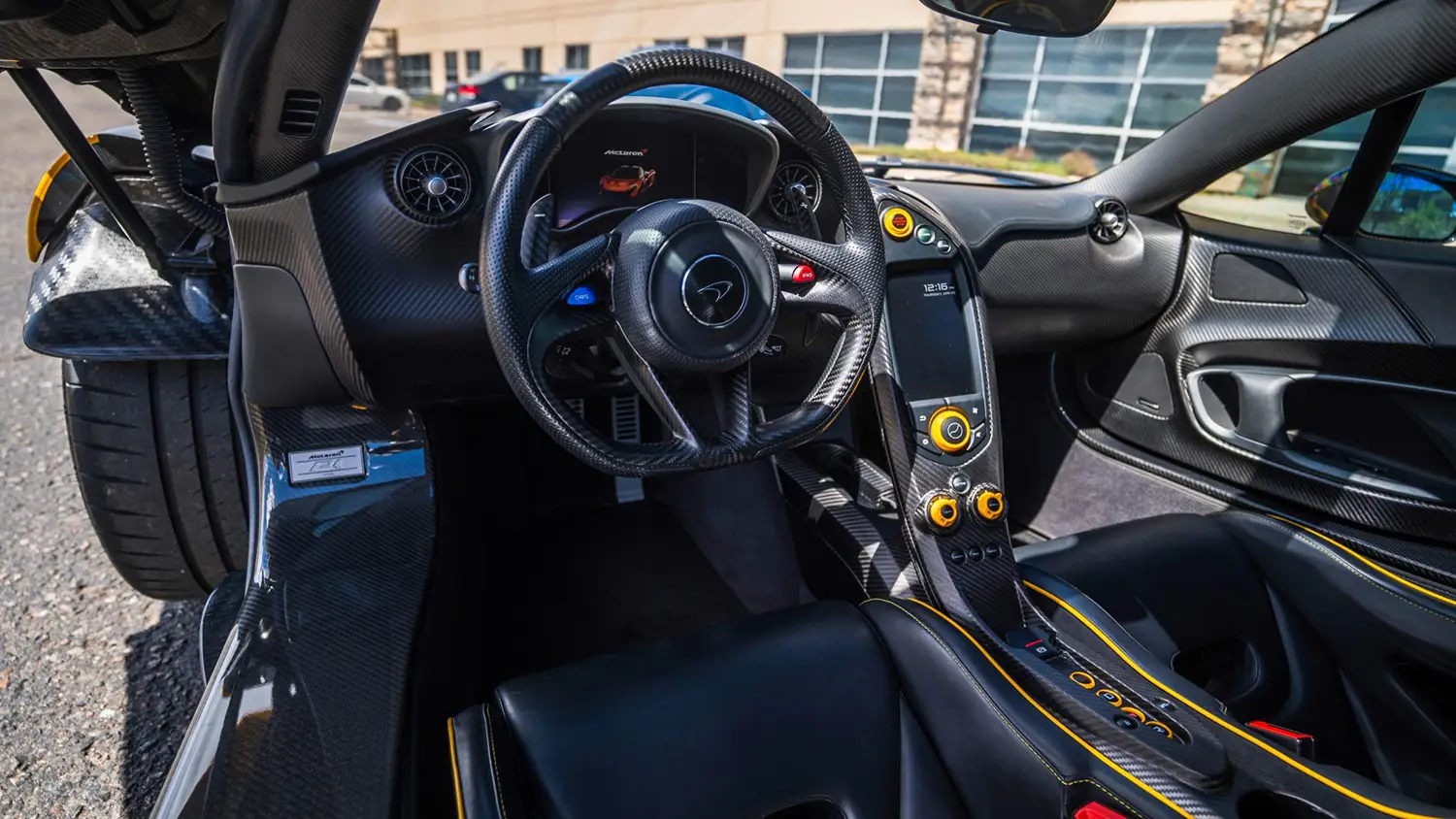
The interior is a focused environment centered around carbon-fiber racing seats upholstered in black leather with vibrant yellow piping and P1 seatback embroidery. Exposed carbon fiber dominates the cabin’s aesthetic, emphasizing McLaren’s commitment to lightweight engineering and structural rigidity. Despite its prototype status, the cockpit is equipped with modern amenities including dual-zone climate control, navigation, and a high-fidelity Meridian sound system. A leather-wrapped carbon-fiber steering wheel provides the driver with instant access to the Drag Reduction System (DRS) and Instant Power Assist (IPAS) buttons. A unique plaque on the driver’s door sill identifies this chassis specifically as VP04, marking it as a true one-of-a-kind specimen.
Hybrid Hypercar Mastery and IPAS Power Delivery
The heart of this 2013 McLaren P1 is a mid-mounted 3.8-liter twin-turbocharged V8 paired with a potent E-Motor for a combined output of 903 hp / 915 PS and 664 lb-ft / 900 Nm of torque. This power is managed by a seven-speed dual-clutch transmission that sends drive exclusively to the rear wheels via an open differential with Brake Steer functionality. The car features a 4.7-kWh lithium-ion battery pack, recently updated to a Gen 2 unit, which supports the electric motor’s instant torque delivery. In full flight, the P1 reaches an electrically limited top speed of 217 mph / 349 km/h, delivering a visceral sense of speed that redefined the performance benchmarks of its decade.
| Technical Specifications | |
|---|---|
| Engine | 3.8L Twin-Turbo V8 + Electric Motor |
| Transmission | 7-Speed Dual-Clutch |
| Horsepower / Torque | 903 hp / 915 PS and 664 lb-ft / 900 Nm |
| Curb Weight | 3,075 lbs / 1,395 kg (Dry Weight) |
| 0-60 mph (96 km/h) | Factory Benchmark |
| Top Speed | 217 mph / 349 km/h |
MSO Track Mode 2 and Akebono Braking Precision
Chassis VP04 is equipped with sophisticated stability and suspension systems, including variable ride height and spring rates that adapt to the driver’s selected modes. A standout feature is the MSO Track Mode 2, which allows the drivetrain to enter its most aggressive track setting without lowering the car to its street-illegal ride height. Stopping power is provided by body-color Akebono-McLaren calipers clamping down on massive carbon-ceramic rotors. The electro-hydraulic rack-and-pinion steering ensures that the driver receives unfiltered feedback from the Pirelli P Zero tires. These electronic aids were perfected during the car’s development phase, ensuring that the P1 remains as composed on a mountain pass as it is on a circuit.

Investment Potential of a Documented Development Asset
While only 375 production units were ever built, the validation prototypes like VP04 occupy an even more exclusive tier of the collector market. The unique selling point of this 2013 McLaren P1 is its dual identity as a high-performance vehicle and a documented historical artifact. Compared to production rivals like the Ferrari LaFerrari or Porsche 918 Spyder, the McLaren’s prototype history and F1 driver association offer a compelling narrative for serious investors. As the market increasingly values provenance and “first of” status, a development car that participated in the Goodwood Hill Climb represents a blue-chip asset. Its 8,000-mile odometer reading suggests a car that has been maintained and enjoyed without being over-driven.

Factory Overhaul Integrity and Gen 2 Battery Security
Purchasing a prototype often comes with concerns regarding long-term support, but chassis VP04 was treated to a comprehensive factory overhaul before its initial private delivery. This included the Volcano Yellow repaint and a full mechanical inspection to ensure it met production-level standards for reliability. The recent inclusion of a Gen 2 battery pack addresses one of the primary maintenance considerations for the P1 platform, offering the next steward peace of mind. Accompanied by a clean Carfax report and service history, this car is ready for its next chapter. For the enthusiast seeking the most raw and historically significant version of the McLaren P1, this validation prototype is an unmatched opportunity.
Disclaimer: Content on this site is for informational and entertainment purposes only. Details, analyses, and opinions reflect current trends and personal views, not professional or financial advice. Always verify information with official sources before making any decisions.
Source: bringatrailer.com