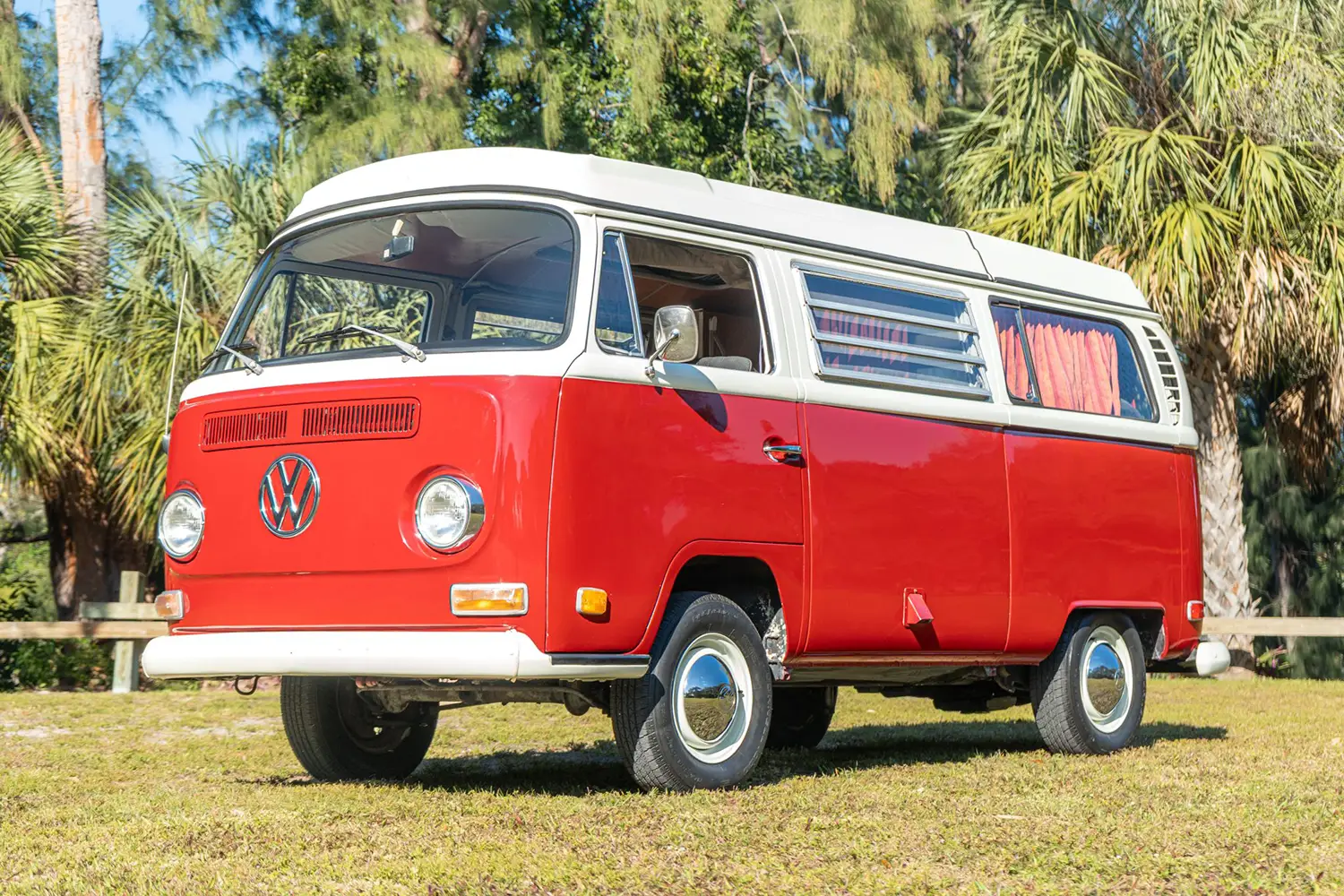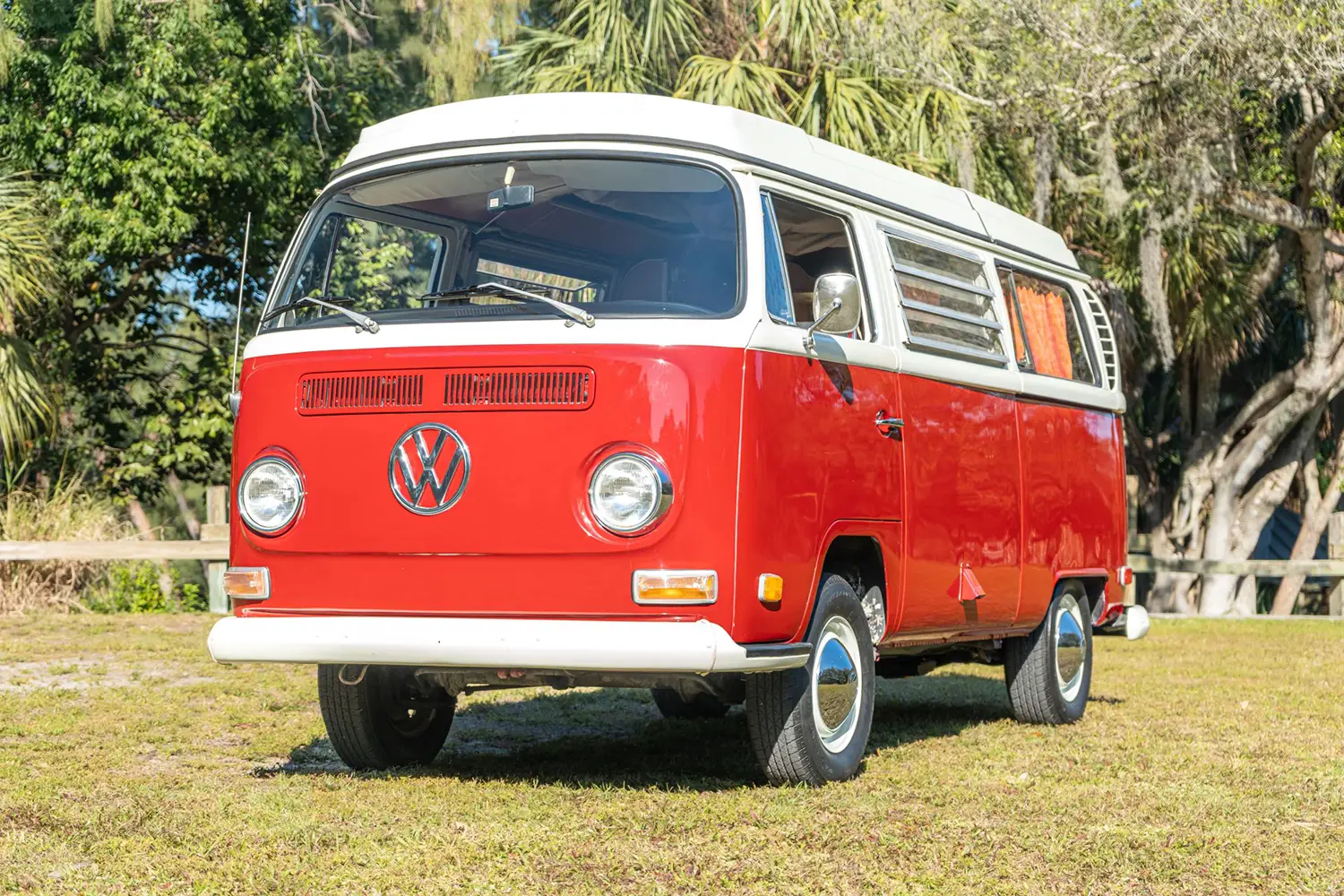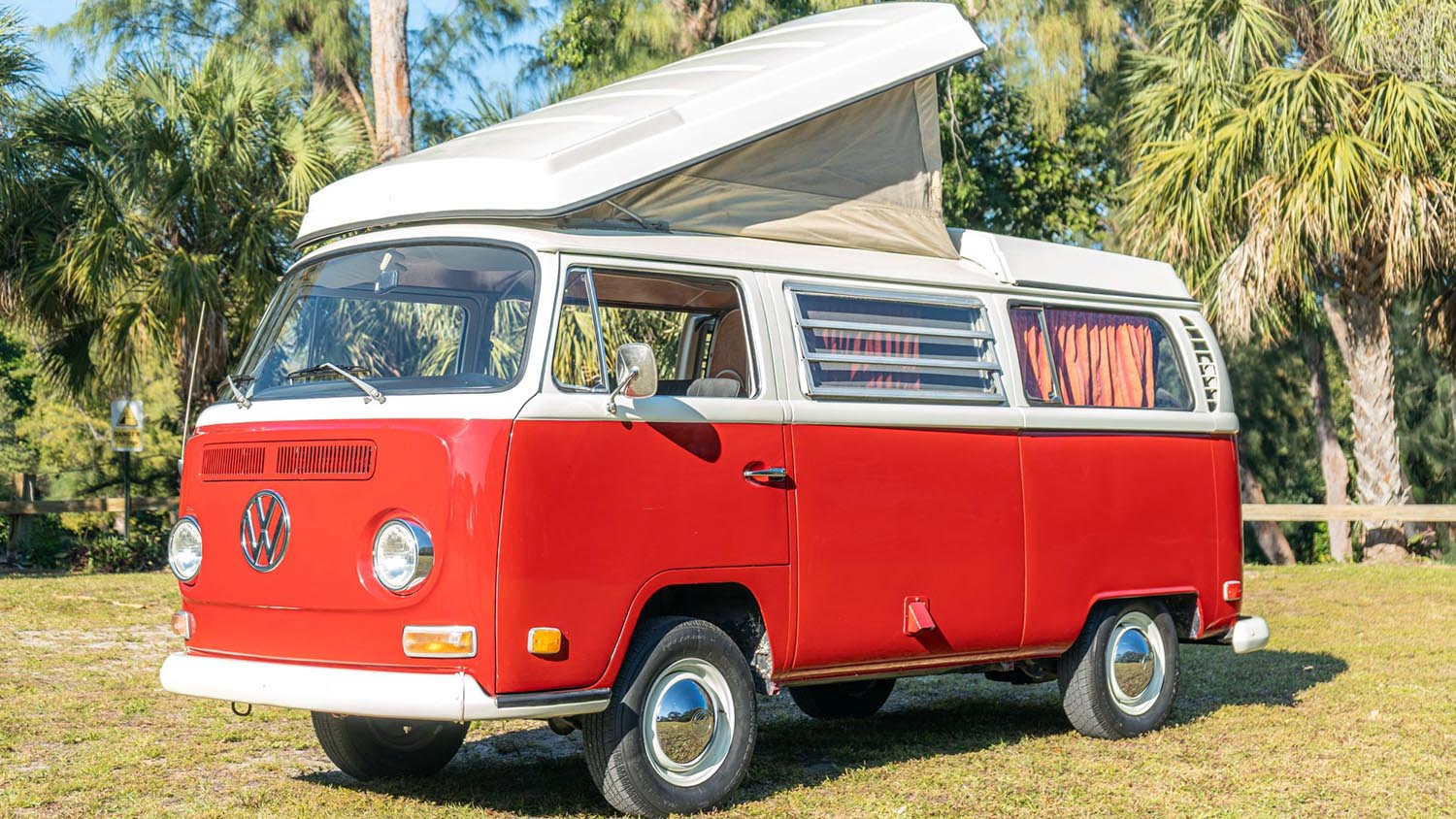
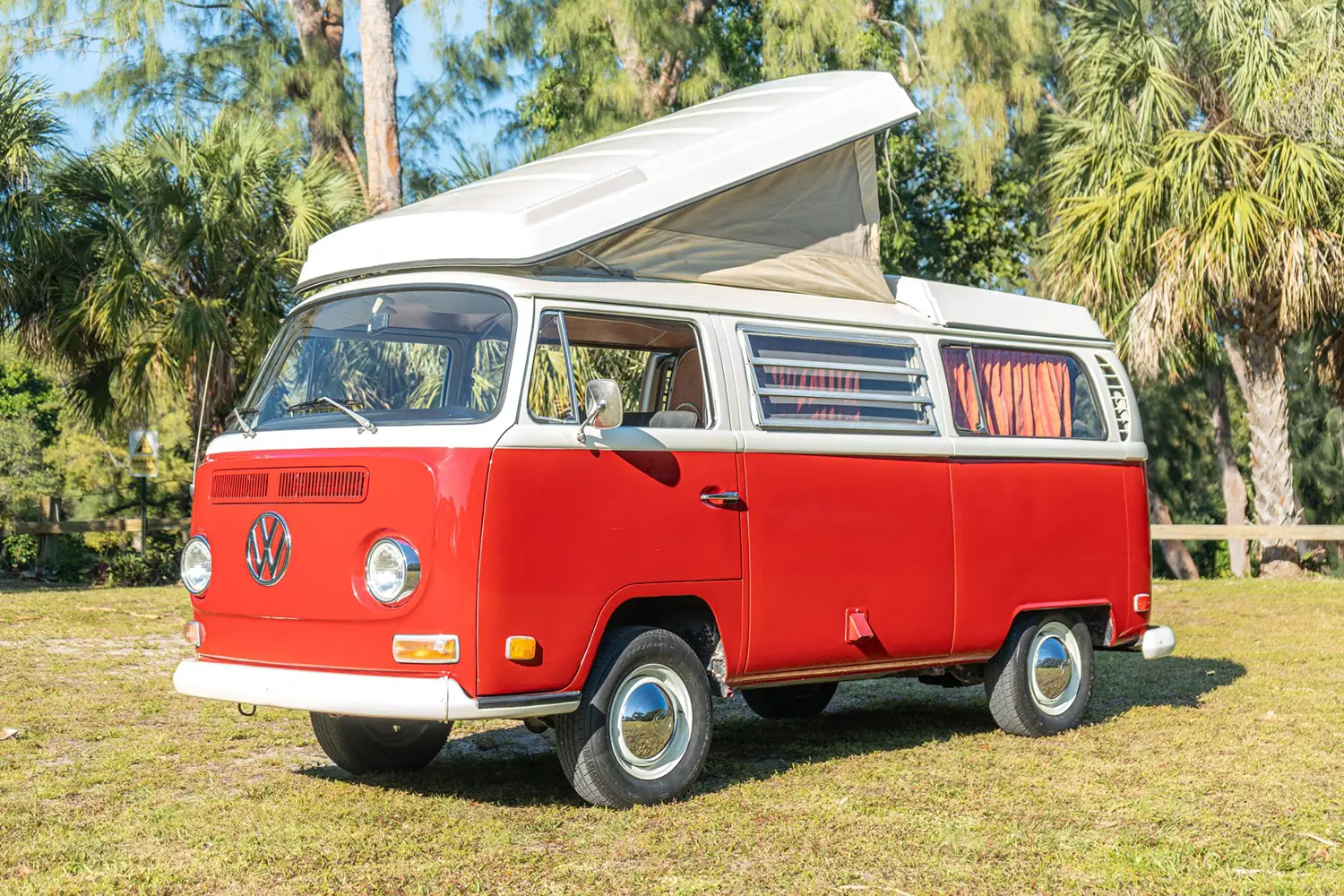
The 1970 Volkswagen Type 2 Westfalia remains the quintessential symbol of the nomadic lifestyle and the golden era of camping. This specific Montana Red and white example has been thoughtfully updated to provide a more capable driving experience while retaining its vintage charm. Under the rear hatch lies a replacement air-cooled 1,641cc flat-four, offering a welcome boost in displacement over the factory original. Because it was acquired by the selling dealer in early 2026, it arrives with freshly synchronized carburetors and adjusted valves. It represents a functional piece of history that is just as comfortable at a modern campsite as it is at a classic car show. For those seeking a blend of mechanical simplicity and retro utility, this Westy stands as a premier candidate.
Montana Red Aesthetics and Camper Essentials
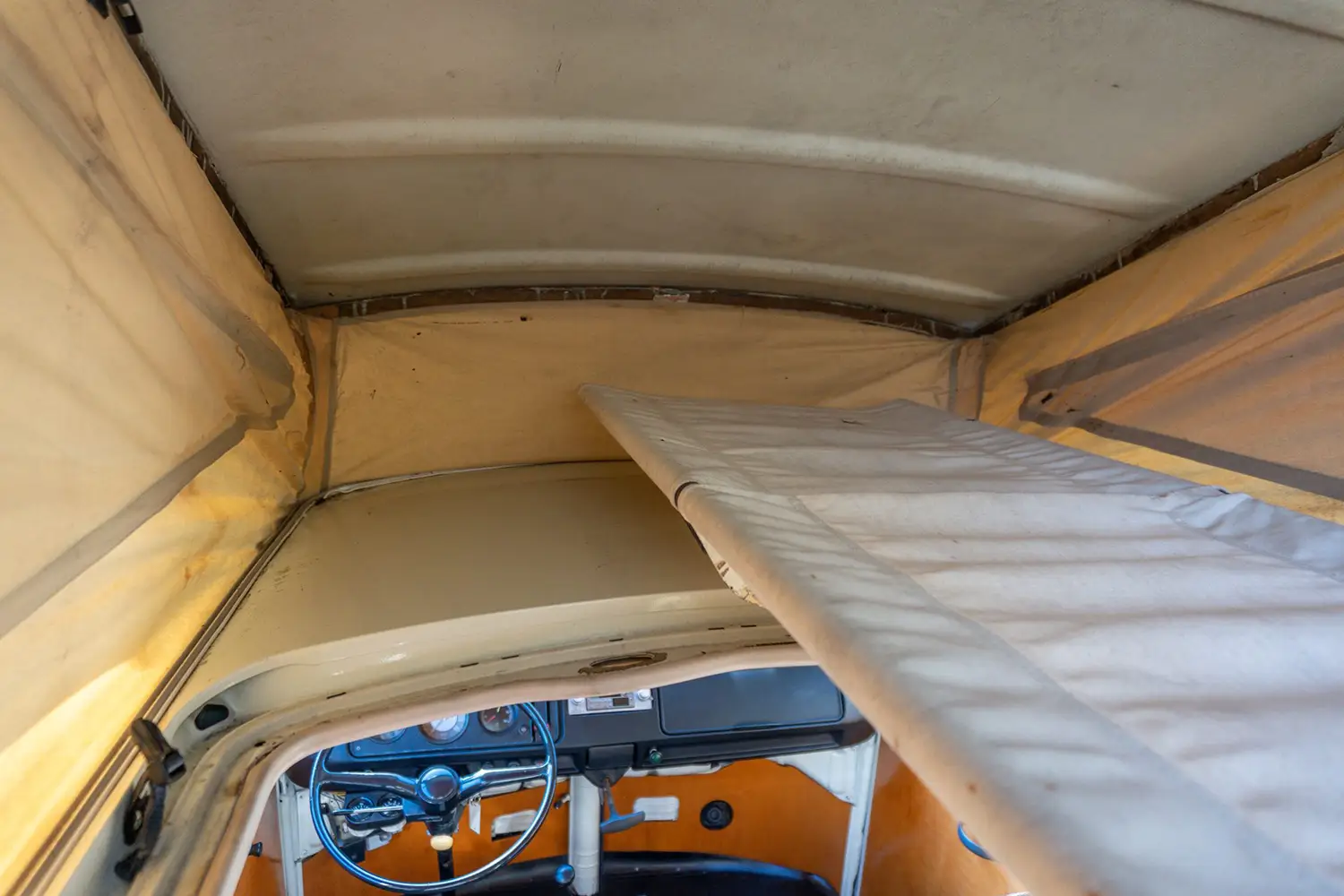
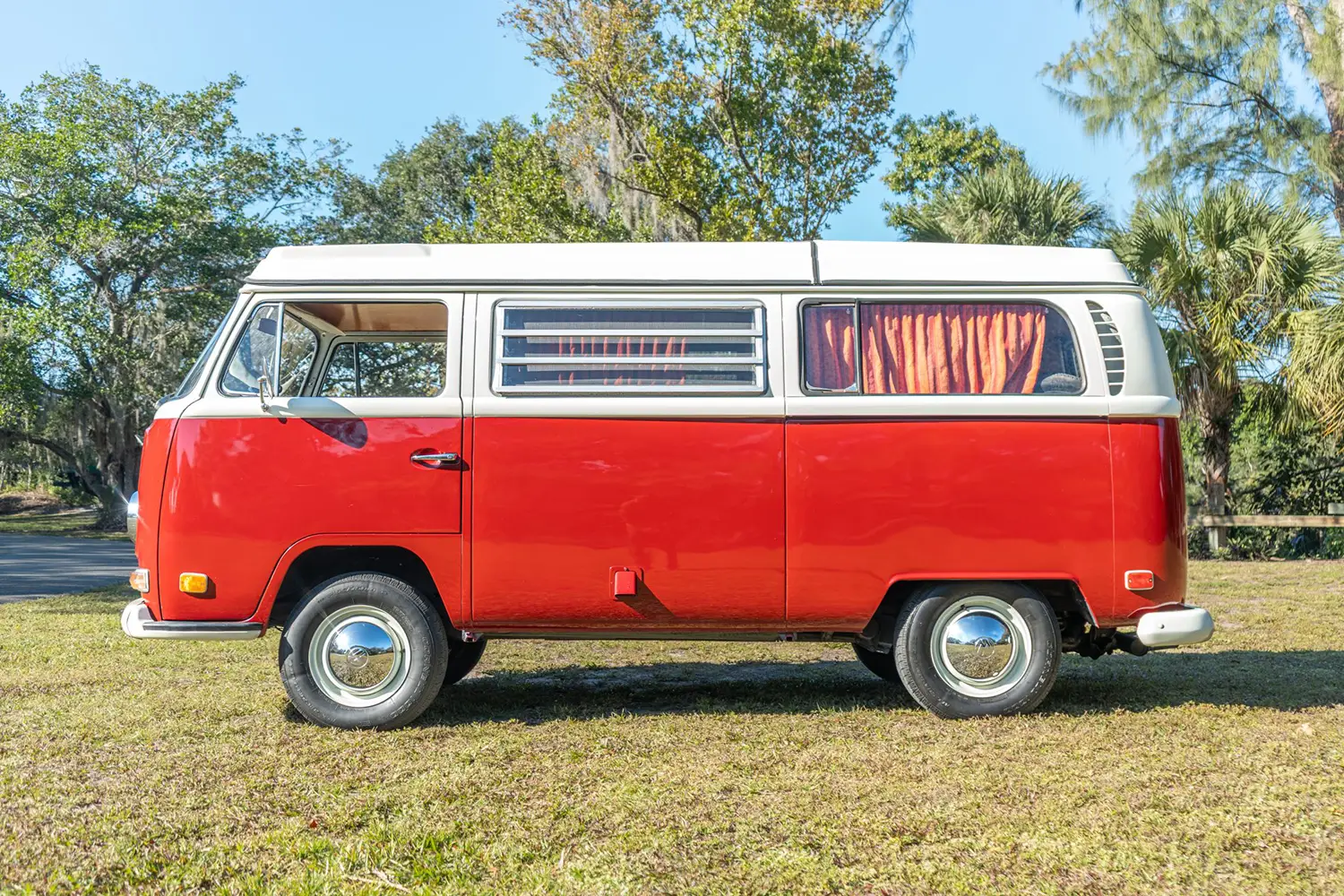
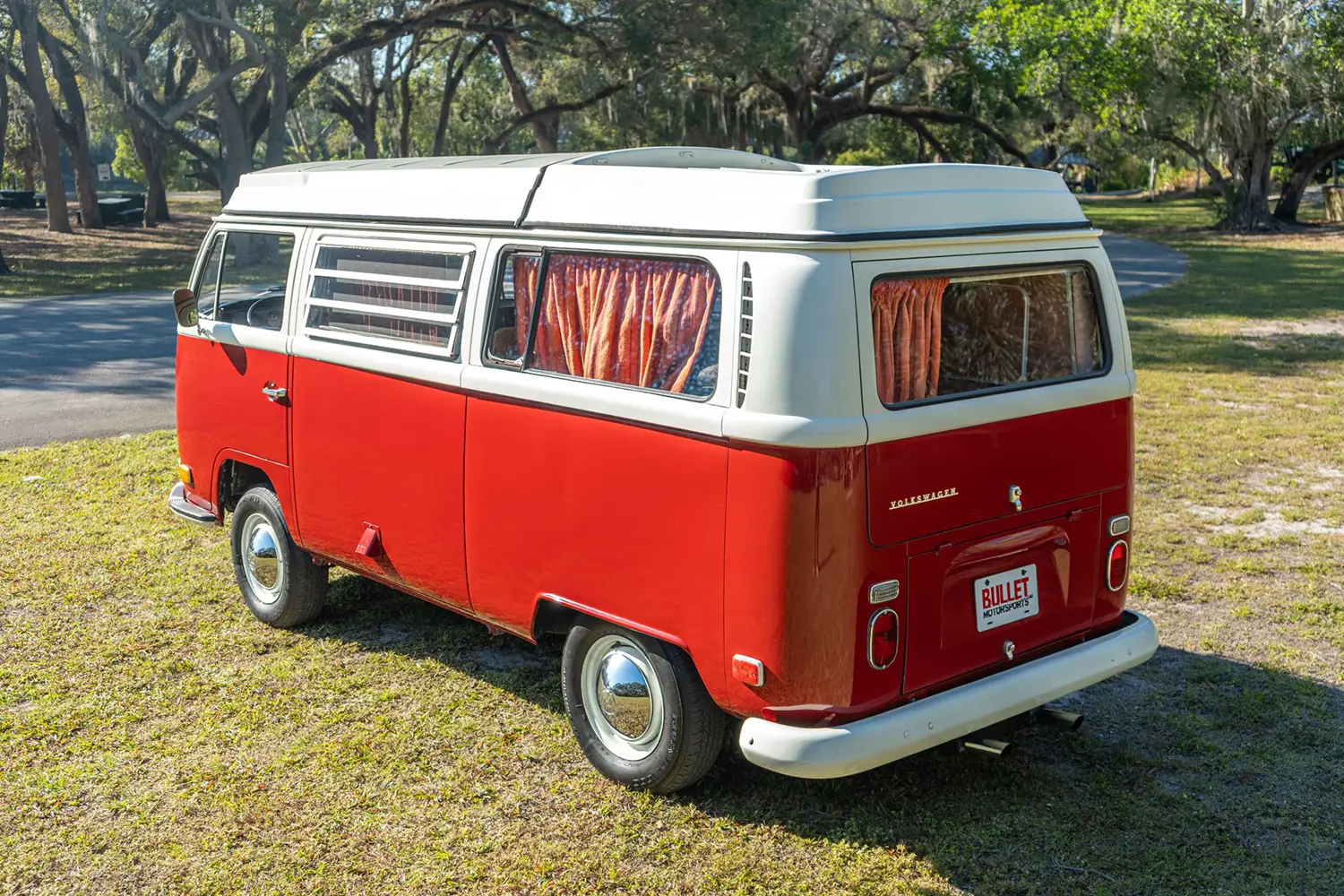
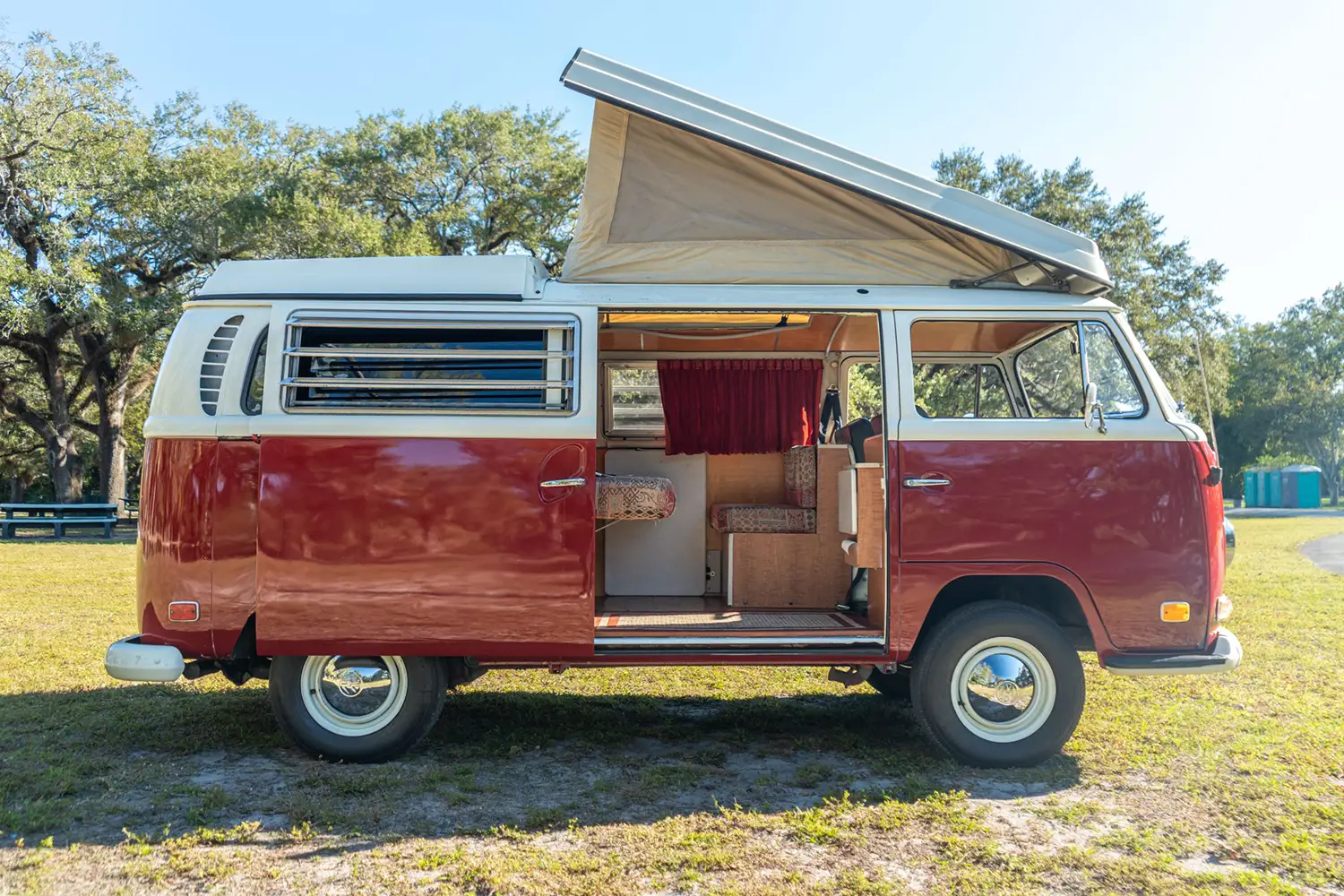
The exterior of this bus was refinished in Montana Red with a contrasting white upper section and matching white bumpers. Practicality is a priority here, with jalousie side windows and a left-rear vent window ensuring excellent airflow during overnight stays. A shore-power connection port allows for modern electrical convenience when parked at established campsites. The iconic pop-up roof tent is in place, significantly expanding the vertical living space inside the cabin. Chrome VW-stamped hubcaps on white 14-inch steel wheels provide a clean, factory-correct look that complements the bold paint. Every detail, from the dual side mirrors to the front quarter vent windows, highlights the functional design of the late sixties. It is a visual package that evokes immediate nostalgia for the open road.
Functional Living Space and Interior Layout
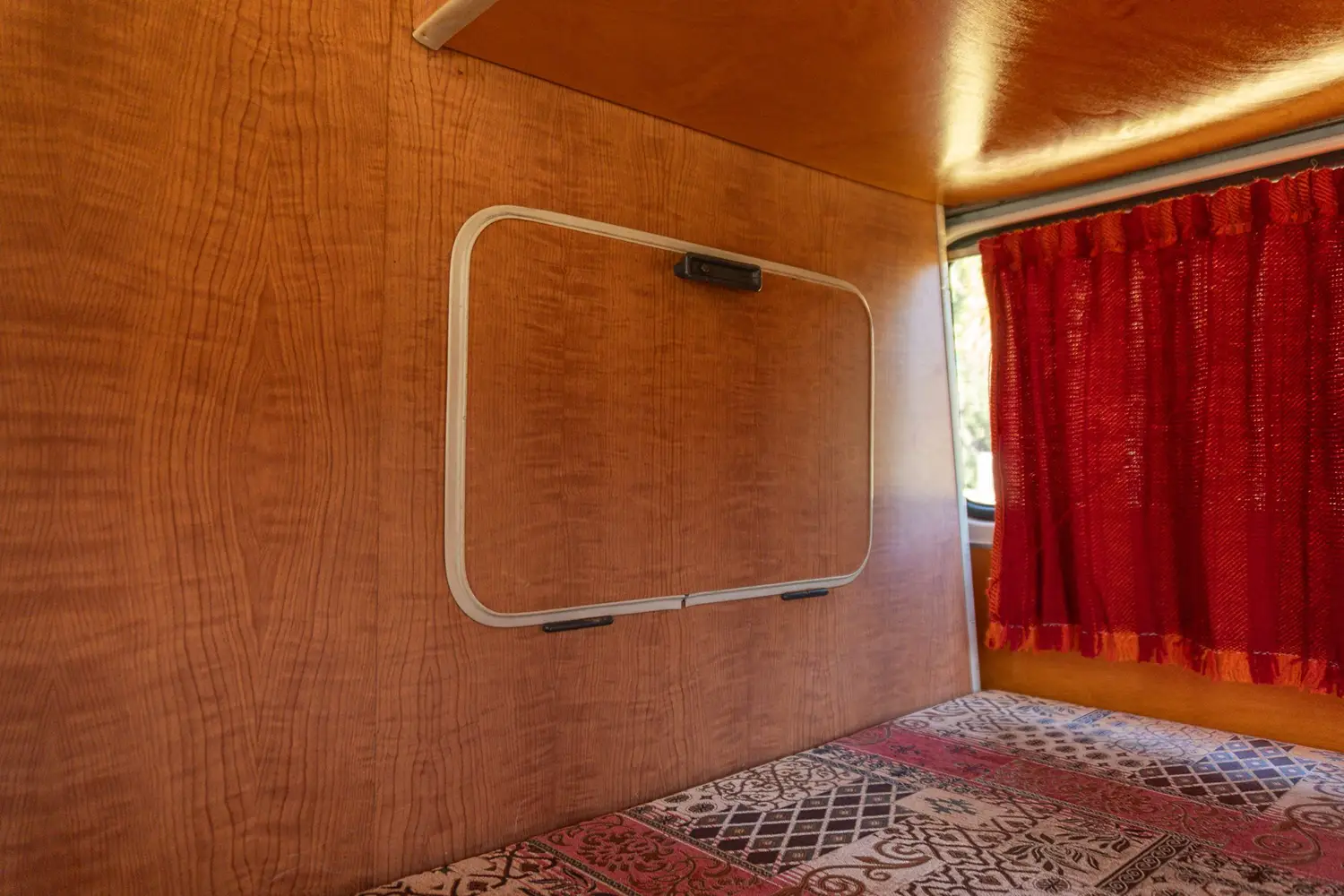
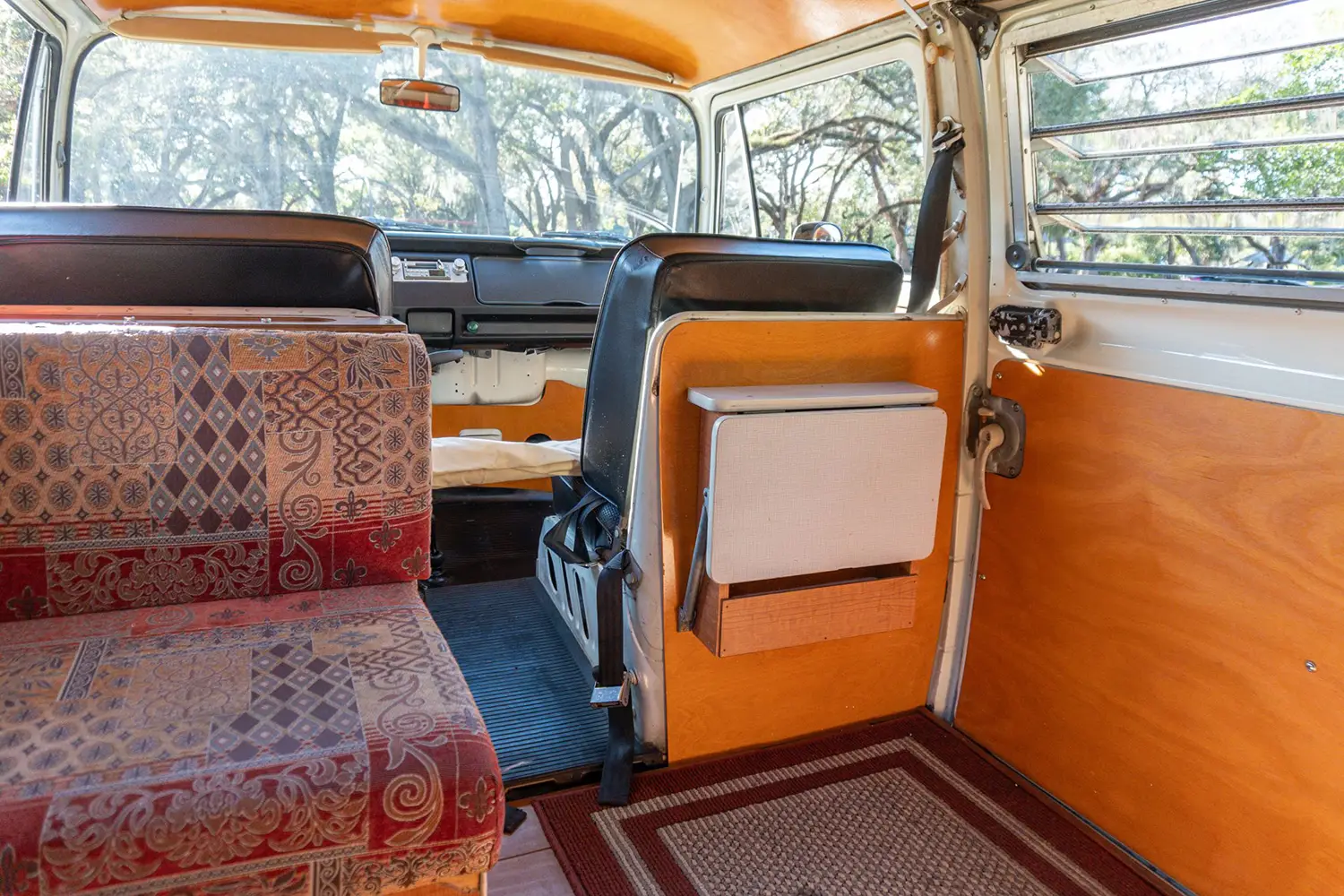
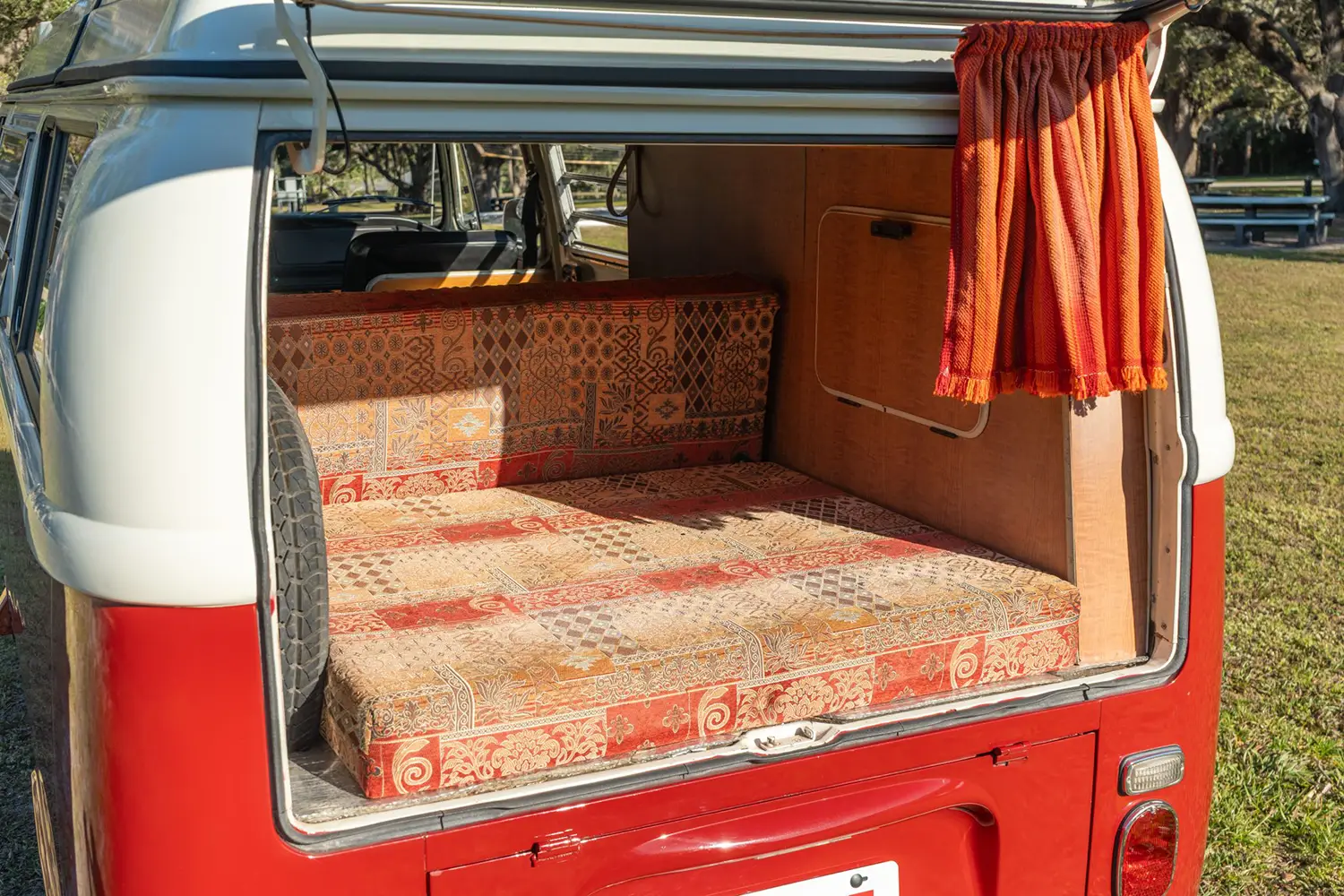
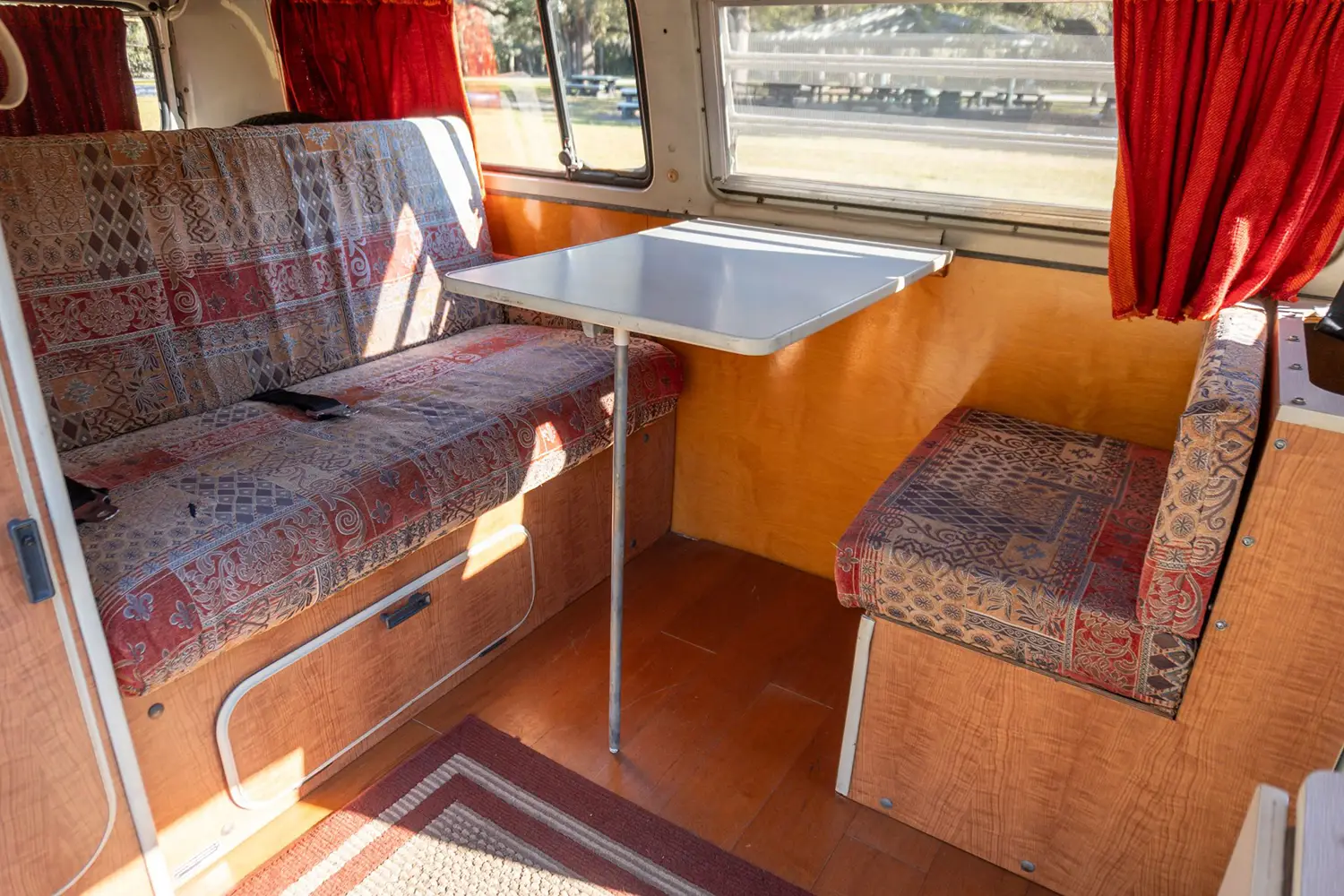
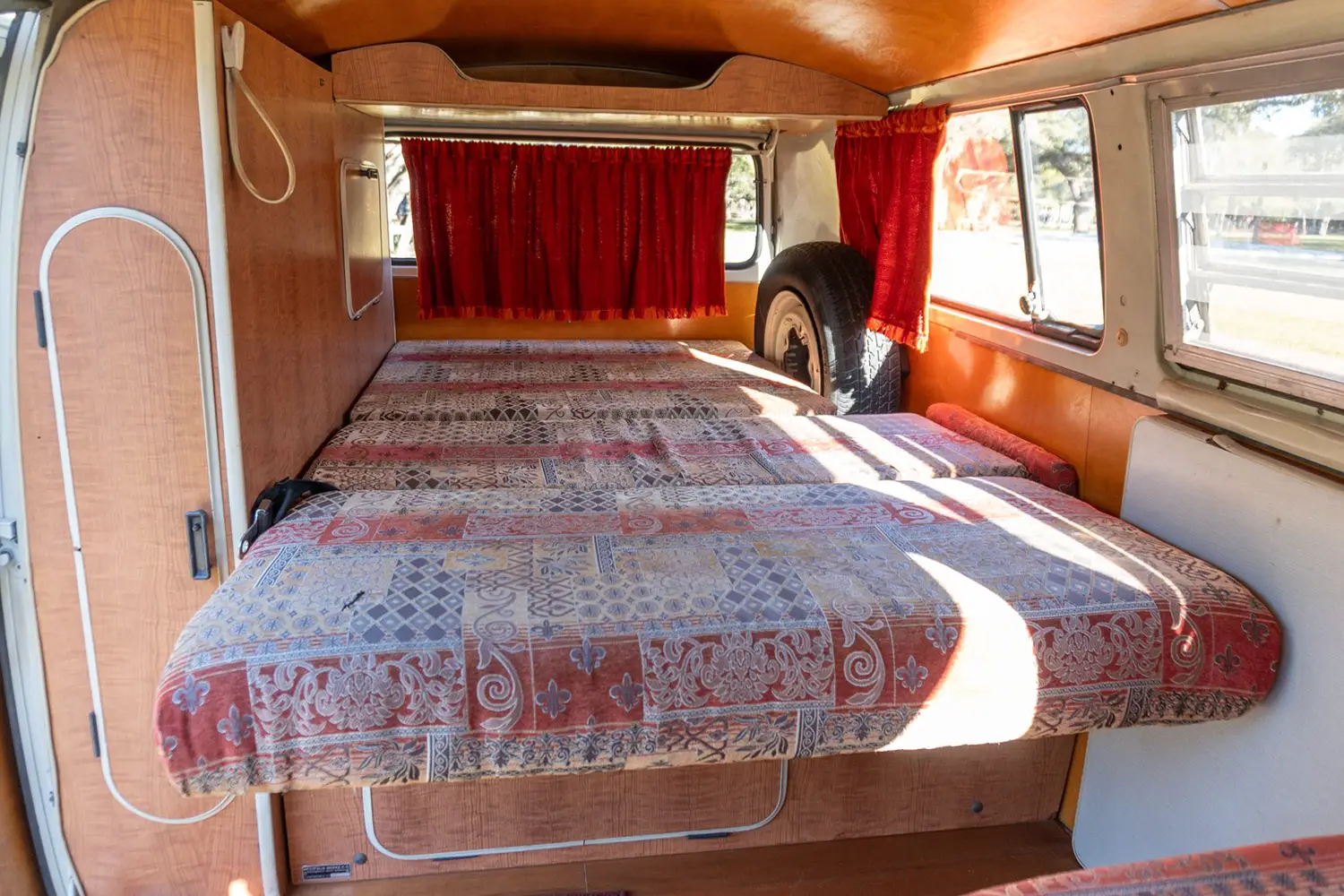
Inside the sliding side door, the 1970 Volkswagen Type 2 Westfalia reveals a highly efficient and cozy living environment. The rear bench seat folds flat into a comfortable bed, while an additional fold-out sleeping cot is available in the pop-up section. Storage cabinets and fold-out tables provide the necessary infrastructure for meal preparation and gear organization. For cooler nights, a cabin heater and a set of privacy curtains ensure the interior remains a comfortable sanctuary. A household outlet is powered by a dual-battery electrical system, allowing for the use of small electronics away from the grid. The upholstery features a mix of black vinyl and patterned cloth that feels durable and period-appropriate. It is a masterclass in maximizing limited square footage for long-distance travel.
Mechanical Upgrades and Driving Dynamics
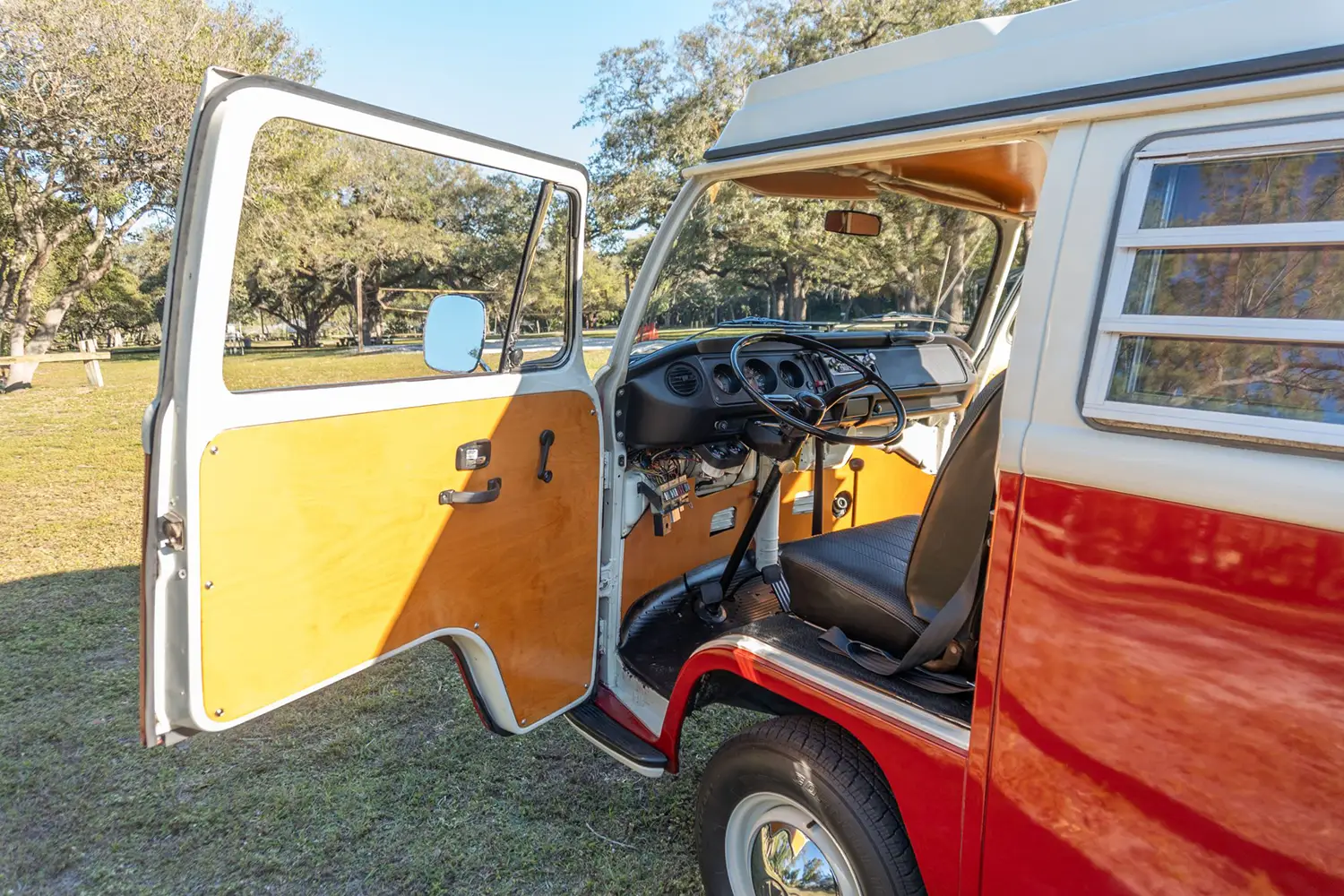
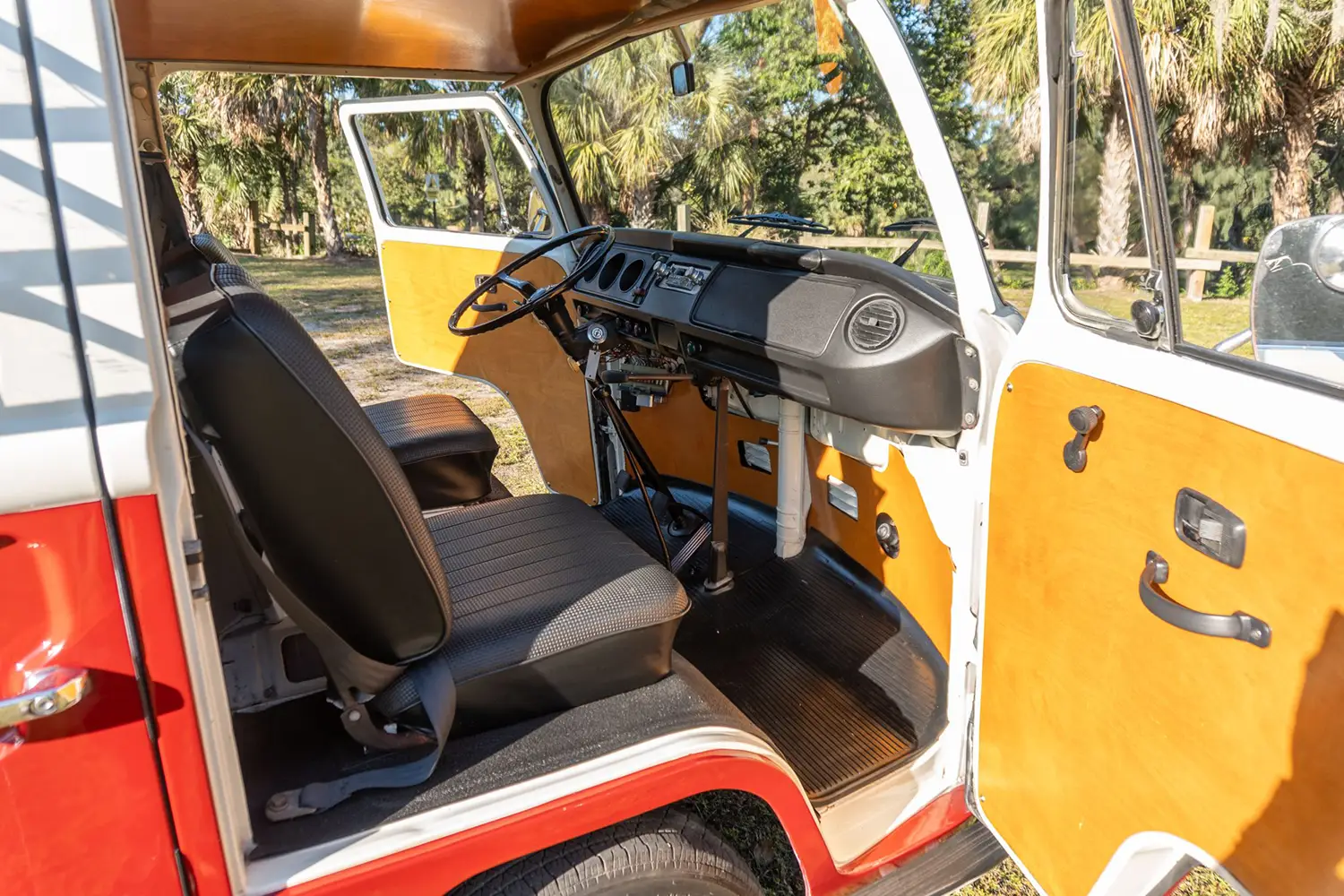
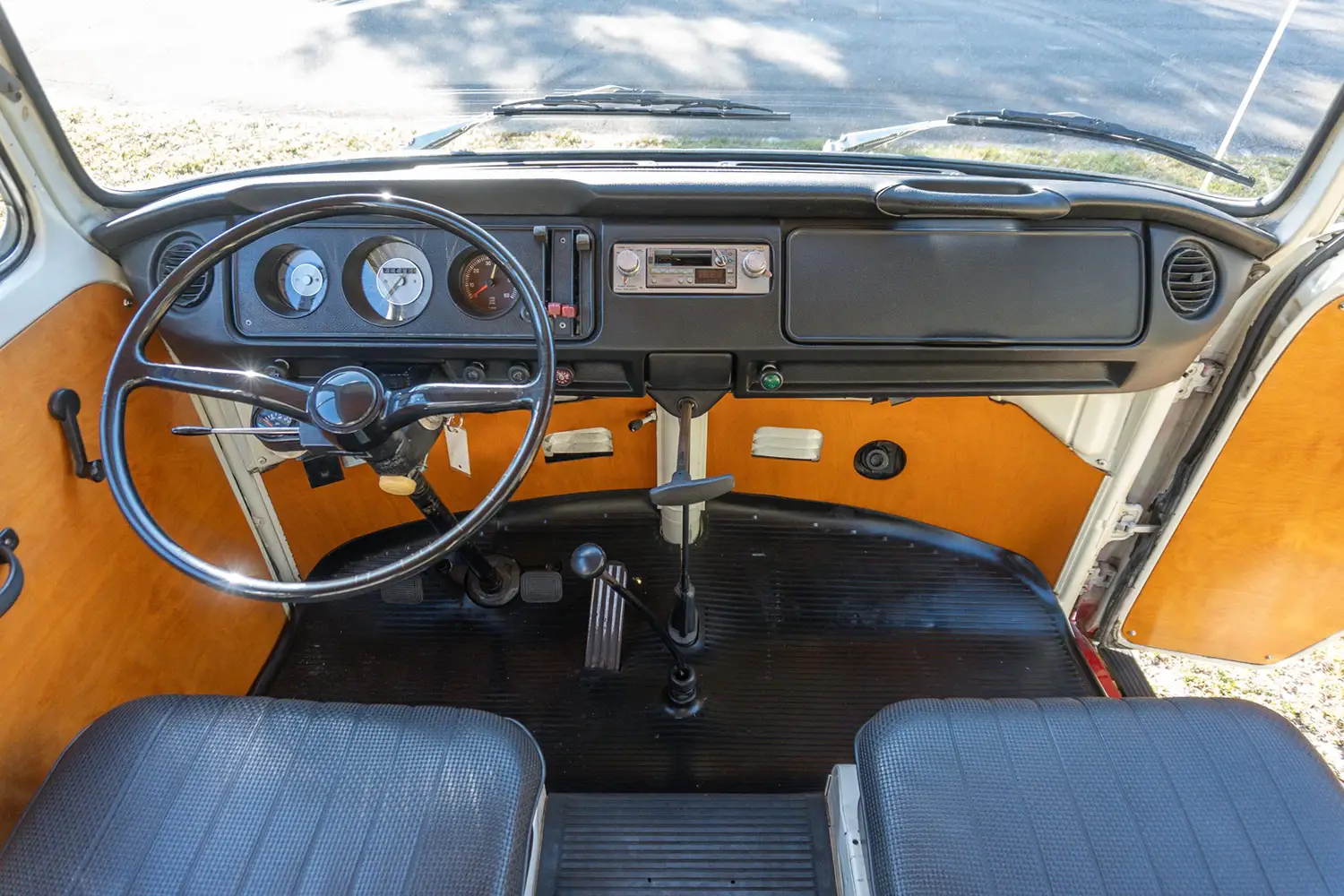
The forward cabin houses bucket seats trimmed in black leatherette, offering a commanding view through the massive wraparound windshield. A two-spoke steering wheel frames a 90-mph VDO speedometer, which is supplemented by auxiliary gauges for oil pressure and temperature. These additions are vital for monitoring the health of an air-cooled engine during long summer climbs. While the aftermarket cassette head unit is currently non-functional, the mechanical sounds of the flat-four provide their own rhythmic soundtrack. Floor-mounted shifters for the four-speed manual transaxle require an engaged and deliberate driving style. The simple dashboard layout keeps distractions to a minimum, allowing the driver to focus on the mechanical feedback of the bus. It offers a tactile connection to the road that modern vans have entirely lost.
Chassis Integrity and Braking Performance
Maintaining an air-cooled Volkswagen requires attention to the chassis, and this Type 2 sits on a sturdy foundation. Stopping power is provided by four-wheel drum brakes, which have been maintained to ensure consistent performance for a vehicle of this weight. The Cornell 1000 tires mounted on the 14-inch steel wheels offer a comfortable ride quality across various road surfaces. Hex-bar throttle linkage and an Engle 110 camshaft improve the engine’s responsiveness, making it more capable in modern traffic. A dual-battery system ensures that the camper’s interior lights and outlets do not drain the primary starting battery. This level of mechanical preparedness makes the bus a reliable choice for the aspiring vintage traveler. It is a robust machine that rewards regular use and straightforward maintenance.
Engine Performance and Technical Specifications
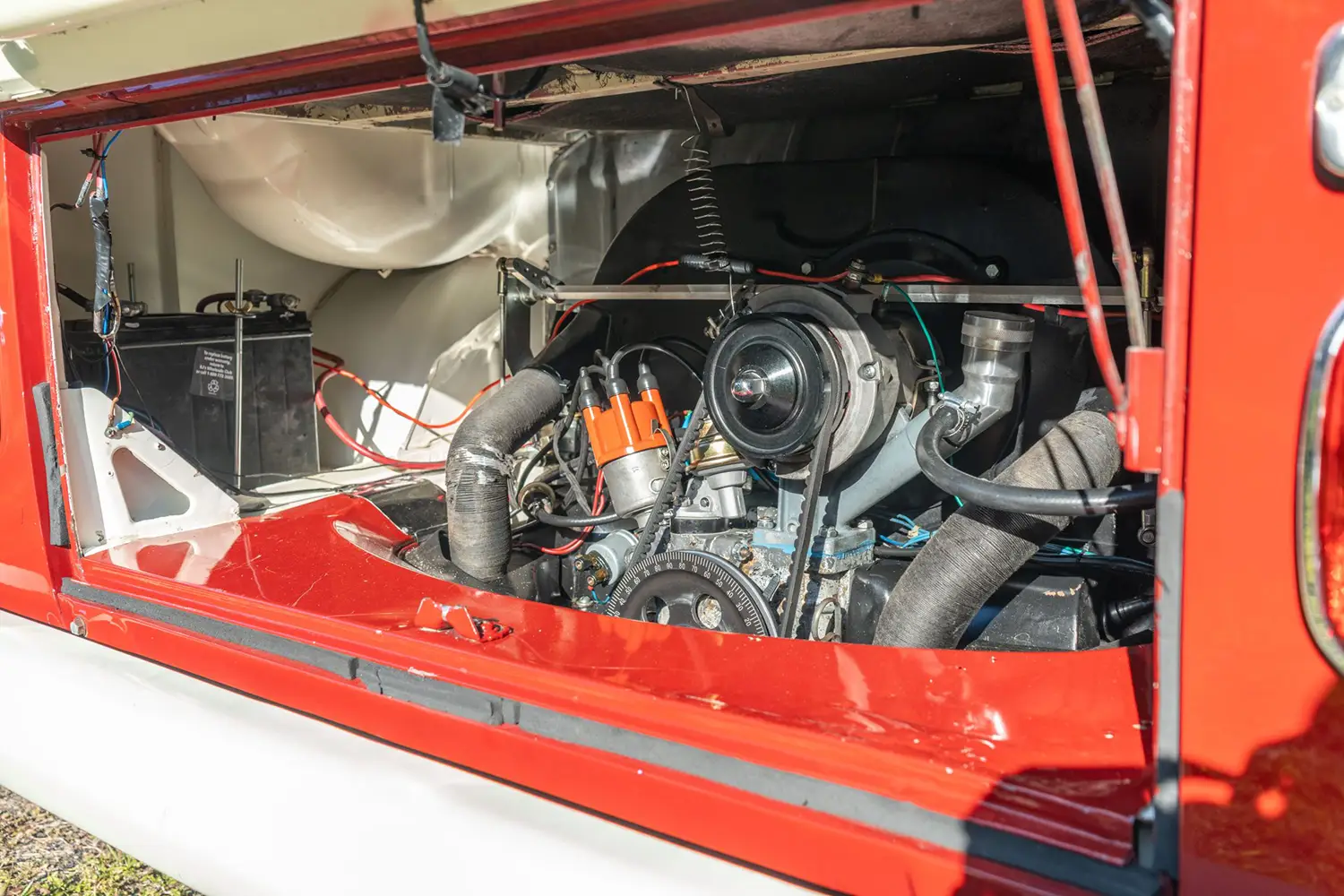
The 1970 Volkswagen Type 2 Westfalia is powered by a replacement 1,641cc air-cooled flat-four engine featuring an Engle 110 camshaft. It utilizes dual carburetors with a hex-bar throttle linkage for improved fuel delivery and increased power output over the stock configuration. Power is sent to the rear wheels via a four-speed manual transaxle that remains legendary for its simplicity and durability. The electrical system has been upgraded to a dual-battery setup to support the camper’s household outlet and interior lighting. Braking is managed by a traditional four-wheel drum system that is period-correct for the 1970 model year. These specifications define a camper that has been optimized for better hill-climbing ability and overall reliability. It is a mechanically sound platform ready for its next journey.
The 1,641cc engine provides a noticeable increase in torque, which is essential when the bus is fully loaded with camping gear. Because the carburetors were recently synchronized, the engine idles smoothly and responds crisply to throttle inputs. The Engle 110 camshaft is a popular choice among enthusiasts for providing a broader power band without sacrificing low-end drivability. Drivers will appreciate the added peace of mind provided by the oil temperature and pressure gauges during long-distance hauls. The four-speed manual transaxle shifts with the classic, positive feel that defines the vintage Volkswagen experience. This technical package ensures the Westfalia can keep up with the flow of traffic while maintaining its air-cooled soul. It is a well-balanced drivetrain for a vehicle designed for the slow lane.
Summary of the Westfalia Adventure
This 1970 Volkswagen Type 2 Westfalia is an honest and well-sorted example of the world’s most famous camper. The Montana Red refinish and white accents create a striking presence that captures the spirit of the seventies perfectly. With its upgraded 1,641cc engine and dual-carburetor setup, it offers better performance than a completely stock survivor. The inclusion of the pop-up tent and full camper interior means it is ready for immediate use on the road. Having a clean Florida title and a recent mechanical service makes the transition to a new owner seamless. It remains an enduring icon that promises a lifetime of memories and a slower, more intentional way of traveling. This Westy is a true classic that is ready for the next campfire.
Disclaimer: Content on this site is for informational and entertainment purposes only. Details, analyses, and opinions reflect current trends and personal views, not professional or financial advice. Always verify information with official sources before making any decisions.
Source: bringatrailer.com