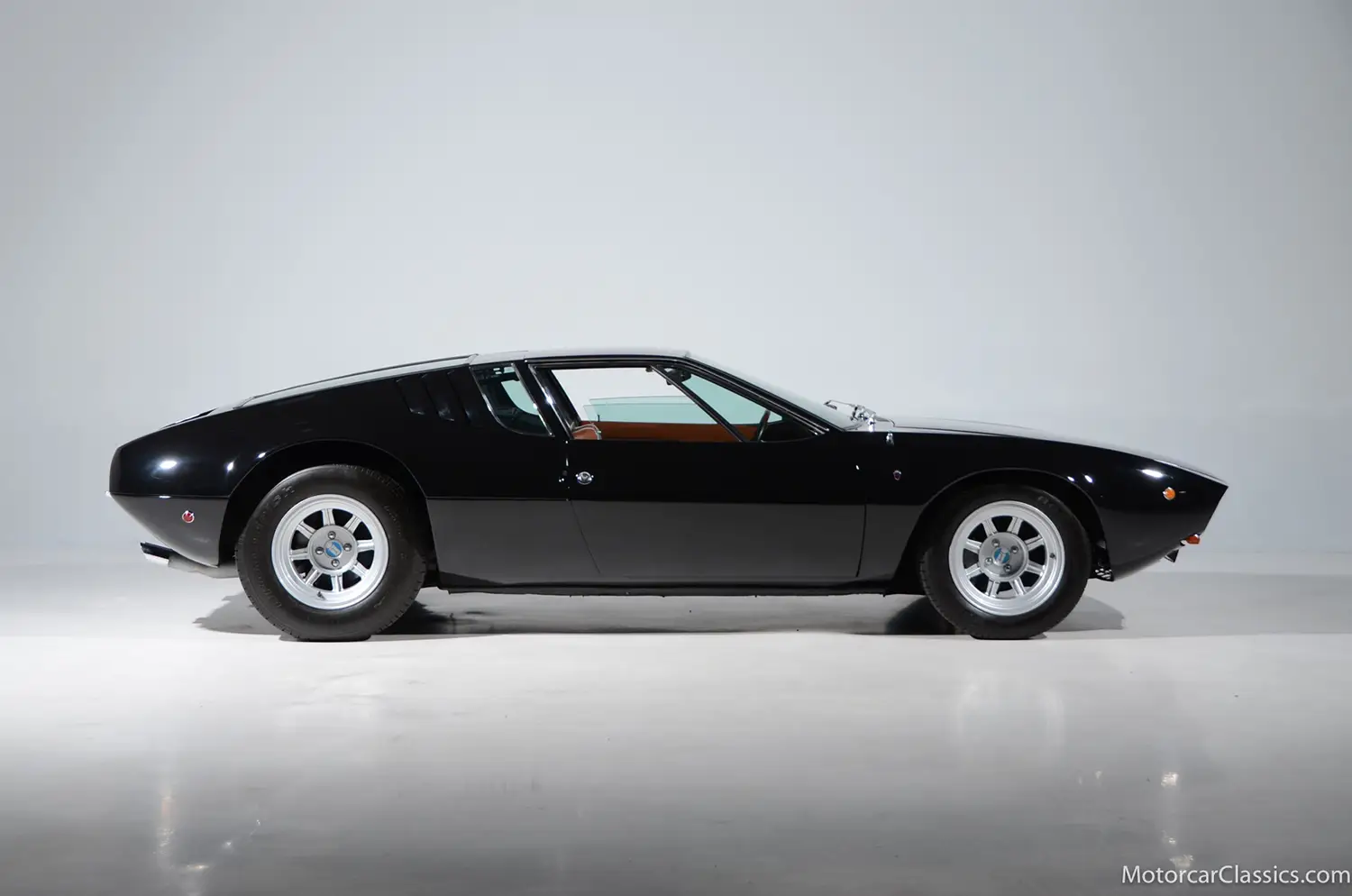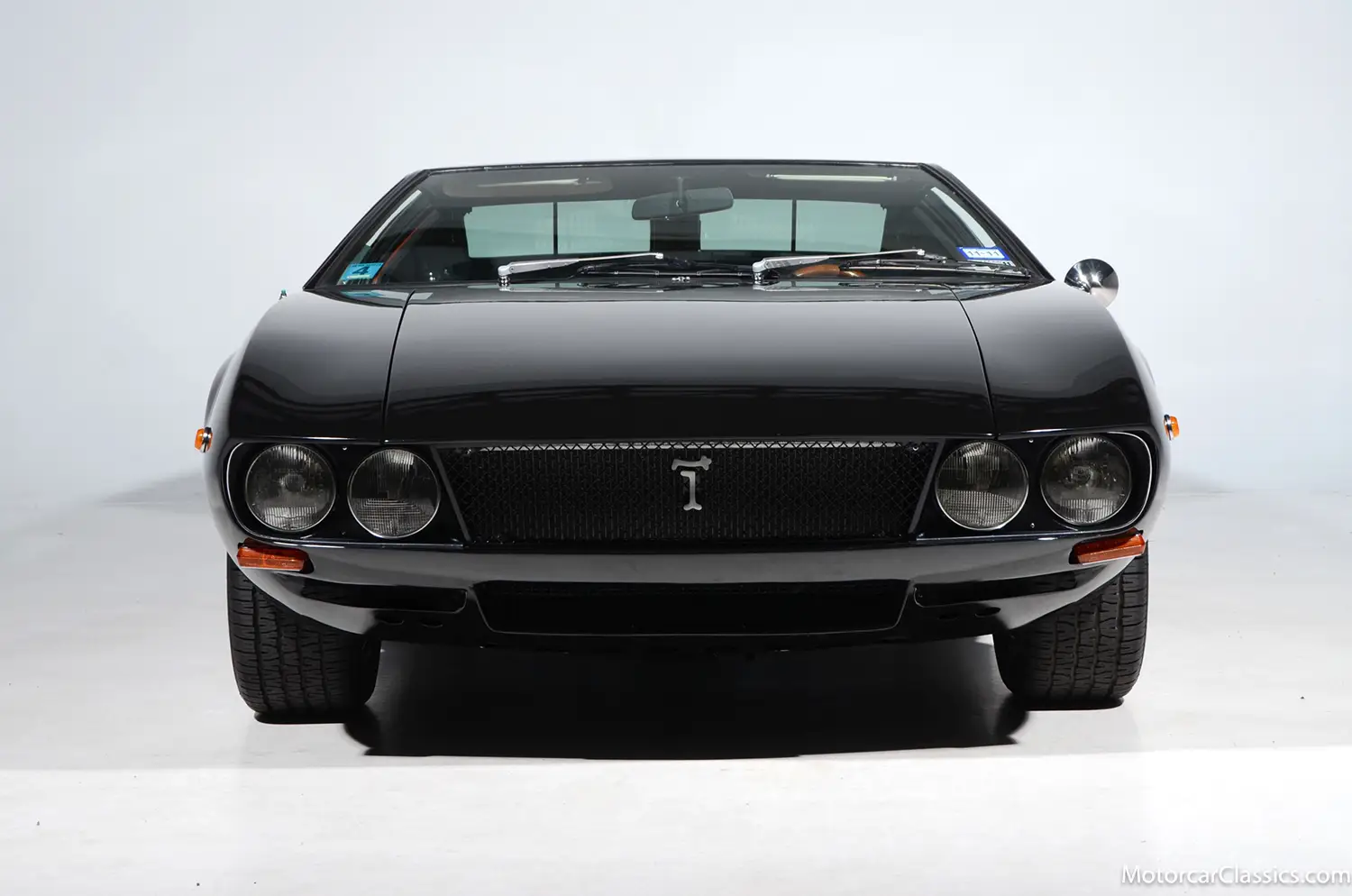
The 1970 De Tomaso Mangusta stands as a provocative mid-engine marvel, born from a period of intense rivalry and creative explosion in the automotive world. Named “Mangusta”, the Italian word for mongoose, as a direct jab at the Shelby Cobra, it was Alejandro de Tomaso’s mission to out-style and out-maneuver the competition. Combining the unapologetic reliability of American small-block power with the avant-garde coachwork of Carrozzeria Ghia, the Mangusta remains one of the most exotic and polarizing silhouettes of the 1960s and 70s.
The Geometry of the Silver-Age Supercar
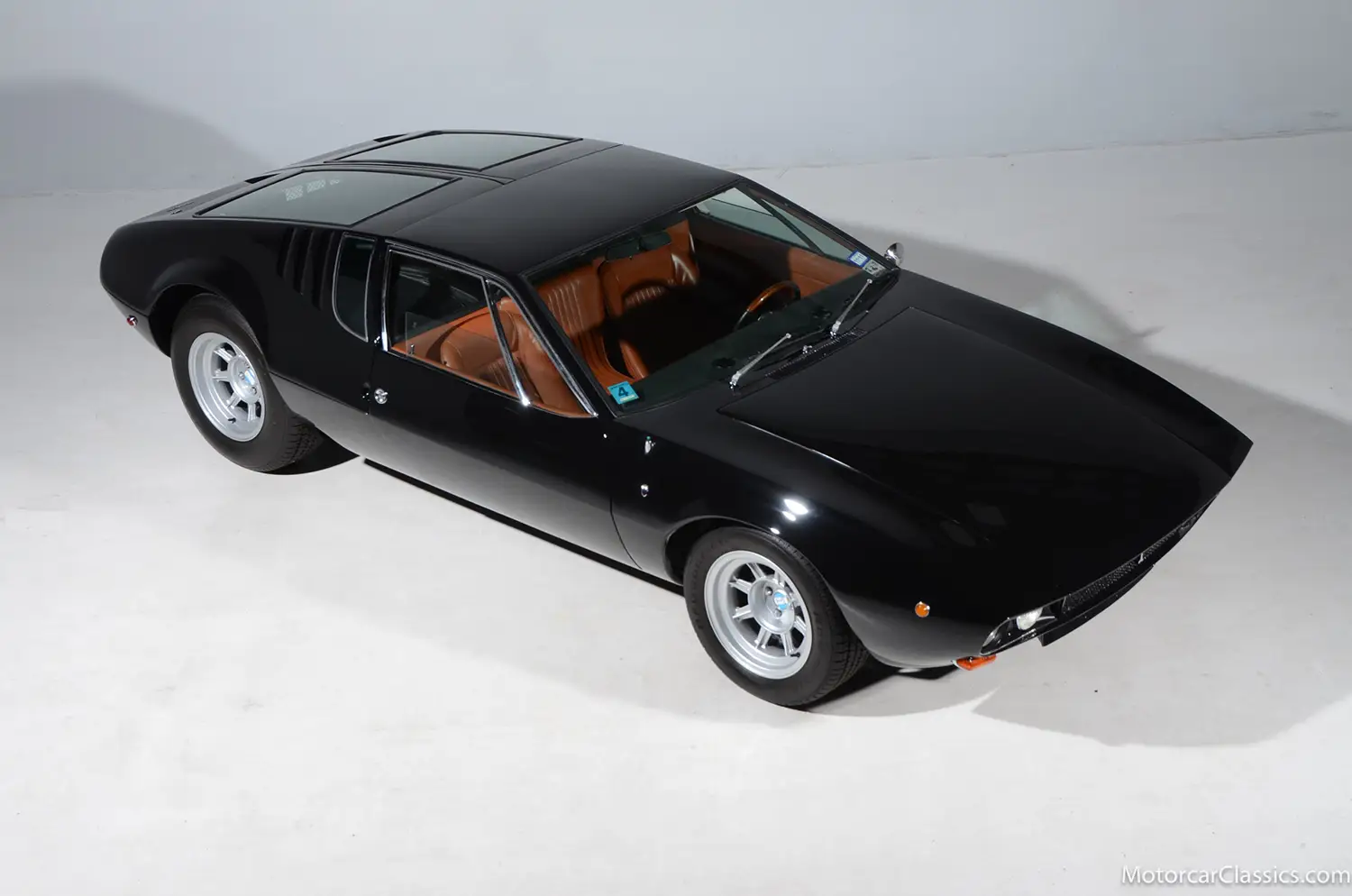
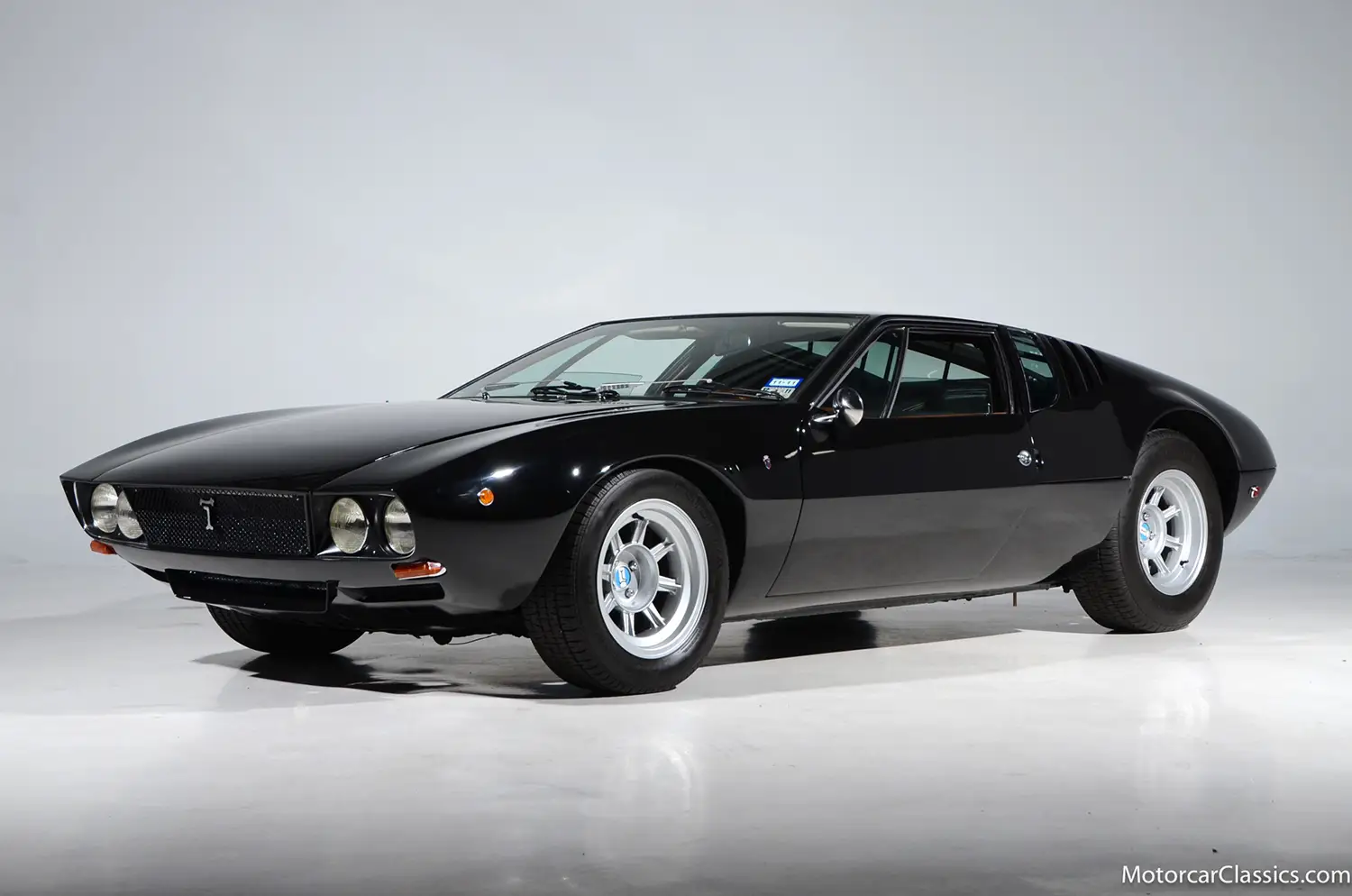
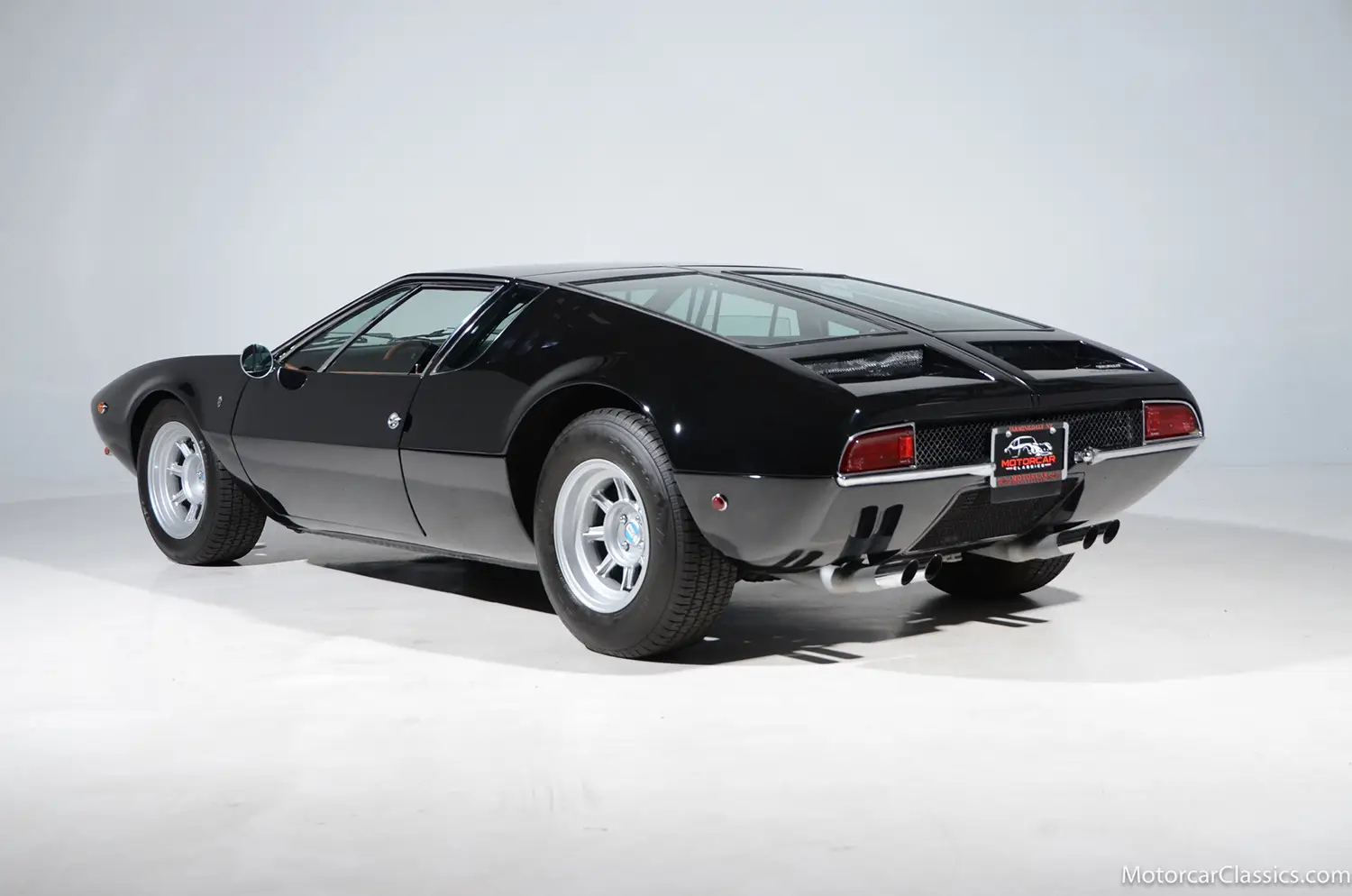
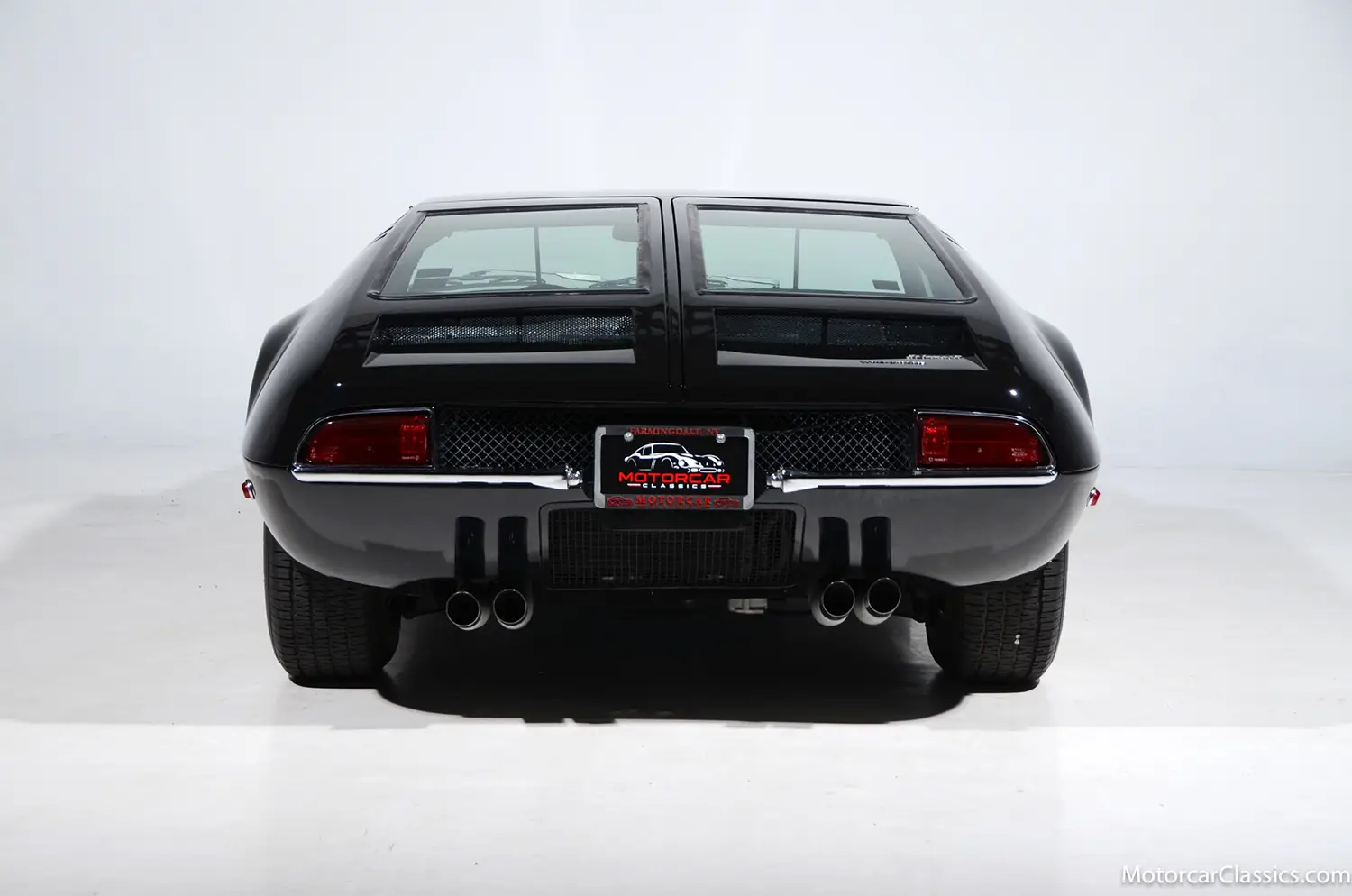
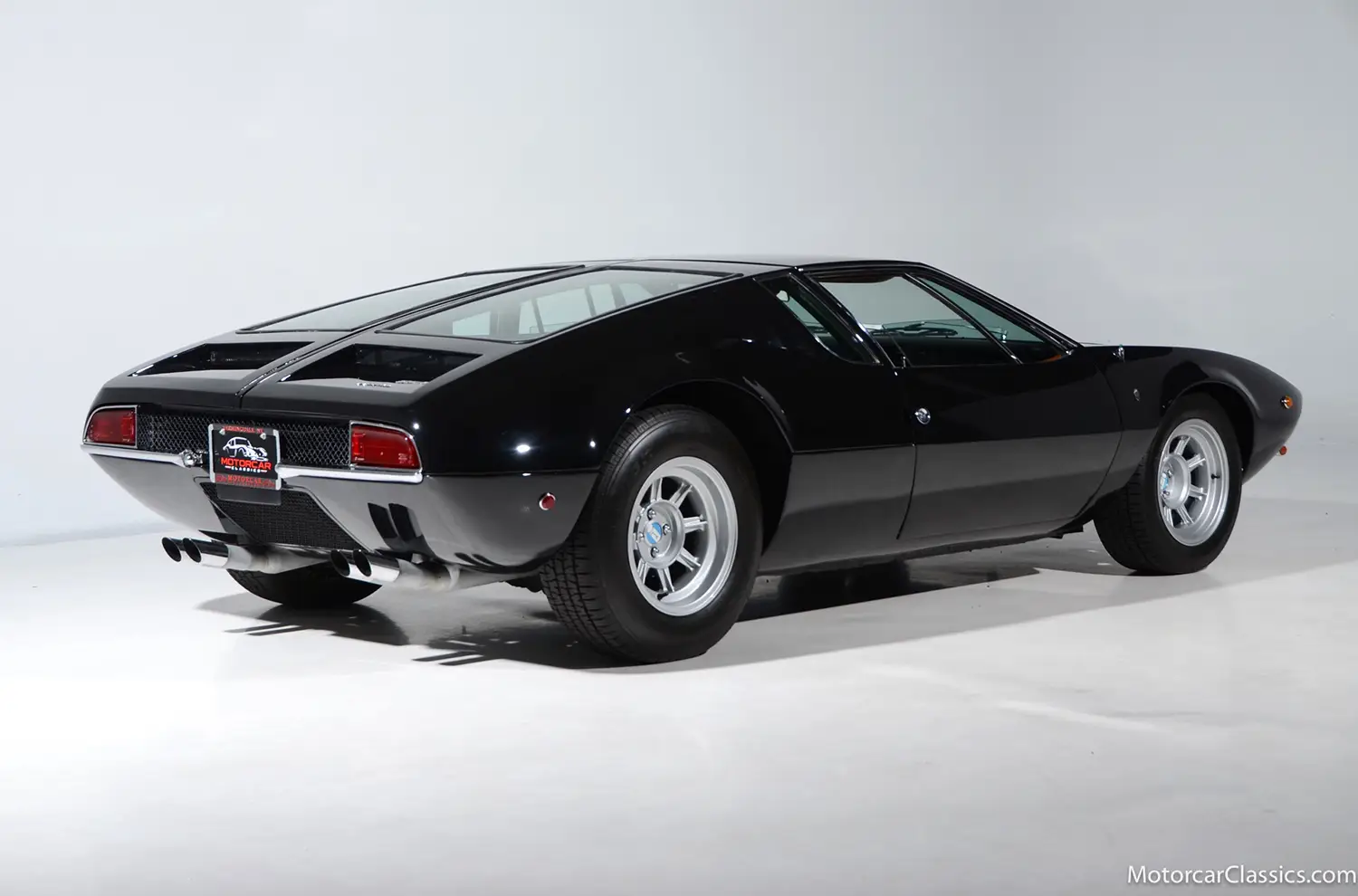
The visual drama of this Mangusta is defined by Giorgetto Giugiaro’s low-slung, needle-sharp profile, finished in an imposing Black that emphasizes its wide, aggressive footprint. This specific chassis features the highly desirable quad-headlamp configuration, a front-end treatment that arguably offers the most balanced look of the entire production run. The car’s signature flourish remains the center-hinged, gullwing-style engine covers, which open to reveal the mechanical heart and storage compartments with unparalleled theater. Rolling on staggered Campagnolo wheels (15×7 front, 15×8 rear), the car retains a period-correct stance that is both elegant and intimidating.
Saddle Leather and Gated Precision
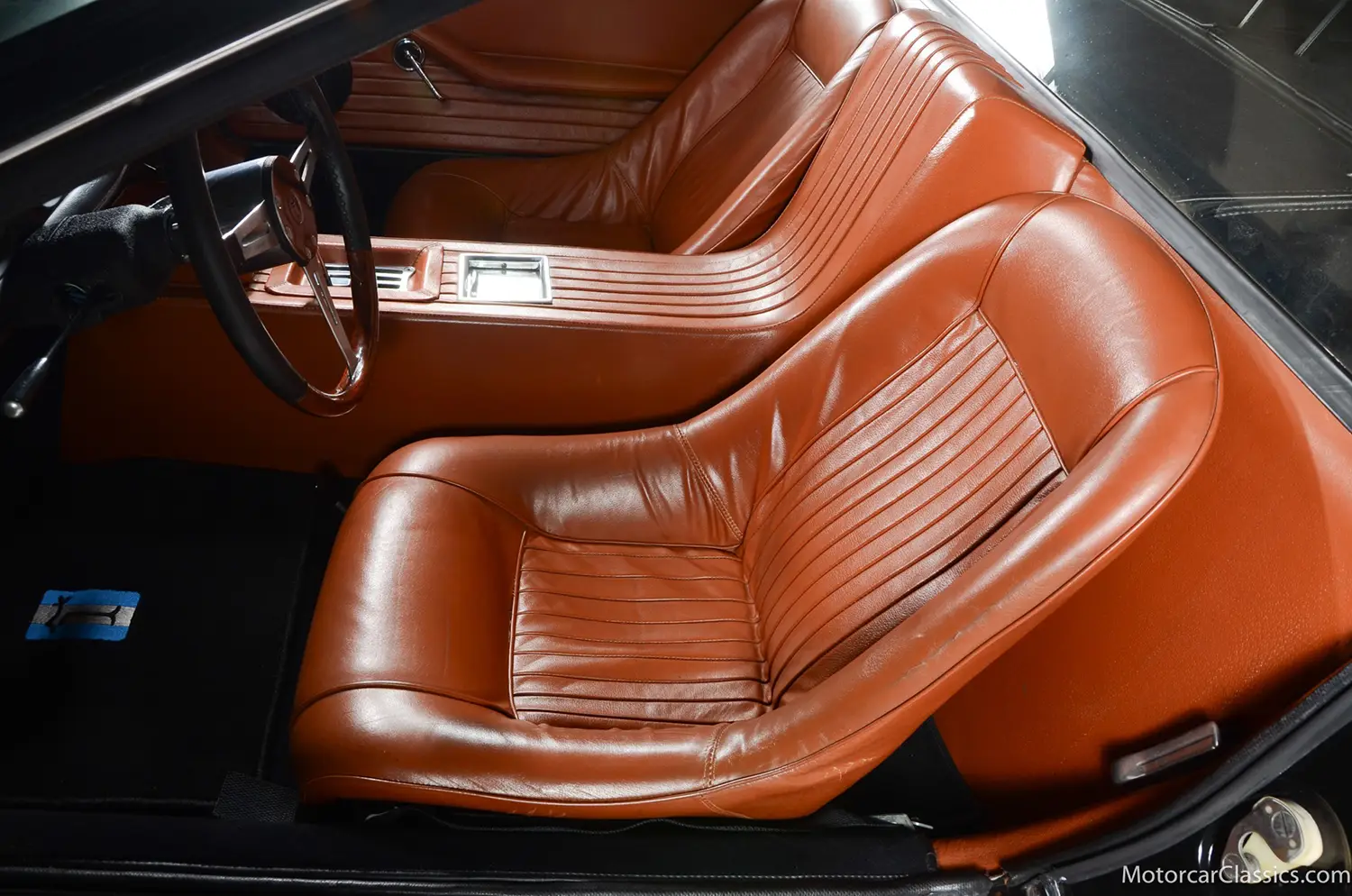
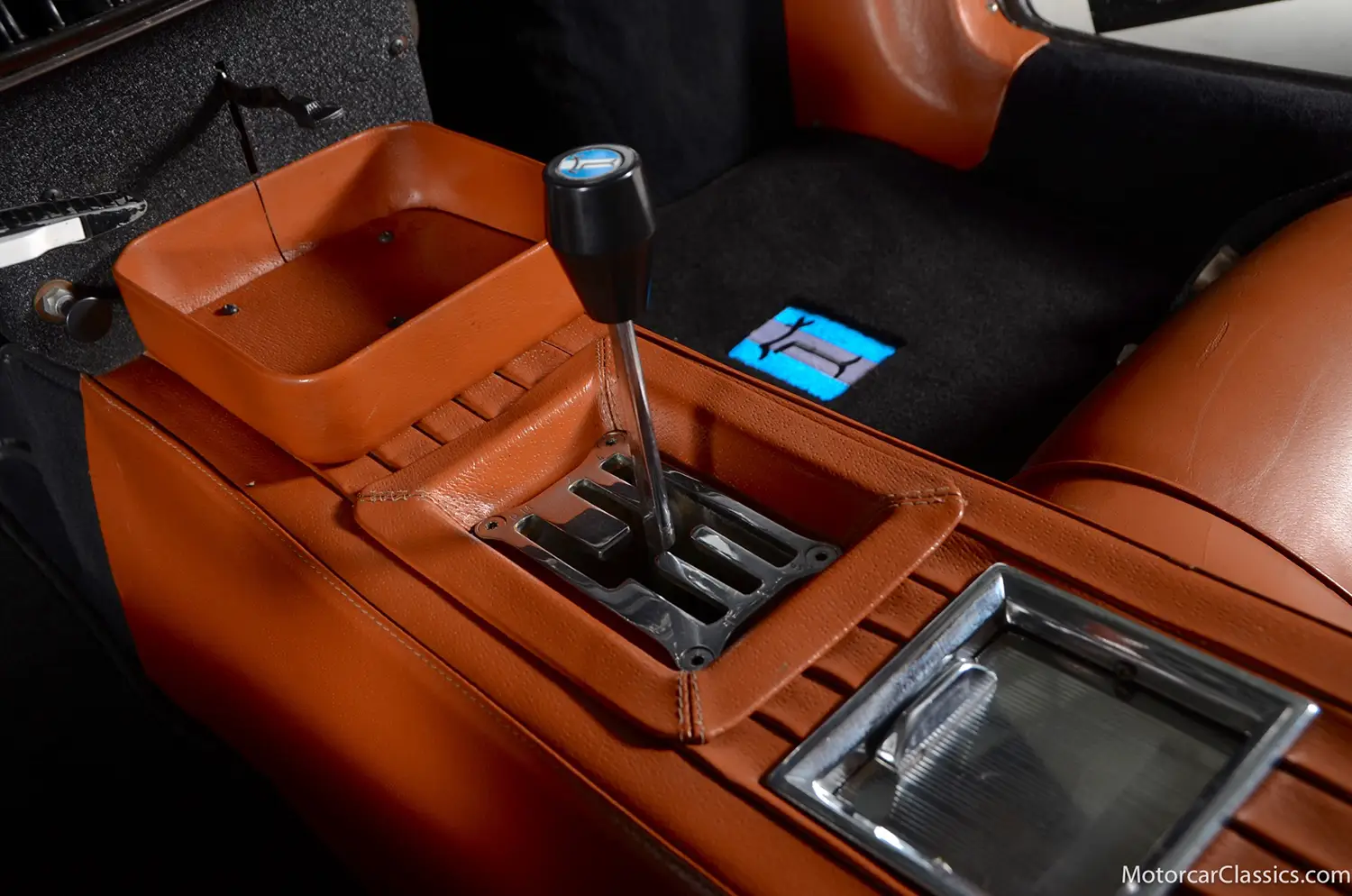
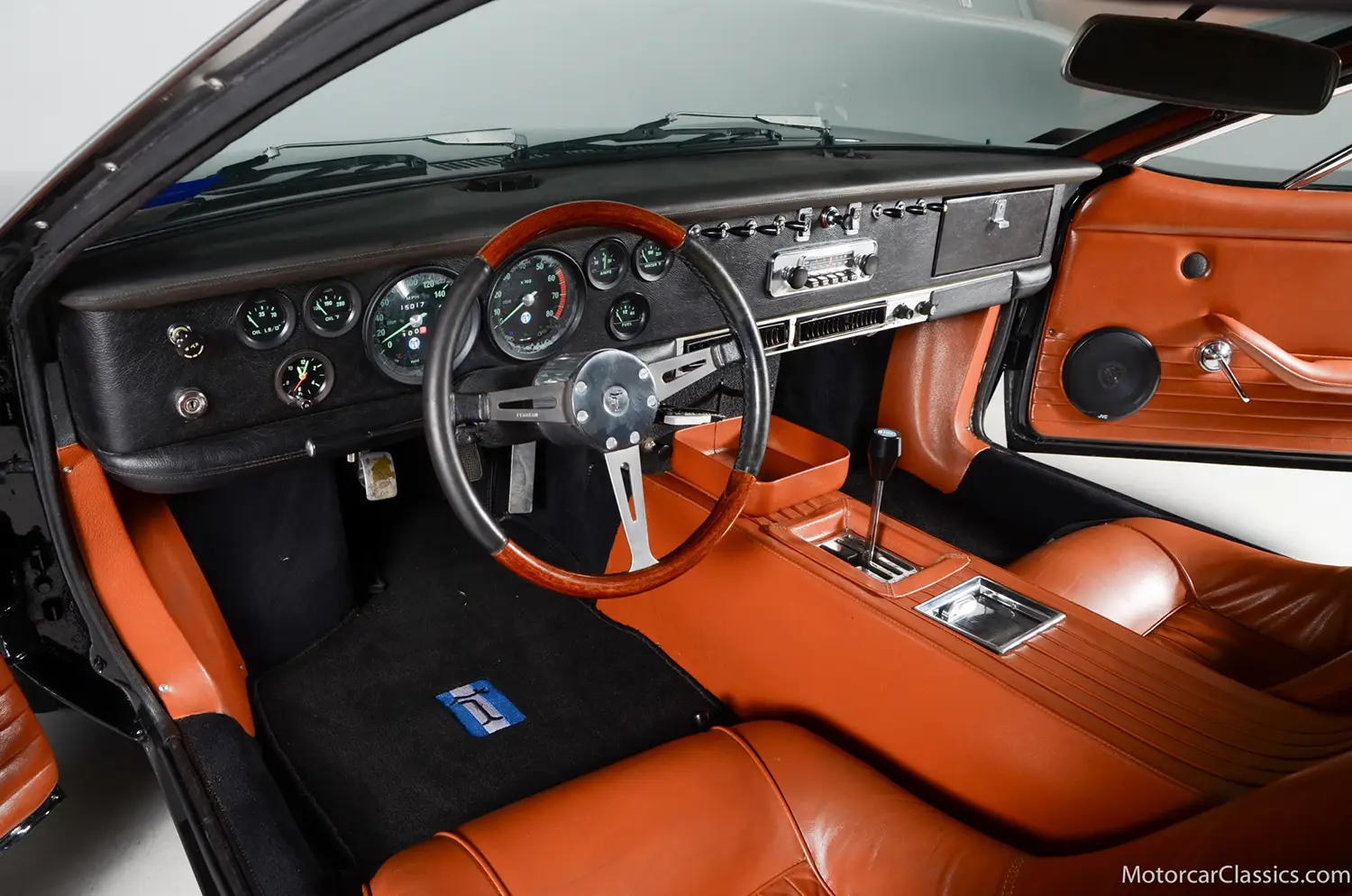
Inside, the cabin is a time capsule of Italian grand touring luxury, draped in its original saddle leather that has aged with remarkable character. The interior ergonomics reflect the car’s competition-inspired roots, positioning the driver low and deep within the chassis for a visceral connection to the road. The centerpiece of the cockpit is the classic gated shifter for the ZF five-speed manual transmission, offering a tactile, mechanical clank with every gear change. While the Mangusta was known for its snug quarters, this example’s excellent interior condition provides a surprisingly refined environment for high-speed continental crossing.
A Torque-Heavy American Heartbeat
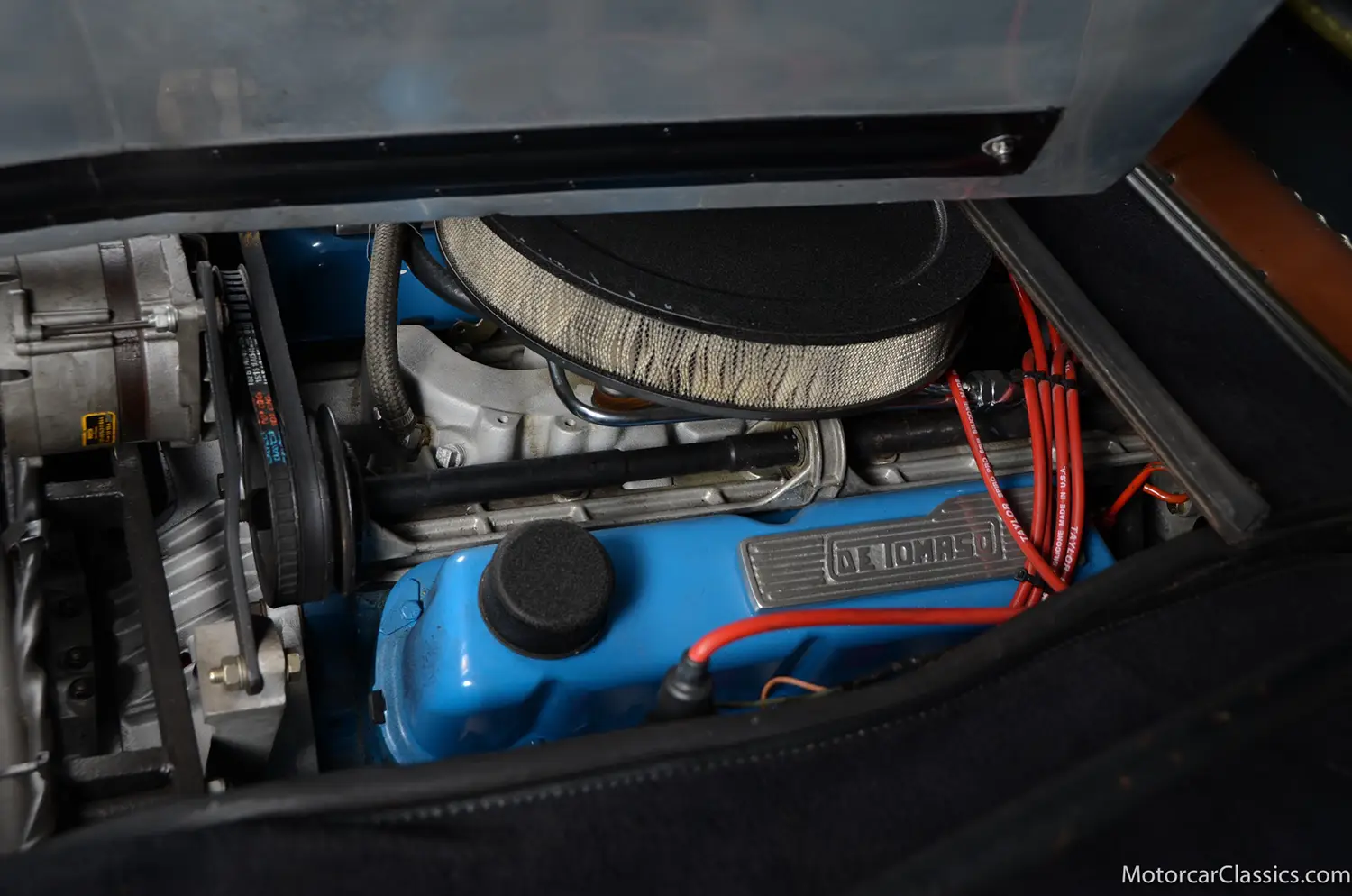
Underneath the dramatic Italian skin lies a later-production Ford 302-cubic inch V-8, a choice that ensures this supercar is as maintainable as it is fast. The engine delivers a broad, lazy torque curve that makes the Mangusta an effortless cruiser, yet it remains capable of a 155 mph top speed when the four-barrel carburetor is fully opened. Power is managed via a limited-slip differential and brought to a halt by dual-circuit Girling disc brakes, providing a level of confidence-inspiring stopping power rare for the era. The Ford-sourced powertrain produces 230 hp/233 PS and 310 lb-ft/420 Nm.
| Feature | Specification |
|---|---|
| Engine | 5.0L Ford 302 V-8 |
| Curb Weight | Estimated |
| 0-60 mph | Under 6 Seconds |
| Top Speed | 155 mph |
The Rarity of a 401-Unit Legacy
With an asking price of $399,900, this 1970 De Tomaso Mangusta represents a high-level entry into a very exclusive club, as only 401 examples were ever handcrafted. Marketed as a #3+ “high-level driver,” it offers the perfect balance for the enthusiast who wishes to actually use their investment rather than letting it sit static on a lawn. While the older restoration remains very presentable, its honest condition and lack of prior damage make it a prime candidate for continued preservation or a future high-level freshening. Its status as an early Giugiaro masterpiece ensures it will always have a seat at the table in the world’s most prestigious concours events.
The Collector’s Driver
This chassis has been treated to a life of consistent mechanical care, currently showing 15,017 miles on the odometer. It remains an exceptionally original machine, still carrying its factory-issued jack and tool kit, items often lost to time in lesser examples. As a quad-headlamp, 302-powered car, it sits in the sweet spot of Mangusta collectibility, offering more modern engine internals and the most iconic styling cues. For the collector who values a “no-stories” car with a straight body and a well-sorted mechanical soul, this Mongoose is ready to strike at a moment’s notice.
A Brutalist Masterpiece for the Modern Era
The 1970 De Tomaso Mangusta is a raw, unapologetic statement of intent that continues to captivate designers and drivers alike. It represents a brief, beautiful window where Italian style was allowed to be as wild as the American V-8s that powered it. This example, with its stunning saddle interior and legendary gullwing covers, is a rolling sculpture that demands attention in any collection. It is the definitive “mongoose,” a fierce, rare, and mechanically robust alternative to the more common exotics of the 1970s.
Disclaimer: Content on this site is for informational and entertainment purposes only. Details, analyses, and opinions reflect current trends and personal views, not professional or financial advice. Always verify information with official sources before making any decisions.
Source: motorcarclassics.com