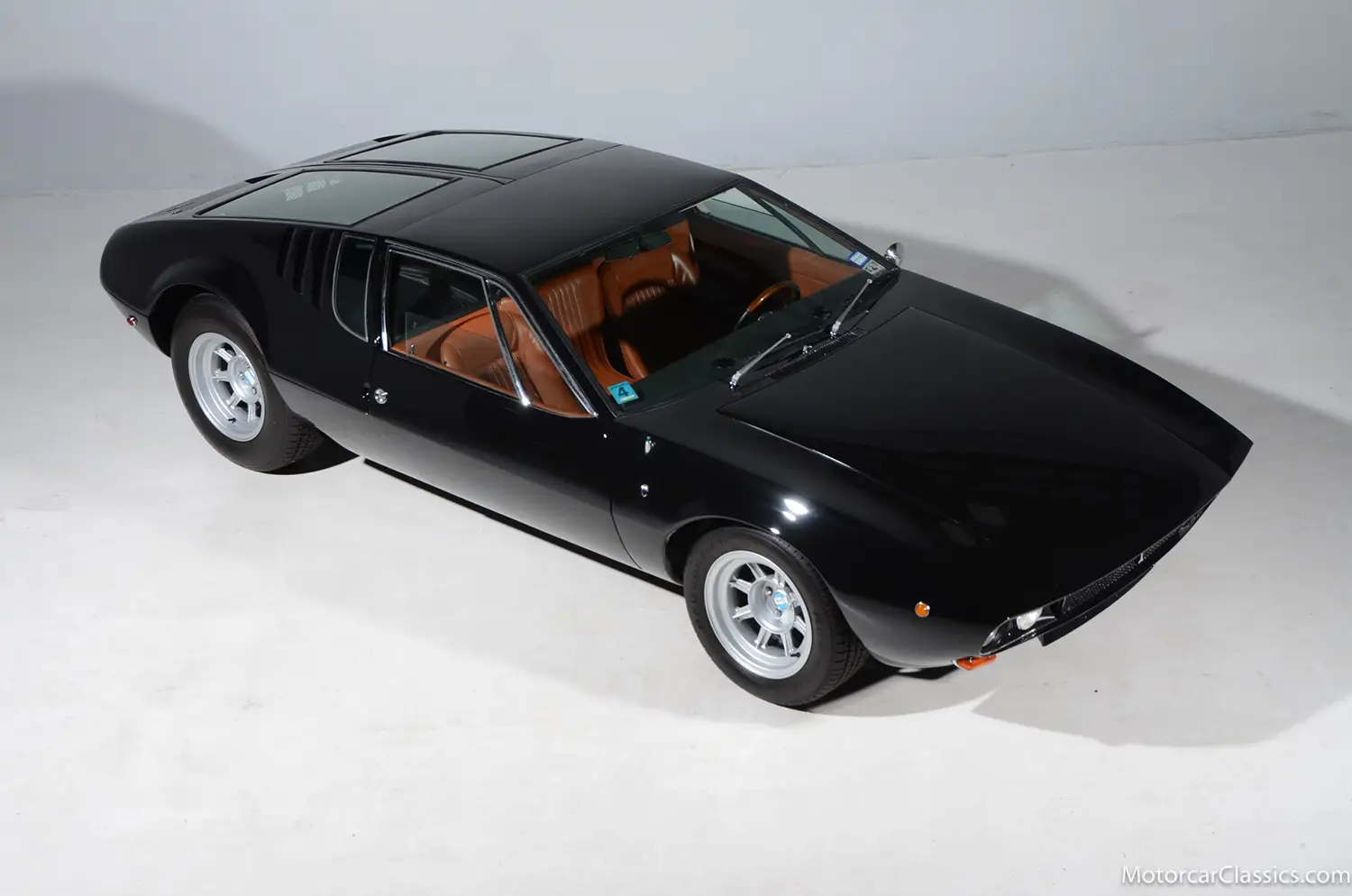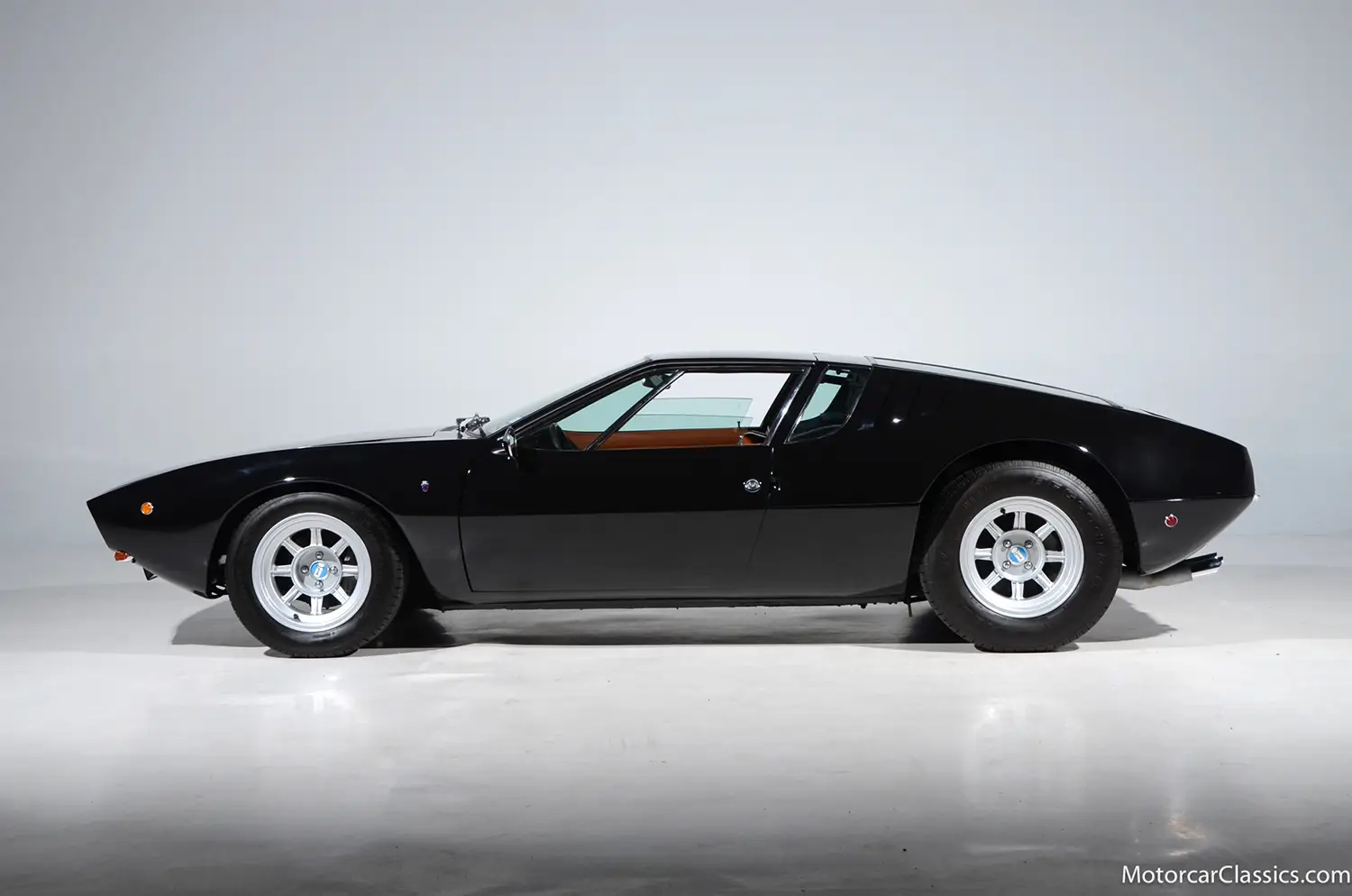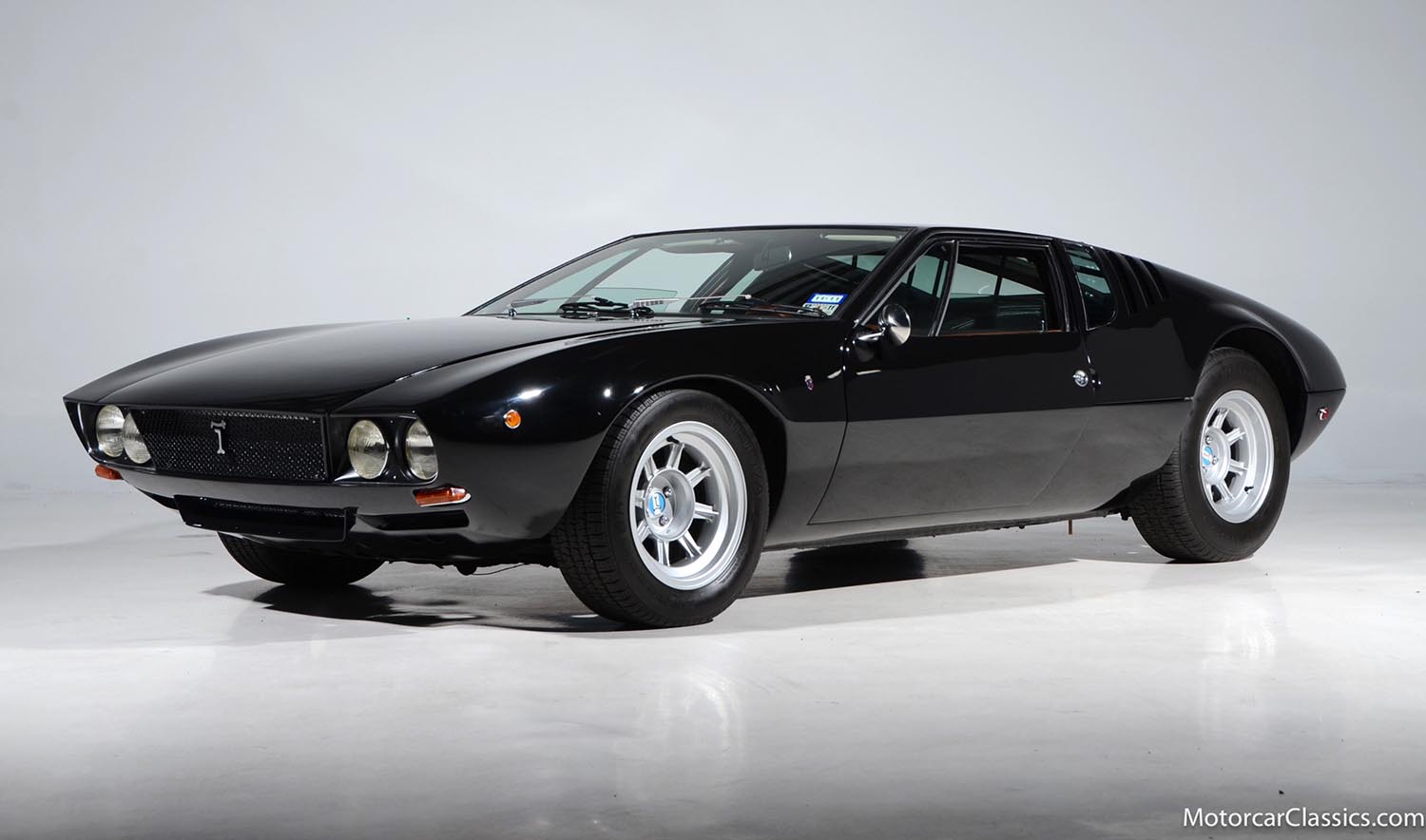
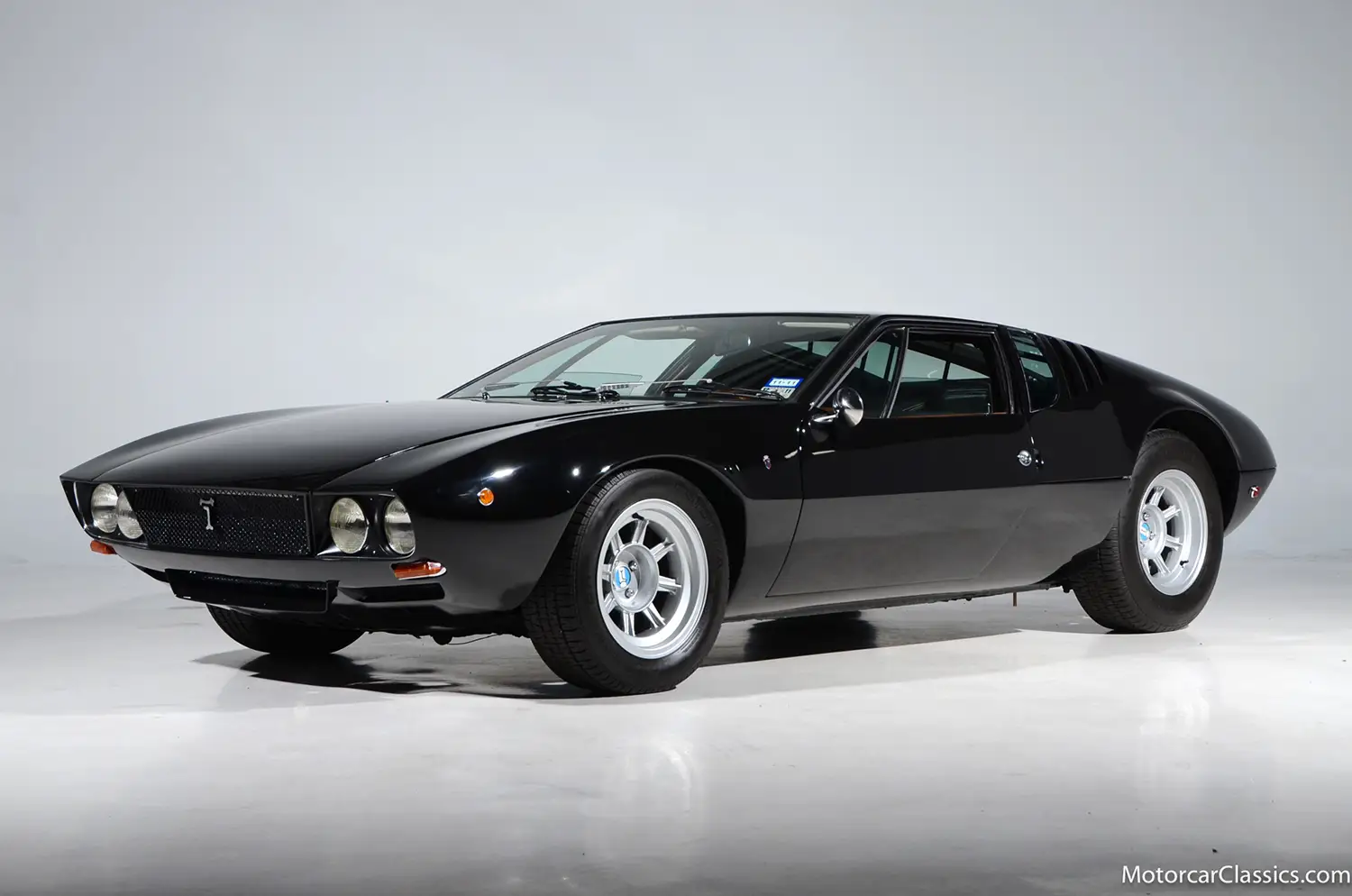
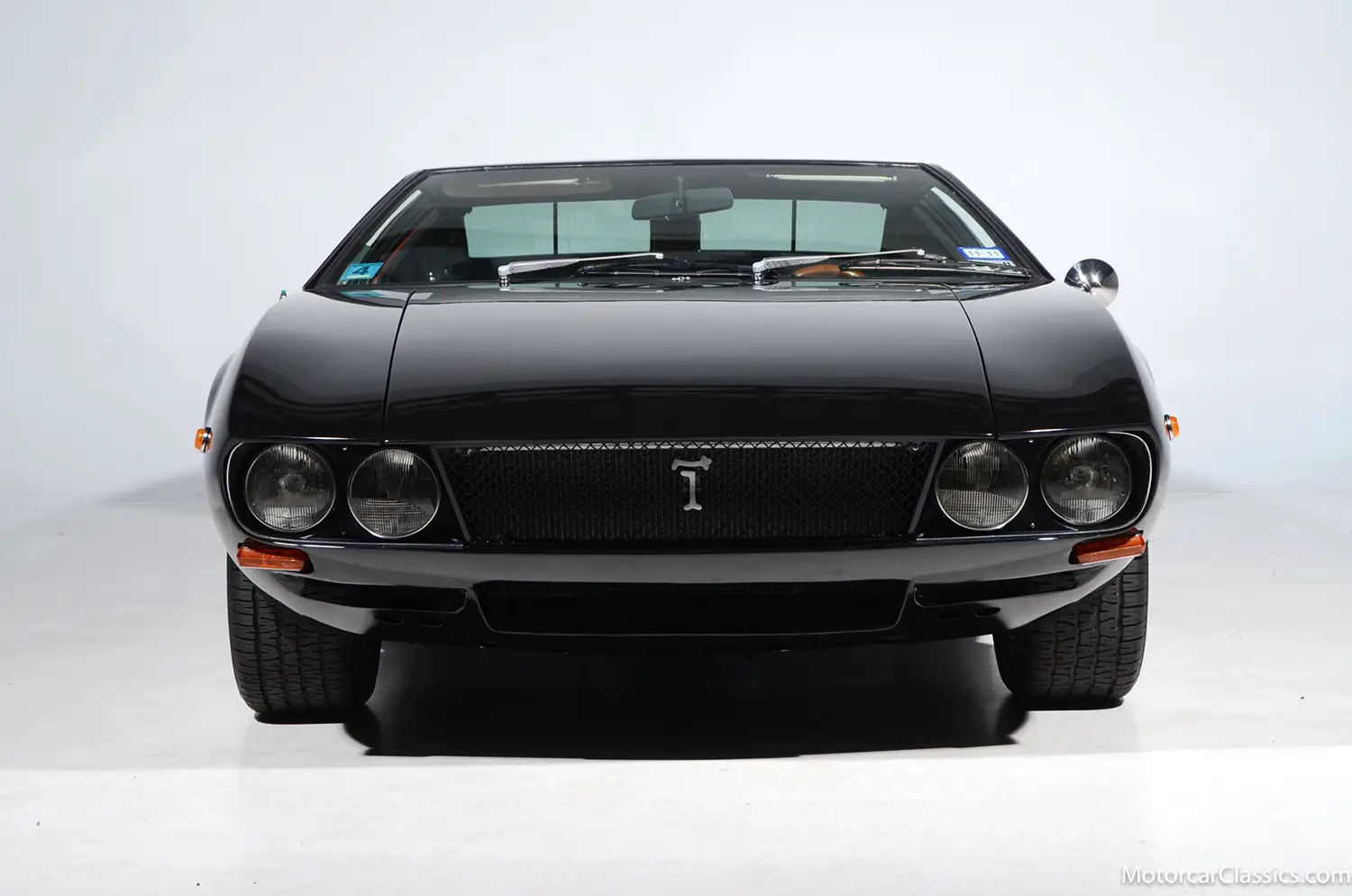
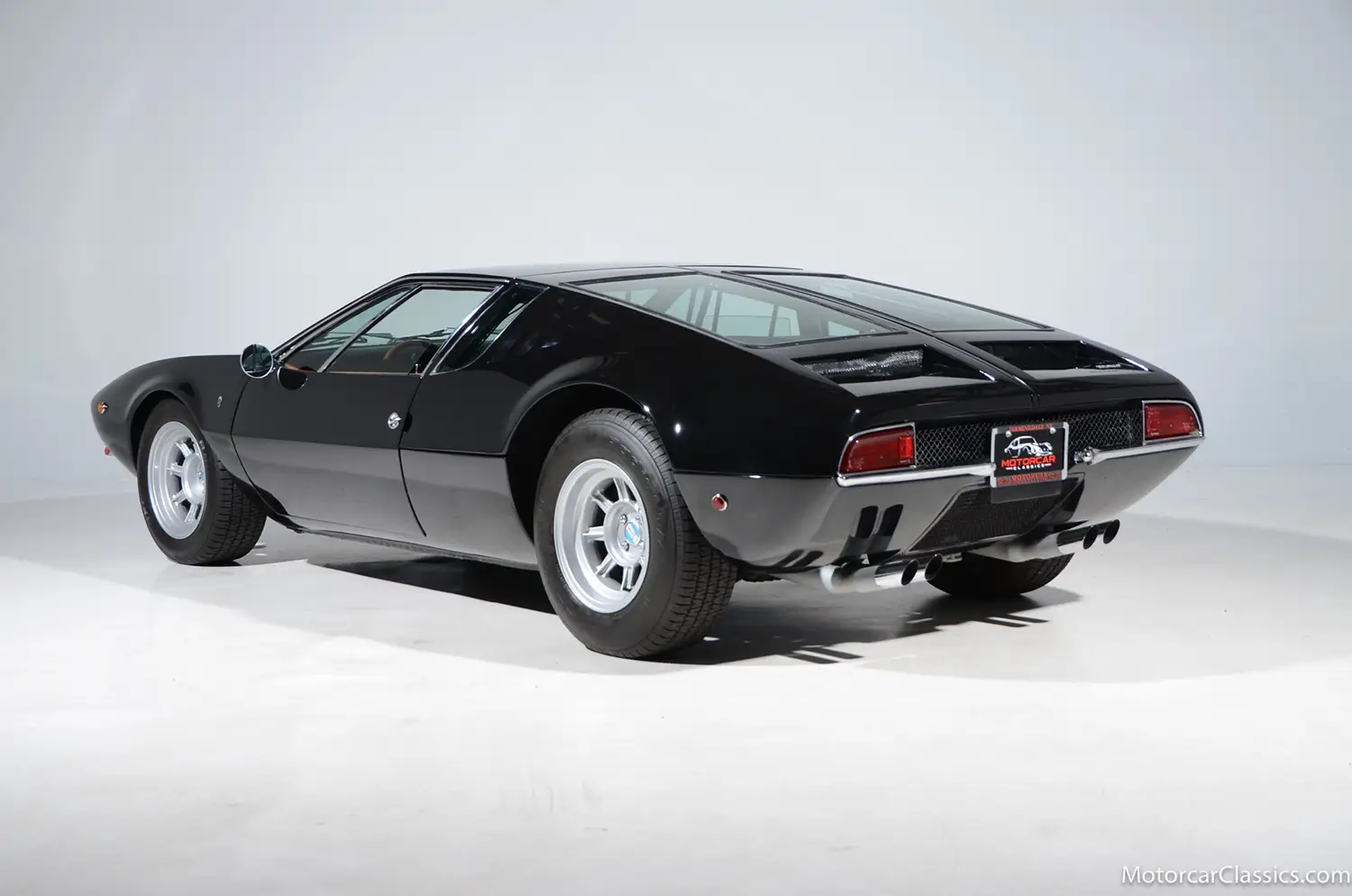
The 1970 De Tomaso Mangusta stands as one of the most provocative and visually arresting supercars of the 1960s, a vehicle designed specifically to hunt the Shelby Cobra. Its name, which translates to Mongoose in Italian, signaled Alejandro de Tomaso’s intent to disrupt the high-performance hierarchy. This specific Black example is one of only 401 units ever built, representing the desirable quad-headlamp configuration that defined the late-production aesthetic. With only 15,017 miles indicated, the car remains a high-level driver that bridges the gap between show-quality preservation and raw mechanical engagement. It is a striking testament to a period where Italian coachwork met American muscle to create something truly transcendent.
Giugiaro Styling and Gullwing Engine Covers
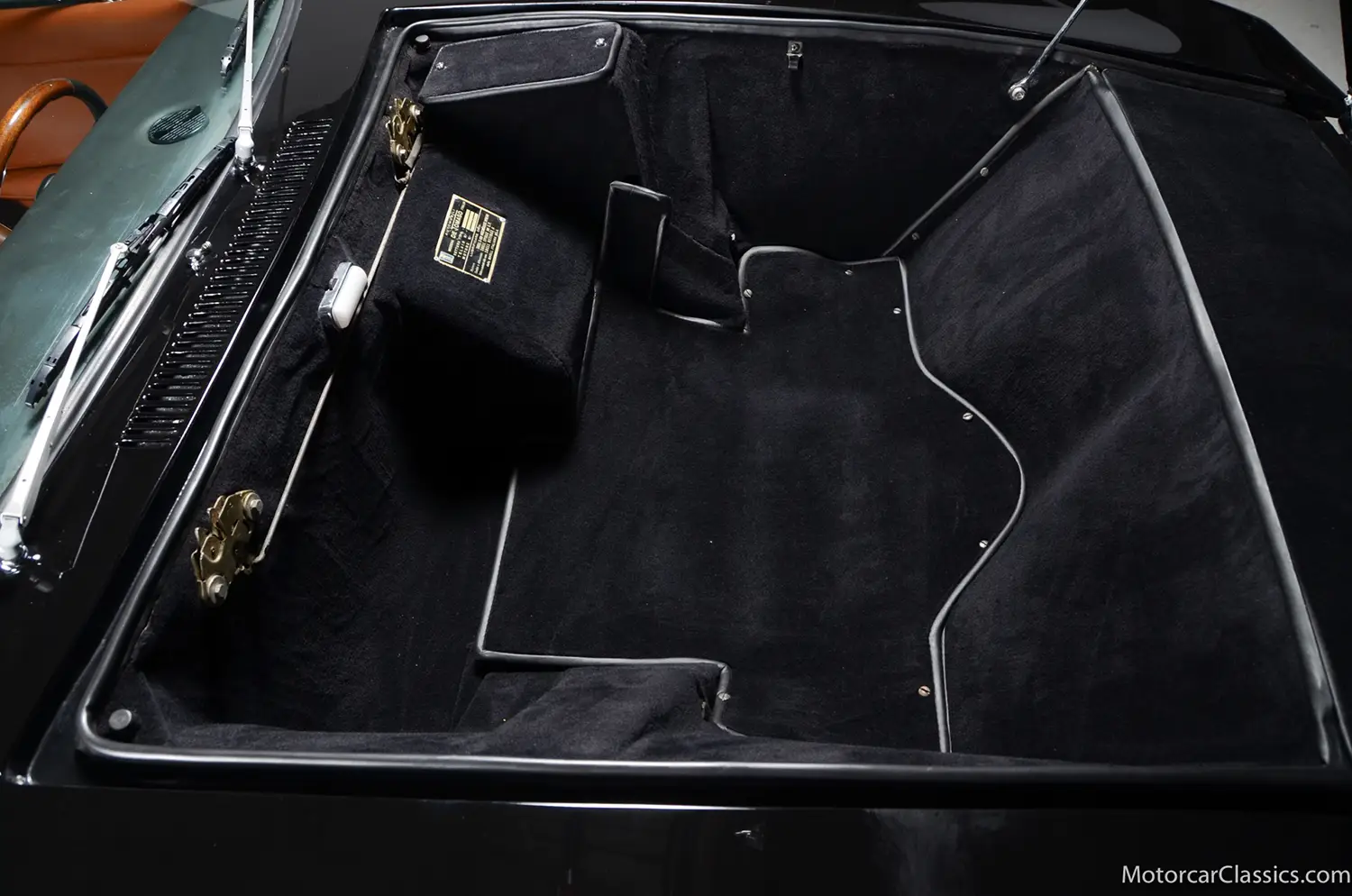
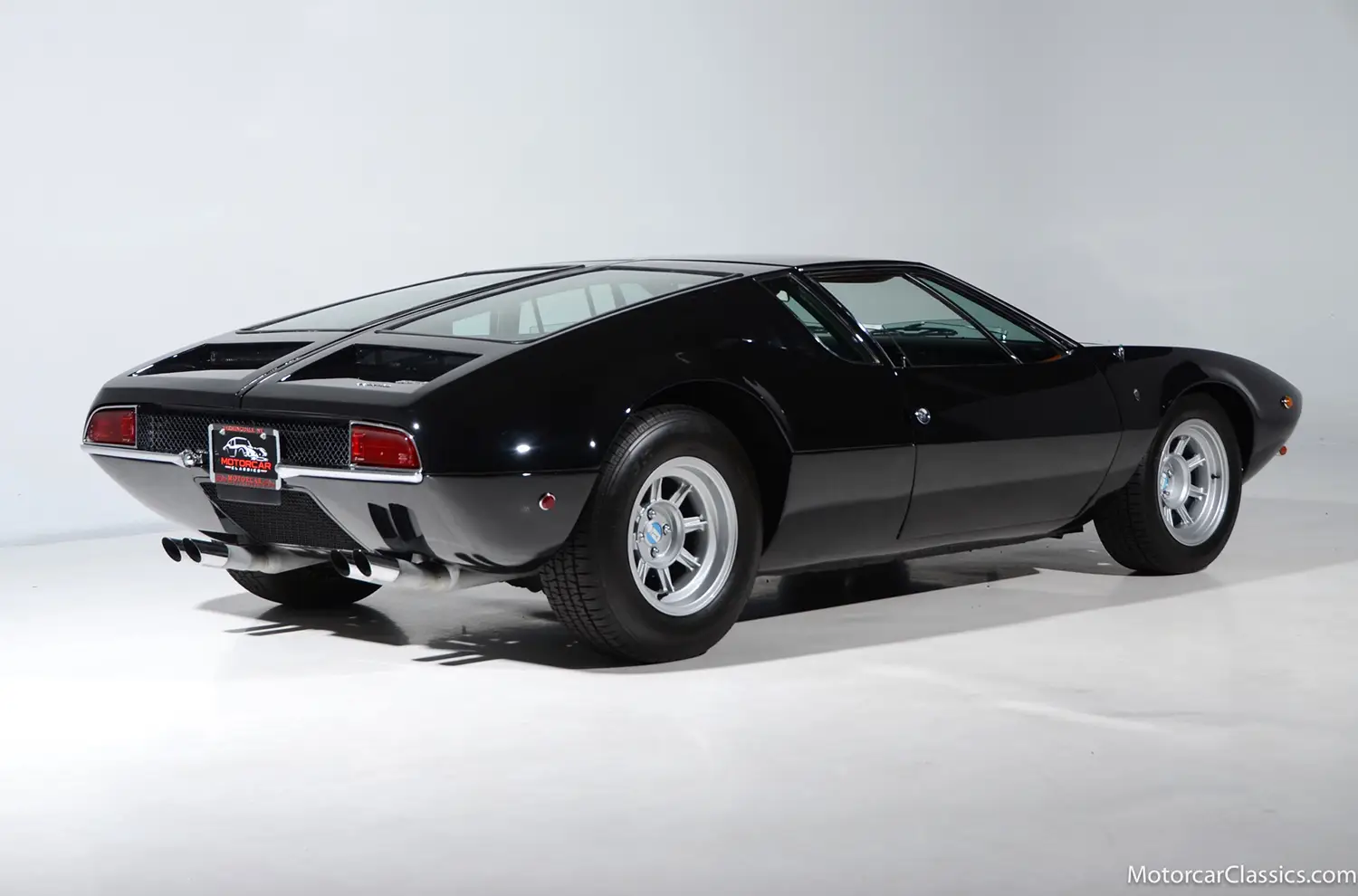
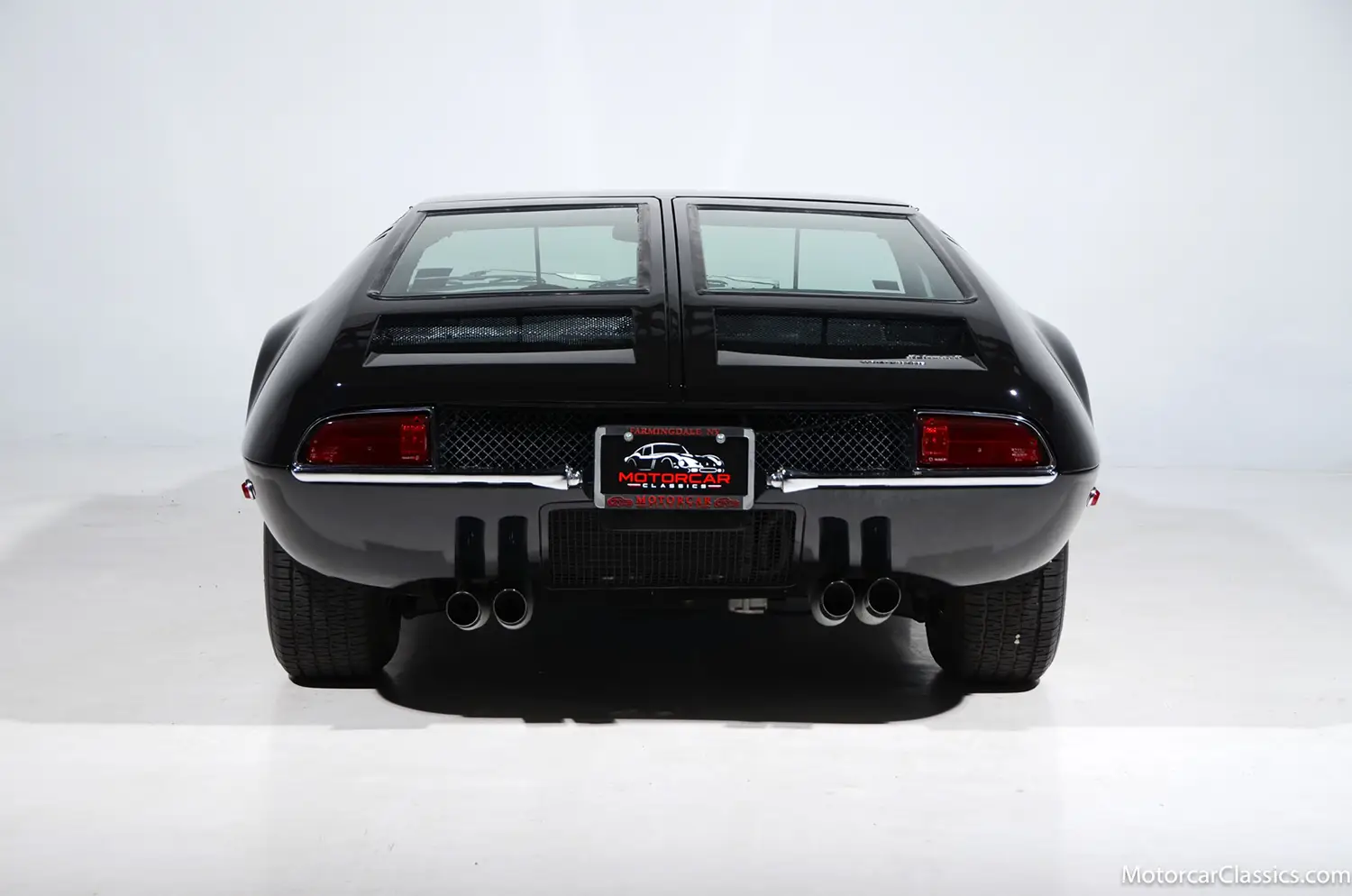
The visual character of this 1970 De Tomaso Mangusta is defined by the sharp, angular lines penned by the legendary Giorgetto Giugiaro. Its low, wide stance is punctuated by the car’s most distinctive engineering feat: the unique gullwing-style engine covers that provide center-split access to the powertrain and luggage compartments. Finished in Black, this Mangusta features the rare quad-headlamp front end and rides on staggered 15-inch Campagnolo wheels, measuring seven inches wide at the front and eight inches at the rear. While described as an older restoration with very presentable paint, the silhouette remains an undisputed masterpiece of automotive sculpture, capturing the transition from the curves of the fifties to the wedge era of the seventies.
Saddle Leather and Classic Gated Shifting
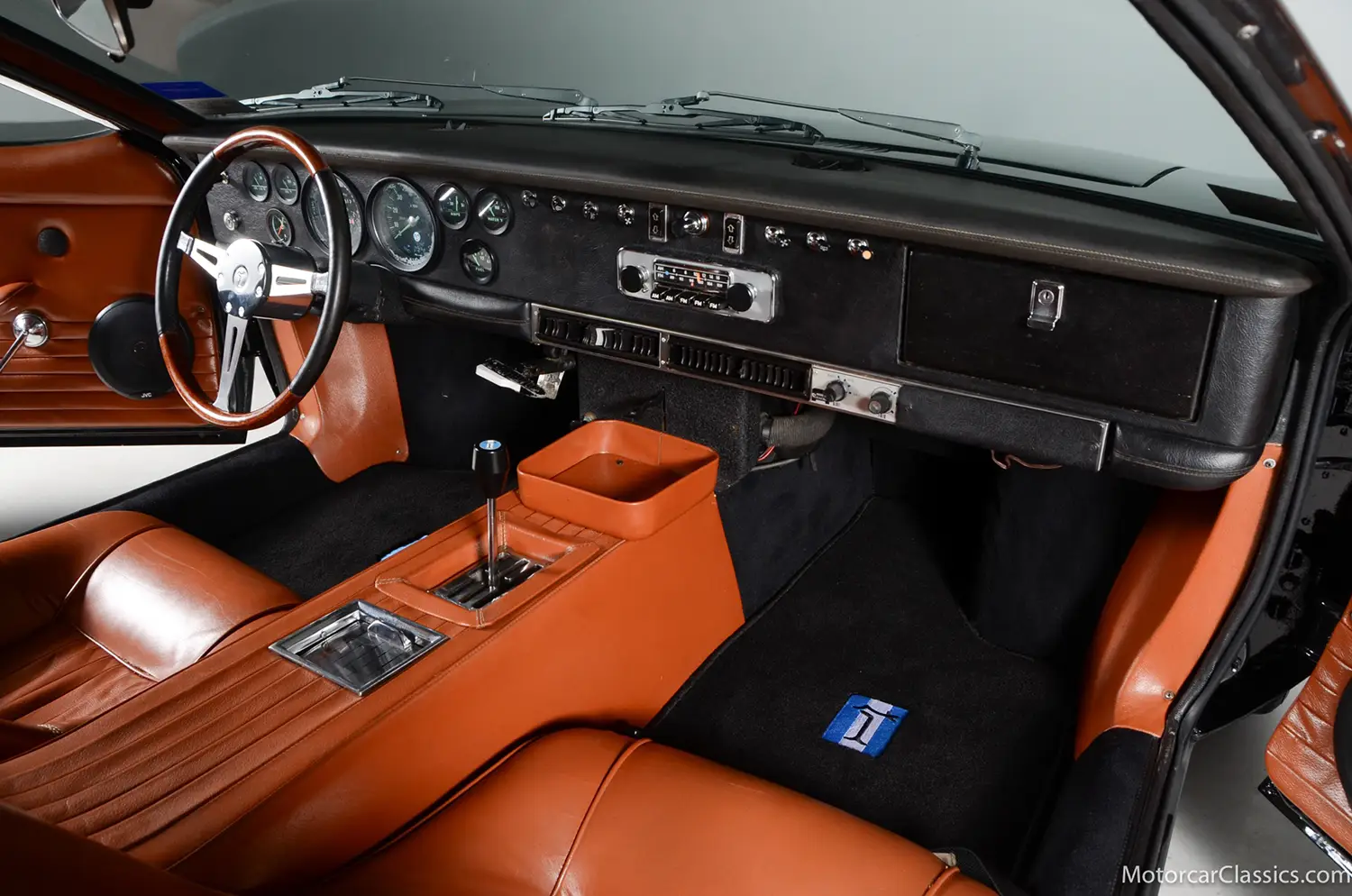
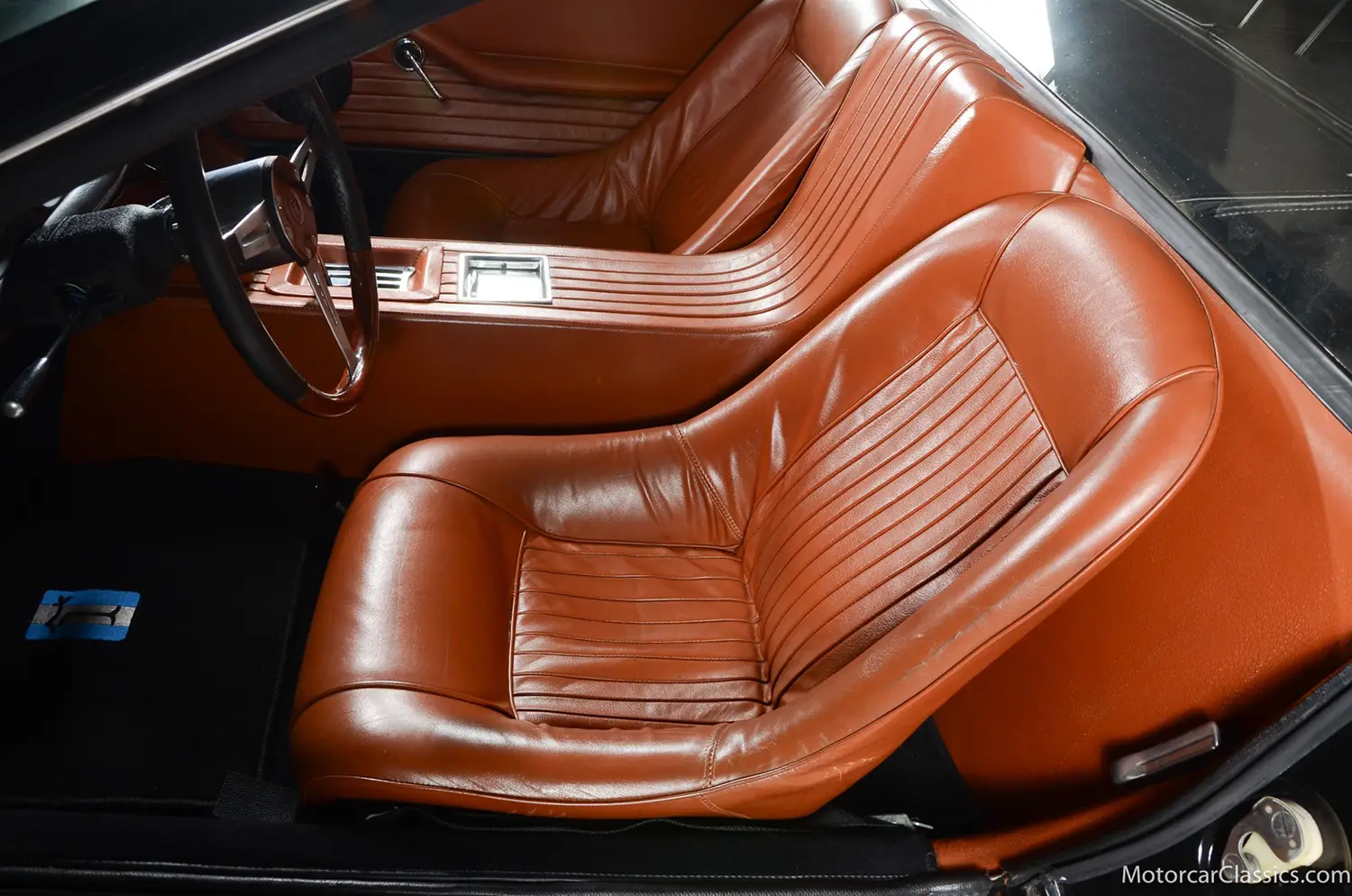
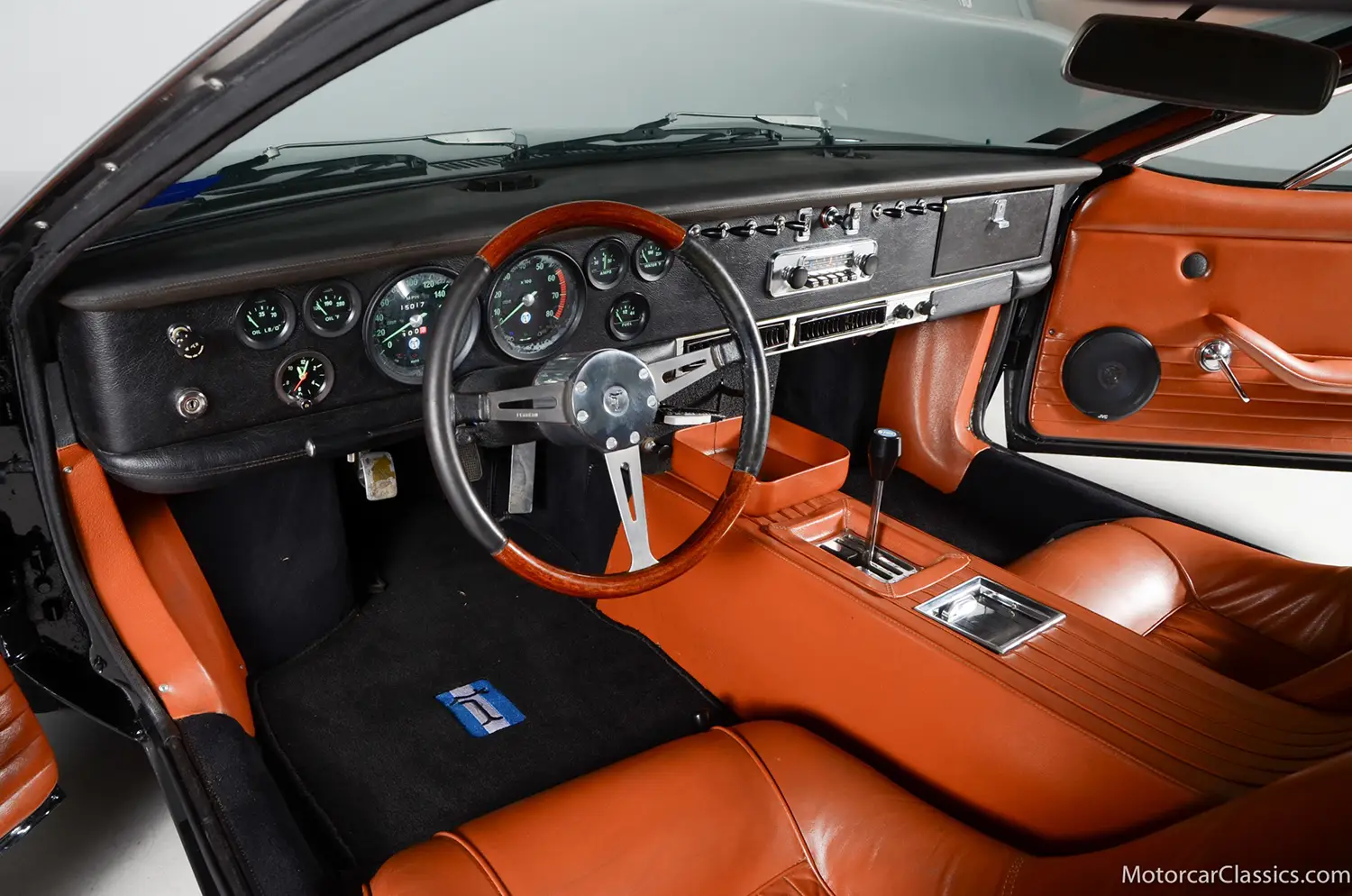
Inside the cockpit, the environment is finished in its original Beige and Tan saddle leather, offering a warm and sophisticated contrast to the dark exterior. The cabin ergonomics are pure vintage supercar, centered around a classic gated shifter that controls the ZF manual gearbox. Every tactile element, from the low-slung bucket seats to the simplified dashboard layout, reflects the car’s focus on a direct and unvarnished driving experience. The interior has been maintained in excellent condition, preserving the authentic materials that were installed when the car left the factory. Included with the vehicle are the original jack and tools, further solidifying its status as a well-documented and highly preserved example of Italian-American heritage.
Ford 302 V8 Power and ZF Manual Precision
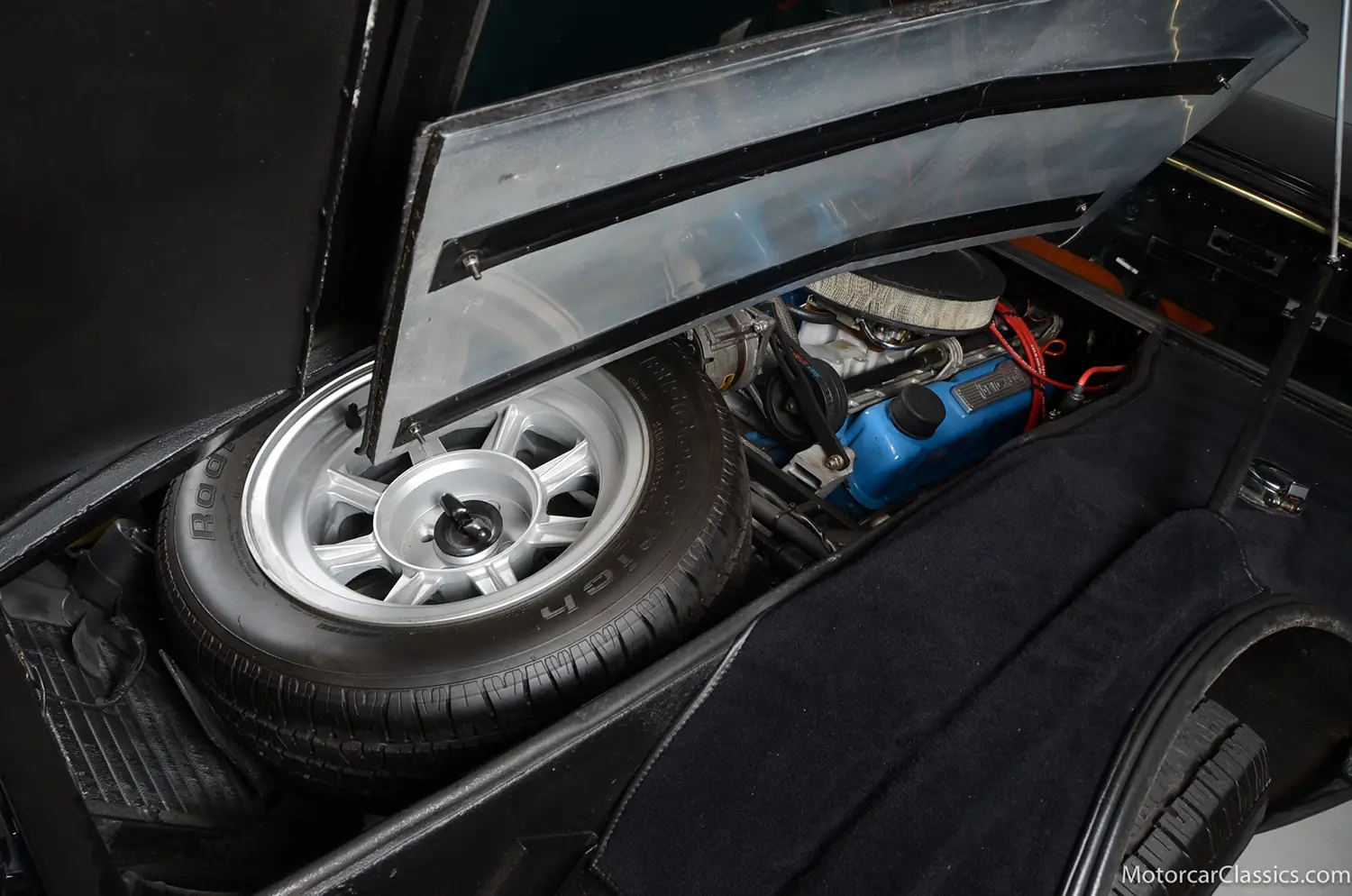
Performance is delivered by a mid-mounted 302 CI Ford V-8 engine, a choice that ensured worldwide serviceability and massive low-end torque. This later-spec powerplant was factory rated at 230 hp/233 PS and 310 lb-ft/420 Nm of torque in a single, authoritative mechanical narrative. Power is routed through a five-speed ZF manual transmission and a limited-slip differential, providing a visceral connection to the rear wheels. The chassis is equipped with dual-circuit Girling disc brakes at all four corners, ensuring that the Mangusta can shed speed as effectively as it gains it. With a period top speed of 155 mph and a 0-60 mph time of under 6 seconds, the car delivers a level of performance that remains engaging and relevant for modern enthusiasts.
Technical Specifications
| Technical Specifications | |
|---|---|
| Engine Type | 302 CI Ford V-8 |
| Transmission | 5-Speed ZF Manual |
| Shifter Type | Classic Gated Shifter |
| Braking System | Dual-Circuit Girling Disc Brakes |
| Differential | Limited Slip Differential (LSD) |
| Wheels | Campagnolo 15×7 (F) / 15×8 (R) |
| Production Volume | 1 of 401 Built |
| Headlight Spec | Quad-Headlamp Configuration |
| Indicated Mileage | 15,017 Miles |
| Condition Scale | #3+ High-Level Driver |
An Elite Hybrid in the Global Collector Market
In the current collector market, the 1970 De Tomaso Mangusta is frequently benchmarked against the Lamborghini Miura and the early Ferrari Daytona. Its unique selling point remains its combination of exotic Italian styling and reliable American Ford power, offering a significantly lower cost of ownership than its V12-powered contemporaries. Because only 401 were produced, it is considerably rarer than the later De Tomaso Pantera, which often places the Mangusta in a different tier of investment-grade collectibles. As a high-level driver, this example represents a perfect entry point for an enthusiast who wants an iconic silhouette that can be driven and enjoyed on the road rather than remaining a static museum piece.
A Masterpiece of 1970s Automotive Drama
This 1970 De Tomaso Mangusta is a definitive icon of automotive drama, merging Giugiaro’s aesthetic genius with the unshakeable reliability of Ford’s small-block V8. From the center-split gullwing covers to the mechanical click of the gated shifter, every aspect of this car was designed to provide a sensory experience unlike anything else on the road. It remains a premier acquisition for the collector who demands a vehicle with a fierce competitive spirit and a design that remains as breathtaking today as it was at the 1966 Turin Motor Show.
Disclaimer: Content on this site is for informational and entertainment purposes only. Details, analyses, and opinions reflect current trends and personal views, not professional or financial advice. Always verify information with official sources before making any decisions.
Source: motorcarclassics.com