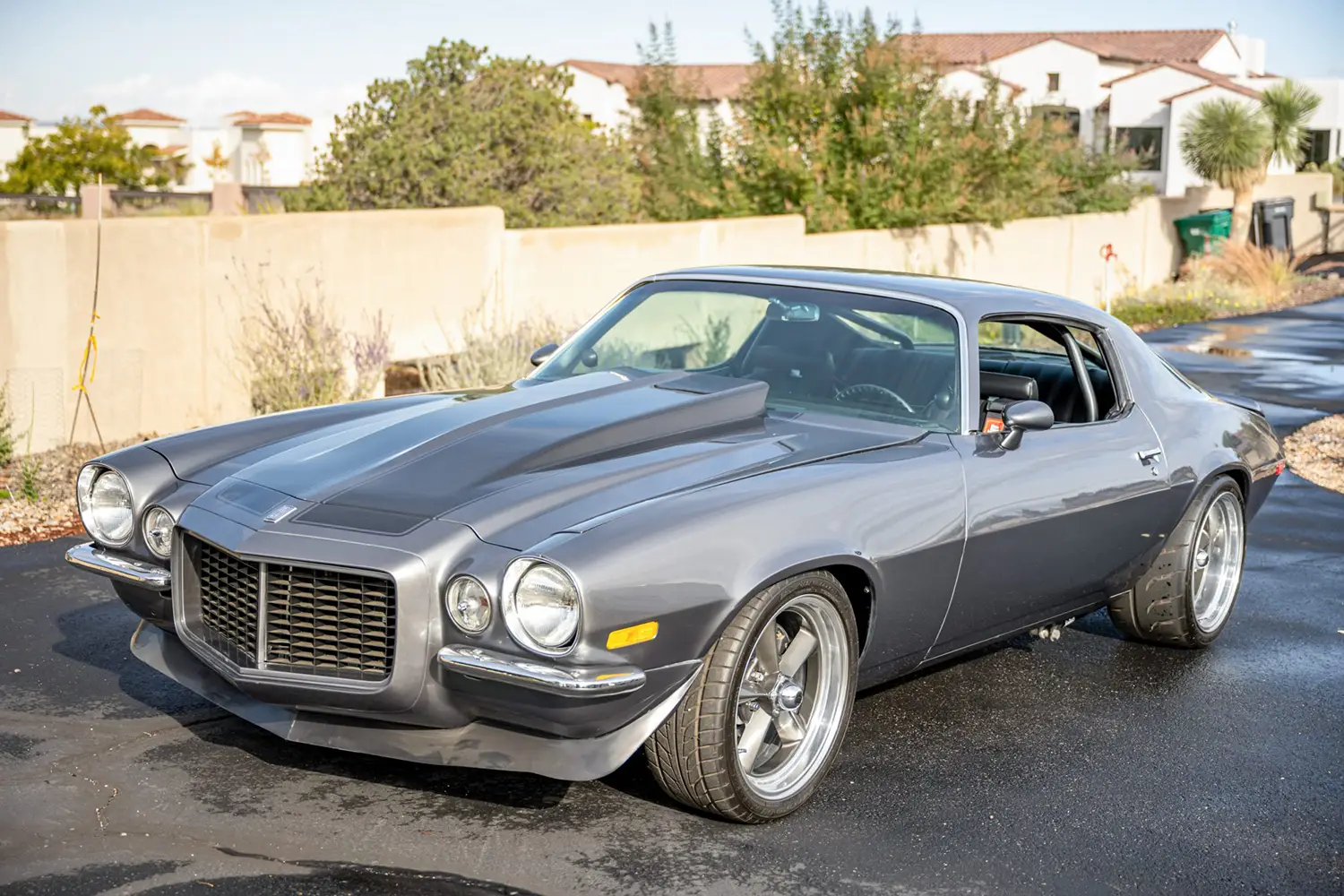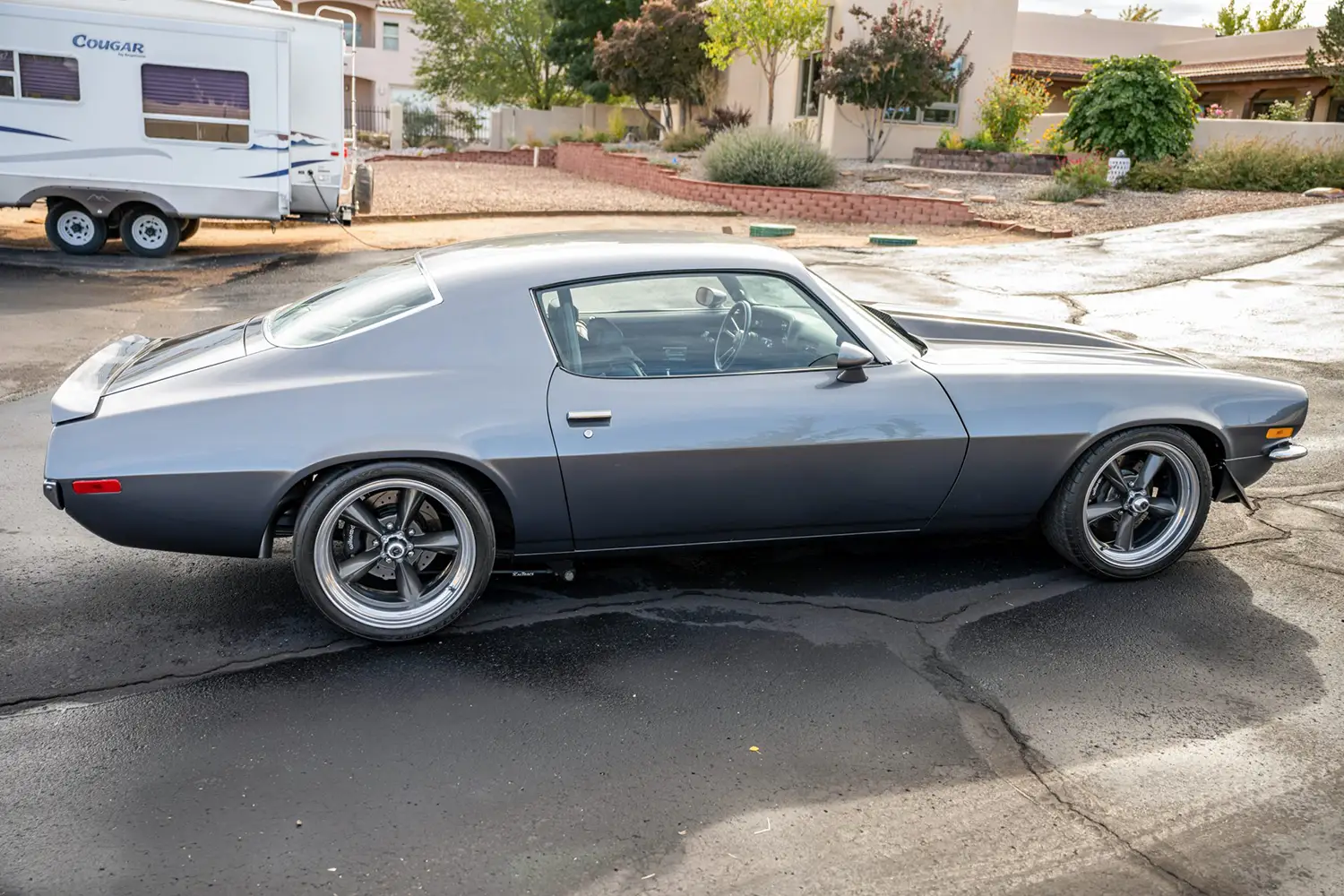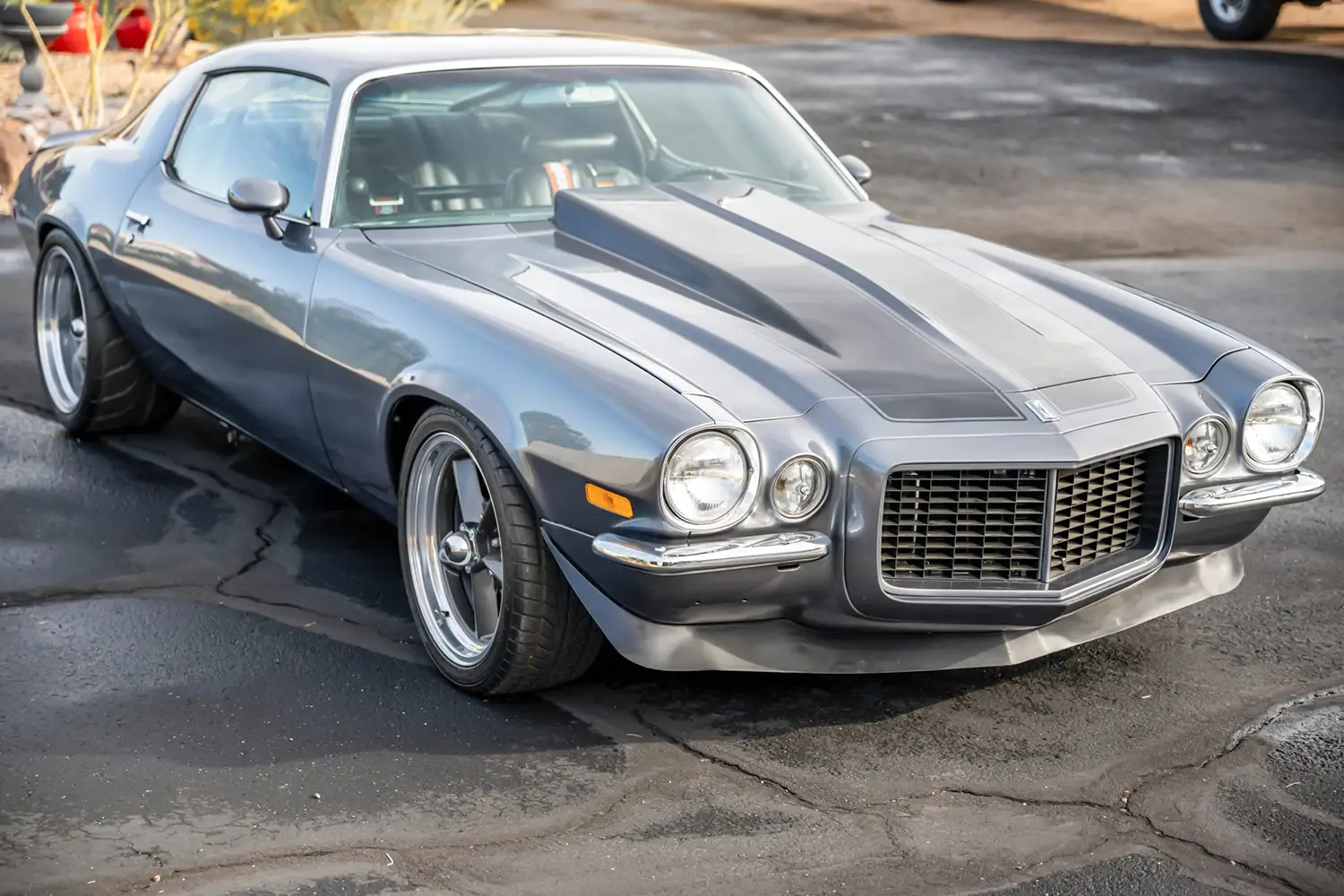
The 1970 Chevrolet Camaro marked the debut of the second-generation F-body, a design that traded the boxy lines of the sixties for a sleek, European-inspired silhouette. This exceptional example has undergone a documented $130,000 transformation, evolving into a pro-touring powerhouse that balances raw big-block aggression with modern chassis dynamics. Finished in a contemporary metallic gray and currently residing in New Mexico, the car features a smoothed firewall and a fully integrated roll bar. With only 15 miles logged since the completion of its refurbishment, this Camaro stands as a nearly fresh build optimized for the driver who demands supercar-level output from a classic American frame.
Grigio Estoque Paint and Vintage Wheel Works Alloys
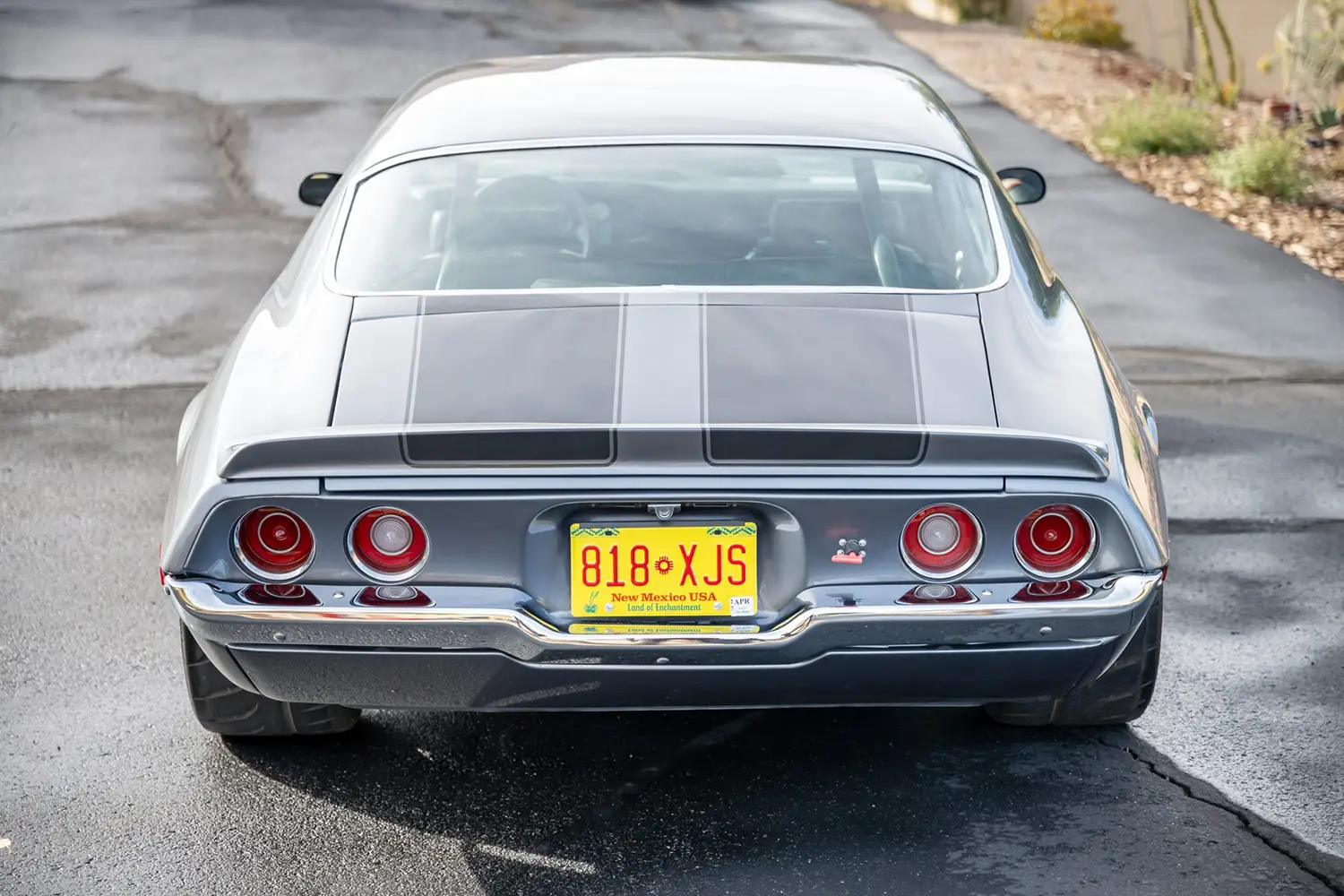
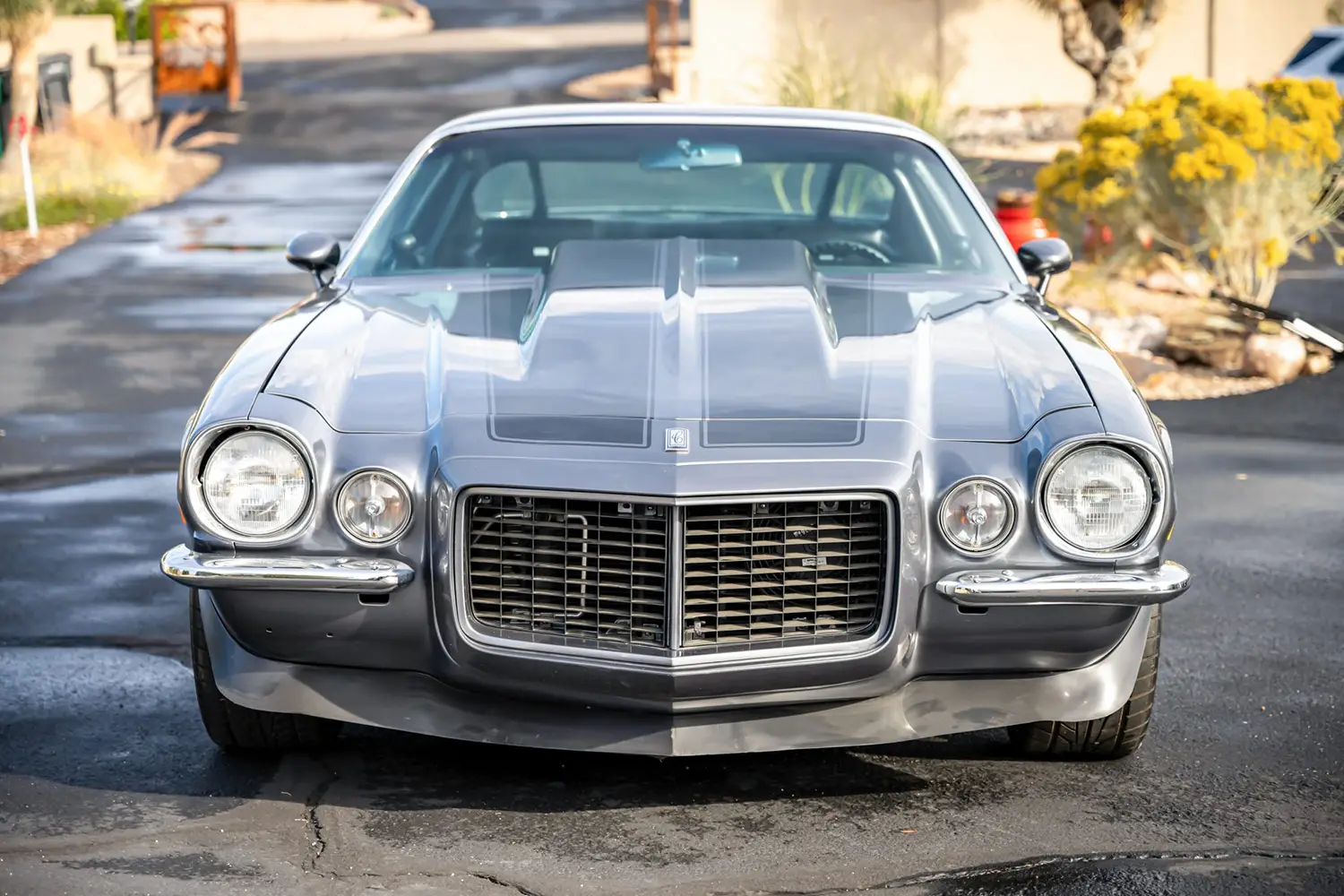
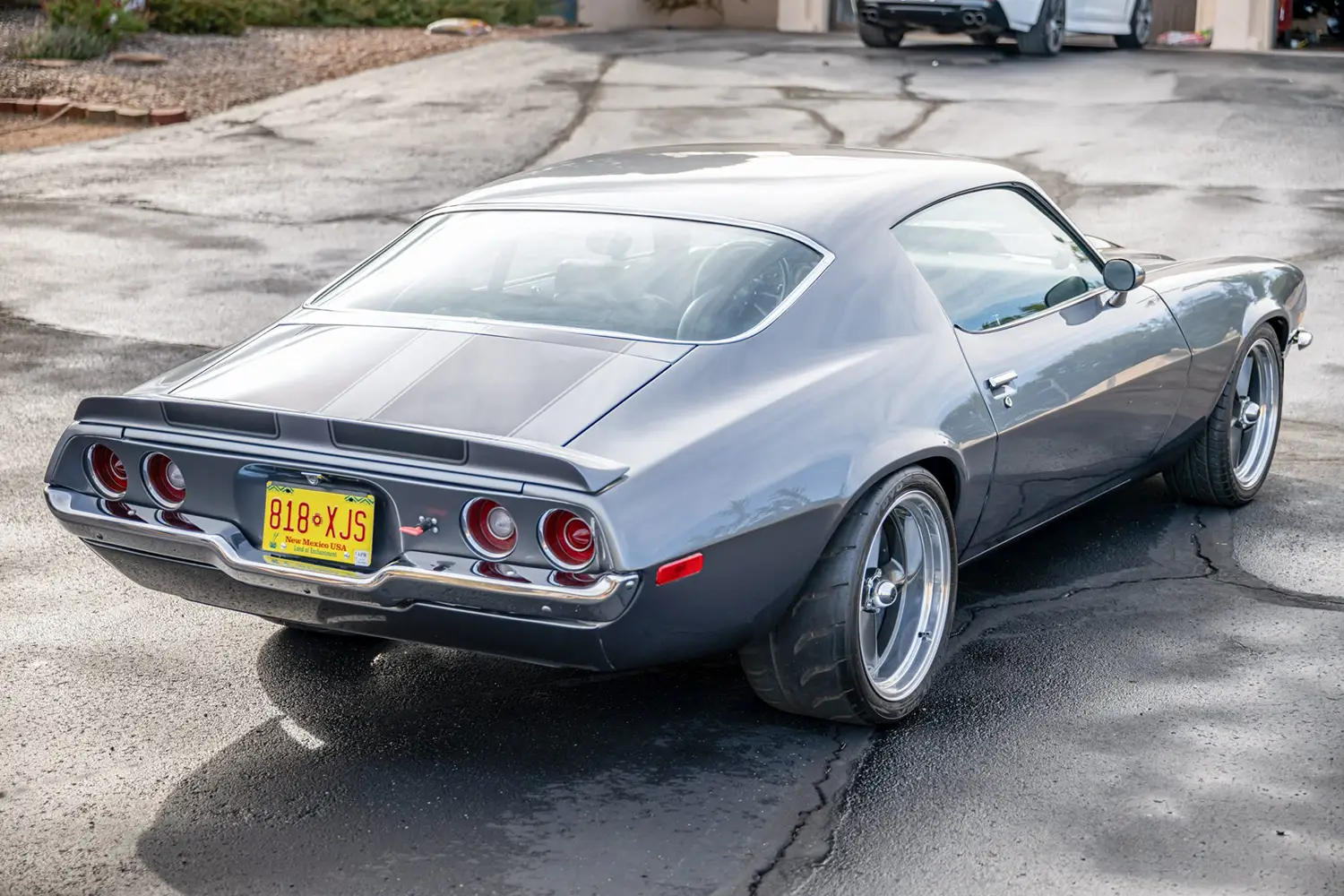
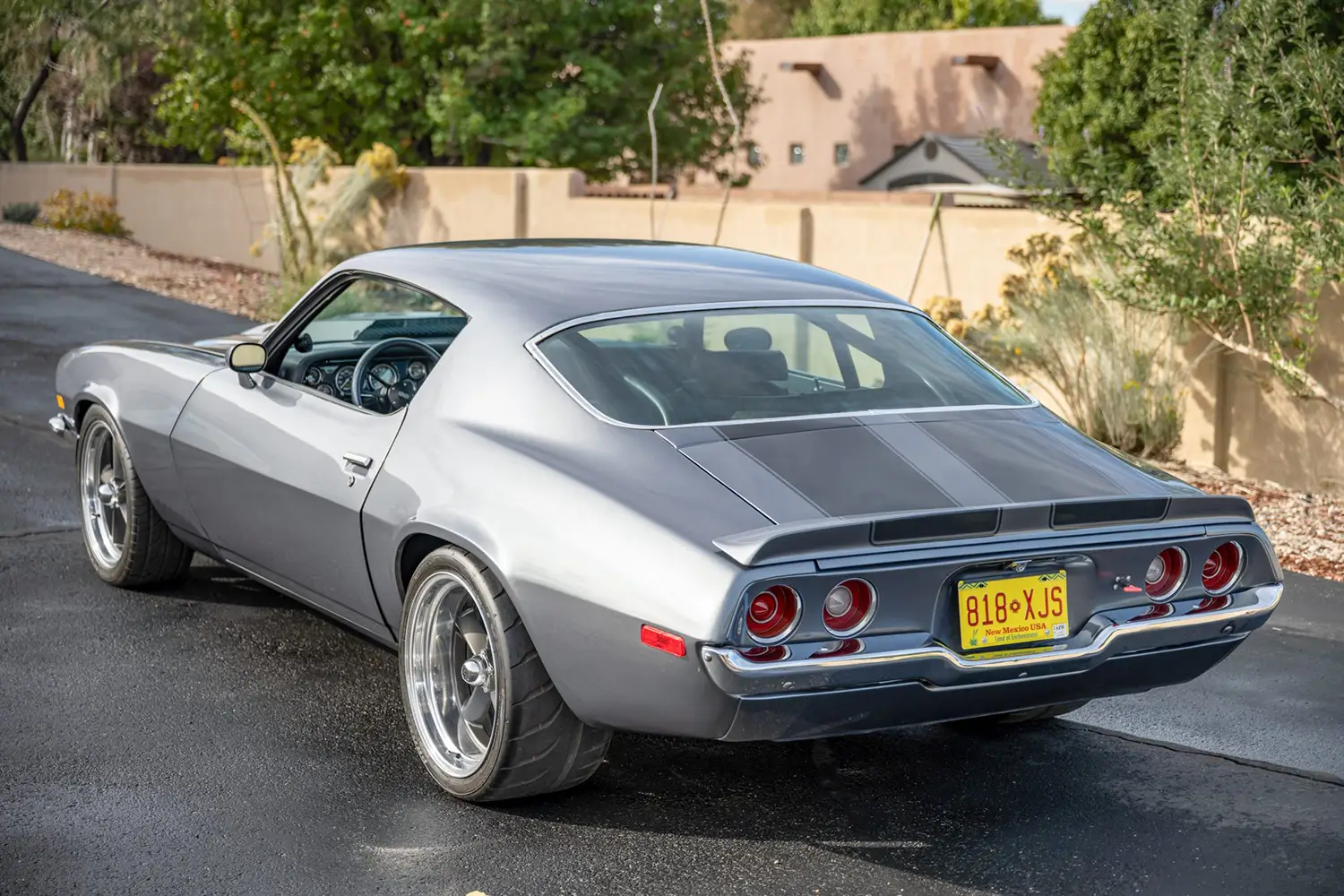
The visual character of this 1970 Chevrolet Camaro is defined by its Lamborghini-sourced Grigio Estoque finish, a sophisticated metallic gray accented by charcoal racing stripes. The bodywork was meticulously prepared with patch panels to eliminate rust before the split-bumper “RS style” front end and aftermarket cowl hood were installed. It sits low over 18-inch Vintage Wheel Works alloy wheels, which are wrapped in staggered Nitto and Toyo rubber to maximize its wide-track stance. Functional aerodynamics are provided by front and rear spoilers, while a battery cut-out switch on the tail panel hints at the car’s serious performance and track-ready capabilities.
Race-Spec Safety and High-Fidelity Sound
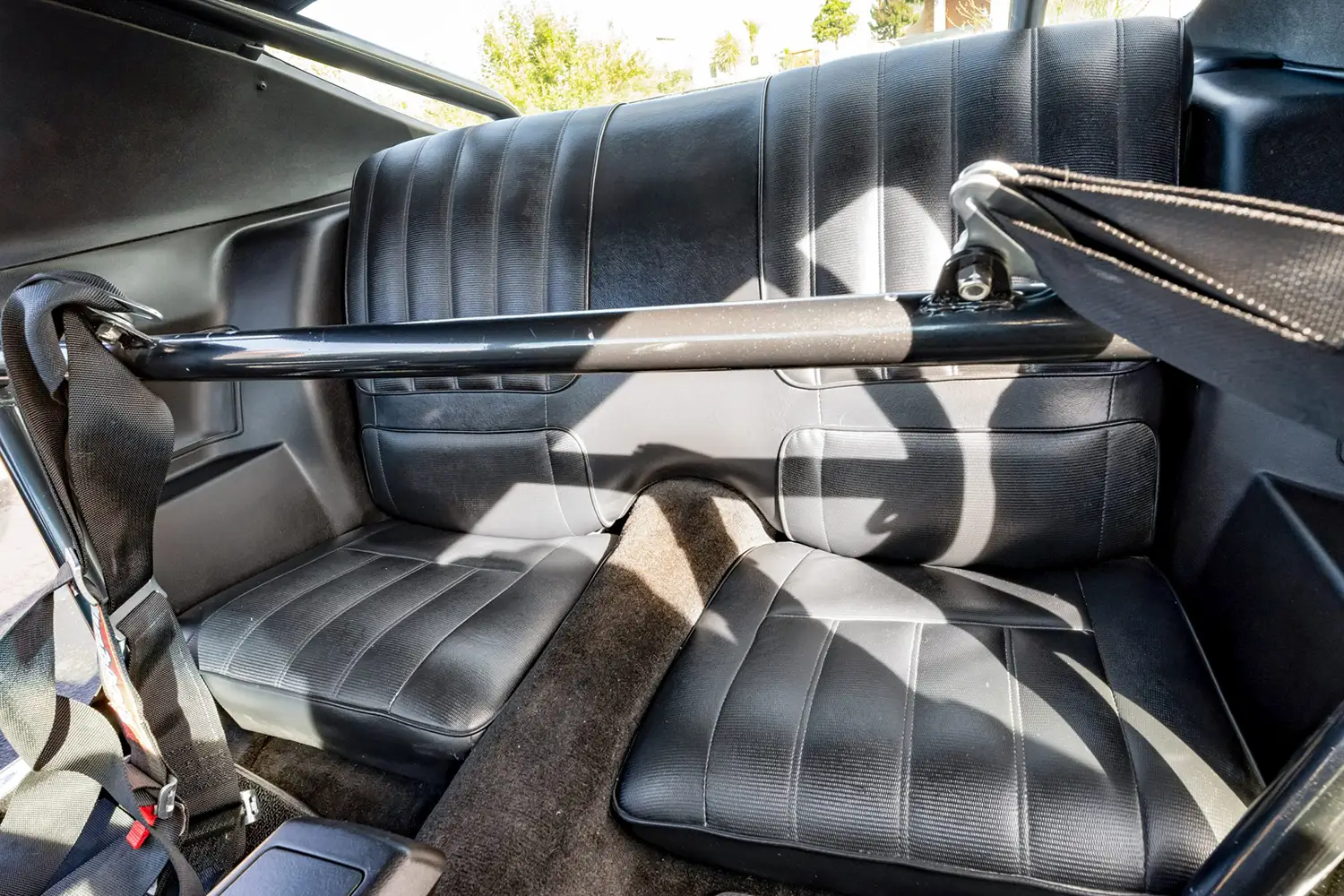
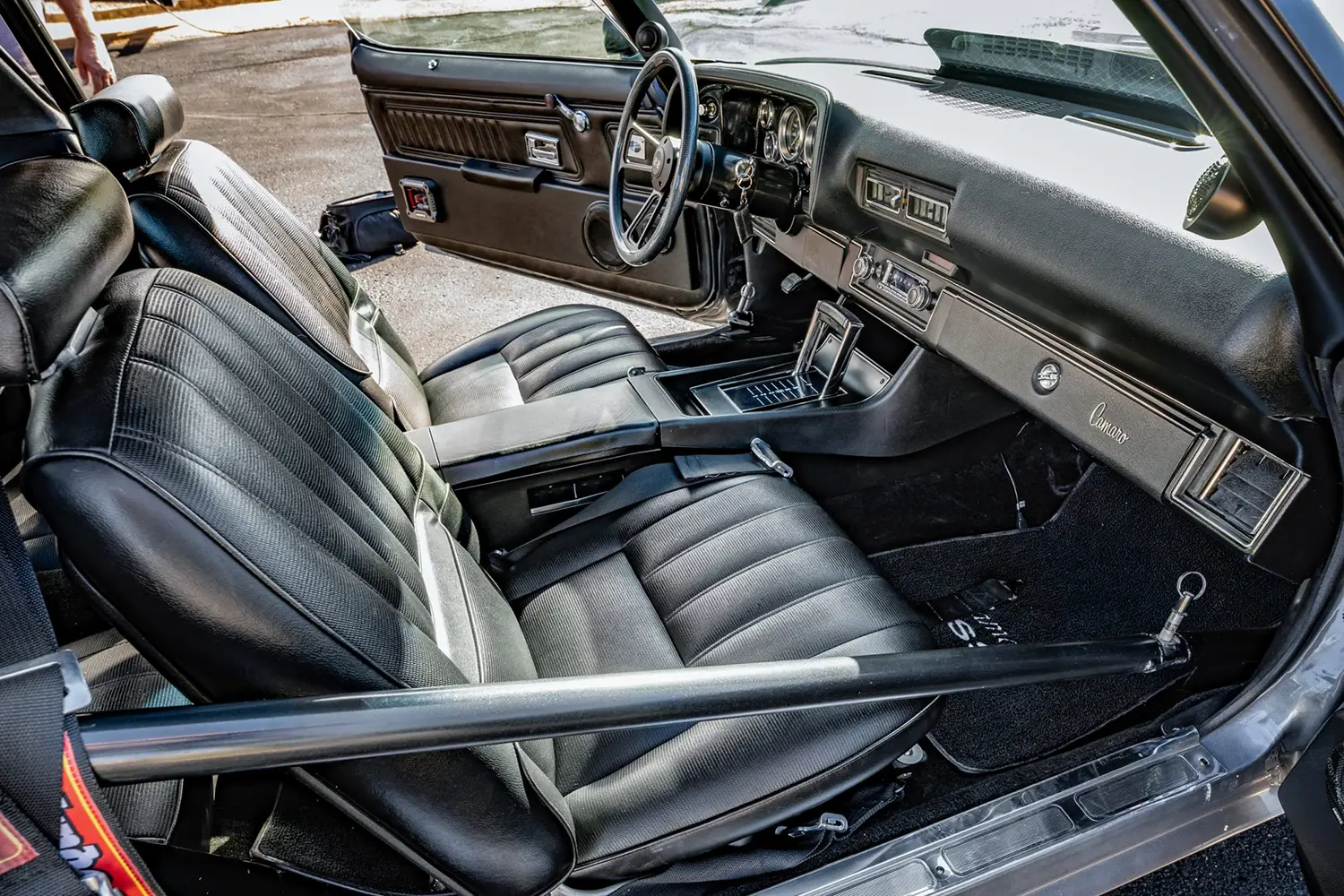
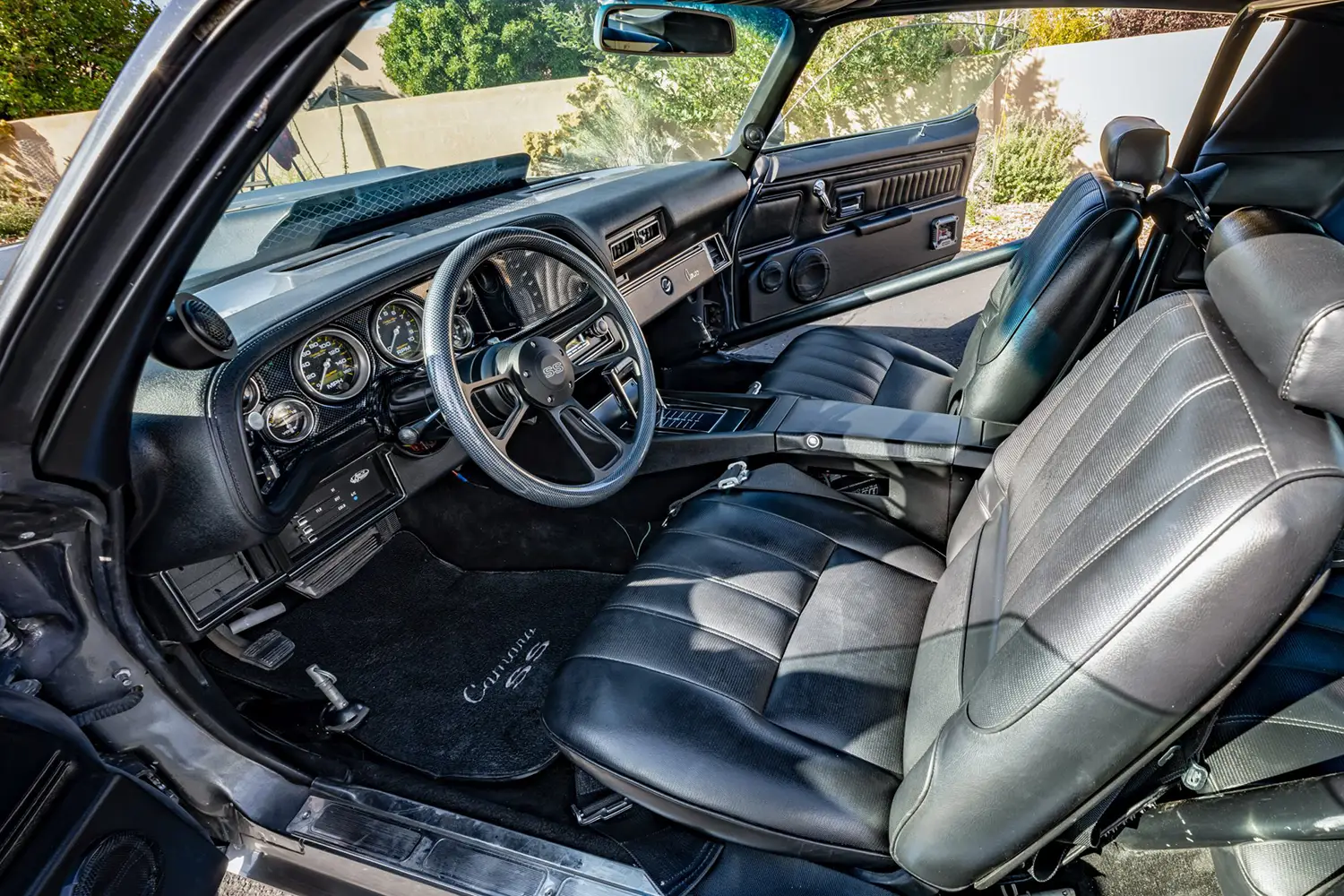
Inside the cabin, the environment is a blend of competition-grade safety and modern luxury. Re-trimmed black vinyl bucket seats are protected by a custom roll bar featuring removable door bars and a crossmember for daily usability. The driver is centered behind a carbon-look steering wheel and a matching instrument bezel housing AutoMeter gauges. Modern comforts were not overlooked, as the car is equipped with a Vintage Air climate control system and a high-end audio suite. This includes a Custom Autosound head unit driving U.S. Amps amplifiers, Kicker subwoofers, and Hertz component speakers, all protected by extensive sound-deadening insulation throughout the floors and panels.
700-Horsepower 540ci V8 and 4L80E Precision
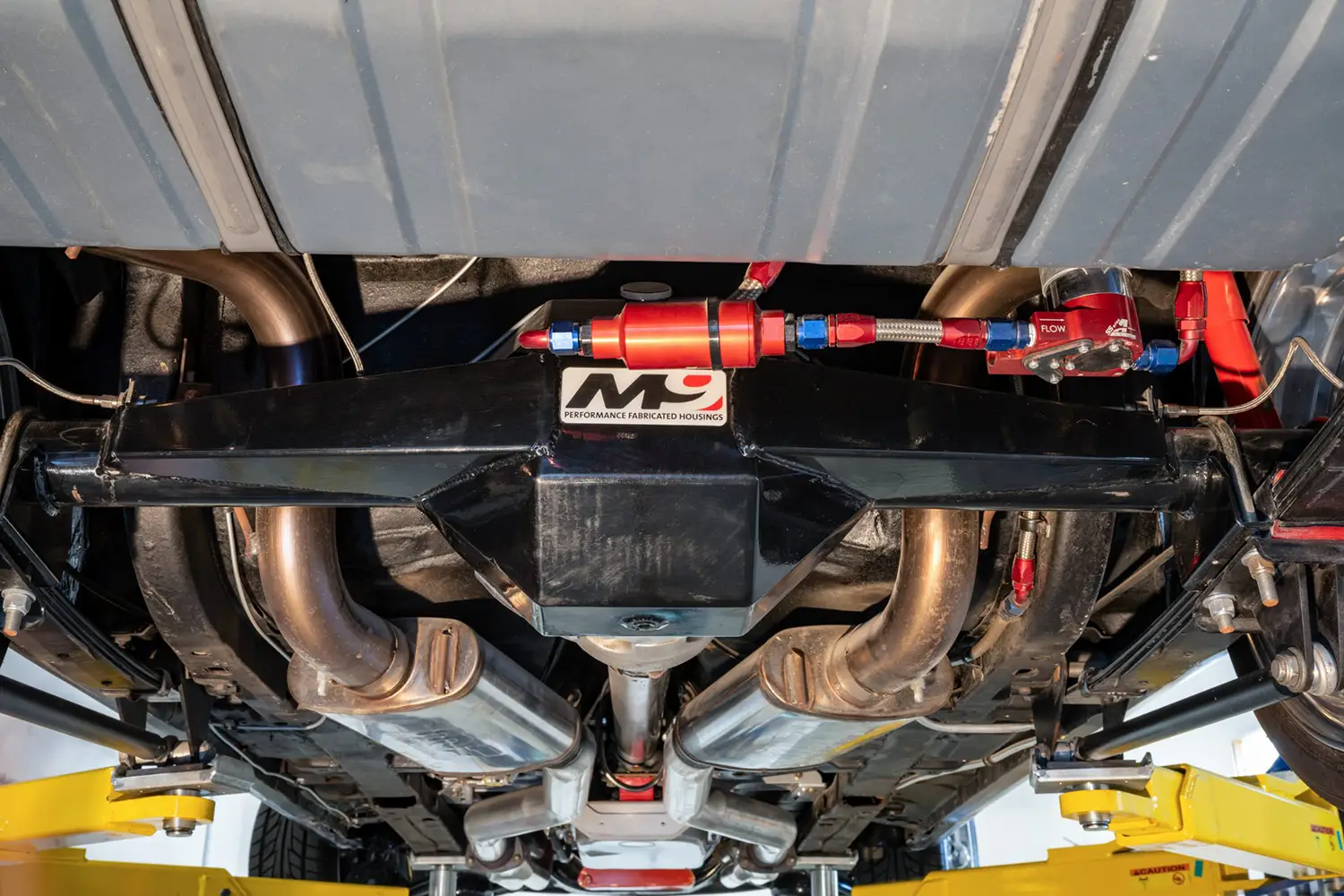
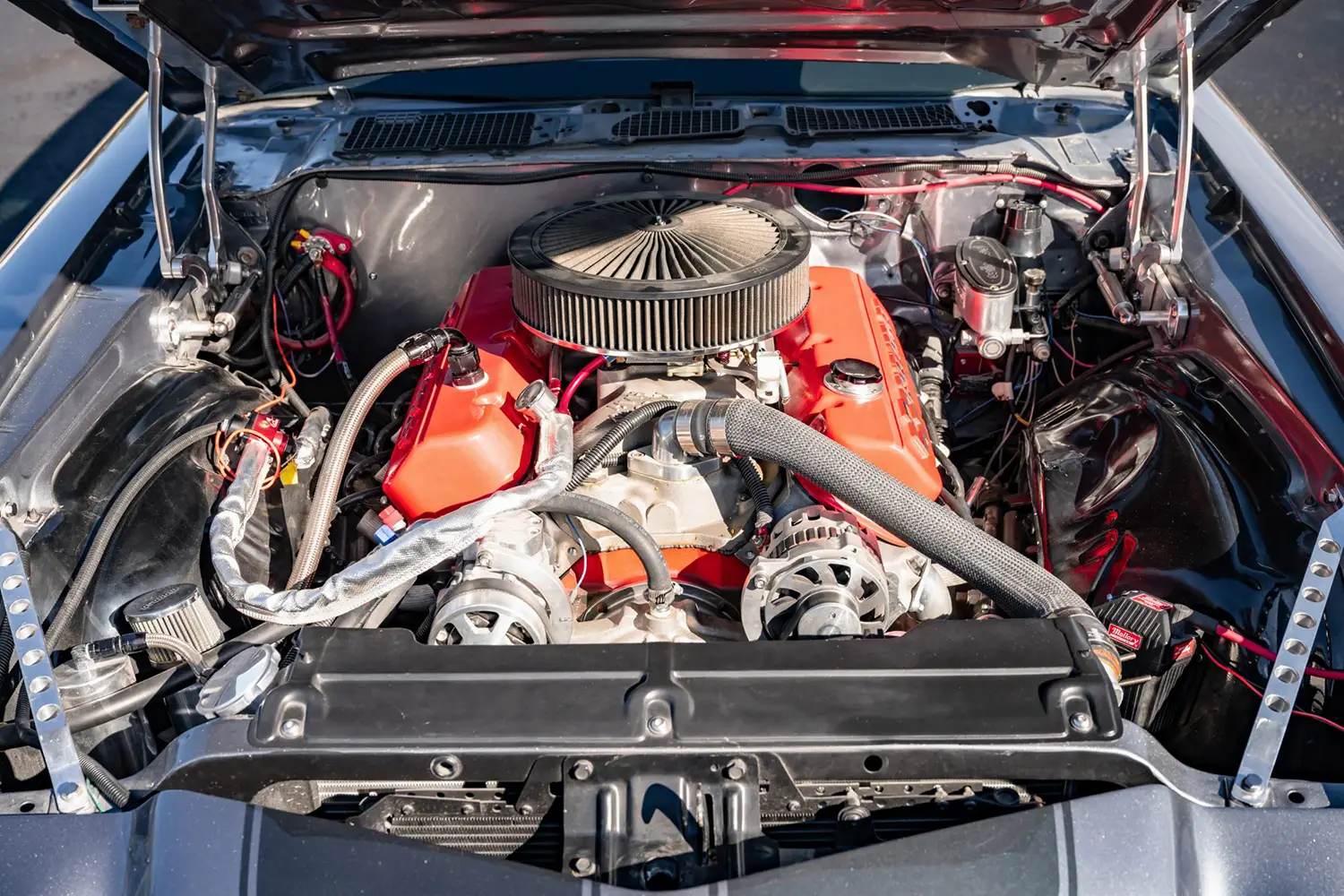
Performance is anchored by a massive 540ci big-block V8 built with an Eagle forged rotating assembly and Brodix BB2 aluminum cylinder heads. Fed by a Holley four-barrel carburetor on a Brodix intake, the engine produces over 700 hp / 710 PS and an estimated 650 lb-ft / 881 Nm of torque. This immense force is managed by a Hughes Performance 4L80E four-speed automatic transmission and a Moser M9 fabricated rear end with a Wavetrac limited-slip differential. The chassis is equally advanced, utilizing Detroit Speed suspension components, CalTracs traction bars, and Wilwood four-wheel disc brakes with drilled and slotted rotors to ensure the car handles as well as it accelerates.
| Specification Segment | Technical Detail |
|---|---|
| Engine Architecture | 540ci Big-Block V8 |
| Power Output | 700+ hp / 710 PS |
| Estimated Torque | 650 lb-ft / 881 Nm |
| Transmission | Hughes 4L80E 4-Speed Automatic |
| Rear End | Moser M9 Fabricated / Wavetrac LSD |
| Suspension | Detroit Speed Front & Rear / CalTracs |
| Braking Hardware | Wilwood 4-Wheel Drilled/Slotted Discs |
| Wheel Specification | 18-Inch Vintage Wheel Works |
| Compression Ratio | 10.6:1 |
| Estimated Curb Weight | 3,650 lbs / 1,655 kg |
Market Context and Pro-Touring Rivals
The 1970 Chevrolet Camaro sits in a highly competitive market for pro-touring builds, often compared to the 1969 Camaro or the early second-generation Firebirds. While many builds focus solely on straight-line speed, the inclusion of Detroit Speed engineering puts this car in the same handling conversation as the modern Challenger Hellcat or high-end aftermarket Corvette builds. The “split-bumper” aesthetic is particularly sought after by enthusiasts, representing the purest form of the second-generation body. Given the $130k build cost, this Camaro offers a significant value proposition for collectors seeking a finished, high-specification vehicle that would take years to replicate from scratch.
Reliability and Long-Term Value Trends
Investing in a pro-touring build of this magnitude provides the benefit of modern mechanical integrity within an iconic shell. The 540ci big-block utilizes top-tier components like Eagle and Brodix, while the Ron Davis cooling system and mini-starter address common big-block heat issues. With a Moser M9 rear end and 4L80E transmission, the drivetrain is engineered to withstand the 700-horsepower output without compromise. As values for first-generation F-bodies have plateaued, the early second-generation 1970 models have seen a steady rise in popularity, making this low-mileage build a strategic asset for the performance-minded collector.
Disclaimer: Content on this site is for informational and entertainment purposes only. Details, analyses, and opinions reflect current trends and personal views, not professional or financial advice. Always verify information with official sources before making any decisions.
Source: bringatrailer.com