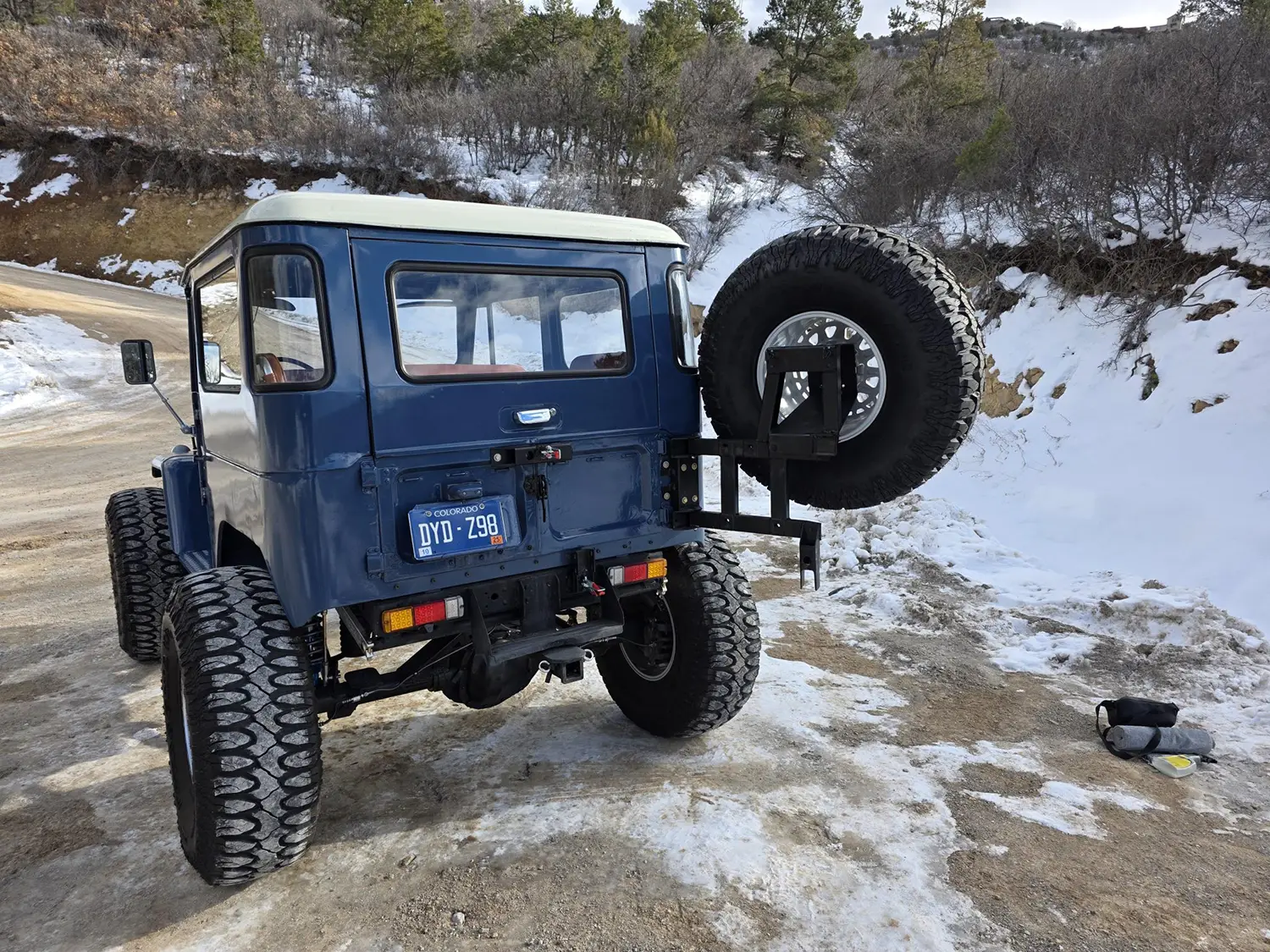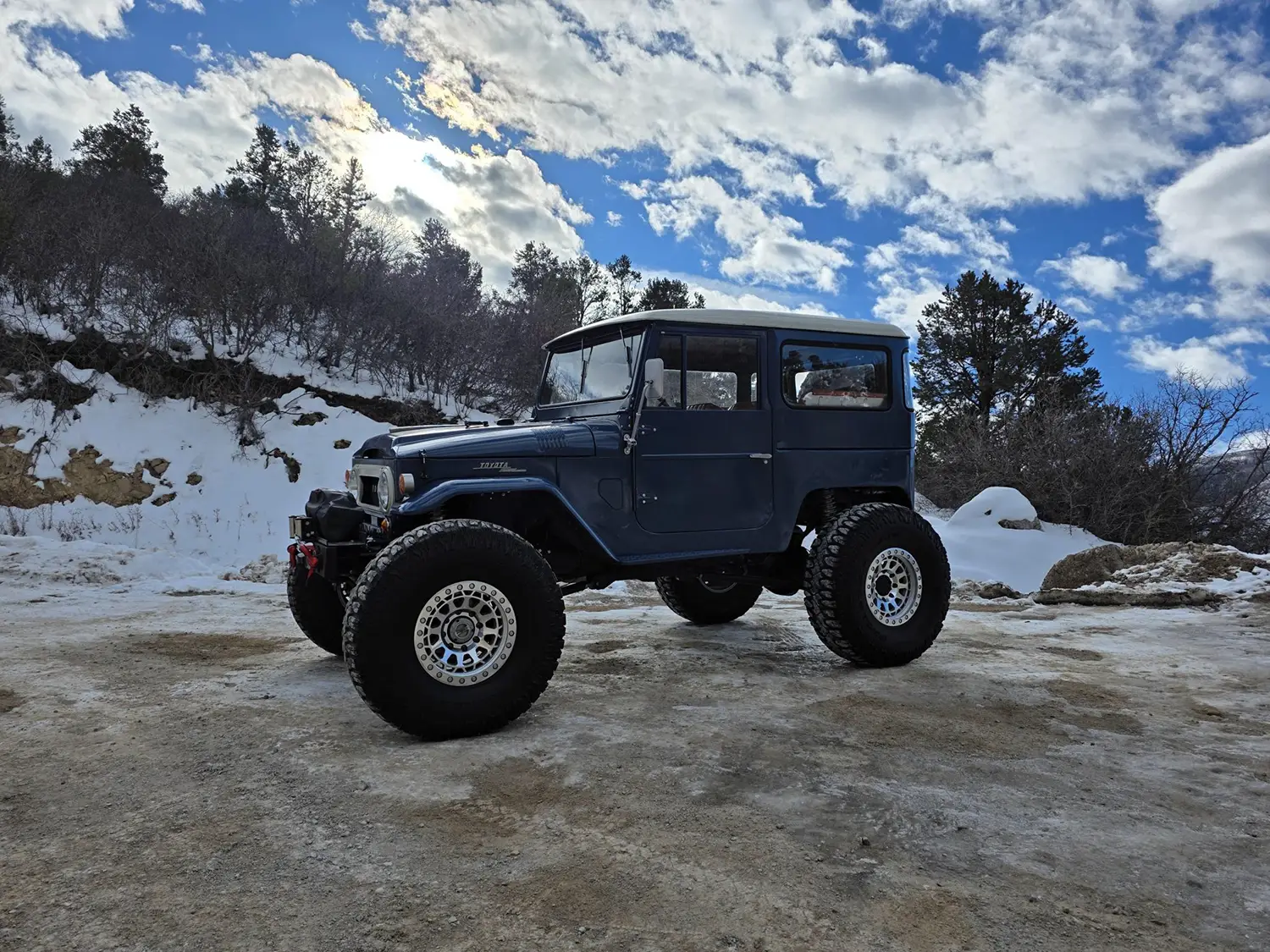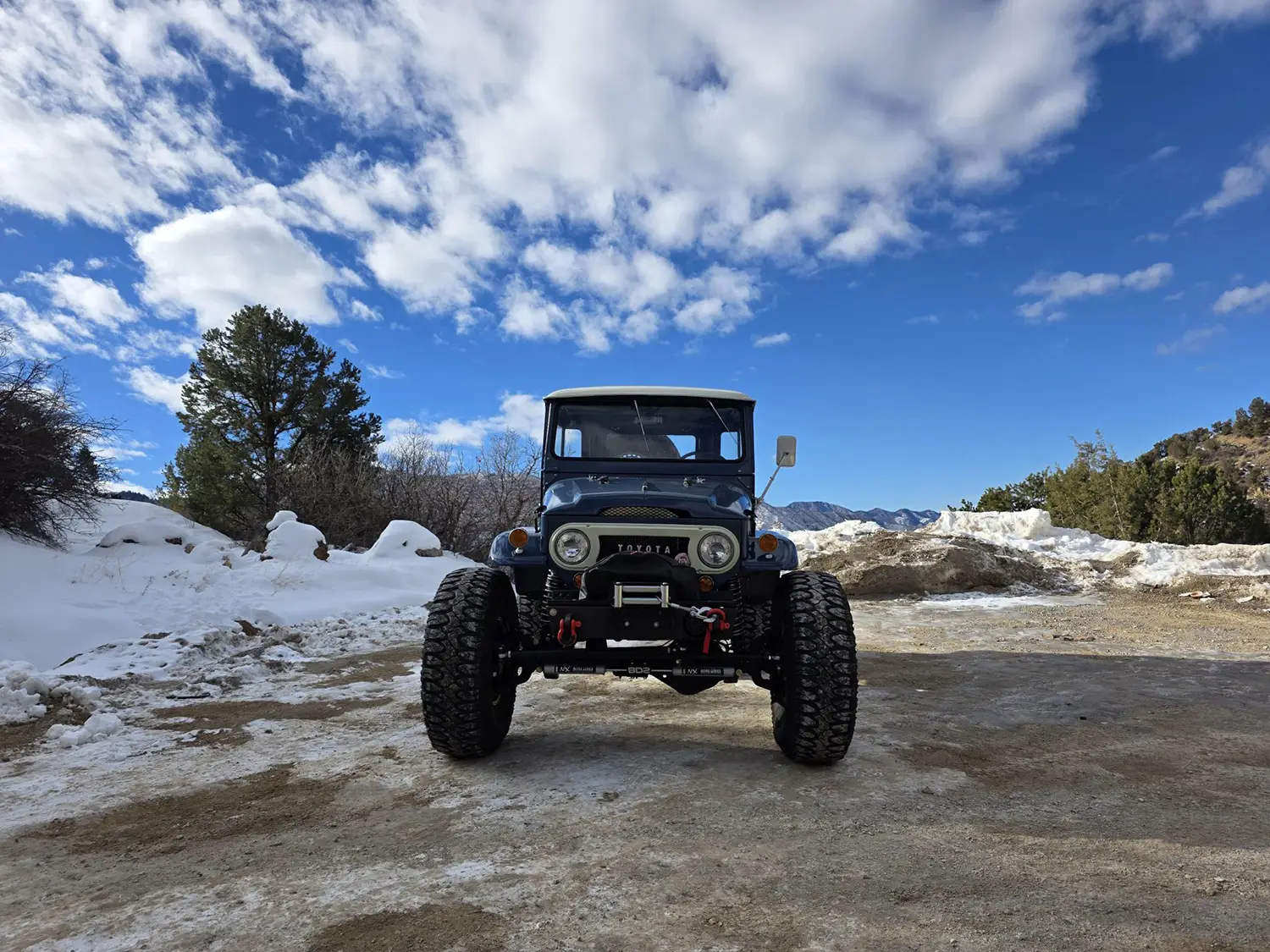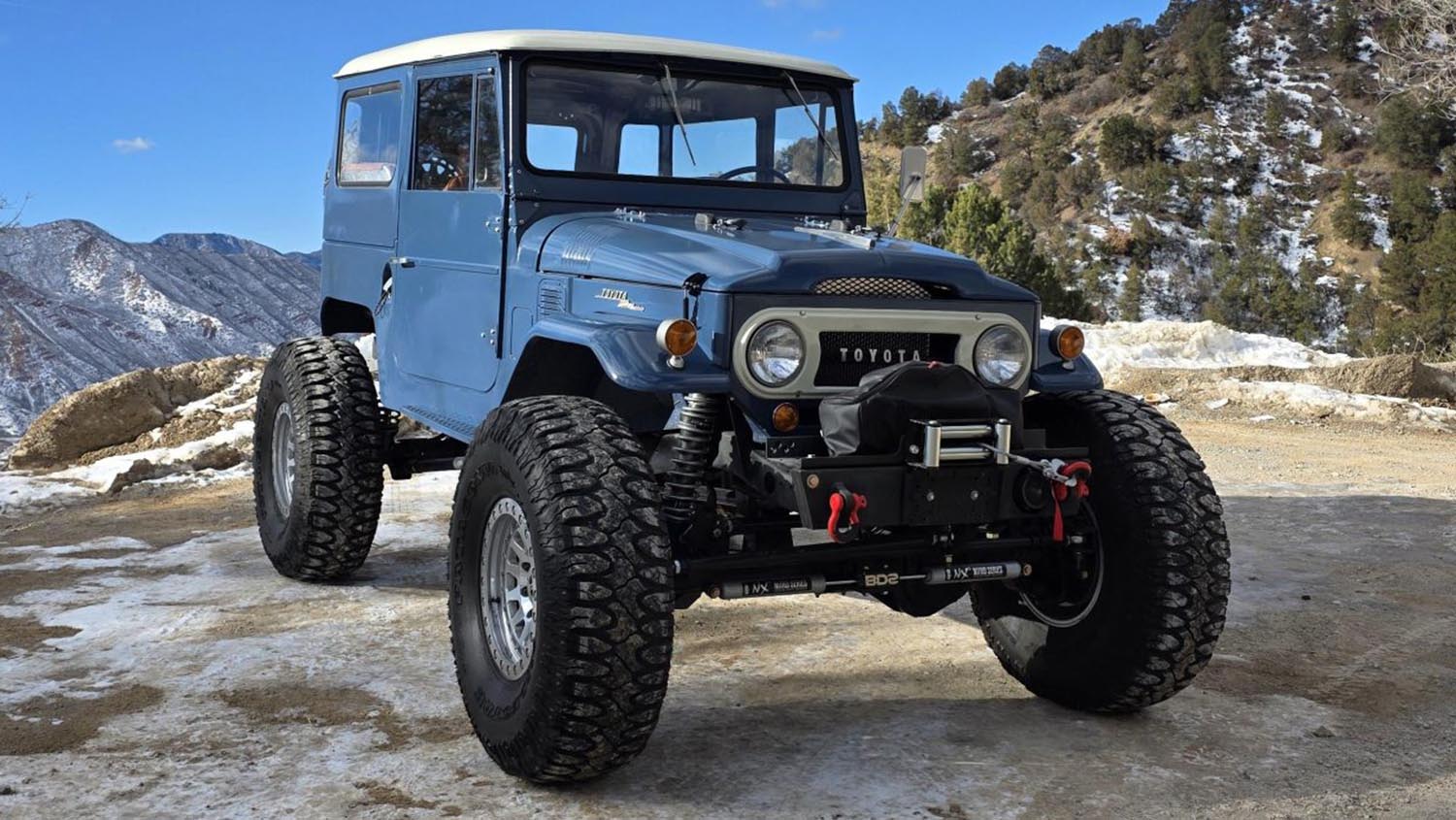
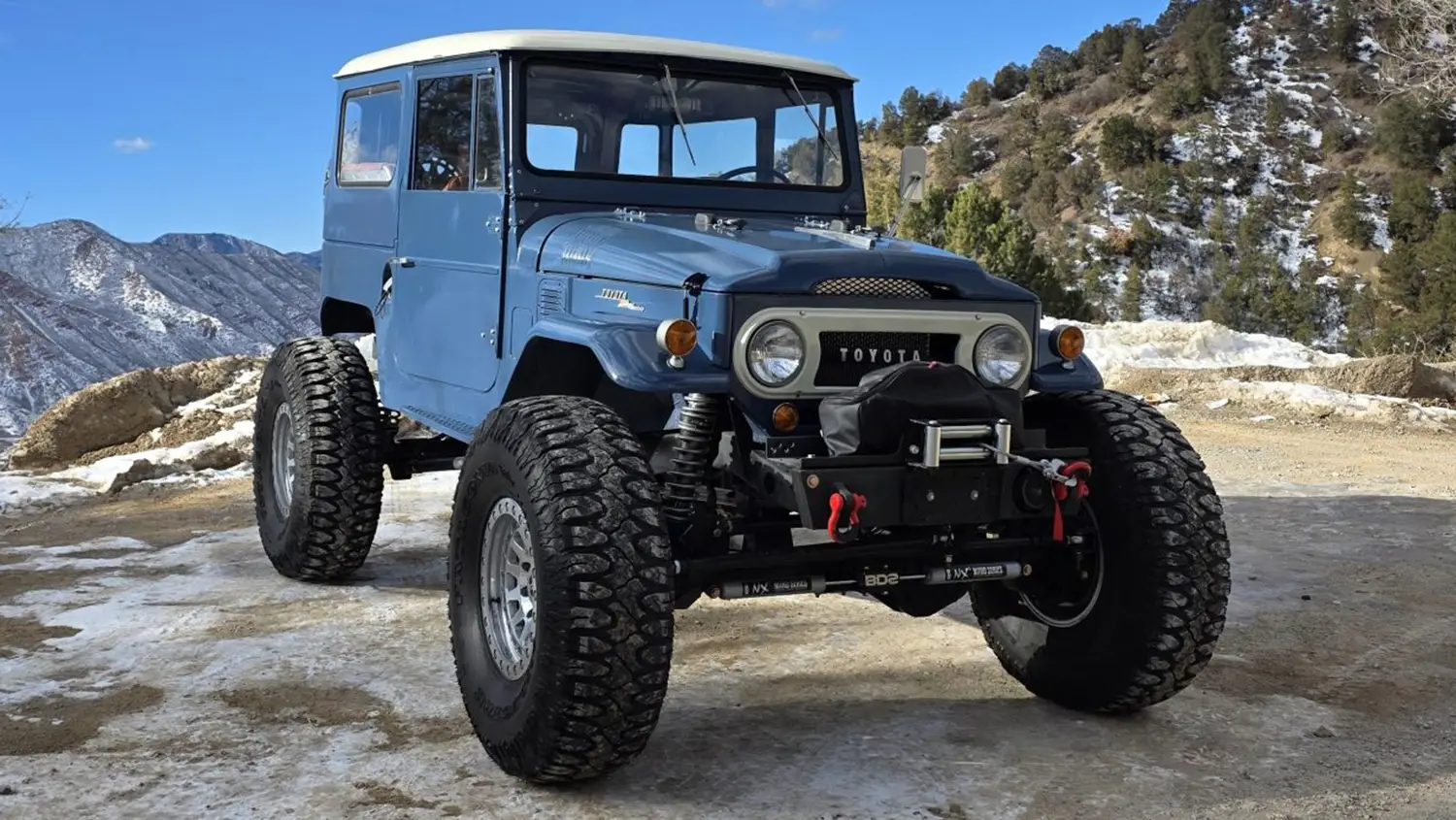
The 1966 Toyota Land Cruiser FJ40 is a vehicle that defines the rugged spirit of early off-roading. While the original inline-six engines were reliable, modern adventurers often seek more power and drivetrain durability. This specific blue example has been thoroughly modified to bridge that gap. It retains the iconic silhouette that enthusiasts love while hiding a high-performance American heart. Every modification on this truck serves to enhance its capability on difficult terrain. From the boxed frame to the heavy-duty axles, it is built for the serious trail.
Vortec V8 Power and Advanced Electronics
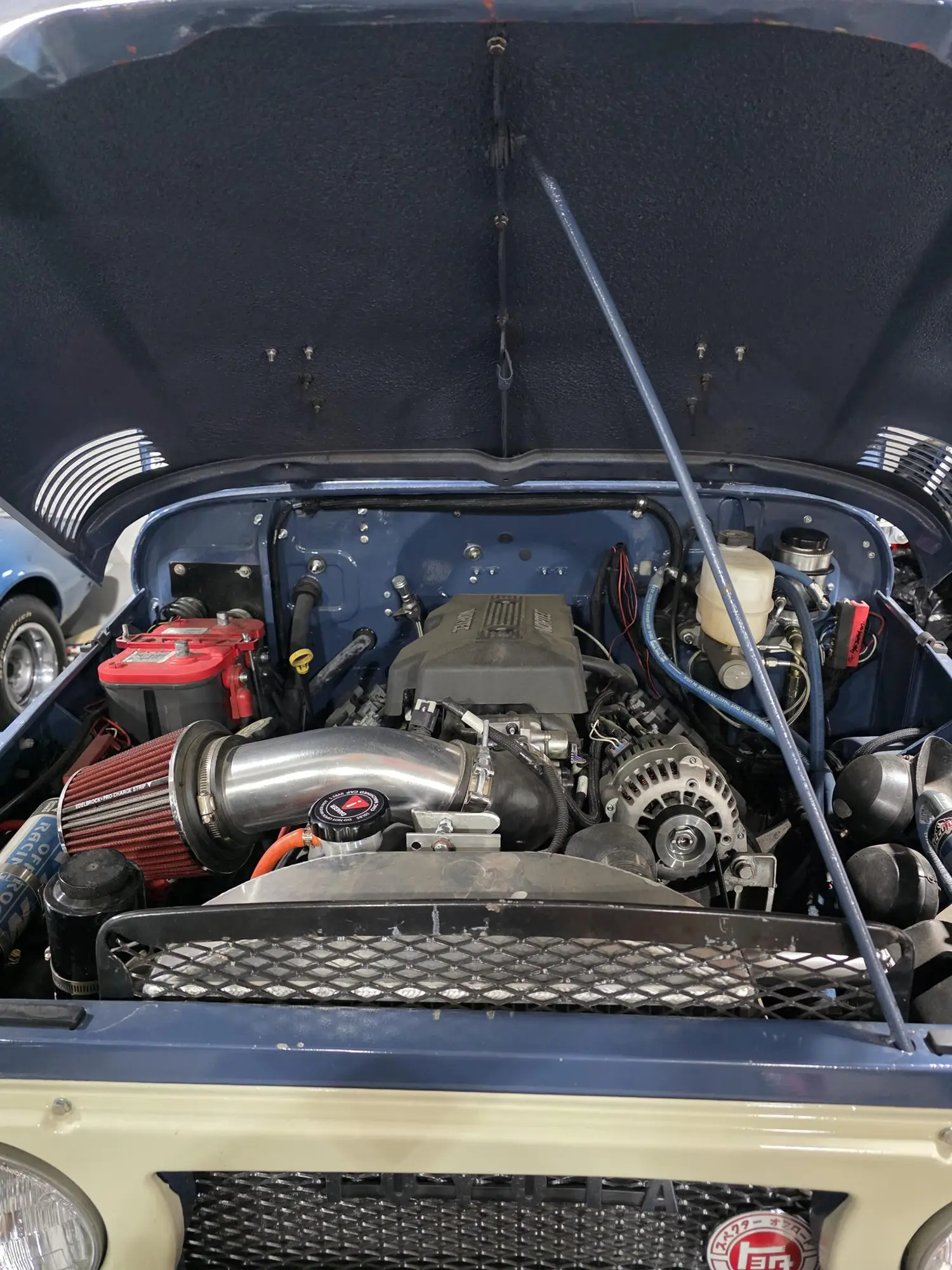
The most significant change to this 1966 Toyota Land Cruiser FJ40 is the 5.3-liter Vortec V8 engine. This remanufactured powerplant provides a massive increase in torque over the factory engine. A Holley Terminator X Max ECU manages the engine vitals for optimal performance and reliability. To keep temperatures under control during slow crawls, an aluminum radiator has been installed. The exhaust note is refined through a Flowmaster muffler, giving it a distinct V8 rumble. This swap transforms the driving experience, making highway speeds and steep climbs effortless.
Heavy Duty Drivetrain and Axle Upgrades
Engineers chose a 4L60E four-speed automatic transmission to handle the power of the new V8. This gearbox is paired with an NP231J dual-range transfer case for versatile off-road gearing. The 1966 Toyota Land Cruiser FJ40 now utilizes a Dana 60 front axle and a Sterling rear axle. These components are far stronger than the original Toyota hardware. Adams driveshafts ensure that power reaches the wheels without failure under high stress. A four-link rear suspension setup further improves articulation and traction over uneven obstacles.
Chassis and Suspension for Extreme Terrain
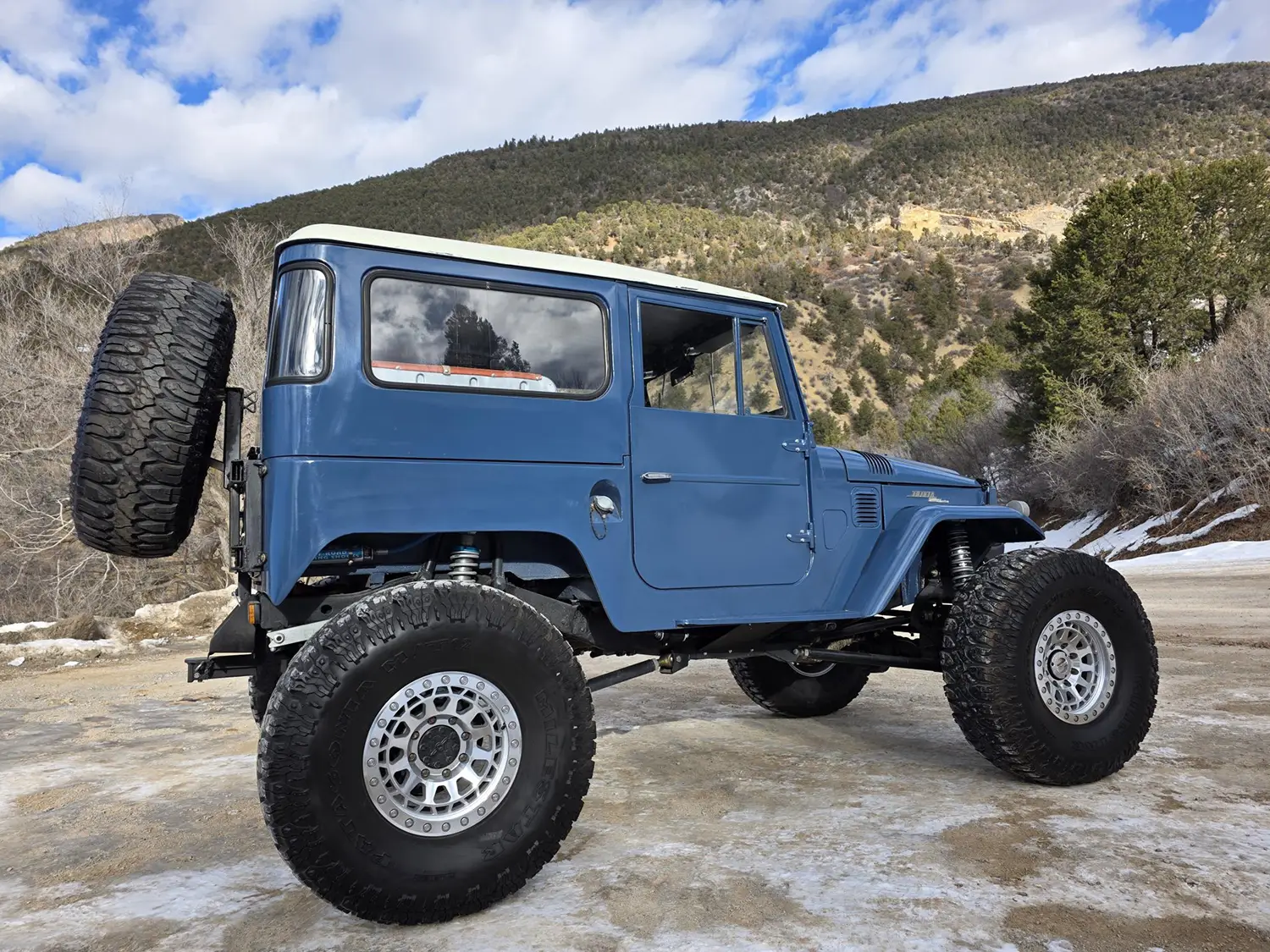
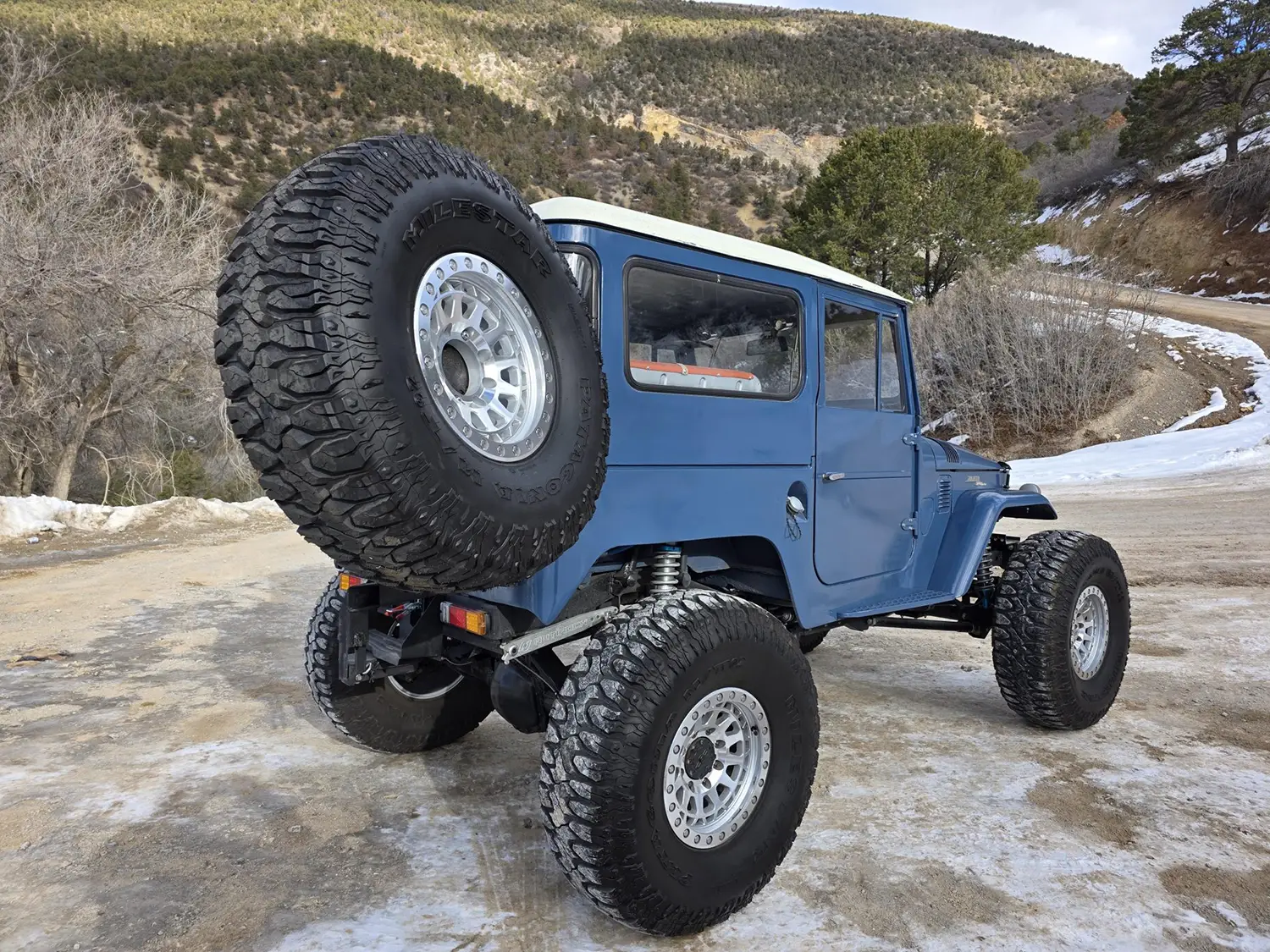
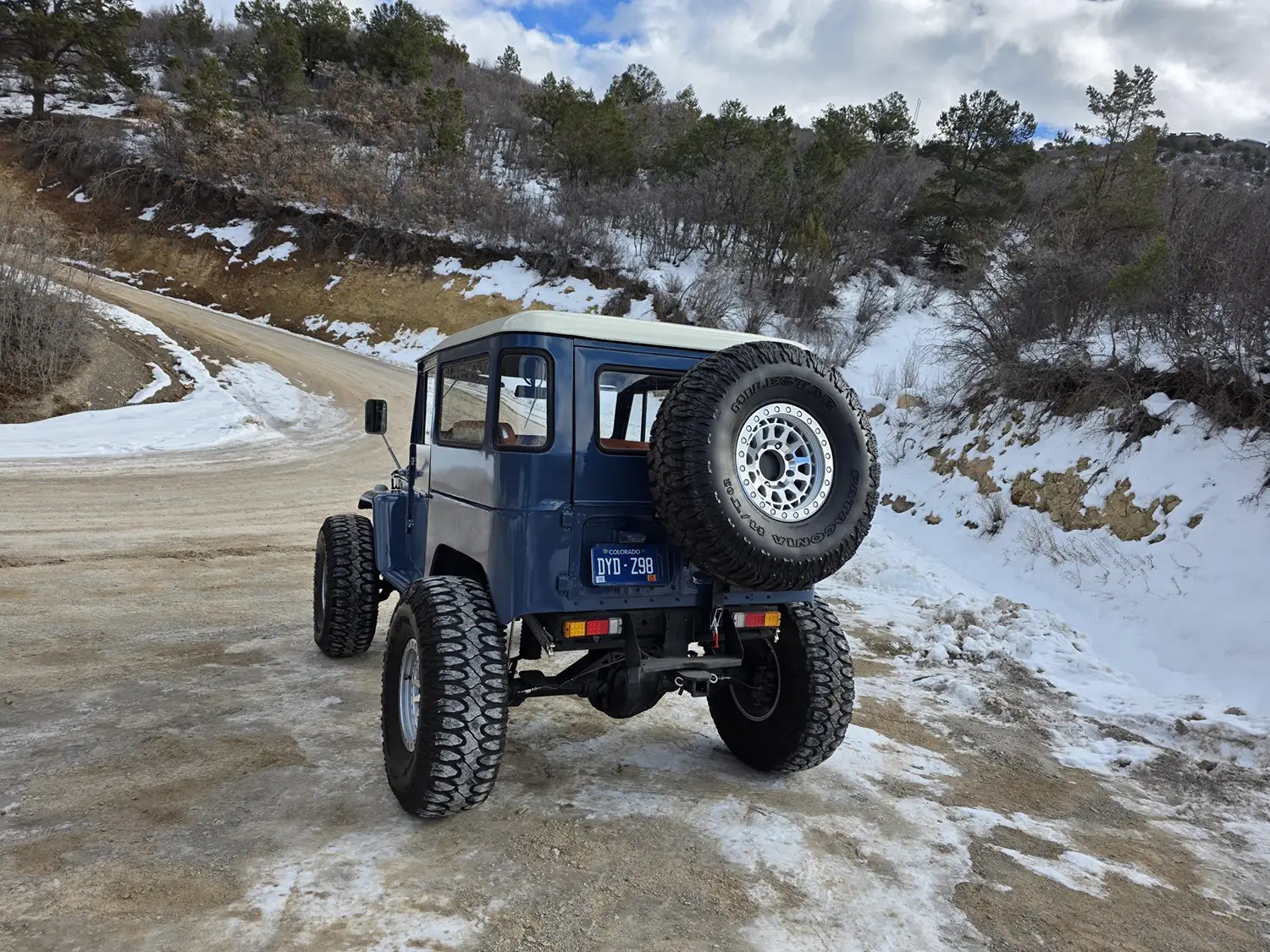
This 1966 Toyota Land Cruiser FJ40 stands tall on a heavily modified suspension system. King Off-Road remote-reservoir shocks and Eibach springs provide excellent damping for both rocks and washboards. A BDS dual steering stabilizer helps maintain control when running the massive 40-inch Milestar Patagonia tires. The 17-inch Black Rhino wheels offer a modern look while providing the necessary strength. Currie Antirock rear sway bars allow for body control without sacrificing the flexibility needed for crawling. Hydroboosted four-wheel disc brakes provide the stopping power required for such large tires.
Custom Interior and Modern Comforts
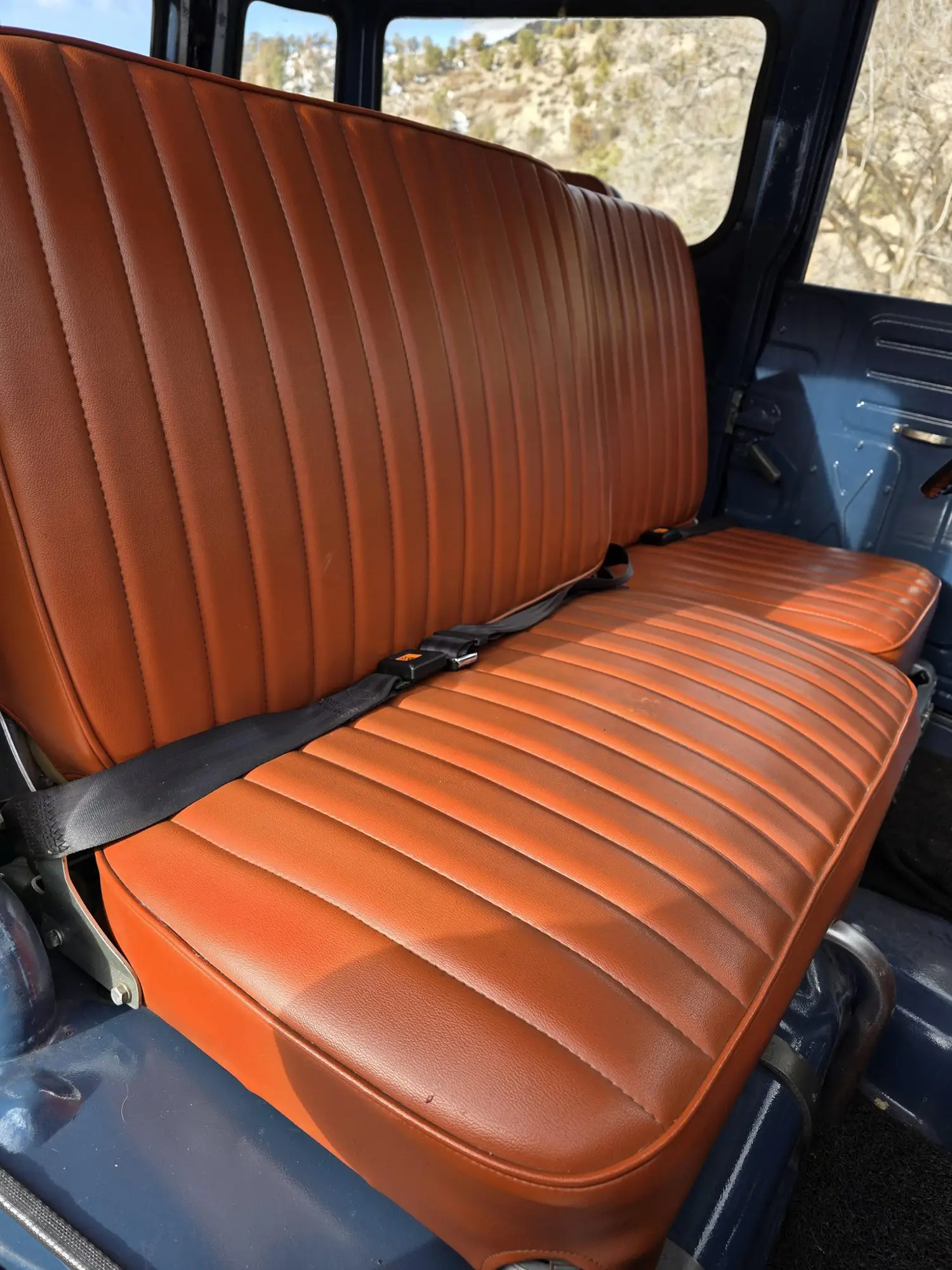
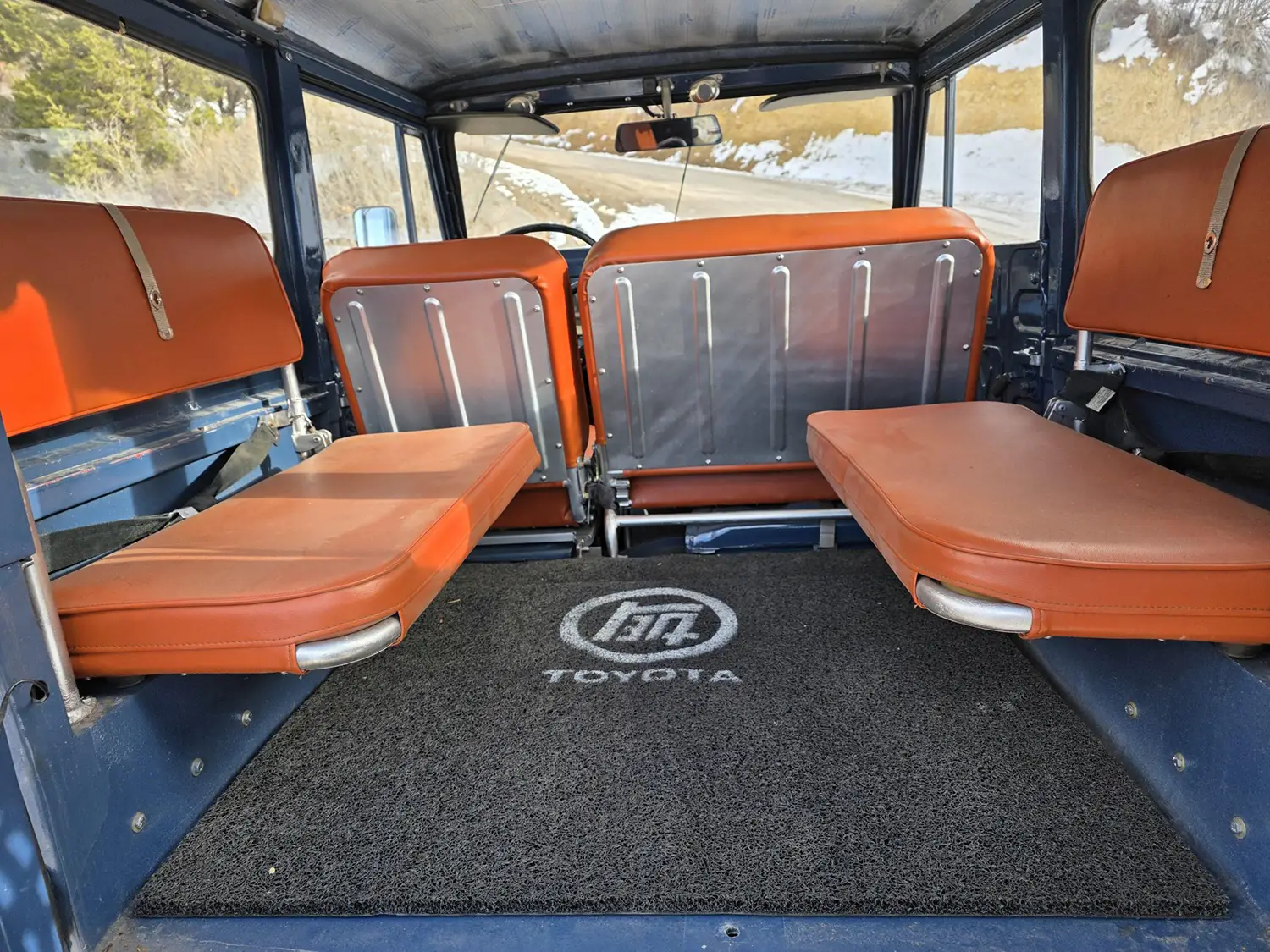
Inside the cabin, the 1966 Toyota Land Cruiser FJ40 offers a surprising mix of vintage and modern. The seats feature unique coral vinyl upholstery, providing a bright contrast to the blue exterior. A Wolfbox rear-view camera system adds much-needed visibility and dash cam functionality. The driver interacts with a Lokar shifter, while a GPS unit accurately controls the factory speedometer. Inward-facing rear seats maintain the classic FJ utility for carrying extra passengers. These updates make the interior a more pleasant place for long days in the dirt.
Performance and Mechanical Specifications
The mechanical profile of this 1966 Toyota Land Cruiser FJ40 is centered on the 5.3-liter Vortec V8. This engine is supported by a 4L60E automatic transmission and a dual-range transfer case. It rides on a four-link rear suspension with King remote-reservoir shocks and 40-inch tires. Braking is handled by a hydroboosted four-wheel disc system for consistent performance. The frame has been boxed and coated in bedliner for long-term durability against the elements. These specifications result in a Land Cruiser that can go where most modern SUVs cannot.

Summary of the FJ40 Build
This 1966 Toyota Land Cruiser FJ40 represents a complete rethinking of a classic platform. It trades the simple mechanics of the past for modern power and extreme chassis components. The combination of a Vortec V8 and heavy-duty axles makes it a formidable tool for any expedition. While the modifications are extensive, the soul of the FJ40 remains clearly visible. It is a well-sorted restomod that is ready for its next adventure in the wild. This build shows exactly what is possible when classic style meets modern engineering.
Disclaimer: Content on this site is for informational and entertainment purposes only. Details, analyses, and opinions reflect current trends and personal views, not professional or financial advice. Always verify information with official sources before making any decisions.
Source: bringatrailer.com