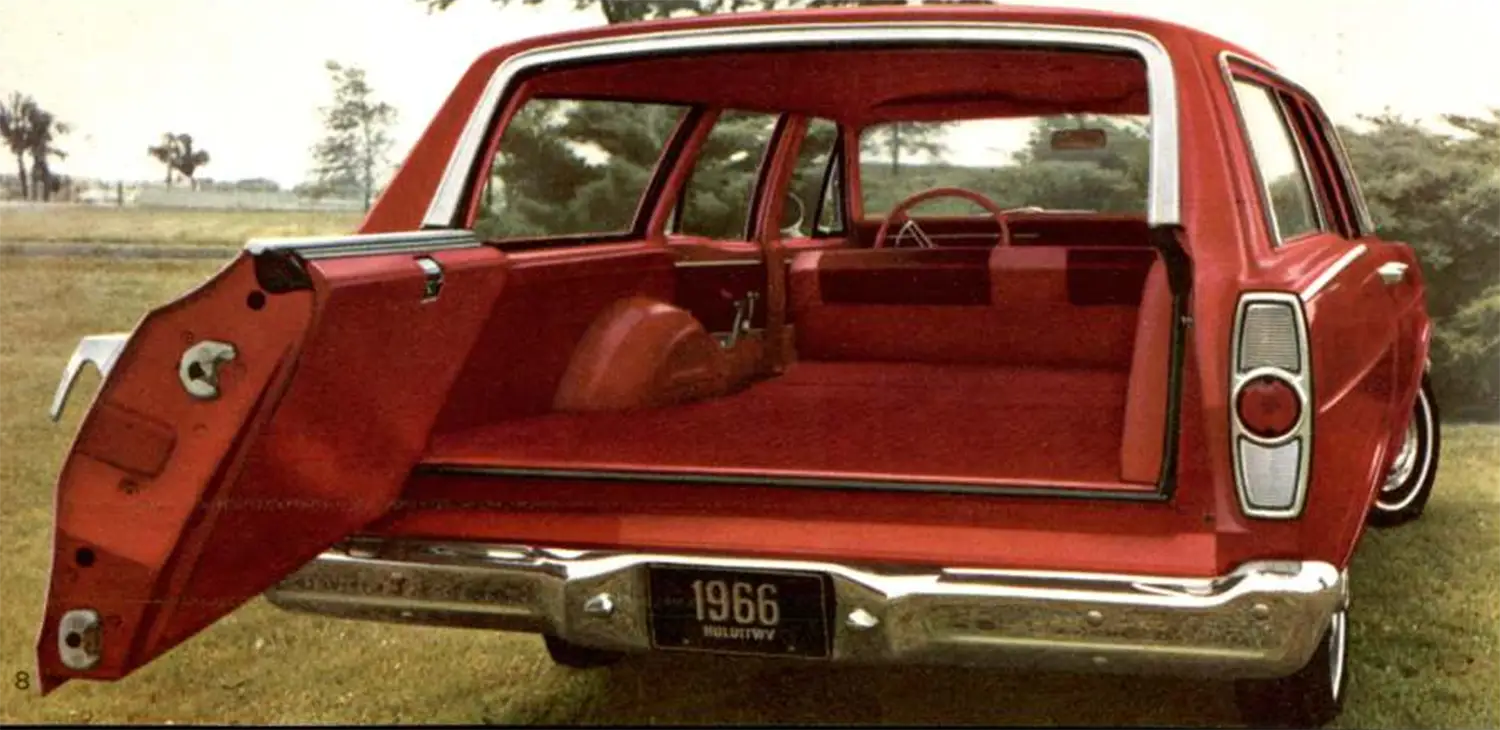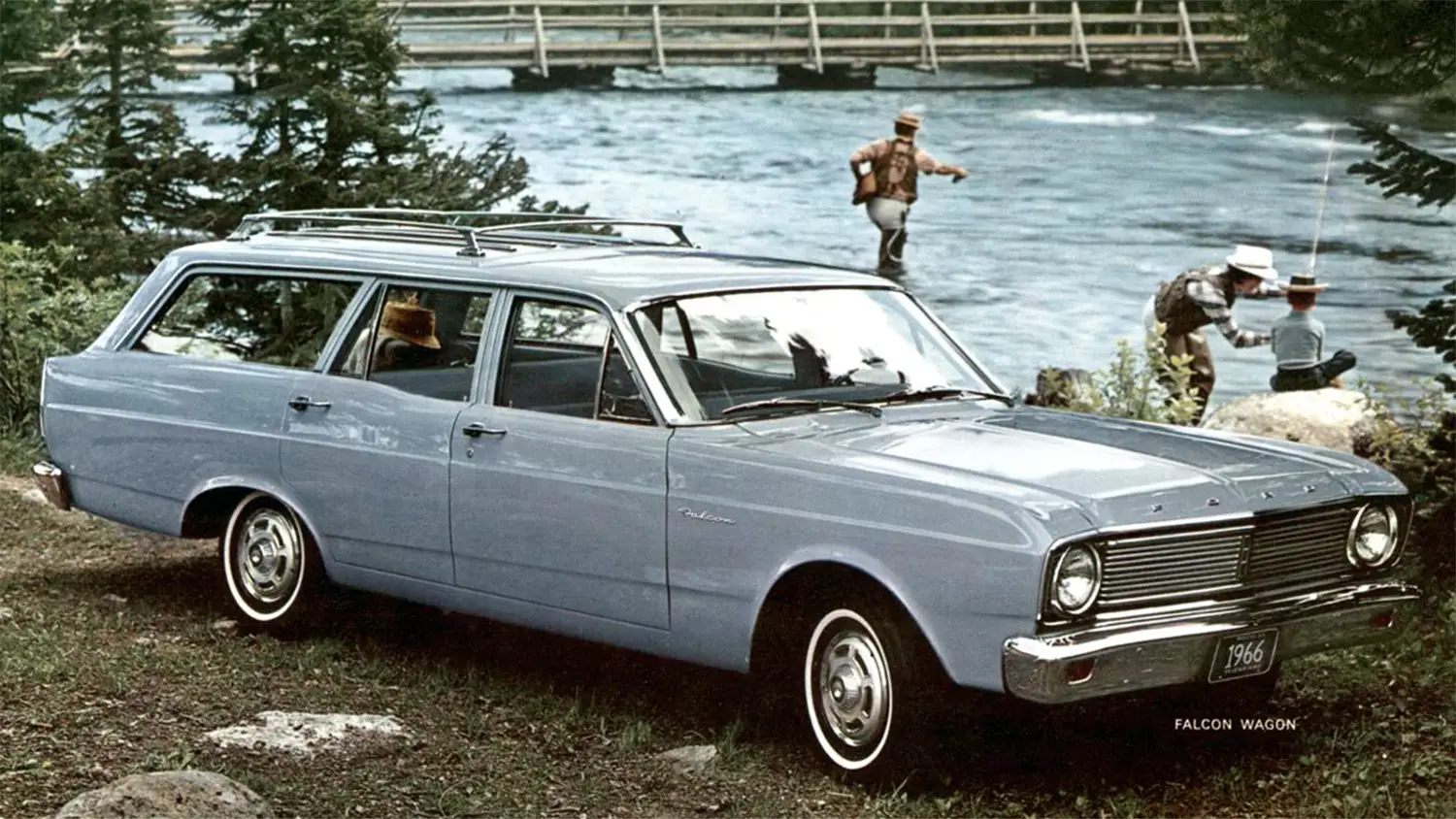
The 1966 Ford Falcon Station Wagon represented a significant shift for the nameplate, moving to a longer 113-inch wheelbase shared with the intermediate Fairlane. This redesign allowed Ford to offer a more spacious interior and a more refined ride while maintaining the Falcon’s reputation for economy and maneuverability. Available in both standard and Futura trims, the wagon was marketed as the “no-compromise” compact, providing families with substantial cargo volume and a range of robust engine options. With its updated unitized construction and stronger suspension, the 1966 model year became a hallmark for durability in the American compact wagon segment.
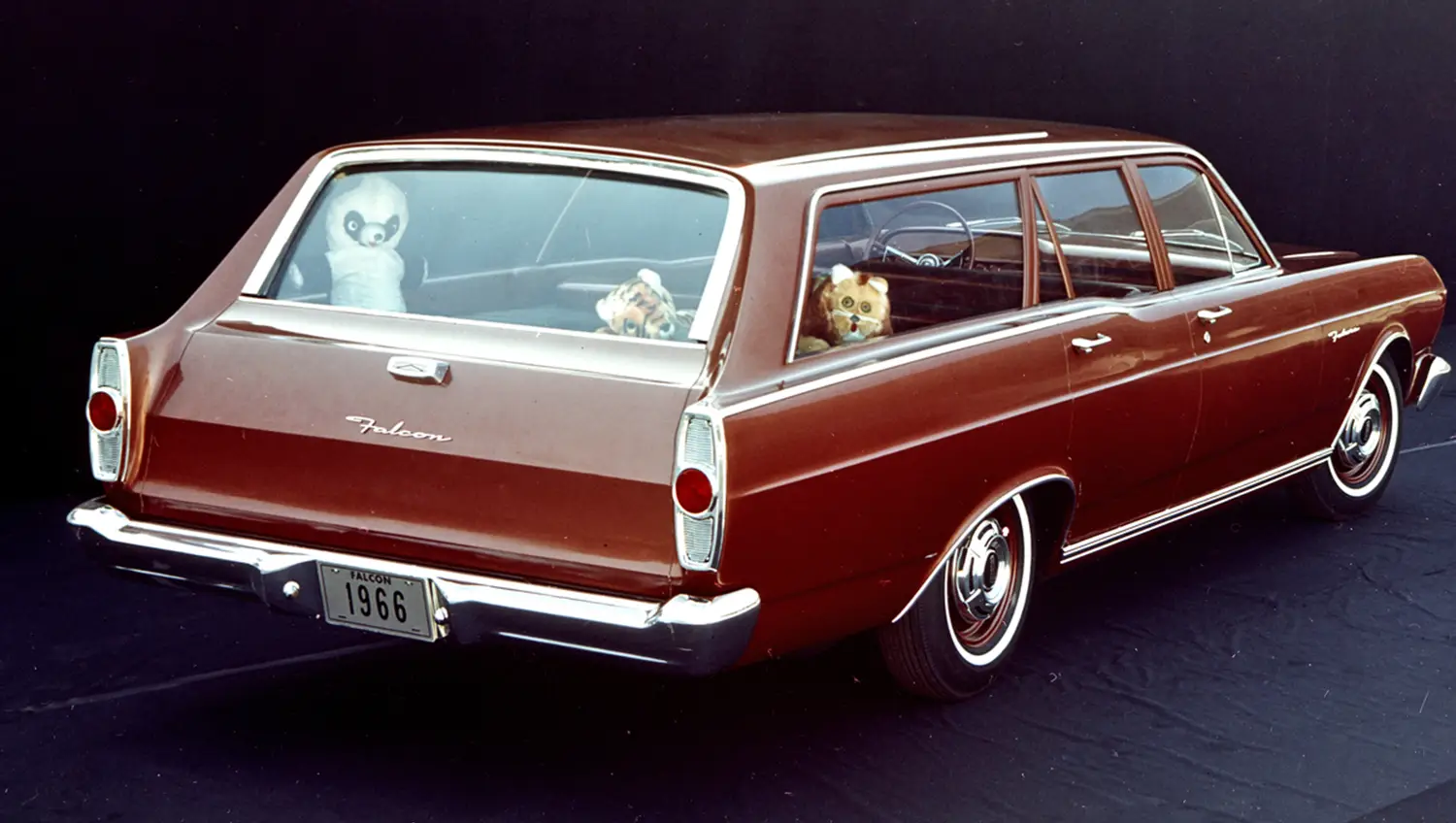
Redesigned Chassis and Increased Cargo Volume
The visual character of the 1966 Ford Falcon Station Wagon is defined by its clean, linear profile and a sparkling aluminum grille that echoed the styling of the larger Fords of the era. By extending the wheelbase, Ford increased the usable cargo volume to a generous 86.7 cubic feet, making it a highly practical choice for the suburbs. Standard exterior features included a manual tailgate with a roll-down window, though a power-operated version was a popular option for ease of loading. Clad in Super Diamond Lustre Enamel, these wagons were built with corrosion-resistant underbody parts and stronger door latches, emphasizing their role as a “toughest in compact history” utility vehicle.
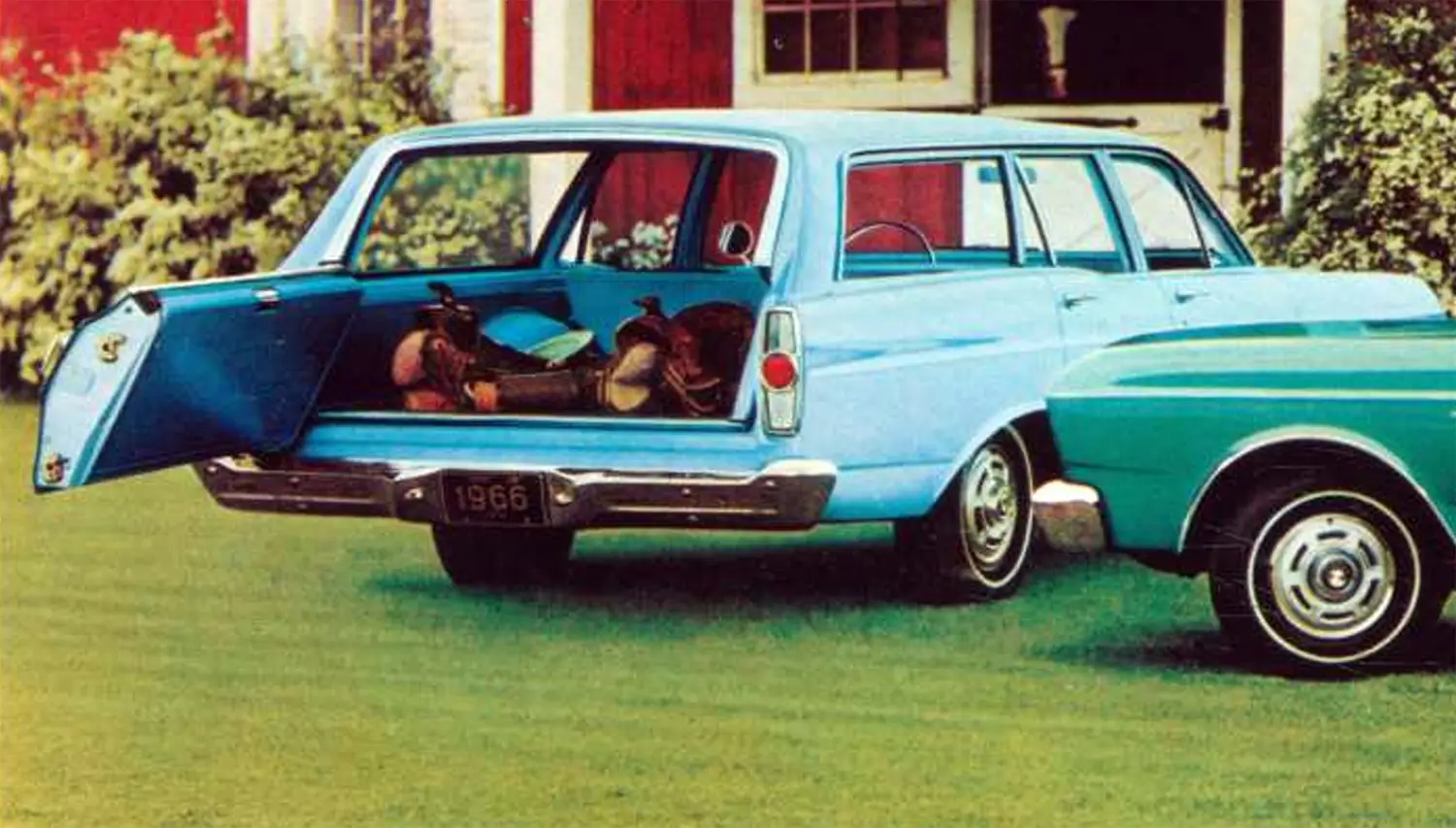
Futura Trim Luxury and Family-Centric Cabin
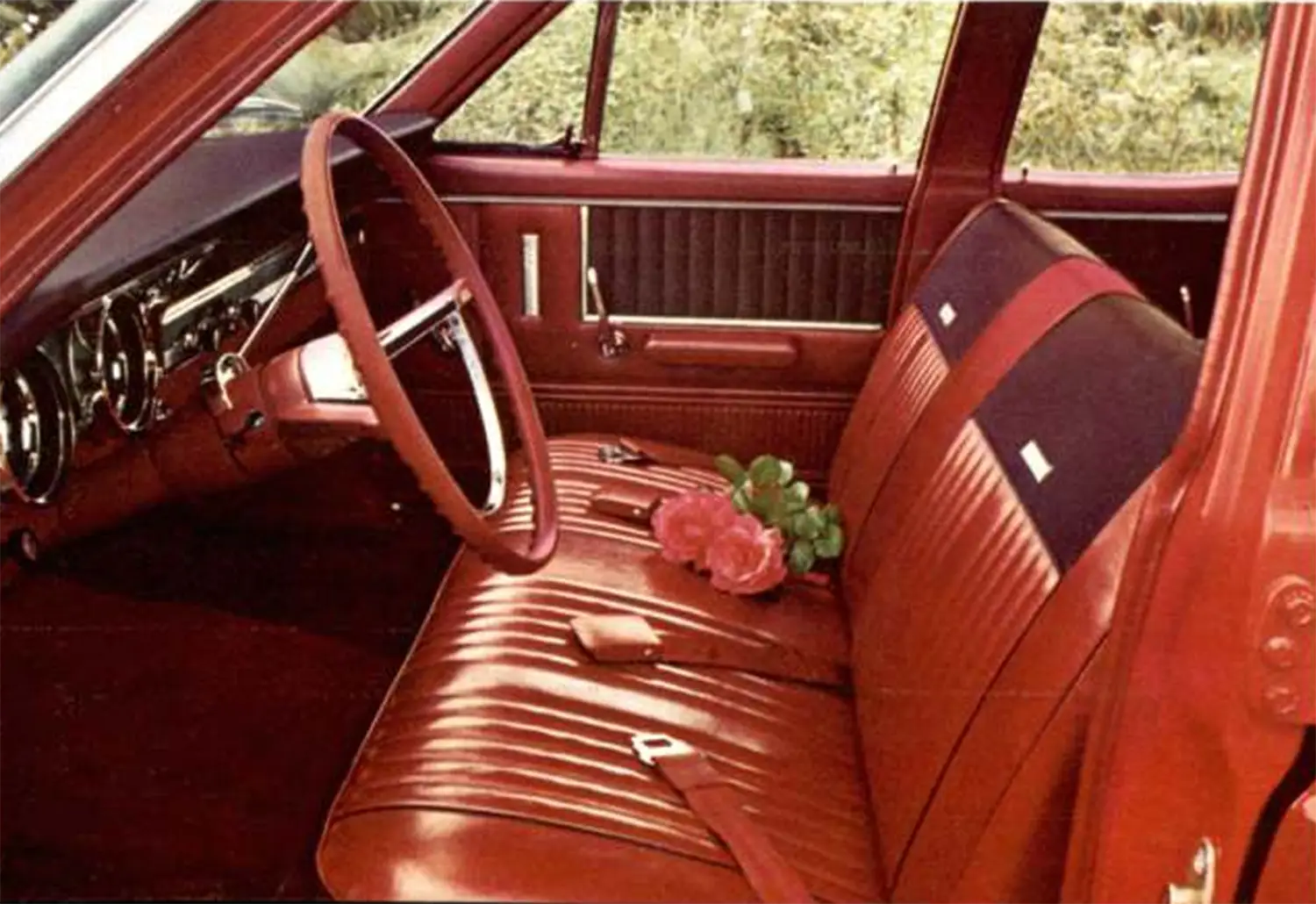
Inside the cabin, the Falcon offered a choice of cloth-and-vinyl or all-vinyl trims, with the Futura model providing a more upscale environment. The dashboard featured a padded instrument panel and sun visors as standard safety equipment, along with a “reversible key” that could be inserted in either direction. Families appreciated the full-width three-passenger seats and the convenience of foot-operated parking brakes, which freed up floor space for a more open feel. Luxury touches like the SelectAire air conditioner and a pushbutton radio could be specified, transforming the humble compact into a comfortable long-distance traveler with wall-to-wall carpeting and color-keyed accents.
Seven-Main-Bearing Smoothness and Challenger V8 Power
Performance was anchored by the standard 200ci “Fairlane Six” engine, which utilized seven main bearings to provide exceptionally smooth and reliable operation for daily commuting. This engine delivered 120 hp/122 PS and 190 lb-ft/258 Nm of torque, paired with a fully synchronized three-speed manual transmission. For drivers requiring more towing capability or highway passing power, Ford offered the 289ci Challenger V-8, factory rated at 200 hp/203 PS and 282 lb-ft/382 Nm of torque. The drivetrain could be upgraded to the three-speed Cruise-O-Matic automatic transmission, providing a seamless driving experience that was perfectly suited for the wagon’s intended role as a versatile suburban hauler.
| Technical Specifications | |
|---|---|
| Standard Engine | 200 CI Fairlane Six |
| Optional Engine | 289 CI Challenger V-8 |
| Transmission | 3-Speed Manual or Cruise-O-Matic |
| Cargo Volume | 86.7 cu. ft. |
| Wheelbase | 113.0 Inches |
| Fuel Tank | Factory Benchmark 16.0 Gallons |
Compact Collectability and Practical Utility Value
The market for the 1966 Ford Falcon Station Wagon has remained steady as enthusiasts increasingly value the J-series wagons for their unique blend of classic Ford styling and manageable size. Unlike the more common sedans and coupes, the wagons offer a level of utility that makes them popular candidates for restomod projects, often receiving modern engine swaps and suspension upgrades. Collectors prize original Futura wagons for their superior trim levels and factory V8 options, which carry a significant premium over base models. With their shared mechanical parts from the Fairlane and Mustang, these vehicles are exceptionally easy to maintain, ensuring their continued presence at car shows and in vintage rallies across the country.
The Enduring Legacy of the Compact Wagon
In summary, the 1966 Ford Falcon Station Wagon successfully bridged the gap between economy and luxury, providing a versatile platform that met the needs of the 1960s American family. It successfully adapted to a changing market by growing in size and capability without losing the “compact” essence that made the Falcon a household name. From the distinctive hum of its seven-main-bearing six to the surprising utility of its cavernous cargo area, every element was designed with the user in mind. This Falcon remains an enduring icon of automotive pragmatism, proving that great design doesn’t always require a massive footprint to leave a lasting impression.
Disclaimer: Content on this site is for informational and entertainment purposes only. Details, analyses, and opinions reflect current trends and personal views, not professional or financial advice. Always verify information with official sources before making any decisions.
Source: Ford Heritage Vault