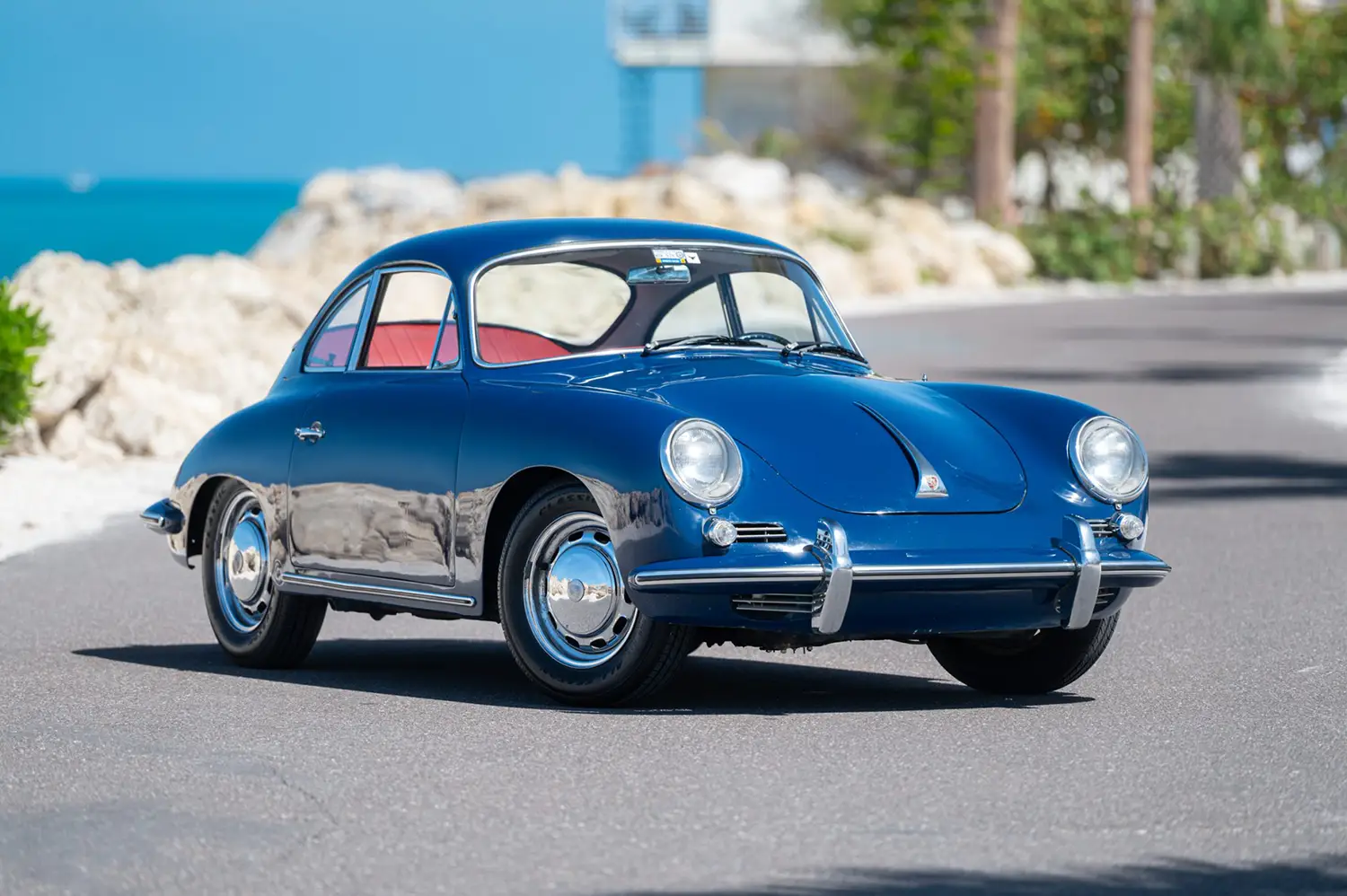
The 1964 Porsche 356C represents the final and most refined evolution of the legendary 356 series, introducing significant mechanical upgrades that bridged the gap to the upcoming 911. This specific coupe, built by Karmann in April 1964, carries a rich provenance having been sold new through the famed Brumos Porsche in Jacksonville, Florida. It reportedly remained within a single family for over five decades before being acquired by the current owner in 2018. Finished in its factory-correct Bali Blue over a striking red interior, this 356C serves as a testament to the enduring build quality and timeless design language that established Porsche as a premiere sports car manufacturer.
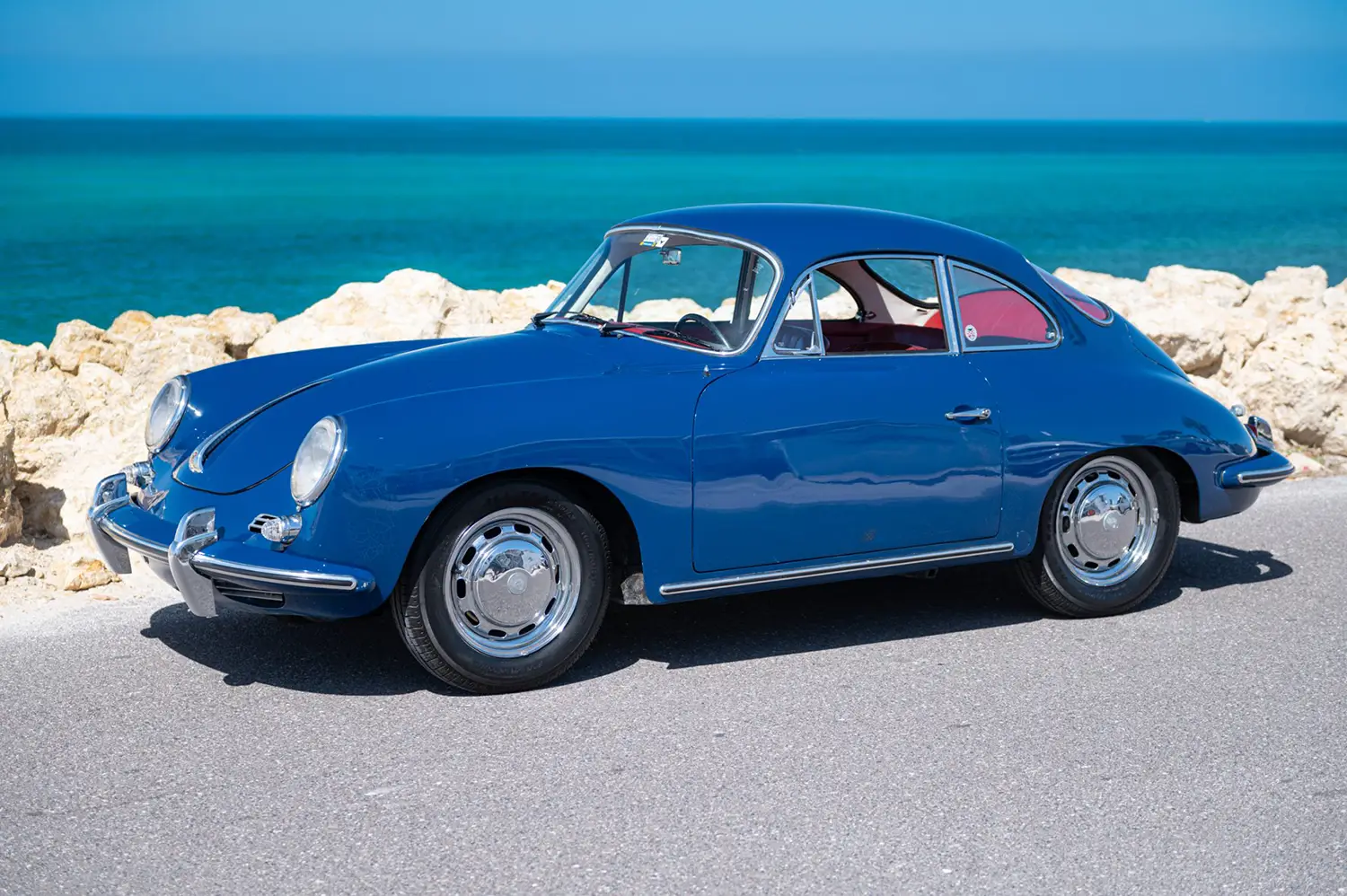
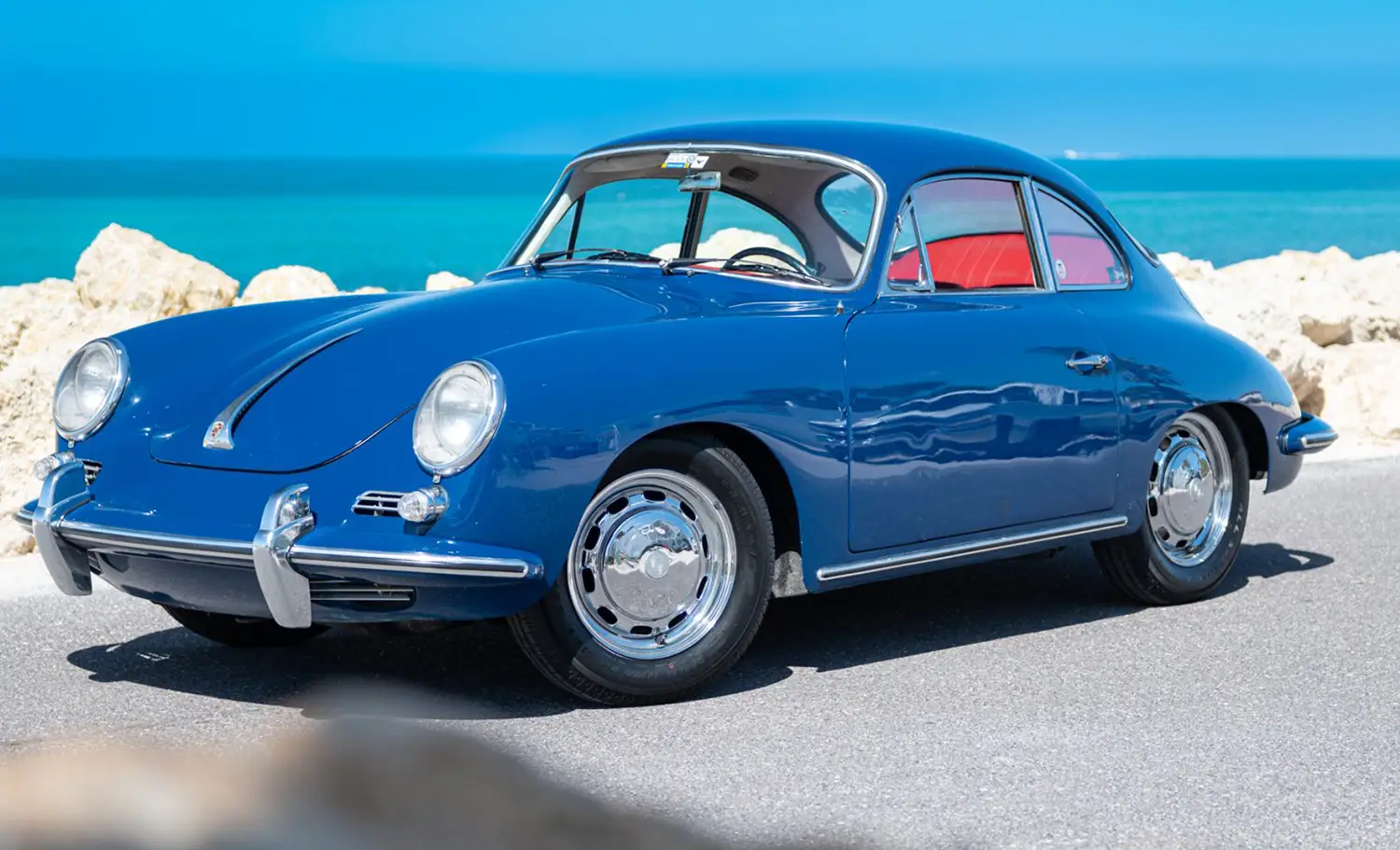
Bali Blue Silhouette and Functional Twin Engine Grilles
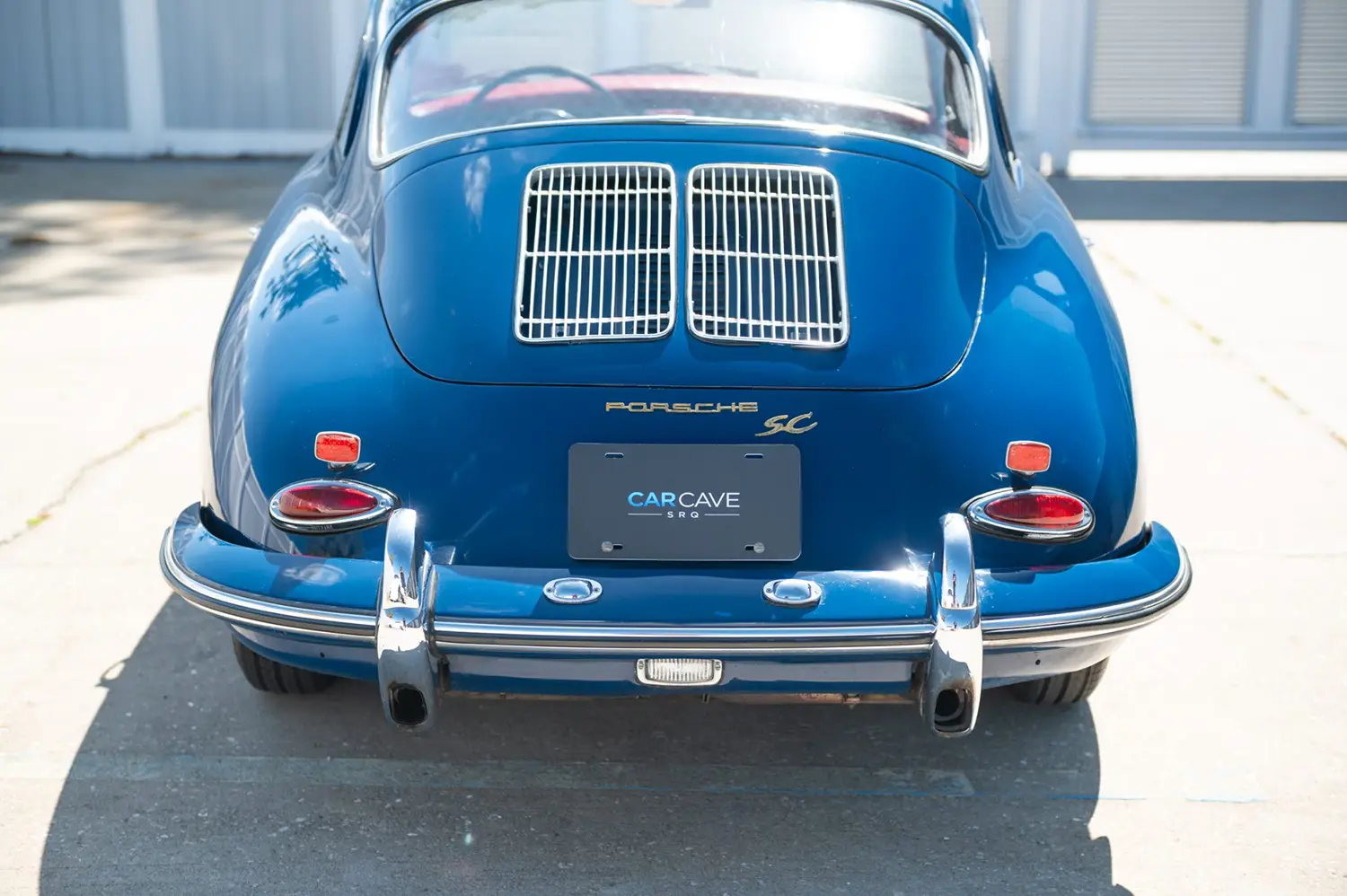
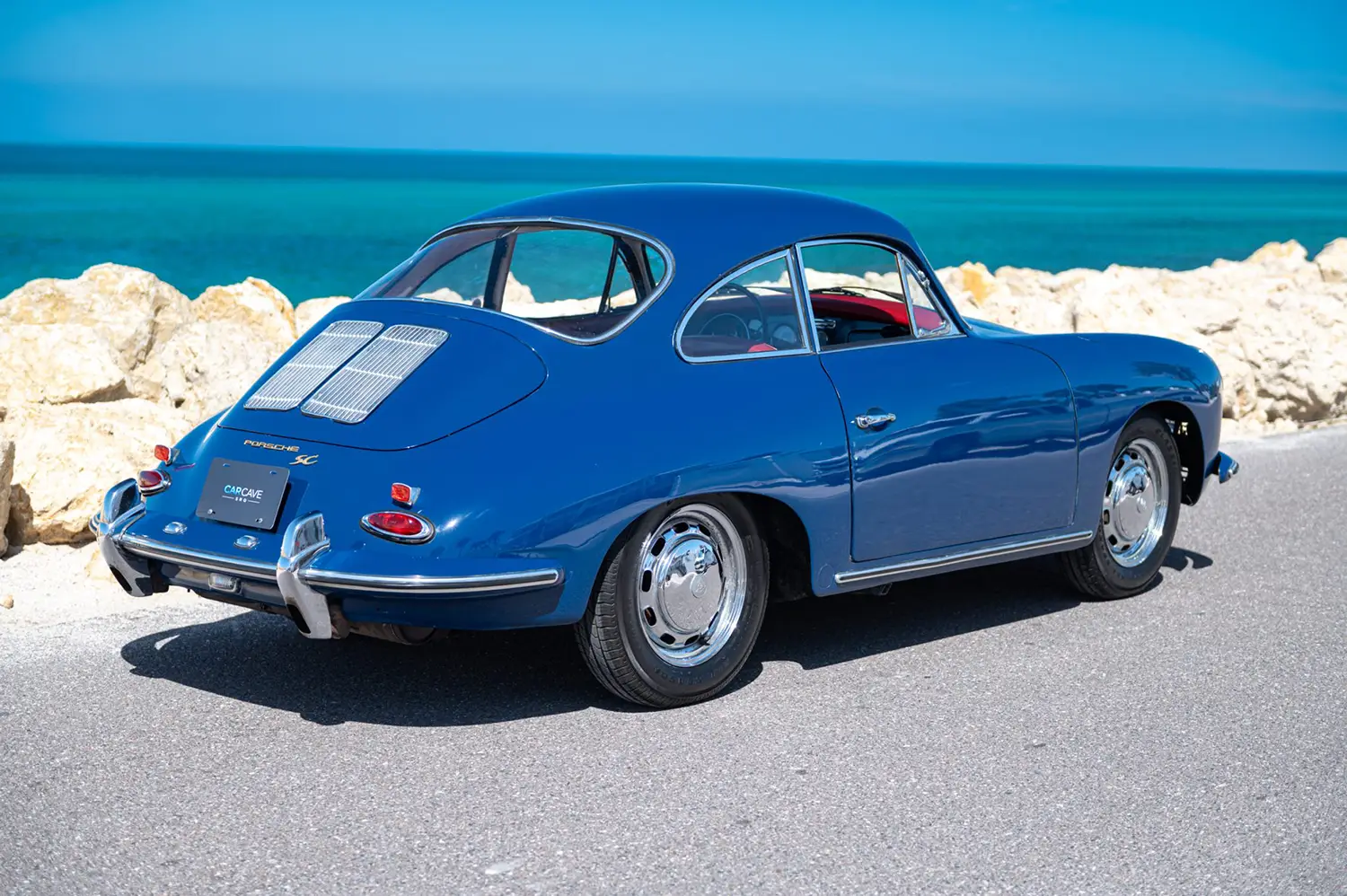
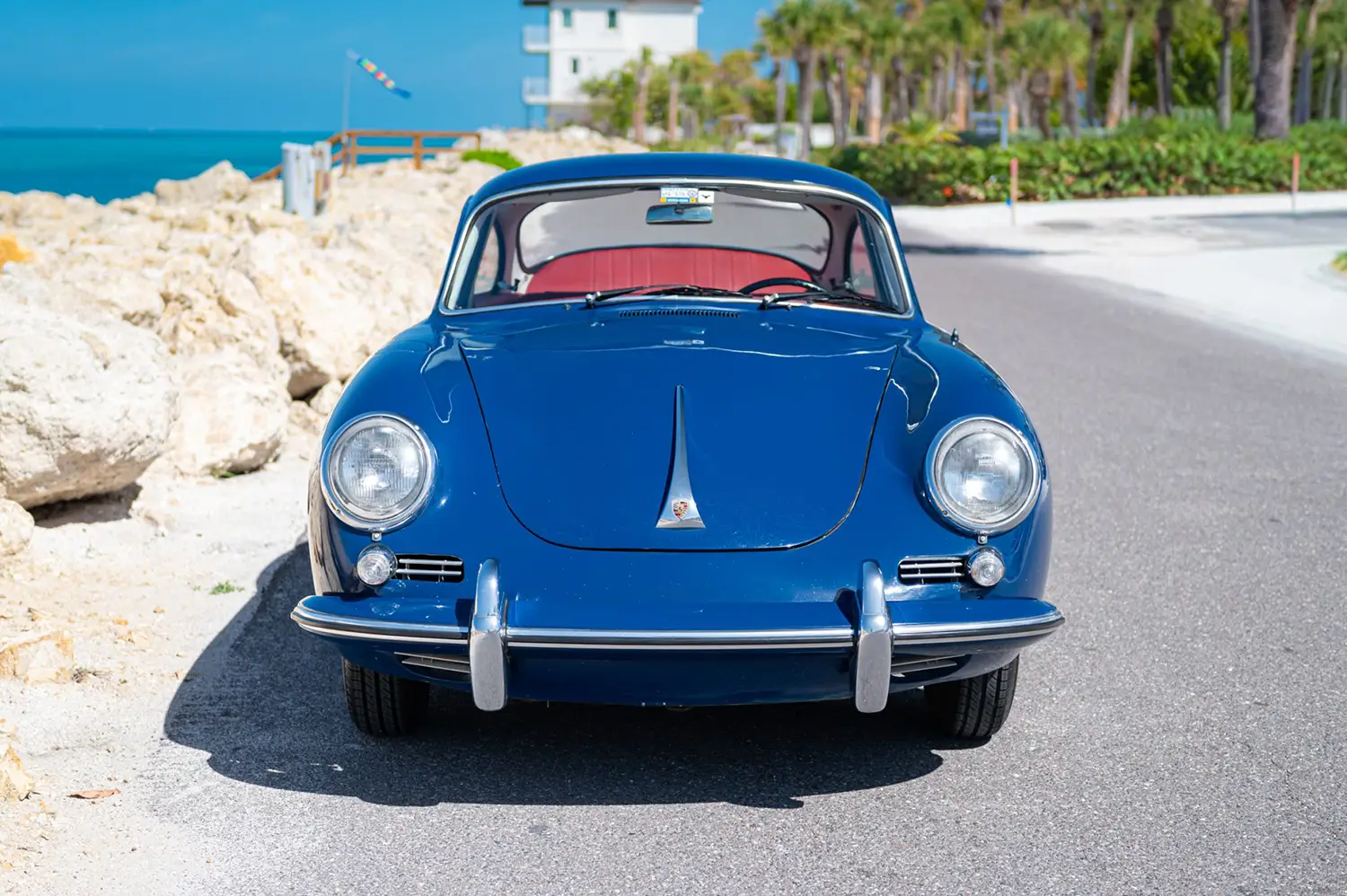
The visual character of the 356C is defined by its smooth, aerodynamic profile and the addition of functional twin engine grilles that distinguish it from earlier models. This Karmann-built body is finished in Bali Blue, a deep and sophisticated hue that perfectly complements the car’s curved fenders and body-color bumpers. While the hood has been replaced and the doors repainted over the years, the car retains an honest aesthetic with some paint checking that speaks to its long-term history. It rides on 15-inch silver steel wheels mounted with classic-profile tires, maintaining the period-correct stance. The silhouette remains an exercise in minimalist elegance, featuring the clean lines that made the 356 an international design icon.
Red Leatherette Cabin and Body Color Dashboard Accents
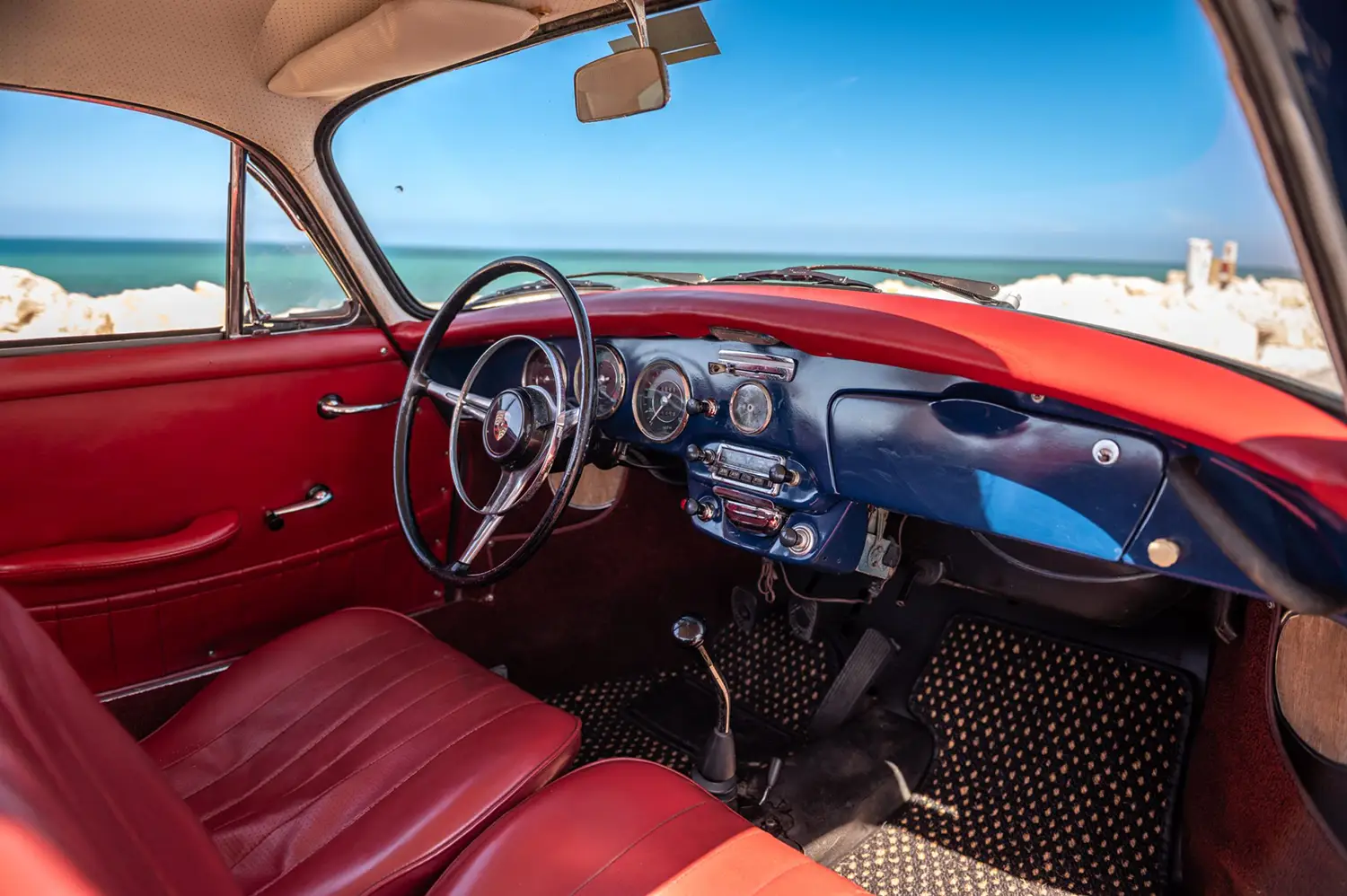
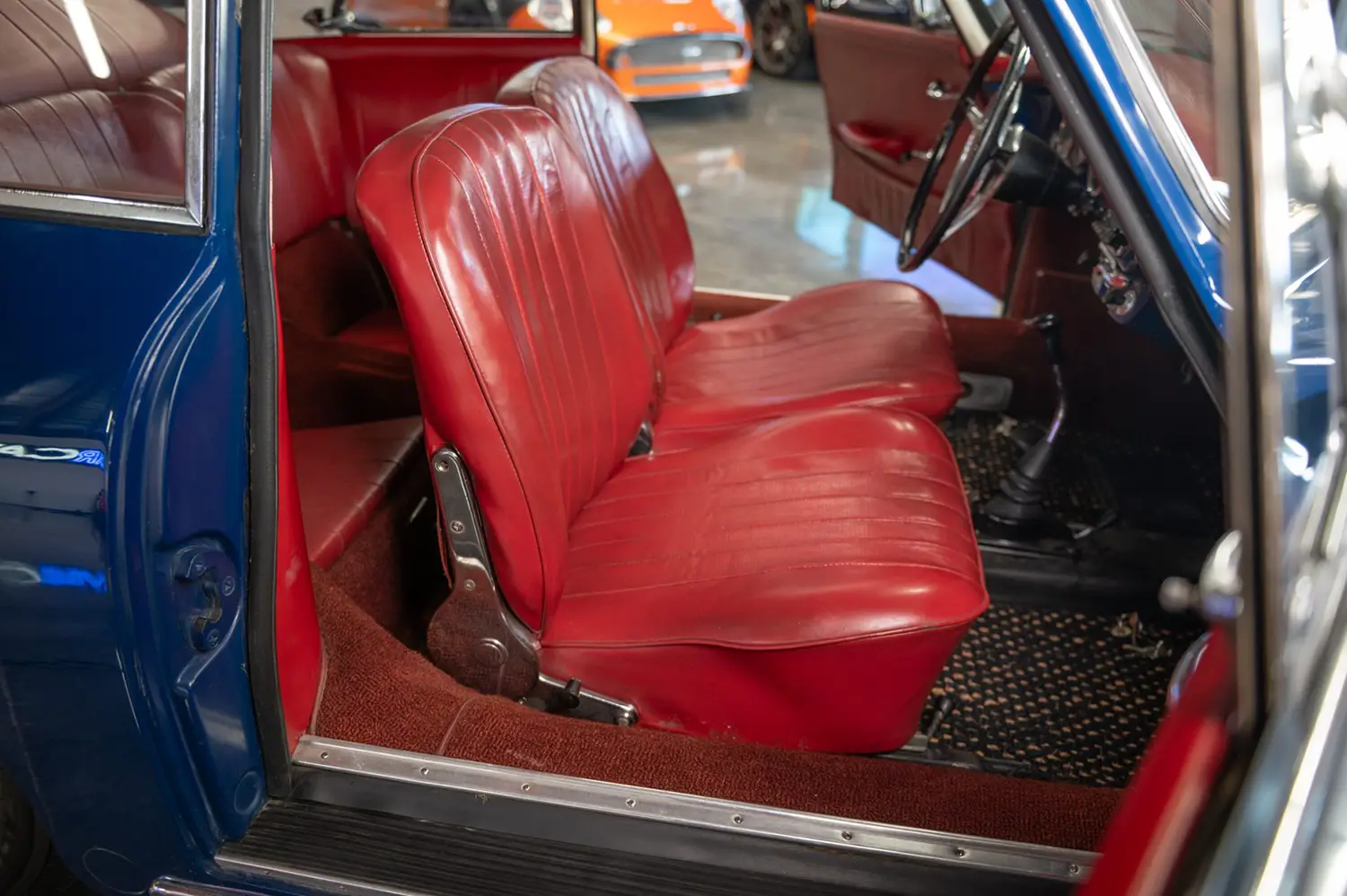
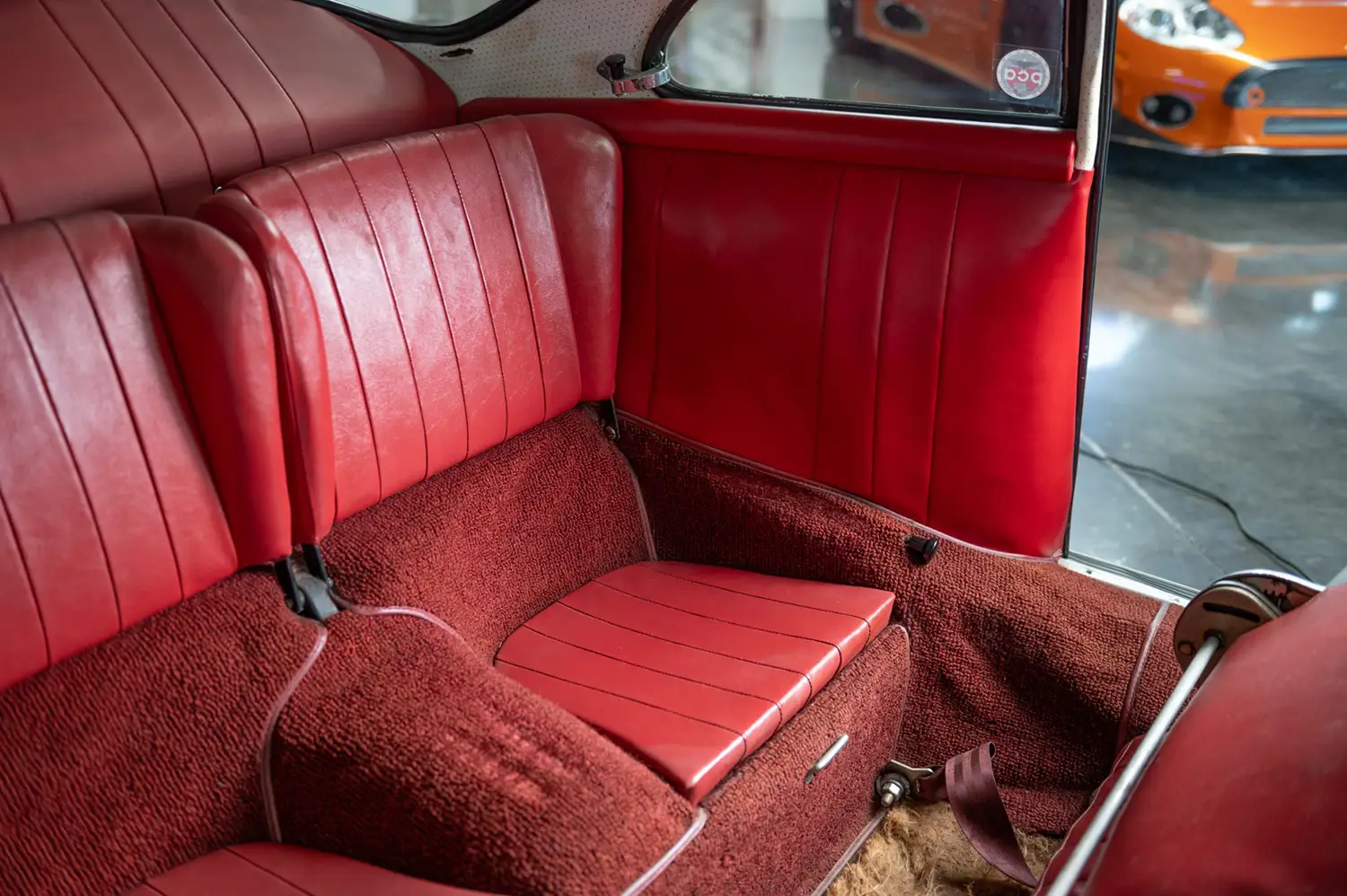
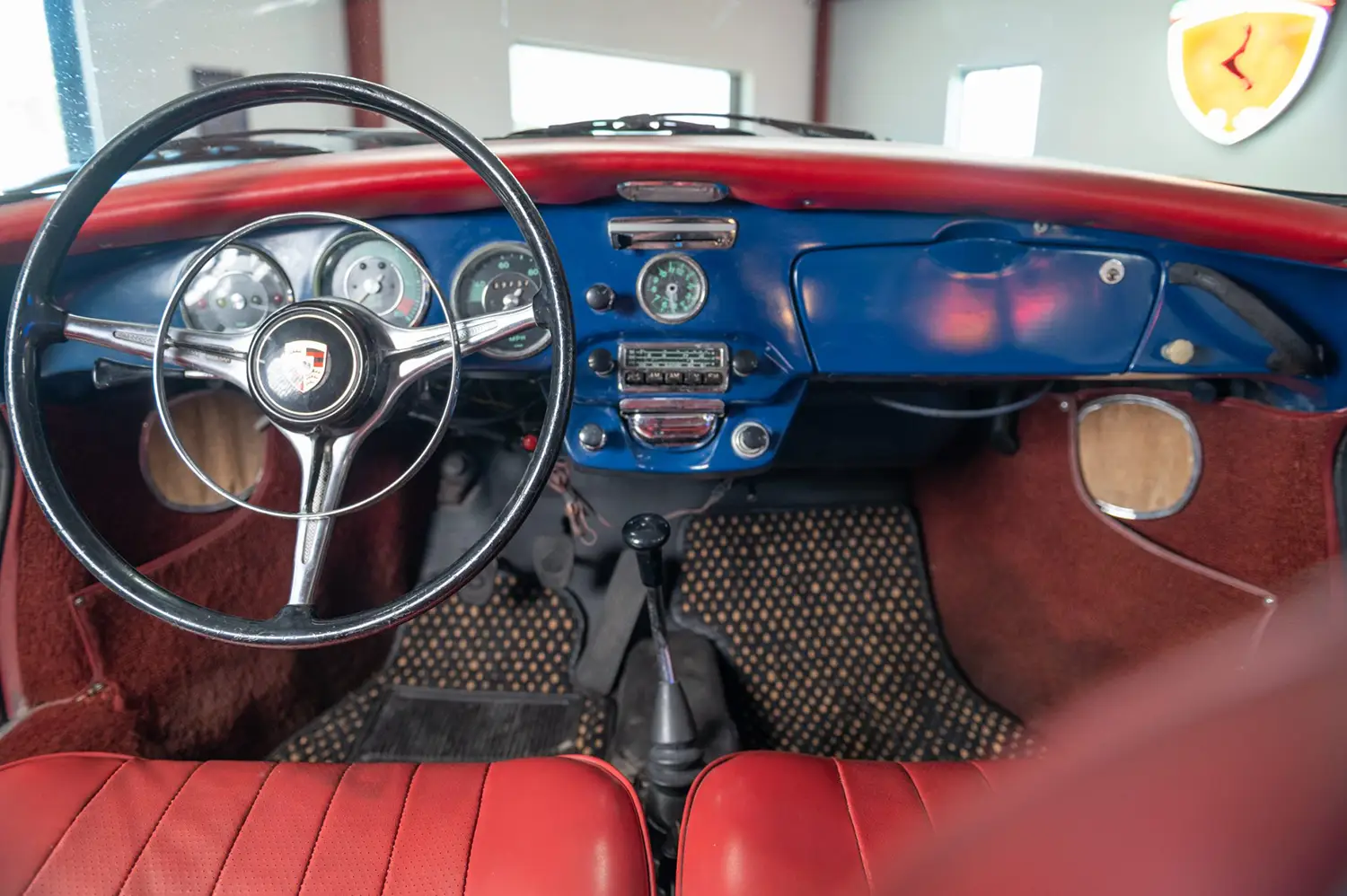
Inside the cabin, the front bucket seats and rear jump seats are upholstered in vibrant red leatherette, creating a classic and high-contrast environment against the blue exterior. The dashboard is painted to match the body, housing a trio of VDO instruments including a central tachometer with a 5,500-rpm redline. Driver amenities include a period-correct Blaupunkt AM/FM radio, a functional cabin heater, and a three-spoke steering wheel with a bright horn ring. While the analog clock is currently non-functional, the rest of the interior reflects a well-maintained survivor status. The layout is ergonomically simple, focusing on the essential relationship between the driver and the machine during long-distance vintage touring.
Rebuilt 1.6L Flat Four Power and Transaxle Precision
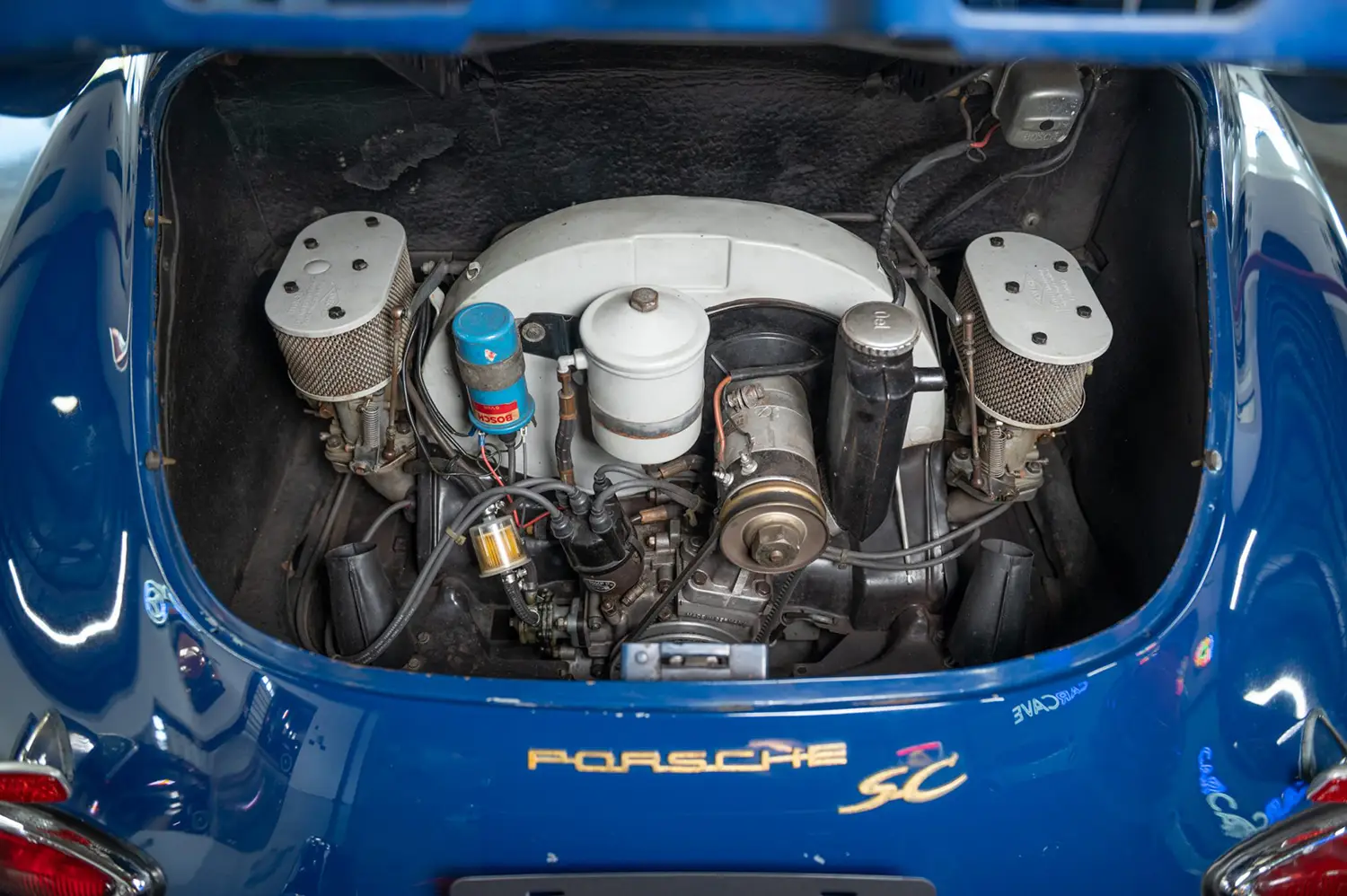
Performance is derived from a replacement 1.6-liter 616/6 flat-four engine, which was rebuilt in 2016 to ensure continued mechanical reliability. This powerplant features dual Solex carburetors that were overhauled in 2018, along with a fuel pump rebuild completed in 2020. The engine produces a characteristic air-cooled growl, delivering power through a four-speed manual transaxle that received a new clutch and pressure plate in 2016. The C-model was revolutionary for Porsche as it introduced four-wheel disc brakes as standard equipment, providing significantly improved stopping power. Combined with Koni shocks installed in 2018, the car offers a communicative and balanced driving feel that remains remarkably modern for its age.
| Technical Specifications | |
|---|---|
| Engine | 1.6L Flat-Four (616/6) |
| Transmission | 4-Speed Manual |
| Induction | Dual Solex Carburetors |
| Braking | 4-Wheel Factory Disc Brakes |
| Wheels | 15-inch Silver Steel |
| Production Body | Karmann Coupe |
The Enduring Appeal of the Final 356 Evolution
In the global Porsche market, the 356C is highly prized for being the most “driveable” of the 356 family due to its superior braking and refined suspension. Its unique selling point is the blend of 1950s style with mid-1960s mechanical advancements, making it a favorite for vintage rallies and concours events alike. While the 356SC offers more horsepower, many collectors prefer the 356C for its reliability and smoother power delivery. Examples with documented Brumos history and long-term family ownership like this one carry a significant premium, as they offer a clear window into the car’s life and maintenance history. It remains a staple of any serious German sports car collection.
Investment Integrity and Documented Kardex History
Owning a 1964 Porsche 356C involves a commitment to preserving one of the world’s most recognizable automotive silhouettes. This example is supported by a copy of its original Kardex, which confirms its factory colors and early history, including an engine swap performed by Porsche as early as July 1964. Recent investments in the mechanical systems, such as the brake caliper rebuilds and the installation of a billet battery tray, indicate a focus on functional preservation. While the gearbox and push rod tubes show some minor leaks typical of air-cooled engines, the car’s overall structural integrity is supported by years of service records. For the enthusiast seeking an authentic 356 experience with deep Florida roots, this Bali Blue coupe is a compelling choice.
Disclaimer: Content on this site is for informational and entertainment purposes only. Details, analyses, and opinions reflect current trends and personal views, not professional or financial advice. Always verify information with official sources before making any decisions.
Source: bringatrailer.com