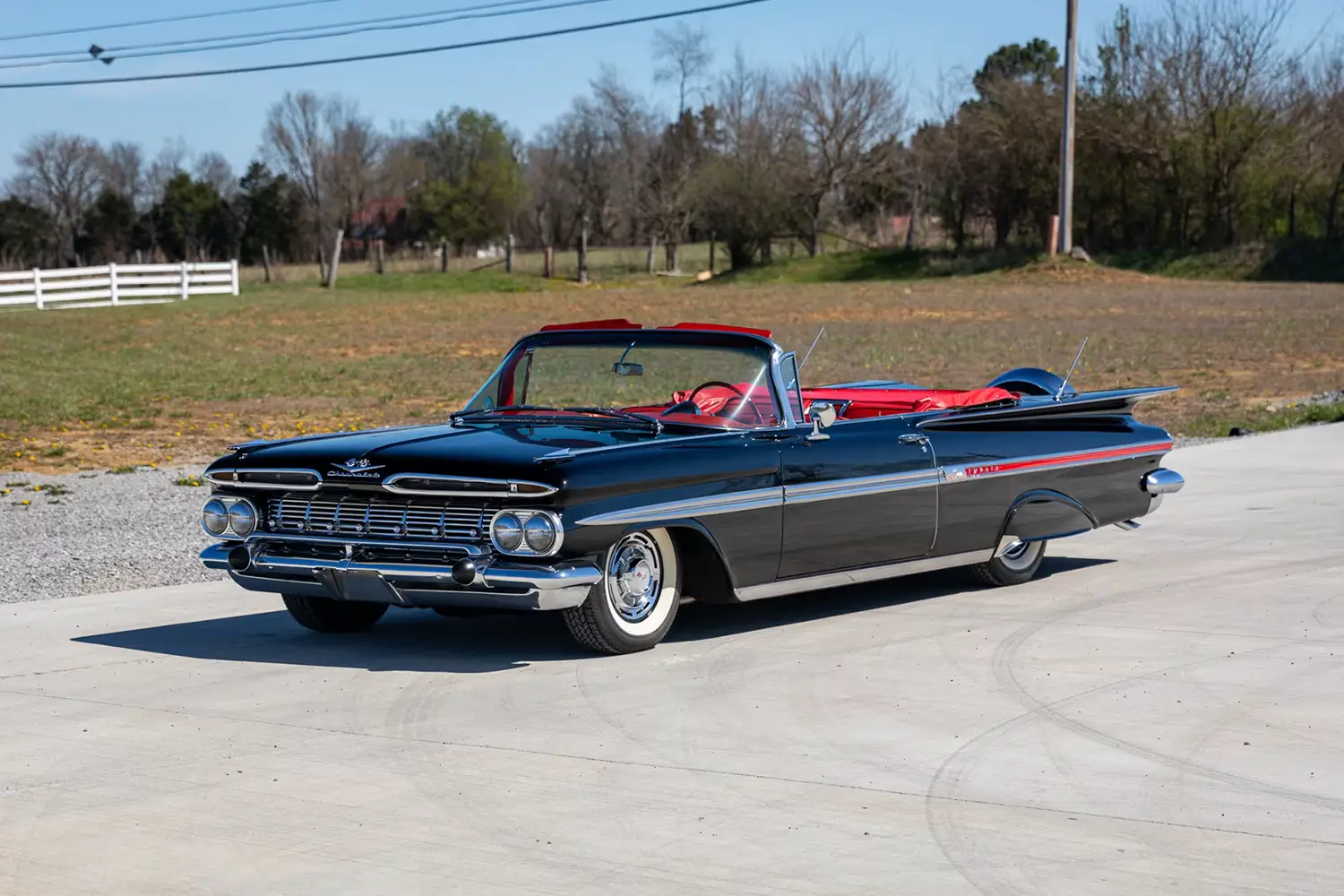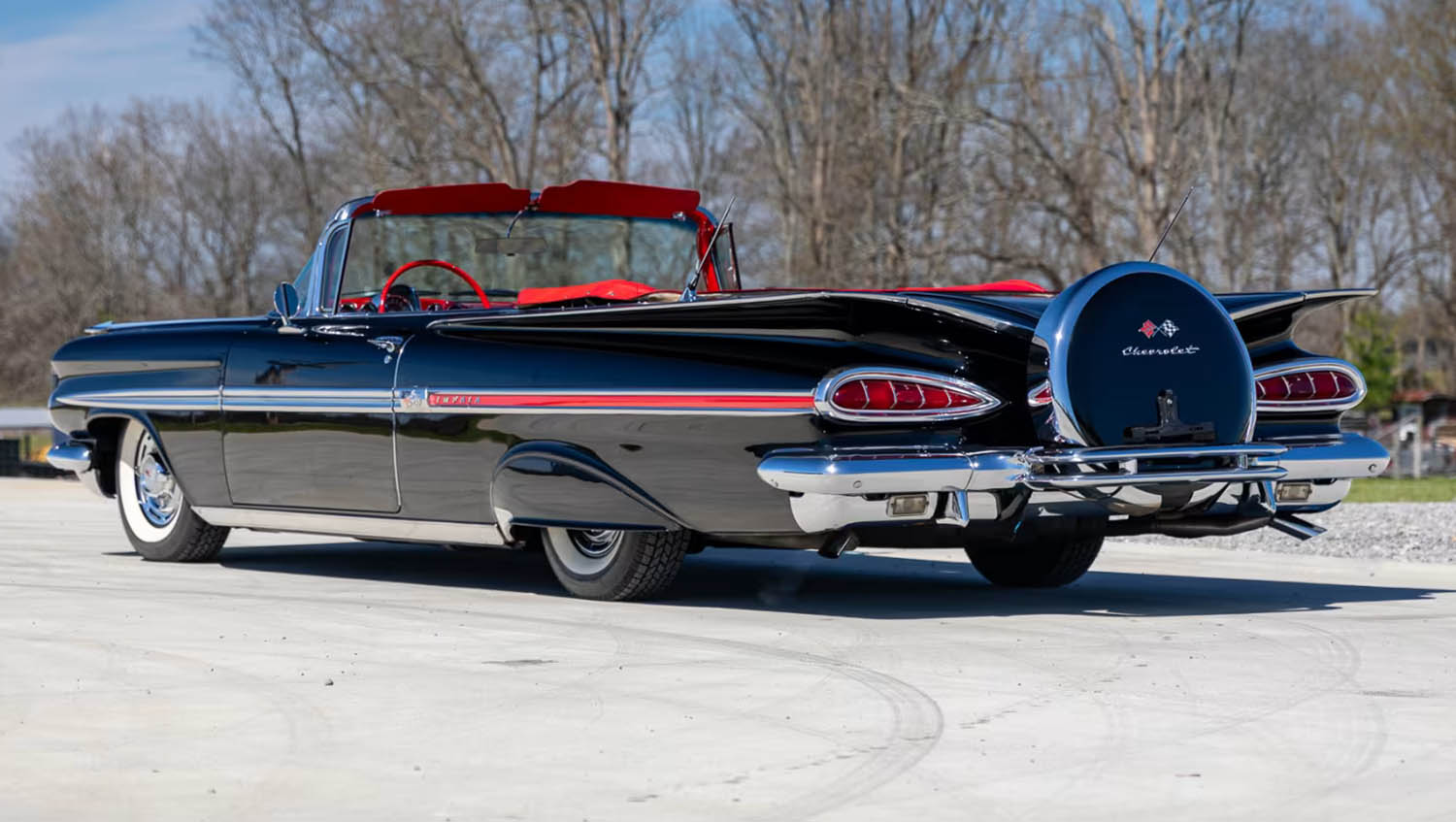
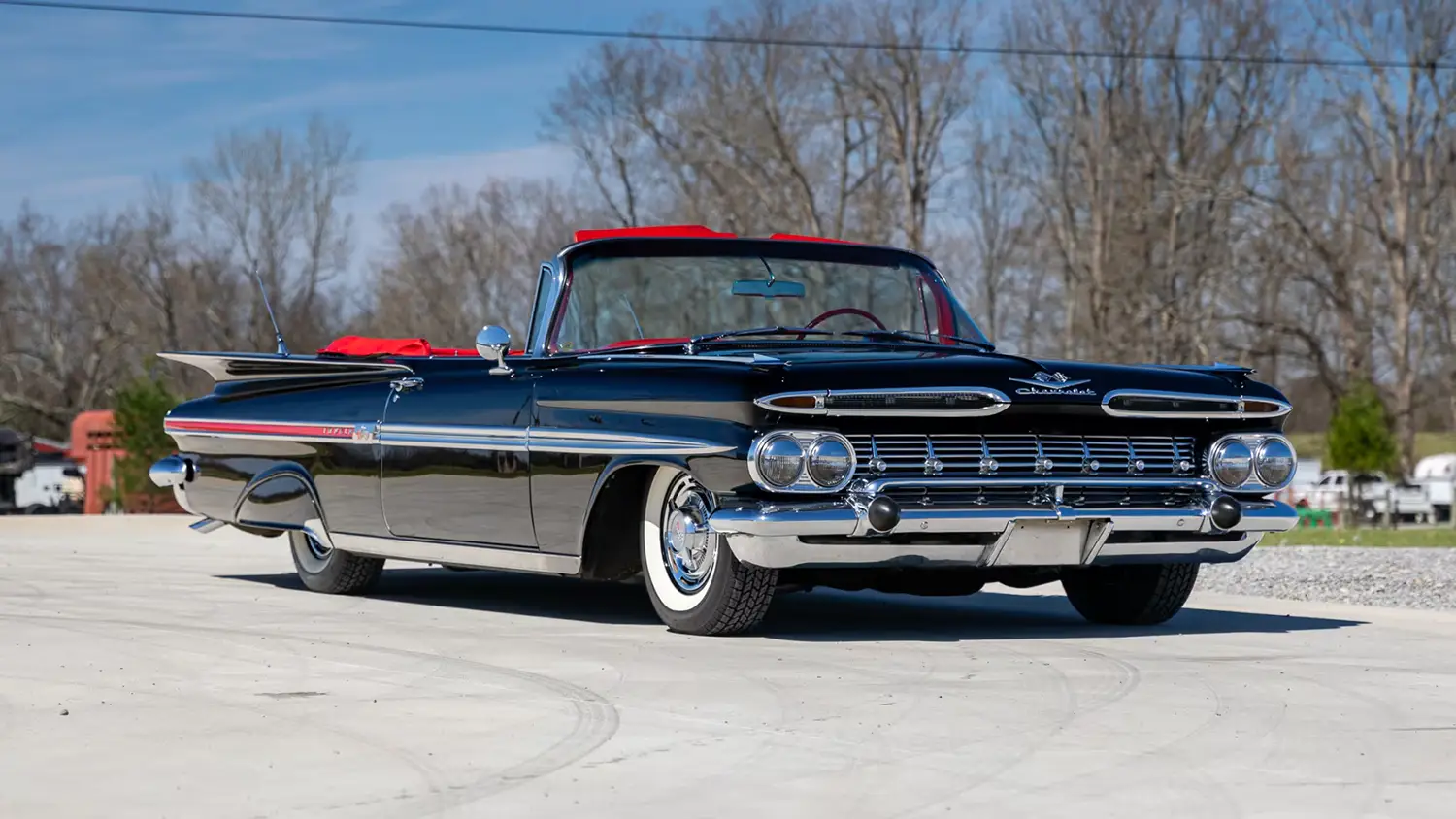
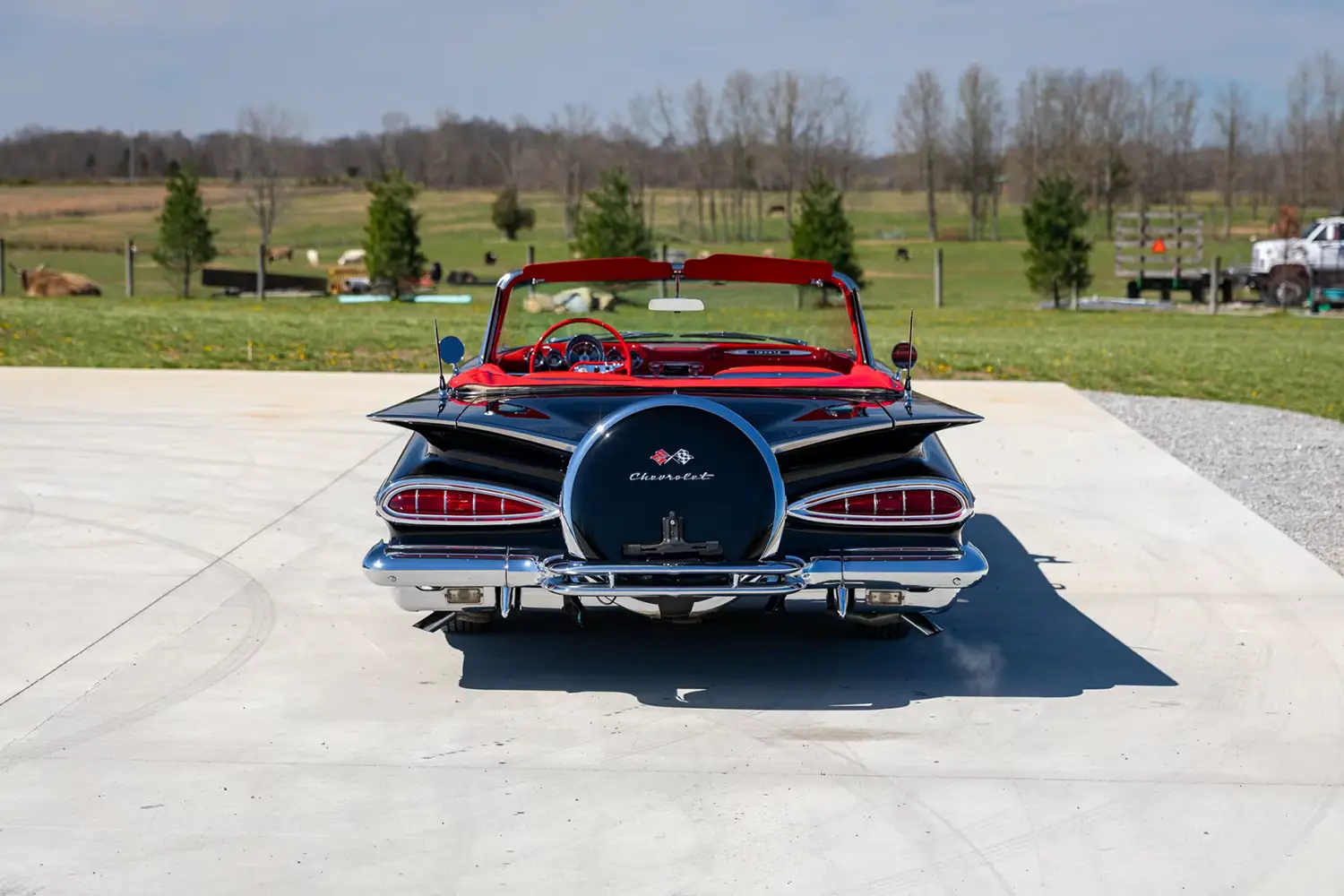
The 1959 Chevrolet Impala Convertible remains one of the most polarizing and celebrated designs in American automotive history, famously known for its radical “batwing” rear fins and cat-eye taillights. This year represented a massive departure from the rounded styling of the mid-fifties, pushing the boundaries of length and width to create a truly horizontal aesthetic. This specific example, crossing the block at Indy 2026 on Saturday, May 16th, is a prime representative of that bold era. It blends high-displacement power with a rare manual drivetrain, offering a visceral connection to the road that few full-size cruisers can match. Its presence at auction highlights the enduring legacy of the Impala as a pinnacle of Jet Age styling and mechanical innovation.
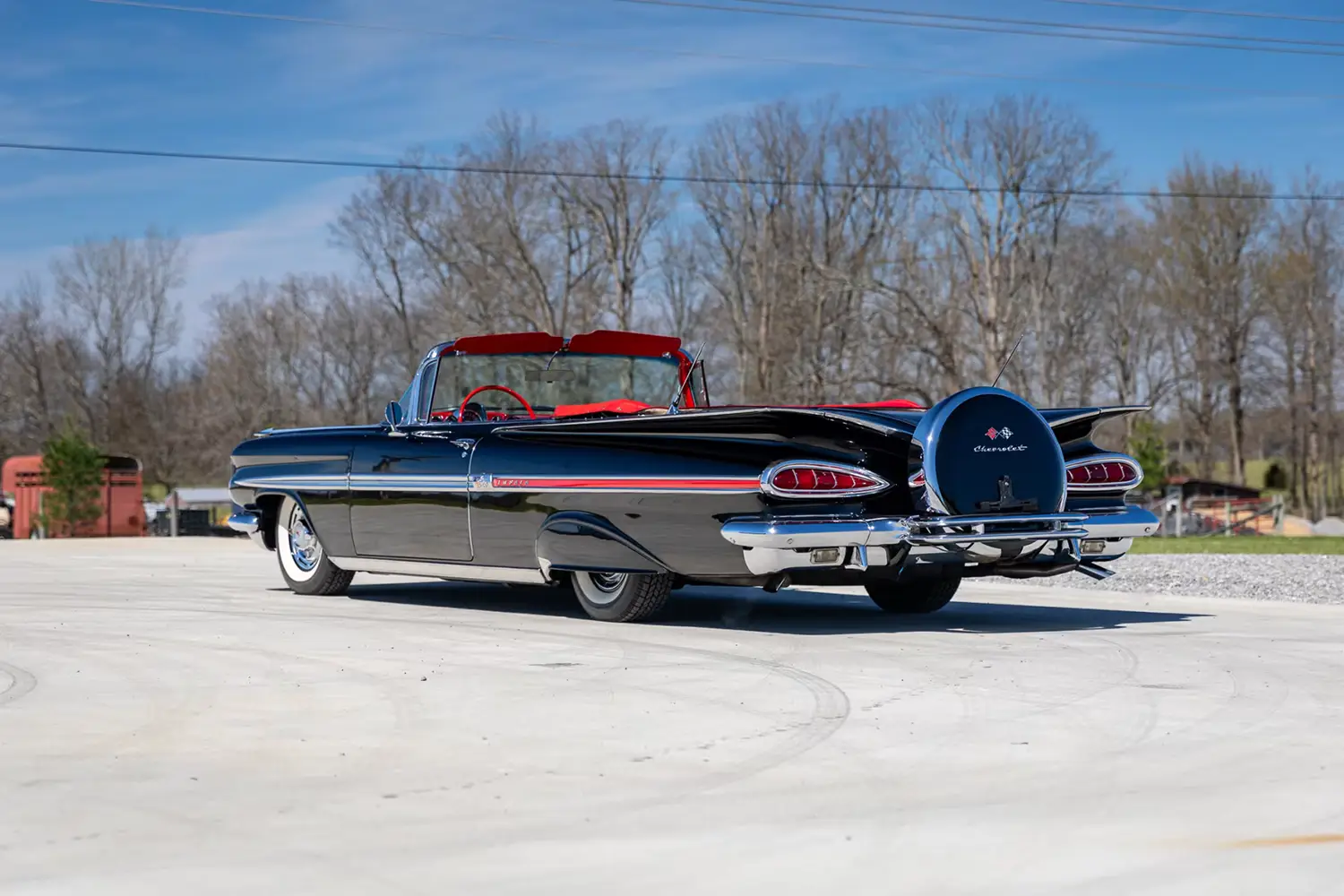
Onyx Black Silhouette with Dramatic Batwing Tailfins
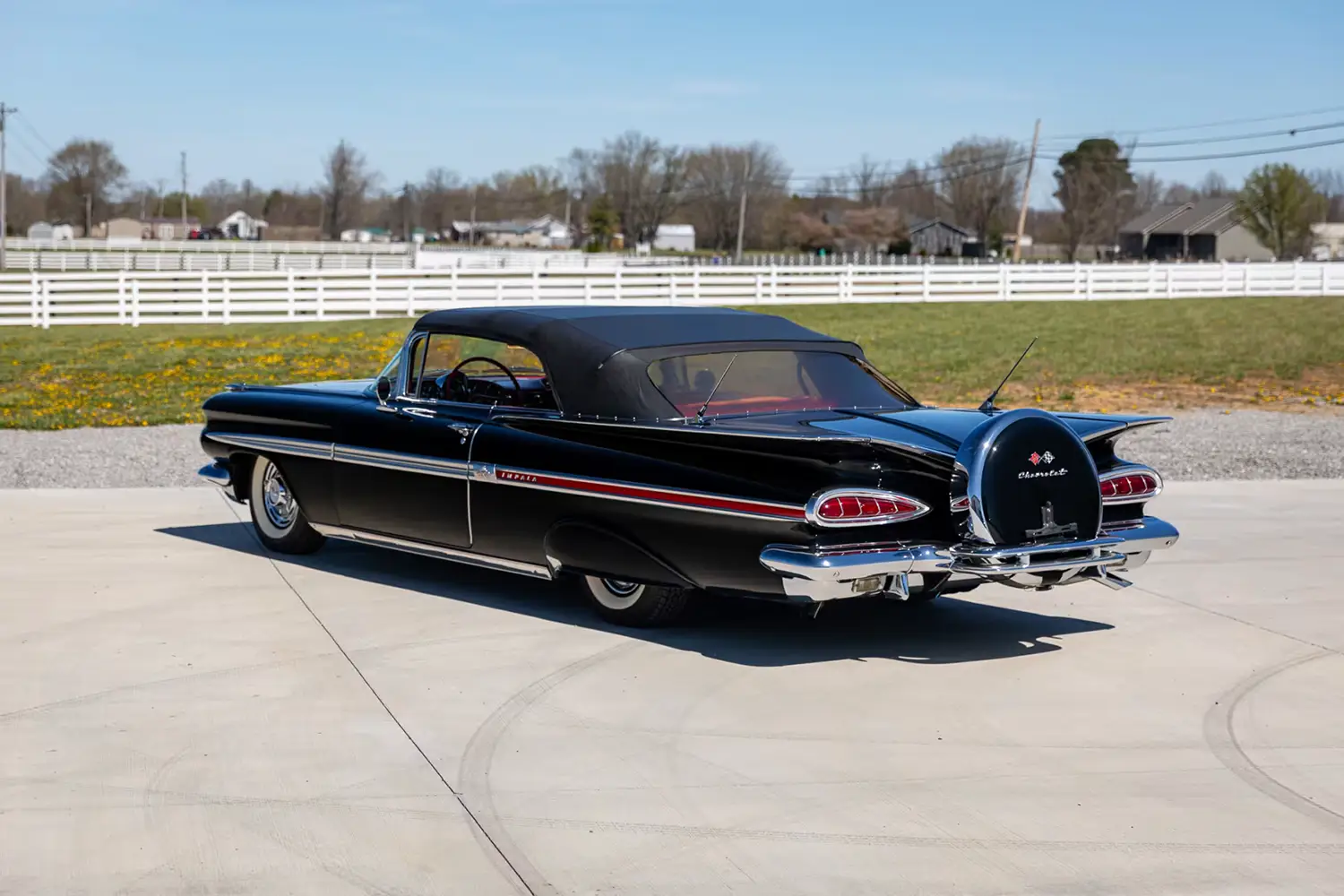
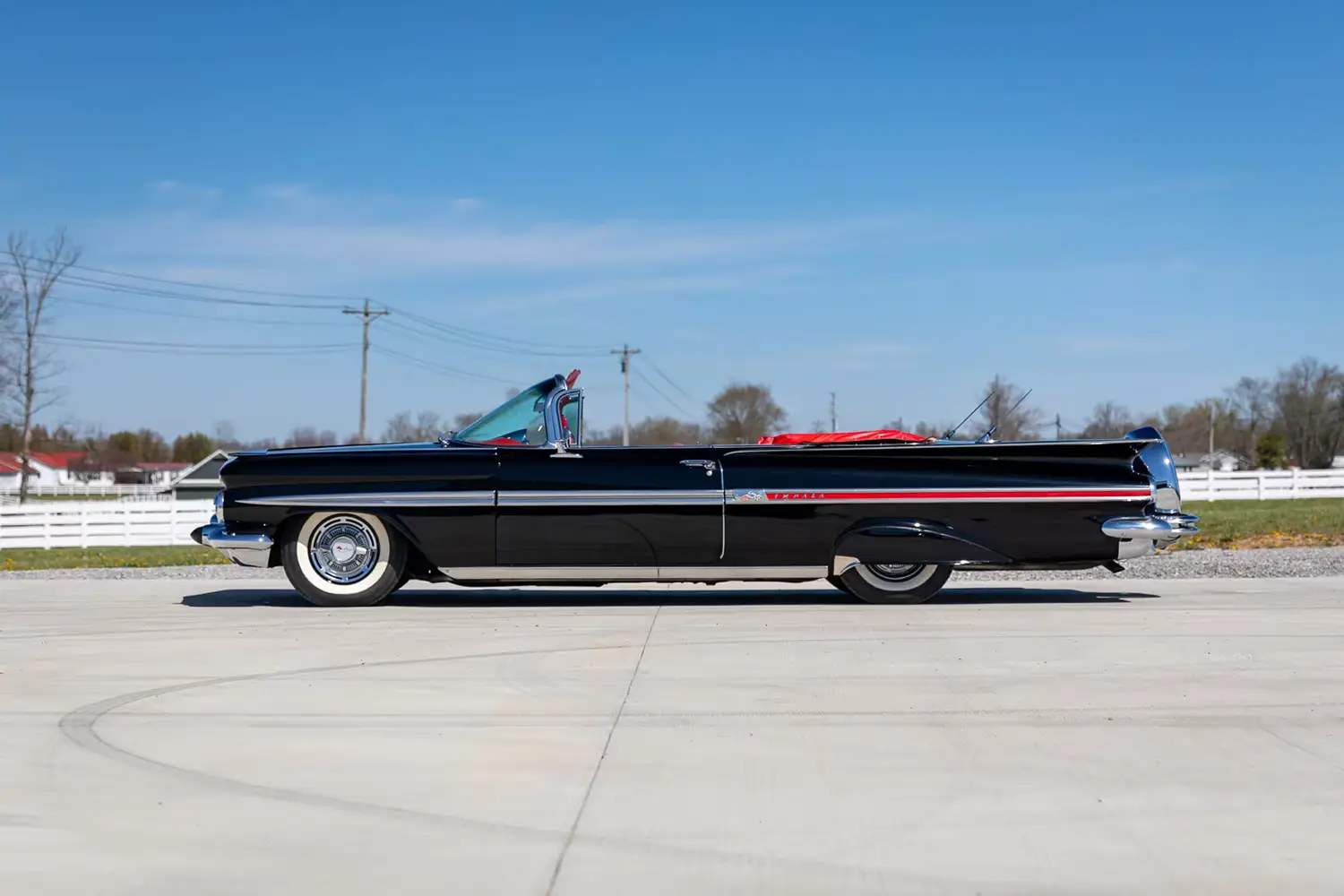
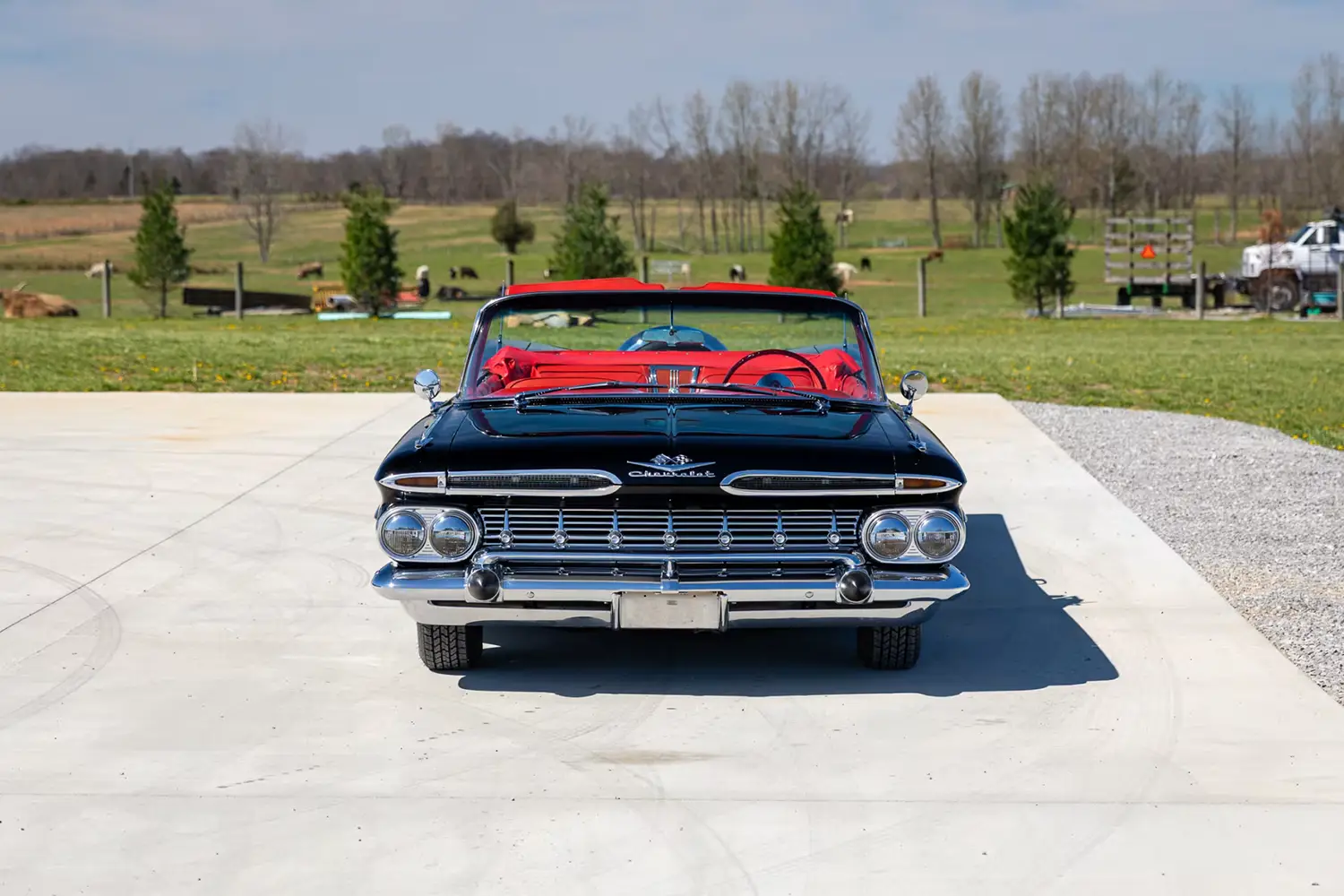
The exterior of this 1959 Chevrolet Impala Convertible is finished in deep Onyx Black, a color that perfectly emphasizes the chrome brightwork and expansive body lines. Its silhouette is defined by the flat, sprawling trunk lid and those unmistakable horizontal fins that seem to float over the rear quarters. This car is equipped with several premium period accessories, including dual outside mirrors, dual antennas, and a color-matched Continental kit that further lengthens the profile. Fender skirts and spinner wheel covers maintain the factory-correct look, while wide whitewall radial tires provide a smoother, more modern ride quality without sacrificing the vintage aesthetic. A power-operated convertible top allows for effortless transition to open-air motoring at a moment’s notice.
Customized Red Vinyl Cabin with 1963 Bucket Seats
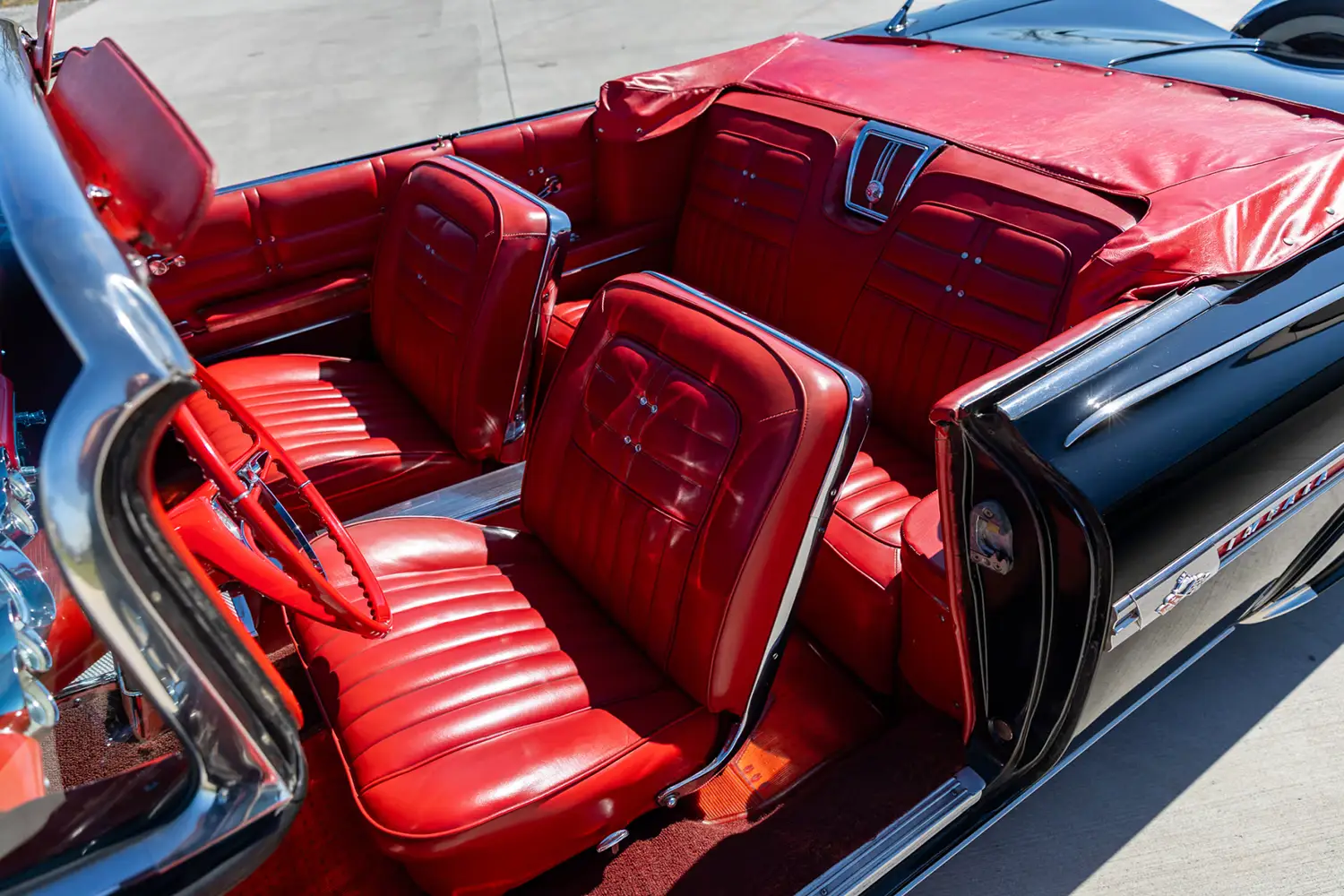
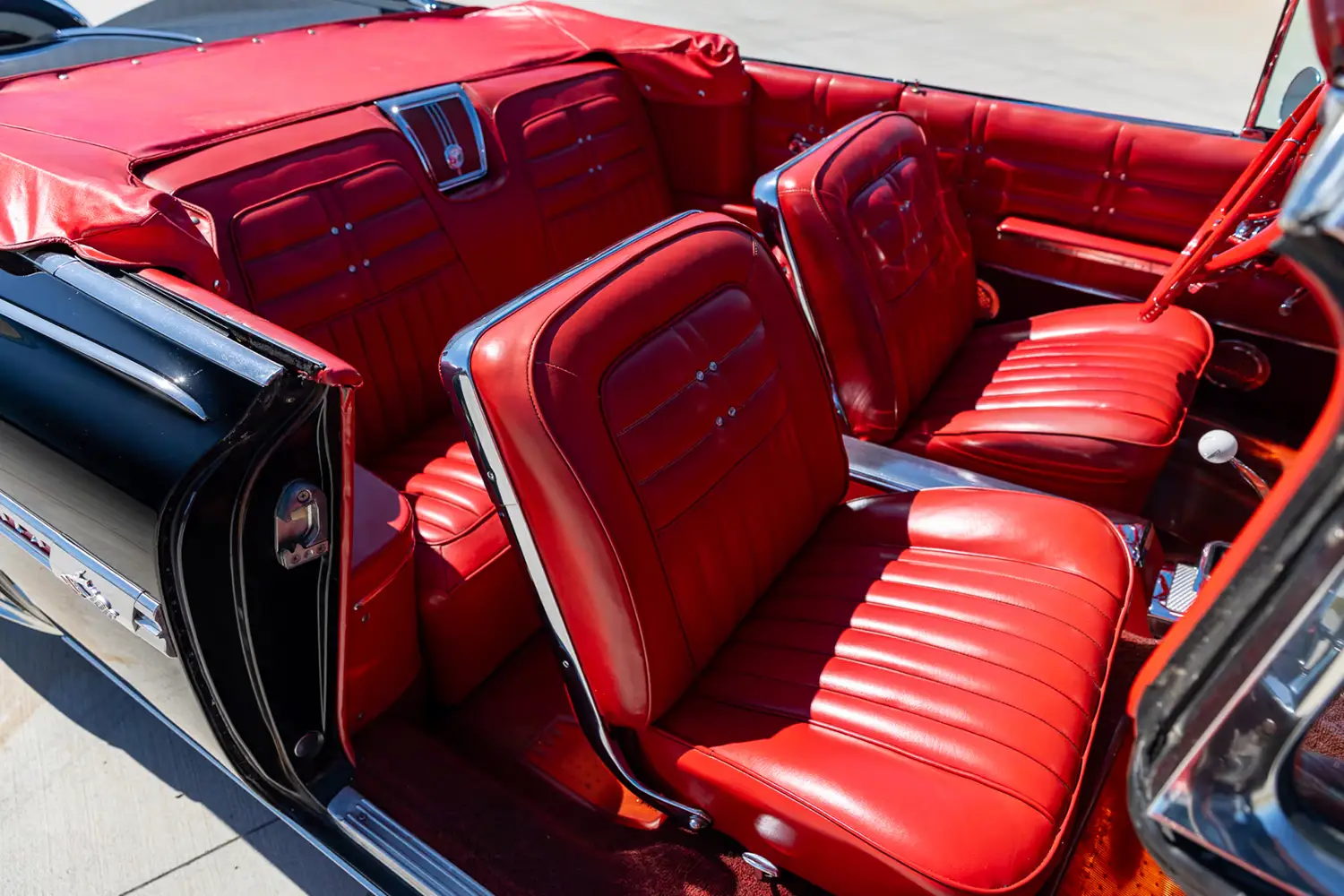
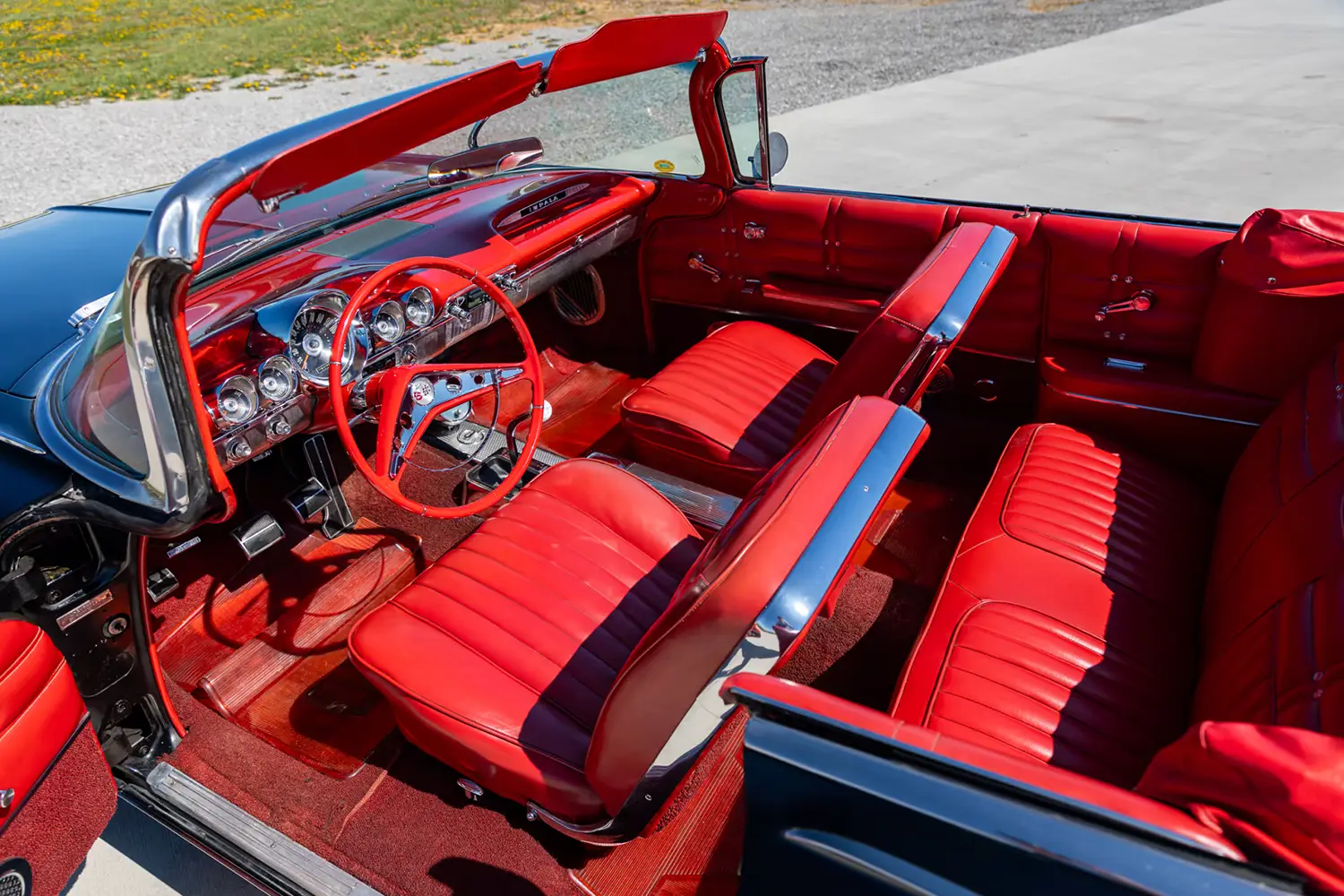
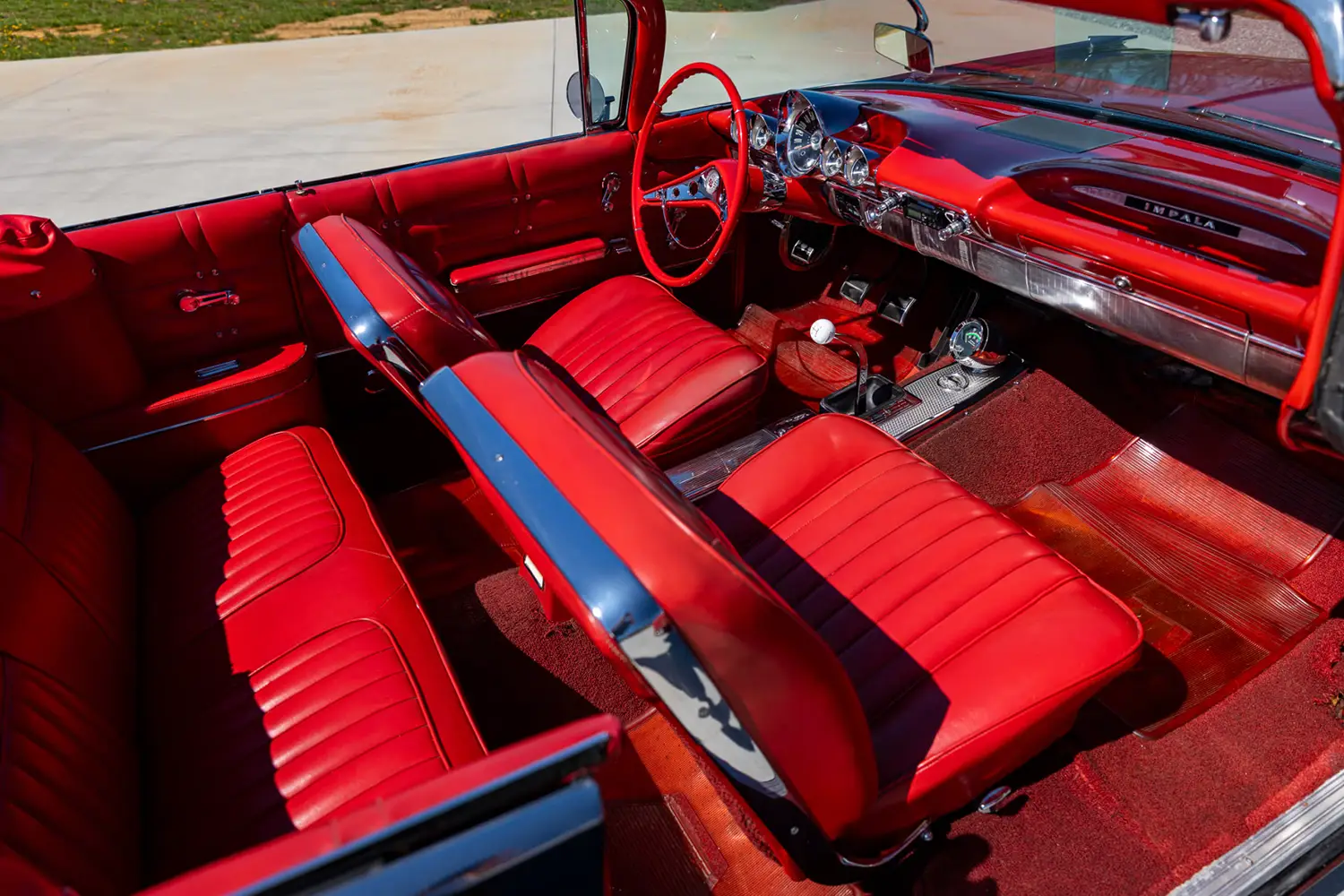
Inside, the 1959 Chevrolet Impala Convertible features a vibrant red vinyl interior that tells a unique piece of its personal history. The original owner redid the cabin in 1963, choosing to install 1963 Impala bucket seats and a center console for a more sporting and modern feel. This modification provides enhanced lateral support and a more focused driving position than the standard bench seat. A Hurst shifter rises from the floor, controlling the transmission with precision, while a console-mounted tachometer keeps the driver informed of engine vitals. The dashboard is accented with a chrome instrument bezel and a tinted windshield, ensuring that the view from the cockpit is as impressive as the view from the curb.
Big-Block 348 V8 Power and Muncie 4-Speed Control
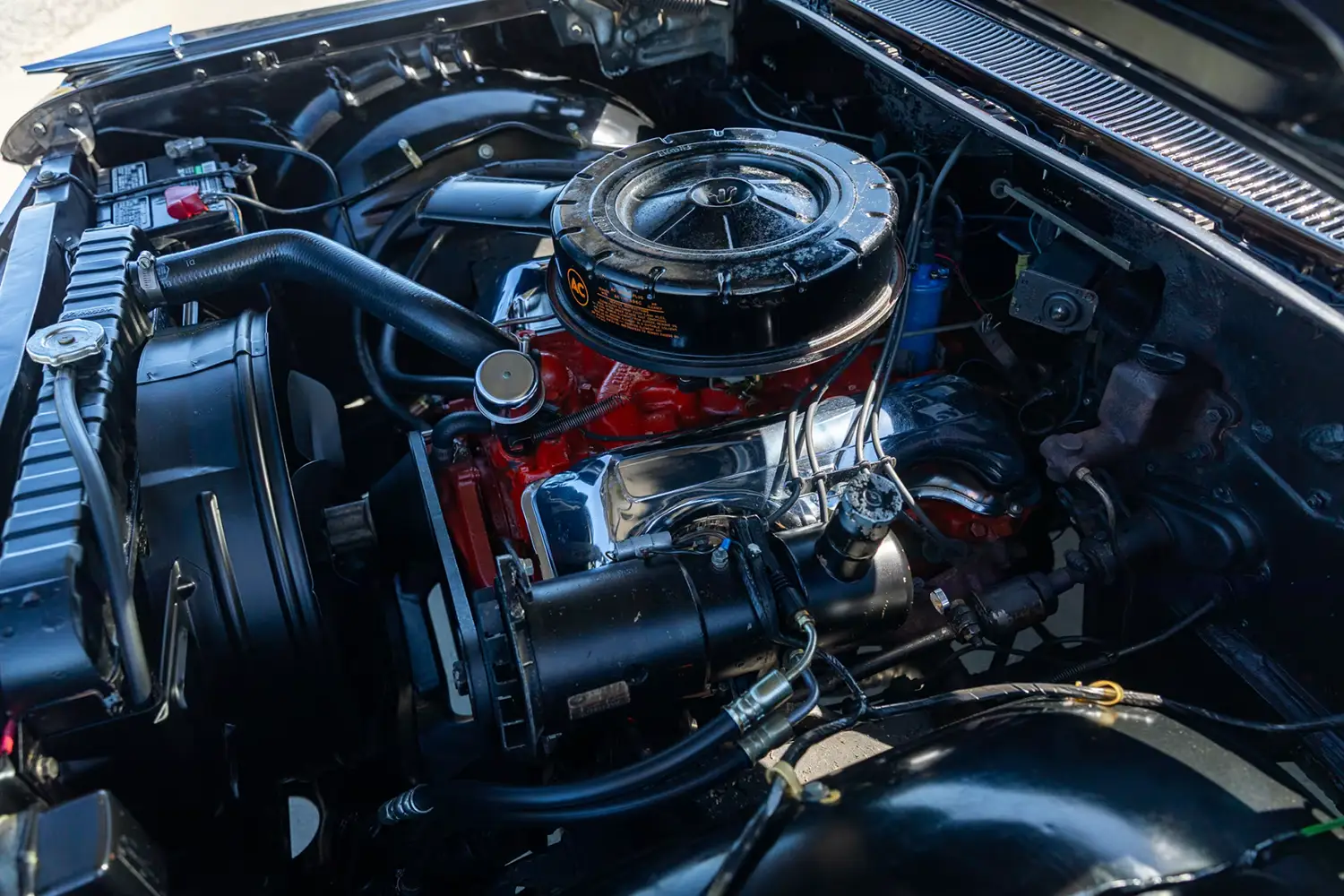
Performance is anchored by the formidable 348 cubic-inch V8 engine, which delivers a factory-rated 250 hp/253 PS and substantial low-end torque. This power is funneled through a Muncie 4-speed manual transmission, a rare and highly desirable choice for a luxury-leaning convertible of this scale. The engine bay is maintained with period-correct components, including a Harrison radiator with shroud and a 12-volt generator system. For better handling and ease of use, the car features power steering, while manual drum brakes handle the stopping duties. The mechanical symphony is rounded out by OE exhaust manifolds breathing through a dual exhaust system, providing the deep, authoritative rumble expected from a classic Chevrolet big-block.
| Technical Specifications | |
|---|---|
| Engine Type | 348 CI V-8 |
| Transmission | Muncie 4-Speed Manual |
| Shifter Type | Hurst Shifter |
| Exterior Color | Onyx Black |
| Interior Color | Red (1963-style trim) |
| Steering | Power Assisted |
| Brake System | Manual Drum Brakes |
| Cooling System | Harrison Radiator with Shroud |
| Additional Equipment | Continental Kit / Dual Antennas |
Investment Value of the High-Spec Manual Impala
In the current collector market, the 1959 model year consistently commands a premium over both its predecessors and successors due to its unique one-year-only styling. While most Impalas were delivered with automatic transmissions, the presence of a factory 4-speed manual elevates this car into a much smaller peer group of performance-oriented convertibles. It competes directly with luxury cruisers from Cadillac and Ford, but the Chevy’s parts availability and broad enthusiast base make it a more approachable investment. The unique 1963 interior modification adds a layer of vintage custom history that distinguishes it from strictly stock restorations, appealing to those who appreciate a car with a documented and personalized past.
Preserving a Fifties Icon for Future Generations
Ownership of a 1959 Chevrolet Impala Convertible is as much about stewardship of history as it is about driving pleasure. This example retains significant details like its original trunk mat and chrome instrument bezel, indicating a life of careful preservation. While the car’s size and dramatic overhangs require a specialized garage space, the reward is a driving experience that stops traffic in any modern setting. Maintaining the 348 V8 is straightforward thanks to its robust design, and the manual drivetrain offers a level of reliability and engagement that is increasingly hard to find. This Impala represents a secure investment in an era where style was the primary objective of automotive engineering.
A Masterpiece of American Chrome and Character
This 1959 Chevrolet Impala Convertible is more than just a car; it is a rolling piece of 1950s art that captures the essence of a decade. The combination of Onyx Black paint, a high-output 348 V8, and the rare 4-speed manual makes it a formidable contender for any serious collection. With its unique interior history and iconic Continental kit, it stands out even among other “batwing” Chevys as a vehicle of exceptional character. As it crosses the block at Indy 2026, it offers the next owner a chance to experience the very best of Chevrolet’s historic lineup. This is a turnkey opportunity to own a legend that remains as striking and powerful today as it was when it first hit the showroom floor.
Disclaimer: Content on this site is for informational and entertainment purposes only. Details, analyses, and opinions reflect current trends and personal views, not professional or financial advice. Always verify information with official sources before making any decisions.
Source: mecum.com