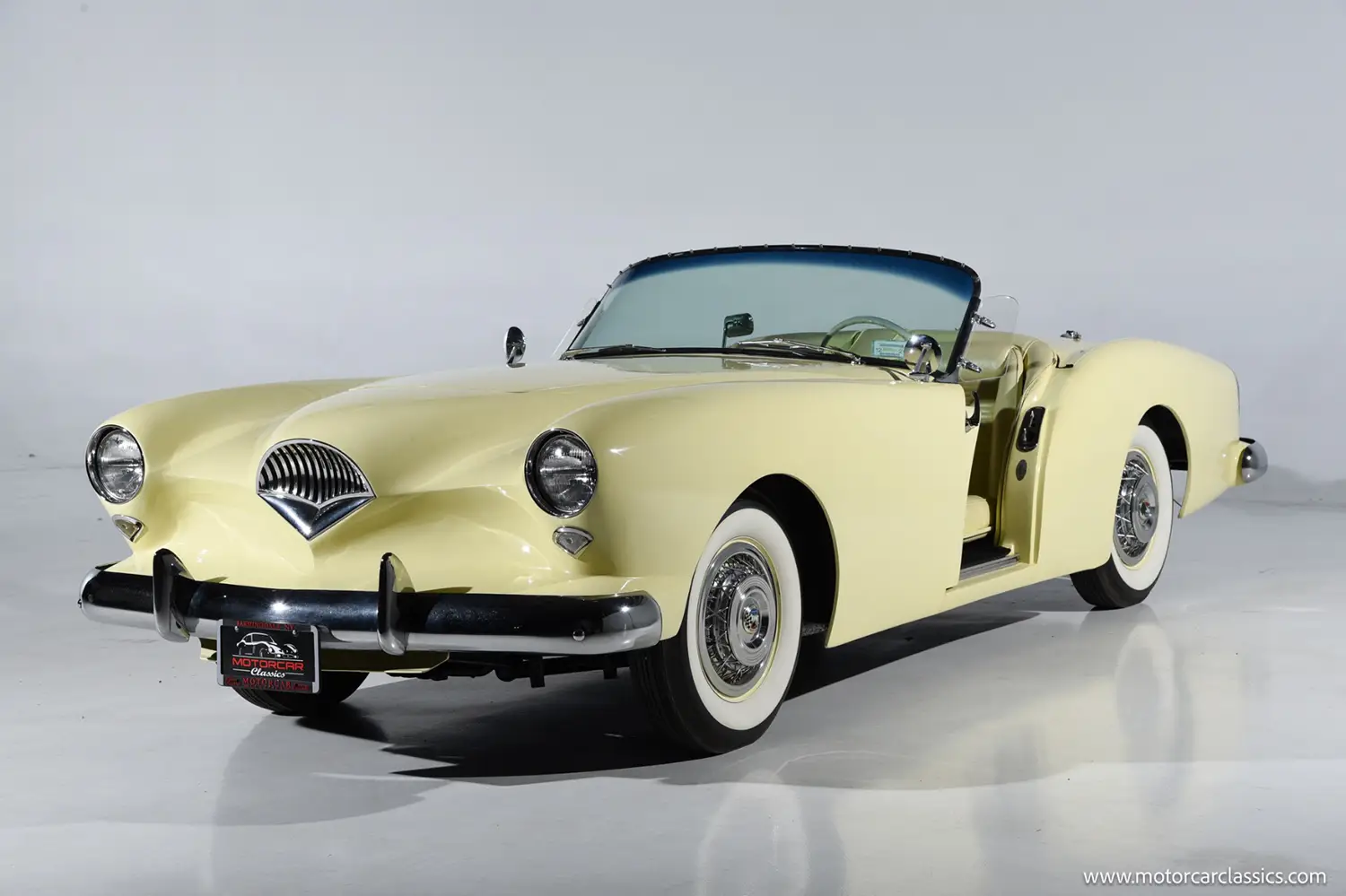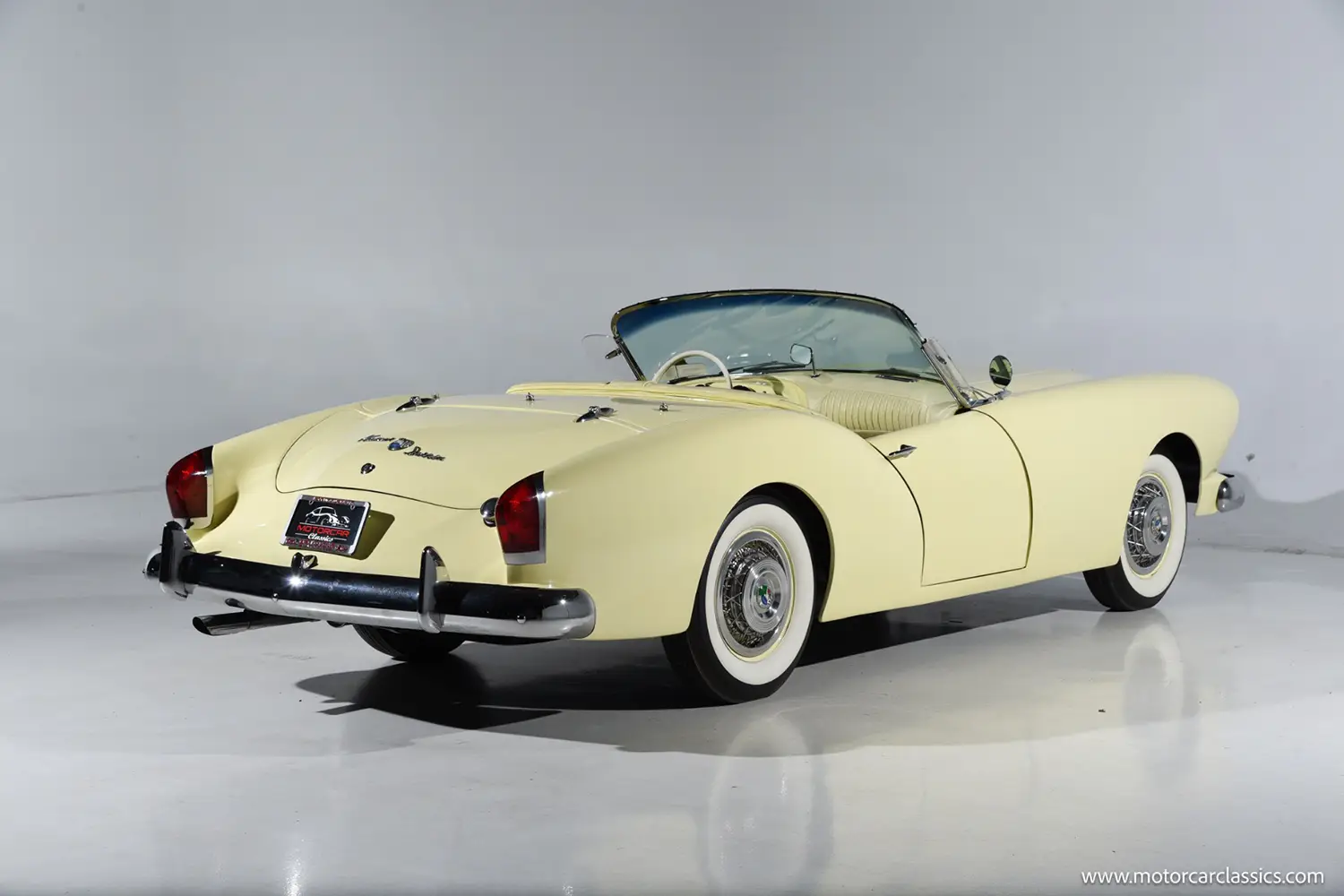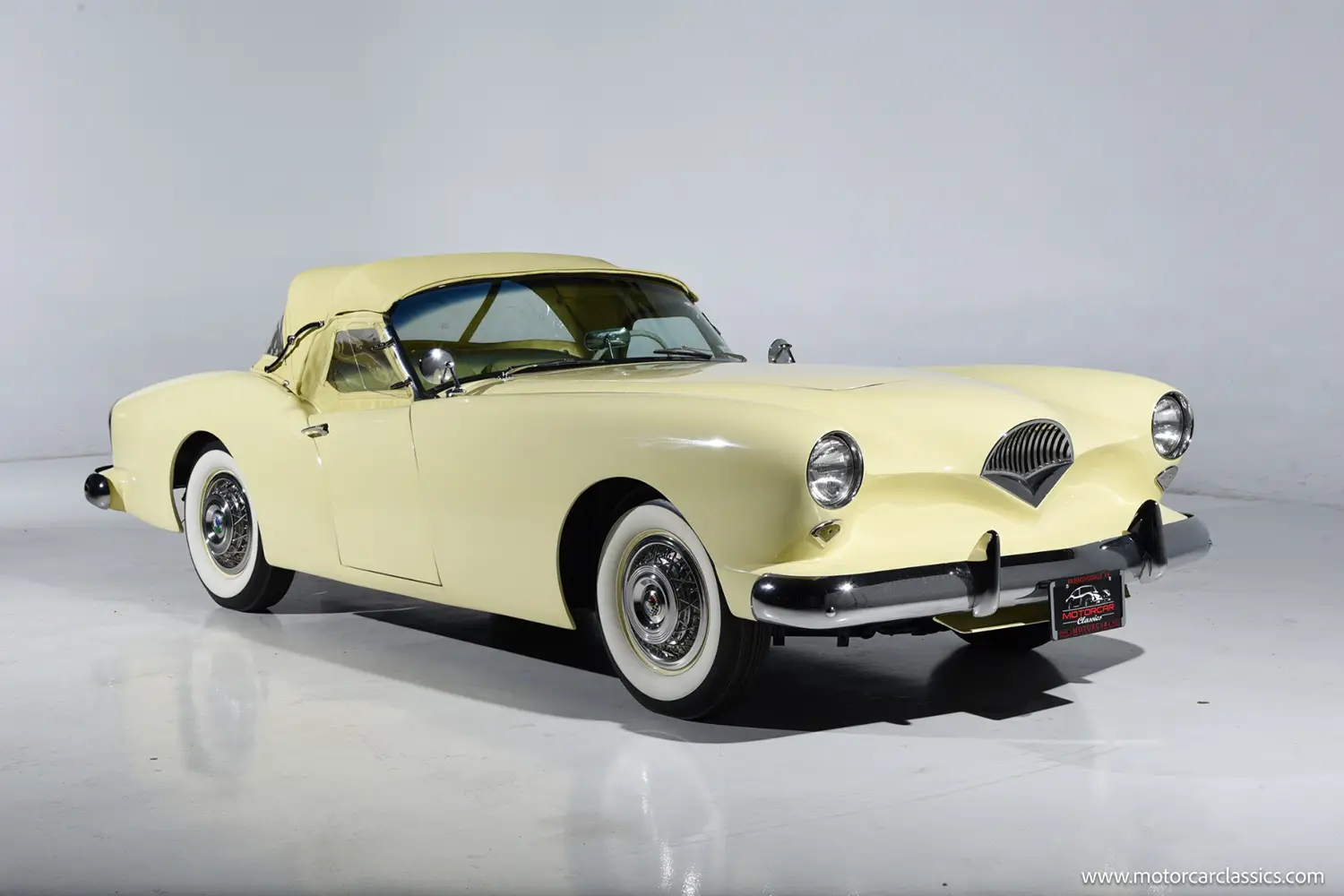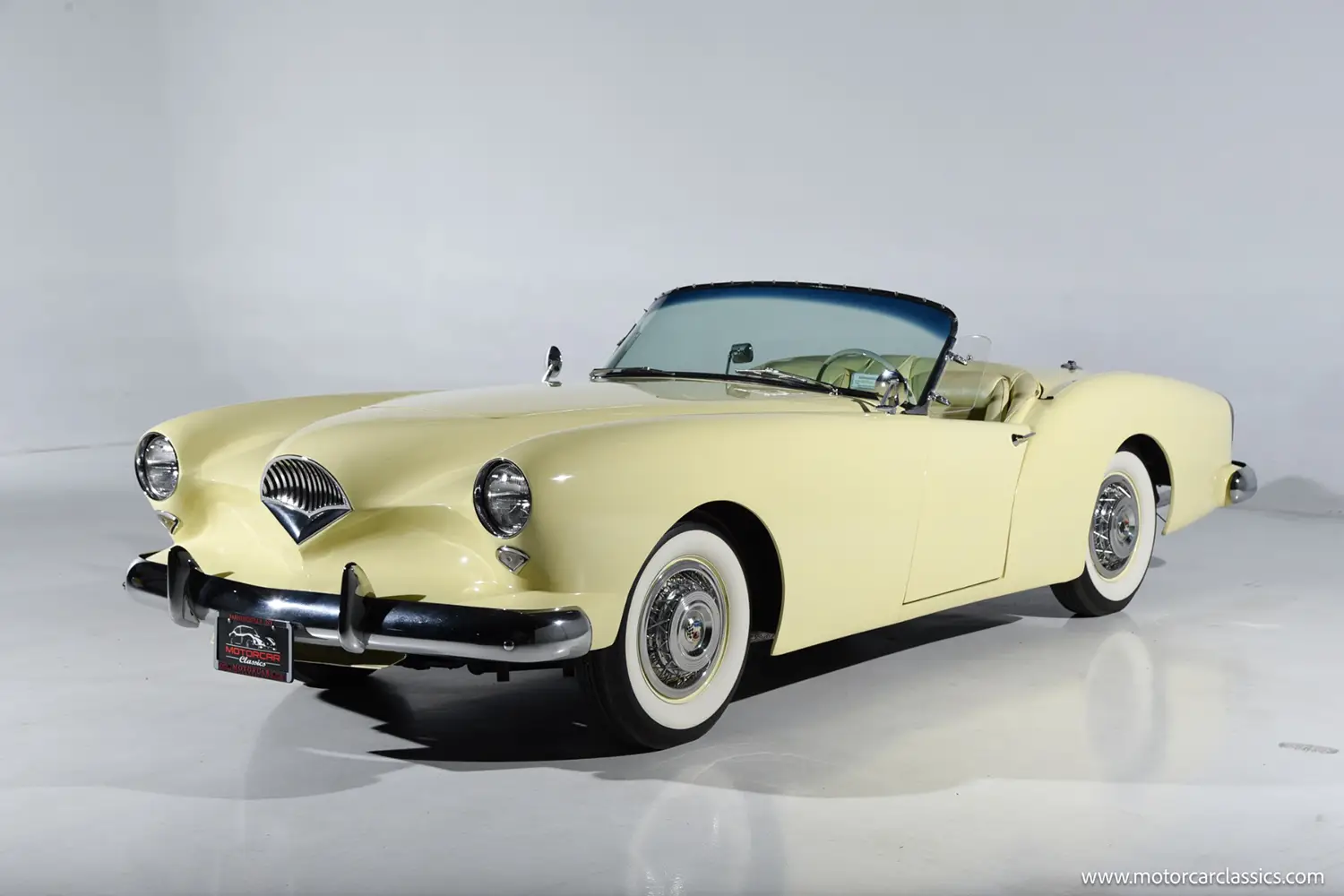
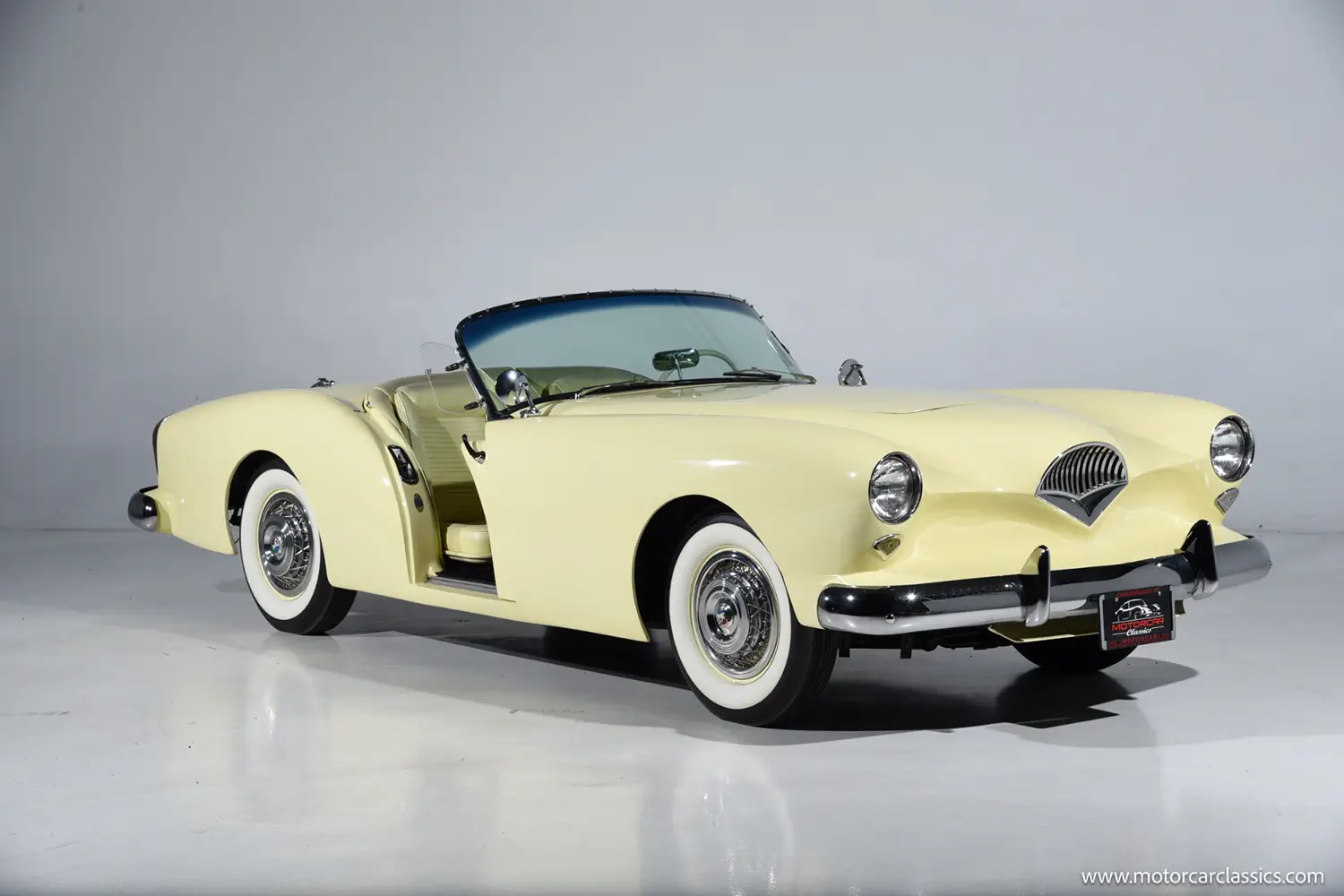
The 1954 Kaiser Darrin Convertible stands as a testament to the brief but brilliant era when American independent manufacturers challenged the Big Three with radical innovation. Designed by the visionary Howard “Dutch” Darrin, it holds the distinction of being the first American production car to feature a fiberglass body, beating the Corvette to the showroom by a narrow margin. Beyond its composite construction, the car is forever immortalized by its “pocket” doors that slide forward into the front fenders rather than swinging outward. This Yellow example, showing a remarkable 8,282 miles, represents a high-water mark of mid-century optimism and serves as a cornerstone for any collection focused on rare, high-style Americana.
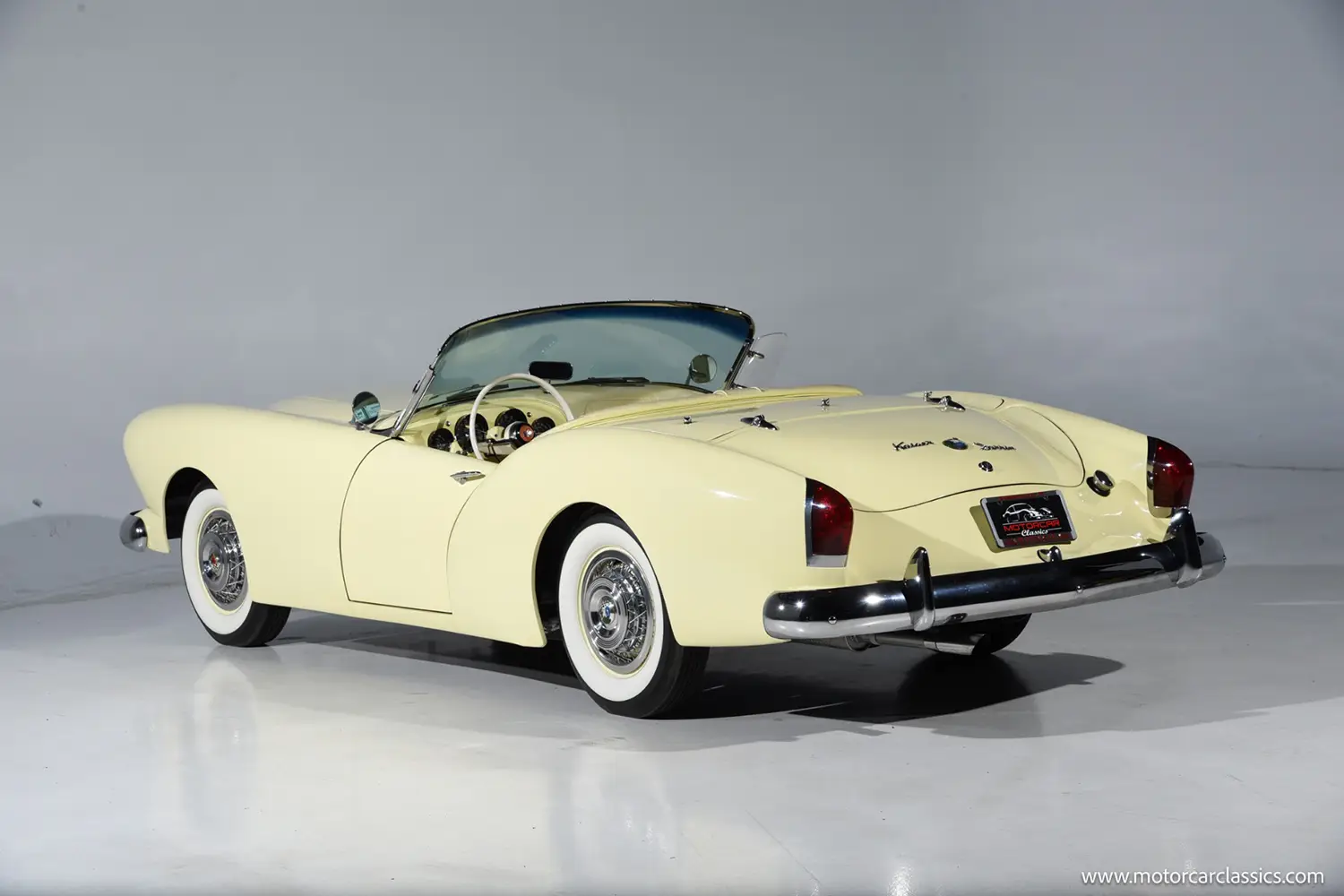
Fiberglass Innovation and the Iconic Heart-Shaped Grille
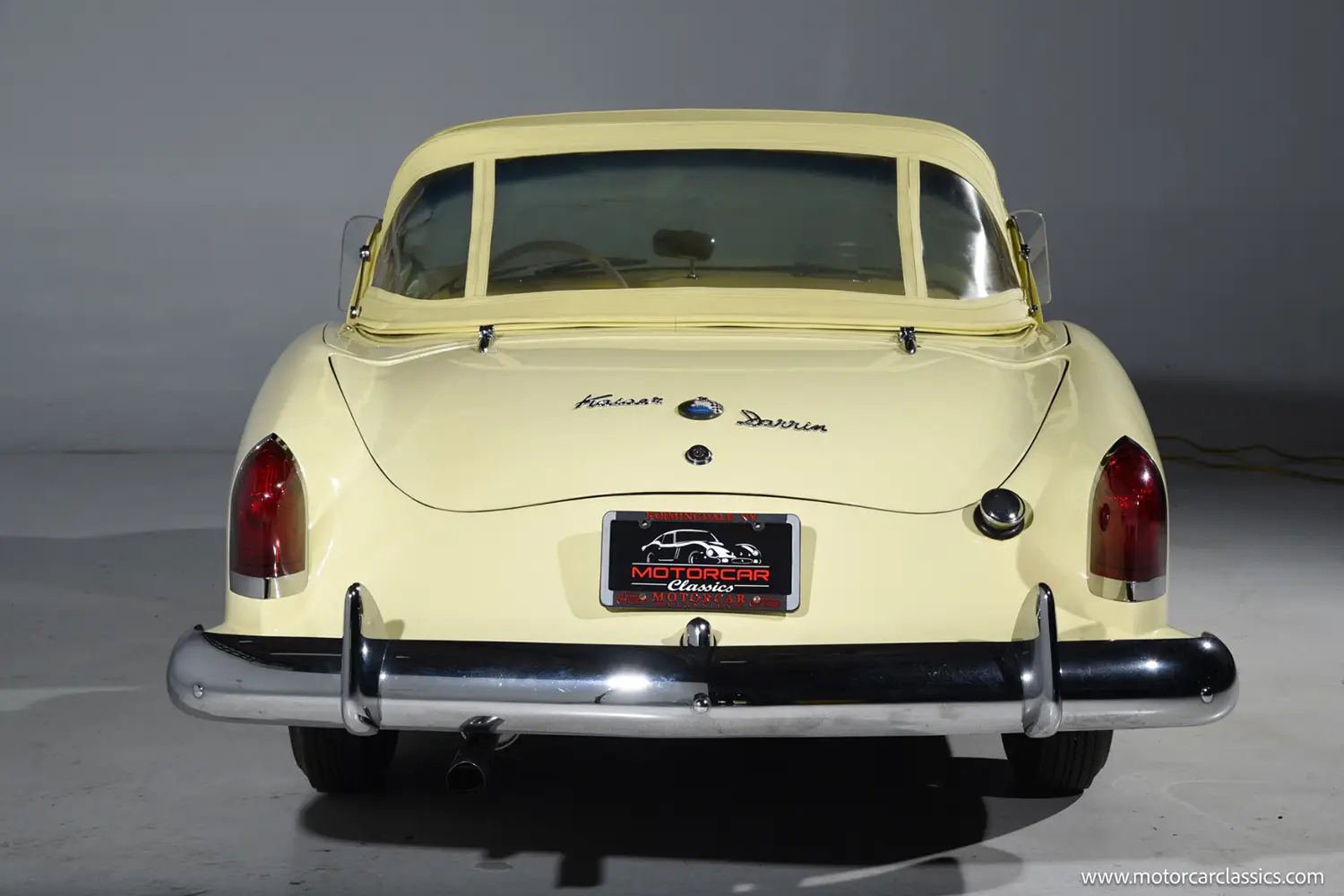
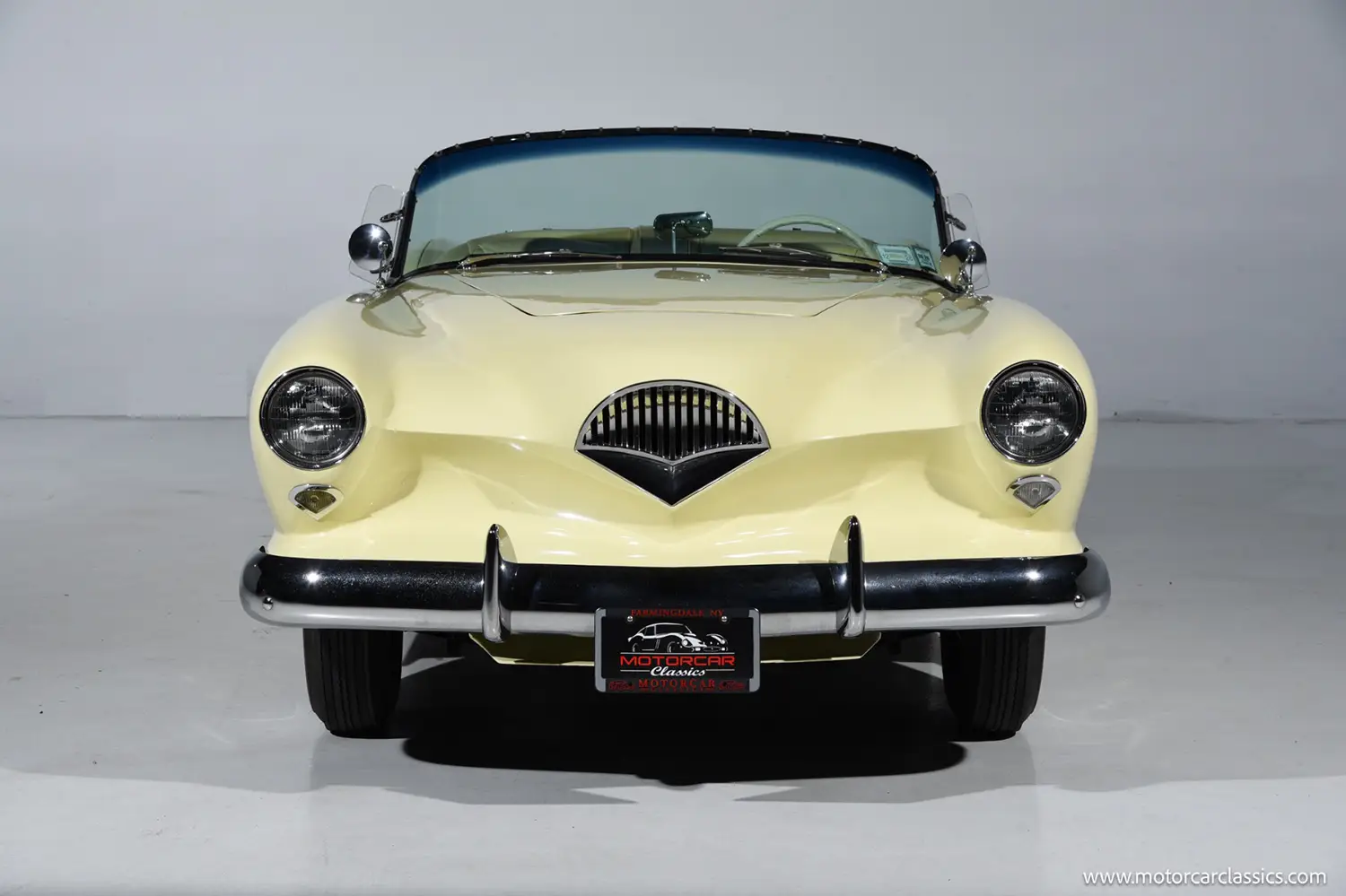
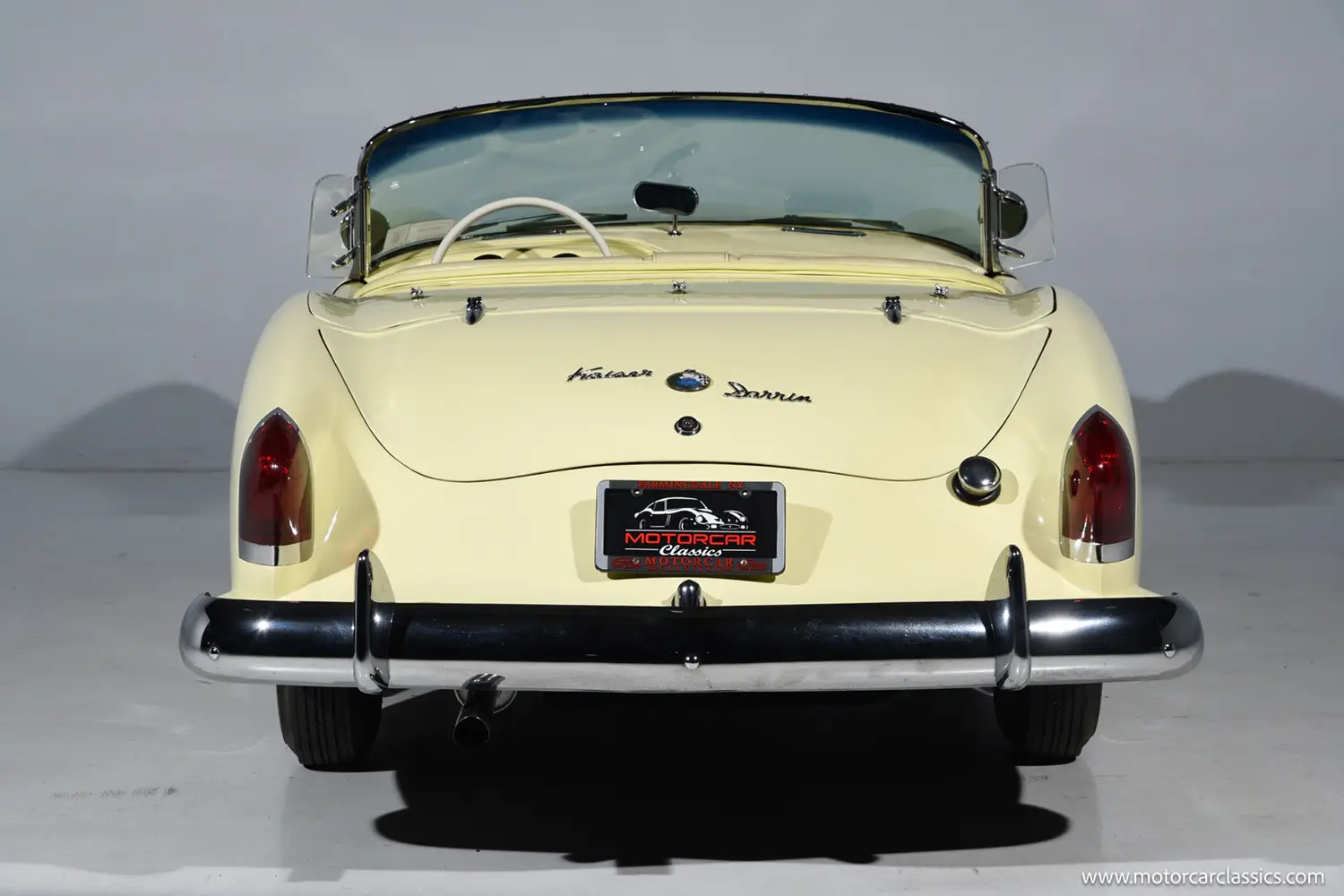
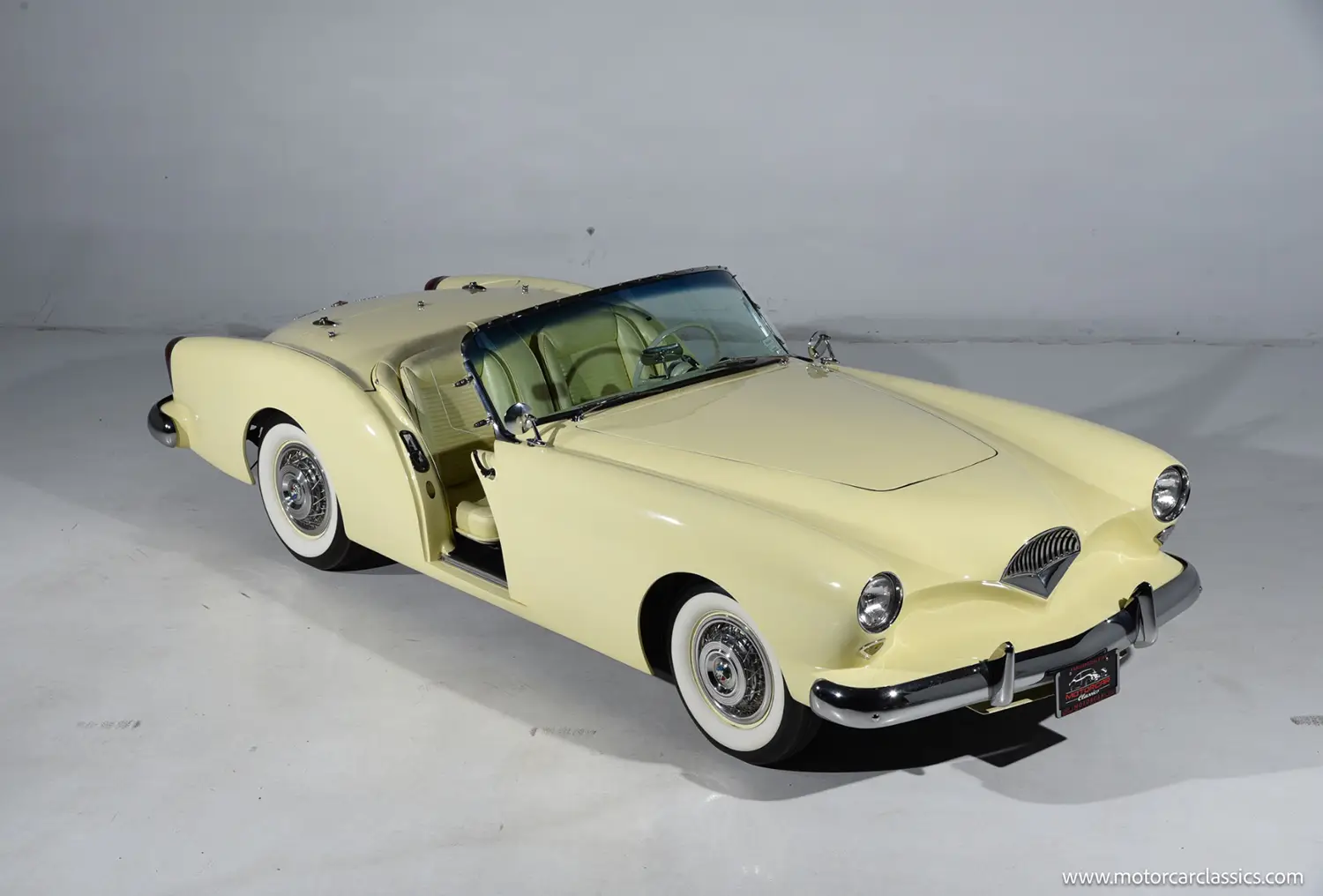
The visual character of the Kaiser Darrin is defined by its low-slung beltline and the distinctive “Darrin Dip” along the tops of the doors. Its fiberglass bodywork allowed for complex curves that were difficult to achieve with steel in 1954, resulting in a sleek, lightweight silhouette that remains striking today. The front end is dominated by a small, heart-shaped grille that feeds air to the engine while giving the car a friendly yet sophisticated face. Finished in a bright Yellow, this convertible maintains its period-correct charm, accented by wire wheel covers and a three-position Landau top that offers versatility for open-air touring or stylish inclement weather protection.
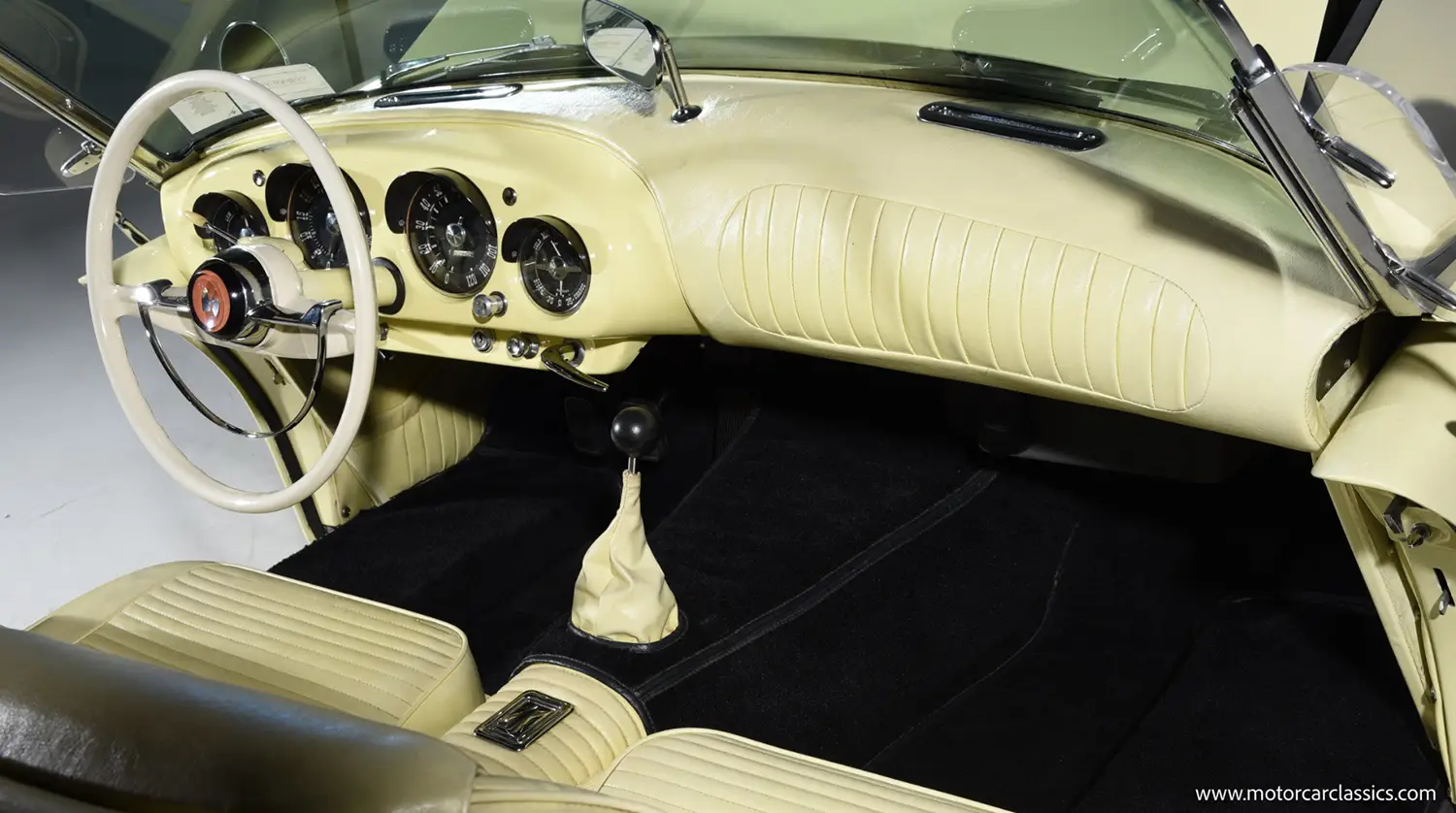
Yellow Satin Cabin and Driver-Focused Layout
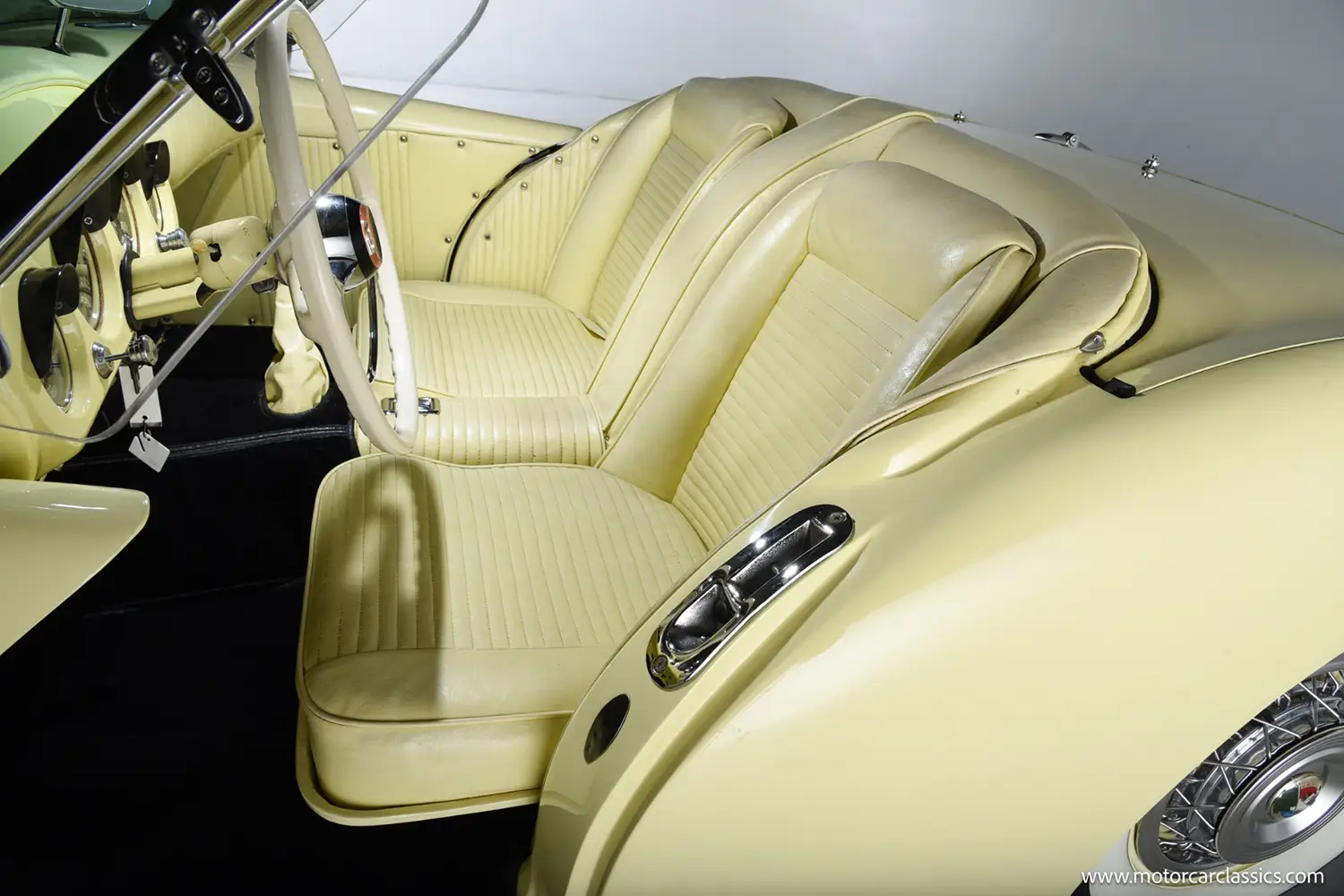
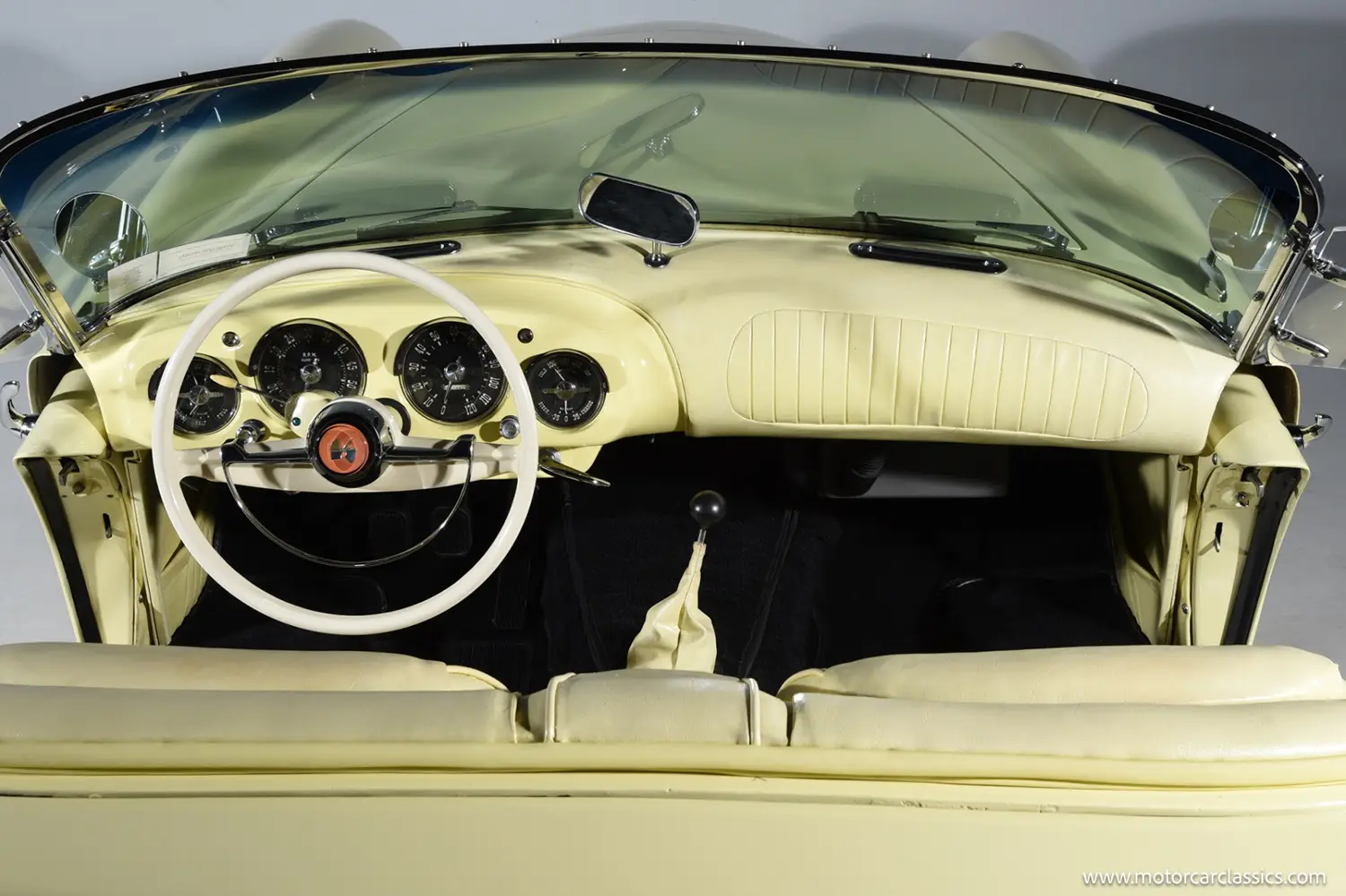
Inside the cockpit, the 1954 Kaiser Darrin Convertible offers a color-coordinated environment that mirrors the bold exterior. The bucket seats and dashboard are finished in matching Yellow, creating a cohesive aesthetic that was far ahead of the standard utilitarian interiors of the early fifties. Instrumentation is clustered directly in front of the driver, emphasizing its sports car aspirations, while the minimalist center console allows for an airy, spacious feel despite the car’s compact proportions. The sliding door mechanism is visible within the door sills, serving as a constant mechanical reminder of the unique engineering that went into Howard Darrin’s most famous automotive creation.
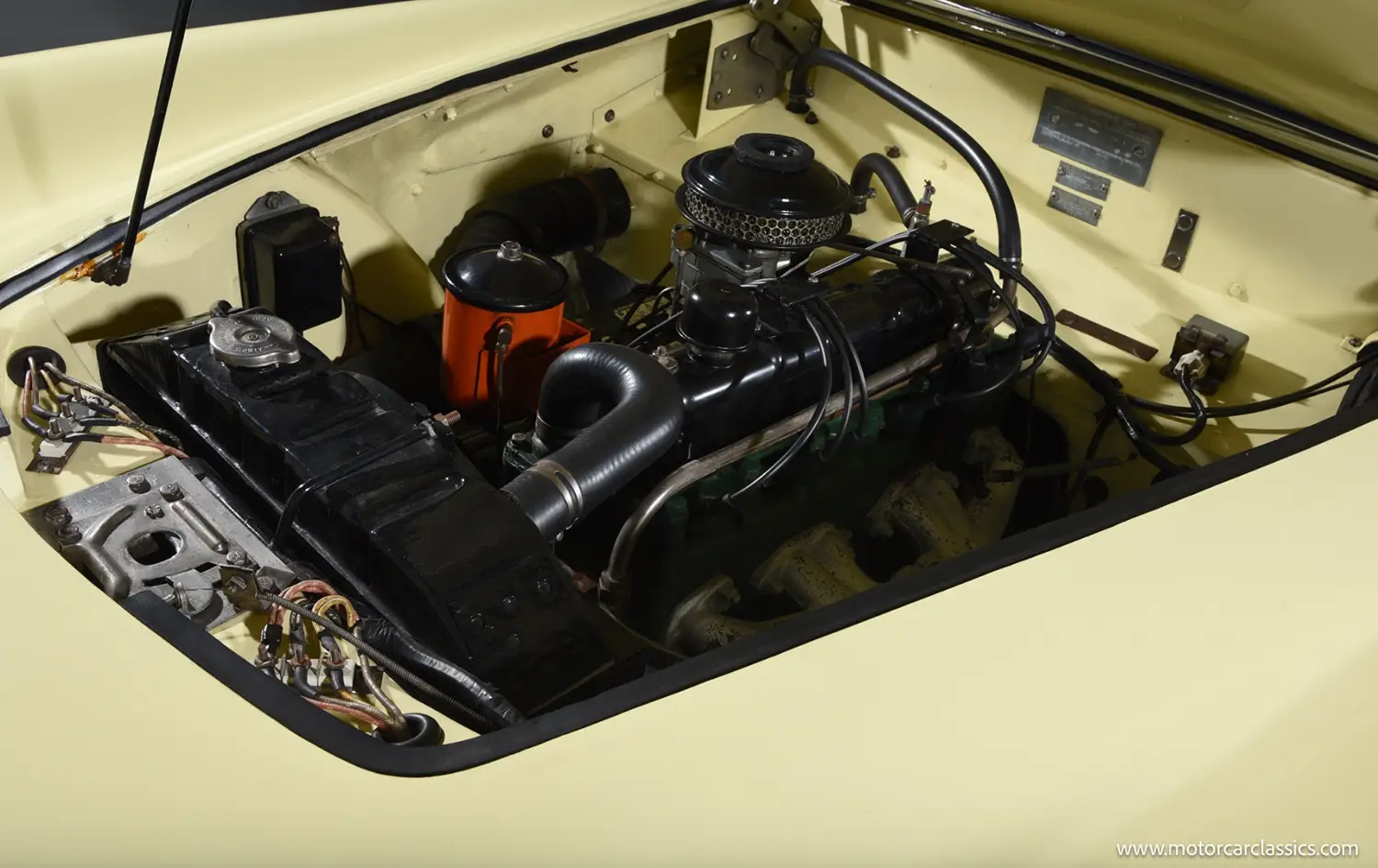
F-Head Six-Cylinder Smoothness and Manual Control
Performance for this stylish roadster is derived from the Willys-sourced 161 cubic-inch F-head inline-six engine, known for its reliability and smooth power delivery. This powerplant produces approximately 90 hp / 91 PS and 135 lb-ft / 183 Nm of torque, which is managed by a three-speed manual transmission with overdrive. While it was never intended to be a high-velocity racer, the Kaiser Darrin offers a refined and nimble driving experience thanks to its lightweight composite body and balanced weight distribution. It was designed for the sophisticated cruiser who valued exclusivity and design over raw horsepower, providing a rhythmic mechanical feel that is quintessentially mid-century.
| Technical Specification | Detail |
|---|---|
| Engine | 161 CI F-Head Inline-6 |
| Transmission | 3-Speed Manual w/ Overdrive |
| Body Material | Fiberglass Reinforced Plastic |
| Door Style | Patented Pocket-Sliding |
| Total Production | 435 Units (Total) |
| Odometer | 8,282 Miles |
Collector Scarcity and The Early Sports Car Rivalry
The 1954 Kaiser Darrin Convertible entered a market that was just beginning to embrace the concept of the American sports car, often compared to the first-generation Chevrolet Corvette and the Nash-Healey. With only 435 units ever produced, its rarity far exceeds that of its contemporaries, making it a highly coveted prize at international auctions and concours events. Its unique door design and fiberglass construction give it a permanent place in the history books as a vehicle that dared to be different. Today, values remain strong for well-preserved examples, as collectors recognize the Darrin as an essential link in the evolution of the lightweight enthusiast vehicle in North America.
Investment Integrity and Mechanical Simplicity
Ownership of a Kaiser Darrin offers the best of both worlds: a world-class design with a powertrain that is relatively easy to maintain. The Willys-based engine shares many components with more common models of the era, ensuring that mechanical parts are accessible for the dedicated hobbyist. The fiberglass body is immune to the rust issues that plagued steel cars of the 1950s, though the intricate sliding door tracks require specialized care to maintain their smooth operation. For the investor, this 8,282-mile survivor represents a low-risk asset with high emotional returns, offering a turnkey entry into the highest levels of the vintage car community.
A Lasting Vision of Howard Darrin’s Genius
Ultimately, the 1954 Kaiser Darrin Convertible is more than just a car; it is a piece of rolling sculpture that captured the imagination of a generation. It reflects a time when a small company could still change the world with a bold idea and a beautiful silhouette. From the distinctive “heart” grille to the pioneering use of fiberglass, every inch of the Darrin is designed to evoke a sense of wonder. For the driver who demands exclusivity and a direct connection to the golden age of automotive design, this Yellow convertible remains an unmatched statement of elegance and engineering audacity.
Disclaimer: Content on this site is for informational and entertainment purposes only. Details, analyses, and opinions reflect current trends and personal views, not professional or financial advice. Always verify information with official sources before making any decisions.
Source: motorcarclassics.com