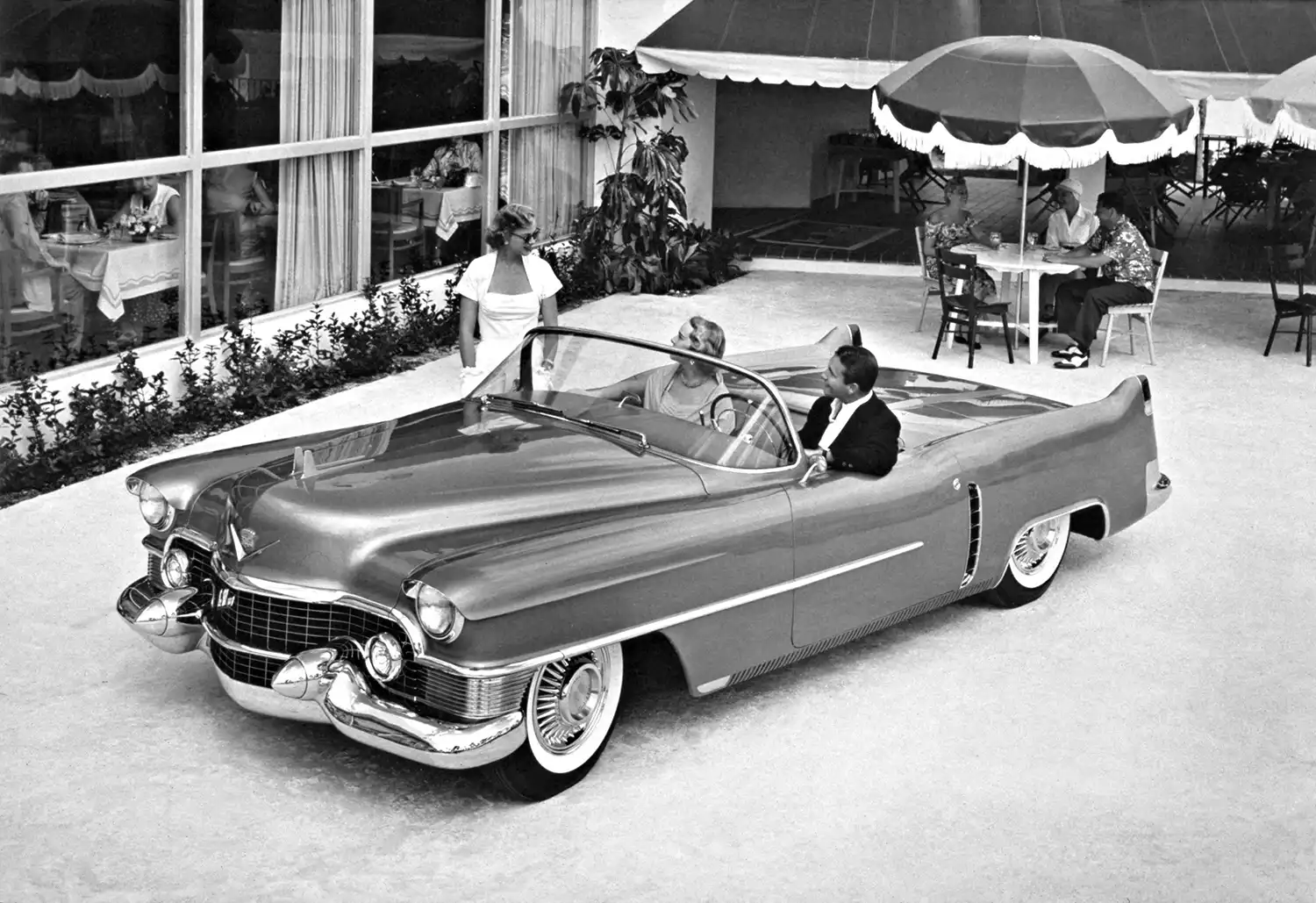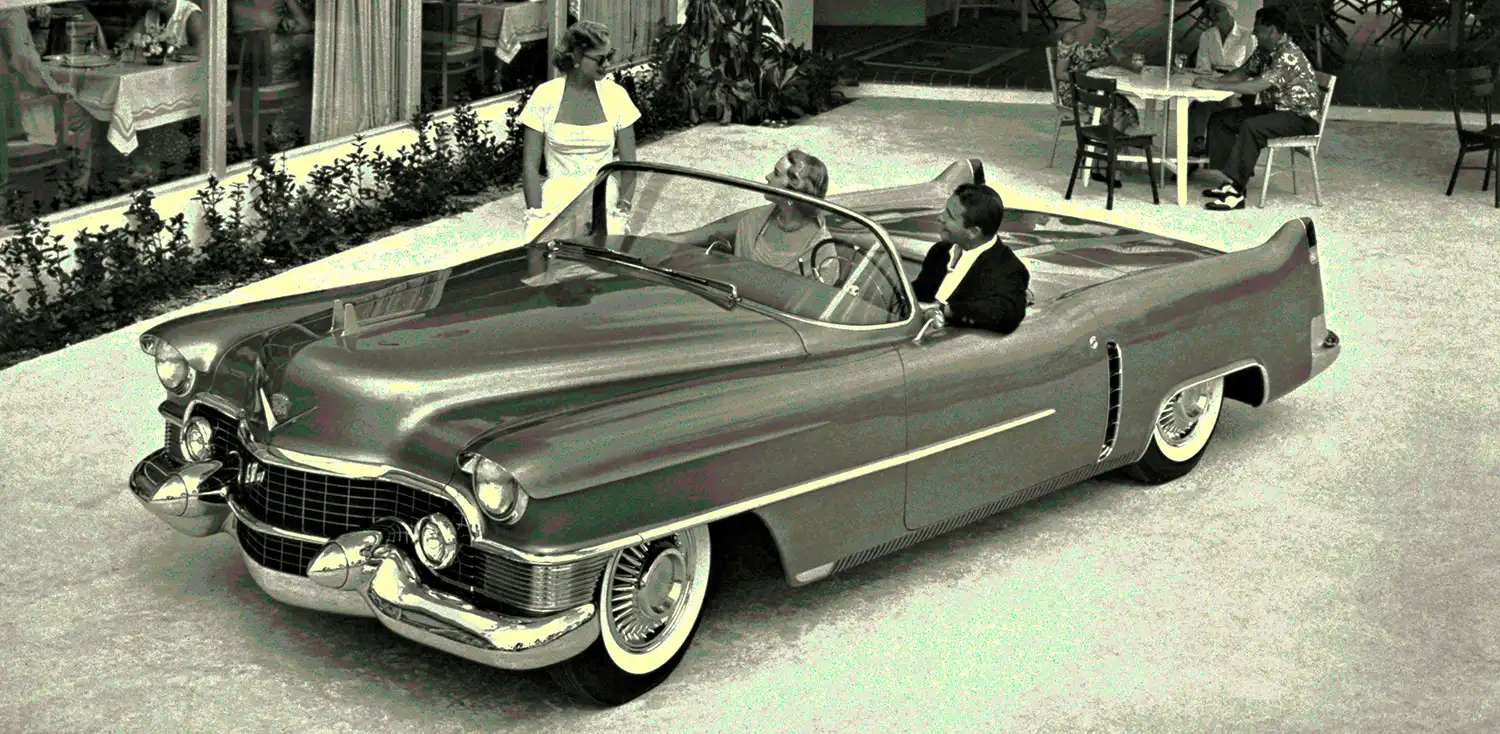
The 1953 Cadillac LeMans emerged as a breathtaking vision of the future during the famous General Motors Motorama show. Unlike the standard models of the era, this was a pure concept car designed to test radical styling ideas on the American public. It embodied the soaring optimism of the post-war years and the nation’s growing fascination with jet aircraft. While it never entered mass production, the vehicle served as a rolling laboratory for Cadillac’s design language. Only four of these hand-built masterpieces were ever created, making them some of the rarest artifacts in GM history. It represented a bold move by the brand to solidify its position as the global leader in automotive luxury. This roadster remains a definitive example of how show cars can dictate the look of an entire decade.
Revolutionary Fiberglass Body and Jet-Age Styling
The most significant technical achievement of the 1953 Cadillac LeMans was its innovative fiberglass body construction. This material was exceptionally rare in the early fifties and allowed for much more complex curves than traditional steel. Designers utilized this freedom to create a low-slung profile that sat much lower than contemporary sedans. Every line of the car was influenced by aviation, from the pointed front fenders to the emerging rear tailfins. A panoramic wrap-around windshield provided a clear view of the road while creating a futuristic cockpit aesthetic. Chrome wire wheels added a touch of elegance to the sporty, open-air proportions of the two-seater. Consequently, the car looked like it was in motion even while standing still on the rotating Motorama display. These features successfully captured the imagination of thousands of spectators across the country. It was a true masterpiece of mid-century industrial design.
Luxury Interior and Pioneering Cockpit Features
Inside, the 1953 Cadillac LeMans offered a glimpse into a more personal and performance-oriented luxury experience. The cabin featured individual bucket seats, which were a radical departure from the bench seats found in production Cadillacs. A prominent center console divided the cockpit, housing various controls in a layout inspired by aircraft instrument panels. Designers used high-end leathers and polished metal accents to maintain the brand’s reputation for peerless interior quality. The minimalist dashboard emphasized horizontal lines, further enhancing the car’s perceived width and stable stance. While the car was an open-top roadster, it suggested a level of refinement usually reserved for the most expensive limousines. This interior proved that a sports car could still satisfy the demanding tastes of a Cadillac owner. Many of these ergonomic ideas eventually migrated into the high-end Eldorado production models of later years.
Predicted Power and 331 V-8 Engine Performance
The 1953 Cadillac LeMans was envisioned as a high-performance machine that would match its aggressive and sleek silhouette. Under the fiberglass hood sat a version of the legendary 331 cubic inch overhead valve V-8 engine. This powerplant was factory rated at approximately 210 horsepower, providing significant motivation for the lightweight roadster. An automatic transmission was paired with the engine to ensure the effortless driving experience expected of the brand. Dual exhaust ports were integrated into the rear bumper design to emphasize the car’s muscular mechanical nature. While the LeMans was never intended for high-speed racing, its power-to-weight ratio would have been among the best in the industry. This mechanical setup showcased the brand’s ability to blend high-output engineering with sophisticated luxury. It offered a performance profile that was years ahead of the standard cars found on showroom floors at the time.
1953 Cadillac LeMans Summary
The 1953 Cadillac LeMans remains an enduring influence on the brand’s legendary 1950s design direction. Its introduction of the wrap-around windshield and jet-inspired fins changed the look of American roads for a generation. Though it stayed in the concept phase, the lessons learned from its fiberglass construction influenced future material experiments. Each of the four examples produced has become a highly sought-after prize for the world’s most elite collectors. The car successfully demonstrated that Cadillac could be both a luxury leader and a styling innovator. It avoided the conservative trends of the day to offer a genuine look at the possibilities of tomorrow. Today, it stands as a testament to the power of the Motorama shows in shaping automotive history. The LeMans is more than just a car; it is the physical embodiment of the American dream in the jet age.
Disclaimer: Information regarding concept vehicles is based on historical records and design intentions. Actual specifications and performance details may not have been fully defined.
Source: Cadillac