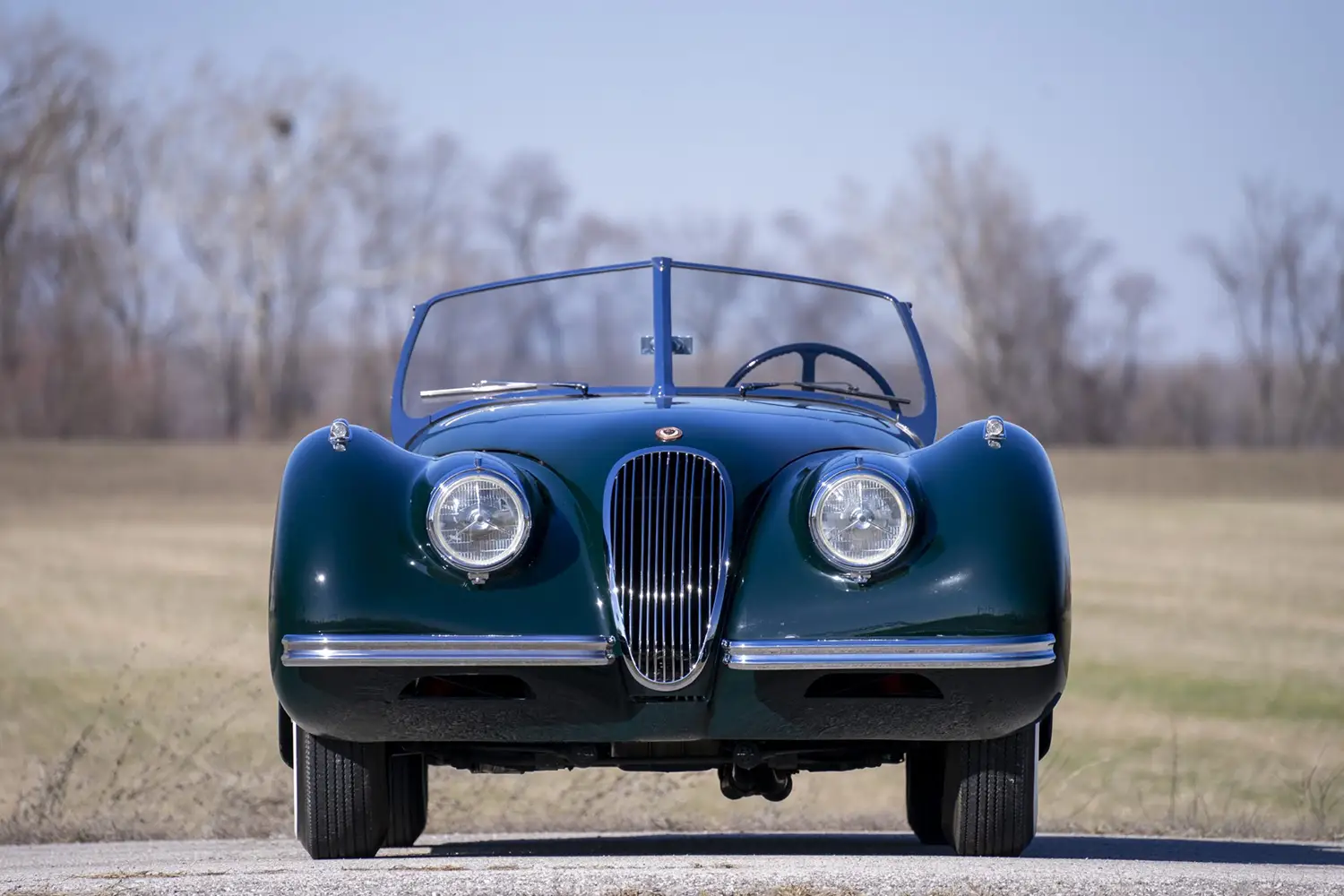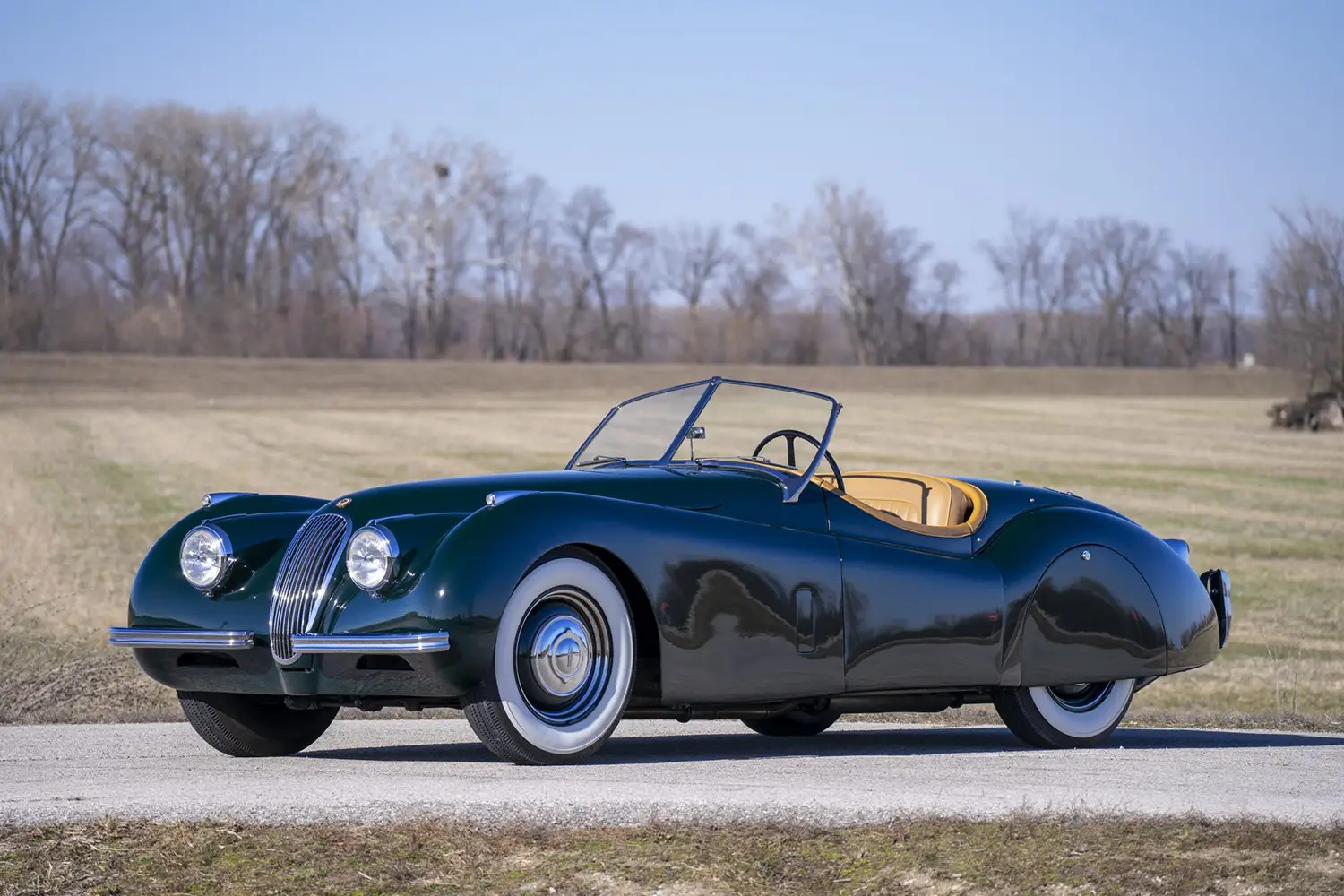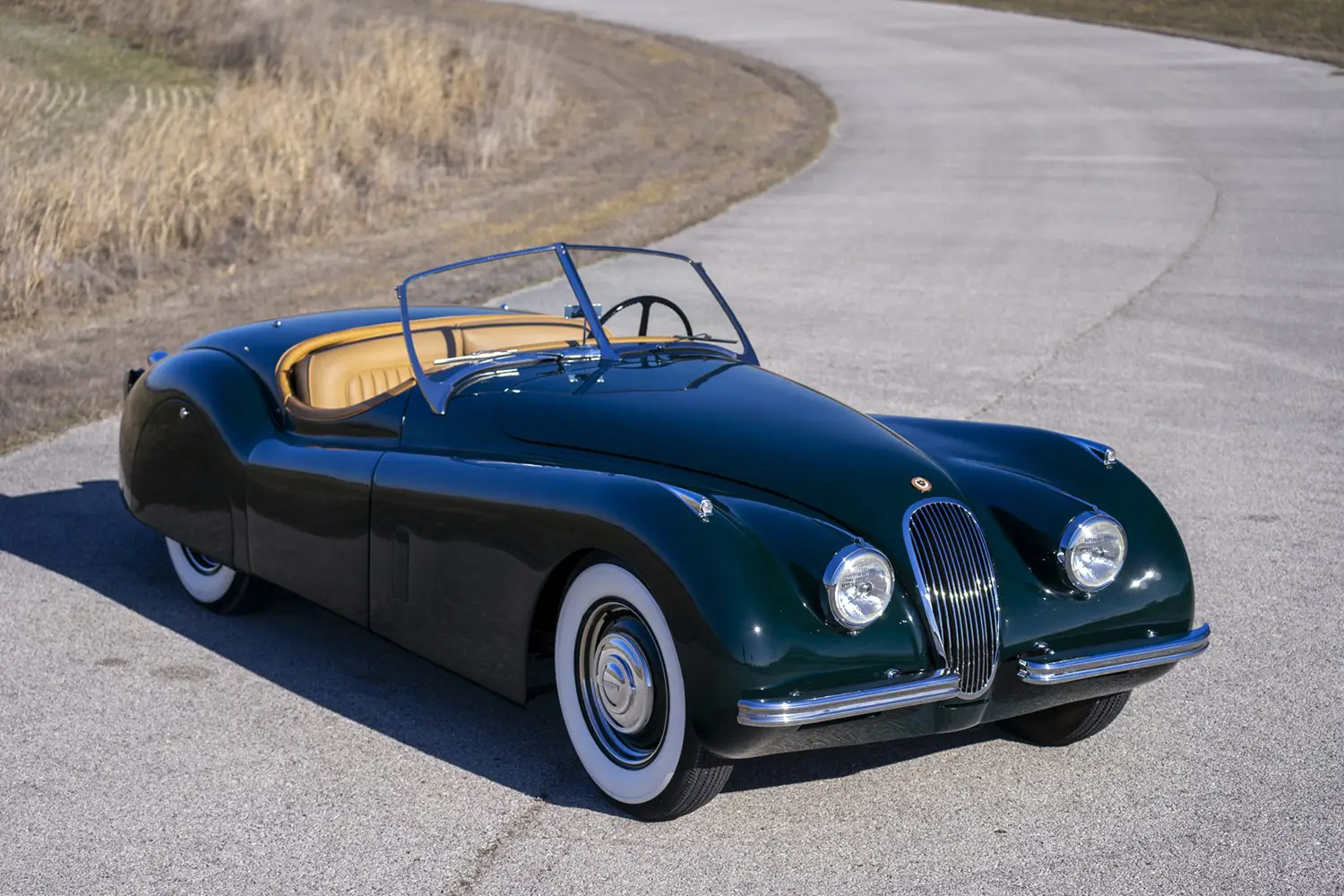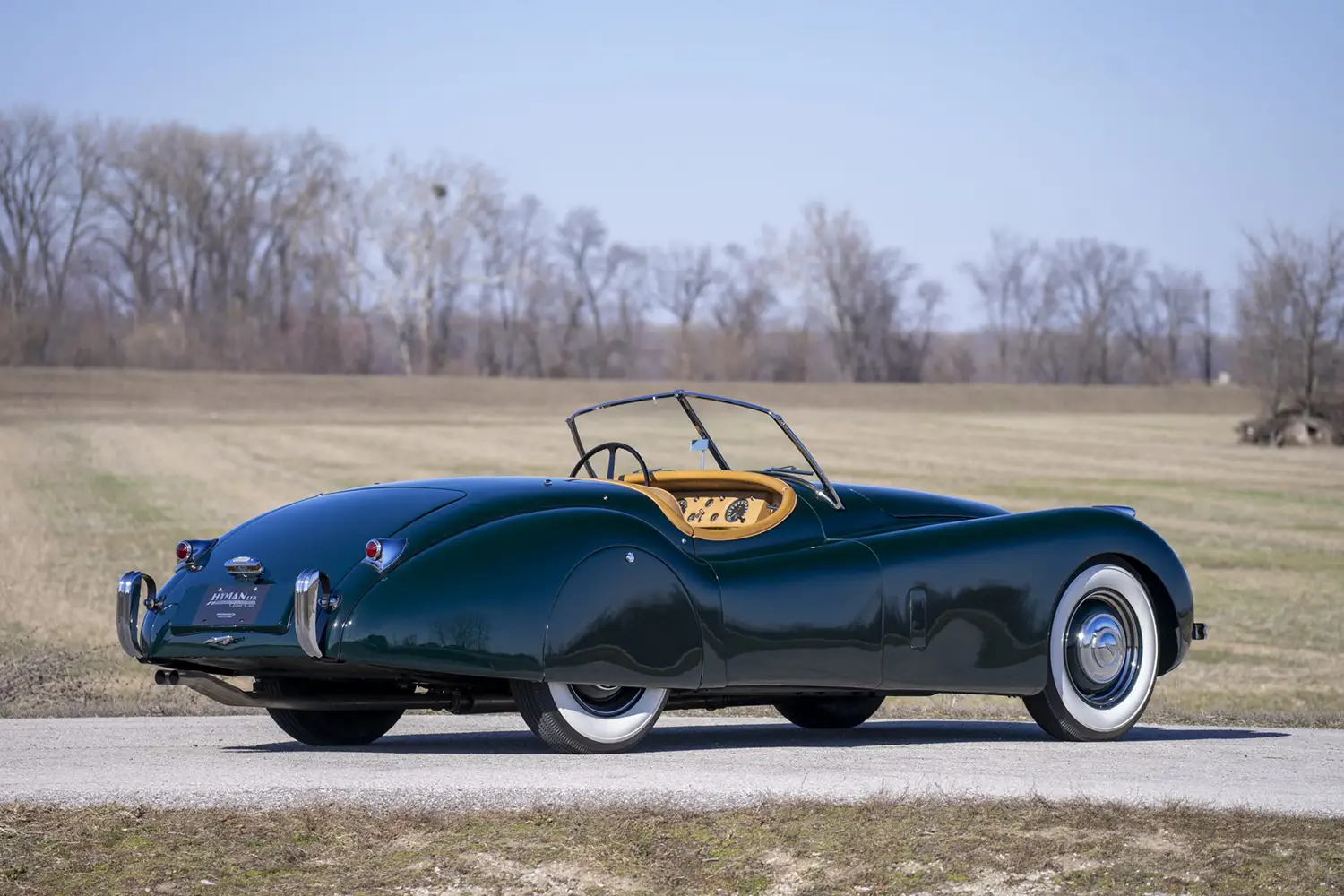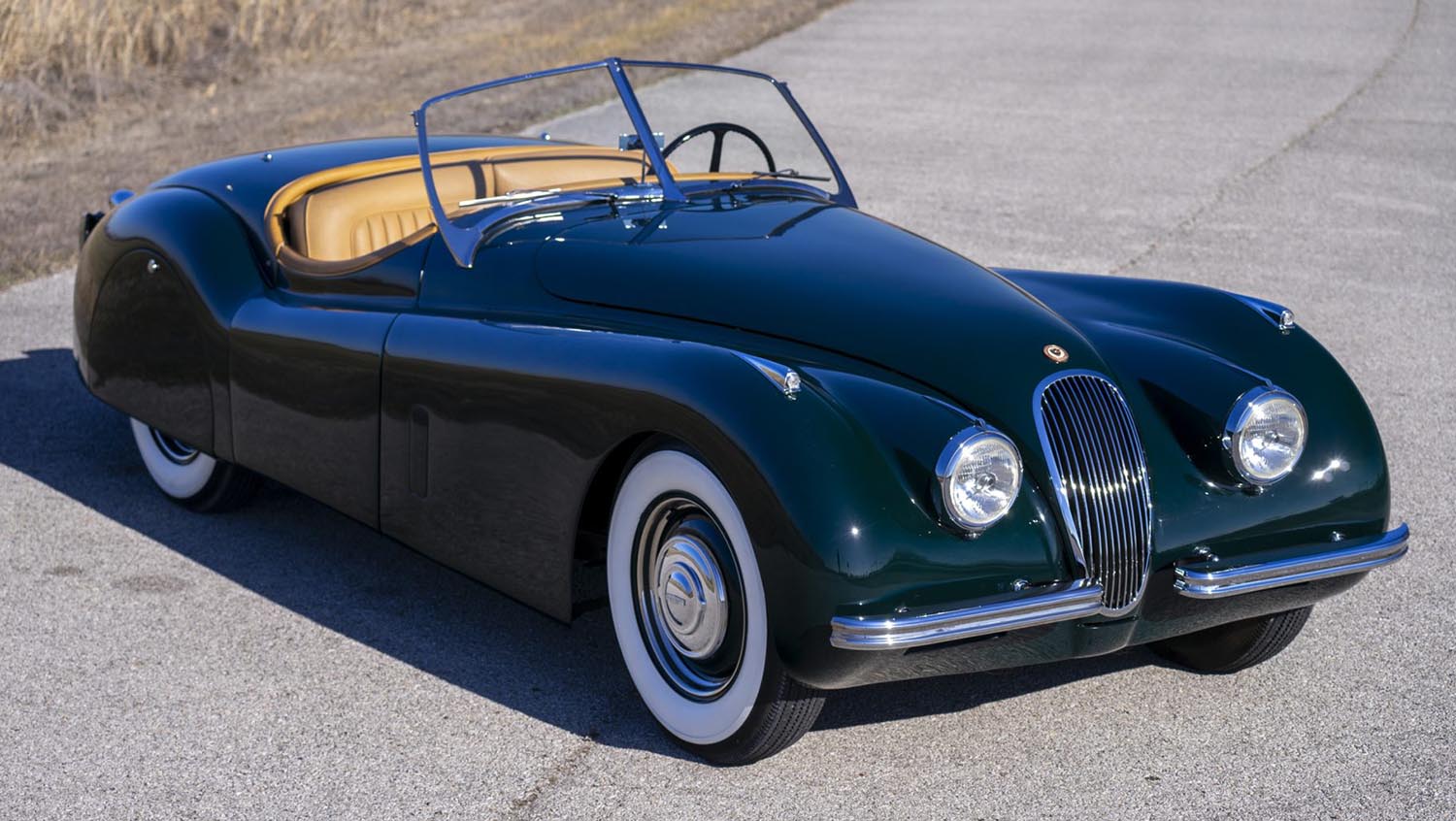
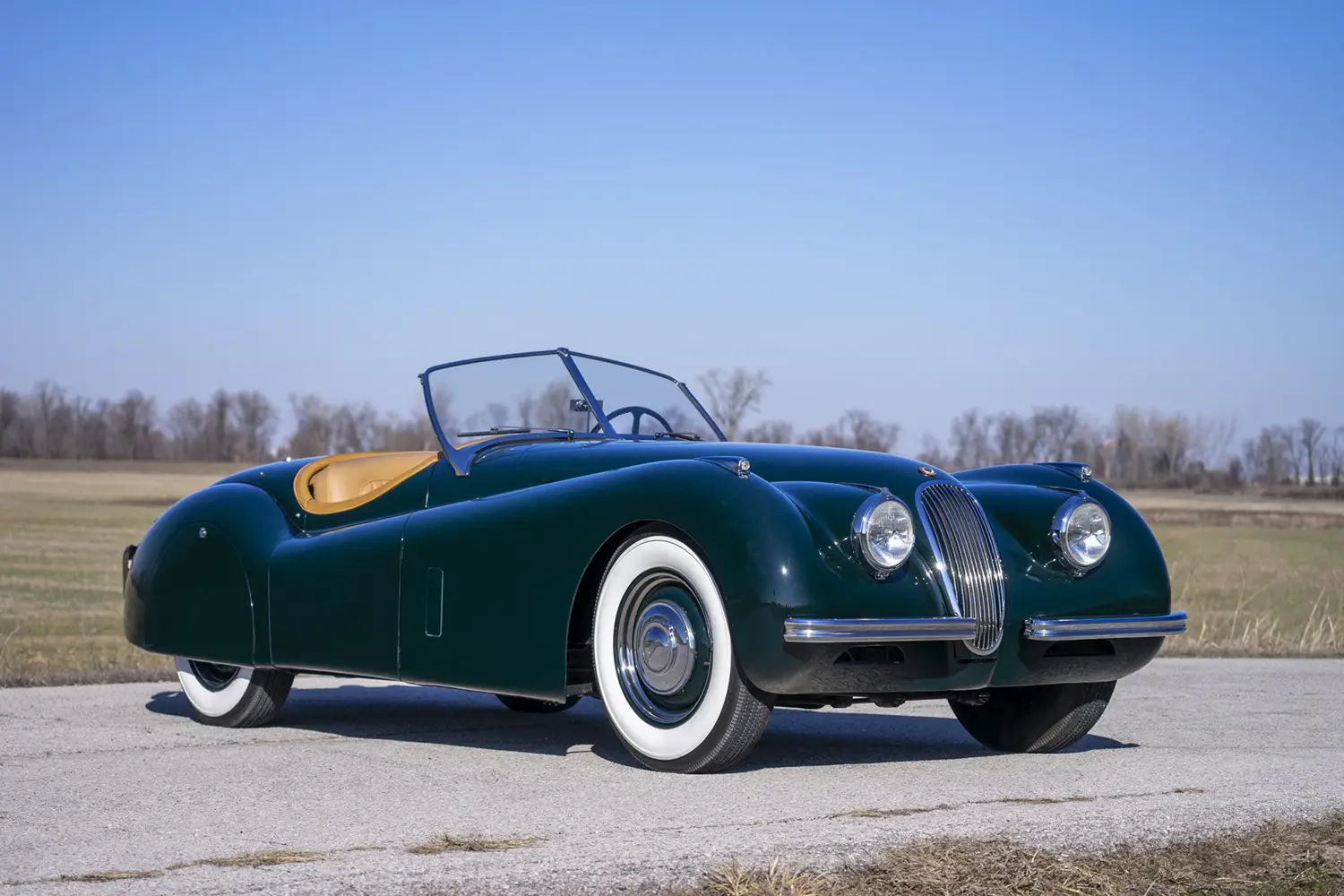
The 1951 Jaguar XK120 Roadster remains a high-water mark for British sports car design and post-war performance. This specific example reflects a transition in manufacturing, moving from handmade alloy to steel panels to meet global demand. Originally delivered through the famous Hoffman dealership in New York, it still carries the elegant proportions that made it an instant sensation.
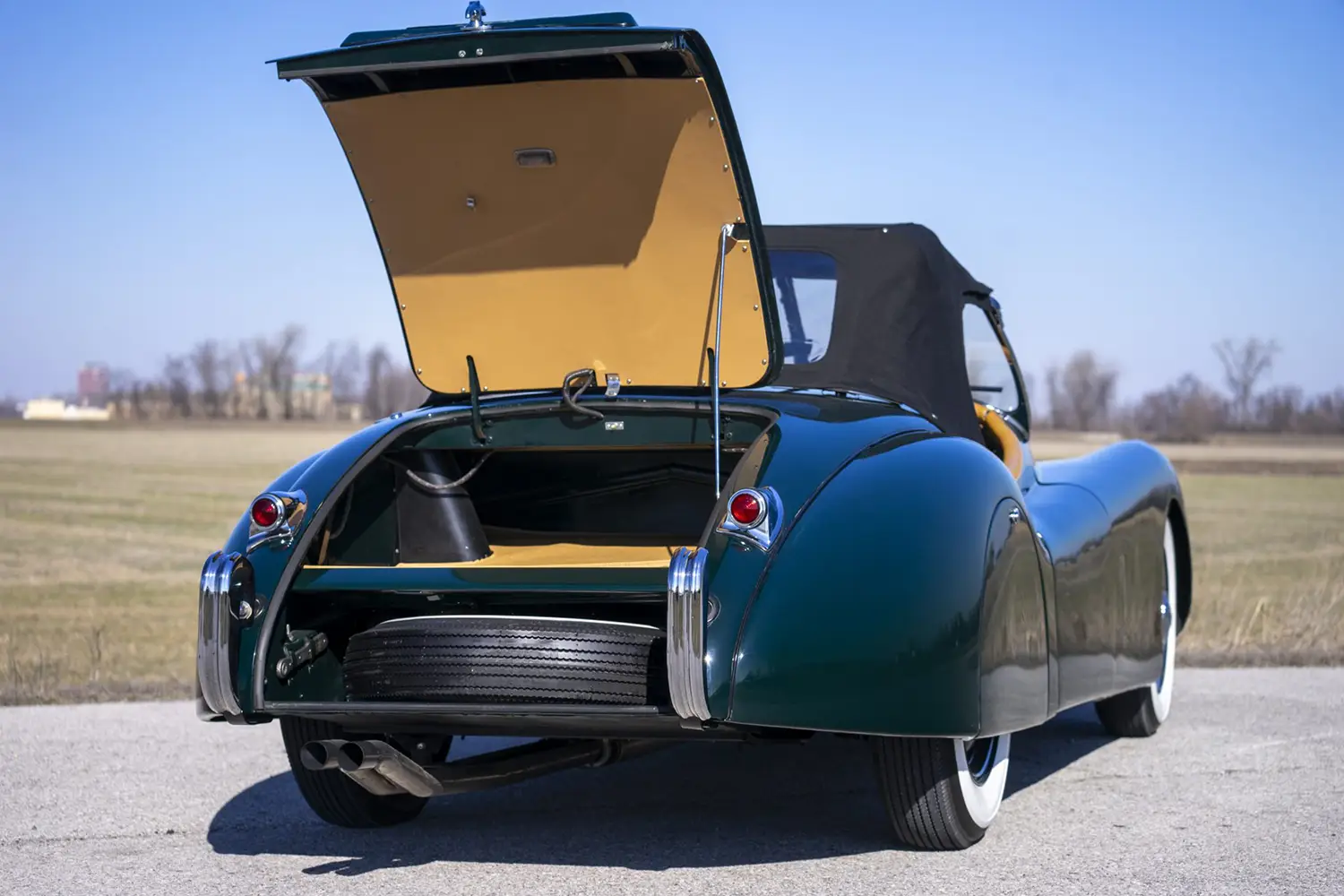
Transition to Steel Bodywork Construction
By 1951, Jaguar had refined the manufacturing process for the 1951 Jaguar XK120 Roadster to include steel body panels. This move allowed for higher production volume without losing the car’s signature sweeping lines and teardrop fenders. This example underwent a high-quality repaint in green during the late 1990s and still retains its matching rear wheel spats.
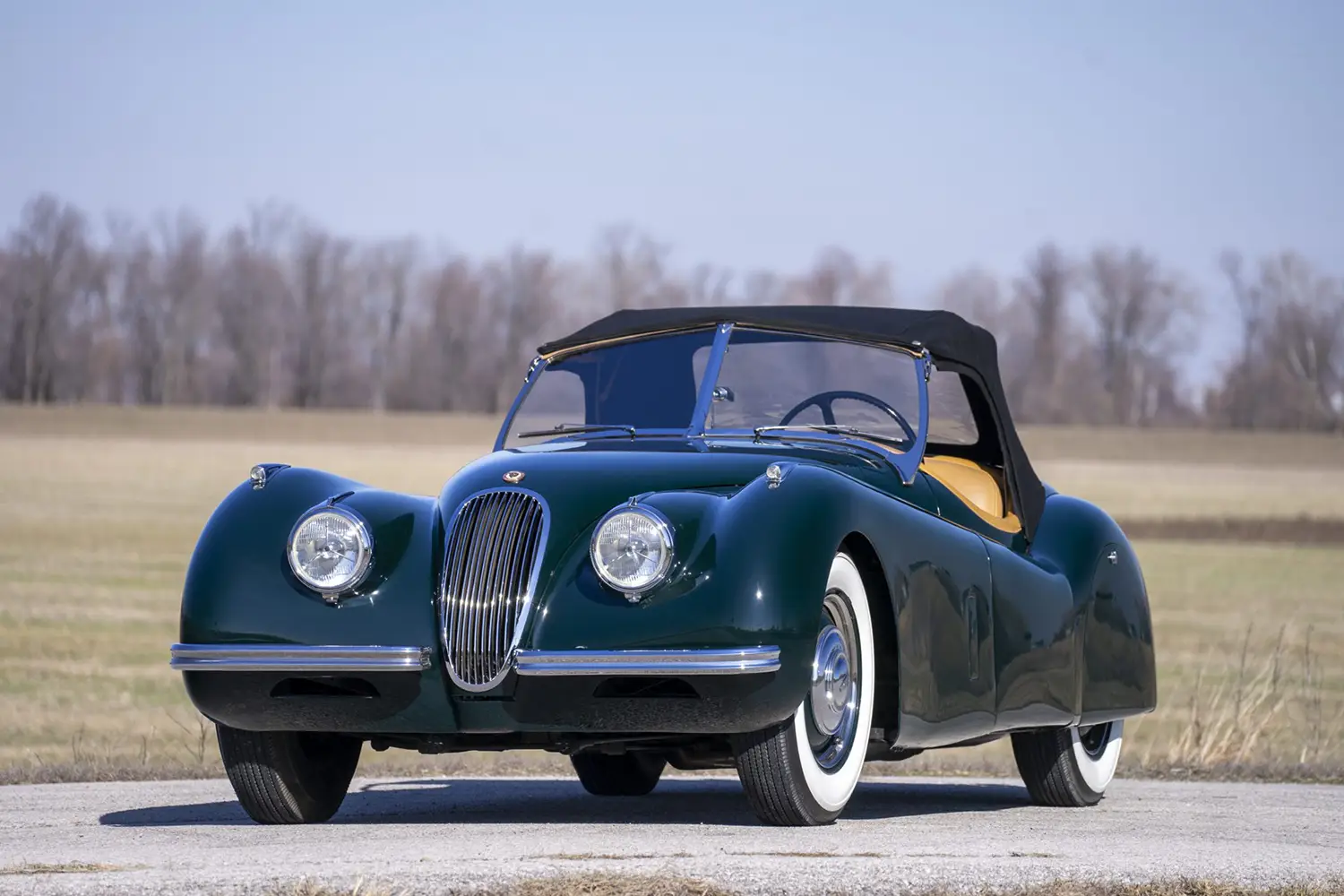
Refined Exterior and Convertible Appointments
The exterior aesthetic is defined by a split front windshield and a contrasting black convertible top. Chrome bumpers and rear bumperettes add a touch of jewelry to the deep green paintwork. Consequently, the car maintains a dignified presence whether the top is up or tucked away for open-air touring through the countryside.
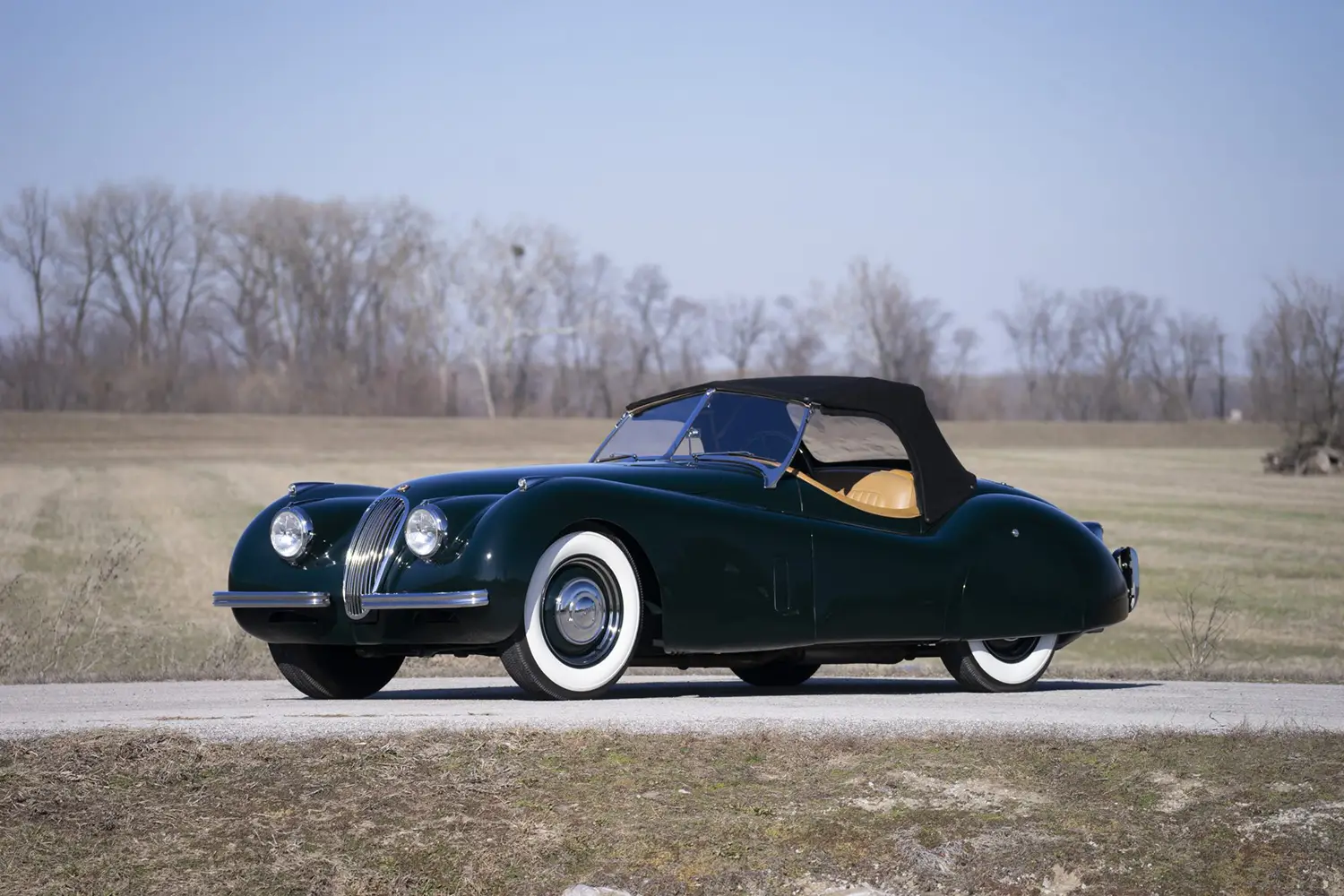
Chassis Upgrades and Suspension Layout
The 1961 Jaguar XK120 Roadster sits on 16-inch steel wheels finished in body color with bright trim rings. While the rear uses traditional semi-elliptical leaf springs, the independent front suspension now benefits from modern Koni shocks. These shocks work alongside the factory lever-arm absorbers to provide a more controlled and predictable driving experience.
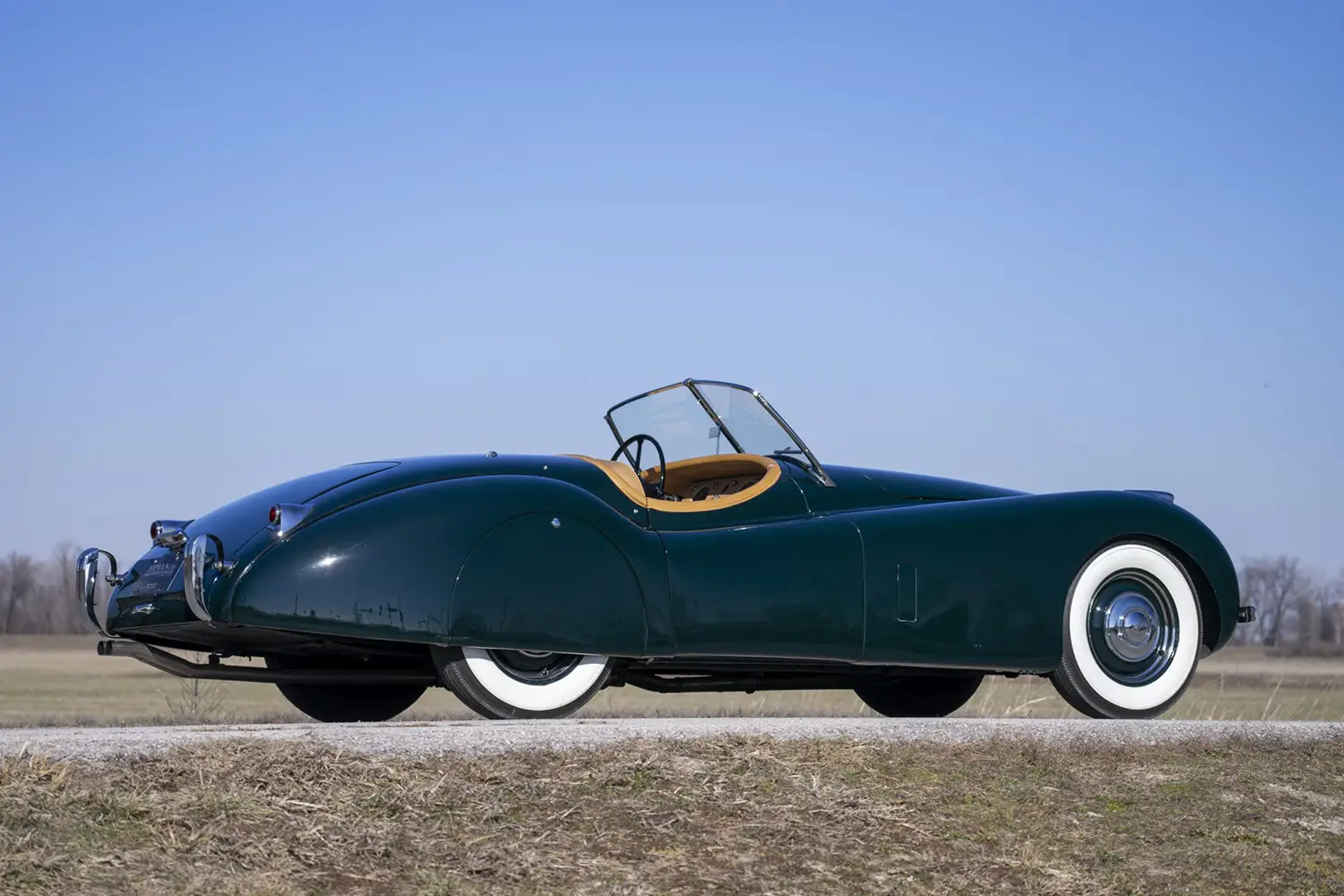
Interior Sophistication and Tan Leather
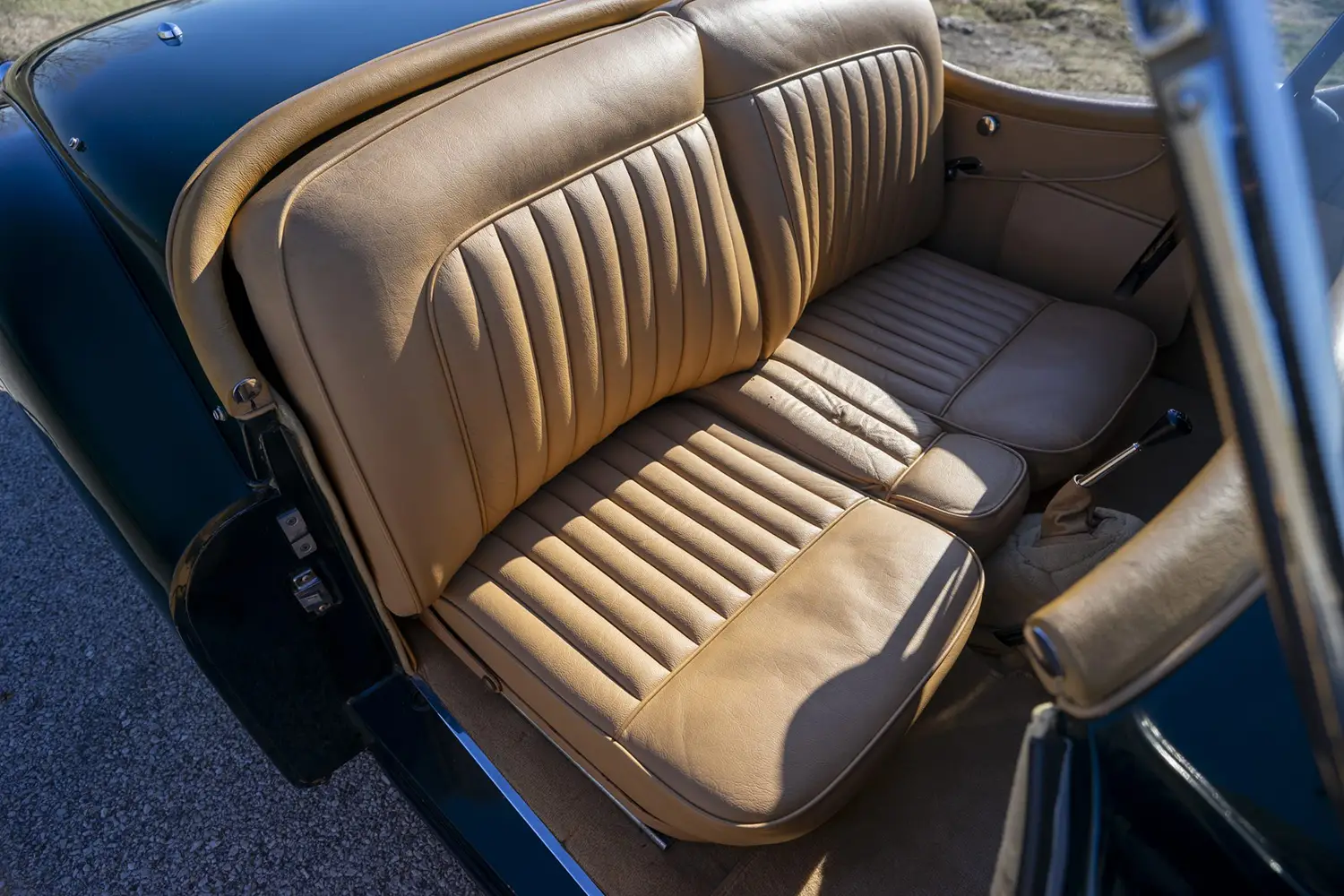
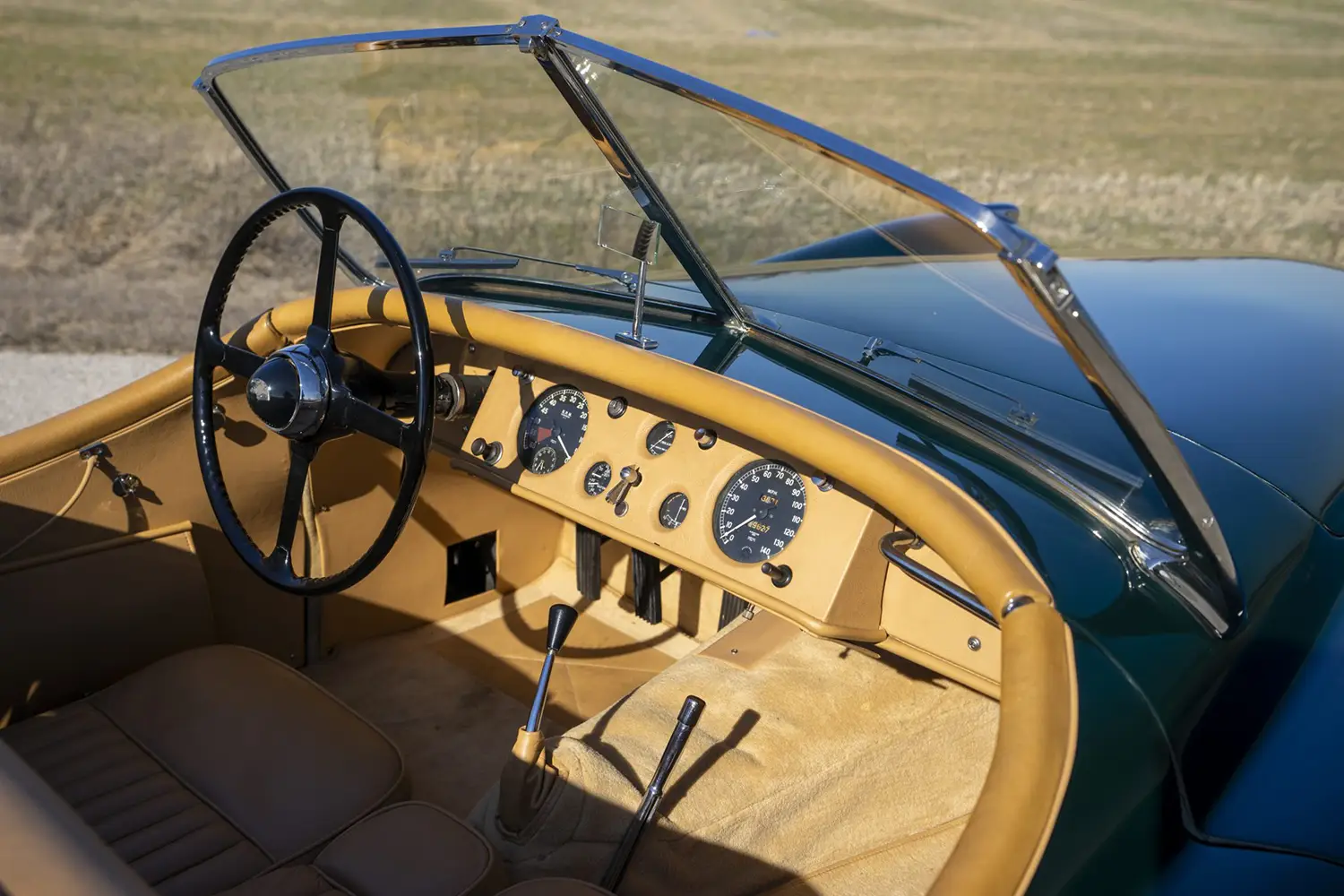
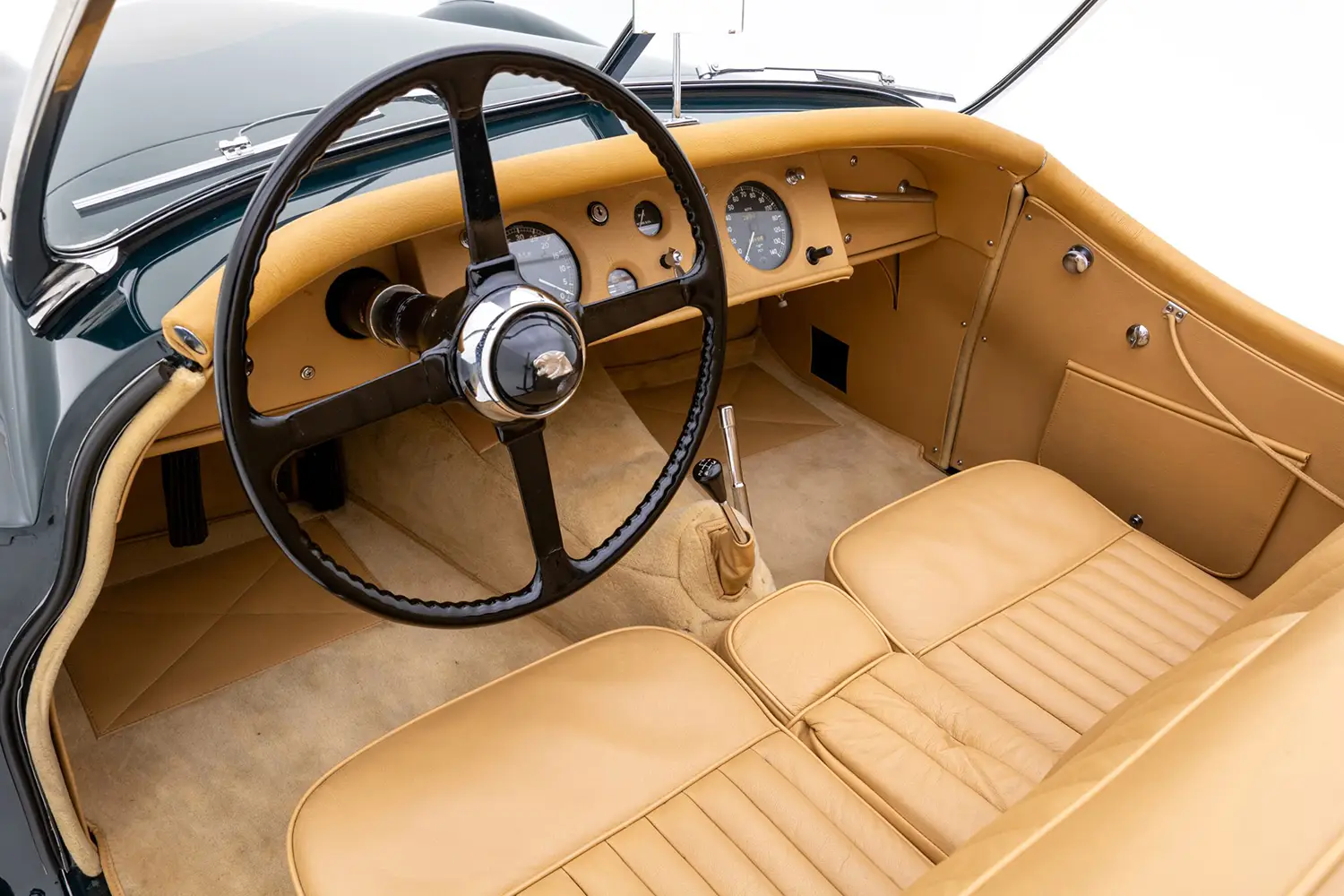
Inside the cockpit, the re-trimmed tan leather upholstery creates a warm contrast against the Suede Green exterior. The dashboard and door panels are color-coordinated, featuring map pockets and a passenger-side grab handle for spirited runs. Although the cigar lighter is currently inoperative, the overall cabin presentation remains remarkably consistent with its refurbishment era.
Classic Smiths Instrumentation and Controls
Drivers interact with a traditional four-spoke steering wheel situated in front of a suite of Smiths gauges. The dashboard includes a 140-mph speedometer and a unique reverse-sweep tachometer that goes up to 6,000 rpm. These analog instruments provide essential data while maintaining the mechanical atmosphere that defines this 1951 Jaguar XK120 Roadster.
Engine Performance and Drivetrain Details
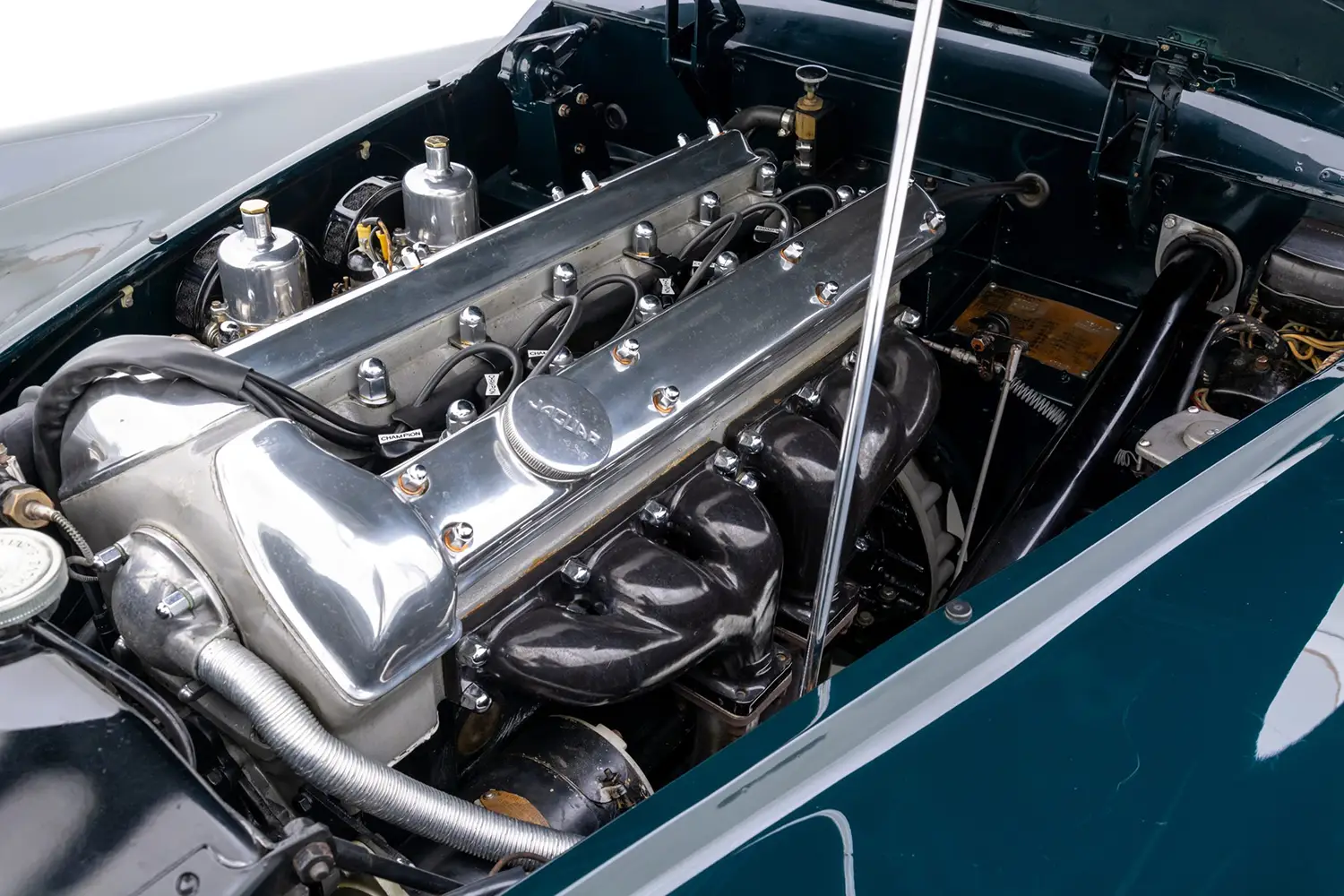
The 3.4-liter DOHC inline-six engine features dual SU carburetors and was factory rated at 160 horsepower when new. Power is managed through a four-speed manual transmission that routes torque directly to the rear wheels. This powertrain combination allowed the XK120 to live up to its name by reaching speeds that few cars could match in the early fifties.
Summary of a British Legend
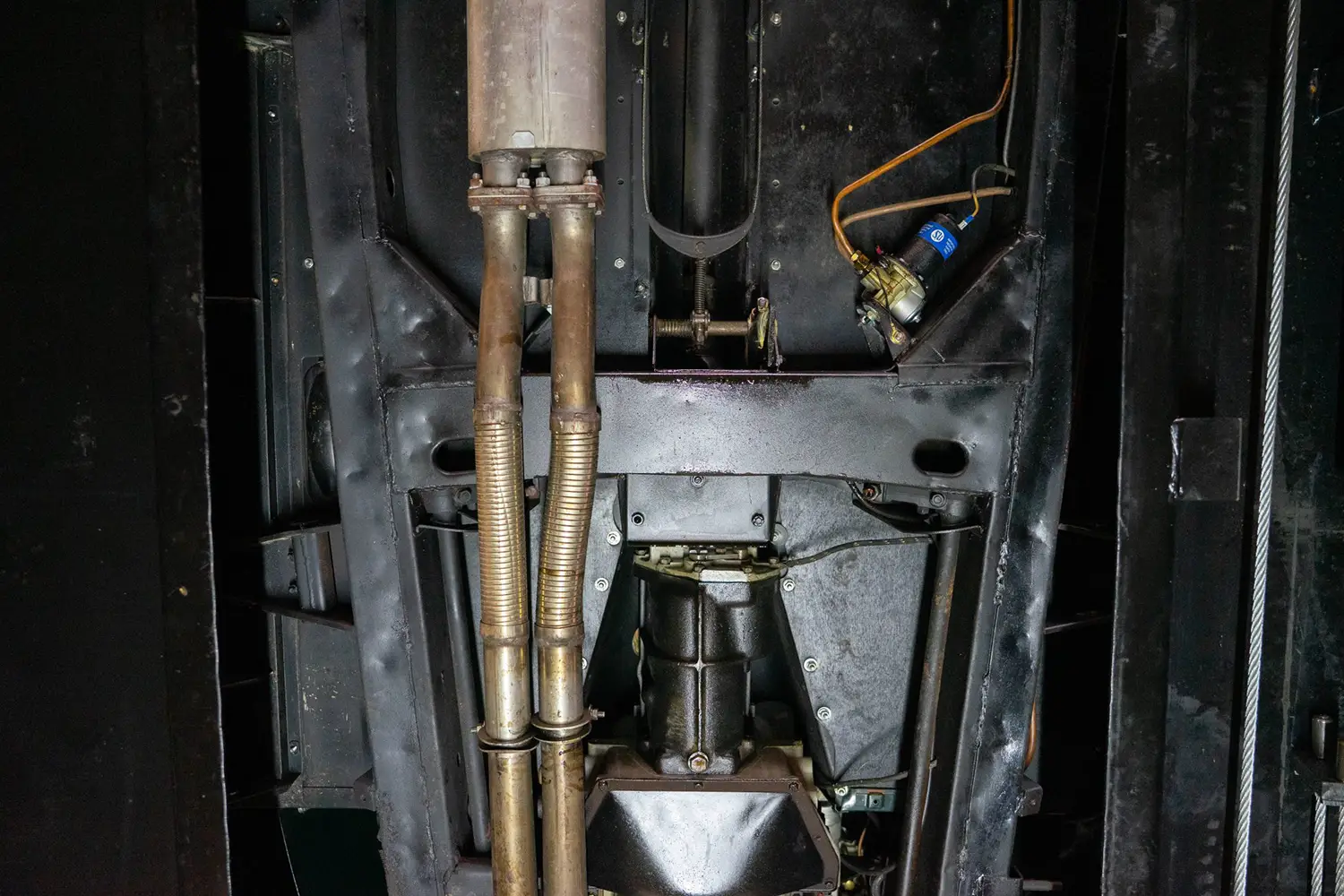
This 1951 Jaguar XK120 Roadster is a well-documented piece of automotive history supported by a Jaguar Heritage Trust certificate. While the underside shows some honest aging, the car remains a striking example of the model that put Jaguar on the map. It offers a rare opportunity to own a verified Hoffman-delivered roadster with significant mechanical and aesthetic appeal.
Disclaimer: Content on this site is for informational and entertainment purposes only. Details, analyses, and opinions reflect current trends and personal views, not professional or financial advice. Always verify information with official sources before making any decisions.
Source: bringatrailer.com