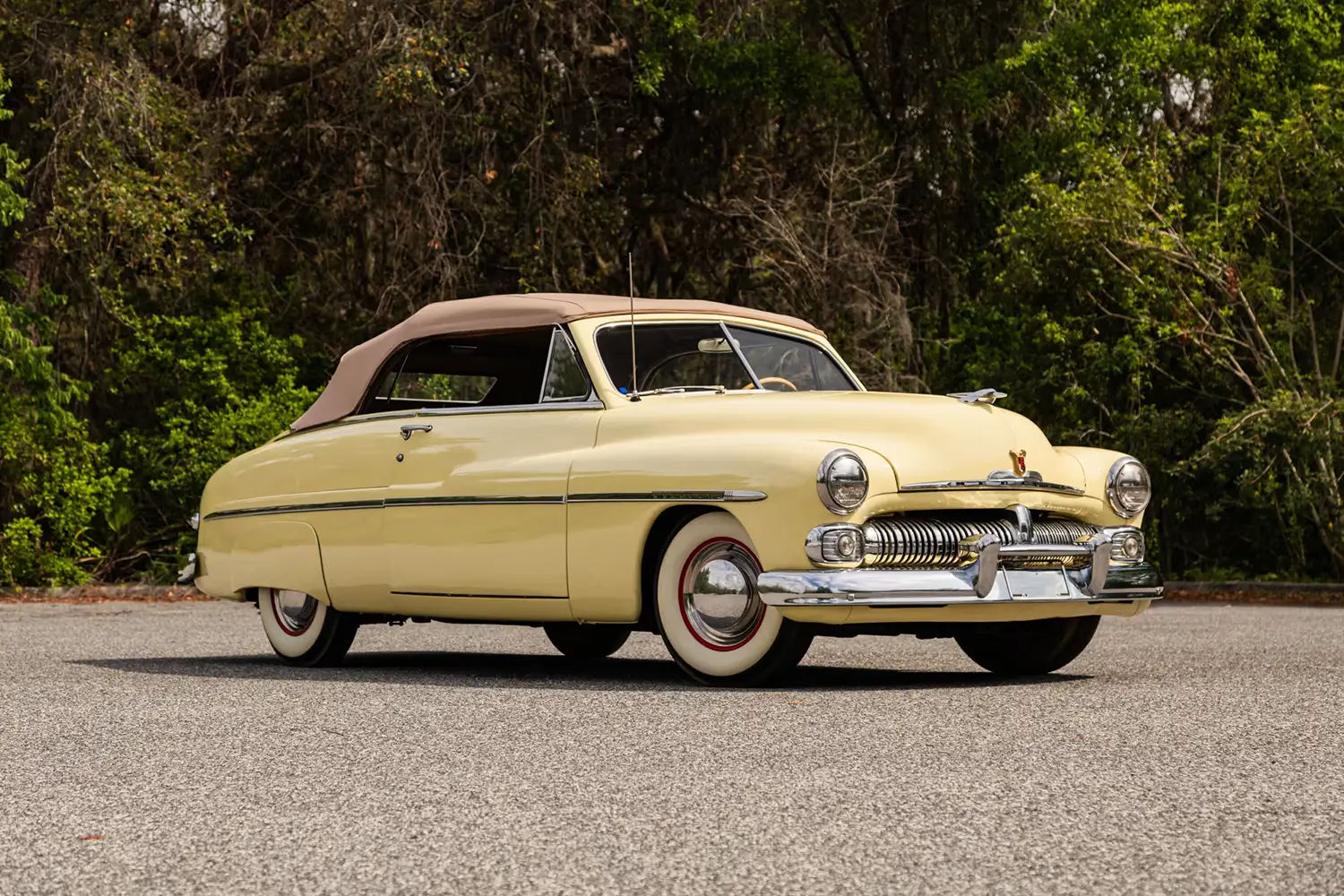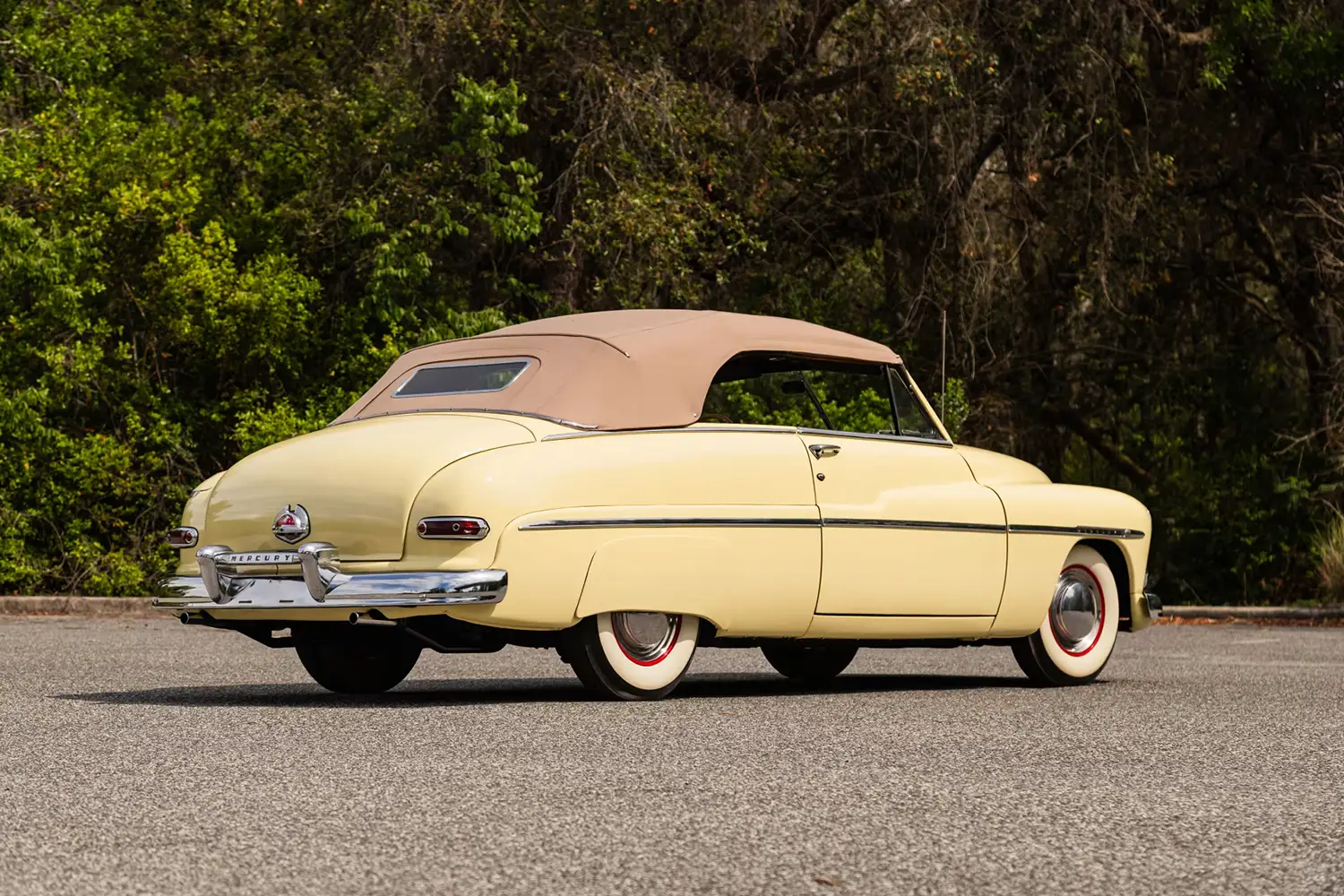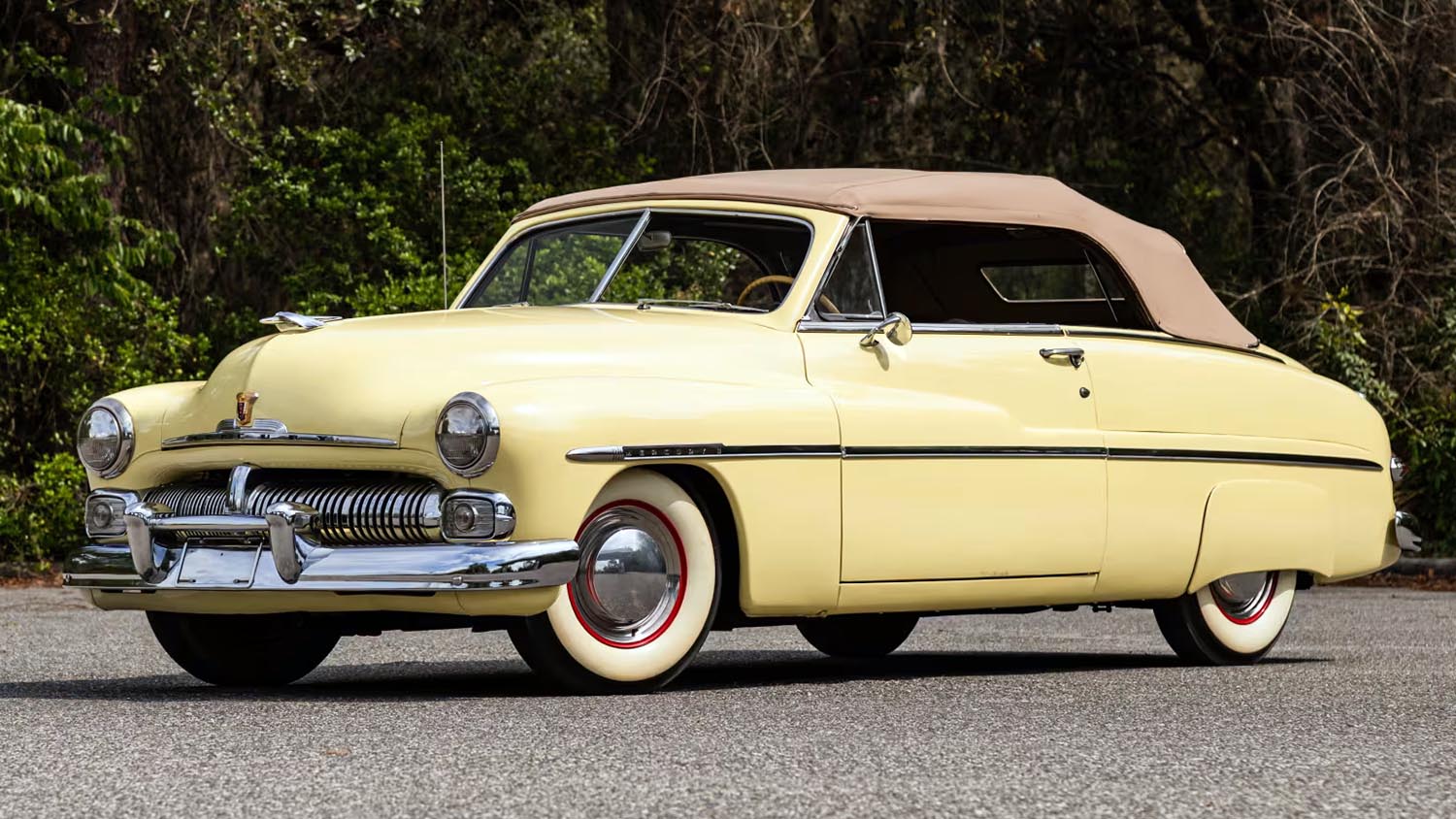
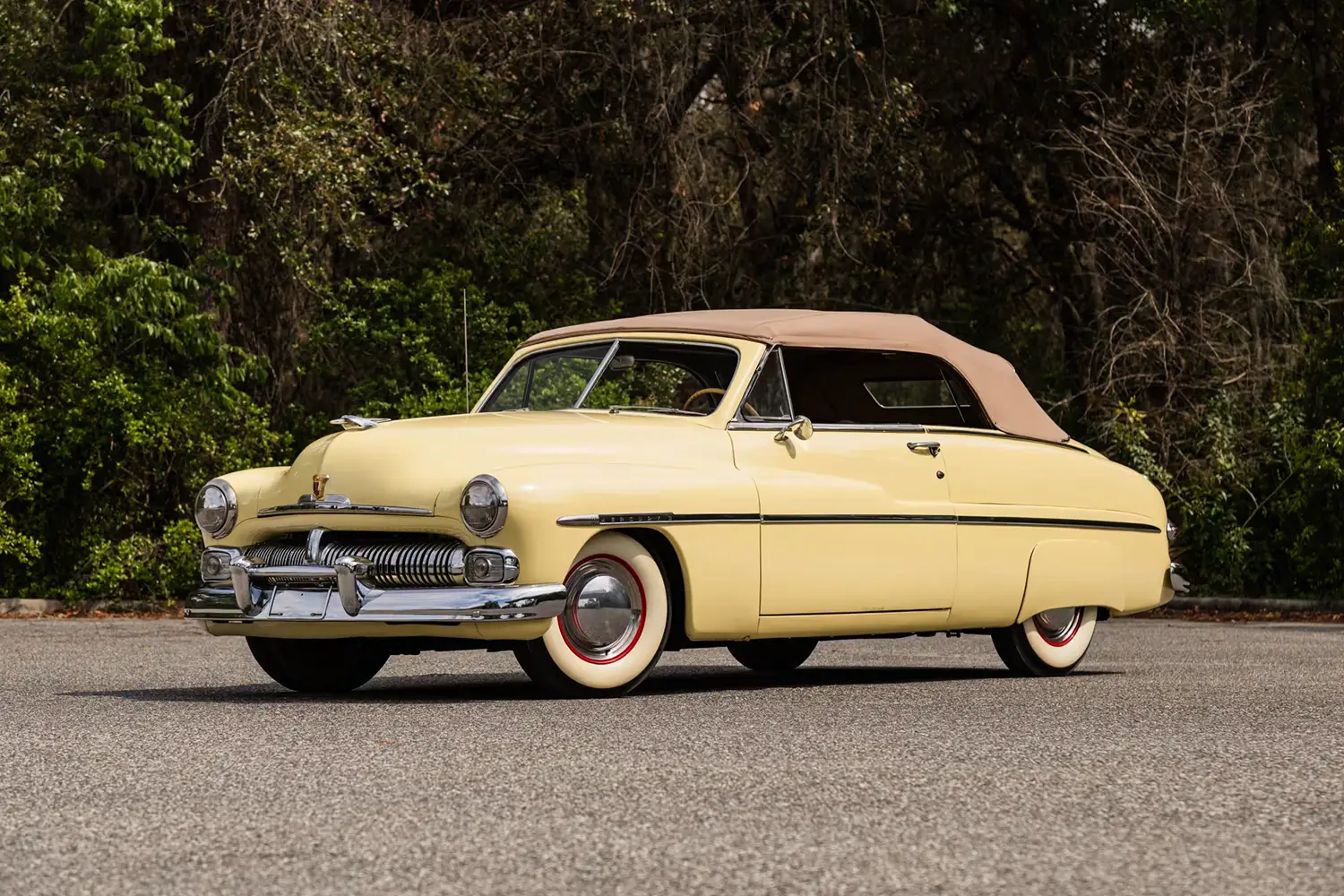
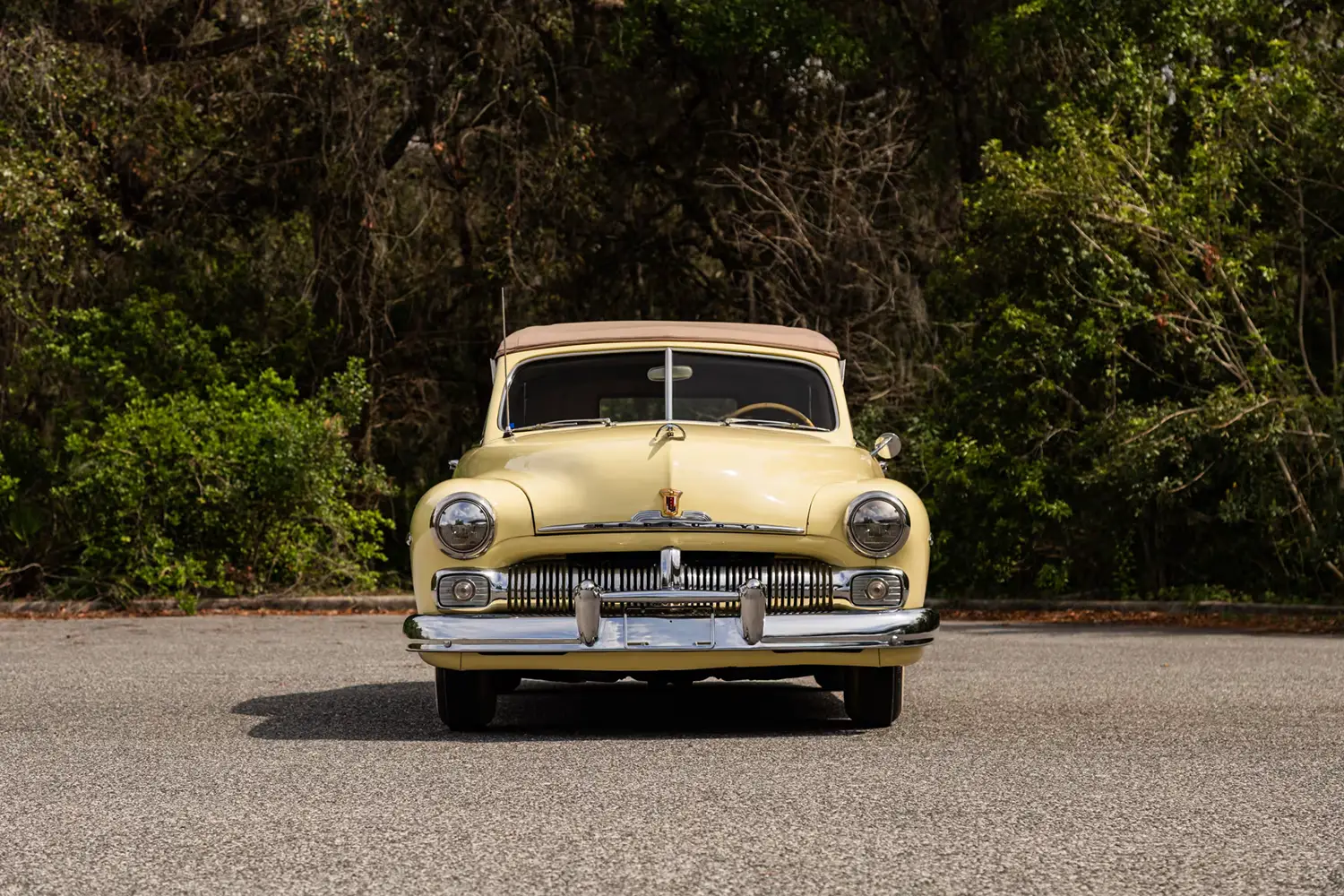
The 1950 Mercury Convertible represents a high-water mark for mid-century American automotive design and post-war luxury. As the most expensive model in the lineup that year, it commanded a premium price of $3,412 at dealerships. This specific example is one of only 8,341 Model OCM units produced during the 1950 model year run. Finished in a stunning Mirada Yellow with a Tan convertible top, it captures the optimistic spirit of its era perfectly. The vehicle sits on red steel wheels adorned with wide Whitewall tires, emphasizing its classic 1950s silhouette. Its presence on the road remains undeniable, bridging the gap between utilitarian transportation and high-status luxury cruising. For the collector, this Mercury offers a rare combination of documented rarity and striking period-correct aesthetics. It continues to be a favorite among enthusiasts who appreciate the heavy chrome and flowing lines of the fifties.
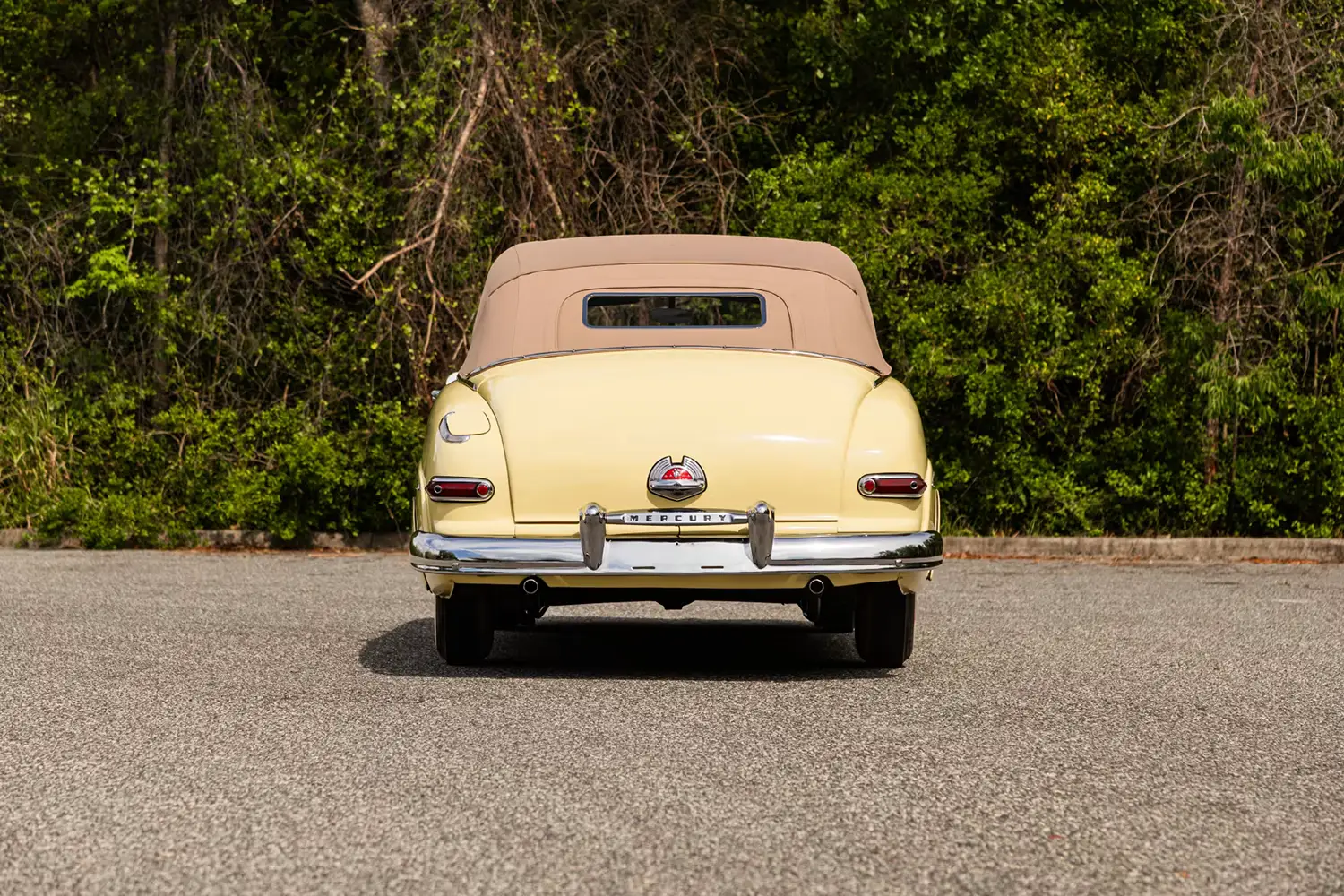
Original Interior and Premium Period Equipment
Inside this 1950 Mercury Convertible, the cabin retains its original blue and gray upholstery, a rarity for cars of this age. The dashboard features a pushbutton radio and the classic instrumentation that defined the luxury Mercury experience of the time. Power windows were an advanced convenience for 1950, highlighting the car’s status as the brand’s flagship convertible model. A column-shifted three-speed manual transmission provides a tactile connection to the flathead V-8 engine under the hood. Fender skirts add to the streamlined appearance, creating a continuous flow from the front fenders to the rear. The interior materials have aged with grace, offering a sensory experience that modern reproductions simply cannot match. Every switch and handle feels substantial, reflecting a time when material quality was a primary focus for engineers. This cabin is a true time capsule that transports the driver back to the golden age of motoring.
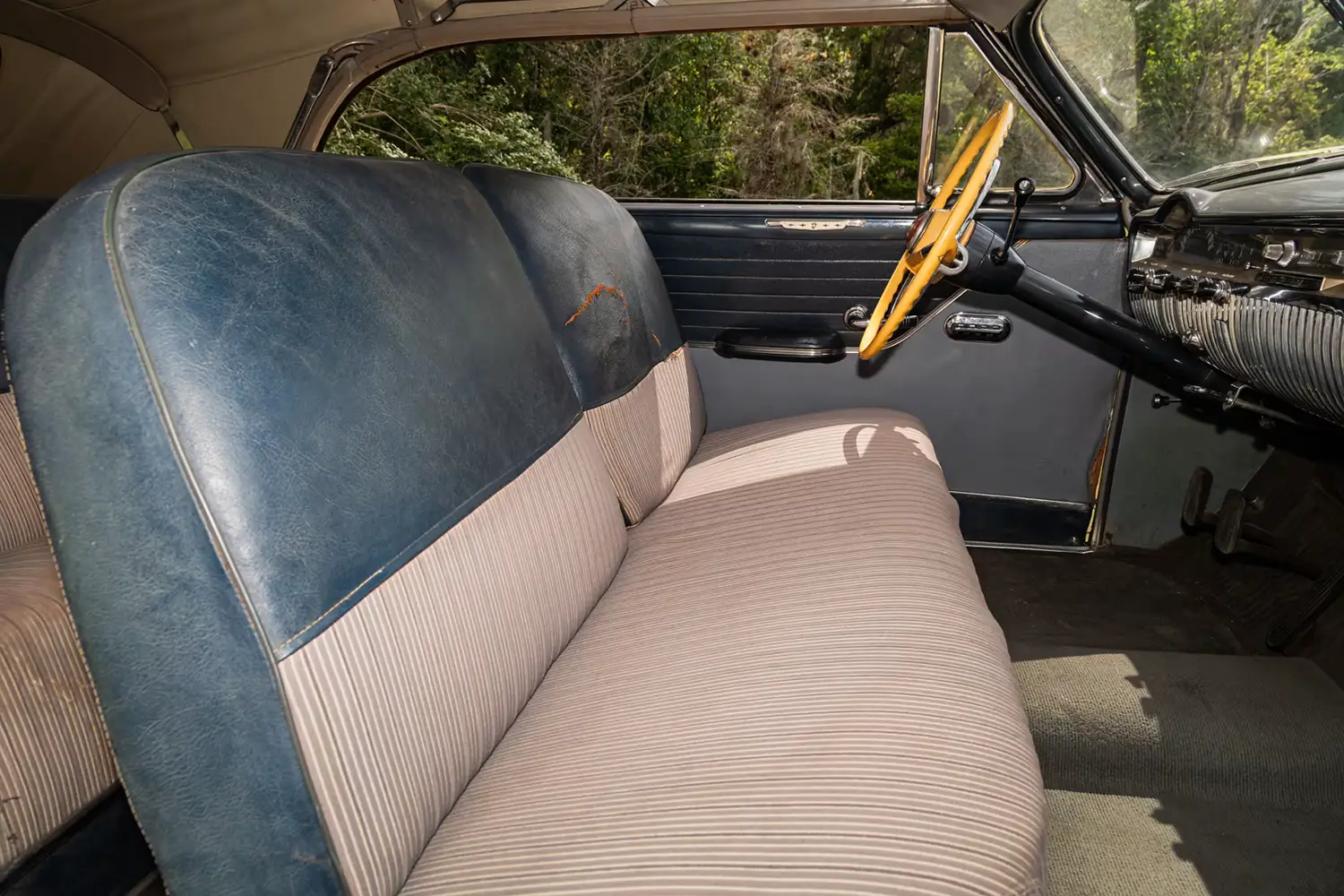
Mechanical Heritage of the Flathead V-8
The 1950 Mercury Convertible is powered by the legendary 255 cubic inch flathead V-8 engine, a staple of Ford’s performance history. This engine was prized for its smooth power delivery and the iconic sound produced by its dual exhaust system. Most drivers appreciate the simplicity and reliability of this OHV predecessor, which became a favorite for early hot rodders. The three-speed manual transmission allows for effortless cruising on the boulevards that these cars were designed to dominate. Red steel wheels with factory wheel covers provide a sharp contrast to the Mirada Yellow bodywork and Whitewall tires. This mechanical setup remains largely stock, preserving the driving dynamics that made the 1950 model so desirable when new. Heavy-duty suspension components ensure a soft, floating ride that soaks up road imperfections with ease. It is a robust powertrain designed for reliability and effortless long-distance travel across the American landscape.
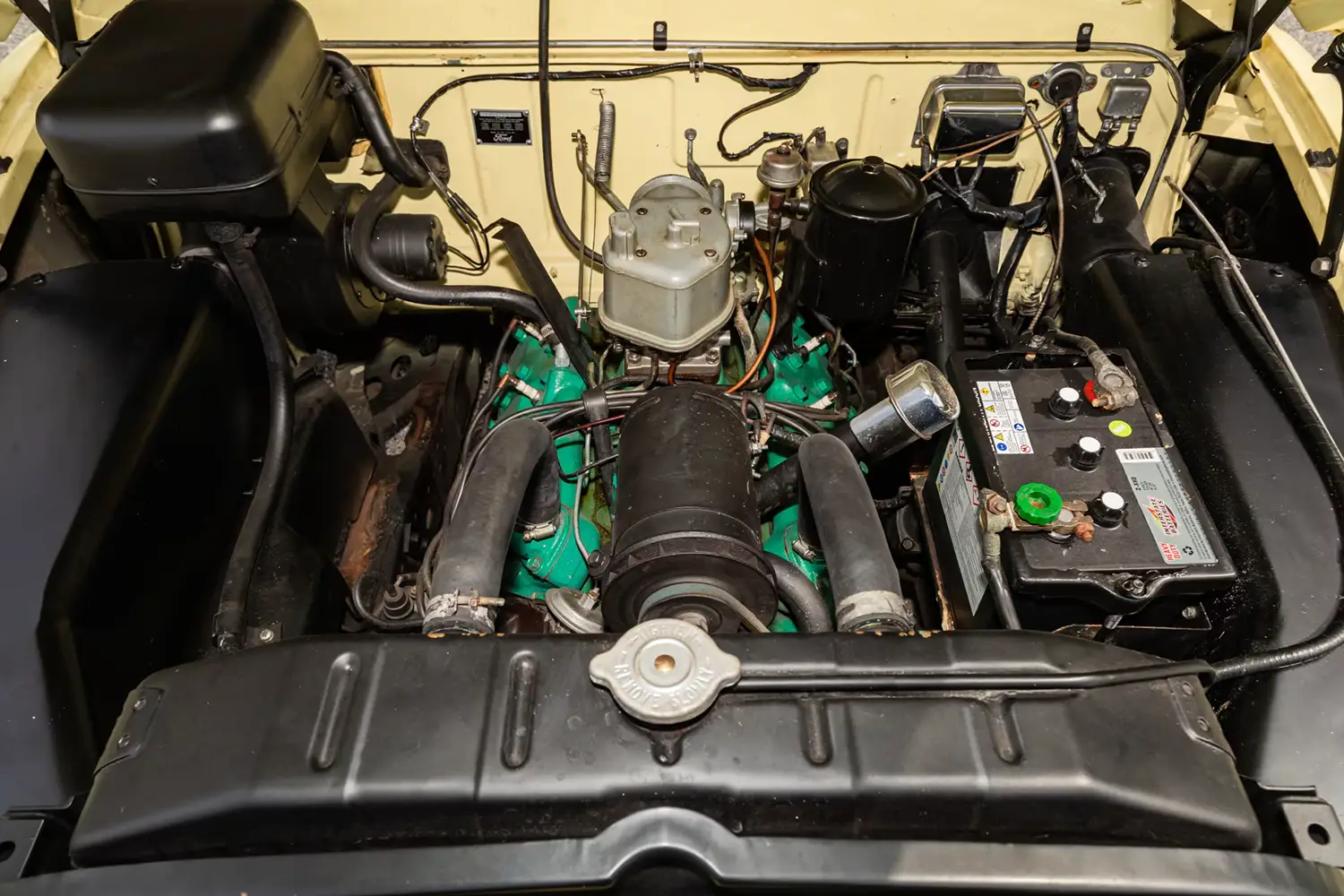
Engine Specifications and Performance Highlights
The 255 CI V-8 engine provides the steady torque required to move the substantial weight of this luxury convertible chassis. Its flathead design is a masterpiece of mechanical simplicity, utilizing a basic valve-in-block configuration for maximum durability. The dual exhaust system not only improves engine breathing but also enhances the deep V-8 burble enthusiasts love. Performance is managed by a column-shifted 3-speed manual gearbox that offers precise control over the power band. Power windows operate via a dedicated hydraulic-electric system, a high-end feature for the 1950 model year. The red steel wheels are paired with period-correct Whitewall tires to maintain the car’s original handling characteristics. This combination of a 255 CI engine and a manual transaxle remains a favorite for traditionalist collectors today. It delivers a visceral and honest driving experience that modern electronically controlled vehicles cannot duplicate.
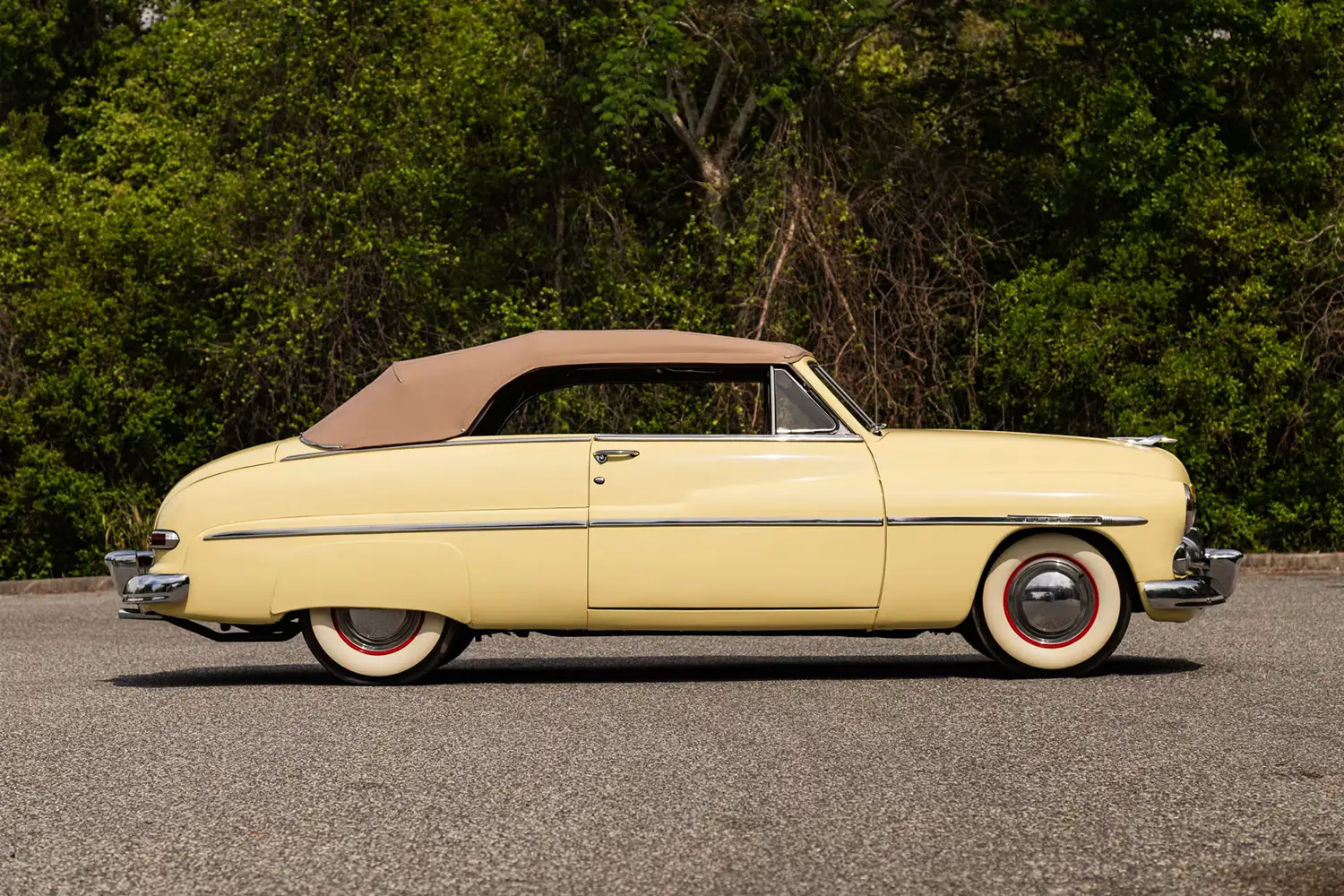
A final look at the 1950 Mercury Convertible reveals a machine that was built with a specific purpose in mind. It was designed to be the ultimate status symbol for the successful post-war American family or businessman. The Mirada Yellow paint and Tan top create a color palette that feels both adventurous and deeply sophisticated. Because it was the most expensive Mercury of 1950, it came equipped with the best features the factory offered. The original interior serves as a testament to the quality of the materials used in the early fifties. With only 8,341 units built, this car is a rare survivor of a high-production era in Detroit history. It remains mechanically straightforward, making it an accessible entry point for those new to the vintage car hobby. Whether displayed at a concours or driven on a weekend, it commands respect from all who see it. This Mercury is a lasting tribute to the era of chrome and flathead power.
Summary of a Post-War Luxury Survivor
The 1950 Mercury Convertible remains an essential piece of the Ford Motor Company’s storied heritage and design evolution. This Mirada Yellow example stands out due to its rare original interior and its status as a top-of-the-line model. Its 255 CI flathead V-8 and 3-speed manual transmission offer an authentic driving experience rooted in the fifties. Features like power windows and the pushbutton radio remind us of the car’s premium positioning in the 1950 market. The combination of fender skirts and wide Whitewall tires completes the iconic look that collectors search for today. As one of fewer than nine thousand units produced, it is a historically significant vehicle for any serious collection. It has been well-maintained to preserve its character while remaining ready for the auction block at Glendale 2026. This car is a functional monument to the design language and engineering spirit of mid-century America.
Disclaimer: Content on this site is for informational and entertainment purposes only. Details, analyses, and opinions reflect current trends and personal views, not professional or financial advice. Always verify information with official sources before making any decisions.
Source: mecum.com