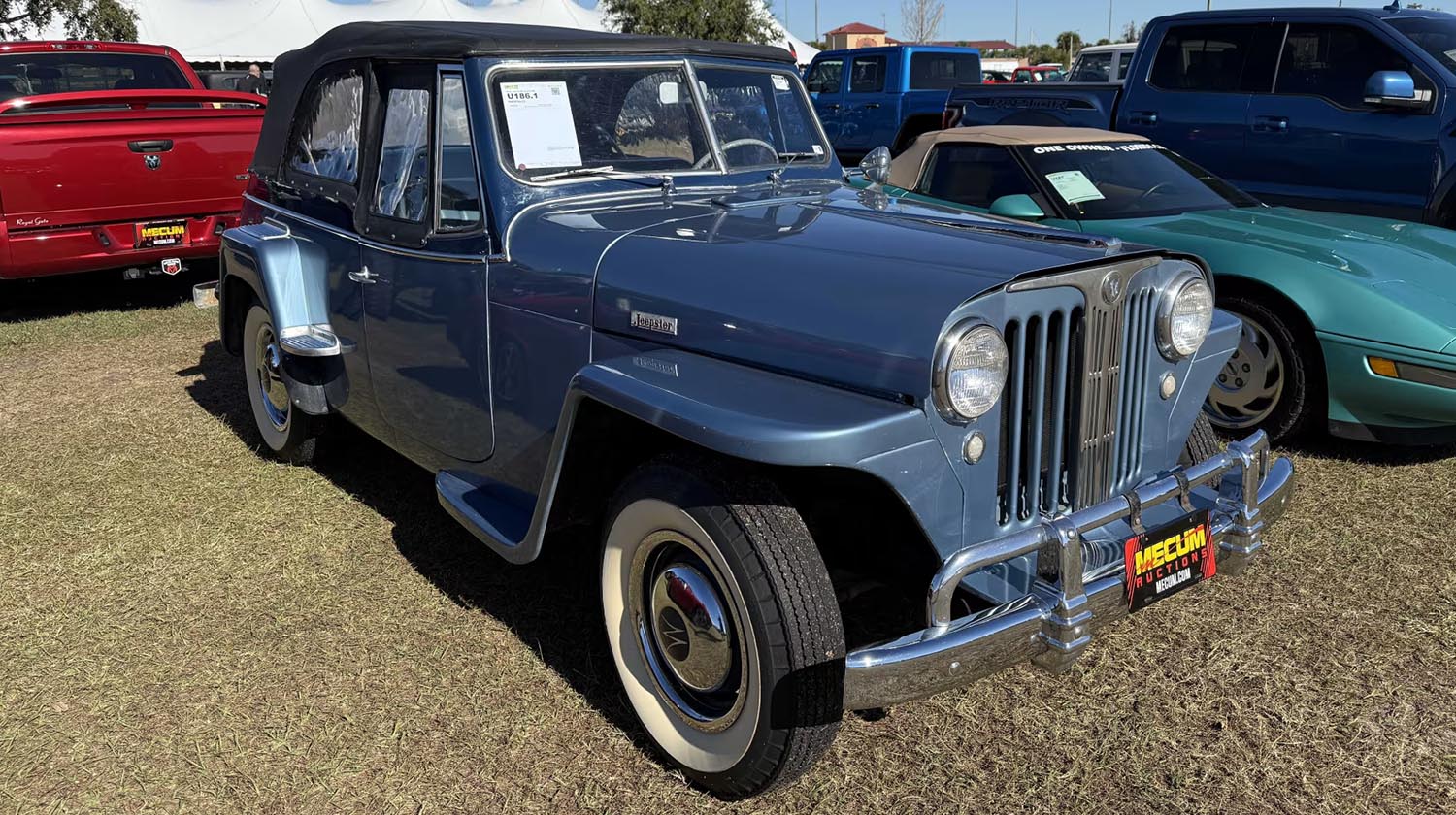
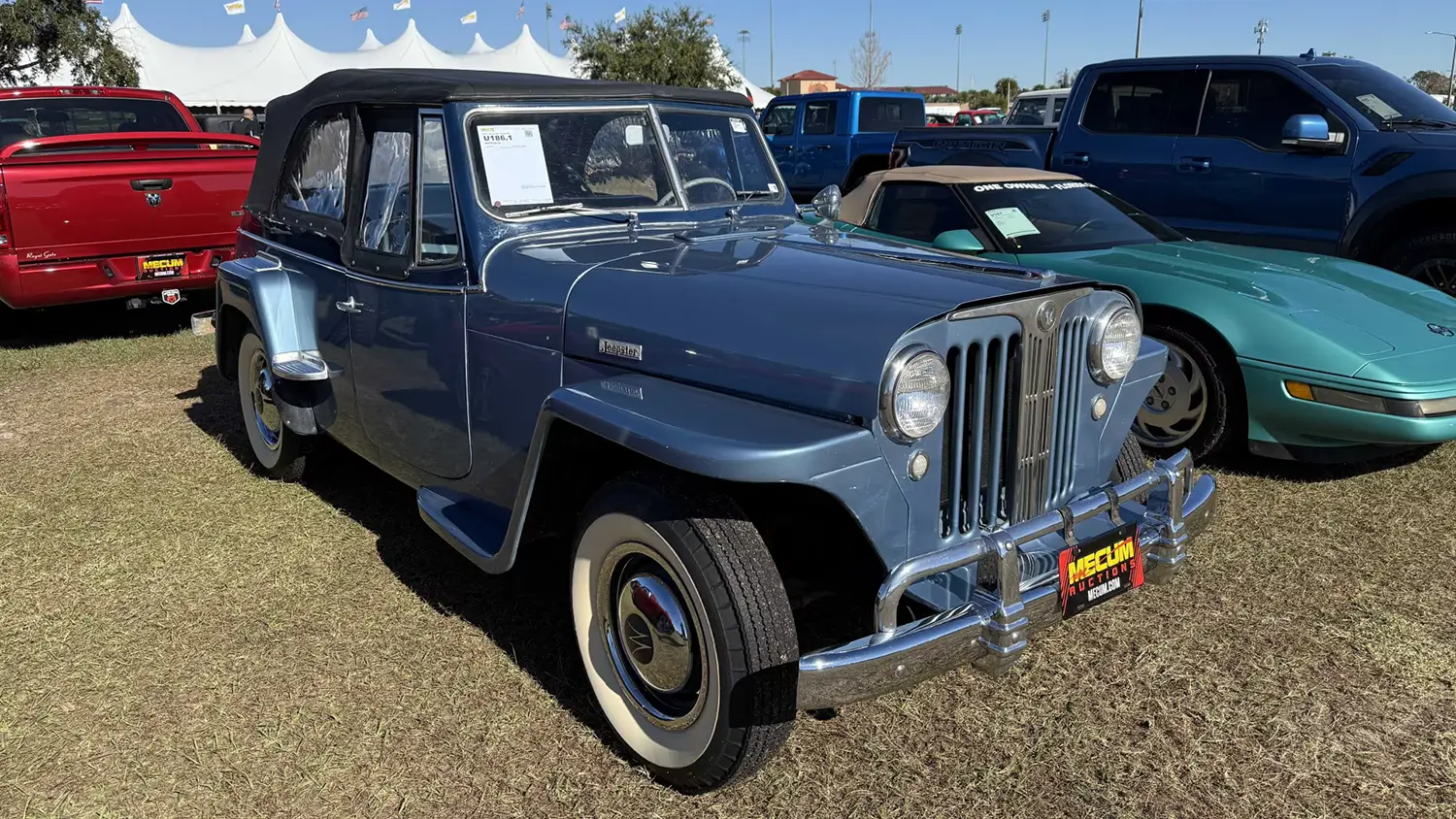
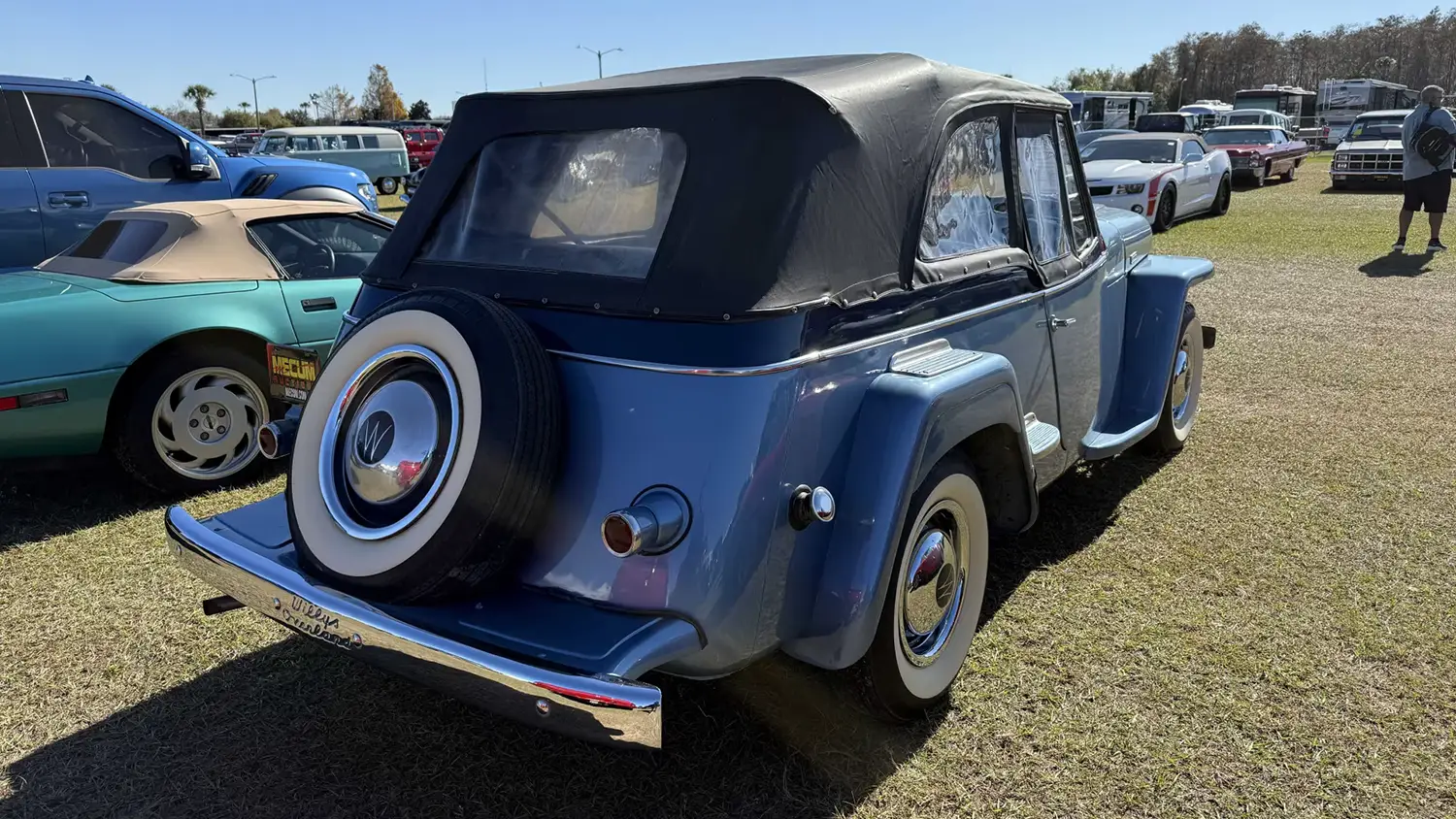
The 1949 Willys-Overland Jeepster represents one of the earliest and most creative attempts to transition a utilitarian brand into the lifestyle market. Born from the rugged DNA of the World War II era, this roadster was designed to offer civilian comfort without losing its recognizable Jeep identity. This specific 1949 Willys-Overland Jeepster shines in a vibrant blue finish that perfectly complements its playful, open-air personality. It remains a standout example of post-war American ingenuity and style.
Brooks Stevens and the Phaeton Vision
Willys-Overland commissioned legendary industrial designer Brooks Stevens to create a vehicle that would appeal to younger, fun-loving buyers. Stevens utilized the existing chassis from the Jeep wagon to keep production costs low while creating a completely fresh silhouette. The result was a two-door phaeton that felt modern yet grounded in the brand’s heritage. Its boxy fenders and flat-paneled body were distinctive hallmarks that eventually influenced the crossover vehicles of later decades.
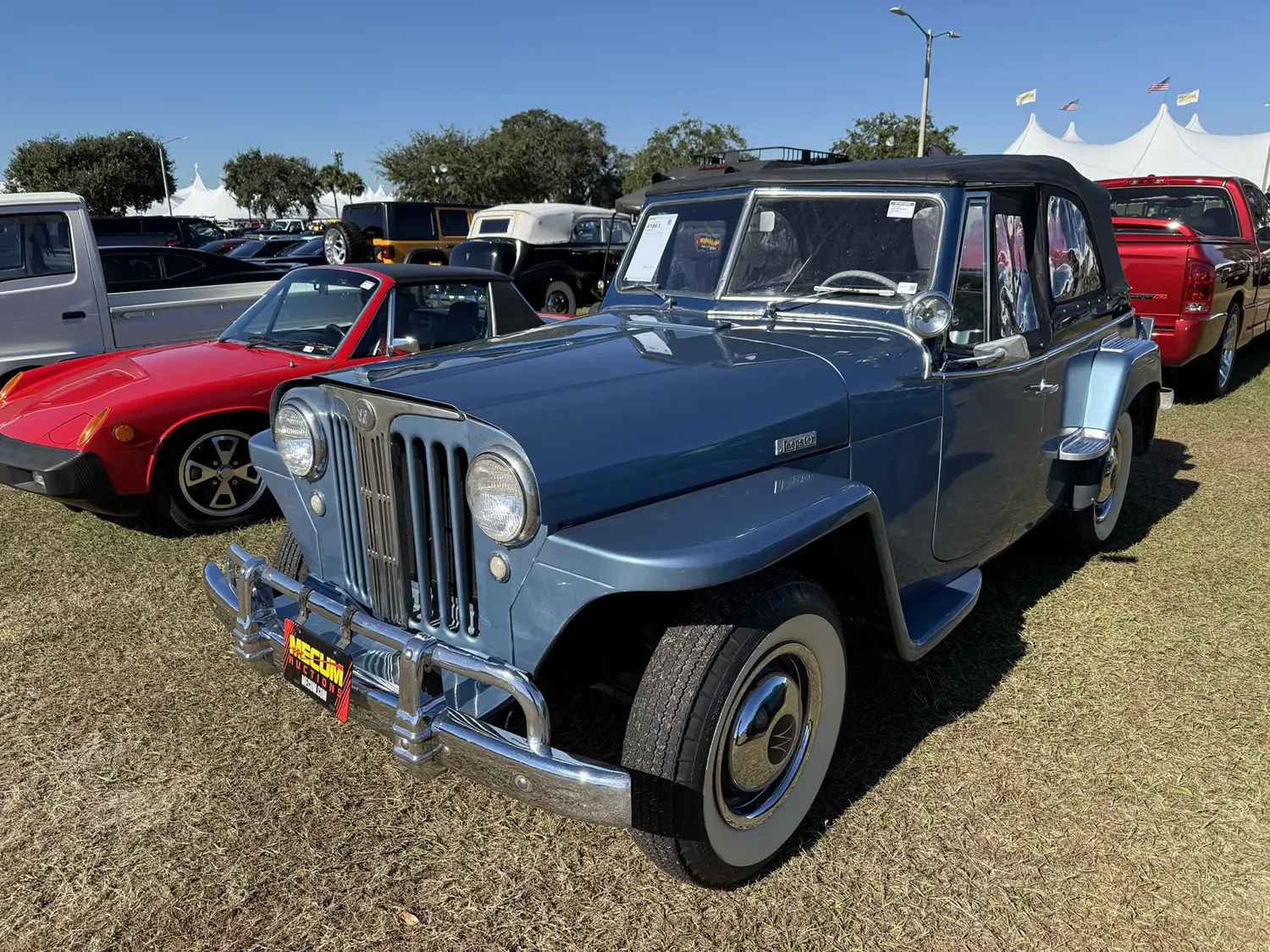
This 1949 model hails from the peak of the Jeepster’s short three-year production run. Unlike the standard Jeeps of the day, the Jeepster was only offered with rear-wheel drive to focus on pavement cruising. It featured more deluxe trim than its military siblings, aiming for a “continental” feel that was popular at the time. Despite its rugged appearance, it was marketed primarily as a sporty car for pleasure driving and social outings.
Simplicity Meets Mid-Century Charm
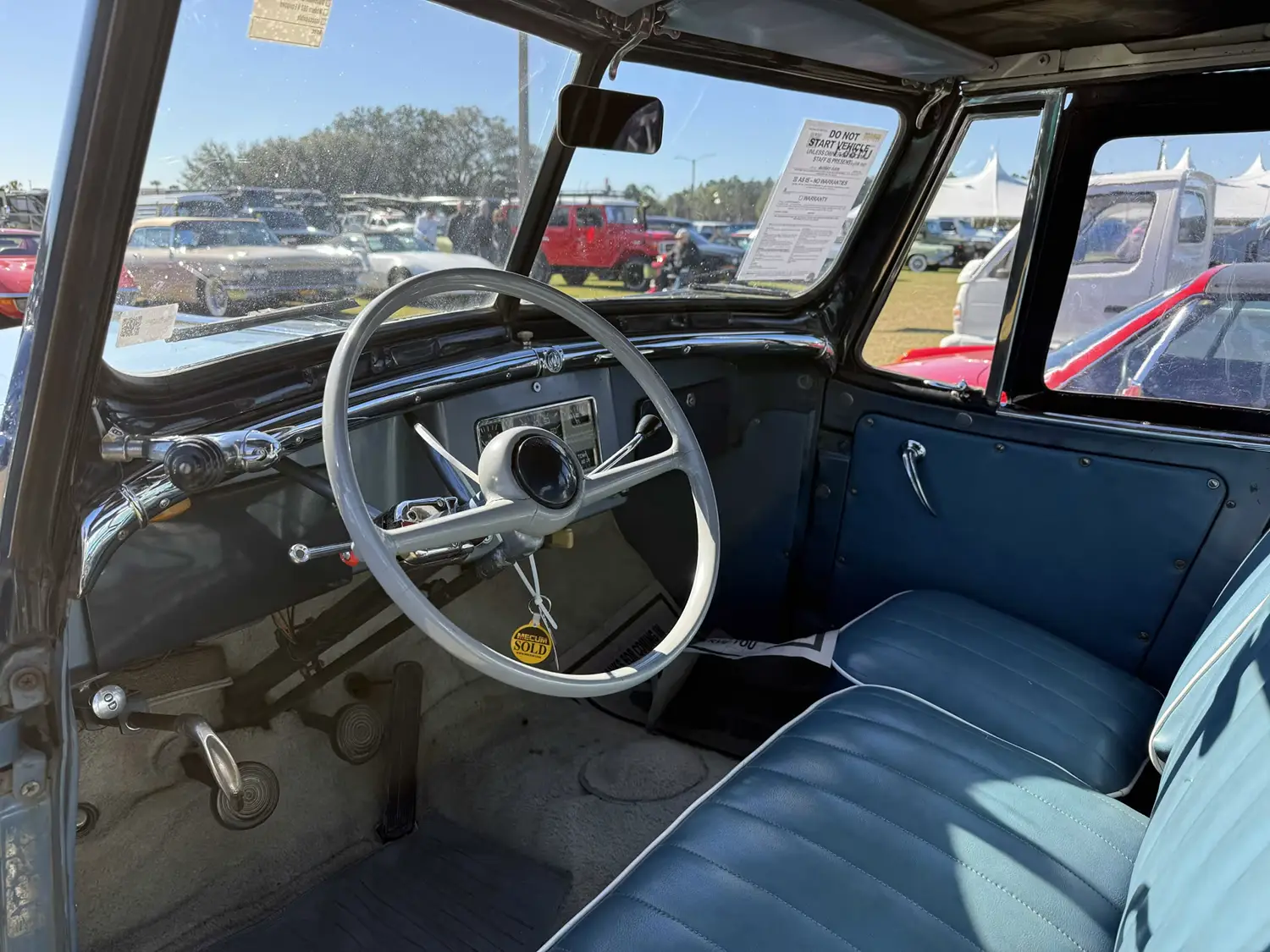
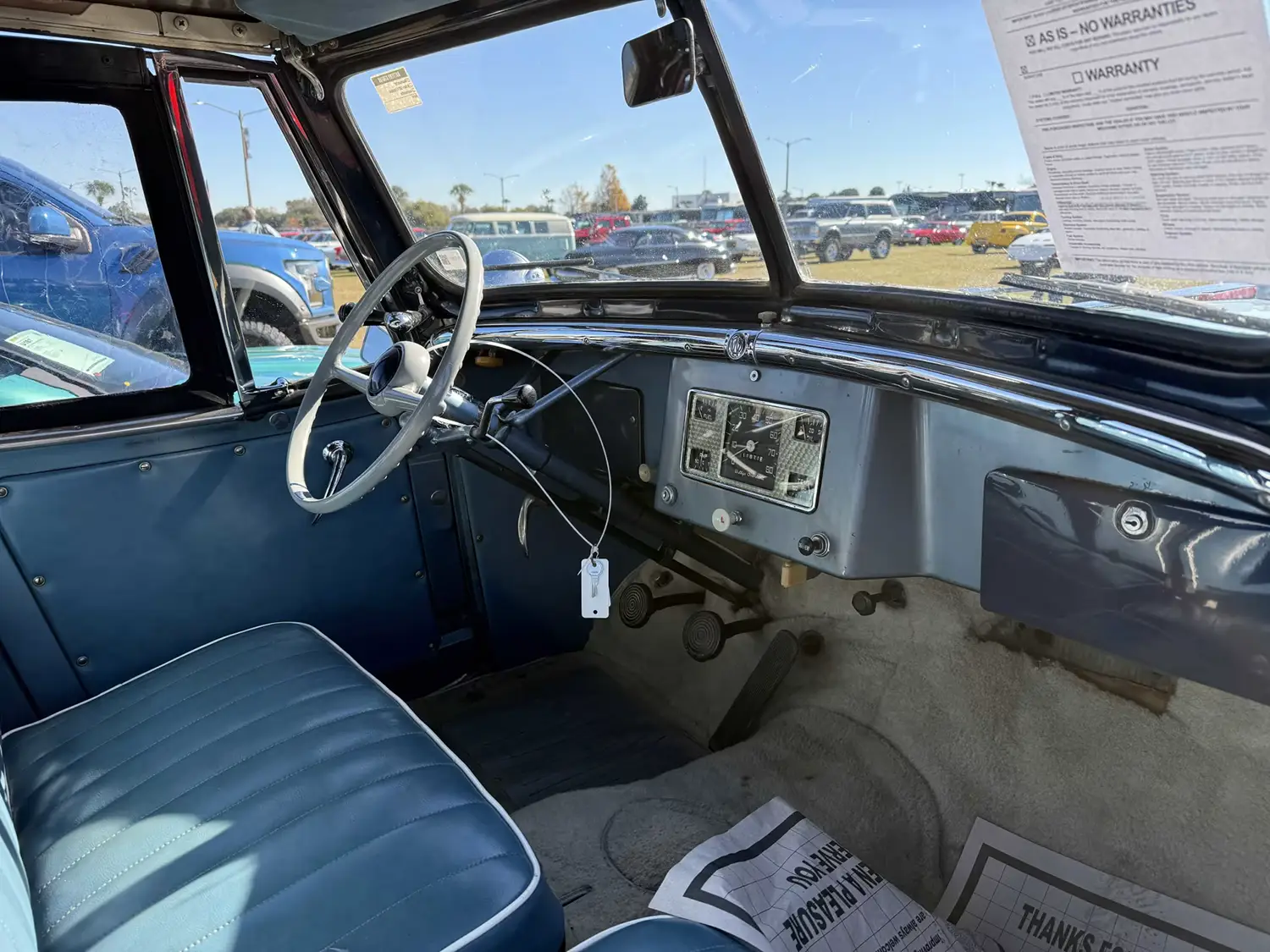
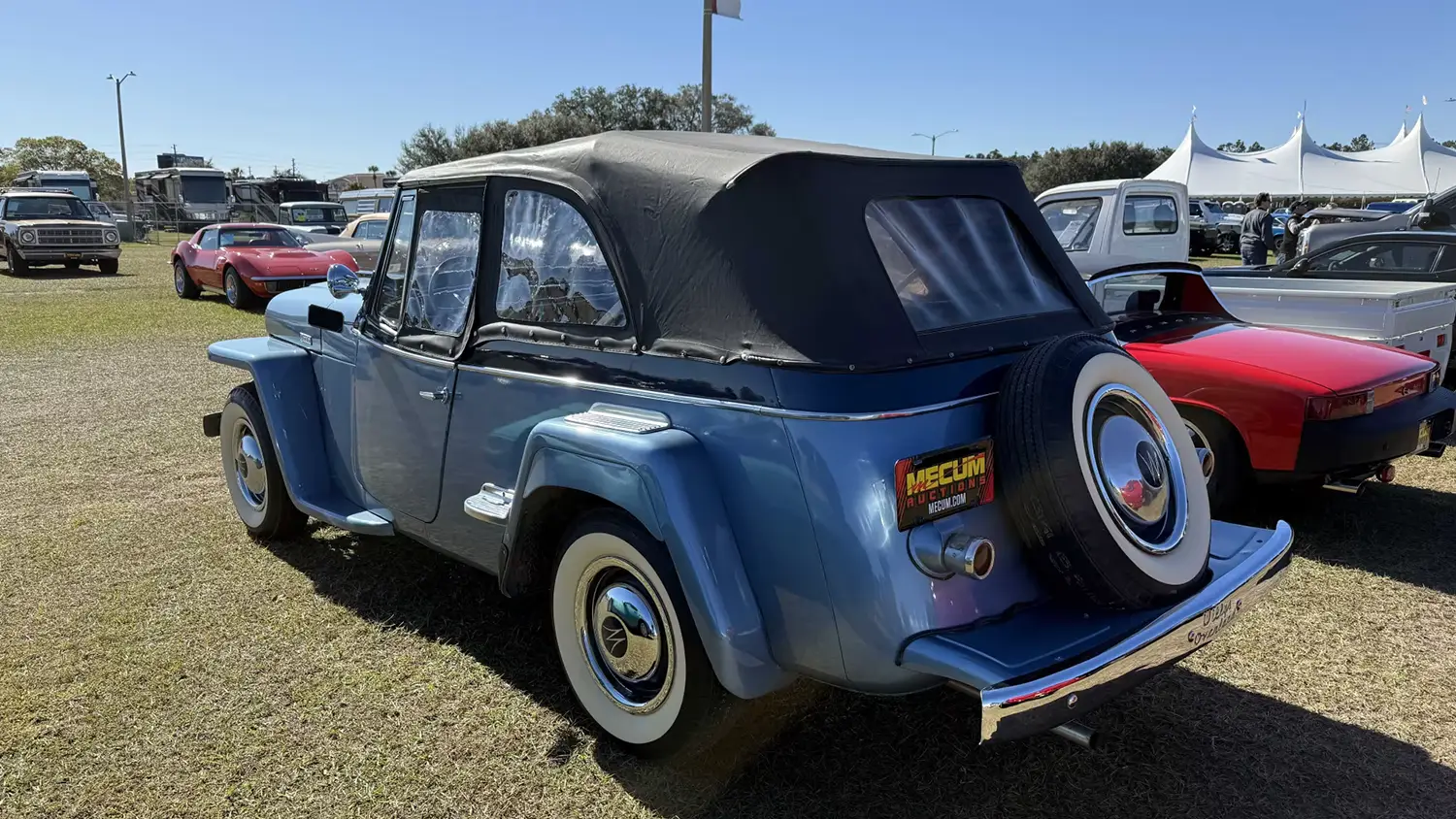
The interior of this Jeepster is a masterclass in functional mid-century design. The cabin features a color-matched blue theme that provides a cohesive look with the exterior paint. Since it is a true phaeton, it uses side curtains rather than roll-up windows to maintain a lightweight profile. A manual black convertible top offers protection from the elements while preserving the car’s classic roadster lines when stowed away.
Instrumentation is kept simple and centered, utilizing the same dashboard layout found in the Willys station wagons of the era. This shared DNA makes maintenance straightforward for collectors while retaining an authentic vintage feel. The white steering wheel and understated chrome accents provide just enough flair to distinguish it from the more spartan utility models. It is a vehicle built for the joy of the journey rather than just the destination.
Go Devil Performance and Drivetrain Specs
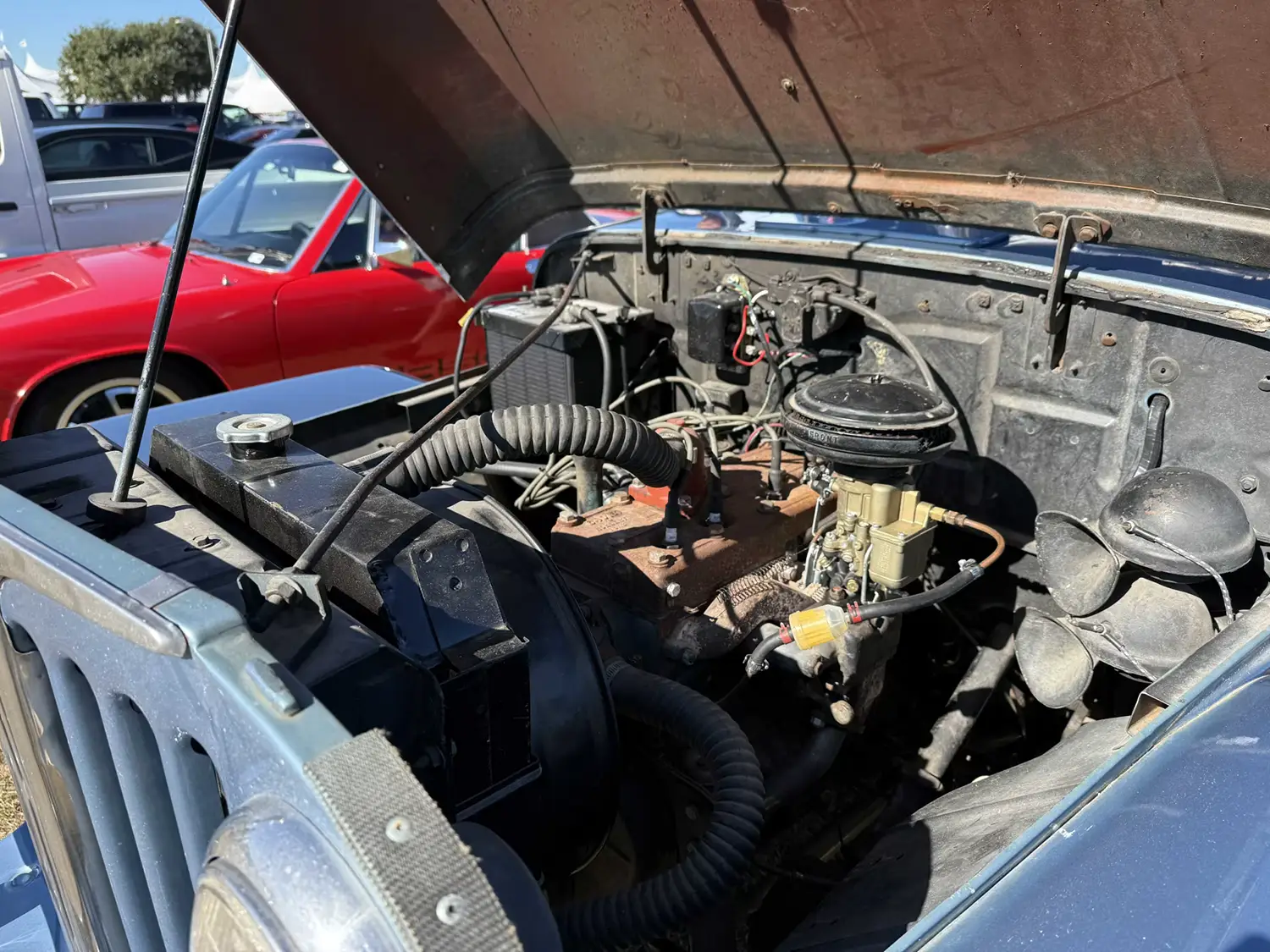
Under the hood of this classic is the famed 134 CI “Go Devil” L-head inline 4-cylinder engine. This powerplant earned its legendary reputation for reliability during the harshest conditions of the Second World War. In this application, it produces approximately 63 horsepower, which provides plenty of spirit for casual neighborhood cruising. The engine is known for its smooth idle and durable cast-iron construction that has stood the test of time.
Driving this Jeepster is a tactile experience thanks to the 3-speed manual transmission equipped with overdrive. The overdrive unit is a critical feature that allows for more comfortable engine speeds during modern road travel. This mechanical setup ensures that the low-displacement engine remains efficient while providing enough torque for a sprightly feel. It is a drivetrain that emphasizes mechanical honesty and longevity over sheer top-end speed.
Jeepster Summary
The 1949 Willys-Overland Jeepster is a rare survivor that bridges the gap between military history and suburban leisure. Its combination of a Go Devil engine and a stylish Brooks Stevens body makes it a collector favorite. This blue example represents a significant era when Jeep began its long journey toward becoming a lifestyle icon. It is ready to bring a smile to its next owner at the Kissimmee 2026 auction.
Disclaimer: Content on this site is for informational and entertainment purposes only. Details, analyses, and opinions reflect current trends and personal views, not professional or financial advice. Always verify information with official sources before making any decisions.
Source: mecum.com