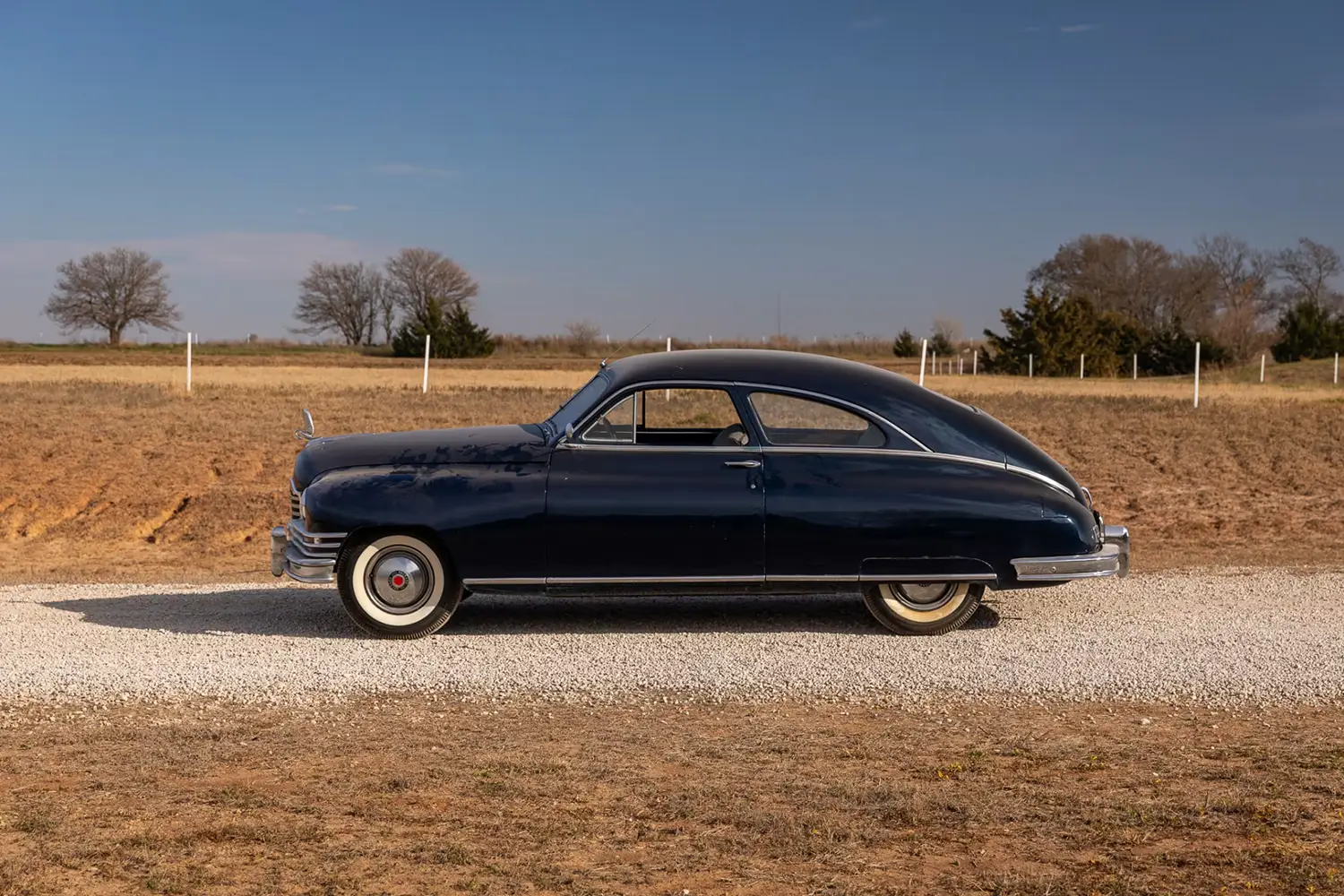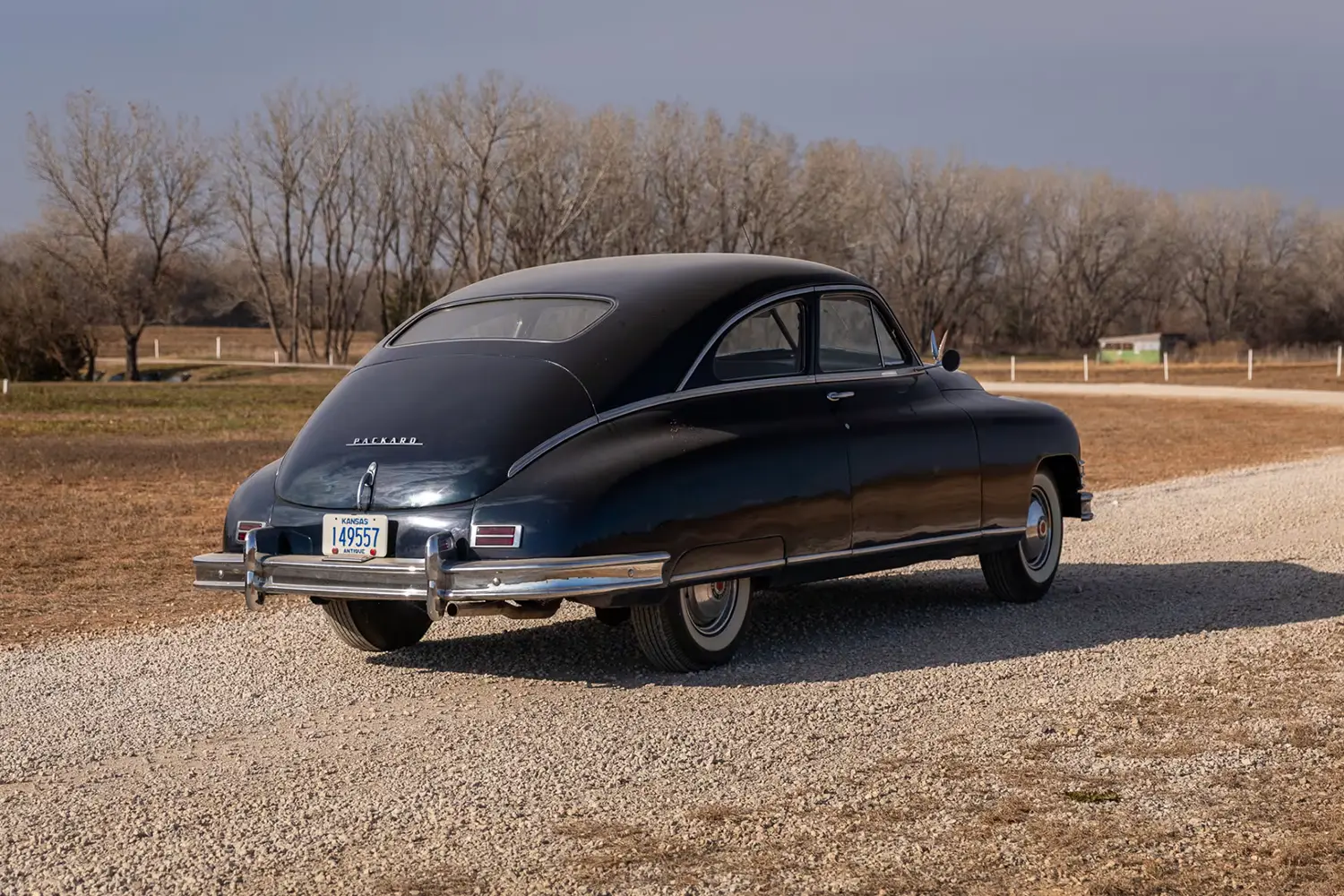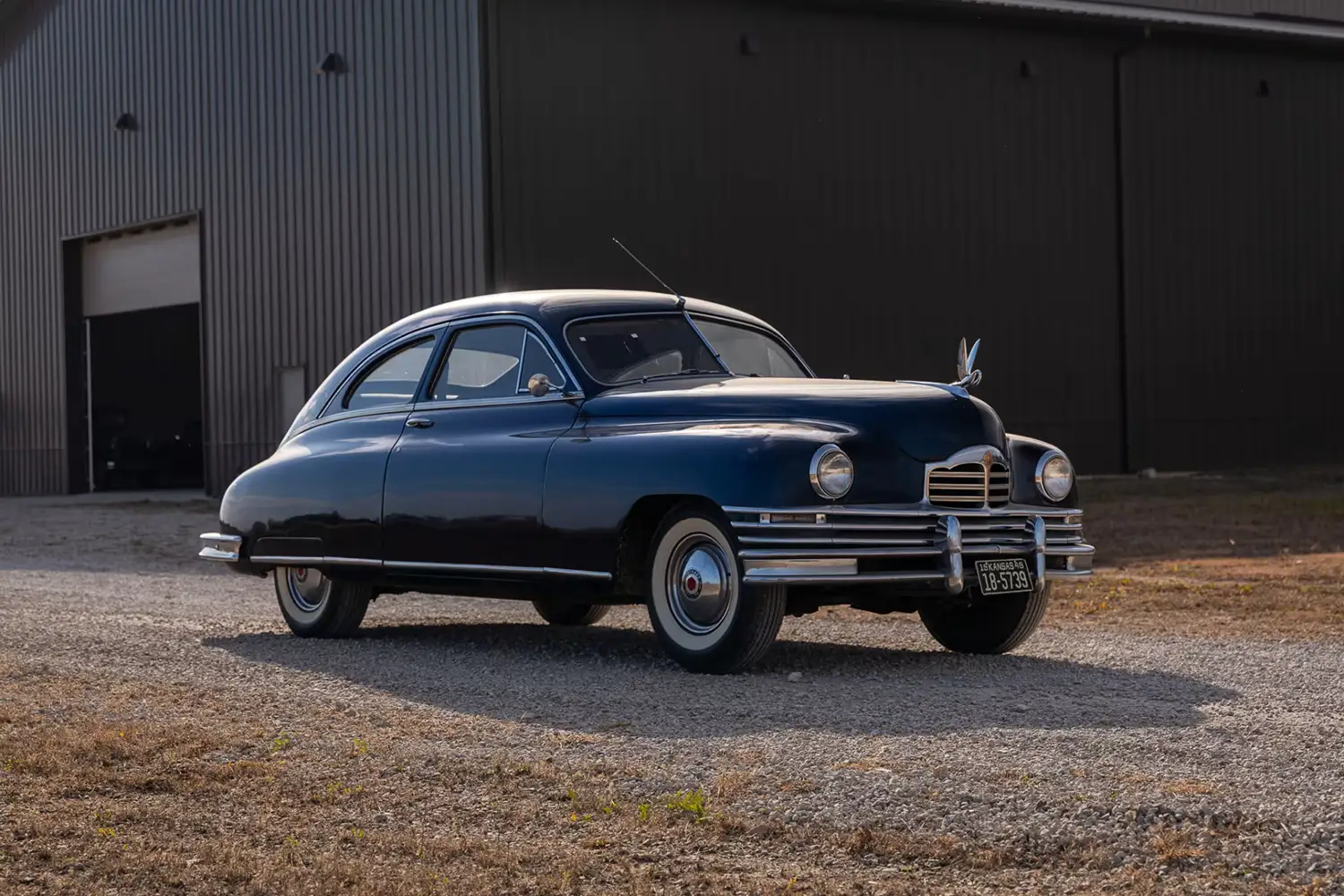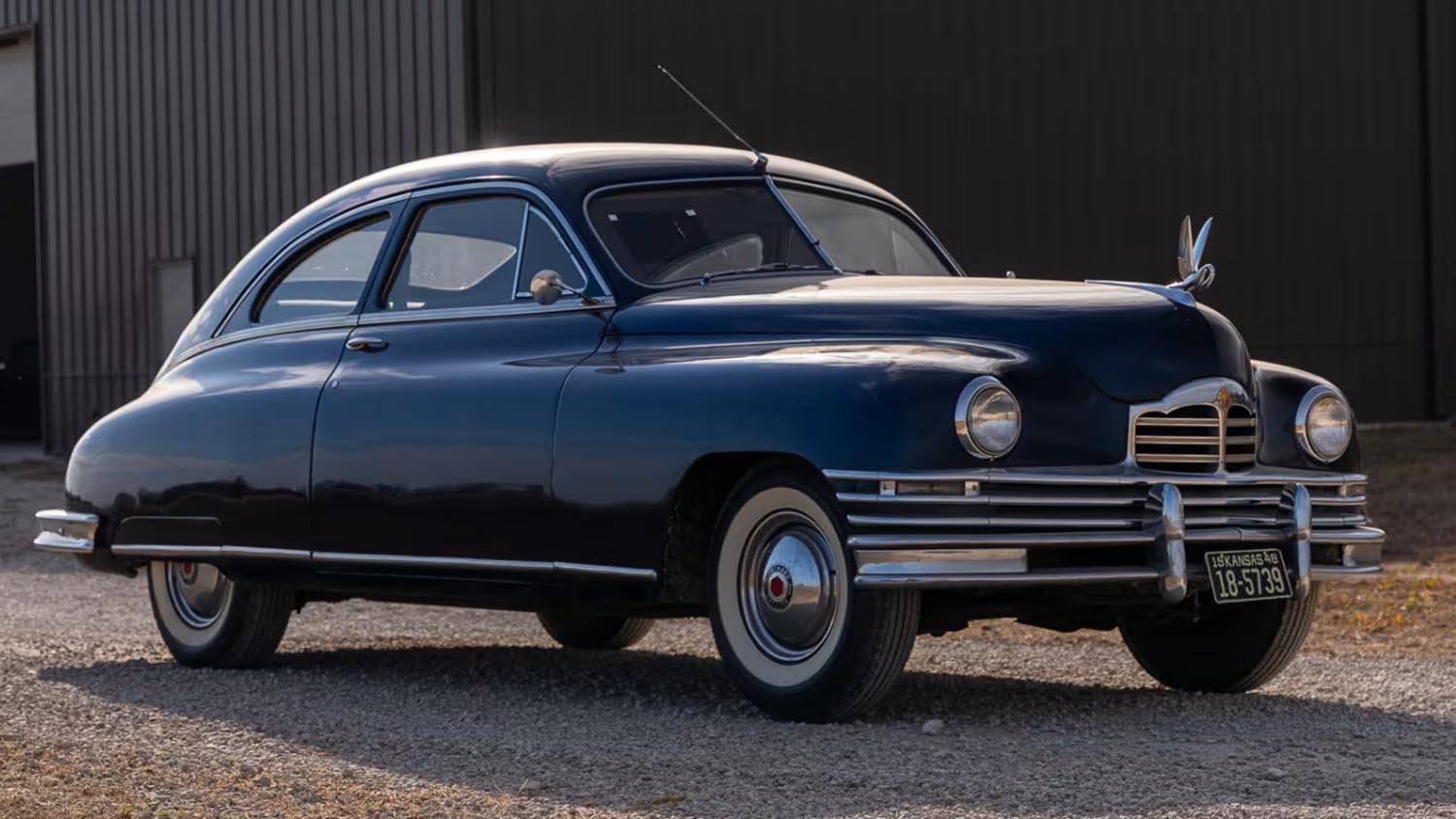
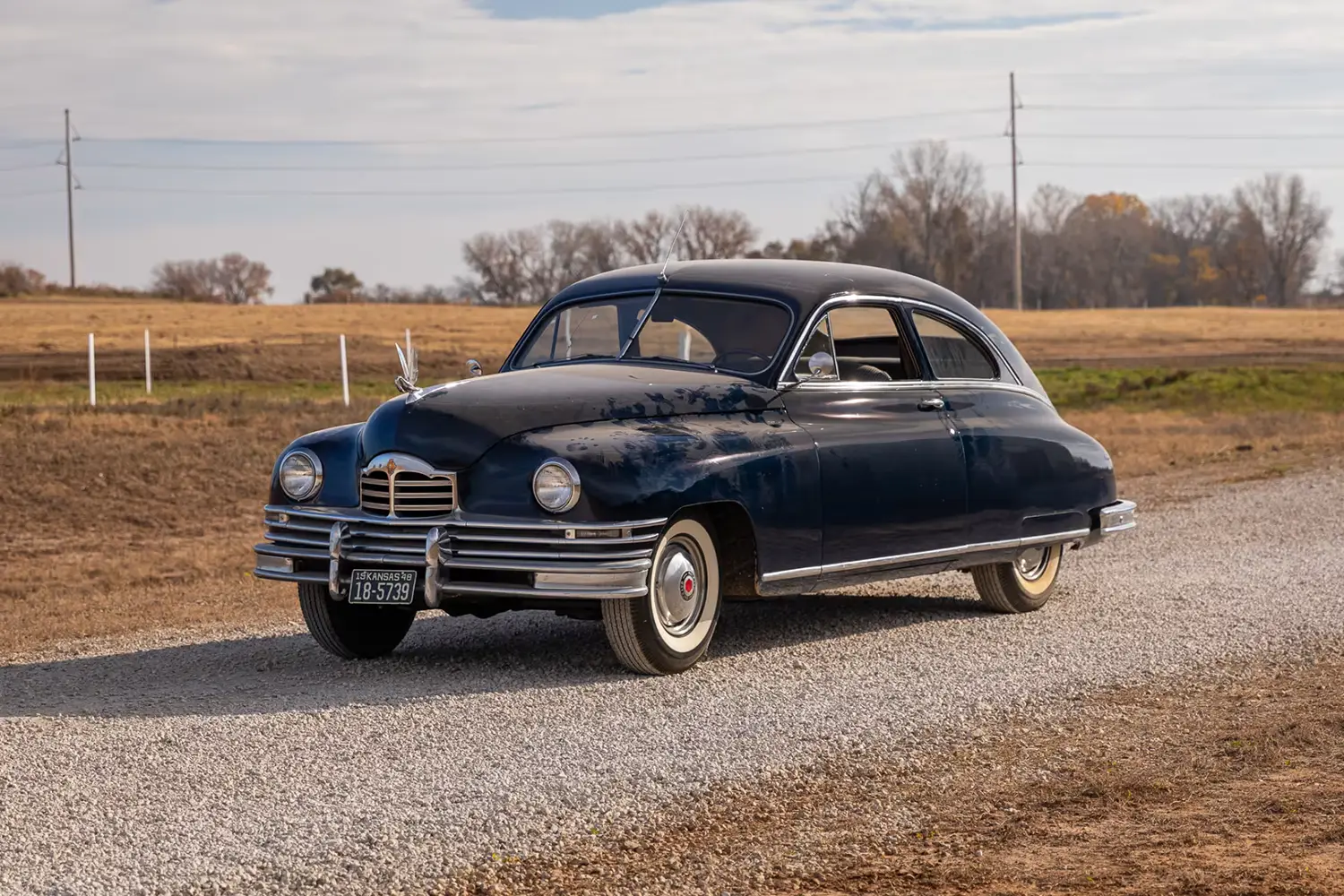
The 1949 Packard Club Sedan represents the final years of the marque’s dominant era in the American luxury market. Often referred to as part of the Twenty-Second Series, this model reflects the streamlined “inverted bathtub” styling trend. While competitors moved toward tailfins, Packard maintained a more conservative and dignified aesthetic for its elite clientele. This blue example carries the unmistakable presence of a vehicle built for the executive class of the late 1940s. Under its long hood sits the legendary inline 8-cylinder engine, known for its remarkably smooth and quiet operation. It represents a time when mechanical refinement was the ultimate measure of automotive quality. This specific Club Sedan is scheduled to cross the block as Lot D27.2 at the 2026 Kissimmee auction. It offers an accessible entry point for collectors who appreciate the engineering integrity of the Packard brand. Despite the changing tides of design, this vehicle remains a steadfast symbol of post-war prosperity and classic grace.
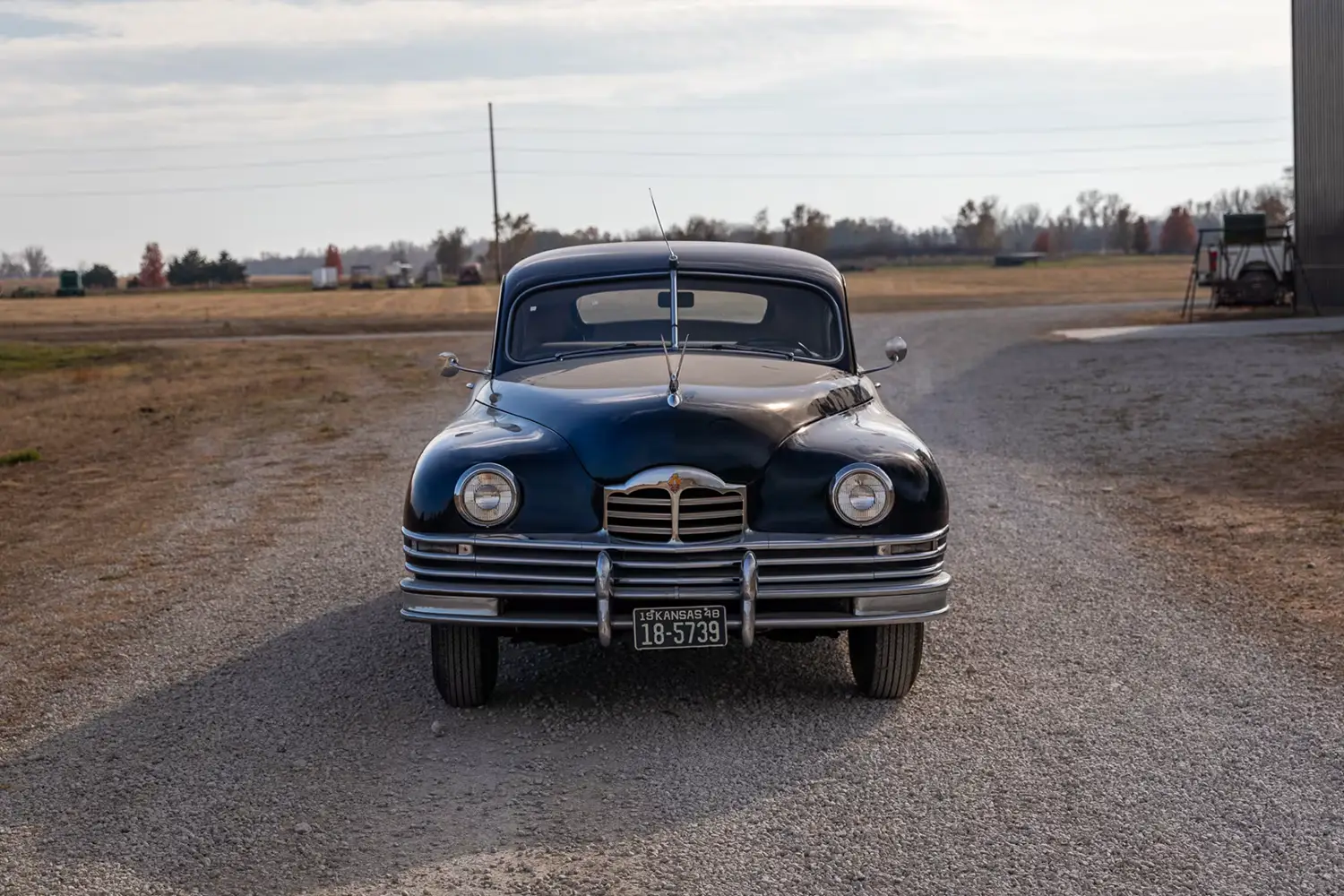
Blue Exterior Styling and Pelican Hood Ornament Details
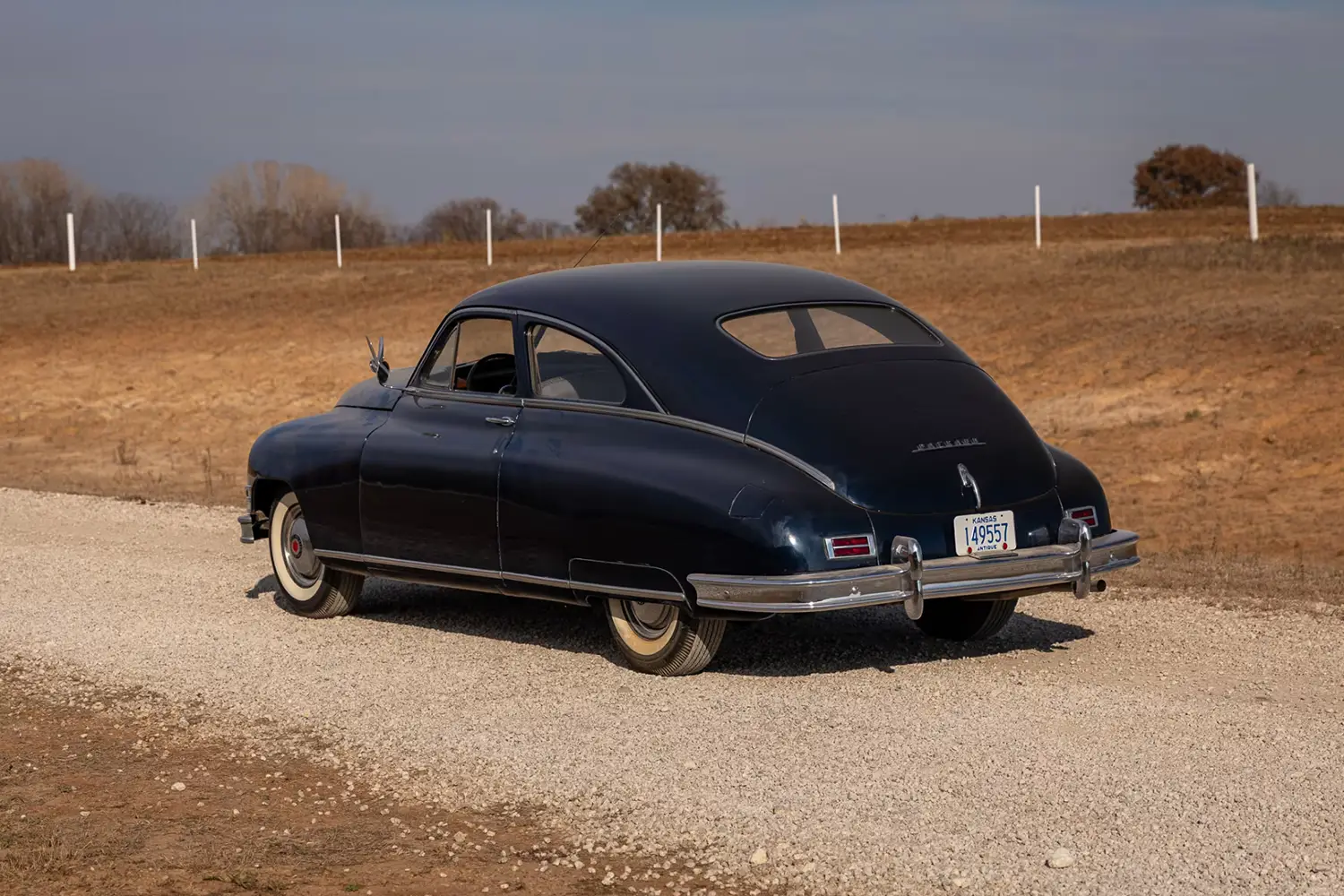
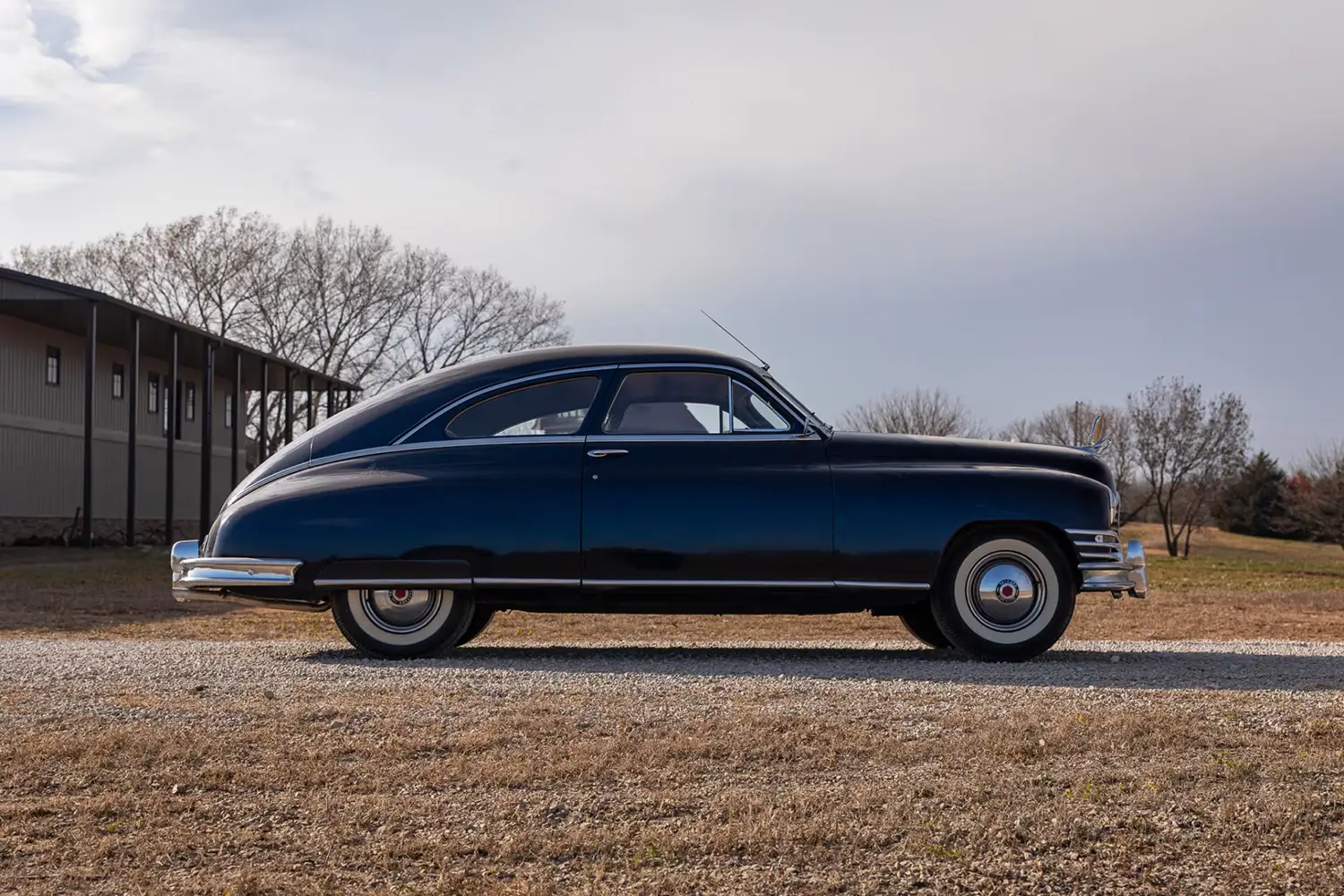
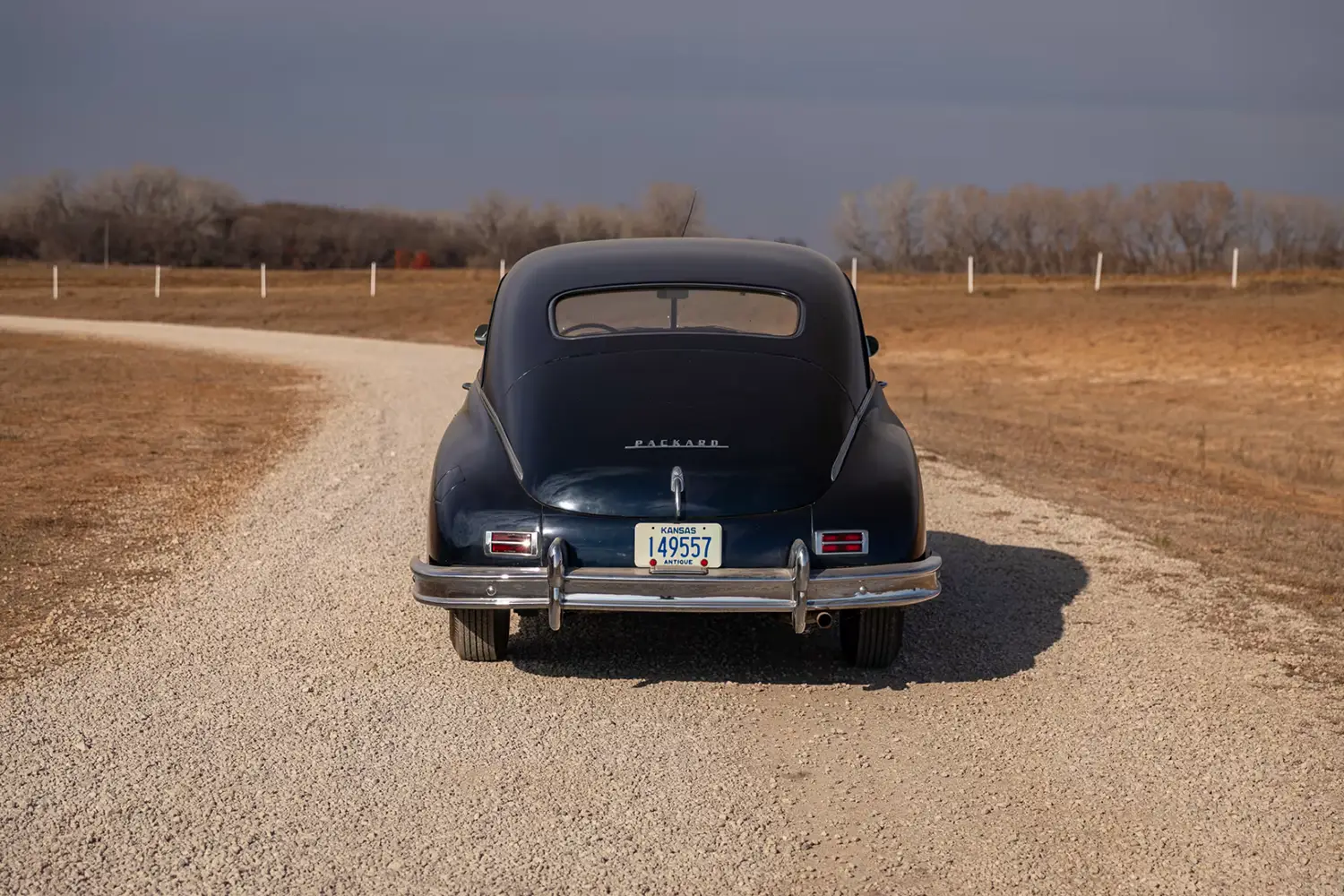
The exterior of this 1949 Packard Club Sedan is finished in a deep blue that highlights its bulbous and flowing lines. Chrome trim is used strategically across the body, framing the expansive grille and highlighting the rounded fenders. A prominent Pelican hood ornament sits atop the nose, serving as the definitive mascot of the Packard brand’s prestige. This mascot remains one of the most recognizable icons in the world of pre-war and early post-war motoring. The vehicle features full-size wheel covers that provide a clean and integrated look to the lower body profile. These are wrapped in classic whitewall tires, which offer a sharp contrast to the dark blue paintwork. Large chrome bumpers protect the front and rear, reflecting the robust construction typical of 1940s luxury sedans. Its pillarless-style greenhouse design gives the car a sense of continuous flow from front to back. Consequently, the car possesses a heavy, grounded stance that suggests a very comfortable and stable ride. This visual package is perfect for those who value understated elegance over aggressive modern styling.
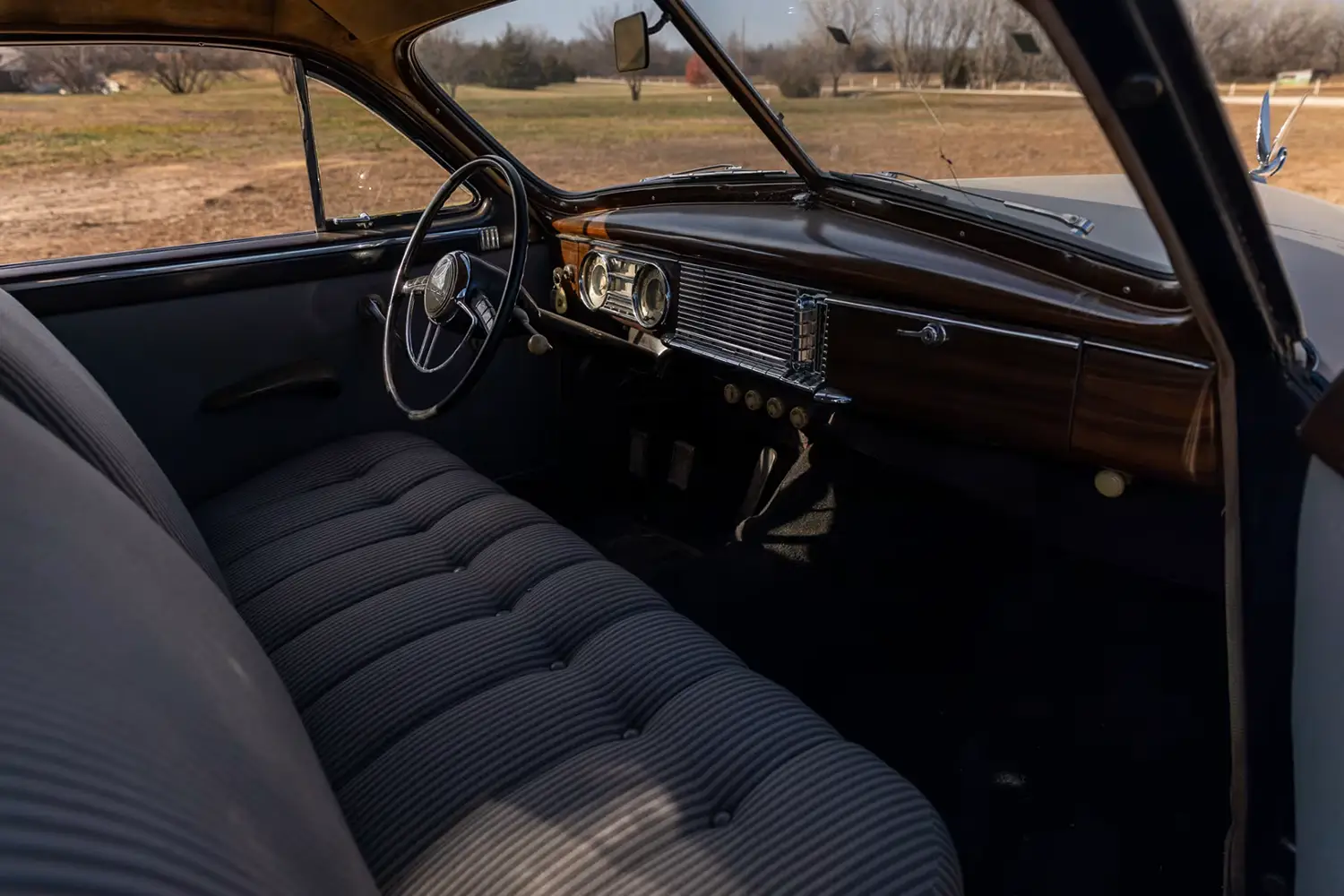
Gray Patterned Interior and Woodgrain Trim Accents
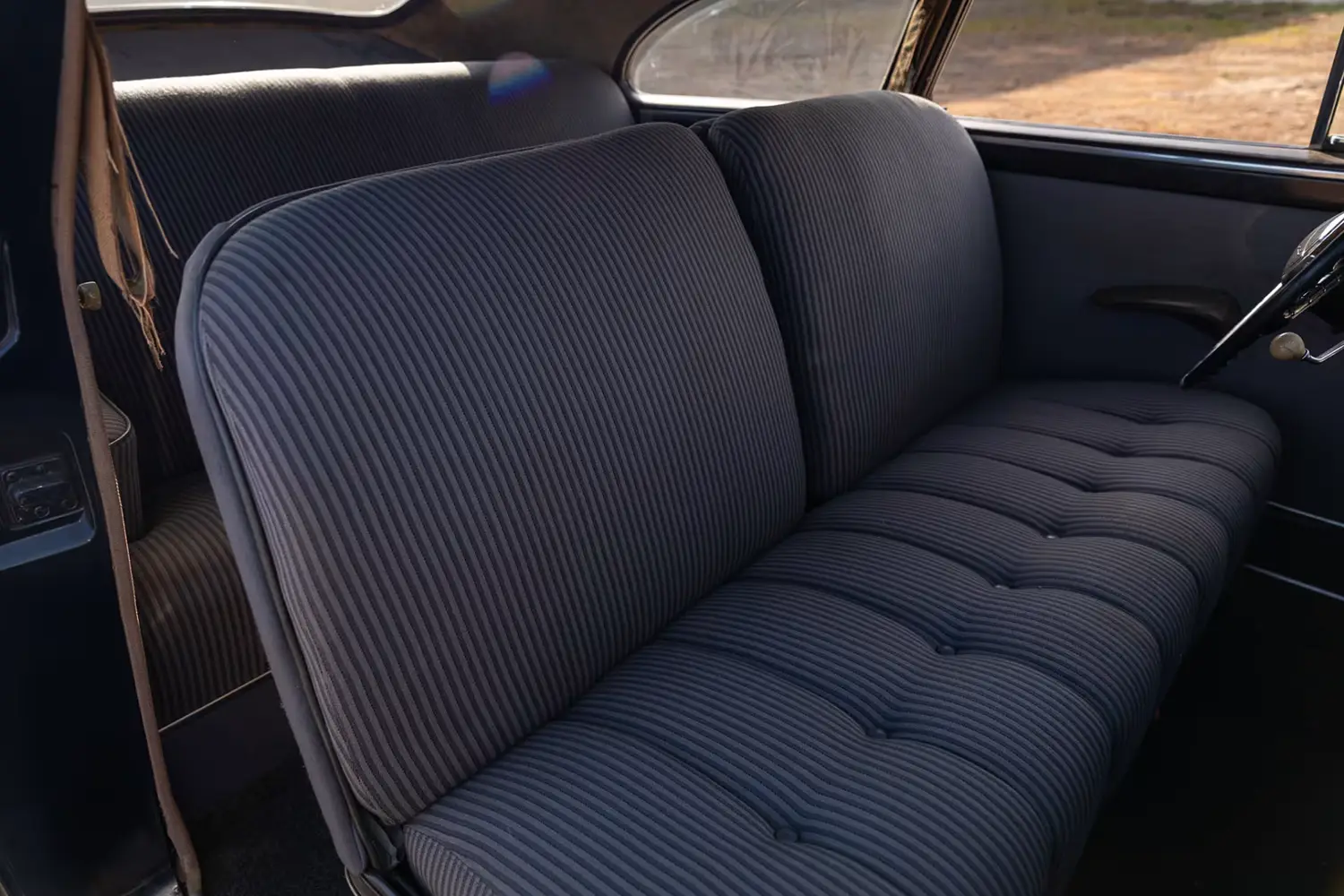
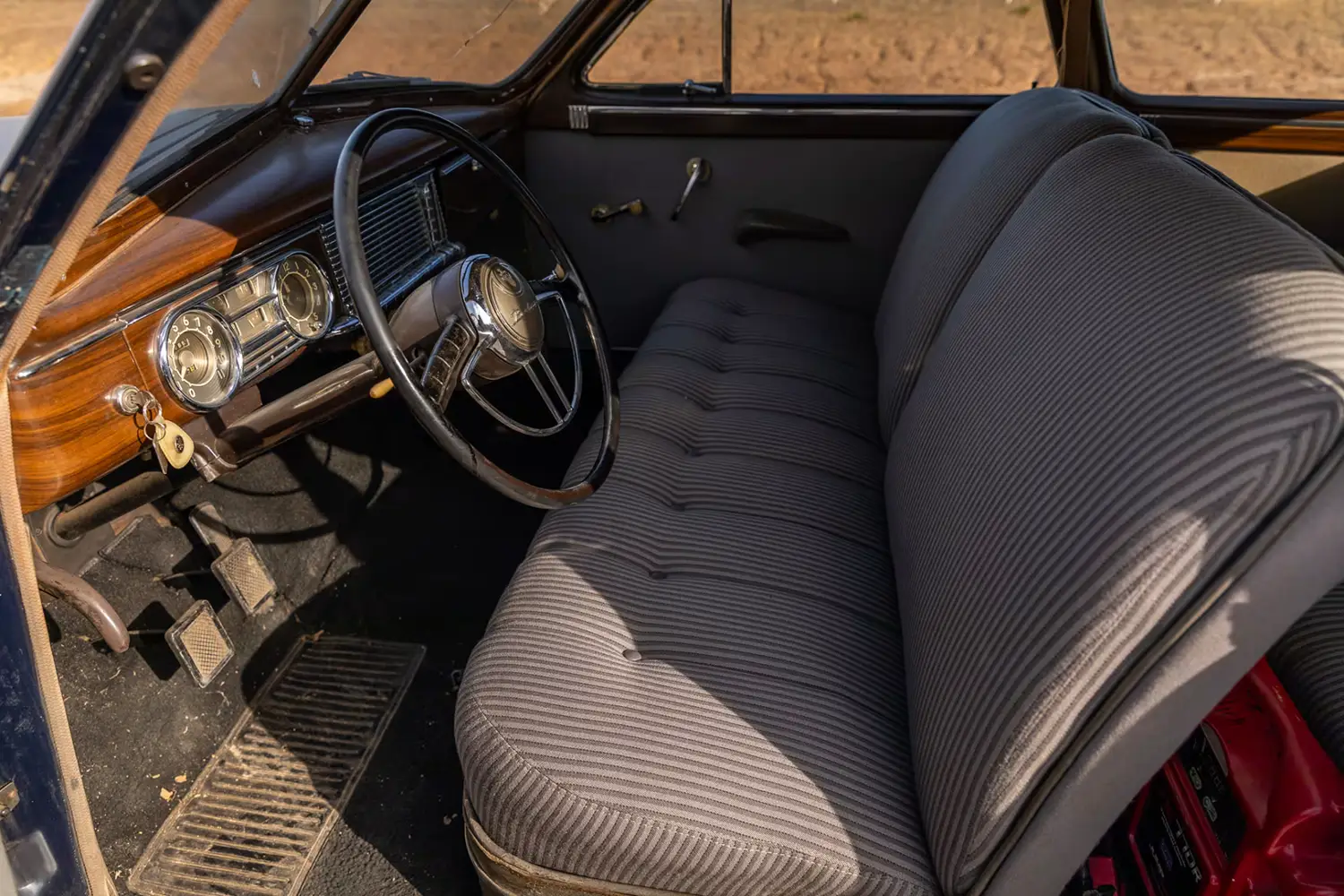
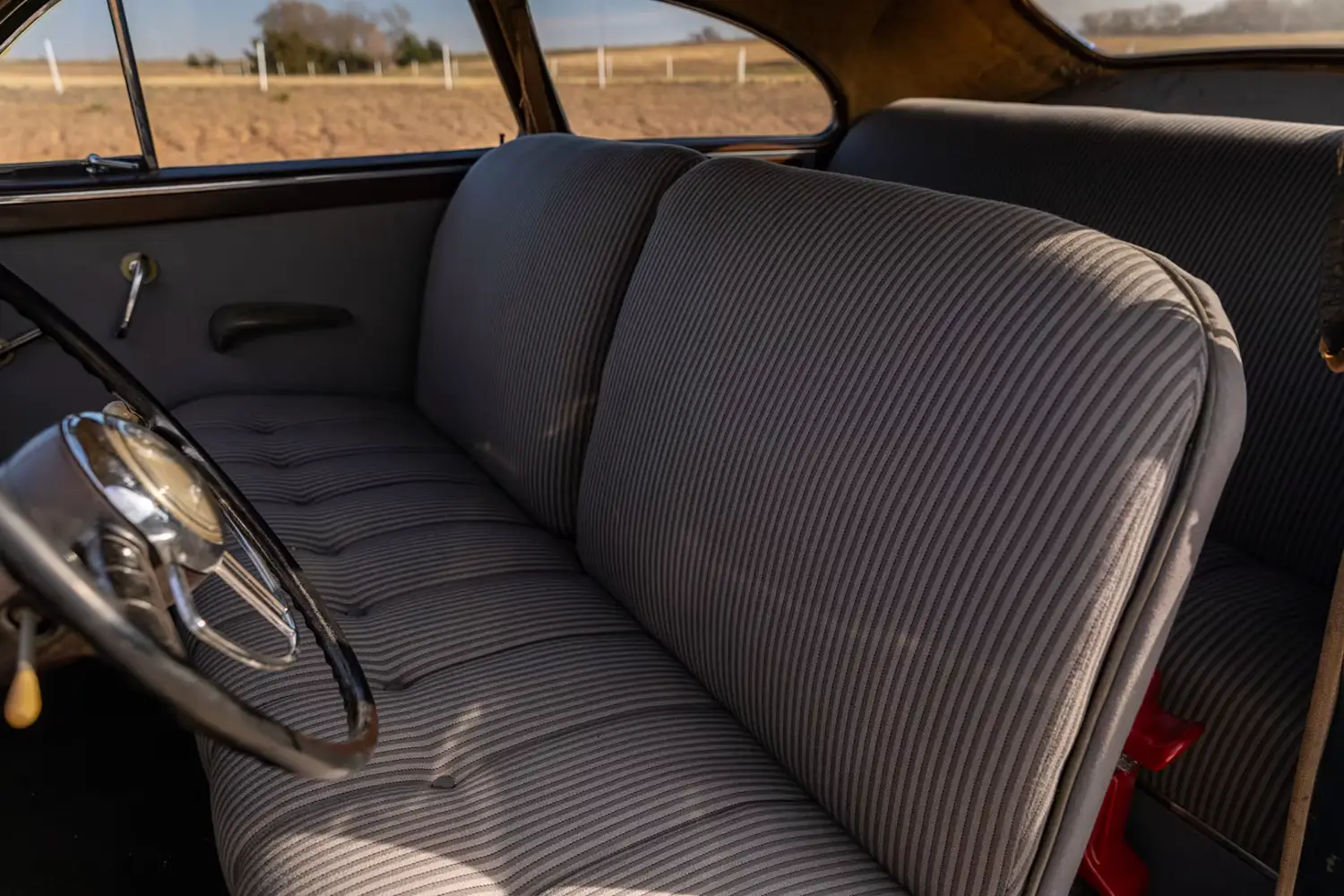
Inside the cabin, the 1949 Packard Club Sedan provides a sanctuary of mid-century textile art and craftsmanship. The interior is finished with gray patterned bench seats that offer a plush, sofa-like experience for all occupants. One of the most striking features is the extensive woodgrain trim that adorns the dashboard and door panels. This finish was designed to bring the warmth and luxury of a high-end living room into the automobile. The layout is clean and functional, with large dials and controls that prioritize ease of use for the driver. A column-shifted manual transmission allows for a clear floor space, enhancing the feeling of roominess in the front. Rear passengers enjoy significant legroom, a hallmark of Packard’s commitment to providing a true chauffeured-class experience. The materials used throughout the cabin feel substantial and were built to last for generations of use. Everything from the door handles to the window cranks reflects a time when metal was the primary interior material. It is a nostalgic environment that makes every journey feel like a special occasion.
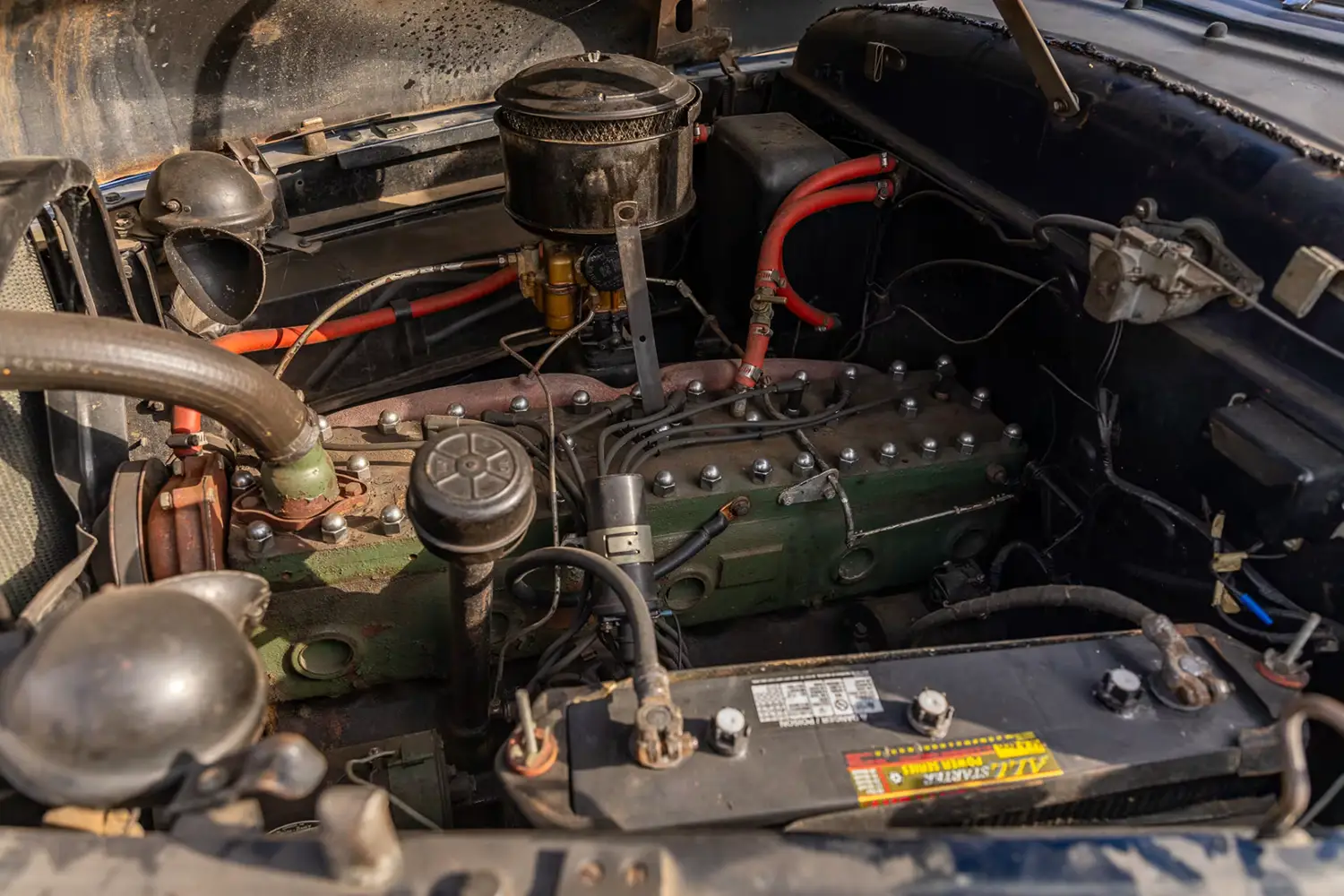
Inline 8-Cylinder Performance and 3-Speed Manual Specs
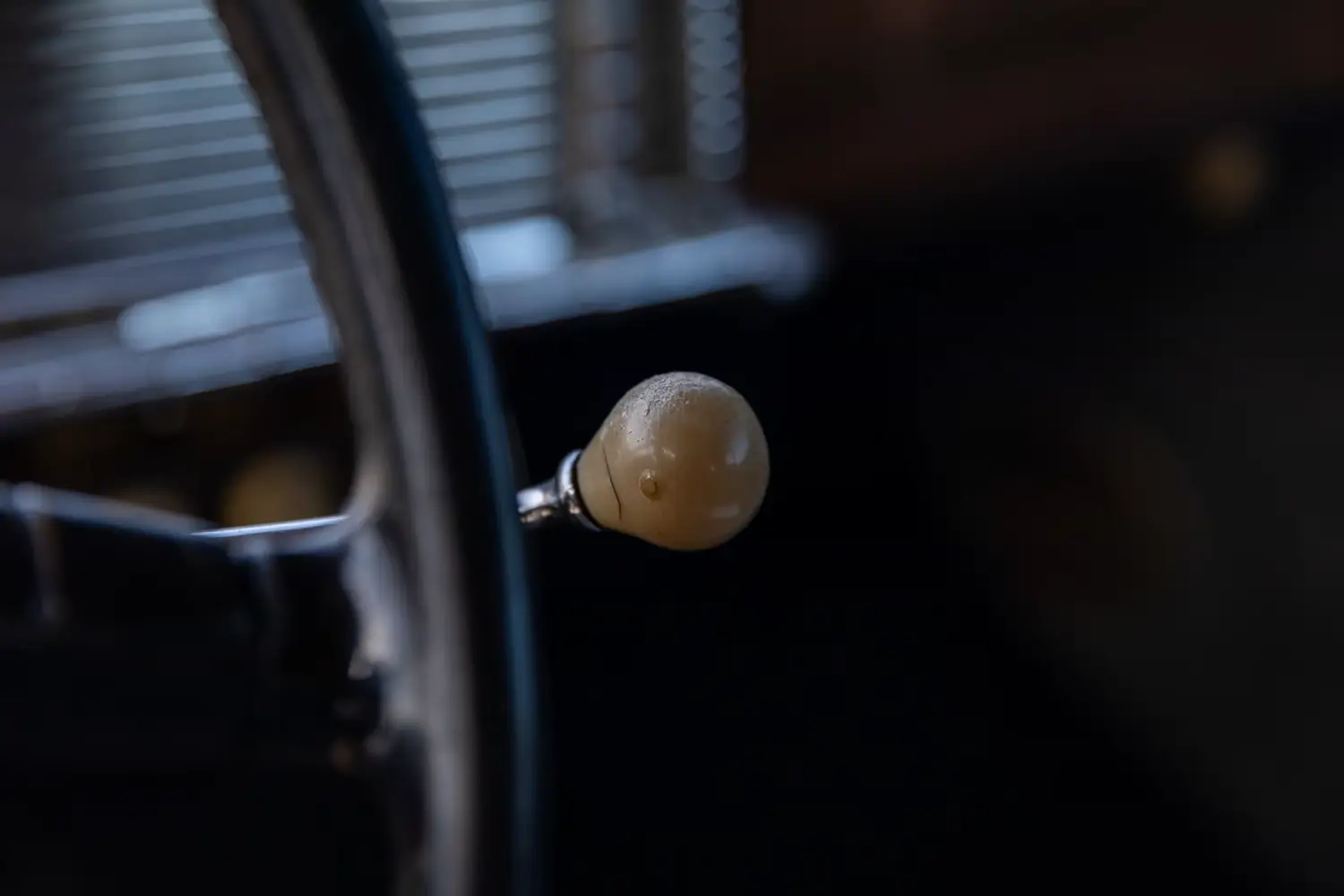
The 1949 Packard Club Sedan is powered by a smooth-running inline 8-cylinder engine that delivers effortless torque for city or highway driving. This powerplant was famous for its ability to idle so quietly that drivers often forgot the engine was running. It is mated to a 3-speed manual transmission that is shifted via the steering column for a vintage feel. This drivetrain setup was engineered for longevity and ease of maintenance, making it a favorite for modern hobbyists. The heavy-duty chassis was designed to soak up road imperfections, providing a “magic carpet” ride quality typical of the marque. Braking is handled by traditional hydraulic drums that are well-suited for the weight and speed of the vehicle. Under the hood, the engine bay is simple and accessible, allowing for straightforward servicing during the car’s show life. The inline-eight configuration provides a rhythmic, low-frequency sound that is distinctly different from a modern V8. It remains a reliable and proven mechanical package that is ready for local parades or club tours. This Packard provides a level of mechanical dignity that few cars of its era can match.
1949 Packard Club Sedan Summary
The 1949 Packard Club Sedan stands as an honest and attractive representative of a golden age in American manufacturing. Its blue exterior and gray patterned interior create a tasteful color combination that appeals to many vintage car enthusiasts. The car features all the essential hallmarks of the brand, including the inline-eight engine and the Pelican mascot. Its appearance at the Kissimmee 2026 auction provides a rare chance to secure a well-sorted Twenty-Second Series model. While it lacks the flash of later chrome-heavy fifties cars, it offers superior mechanical refinement and build quality. The inclusion of whitewall tires and woodgrain trim ensures it looks the part of a high-end vintage cruiser. It is a vehicle that rewards close inspection of its details and appreciates in the company of other historic cars. For those looking to experience the prestige of a Packard without the price of a senior model, this is ideal. It is a functional and beautiful piece of history that is ready for its next chapter. This sedan is truly a testament to why Packard was once the top-selling luxury brand in America.
Disclaimer: Content on this site is for informational and entertainment purposes only. Details, analyses, and opinions reflect current trends and personal views, not professional or financial advice. Always verify information with official sources before making any decisions.
Source: mecum.com