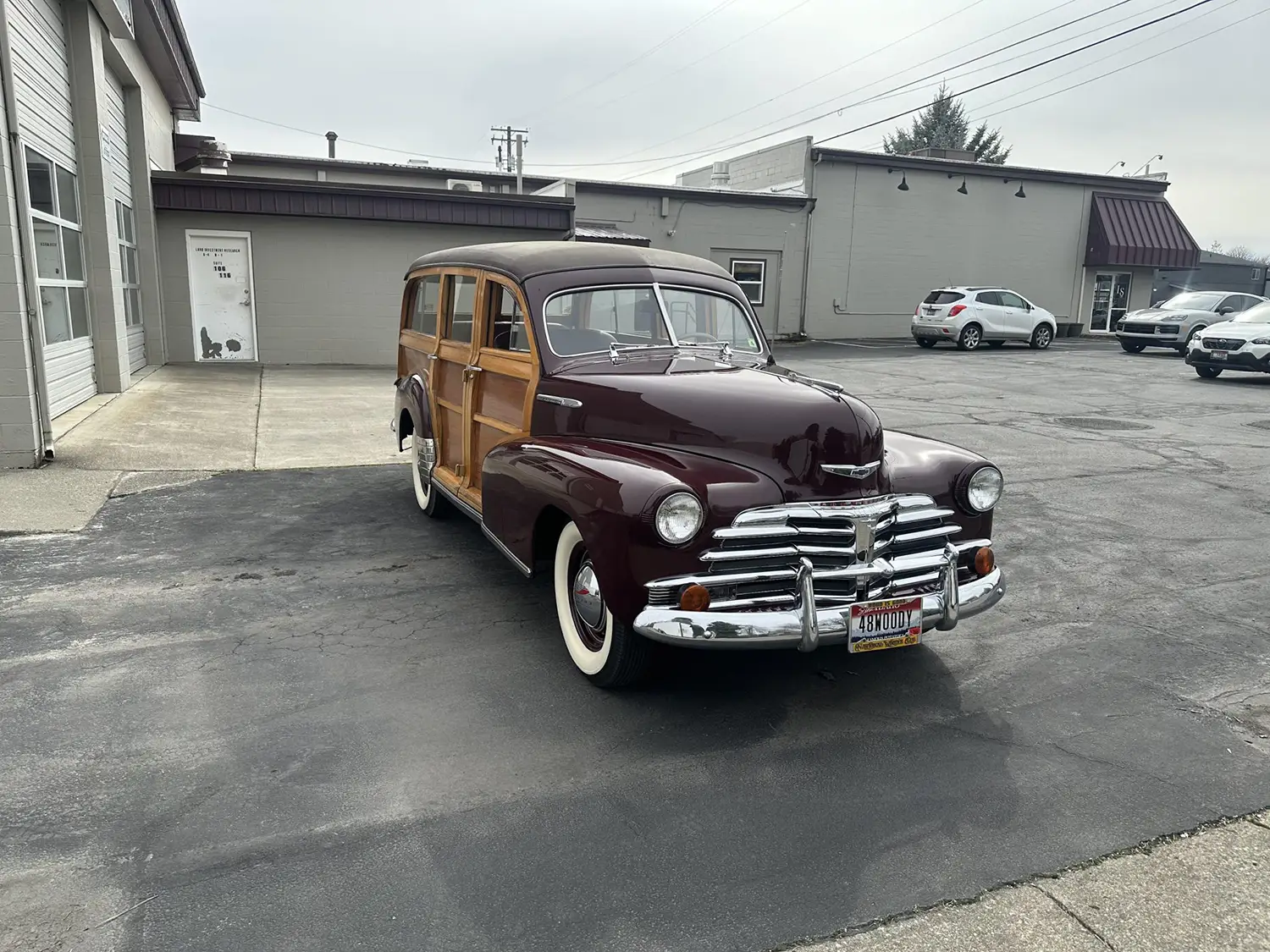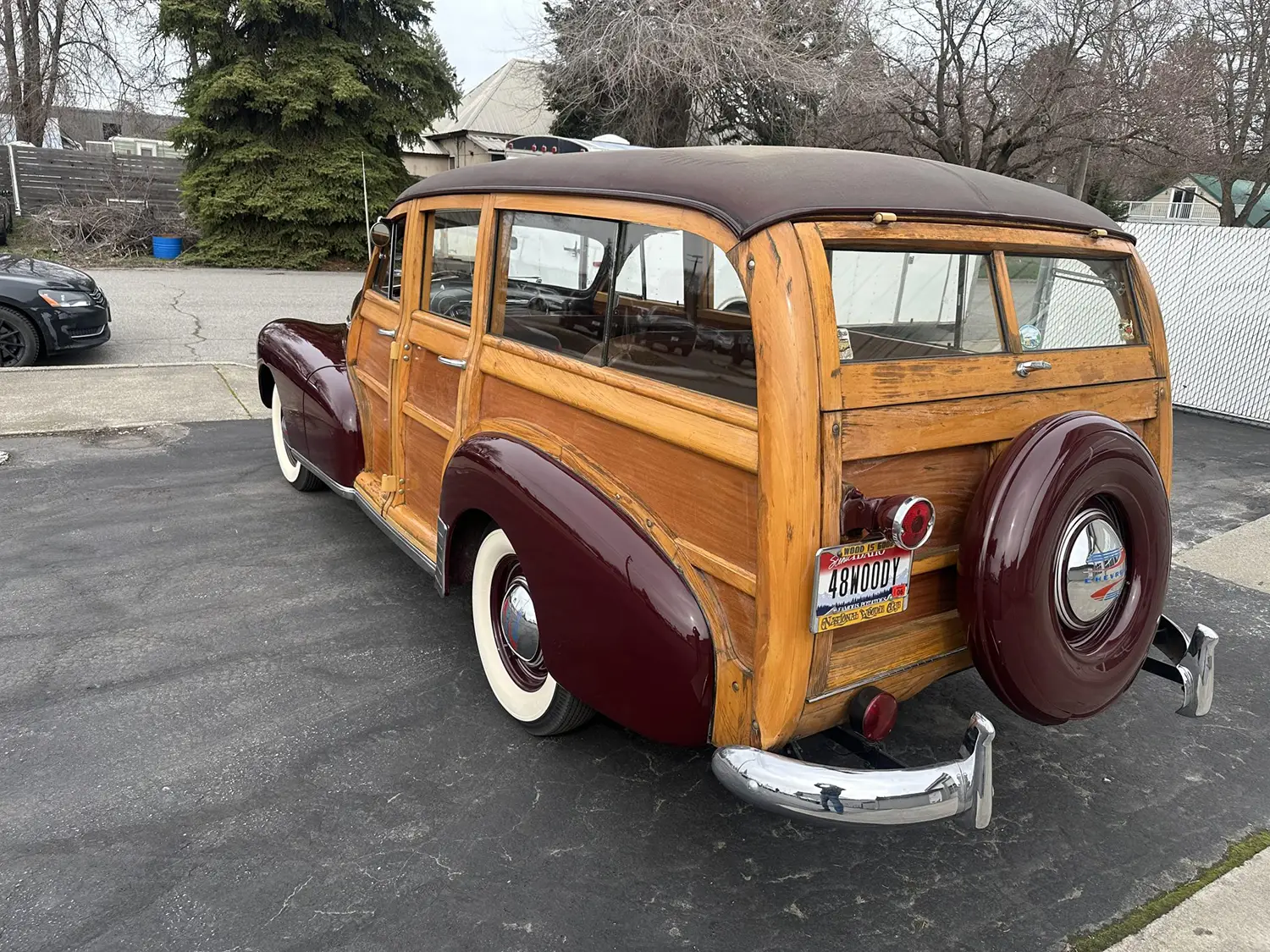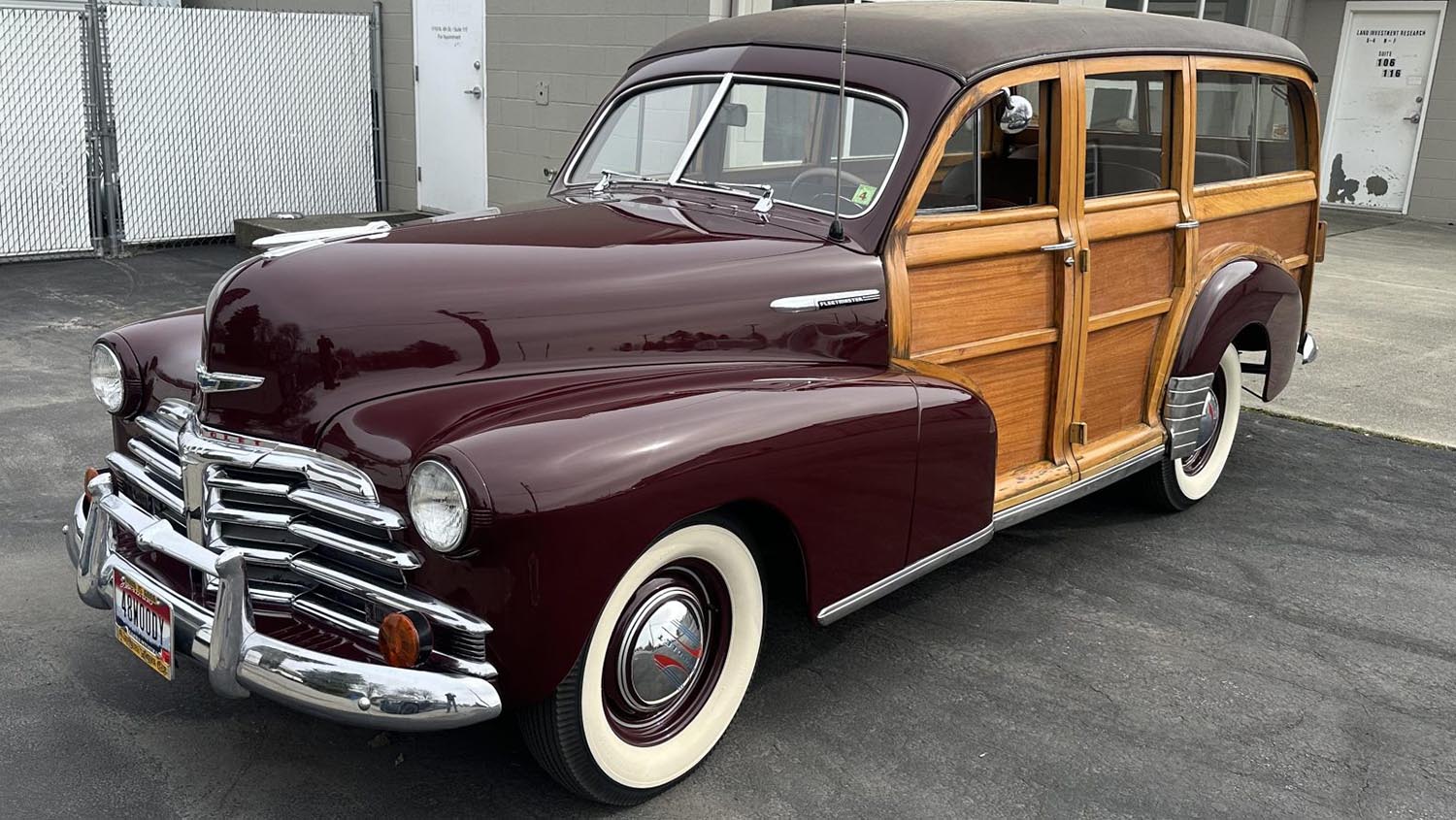
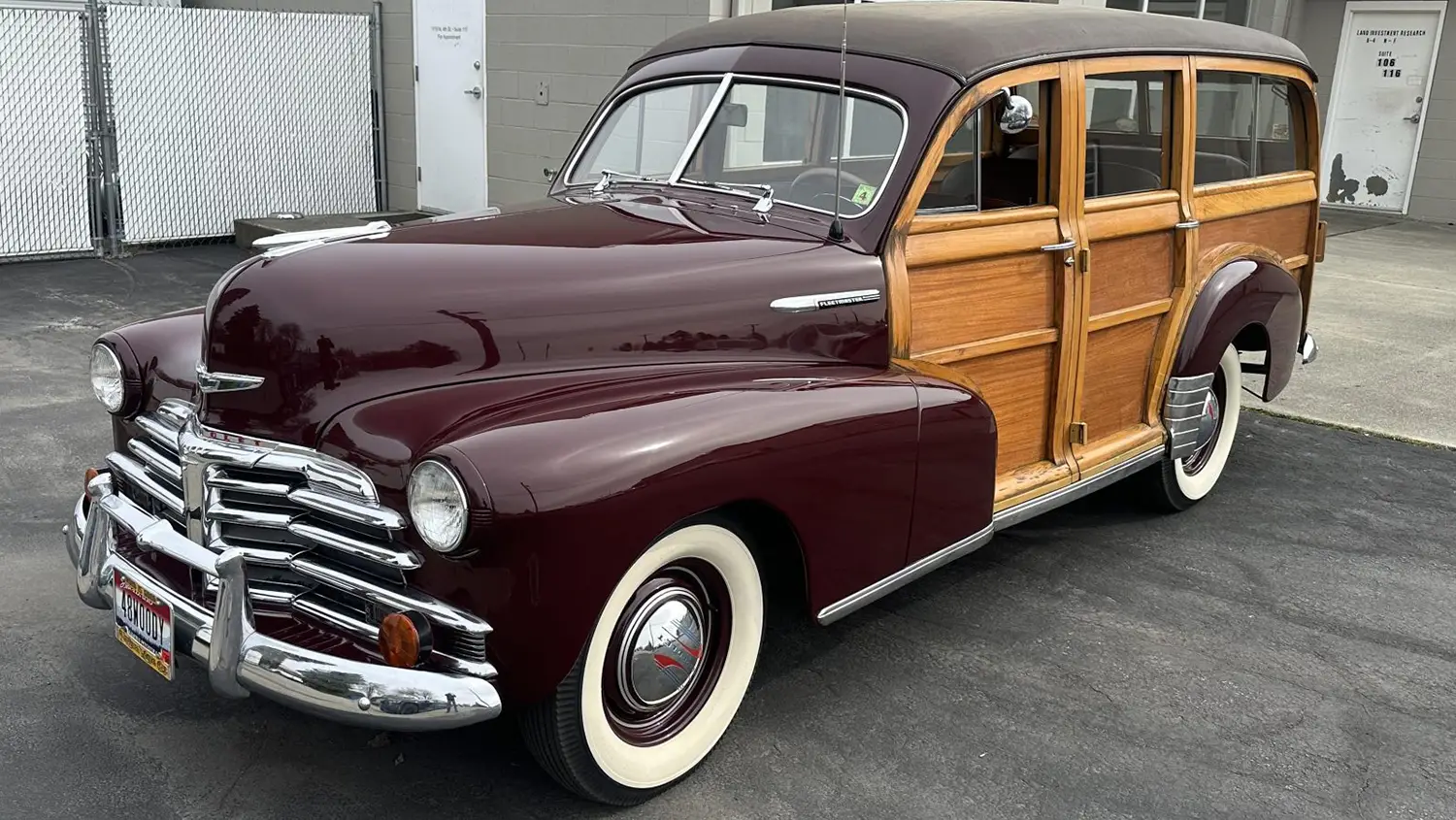
The 1948 Chevrolet Fleetmaster Station Wagon represents a fascinating intersection of post-war civilian utility and specialized industrial service. This particular four-door woodie carries a remarkable provenance, having been purchased from the Hecla Mining Company in 1977. Serving originally as an ambulance at the Star mine in Idaho, it has remained under the stewardship of a single family for nearly half a century. Its transition from a rugged service vehicle to a cherished collector piece highlights the enduring appeal of Chevrolet’s mid-century flagship wagon.
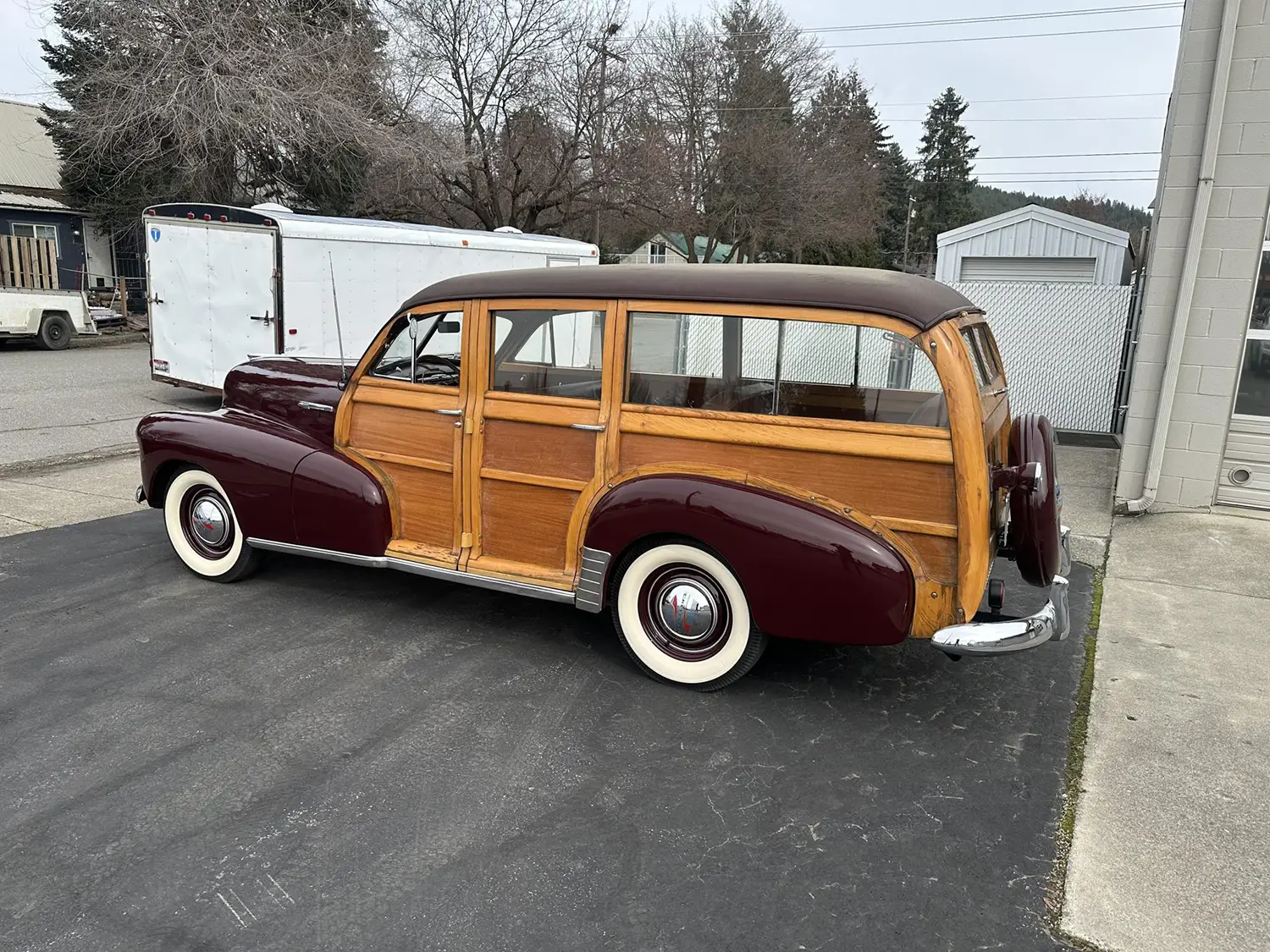
Refined Woodwork with a Service Pedigree
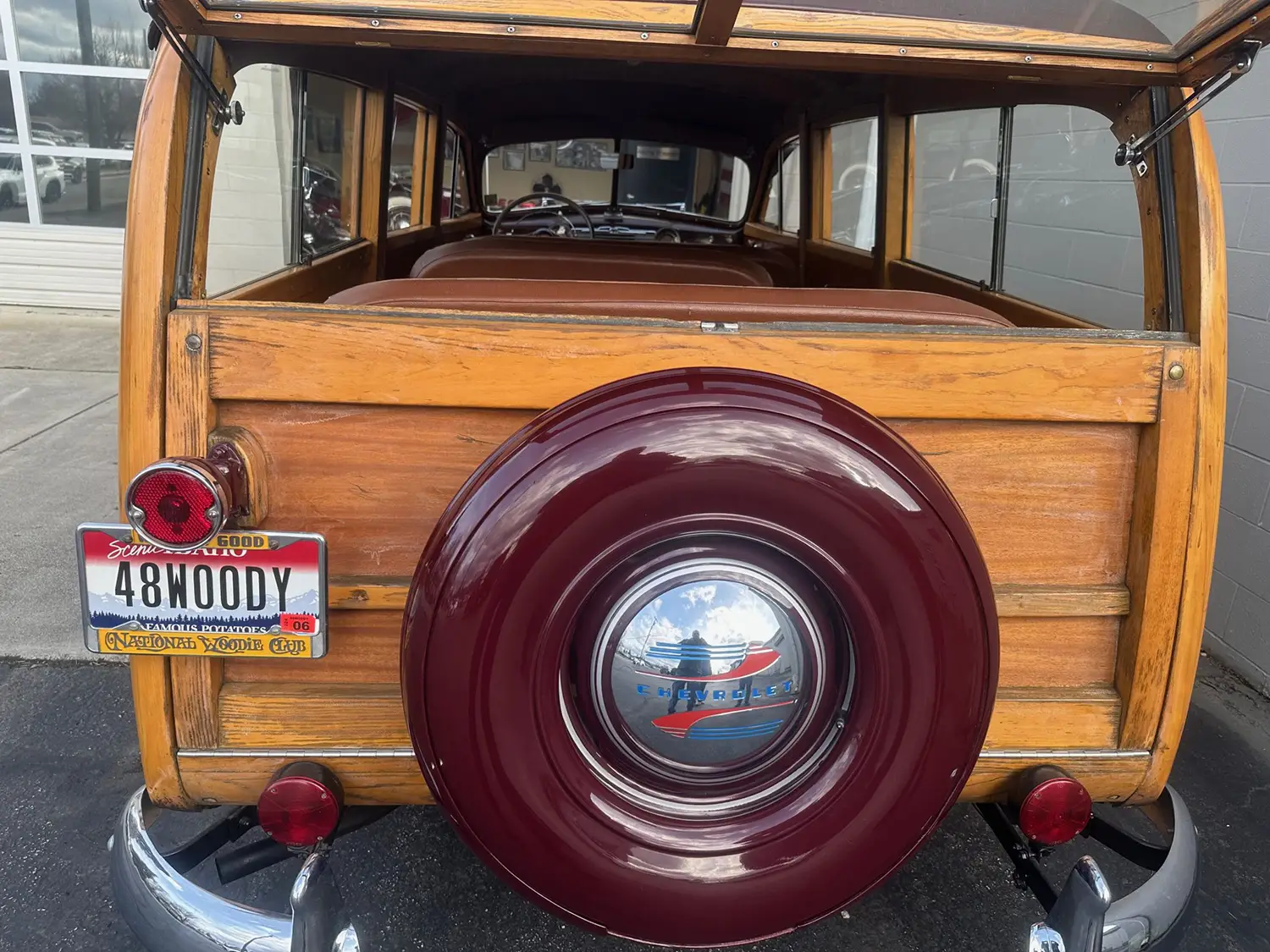
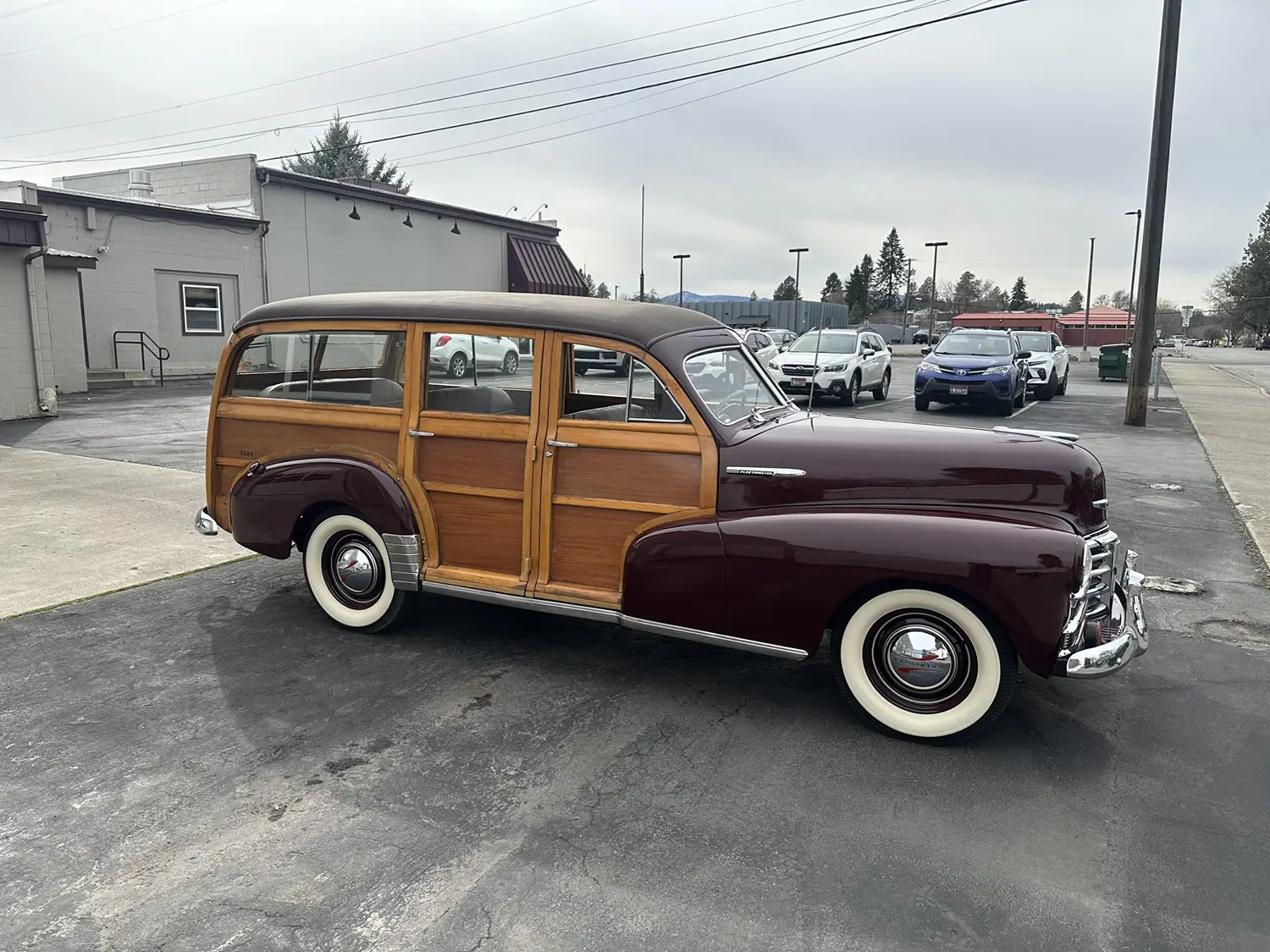
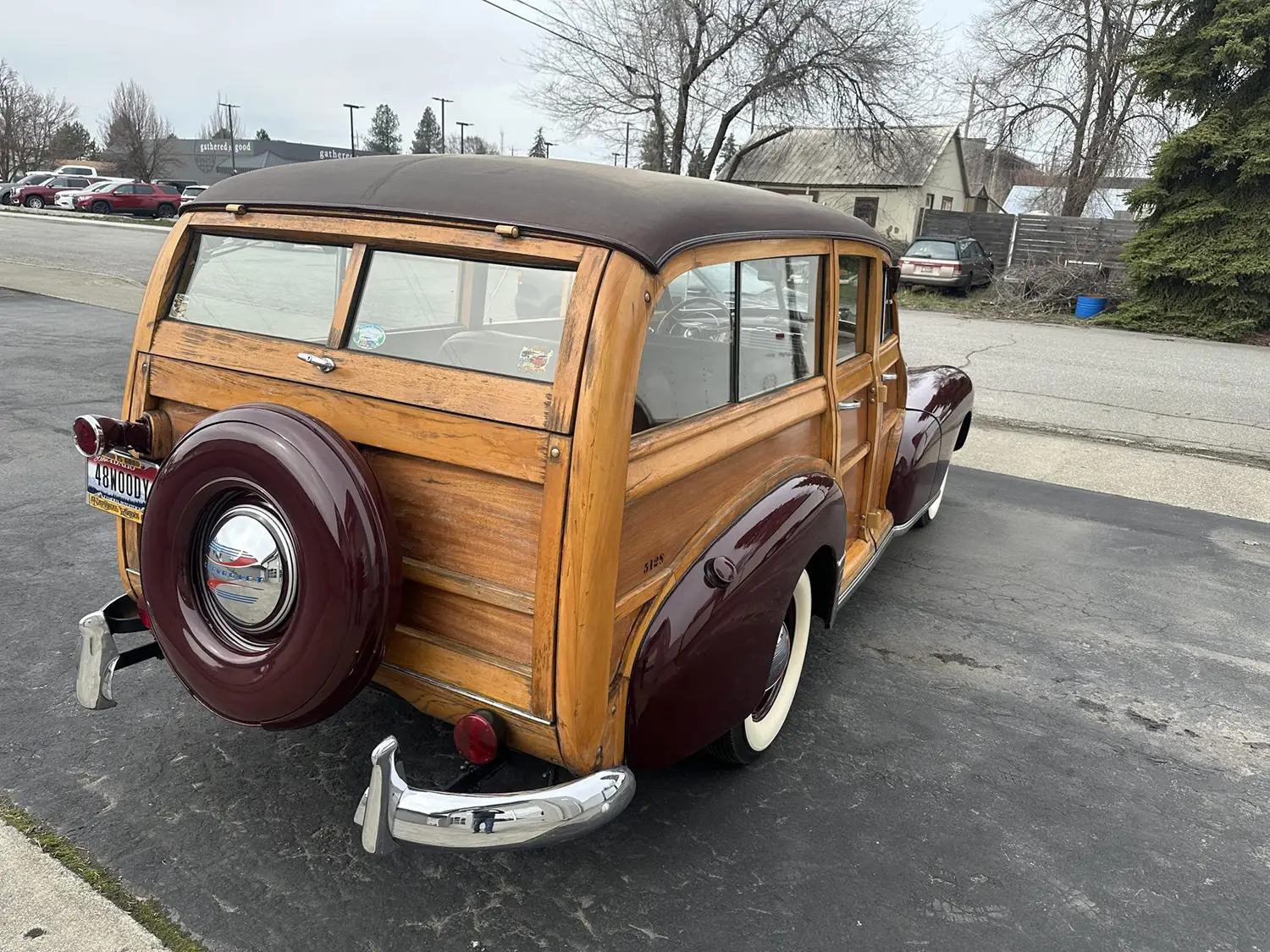
The exterior presentation is defined by a 1990s refinish in maroon metallic, which contrasts beautifully against the authentic wood body paneling. As a former ambulance, the wagon still retains its front and rear emergency lights, controlled via a dedicated cabin pull knob. The silhouette is characterized by sweeping metal fenders, rear stone shields, and 16-inch steel wheels wearing bright hubcaps and whitewall tires. Stenciled numbers on the wood panels serve as a permanent nod to its previous life at the Idaho mine site.
A Spacious Cabin Finished in Tan and Timber
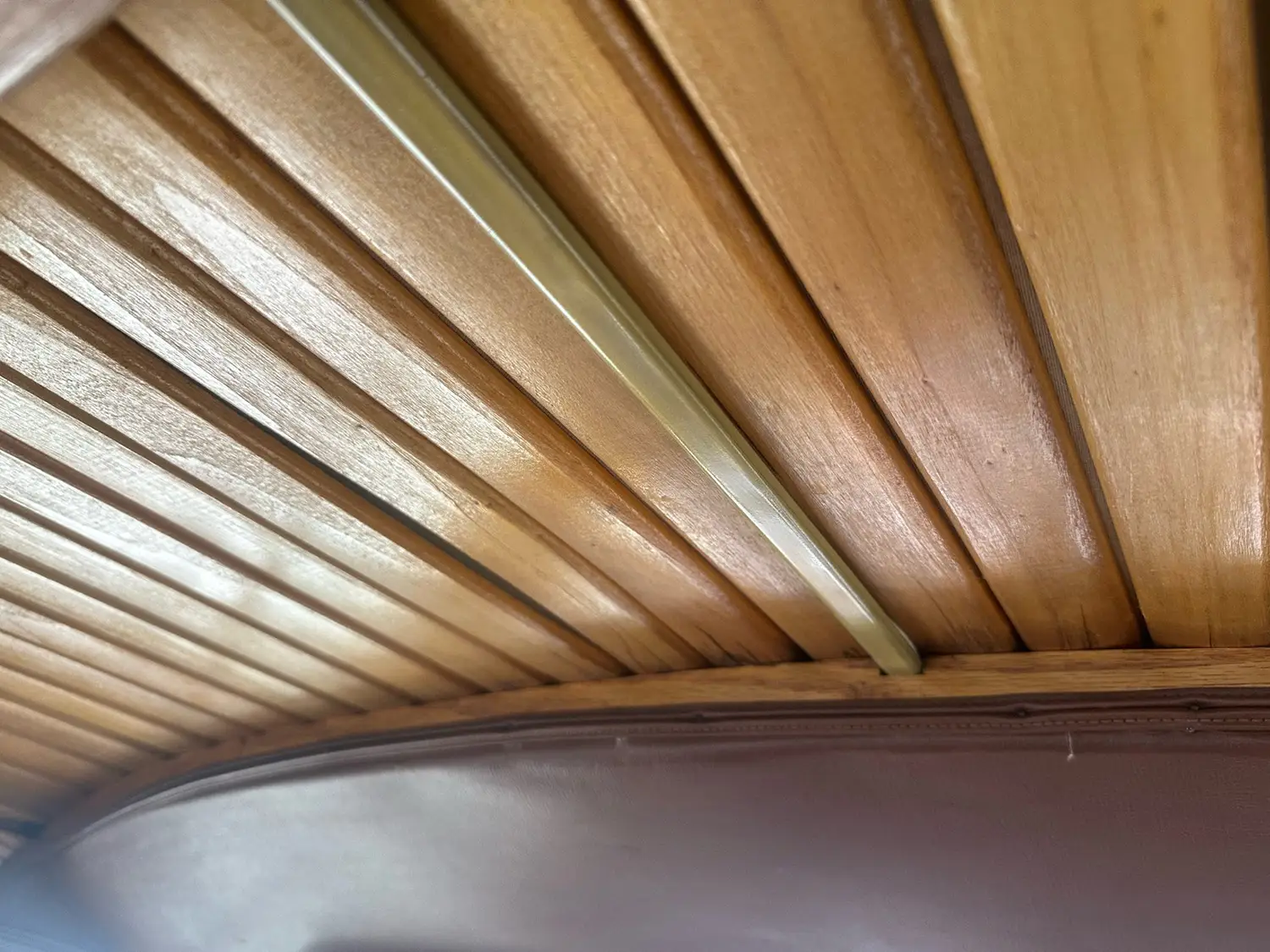
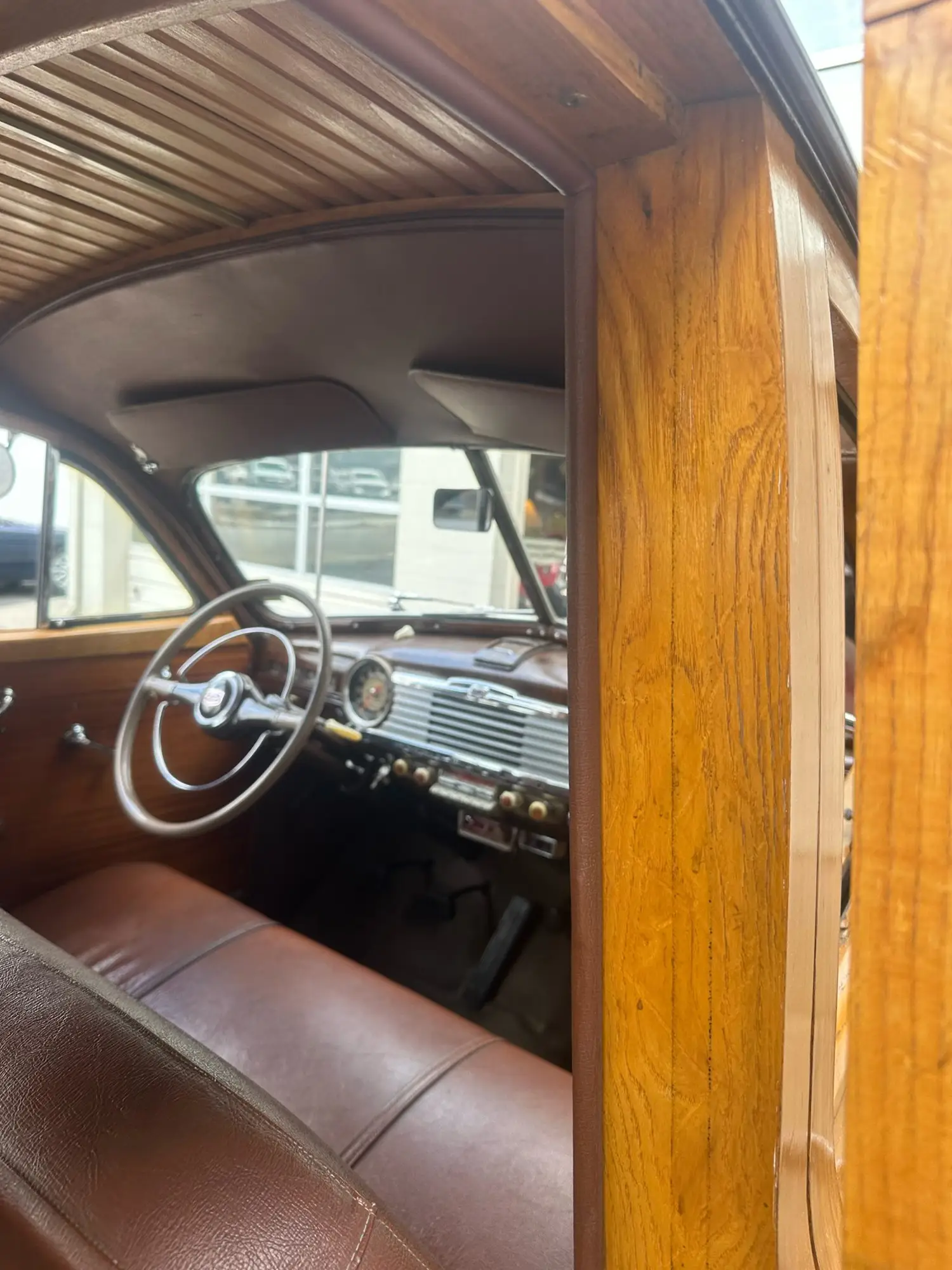
Inside, the Fleetmaster offers an expansive three-row configuration capable of hauling the whole family or vintage gear. The bench seats are upholstered in durable tan vinyl, a material chosen for both longevity and period-correct aesthetics. The interior architecture is a masterclass in traditional craftsmanship, featuring exposed wood trim on the pillars, door panels, and the sprawling roof structure. A factory push-button radio remains centered in the dash, alongside the specialized pull knob used to activate the exterior emergency beacons.
Reliable Stovebolt Power and Column Shift Gearbox
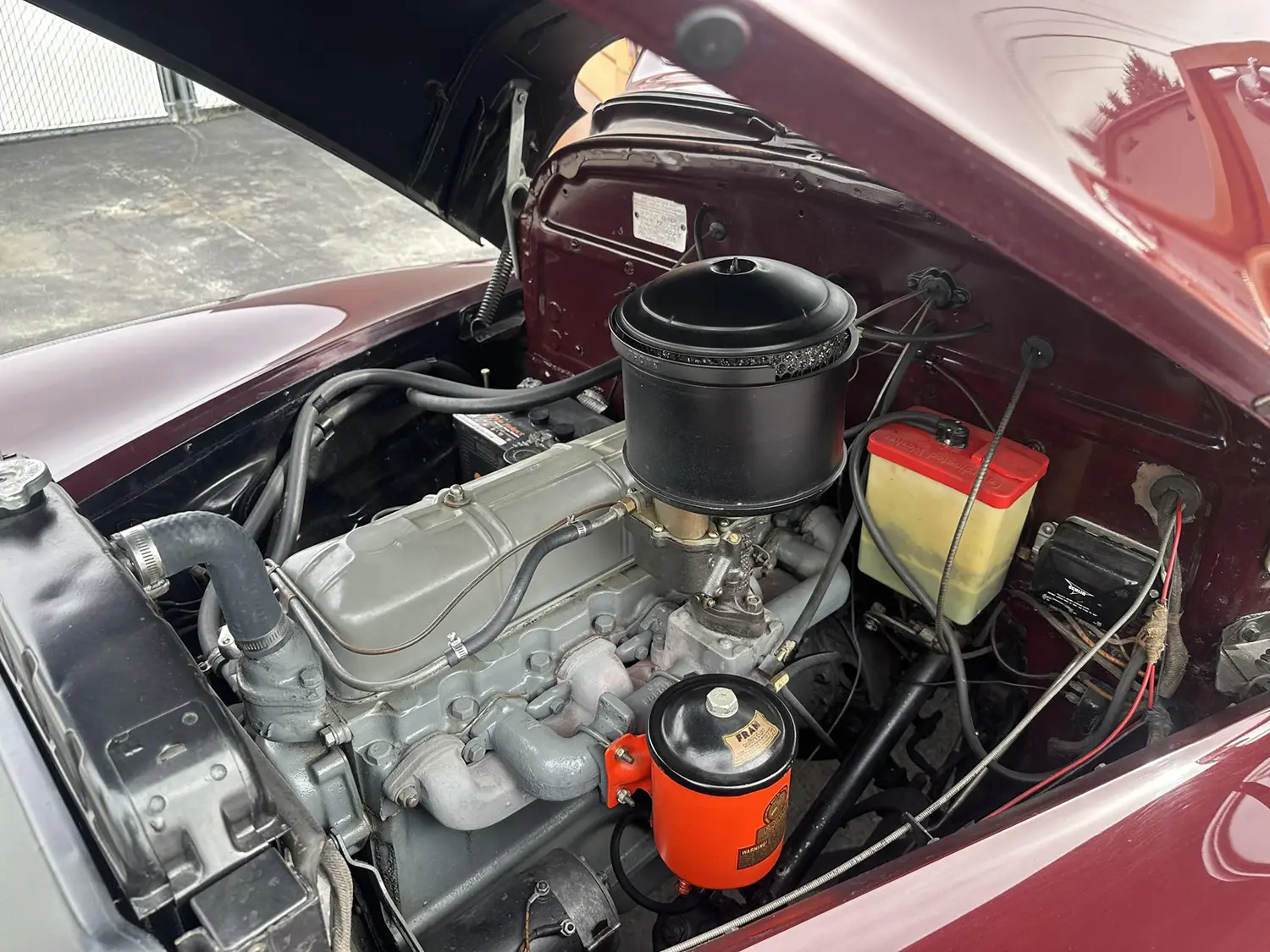
Mechanical motivation comes from a 216ci inline-six engine, a powerplant renowned for its reliability and smooth delivery during the late 1940s. This factory-correct unit utilizes a single-barrel carburetor and was rated at 90 hp/91 PS and 174 lb-ft/236 Nm when new. Power is managed through a three-speed manual transmission with a traditional column-mounted shifter. The driving experience is purely analog, supported by a 100-mph speedometer and a detailed gauge cluster that monitors vital engine temperatures and pressures.
| Technical Specifications | |
|---|---|
| Engine Type | 216ci Inline-Six |
| Induction | Single-Barrel Carburetor |
| Transmission | 3-Speed Manual (Column Shift) |
| Braking System | Four-Wheel Drum Brakes |
| Wheel Size | 16-Inch Steel Wheels |
| Assembly Plant | Cleveland, Ohio |
Collectibility of the Post-War Woodie Wagon
In the current market, authentic wood-bodied wagons are highly sought after, with only 10,171 units originally produced for this model year. This Fleetmaster holds a unique competitive advantage over standard examples due to its long-term family ownership and documented history as an ambulance. While many wagons of this era were lost to neglect, this Idaho-based survivor offers an investment-grade opportunity for those who value both mechanical simplicity and a deep, narrative-driven history within the American automotive landscape.
An Authentic Piece of Chevrolet History
This 1948 Chevrolet Fleetmaster Station Wagon stands as a testament to the versatility of the Fleetmaster platform. Whether serving as an emergency vehicle in a remote mine or cruising to a modern car show, its presence is undeniable. With its documented service past and nearly 50 years of single-family care, it remains one of the more compelling woodies available today. It is a rare chance to acquire a vehicle that perfectly bridges the gap between industrial history and classic American design.
Disclaimer: Content on this site is for informational and entertainment purposes only. Details, analyses, and opinions reflect current trends and personal views, not professional or financial advice. Always verify information with official sources before making any decisions.
Source: bringatrailer.com