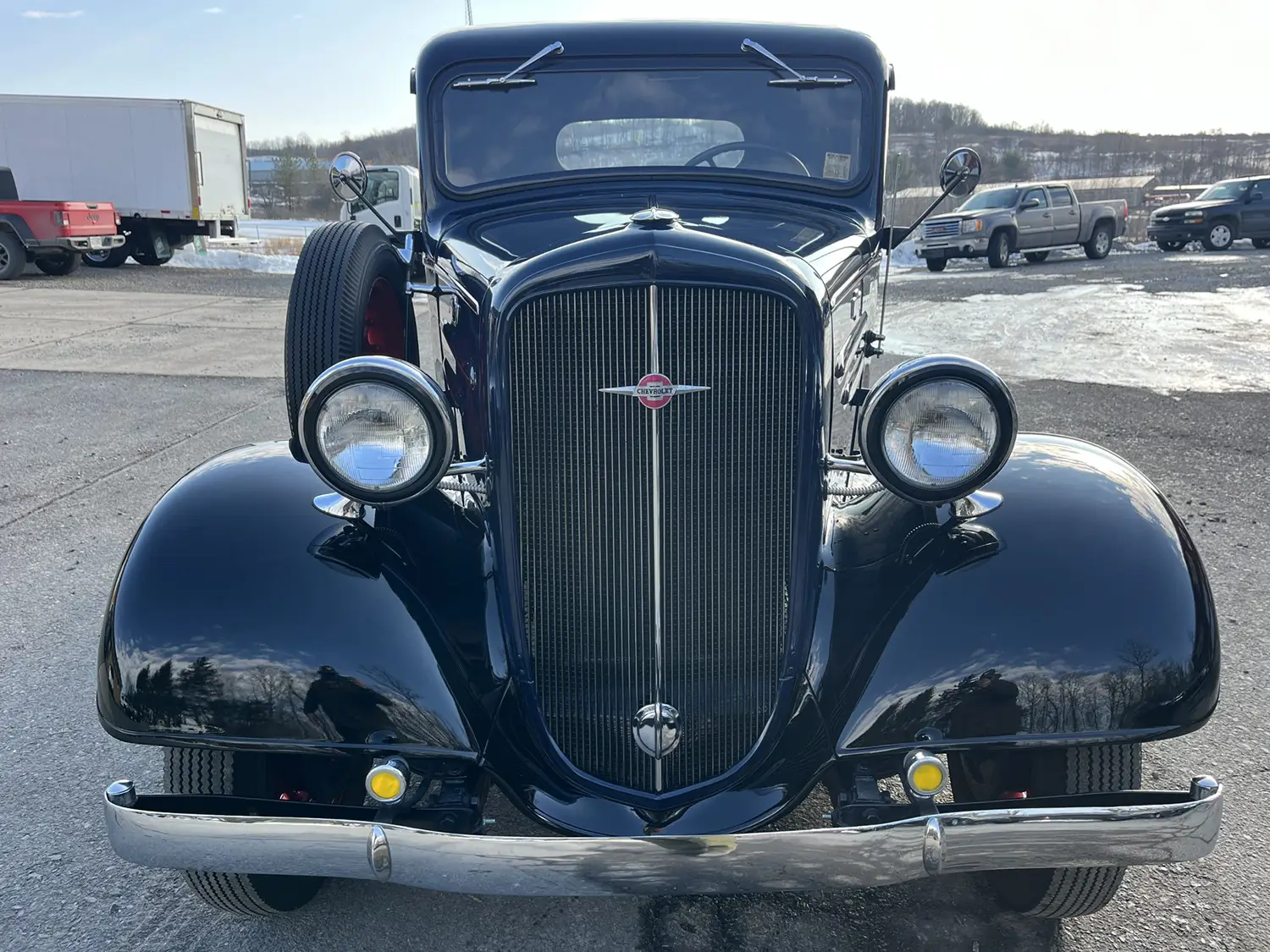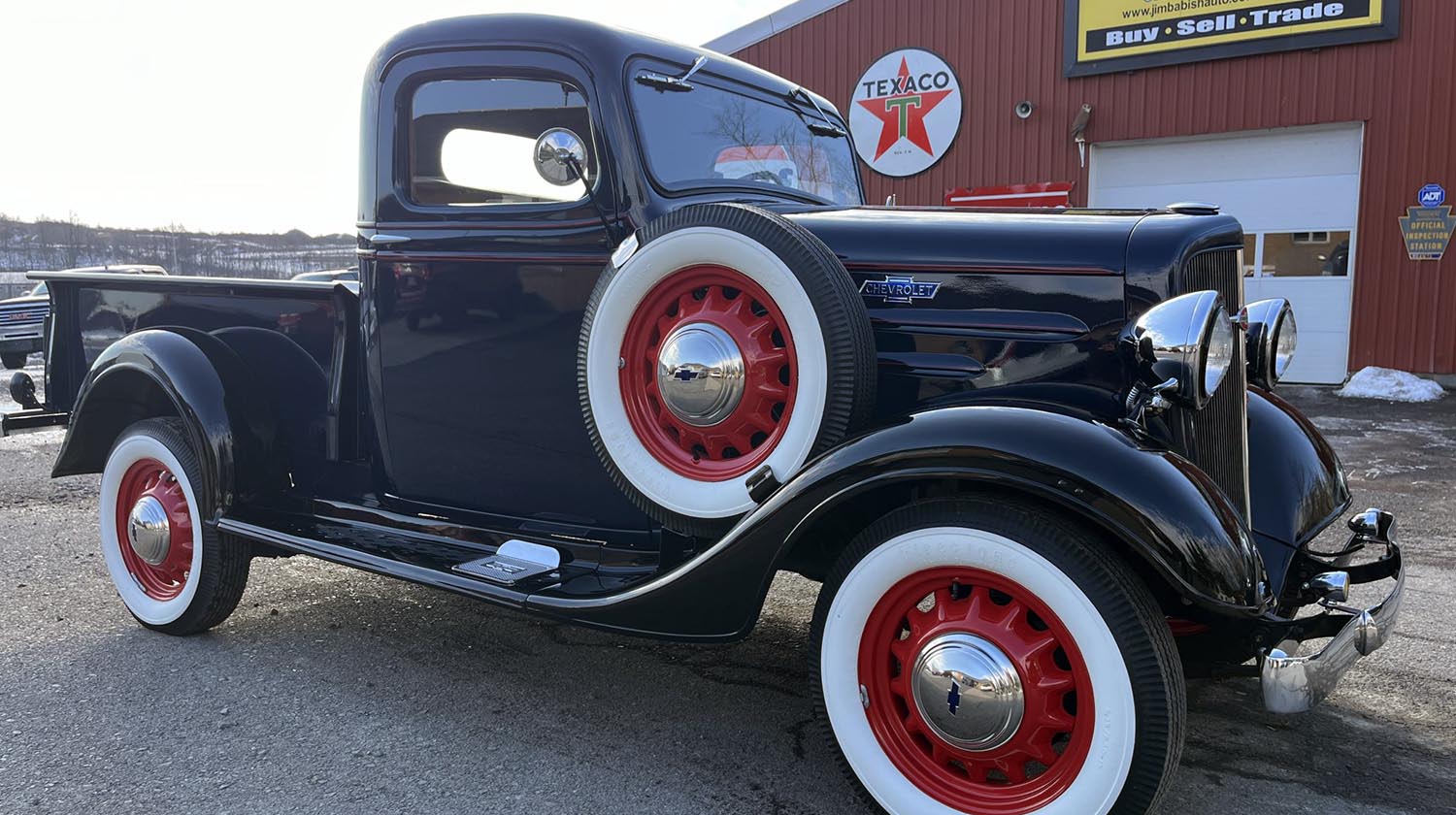

The 1936 Chevrolet Model FB pickup stands as a landmark in General Motors’ commercial history, debuting a “low cab” design that prioritized aerodynamic efficiency and an all-steel construction. This mid-year update was a direct response to the evolving needs of the American workforce, offering a shorter, more streamlined silhouette that defined the pre-war truck aesthetic. This example underwent a meticulous four-year refurbishment completed in 2020, which included a rebuild of its mechanical core and a transition to a striking blue finish with hand-painted red accents. Currently located in Pennsylvania and carrying a clean West Virginia title, it represents a beautifully preserved intersection of Art Deco design and industrial utility.

Low Cab Aerodynamics and Oak-Plank Bed Craftsmanship
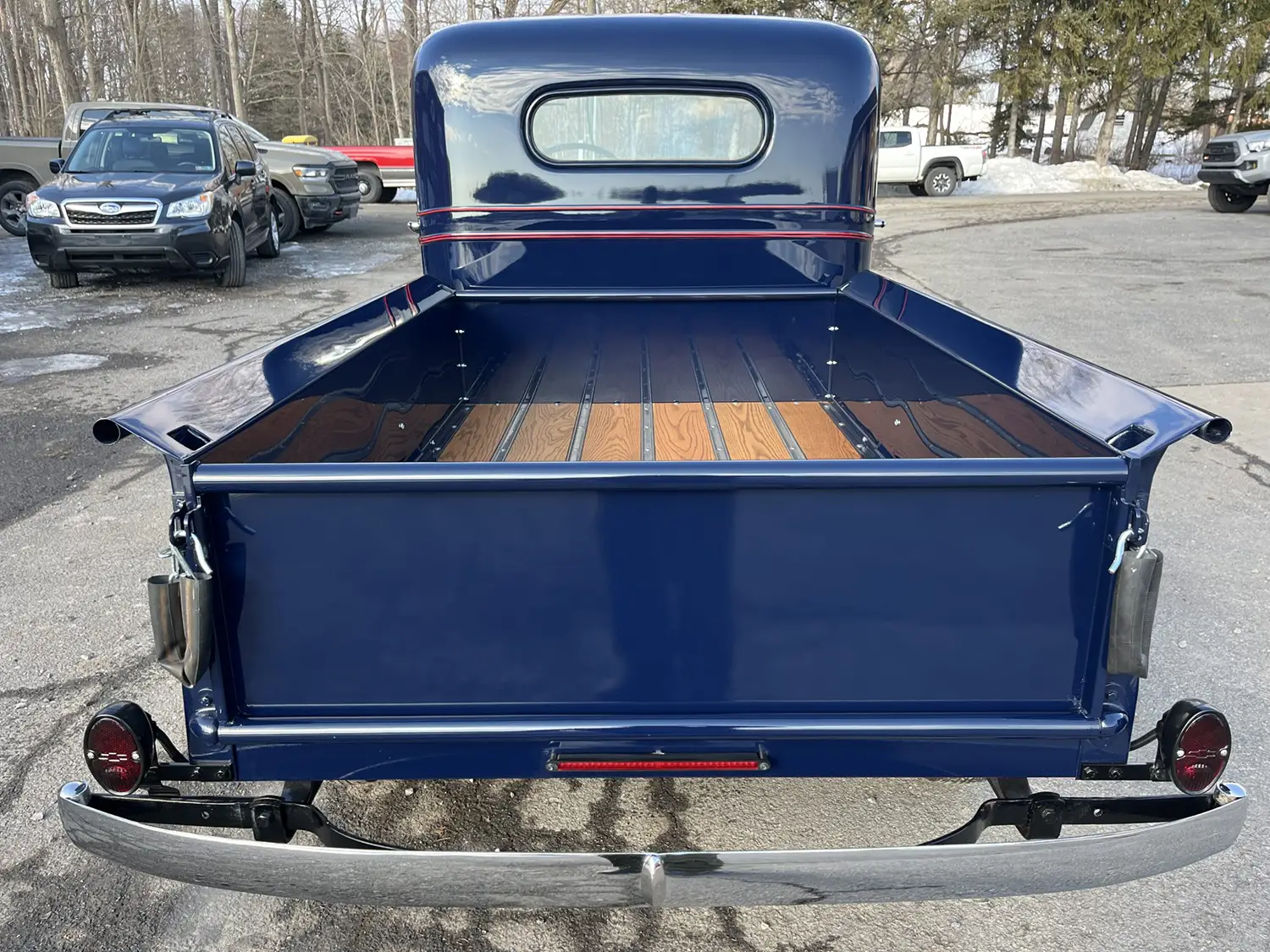
The visual character of this 1936 Chevrolet Model FB is highlighted by its refined “low cab” body, featuring a crank-out windshield and a distinctive oval rear window. Repainted in a deep blue with red accent stripes, the truck’s silhouette is grounded by 17-inch artillery-style wheels painted red and fitted with Firestone Deluxe Champion whitewall tires. The six-foot cargo box has been thoughtfully restored with an oak-plank floor and steel cargo strips, secured by a replacement tailgate. Chrome bumpers, headlight buckets, and yellow-lens fog lights provide the period-correct brightwork that distinguishes this professional-grade refurbishment from more utilitarian survivors.
Brown Vinyl Bench and Walnut-Woodgrain Dashboard
Inside the cabin, the 1936 Chevrolet Model FB provides a warm and functional environment that echoes the automotive refinements of the era. The bench seat has been reupholstered in rich brown vinyl, complemented by tan-painted dash and door panels. A notable highlight is the walnut-woodgrain-painted dashboard and door caps, which elevate the cabin beyond its commercial origins. Modern practicality is subtly integrated through an LED third brake light and a hot-water cabin heater, while the chrome windshield hand-crank and leather door straps maintain the authentic 1930s experience. The instrumentation remains clear and functional, centered around a 100-mph speedometer.

Rebuilt Stovebolt Inline-Six and First-Year Hydraulic Braking
Performance is provided by a rebuilt 206ci Stovebolt inline-six, an engine celebrated for its durability and valve-in-head efficiency. This powerplant delivers a factory benchmark of 79 hp/80 PS and 156 lb-ft/212 Nm, breathing through a Carter W-1 one-barrel carburetor. Power is managed by a three-speed manual transmission and sent to a rebuilt rear end. A critical advancement for the 1936 model year was the introduction of hydraulic drum brakes at all four corners, a significant safety upgrade over the previous mechanical setups. The suspension features rebuilt leaf springs and solid axles, ensuring a period-correct yet stable ride quality.
| Technical Specifications | |
|---|---|
| Engine | 206ci Stovebolt Inline-Six |
| Transmission | 3-Speed Manual |
| Power Output | 79 hp/80 PS and 156 lb-ft/212 Nm (Factory Benchmark) |
| Brakes | First-Year Hydraulic Drum Brakes |
| Wheels | 17-inch Artillery-Style |
| Bed Material | Oak-Plank with Steel Strips |
| Weight | 2,760 lbs/1,252 kg (Estimated) |

Benchmarking the Model FB Against the Ford Model 67
In the mid-thirties commercial market, the 1936 Chevrolet Model FB was the primary rival to the Ford Model 67 pickup. While Ford relied on the selling power of its V-8, Chevrolet successfully captured a massive market share by emphasizing the “Stovebolt” engine’s reputation for mechanical longevity and smoother power delivery. The 1936 model holds a unique selling point as it introduced hydraulic brakes a full three years before Ford, making it a preferred choice for drivers prioritizing safety and controlled stopping power. In the current collector market, the “low cab” design is highly prized for its smoother lines compared to the earlier, taller cabs, often commanding a premium at vintage auctions.

A Refined Legend of the American Working Class
The 1936 Chevrolet Model FB is an exceptional vehicle that honors the engineering and utilitarian legacy of General Motors. From its high-torque Stovebolt six to the mechanical precision of its rebuilt steering box and hydraulic brakes, every aspect of this truck has been curated to provide an authentic and commanding driving experience. It successfully captures the transition from basic farm equipment to a more aerodynamic and user-friendly vehicle. Ready for local shows or weekend excursions, this Model FB remains a definitive statement of Chevrolet’s historic dominance in the light-duty truck segment, continuing to inspire enthusiasts with its Art Deco charm and mechanical integrity.
Disclaimer: Content on this site is for informational and entertainment purposes only. Details, analyses, and opinions reflect current trends and personal views, not professional or financial advice. Always verify information with official sources before making any decisions.
Source: bringatrailer.com