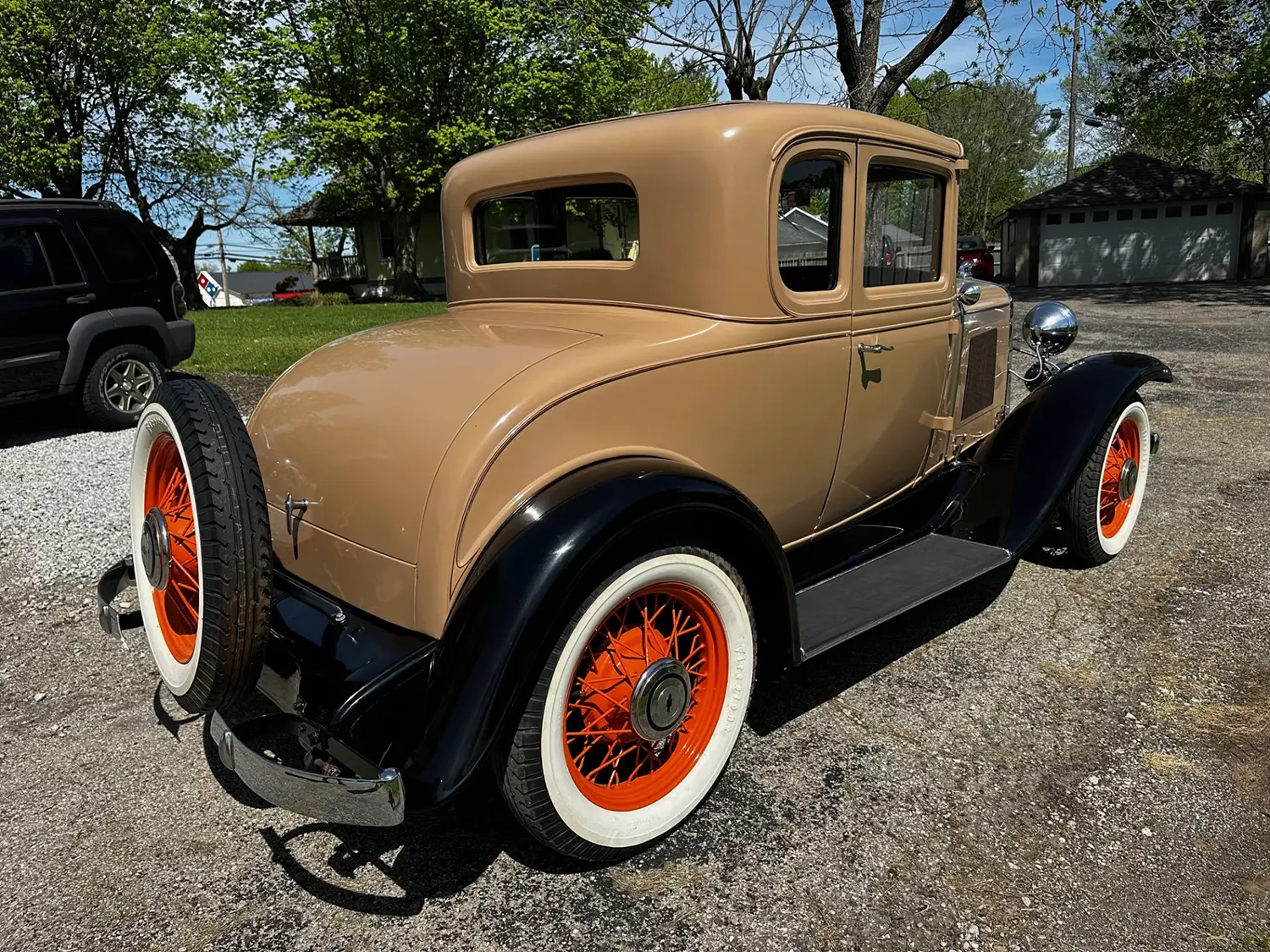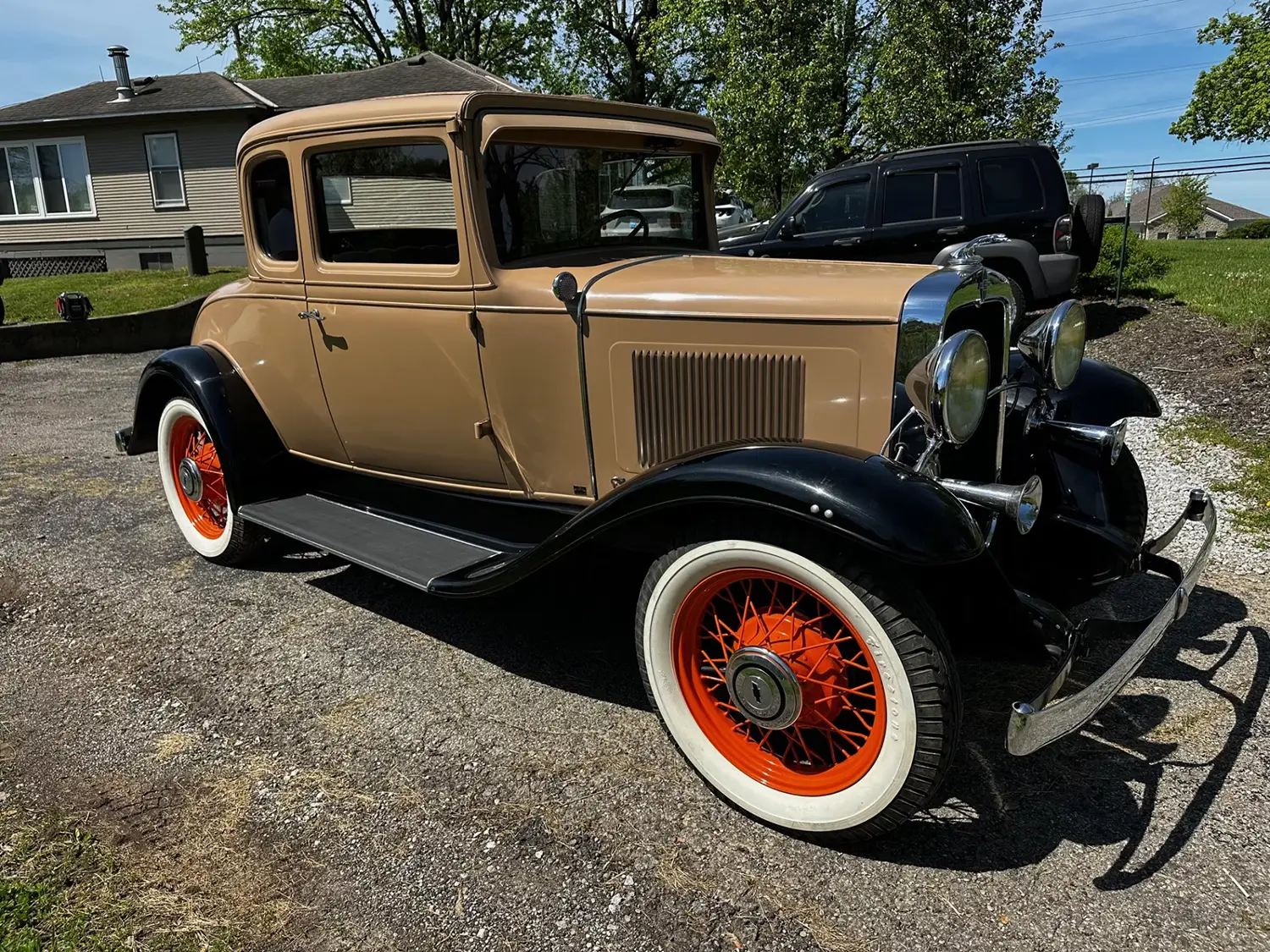
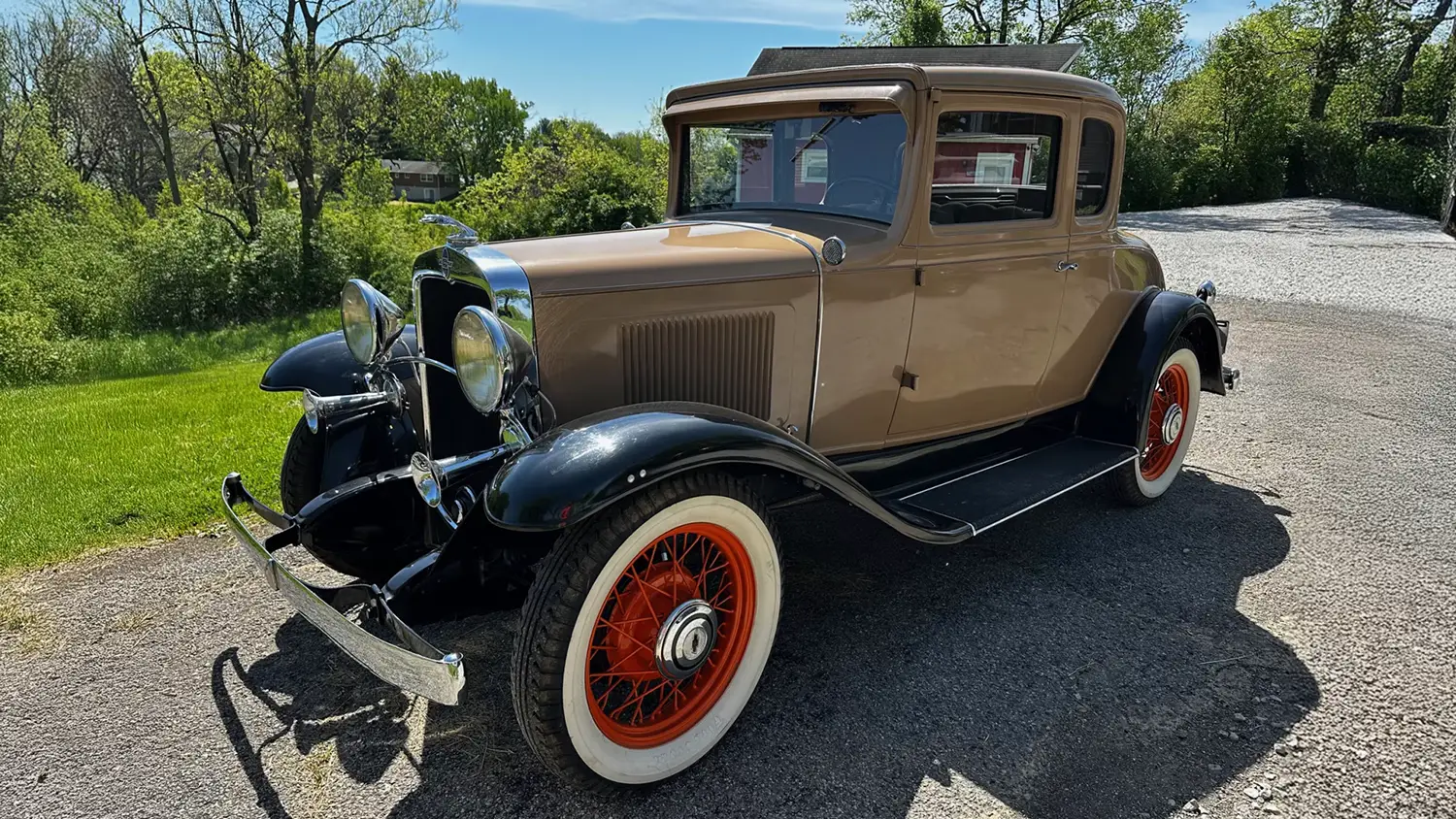
The 1931 Chevrolet Coupe represents a pivotal moment in automotive history when the “Stovebolt Six” solidified the brand’s reputation for value and durability. Crossing the auction block as Lot J87 at Indy 2026, this quintessential pre-war machine embodies the charm of the Great Depression era. It features an older restoration that has matured gracefully, maintaining the dignity of its original design. Collectors appreciate these models for their overhead-valve engines, which provided a significant performance advantage over four-cylinder competitors of the time. This specific coupe offers a rare opportunity to acquire a well-preserved piece of early American motoring heritage.
Classic Silhouette and Wire-Spoke Charm
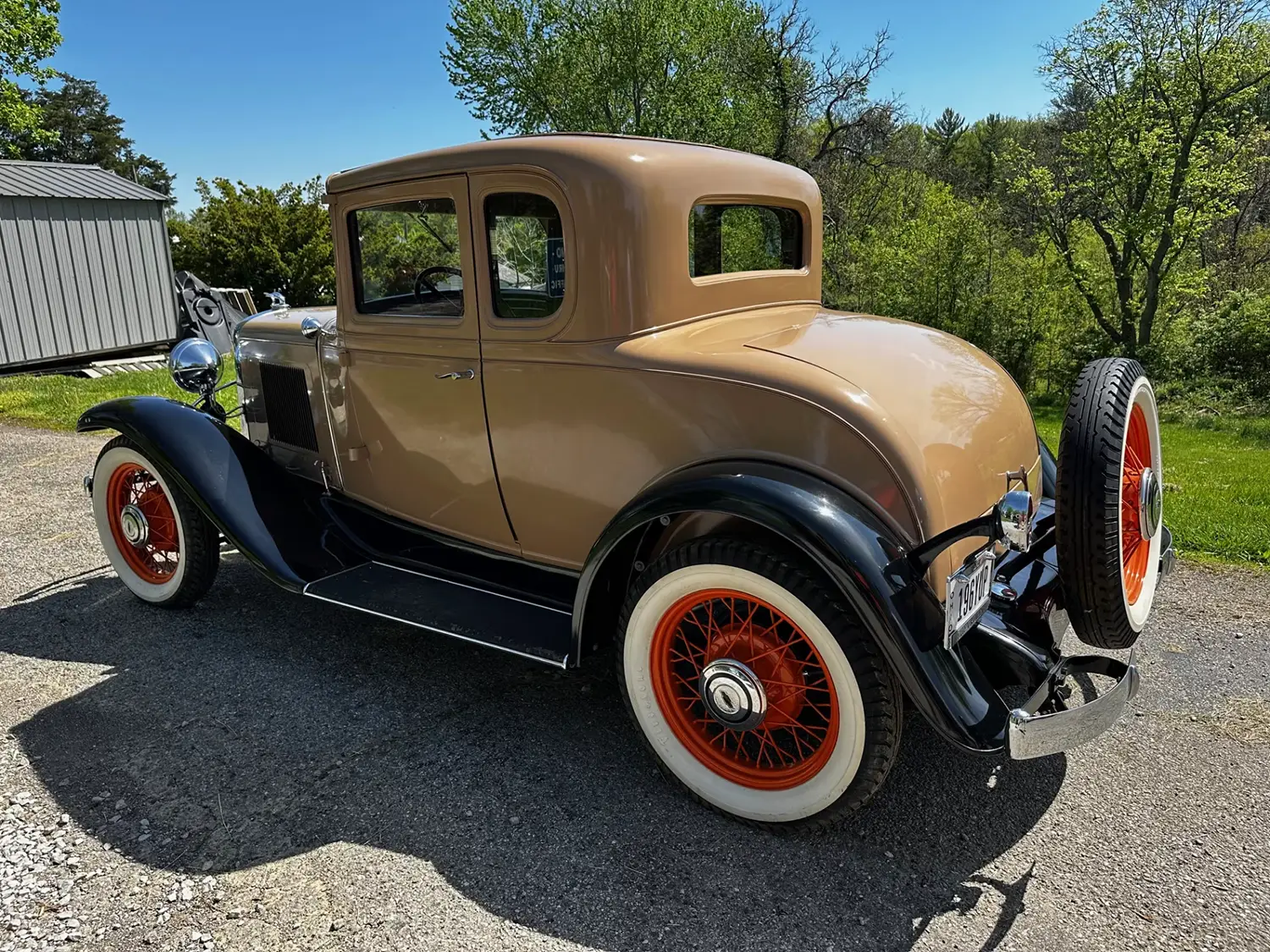
The exterior character of this coupe is defined by a traditional two-tone Tan and Black paint scheme that accentuates its upright, formal silhouette. Protective sun visors and painted wire wheels provide an authentic period aesthetic that is further enhanced by the classic whitewall tires. A rear-mounted spare tire serves as both a functional necessity and a signature styling element of the early 1930s. The body panels remain straight, showcasing the simple yet elegant metalwork that made Chevrolet a formidable rival to the Ford Model A. Every detail, from the radiator mascot to the sweeping fenders, evokes a sense of nostalgia for the open roads of the past.
Button-Tucked Beige and Vintage Controls
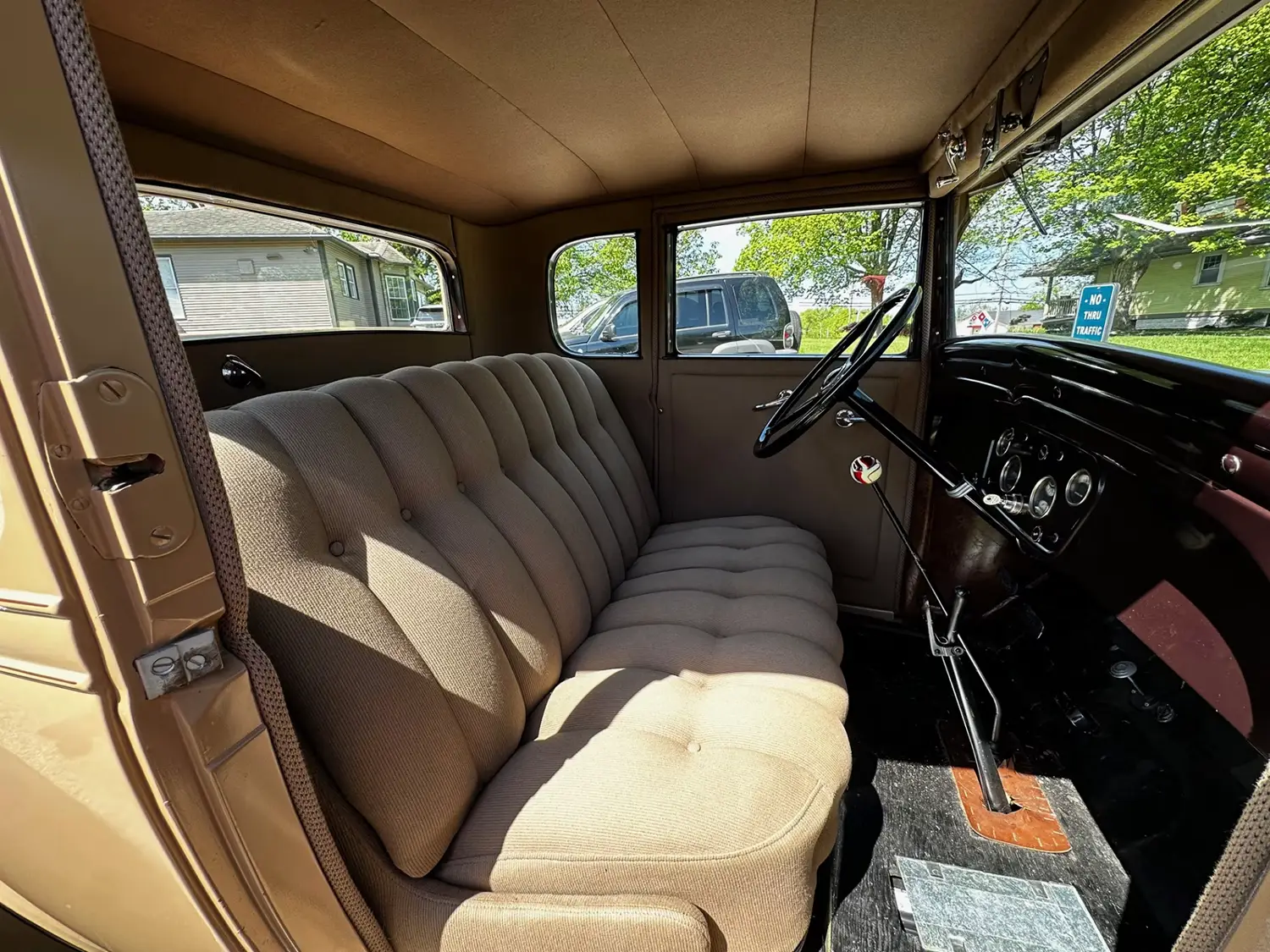
Stepping inside reveals a cabin finished in soft Beige, featuring cozy button-tucked upholstery that adds a touch of luxury to the utilitarian space. The interior reflects the simplicity of the era, with tactile controls and a basic instrument cluster that prioritize function over flash. Fresh materials from the older restoration remain in good condition, providing a comfortable environment for vintage touring. Occupants are greeted by a large-diameter steering wheel and a floor-mounted shifter, offering a driving position that is quintessentially pre-war. This cockpit is a reminder of an age when driving required a physical connection to the machinery and a deliberate hand at the controls.
The Legendary Stovebolt Inline-Six
Performance is anchored by the 194 CI Stovebolt inline-6 engine, a powerplant famous for its smooth operation and overhead-valve architecture. This reliable unit produces 50 hp / 51 PS and approximately 122 lb-ft / 165 Nm of torque, allowing for steady cruising on secondary roads. It is paired with a 3-speed manual transmission that requires a practiced touch for smooth transitions between gears. The mechanical nature of the engine is a delight for purists, offering an unfiltered auditory experience that modern vehicles simply cannot replicate. While the odometer indicates 18,959 miles, the true value lies in the mechanical integrity of this iconic six-cylinder heart.
| Feature / Component | Specification |
|---|---|
| Engine Type | 194 CI Stovebolt Inline-6 |
| Output | 50 hp (51 PS) / 122 lb-ft (165 Nm) |
| Transmission | 3-Speed Manual |
| Exterior Color | Tan / Black |
| Interior Color | Beige |
| Wheels | Painted Wire Spoke |
| Tire Style | Whitewall |
| Odometer Reading | 18,959 Miles (Indicated) |
| Auction Date | Friday, May 8th |
Mechanical Purity and Direct Engagement
Operating a 1931 Chevrolet Coupe is an exercise in mechanical sympathy, as the car lacks any form of modern electronic stability or assistance. The driver must master the art of non-synchronized shifting and threshold braking using the four-wheel mechanical drum system. There are no drive modes or terrain selectors to intervene; the experience is entirely dependent on the pilot’s input and understanding of the machine. This direct engagement provides a rewarding sense of accomplishment that is lost in contemporary cars. It remains a sturdy and honest vehicle, built for an era when roads were rough and reliability was the ultimate luxury for the American motorist.
Ownership Heritage and Collector Value
As a survivor of nearly a century, this coupe represents a stable and high-value entry point into the pre-war collector car market. Its older restoration makes it an ideal candidate for local shows or vintage rallies where it can be driven and enjoyed without the stress of a concours trailer. The 1931 models are particularly desirable because they offer the legendary six-cylinder engine in a package that is remarkably easy to maintain and support with parts. Investing in a Stovebolt Chevrolet is not just about owning a vehicle; it is about preserving a legacy of American engineering that helped put the country on wheels during one of its most challenging decades.
Disclaimer: Content on this site is for informational and entertainment purposes only. Details, analyses, and opinions reflect current trends and personal views, not professional or financial advice. Always verify information with official sources before making any decisions.
Source: mecum.com